
Mount Olive-Silverstone-Jamestown is a diverse, working-class neighbourhood in northwest Etobicoke where detached post-war bungalows trade between $750,000 and $1,000,000. The Finch West LRT now connects residents to Line 1, basement rental income potential is real, and buyers who know which pockets to target find genuine value that has largely disappeared from the rest of the city.
Mount Olive-Silverstone-Jamestown occupies the northwest corner of Etobicoke, bounded roughly by Finch Avenue West to the north, Kipling Avenue to the east, Rexdale Boulevard to the south, and the approach to the Humber River to the west. It is one of Toronto’s more honest working-class neighbourhoods: post-war bungalows on modest lots, community housing towers scattered through the residential fabric, a diverse and predominantly immigrant population, and a set of daily realities that the real estate listings tend to softpedal.
The three names in the official designation reflect three distinct sub-areas that developed at different times and have distinct characters. Mount Olive to the east of Martin Grove Road is the most conventional post-war residential, with bungalows and backsplits on standard lots. Silverstone, around Silverstone Drive, has a mix of low-rise ownership housing and community housing. Jamestown, further west near Kipling and Finch, has the largest concentration of Toronto Community Housing buildings and the higher density that comes with them. Knowing which pocket you are buying in matters, because the street character varies meaningfully across those three areas.
The neighbourhood is connected to the rest of the city through the Finch West LRT, which opened in recent years and gives residents a surface transit link east to Finch West station on Line 1. Before that, this area was bus-dependent in a way that many residents found limiting. The LRT changes the calculus somewhat, though the neighbourhood still requires more transit patience than inner-city addresses. For buyers willing to accept that trade-off, the detached house prices here are among the lowest available within Toronto city limits.
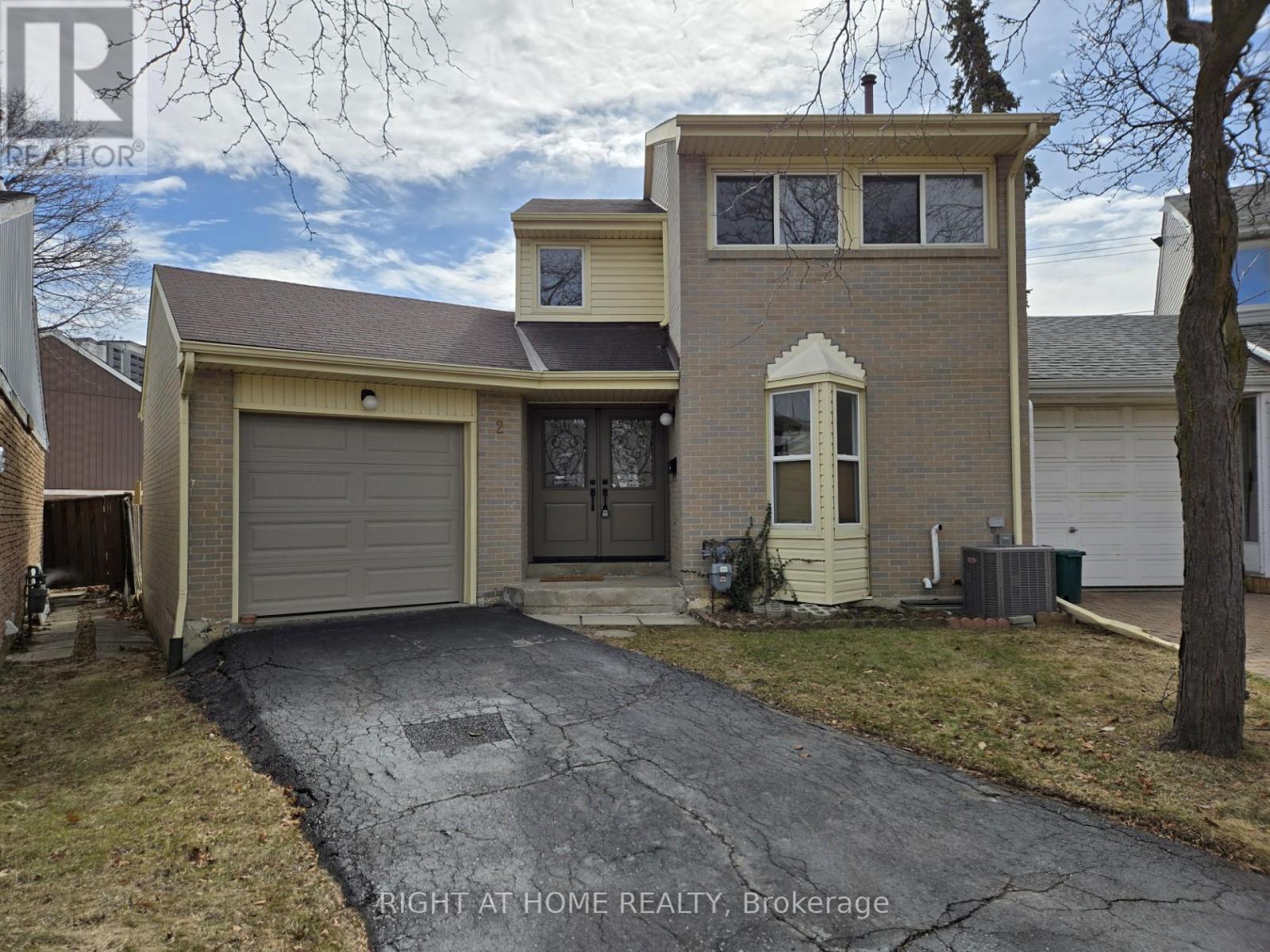
The ownership stock here is predominantly post-war detached bungalows and backsplits built in the 1950s and 1960s. Lots are typically 40 to 50 feet wide, with functional rear yards. The houses are not large: most original bungalows run 1,000 to 1,300 square feet above grade, with basements that many owners have finished or converted to secondary suites. Brick exteriors hold up well in the Toronto climate, and the bones of most of these houses are solid. The kitchens and bathrooms in unrenovated examples date from the original build and reflect it.
Prices in 2026 run from approximately $750,000 to $1,000,000 for detached properties, with the lower end representing unrenovated bungalows on standard lots in the Jamestown area and the upper end representing renovated or larger homes in the Mount Olive section near the better streets. This range makes Mount Olive-Silverstone-Jamestown one of the few parts of Toronto where a family can buy a detached house with a yard for under $800,000, which explains the consistent buyer interest despite the neighbourhood’s limitations.
There is no significant condo or townhouse market here. The community housing towers are not ownership product. Semi-detached houses exist but are a small fraction of the ownership stock. Buyers coming here are almost always buying detached, and they are usually weighing the value against locations further east or south where the same money buys less house but more neighbourhood amenity. Renovation potential is real: houses that have been brought up to current standards hold value and have improved sale prices meaningfully compared to unrenovated comparables on the same street.
The market here is driven by value buyers and by first-time purchasers who have exhausted options further south and east. When the broader Toronto market softens, this neighbourhood softens with it and tends to feel the correction earlier than more established addresses, because the buyer pool is more rate-sensitive and has fewer backup options for financing. When the market tightens, demand here picks up quickly because the entry price for a detached house is genuinely compelling.
Days on market run longer than the city average in slow periods, and shorter than average in competitive periods. Buyers in this area tend to be diligent about inspections, which means conditional offers are more common than in hotter markets, and sellers expect it. The listing price is often negotiable by three to five percent in a balanced market, though well-presented homes in the best pockets of Mount Olive can move with multiple offers in a strong spring market.
Rental income potential influences buyer calculations here more than in most other Toronto neighbourhoods at this price point. Many buyers are purchasing with a finished or partially finished basement in mind as a rental unit, and the rental market for basement suites in this area is consistent given proximity to the Finch West transit corridor. This income-property dimension keeps demand floor higher than the neighbourhood’s amenity profile alone would suggest. Sellers who can demonstrate a legal or compliant secondary suite command a meaningful premium, and the gap between an unfinished basement and a rentable one is often more than the renovation cost.
The buyers who choose this neighbourhood fall into a small number of identifiable groups. First-time buyers priced out of the rest of the city make up the largest contingent. They are buying the detached house they cannot get anywhere closer in, accepting the commute and the more limited neighbourhood services in exchange for the home itself. Many grew up in northwest Etobicoke or in Rexdale and are choosing to stay close to family and community rather than move to a more polished neighbourhood further away.
Income-property investors are a consistent presence, attracted by the rental yield math on houses with finished basement apartments. The calculation works better here than in many other parts of the city because the purchase price is lower and the rental income is comparable. These buyers are not speculating on appreciation. They are buying cash flow, and the neighbourhood delivers it if the property is set up correctly.
Newcomer families make up a third significant group. The neighbourhood has deep roots in Black Canadian, West African, Caribbean, South Asian, and Southeast Asian communities, and people frequently buy here to be near established community infrastructure, places of worship, familiar food retailers, and family networks. This is not incidental. The social and cultural density of the area is a draw in itself, and buyers who understand that context appreciate the neighbourhood differently than those who see only the housing value. The population is young and growing, and the community institutions that serve it are well-embedded.
The Mount Olive section east of Martin Grove Road is the most conventionally desirable residential pocket within the larger neighbourhood designation. Streets like Mount Olive Drive and the side streets running off it contain intact post-war bungalows with maintained lots and a relatively stable owner-occupant base. This is where you find the higher end of the neighbourhood price range and the most consistent street character.
The Silverstone Drive area, centred on the park and community facilities near Silverstone Drive and Jamestown Crescent, has a mixed ownership and rental character. The community housing buildings here are lower-rise than in the Jamestown section, and the streets adjacent to Silverstone Park feel more residential in scale. Buyers here are buying adjacency to green space and community facilities rather than the pure residential quiet of Mount Olive.
The Jamestown section near Kipling Avenue and north of Rexdale Boulevard has the most complex ownership picture. Community housing towers sit alongside ownership bungalows on streets that can feel inconsistent in maintenance and care. The value here is real for buyers who are comfortable with that mixed character, and the Finch West LRT stop at Kipling and Finch gives this pocket better transit access than its position suggests. Buyers looking for the lowest entry prices within the neighbourhood designation tend to find them in Jamestown, but they should walk the specific streets rather than generalising from the area name. Some blocks are well-cared for and owner-dominant. Others are not.
The Finch West LRT changed the transit picture for this neighbourhood meaningfully. The surface rail line running east along Finch Avenue West connects residents to Finch West station on Line 1 of the subway, from which downtown is roughly 45 minutes. Stops along the Finch corridor serve the neighbourhood at several points, and the frequency is an improvement on the buses that served the corridor before. For residents whose destinations are along the Finch corridor itself, including York University, the LRT is directly useful.
For trips south or west, buses remain the primary option. The TTC routes on Martin Grove, Kipling, and Albion provide connections to the Bloor-Danforth line and to Kipling station. These trips are functional but not fast. Residents who commute downtown by transit should expect 60 to 75 minutes each way in a realistic scenario, not 45 minutes. The neighbourhood sits at the edge of the city, and the transit network reflects that geography.
Driving is practical and Highway 427 is accessible within 10 minutes heading south toward the Gardiner and QEW. The 401 is similarly accessible eastbound and westbound. For residents who drive to work in Mississauga, the Pearson airport area, or the 401 corridor, the location actually works well. Street parking is available on residential streets without restriction in most areas. Cycling infrastructure on the main arterials is limited and the distances to other parts of the city are substantial, making cycling a minority choice for most residents. Those who do cycle typically use it for local errands rather than commuting.
Silverstone Park sits at the heart of the neighbourhood and serves as the primary green space for families in the Silverstone-Jamestown area. It has sports fields, a playground, a community centre with programming, and enough open space to be genuinely useful on summer evenings and weekends. The community centre attached to the park runs programs for youth and families and is an important social hub in an area where community investment matters.
The Humber River valley to the west provides a more substantial natural corridor. Trail access into the Humber system is within cycling or driving distance and opens up connections south through the valley toward Lake Ontario. The trails are maintained and usable through much of the year. For residents who want access to a serious ravine trail network without living in the inner city, the Humber is a real asset even if the neighbourhood itself does not sit on the valley edge.
Mount Olive Park provides a local parkette for the eastern section of the neighbourhood, with a playground and open grass suitable for casual use. Jamestown Crescent Park serves the towers in that area with a small green buffer. The overall park coverage in this neighbourhood is better than the urban form might suggest, partly because the community housing blocks were planned with landscaped setbacks and open space. Whether those setbacks feel usable and maintained depends on the specific block. The parks adjacent to community housing towers vary in how well they function as public space versus underused buffer zones. The more active community parks in the Silverstone section are the ones worth seeking proximity to.
The retail on Finch Avenue West through this part of Etobicoke serves the neighbourhood’s population accurately. West Indian food shops, West African grocery stores, halal butchers, South Asian restaurants, and a range of independent food retailers serve a population that has shaped the commercial strip to its own preferences. For the buyers who are coming to this neighbourhood because they want to be near that community infrastructure, the Finch retail is a draw. For buyers arriving from outside that community, it is a practical strip that handles daily food shopping adequately and with more authentic variety than a suburban grocery chain provides.
Larger retail is available along Albion Road and at the Westwood Square commercial area near Kipling and Albion, which has a No Frills, a pharmacy, and the kind of everyday services that a working-class neighbourhood needs. The Rexdale Boulevard commercial strip adds additional options. Sherway Gardens is a 15-minute drive south and provides the full range of retail, including major department stores and the restaurants that bring people from across the west end.
Medical clinics and dental offices are present along the Finch corridor. The Etobicoke General Hospital is a 10-minute drive and is a full-service community hospital with emergency services. Banking, pharmacies, and the standard service categories are covered. The neighbourhood does not have the cafes, wine bars, or boutique retail that younger buyers associate with desirable urban neighbourhoods. It also does not need them for its residents. The commercial infrastructure here is built for the people who actually live here, which is a kind of honesty worth noting.
The public school system in this neighbourhood operates under the Toronto District School Board, and several elementaries serve the area: Elmbank Junior Middle School, Ockham Junior School, and Smithfield Middle School are among those most relevant to buyers in the residential sections. Secondary students typically attend Thistletown Collegiate Institute or West Humber Collegiate Institute, both of which have the full range of standard programming and serve diverse student populations consistent with the neighbourhood’s demographics.
School performance data for schools in this area tends to run below the TDSB average on provincial testing measures, which reflects the socioeconomic profile of the community more than the quality of teaching. Buyers who are calibrating their decision based on school ranking data should understand that the testing outcomes in this area are influenced heavily by the proportion of students who are newcomers learning English, which depresses aggregate scores without reflecting the full picture of what happens in the classroom. Schools here often have strong settlement and newcomer support programs that are genuinely valuable and not captured by EQAO scores.
The Toronto Catholic District School Board serves families in the Catholic system through several elementaries in the area, with secondary students directed to Father Henry Carr Catholic Secondary School on Kipling, which has a strong reputation and draws students from across northwest Etobicoke. French immersion access in the public system should be confirmed directly with the TDSB given boundary complexity in this part of the city. York University is accessible via the Finch West LRT and is a relevant post-secondary option for families considering longer-term educational access.
The most significant change to this area in recent years has already happened: the Finch West LRT opened and permanently improved transit access along the Finch corridor. That change has been priced into the market to some degree, but the full effect of improved transit connectivity on neighbourhood investment and commercial renewal typically plays out over a decade rather than immediately. The Finch West corridor is now a more viable investment location than it was before, and some incremental commercial improvement along the strip has been visible.
Toronto Community Housing has been actively engaged in planning for revitalization of several community housing sites in northwest Etobicoke, including in the Jamestown area. These revitalization plans typically involve replacing aging towers with mixed-income communities that include new market-rate housing alongside rebuilt community housing. When these projects proceed, they tend to increase the overall housing quality in the area and bring new residents without displacing existing ones. The plans are in various stages of development and approval, and the timeline for construction is subject to funding cycles and community consultation. Buyers should be aware that the community housing landscape in this area will look different over the next 10 to 15 years.
Private redevelopment interest in the Finch corridor has grown since the LRT opened, with a number of mixed-use applications filed for sites along Finch West in this part of Etobicoke. These are early-stage and some will not proceed, but the direction of planning policy and transit investment is pointing toward more density and a more mixed commercial and residential character along the Finch Avenue spine. The effect on the established residential streets behind the arterial is likely to be gradual but positive.
Is this neighbourhood safe to buy in?
It depends on which part and which street. The Mount Olive section east of Martin Grove has a stable, owner-dominant residential character with low turnover and consistent maintenance. The Jamestown section near the community housing towers has higher crime statistics than the Toronto average, and this is not a secret. Most buyers who do their research and walk the specific streets they are considering come to a nuanced view: the blocks immediately adjacent to the best parks and away from the highest-density community housing clusters are safer and more stable than the aggregate neighbourhood statistics suggest. No blanket answer applies. Walk the streets during the day and on a weekend evening before you make a decision.
How realistic is the rental income from a basement apartment here?
Very realistic, provided the unit is set up properly. Basement suites in northwest Etobicoke rent in the $1,200 to $1,700 per month range depending on size, condition, and whether there is a private entrance. The demand is consistent given the population density and the neighbourhood’s position on the Finch transit corridor. Before buying with rental income in mind, establish whether any existing basement unit has been permitted by the City of Toronto. Unpermitted suites carry both safety and financial risk: they cannot be legally rented and can trigger enforcement orders. The cost to bring a non-compliant suite into compliance varies significantly depending on what work is needed.
What is the commute like to downtown Toronto?
Longer than most buyers prefer. A realistic estimate by transit is 60 to 75 minutes door-to-door to downtown office towers, involving the Finch West LRT to Finch West station, a subway ride south on Line 1, and then whatever walk or connection your destination requires. On a good day with no delays, you can do it in under 60 minutes. On a typical day, budget 70. Driving during peak hours is not faster. This is a significant trade-off for buyers who commute downtown five days a week, and it should be weighed honestly against the savings on the purchase price.
Are prices here likely to rise significantly over the next 10 years?
The structural factors are in place for steady appreciation: the Finch West LRT has improved transit access, community housing revitalization plans will improve the neighbourhood composition over time, and the supply of detached houses in Toronto is permanently constrained. The honest answer is that this neighbourhood will likely appreciate in line with the broader Toronto market, with some additional upside if the Finch corridor commercial renewal happens faster than currently projected. It is not a neighbourhood where dramatic short-term appreciation is likely, and buyers who are purchasing primarily as a speculative play would do better to look elsewhere. Buyers who want a detached house in Toronto at the lowest available entry price and plan to hold for at least 10 years are likely to do well here.
Buying in Mount Olive-Silverstone-Jamestown requires an agent who will be honest with you about what the different pockets of the neighbourhood are actually like, not just what the listing describes. The variation within the neighbourhood designation is large enough that two houses on different streets at the same price can represent materially different purchases. An agent who knows which streets have the most stable owner-occupant base, which blocks are adjacent to community housing with challenging maintenance records, and which pockets are quietly improving will save you from making a decision based on a listing description alone.
Inspection is non-negotiable here. Post-war houses of this age and price point often have deferred maintenance that is not visible during a showing: aging knob-and-tube wiring that has not been fully replaced, older plumbing systems, basement waterproofing that has not been addressed, or HVAC systems approaching end of life. An inspection that identifies $40,000 in required work on a house listed at $780,000 changes the purchase calculus entirely. Buyers who waive inspection to compete in a multiple-offer situation are taking on real risk. An agent experienced in this market can often advise on which listings are likely to attract competition and which offer genuine conditional-offer opportunity.
We work regularly in northwest Etobicoke and have direct knowledge of the specific street dynamics, the building stock condition patterns, and the local comparables that determine whether a given price is good value. If you are looking at properties in this area, we are glad to walk the specific streets with you, advise on which pockets we would look at and which we would avoid, and help you make a considered decision rather than one driven by desperation at the price point. Get in touch and we can start there.
Street-level knowledge is hard to find online. Our team works in Mount Olive-Silverstone-Jamestown every day. They know which pockets hold value, where the school catchment lines actually fall, and what the market is doing right now. Talk to us before you make a decision about Mount Olive-Silverstone-Jamestown.
Talk to a local agent For Rent
 For Sale
 For Sale
 For Sale