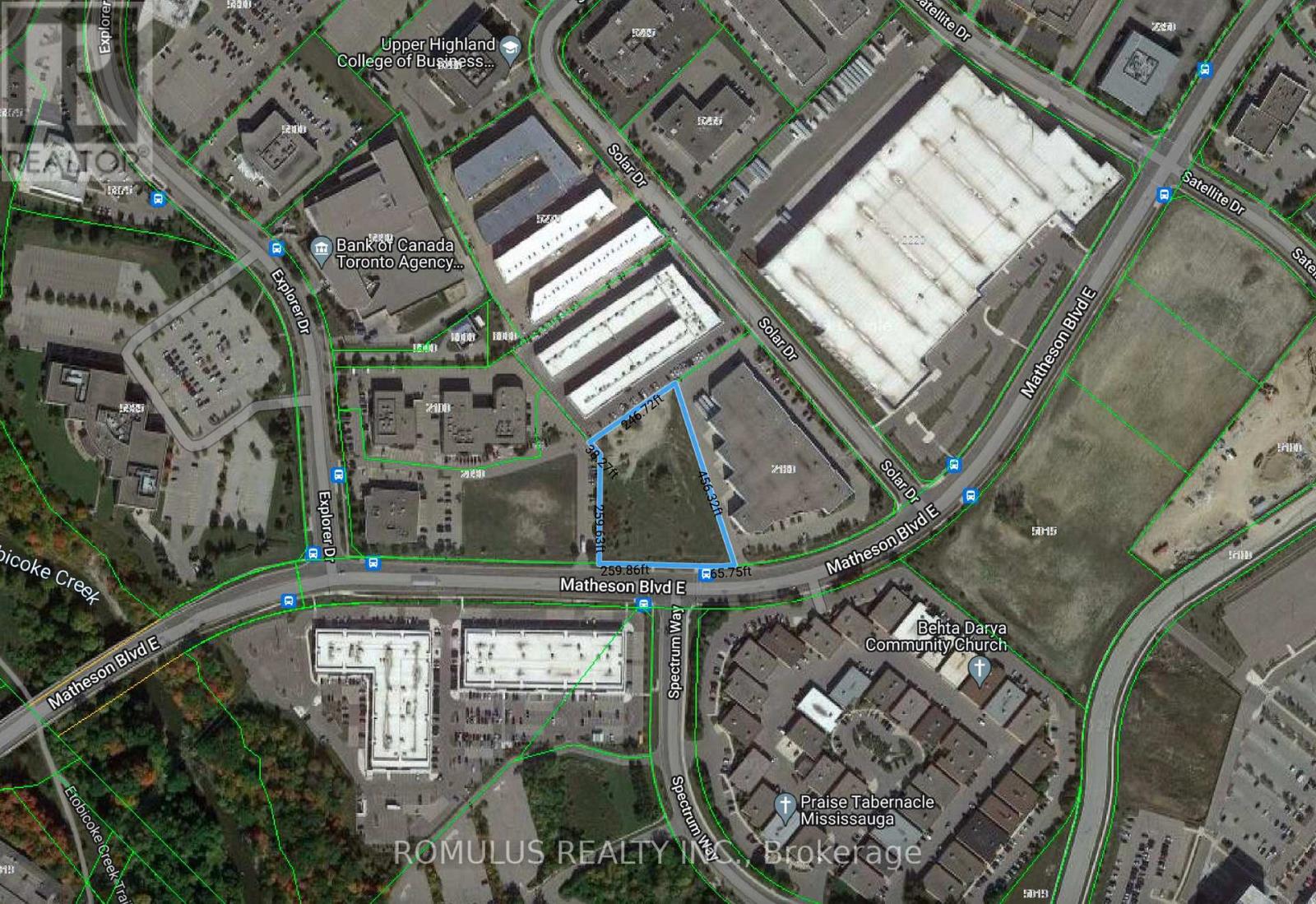
Airport Corporate sits at the northeastern edge of Mississauga, surrounding Toronto Pearson International Airport with logistics, cargo, and aviation employment uses. The adjacent Malton neighbourhood and northwest Mississauga residential pockets serve buyers who work at Pearson and want to minimize commute time. Semi-detached homes and bungalows in Malton trade between $700,000 and $850,000, with Malton GO station on the Kitchener line providing rail access to downtown Toronto in under 40 minutes.
Airport Corporate is not a residential neighbourhood in the conventional sense. It sits at the northeastern edge of Mississauga, bracketing the land around Toronto Pearson International Airport, and its defining character is employment rather than community. Warehouses, logistics centres, hotel corridors, cargo facilities, and corporate campuses fill the landscape here. The roar of jets overhead is constant. For anyone thinking about real estate near this area, the question is almost always about proximity rather than presence: what can you buy close to here, and what does living adjacent to one of Canada’s busiest airports actually mean day to day?
The airport itself straddles the Mississauga-Brampton municipal boundary, with the main terminals sitting in Mississauga and significant operations spilling into Brampton. The surrounding lands designated as Airport Corporate fall under employment zone designations, meaning residential development is not the primary land use. This shapes everything about real estate in the vicinity. Buyers drawn here are typically looking at Malton to the north, the Rexdale area just across the Etobicoke boundary, or pockets of Mississauga’s northwest where residential streets begin once the industrial buffer thins out.
What the Airport Corporate zone offers the city is economic weight. Pearson is one of the largest employment nodes in Ontario, with tens of thousands of workers moving through the corridor daily. That employment concentration anchors demand for housing in every direction: Malton, Brampton’s Bramalea area, and northwest Etobicoke all serve as bedroom communities for airport and logistics workers. Understanding this context matters to buyers who work at or near Pearson and want to minimize commute time without living in a purely industrial environment.
The character of the area changes noticeably as you move away from the flight paths. The Dixie Road and Derry Road corridors carry a mix of industrial parks, gas stations, fast-food plazas, and the occasional hotel cluster. North of Derry, Malton begins, with its grid of postwar bungalows and the stronger sense of a working neighbourhood. South of the airport, the City of Mississauga’s northwest residential areas open up. The Airport Corporate designation itself sits between these worlds, a zone of function rather than feeling.
Because Airport Corporate itself is zoned primarily for employment uses, the residential real estate story here is really the story of adjacent neighbourhoods. Buyers who work at Pearson and want to live close will find the most accessible options in Malton, just north of the airport. Malton’s housing stock runs heavily toward semi-detached homes and bungalows built in the late 1950s through 1970s, selling in the $700,000 to $850,000 range in 2024 and 2025 depending on condition, lot size, and any additions or improvements made over the decades.
The northwest Mississauga residential pockets that border the Airport Corporate zone, particularly along Derry Road West and into the area south of Humberwest Parkway, include a mix of townhouse complexes and low-rise condominiums built primarily in the 1980s and 1990s. These units trade between $450,000 and $650,000 for condos and $650,000 to $800,000 for freehold towns, with larger detached homes on the southern fringe approaching $900,000 to over $1.1 million on good-sized lots.
If you push slightly further south into Mississauga’s Northwest district proper, detached homes from the 1980s and 1990s sit on wider lots and carry price tags from $950,000 to $1.2 million. These were built as family homes, with three and four bedrooms standard, double-car garages, and finished basements. The condition of these homes varies considerably. Many have been updated with modern kitchens and bathrooms, while others retain original finishes and represent genuine renovation opportunities at a lower entry point.
The rental market around the airport corridor is unusually active compared to most Mississauga neighbourhoods, driven by the large number of airline, airport, and logistics workers on rotating shift schedules who prefer not to commute long distances. This creates consistent demand for basement suites, purpose-built rental units, and condo investment properties, which adds a different dimension to the area’s real estate dynamics compared to purely residential communities further south.
The market around the Airport Corporate zone behaves differently from most of Mississauga because the buyer pool is driven heavily by employment rather than lifestyle factors. Demand here is relatively stable year-round since airport and logistics employment does not take summers off or slow down in January the way office-based sectors do. Families with shift workers, newcomers to Canada who find their first employment at or near Pearson, and investors targeting the rental market all contribute to consistent baseline demand even when the broader GTA market softens.
Days on market for well-priced semi-detached and detached homes in Malton and the northwest Mississauga pockets adjacent to the airport typically run between 14 and 28 days in a balanced market, though this can compress significantly during the spring surge in March and April when overall GTA buyer activity peaks. Homes that sit longer tend to be those priced above $1 million in areas where buyer expectations around finishes and lot size are harder to meet, or properties with obvious deferred maintenance.
Multiple offer situations are less common here than in more aspirational Mississauga neighbourhoods like Lorne Park or Streetsville, partly because the buyer pool is more price-sensitive and partly because the area does not attract the same discretionary upgrader traffic. That said, entry-level semis and towns in the $650,000 to $800,000 range can attract competing offers in a strong spring market, particularly if they show well and have recent updates.
Seasonality follows the broader GTA pattern: spring listings from February through May dominate the market, with a secondary burst in September and October. The summer period tends to be quieter, and December through January is very slow. Buyers with flexibility on timing will find better negotiating room outside the spring window, and sellers who list in late February or early March historically achieve stronger results here than those who hold out until May.
The buyer profile around the Airport Corporate area is more economically diverse than almost anywhere else in Mississauga. First-generation Canadian families who arrived in the GTA and found work at the airport, in cargo, in aviation services, or in the dense logistics parks along Derry and Dixie Roads form a large portion of buyers. For many of these households, owning a semi-detached or detached home in Malton or northwest Mississauga represents a primary financial and stability goal, pursued regardless of what the broader market is doing.
Airport workers themselves, including flight crew who commute internationally and want a short drive to terminals, ground crew on rotating shifts, and airline maintenance staff, represent a genuine niche buyer here. A 10-minute drive to Pearson at 4 a.m. has real value, and this group will accept trade-offs in neighbourhood character or amenity density that other buyers would not. They prioritize parking, proximity, and quiet streets over walkability scores or coffee shop access.
Investors and small landlords are also a consistent presence. The rental demand generated by airport employment is structurally reliable in a way that most residential rental markets are not, and buyers who purchase a semi-detached home with an existing basement suite can generate meaningful rental income while servicing the mortgage. This investment logic keeps floor prices supported even when owner-occupier demand softens.
A smaller but real cohort of buyers comes from Brampton’s housing market, looking for a lower-price entry point into Mississauga addresses. The northwest Mississauga fringe offers access to Mississauga services and the Peel District School Board’s Mississauga schools while sitting at price points closer to what Brampton offers. For families focused on school district access or long-term appreciation tied to a Mississauga address, this corner of the city provides a viable entry.
The residential streets that sit closest to the Airport Corporate zone’s southern edge include pockets along Derry Road West, Morning Star Drive, and the Humberwest Parkway area where townhouse complexes from the 1980s and 1990s sit in tidy rows. These townhomes are priced between $650,000 and $800,000 and offer freehold ownership with small private yards, suitable for families who want more space than a condo but cannot stretch to a detached home.
Further north into Malton proper, Goreway Drive and the streets branching off it carry the core of the neighbourhood’s detached and semi-detached stock. The streets closest to Malton GO station, including Morning Star Drive and its surrounding grid, benefit from transit proximity and tend to hold value well. Homes here are typically 1,100 to 1,400 square feet above grade on 30-by-120-foot lots, with the variation in price driven largely by renovation quality and basement configuration.
The area along Nuggett Avenue and Darcel Avenue in Malton includes some of the older semi-detached stock where price points remain accessible. Buyers who can tolerate an older kitchen or bathroom can still find entry-level homes under $750,000 in this pocket, though competition from investors looking to add basement apartments means even original-condition properties attract attention when priced right.
South of the airport lands, where Mississauga’s residential fabric picks up again near Airport Road and Derry Road East, a different character emerges. Larger lots, detached homes from the late 1980s and 1990s, and cul-de-sac streets create a quieter suburban feel. These homes, primarily three and four bedrooms with double-car garages, trade between $950,000 and $1.15 million. The tradeoff for the relative quiet and larger lots is the absence of walkable retail and the noise envelope from flight paths, which affects parts of this area depending on runway configurations in use.
Getting around from the Airport Corporate area depends almost entirely on what you drive and where you work. If your destination is Pearson itself, the road network is the dominant mode: Airport Road, Derry Road West, and the controlled-access connector roads into the terminal zones make car travel the most practical option for most shifts. The drive from Malton to the terminal area is under 10 minutes in off-peak hours, though highway ramps on Highway 427 and the 401/400 interchange can back up badly during morning and afternoon peaks.
For transit users, Malton GO station on the Kitchener GO line provides train service into Union Station in downtown Toronto, with peak-hour trains running roughly every 30 minutes and off-peak service less frequent. The station sits on Goreway Drive and is walkable from the core Malton residential streets, though most users drive or cycle to it. Travel time to Union Station by GO train is approximately 35 to 40 minutes, making this a viable commute for those working downtown.
MiWay, Mississauga’s transit system, serves the area with several routes along Derry Road, Airport Road, and the Malton grid. Route connections to Mississauga’s Central Bus Terminal in City Centre allow transfers to the broader MiWay network. However, the transit network in this part of Mississauga is primarily oriented toward employment destinations rather than the kind of point-to-point errands that would replace car ownership for most households.
Highway access is genuinely strong. Highway 427 runs north-south just east of the airport, connecting directly to the QEW to the south and Highway 401 to the north. Highway 401 is reachable in minutes, providing east-west access across the GTA. Highway 409 connects directly into the airport property. For those driving regularly to Brampton, Highway 427 north connects to Highway 27 and Brampton’s grid without needing to navigate through Mississauga City Centre. This highway access is one of the area’s strongest practical attributes.
Green space in and around the Airport Corporate zone is limited compared to other parts of Mississauga, a direct consequence of the employment land designations that dominate the area. The airport lands themselves include extensive grass buffer zones and noise mitigation berms that are not publicly accessible, so while the area looks green from above, recreational space for residents requires a short drive or cycling trip to access.
Malton Community Park, located at Goreway Drive near Morning Star Drive, serves as the main community green space for Malton residents. It includes sports fields, a wading pool, and open lawn areas used heavily by local families in summer months. The park anchors a neighbourhood where dense residential streets have few private yards large enough for meaningful outdoor activity, making this shared space genuinely important to the community fabric.
Elmbank Park and the surrounding ravine lands along Mimico Creek provide a corridor of natural space that extends south from Malton into Etobicoke. The creek trail is accessible from several points and connects to the broader Toronto and Region Conservation Authority trail network, offering walking and cycling routes that feel notably different from the surrounding industrial character. Mimico Creek here is narrower and less developed than its counterpart in Etobicoke, with a more naturalistic feel.
Further south, once you move past the airport employment zone toward northwest Mississauga’s residential area, the parks picture improves. Neighbourhood parks like Millgate Park and the open spaces around the Humberwest Parkway townhouse complexes offer smaller green spaces. For larger natural experiences, Claireville Conservation Area in Brampton is a short drive north and provides hiking trails, a reservoir, and significant natural cover that offsets the industrial character of the immediate area.
The retail and amenity picture around the Airport Corporate area is functional rather than aspirational. The Malton Village commercial strip along Goreway Drive includes the essentials: grocery stores, pharmacies, banks, a handful of restaurants serving South Asian, Caribbean, and West African cuisines that reflect Malton’s demographic character, and the services a working neighbourhood needs day to day. Canadian Tire, FreshCo, and independent grocers are all reachable within a 5-minute drive from most Malton streets.
The intersection of Derry Road West and Airport Road carries the kind of commercial node typical of employment corridors: gas stations, fast food chains, hotel properties, and the occasional strip mall with a mix of light retail and food options. These serve the workforce more than the residential population, and the result is a commercial landscape that prioritizes convenience over character. It is useful, but it is not somewhere most people would choose to spend a Saturday afternoon.
Larger shopping is a short drive in multiple directions. Shoppers World Brampton at Queen Street and Rutherford Road is accessible to the north. To the east, the Etobicoke retail corridors along Rexdale Boulevard and the Woodbine-Rexdale commercial strip fill out the shopping options. For a major mall experience, Bramalea City Centre in Brampton and Sherway Gardens in Etobicoke are both reachable in 15 to 20 minutes depending on traffic.
One distinct amenity of this area is access to Pearson International Airport itself, which matters more than it might seem for households with frequent flyers. Residents of Malton and northwest Mississauga can reach the terminal drop-off zones in under 15 minutes with no highway driving required, which has genuine value for families with international ties and regular travel patterns. The airport’s dining and retail options, while oriented toward travellers, also serve as a destination of last resort for late-night food options in an area that is not particularly well served after 9 p.m.
Schools in Malton and the northwest Mississauga area adjacent to Airport Corporate fall under the Peel District School Board (PDSB) for the public English system and the Dufferin-Peel Catholic District School Board (DPCDSB) for Catholic education. The schools here serve communities with high rates of recent immigration, and many operate with English language learner programs and settlement support services that are well-developed and genuinely responsive to family needs.
Malton Public School on Darcel Avenue serves the core of the Malton residential area at the elementary level, offering JK through Grade 8. Westwood Middle School provides intermediate education, and Malton Secondary School, part of the PDSB, serves high school students in the community. Malton Secondary has vocational and co-op programming that aligns with the employment focus of the surrounding area, including pathways related to aviation and logistics that reflect the community’s economic context.
For Catholic education, St. Joseph Secondary School is the main Catholic high school serving this part of Mississauga-Malton under the DPCDSB. Elementary Catholic options include St. Martin of Tours Catholic School and others within the Malton and northwest Mississauga catchment. The Catholic system in Peel Region has strong community ties in this area and offers French immersion streams at some elementary schools for families seeking bilingual education.
It is worth noting that school performance data, as measured by EQAO provincial assessments, tends to show lower averages in Malton schools compared to south Mississauga schools, primarily reflecting the socioeconomic context rather than the quality of teaching. Many families in this area are highly motivated education advocates, and school-community involvement is strong. Buyers with school-age children would do well to visit schools directly and speak with current parents to get an accurate picture beyond aggregate test scores.
The Airport Corporate zone itself is not undergoing residential development, but the employment lands are intensifying significantly. Pearson’s surrounding logistics and cargo infrastructure has expanded steadily over the past decade, driven by e-commerce growth and Canada Post’s major distribution investments near the airport. This employment growth matters to residential real estate because it sustains and increases demand for housing within commuting distance, supporting price floors in Malton and northwest Mississauga even when broader market conditions soften.
Malton itself has been identified in Mississauga and Peel Region planning frameworks as a candidate for intensification along the Goreway Drive corridor, where current low-rise housing and commercial uses sit on land that could, in theory, support higher densities over time. This is a long-horizon conversation rather than an imminent development story, but it signals that planners see the area’s transit connectivity, specifically the Malton GO station, as an underutilized asset that future development should leverage.
The Hurontario LRT, while its northern terminus is at Brampton Gateway Terminal rather than reaching Malton, will nonetheless reshape transit patterns in the region in ways that affect northwest Mississauga. Improved connectivity between Brampton and Mississauga City Centre will create new employment-to-housing pathways that could redirect some demand toward different parts of the city, but the airport employment corridor’s fundamentals are strong enough to remain attractive regardless.
Airport expansion planning at Pearson is an ongoing conversation at the federal level. Any runway additions or terminal expansions would increase employment further while potentially affecting noise envelopes for residential areas to the north and east. This is not an imminent concern for most buyers, but it represents a long-term variable that is worth monitoring if you are buying with a horizon of 15 or more years. The airport’s growth trajectory has been consistently upward over decades, which is generally positive for employment-driven housing demand but adds complexity to the long-term amenity picture.
Q: Is aircraft noise really a problem for daily living near Pearson?
A: It depends entirely on where you are relative to the active flight paths. The areas directly under approach and departure corridors, particularly those aligned with Runway 05/23, experience frequent and significant noise. Malton’s core residential streets see regular overhead traffic. Many residents adapt to it, particularly those who work shift schedules themselves and sleep at unconventional hours. The noise is most noticeable in summer when windows are open. Buyers should visit at different times of day and ideally check Transport Canada’s published flight path maps before committing to a specific street. Some streets are measurably quieter than others even within Malton. New builds with better window insulation fare better than older homes. The noise is real, not exaggerated, and anyone sensitive to sound should assess it honestly before buying.
Q: What are the best streets in Malton for a first home purchase?
A: The streets closest to Malton GO station, particularly around Morning Star Drive and the short grid streets connecting to Goreway Drive, offer the best combination of transit access, community stability, and price. These blocks were developed in the late 1960s and early 1970s and have the urban lot sizes, mature trees, and pedestrian-scale character that make a neighbourhood livable. Semi-detached homes on these streets typically trade between $720,000 and $820,000 in current market conditions. Buyers should prioritize homes where the basement has been properly converted as a legal or near-legal suite, as this materially affects carrying costs in a high-rate environment. Streets further from the GO station and closer to the employment lands can offer lower prices but come with more industrial noise and heavier truck traffic on nearby arterials.
Q: Is this area a good investment for a rental property?
A: The rental fundamentals here are stronger than in many Mississauga neighbourhoods. Airport and logistics employment generates reliable demand from shift workers who prefer short commutes and value the practicality of living close to work over neighbourhood amenities. A semi-detached home with a basement suite near Malton GO can achieve gross rents that make the math work better than comparable investments in more expensive south Mississauga. The key variables are property condition and basement legality. Many basement suites in Malton exist in legal grey areas, and buyers should either budget for bringing them to code or factor the cost into their offer price. Vacancy rates in the immediate area have historically been low, and the diverse workforce creates demand across price points from bachelor basement units to full upper floors for families.
Q: How does living near the Airport Corporate zone compare to other northwest Mississauga options?
A: Northwest Mississauga residential areas that are not directly under flight paths, including the residential pockets along Derry Road West south of the airport, offer a compromise worth considering. You get Mississauga address status, better proximity to the Mississauga school system’s stronger-performing schools, and slightly more suburban character, at prices still below the city’s south Mississauga premium. The tradeoff is less direct transit, longer drives to GO stations, and a less walkable environment than Malton’s compact grid. For buyers who drive everywhere and work somewhere along the 401 or 403 corridors, these south-of-airport residential pockets can offer good value. For those who need Pearson access specifically, Malton’s proximity advantage is hard to replicate elsewhere at comparable price points.
Buying near the Airport Corporate zone requires a buyer’s agent who understands the specific trade-offs involved and does not either oversell the area’s convenience or understate its limitations. The noise question needs to be addressed directly, ideally by visiting properties at multiple times of day. An agent who dismisses the flight path issue or says “you get used to it” without helping you actually assess it on the specific streets you are considering is not serving your interests.
The basement suite question is central to almost every semi-detached purchase in Malton. Your agent should know how to identify whether a basement conversion meets the standard for a legal second unit under Mississauga’s zoning and building code requirements, or at minimum, what work would be required to bring it there. Buying a home based on income projections from an illegal or uninspectable suite is a risk that can be avoided with proper due diligence at the offer stage.
This market also rewards pre-approval solidity. Lenders look carefully at income verification for buyers in shift-work occupations, and if your employment involves irregular hours, tips, union scale, or commission components, your agent should be working with a mortgage broker who understands how to document these income types accurately for lender review. Rushing to write an offer without confirmed financing in a Malton semi market can mean losing a property to a more financially prepared buyer.
Finally, an agent who knows this specific pocket will have insight into which streets have pending intensification applications, where truck routing changes might affect traffic noise, and which properties have title or municipal compliance issues that are common in older semi-detached housing that has been modified over decades. The Airport Corporate adjacency creates a specific set of real estate dynamics, and the right agent will navigate them with you honestly and specifically rather than treating this as a generic Mississauga transaction.
Street-level knowledge is hard to find online. Our team works in Airport Corporate every day. They know which pockets hold value, where the school catchment lines actually fall, and what the market is doing right now. Talk to us before you make a decision about Airport Corporate.
Talk to a local agent