
Gateway sits at the eastern edge of Mississauga near Lake Ontario, adjacent to Port Credit and the planned Lakeview Village waterfront development. It offers south Mississauga proximity at prices below the Port Credit premium.
Gateway occupies a corner of east Mississauga that sits at the transition between the city’s residential fabric and its industrial and commercial eastern edge near the Toronto border. The neighbourhood name is apt in a literal sense: this area sits along the Dixie Road corridor approaching Lakeshore Road, where Mississauga gives way to the Etobicoke boundary and the urban form shifts between cities. Lake Ontario lies a short distance to the south, and some of the area’s streets have a proximity to the lake that gives them a character distinct from the mid-Mississauga residential grid further north.
Gateway is one of the less well-known named communities in Mississauga, partly because its boundaries are somewhat loosely defined and partly because the area has historically been dominated by industrial and commercial uses rather than residential ones. The residential pockets that do exist sit in a mixed-use context that is more urban and gritty than the planned suburban communities of west Mississauga. The area around Dixie Road and Lakeshore has gone through multiple cycles of industrial, commercial, and residential use, and the current character reflects all of those layers rather than presenting a single coherent neighbourhood identity.
Port Credit is a short drive or bike ride west along Lakeshore Road, and the proximity to one of Mississauga’s most desirable communities is both a practical benefit and a pricing pressure. Buyers who want the general area of southwest Mississauga near the lake but cannot afford Port Credit’s premium price points sometimes find Gateway-area properties as an adjacent option. The lake access, while less developed than in Port Credit proper, is a genuine amenity for residents who are close enough to use it regularly.
The residential housing stock in the Gateway area is diverse and reflects the area’s mixed-use history. There are modest bungalows and two-storey detached homes from the 1950s and 1960s in the areas that were developed as residential from early on. There are also some townhome developments and small-scale condominium buildings that represent more recent residential investment in a neighbourhood that has been attracting attention as buyers priced out of Port Credit look east along the lakeshore corridor. Prices vary considerably by specific address and housing type.
Detached homes in the residential pockets of the Gateway area trade in the $900,000 to $1.4 million range depending on condition, lot size, and proximity to the lake or to the more desirable lakeshore-adjacent streets. The older bungalows at the lower end of this range are typically smaller homes on modest lots that require updating, while properties toward the upper end tend to be on larger lots or have been significantly renovated. The lake proximity commands a premium that is real but varies with how accessible and visible the lake actually is from a given property.
The industrial and commercial character of significant portions of the Gateway area means that residential buyers need to be particularly attentive to their specific block and address rather than relying on neighbourhood-level descriptions. A residential street that is pleasant and quiet can be adjacent to a commercial or industrial use that affects noise, traffic, and general livability. Due diligence around what is actually adjacent to and nearby any specific property is more important here than in a purely residential neighbourhood where the surrounding use is predictably residential.
Condominium options in the area, where they exist, offer lower price points but require the same due diligence around building condition and condo corporation finances that applies to any older condominium. The area has not seen the same high-rise condominium development as the Port Credit and Clarkson corridors further west, so the condo stock that does exist tends to be smaller-scale buildings rather than the high-rises that dominate other parts of the lakeshore.
The Gateway area market is more difficult to characterise as a single entity than most Mississauga communities, precisely because the area is heterogeneous. Residential pockets trade on their own merits, with pricing influenced by lakeshore proximity, specific address quality, and the condition of the immediate block. The broader narrative about Port Credit’s strong performance and the general desirability of southwest Mississauga lakeshore access does provide a rising-tide effect for the area, but individual transactions vary too much for simple neighbourhood-level generalisation to be reliable.
The residential market in the pockets near Lakeshore Road and the lake has been influenced by the general appreciation of the southwest Mississauga lakeshore. Port Credit’s strong market performance has pushed some buyers east toward the Gateway area as a more accessible alternative, and this demand spillover has provided some price support. How much any given property in Gateway benefits from this depends on its actual access to the amenities that drive Port Credit’s premium, including walkable retail, the waterfront trail, and GO station proximity.
The commercial and industrial portions of the area operate on entirely different market dynamics from the residential pockets and are outside the scope of what most residential buyers are considering. For residential buyers, the key market question is whether a specific property is in a viable residential context or whether it sits too close to commercial or industrial uses to function as a comfortable long-term family home. This is a judgment that requires walking the property and its surroundings rather than reading a market report.
Days on market for residential properties in the Gateway area vary significantly. Well-priced homes in the strongest residential pockets, particularly those near the lakeshore or with clear access to Port Credit’s amenities, can move quickly in active market periods. Properties in more mixed-use or industrial-adjacent contexts tend to sit longer, reflecting a narrower buyer pool that requires either a higher tolerance for the surrounding uses or a genuinely compelling price.
Gateway attracts buyers who are primarily motivated by lakeshore proximity at a price point below Port Credit, or who have a specific professional or commercial reason to be in this part of east Mississauga. The residential buyer pool is smaller than in the established residential communities further west, and it skews toward buyers who have done their research and identified a specific address or pocket rather than buyers who start with the neighbourhood as a broad search category.
The industrial and commercial character of portions of the area does limit the family buyer appeal that drives demand in most Mississauga residential communities. Families with school-age children and significant daily quality-of-life requirements around neighbourhood character typically look elsewhere. The buyers who land in Gateway’s residential pockets tend to be individuals or couples who prioritise the lake access and the lower price point over the conventional suburban family-neighbourhood attributes.
There is also a working population associated with the nearby industrial and commercial areas who live in the immediate vicinity for convenience. This is a different buyer profile from the lakeshore-motivated purchaser, and their presence gives the area a more economically mixed residential base than the premium southwest communities. This diversity of household types is not a problem; it’s a description of what the neighbourhood actually is.
As Port Credit’s redevelopment and the broader southwest Mississauga lakeshore intensification continues, the Gateway area may attract more buyer attention from people who recognise its proximity to those improvements without being able to afford the Port Credit price premium. This is a medium-term demographic shift rather than an immediate market reality, and buyers considering Gateway for this reason should be clear-eyed about the timeline and the current condition of the area rather than buying on a future-state thesis that may take longer to materialise than expected.
The strongest residential pocket in the Gateway area is the land immediately north of Lakeshore Road in the sections closest to the lake and closest to the Port Credit boundary. Streets that run perpendicular to Lakeshore and that allow access to the lakefront path or that have clear lake proximity feel most like an extension of the broader southwest Mississauga residential market. These are the addresses that command the highest prices in the area and that attract the most motivated buyers.
Moving north from the lakeshore, the character becomes more mixed and the residential quality becomes more variable. The Dixie Road corridor through this area has commercial and automotive businesses along stretches that interrupt any consistent residential street character. Residential streets that sit between commercial uses or that back onto industrial properties have a quality of life consideration that is immediately apparent on a site visit. These addresses may offer lower price points but the context is a genuine trade-off rather than simply a discount for equivalent quality.
The streets in the northwest portion of the area, closer to the Port Credit boundary and to Lakeshore Road West, have benefited from spillover demand from Port Credit and have a more established residential character. Some of these streets would feel at home in the adjacent Port Credit community, with modest detached homes on reasonable lots and a sense of settled residential use that contrasts with the more transitional character of the Dixie Road corridor. Buyers specifically hunting value adjacent to Port Credit should prioritise this pocket.
The eastern sections of the area, approaching the Toronto boundary, have more industrial adjacency and less residential coherence. These are not places where most family buyers will find a comfortable long-term environment, and the price points reflect the limited buyer pool. Investors and buyers with specific proximity needs to the industrial and commercial uses in the area make up a higher proportion of the buyer pool here than in the more residential western sections.
Port Credit GO station on the Lakeshore West line is within a few kilometres of the Gateway area and is the primary GO Transit access point for residents of this part of east Mississauga. Port Credit GO is one of the most frequently served stations on the Lakeshore West line, with express service to Union Station running throughout the day and not just during peak commuting periods. The drive from Gateway to Port Credit GO is short, and some residents in the more southerly Gateway addresses can reach the station by bike along the Waterfront Trail. Train travel time from Port Credit to Union Station runs approximately 30 to 35 minutes, making it one of the faster GO commutes in the region.
The QEW is the primary highway connection for Gateway area residents. With on-ramps accessible along Dixie Road and via the Lakeshore Road approach, the QEW provides direct access eastward into Toronto or westward through Mississauga toward the 403 and 401 interchange. The QEW through this section of Mississauga carries significant volume during peak periods, particularly the eastbound morning commute into Toronto, but it remains one of the more direct highway routes from Mississauga to the downtown core.
MiWay operates routes along Lakeshore Road and Dixie Road that connect to the broader Mississauga transit network. Service frequency along these routes is adequate for basic connectivity but requires connections and transfers for most destinations beyond the immediate corridor. For residents who rely primarily on transit, the Port Credit GO bus connections and the direct GO train service are more practical than the MiWay network for regular commuting.
The Waterfront Trail runs along the Lake Ontario shoreline through this area, connecting east to Toronto and west through Port Credit and Clarkson. For residents within access distance of the trail, it provides both a recreational cycling and walking route and, for those headed toward Port Credit or Clarkson GO stations, a practical active-transportation commute option. The trail quality in this section varies but is functional.
The proximity to Lake Ontario is the defining natural feature for the Gateway area’s southern addresses. The Waterfront Trail runs along the shoreline and provides continuous walking and cycling access east toward Marie Curtis Park and west through Port Credit toward Clarkson and Oakville. For residents within reasonable distance of the trail, this is a substantial amenity that separates the southern Gateway addresses from mid-Mississauga neighbourhoods that have no comparable linear park access.
J.C. Saddington Park in Port Credit, located just a few kilometres west along Lakeshore, is accessible by trail or by a short drive and offers the most developed lakefront park experience in the immediate area. The park includes a boat launch, picnic areas, a beach section, and direct views across Lake Ontario. Gateway residents use this park regularly, and its quality means the Gateway area benefits from Port Credit’s park infrastructure without the Port Credit price premium on every property.
Closer to the residential streets, Lakeview Golf Course formerly occupied a large parcel of land in this part of east Mississauga. The decommissioned golf course lands have been part of the Lakeview Village redevelopment planning process, with a new park and public waterfront access planned as part of the larger community development. This long-horizon project will eventually add significant park space to the immediate area, though the timelines for full delivery extend over many years.
The Cooksville Creek valley runs through parts of the broader area and provides some trail access, though the creek-valley parks in this section are more modest than those further upstream. For residents in the Gateway area proper, the practical park options for daily use are the Waterfront Trail, the neighbourhood green spaces along residential streets, and the parks of adjacent Port Credit reached by a short trip along Lakeshore Road.
The Lakeshore Road corridor through the Gateway area carries a mix of uses: car dealerships, plazas, fast food, and occasional independent businesses alongside automotive and commercial services. This is not a restaurant row or a boutique retail street. The nearby Dixie Value Mall, one of Mississauga’s older discount retail centres, provides basic shopping options within a short drive. For more polished retail and dining, the Port Credit village is the practical destination for Gateway-area residents, and its walkable main street of restaurants, cafes, and independent shops is accessible without a significant drive.
The Lakeview area has been the subject of significant planning attention with the Lakeview Village development project, which envisions a new mixed-use waterfront community on the former Lakeview Ontario Power Generation lands. This project is in its early development phases and will eventually bring new retail, restaurants, and community facilities to the eastern shore of the Gateway area. The timeline for full community build-out is measured in decades, but the planning direction is clear and any retail or amenity development associated with Lakeview Village will serve the Gateway residential catchment once built.
For grocery shopping, residents typically use the Dixie Road and Lakeshore Road commercial corridors, where a mix of national grocery chains and discount options are available within a short drive. The proximity to Port Credit also means that the grocery options on Lakeshore Road West, including a well-stocked Loblaws at Port Credit and various specialty food stores along Hurontario, are practical options for residents who are already driving in that direction.
The honest assessment of Gateway’s retail and amenity situation is that it is functional rather than exceptional. Day-to-day needs can be met without significant travel. The neighbourhood is not a destination for dining or independent retail in the way that Port Credit or Streetsville are. For residents who prioritise waterfront access and housing value over walkable amenities, this is an acceptable trade. For residents who want to walk to dinner at a good restaurant, Port Credit itself is the better address.
The Gateway area is served by the Peel District School Board (PDSB) for public schools and the Dufferin-Peel Catholic District School Board (DPCDSB) for Catholic schools. Given the mixed residential and industrial character of the area, school options for the Gateway neighbourhood reflect the broader east Mississauga catchment. Cawthra Park Secondary School, one of the most well-regarded secondary schools in Mississauga, is located nearby and is known particularly for its Regional Arts program, which draws students from across the city who audition for acceptance.
At the elementary level, the catchment schools for Gateway-area addresses fall within the east Mississauga PDSB boundaries. Families should confirm specific catchment assignments through the PDSB school finder, as the exact school boundary for any address depends on which street you are on. The Catholic elementary options under DPCDSB include St. Luke Catholic Elementary School, serving parts of this east Mississauga area, with Our Lady of Mercy Catholic Elementary School also serving addresses further east along Lakeshore.
The school situation in the Gateway area is adequate rather than exceptional by Mississauga standards. The neighbourhood lacks the concentration of top-ranked elementary schools that drives premium pricing in communities like Mineola, Lorne Park, or Churchill Meadows. Families for whom a specific elementary school ranking is a primary driver of neighbourhood choice will find more consistently strong options in the western Mississauga communities. Families who are flexible about elementary school and value the waterfront proximity and relative affordability will find the Gateway schools serve their children well.
For buyers with school-age children, the proximity to Port Credit Secondary School and Cawthra Park Secondary School means strong secondary options are accessible whether or not the specific catchment elementary is considered exceptional. Secondary school options in this part of Mississauga are a genuine strength of the broader area, and this is worth factoring into the assessment alongside the elementary school picture.
The most significant development story for the Gateway area is the Lakeview Village project on the former Ontario Power Generation lands at the lake’s edge east of Cawthra Road. This project envisions a new mixed-use waterfront community of approximately 8,000 to 9,000 residential units alongside employment, retail, park, and public waterfront space. Planning approvals have been moving through the process over several years, with early site preparation and infrastructure work underway. Full build-out will span two decades at minimum, but the first phases of residential development are expected to begin delivering units within the next several years.
The Lakeview Village development will transform the character of this part of east Mississauga more than any other single project. The addition of thousands of new residents alongside planned retail, a restored and expanded public waterfront, and new park infrastructure will change the amenity profile of the entire Gateway area. Properties already in the vicinity will benefit from this transformation as the new community develops, though buyers should not purchase on the assumption that Lakeview Village will deliver on its full vision on any specific timeline.
Along the Hurontario corridor, the Hazel McCallion LRT does not extend to the Gateway area directly, but the southern terminus at Port Credit GO connects to the existing GO Transit network that Gateway residents already use. Any development intensification along the Hurontario corridor tends to increase demand and pricing pressure in adjacent Mississauga communities, which can influence Gateway pricing indirectly as buyers displaced from more expensive areas look for alternatives nearby.
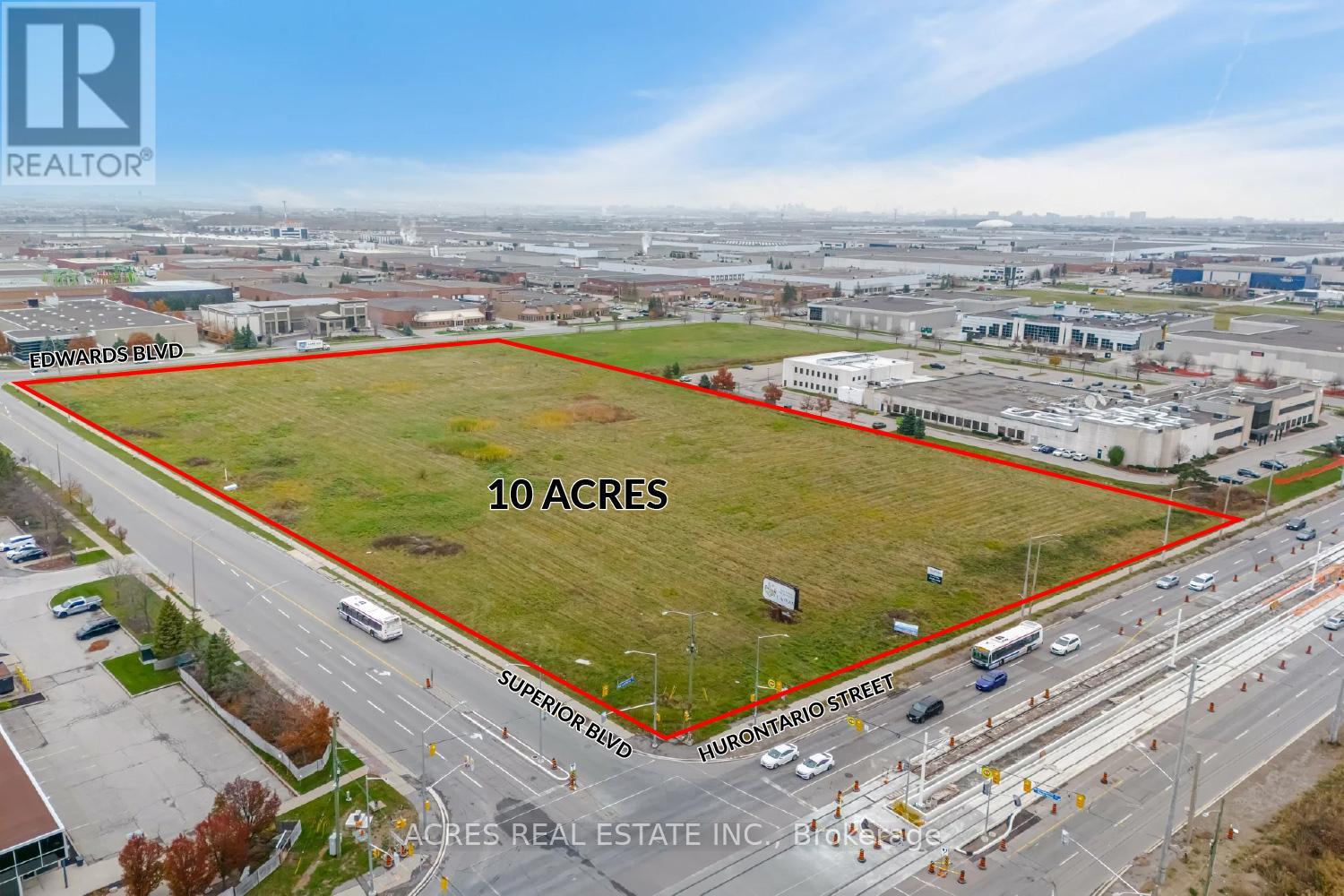
The Dixie Road corridor between Lakeshore and the QEW has been the subject of various commercial development proposals over the years, with new mixed-use residential and commercial development replacing older industrial and commercial uses. This corridor intensification is incremental rather than dramatic, but it is gradually improving the quality of the built environment in the Gateway area’s immediate commercial surroundings.
Q: What do homes actually cost in the Gateway area of Mississauga?
A: Gateway is one of the more affordable entry points into south Mississauga given its mixed-use character and industrial adjacencies. Detached bungalows and two-storey homes in the residential pockets nearest Lakeshore Road and along the Dixie Road corridor have listed and sold in the $900,000 to $1,250,000 range in recent transactions, below the Port Credit and Mineola price levels that characterise the most desirable waterfront-adjacent addresses. Townhomes and semi-detached properties in the area come in somewhat lower, typically $750,000 to $950,000. The wider price spread reflects the variation in lot size, proximity to industrial uses, and distance from the lake. Properties closest to the water and furthest from noise sources command the higher end of the range. The affordability relative to Port Credit is real but comes with trade-offs in neighbourhood completeness that buyers should assess directly.
Q: How close is Gateway to Port Credit and what does that proximity actually mean for residents?
A: Gateway sits immediately east of Port Credit, roughly one to three kilometres depending on the specific address. In practical terms this means Port Credit’s waterfront, restaurants, the harbour, and the GO station are accessible by a short drive, a 10 to 15 minute bike ride, or a walk for addresses within range of Lakeshore Road. Gateway residents use Port Credit’s amenities regularly without paying Port Credit property prices. The main limitation is that the walk is not always pleasant along Lakeshore Road’s commercial sections, and the bike route along the Waterfront Trail is the more attractive active-transportation option. For households that prioritise the proximity to Port Credit’s lifestyle over having it at their front door, Gateway offers genuine value.
Q: What is the Lakeview Village development and how will it affect Gateway area properties?
A: Lakeview Village is a large mixed-use redevelopment of the former Lakeview Ontario Power Generation site on Lake Ontario, east of Cawthra Road. The approved plan calls for approximately 8,000 to 9,000 residential units, significant commercial and retail space, and a new public waterfront park extending the Waterfront Trail access. Construction is expected to proceed in phases over two decades, with early residential phases beginning in the next few years. For Gateway area property owners, the development represents a long-term positive for area infrastructure, amenities, and demand. It should not be a primary reason to purchase right now, as the timeline is long and development projects of this scale routinely take longer than projected.
Q: Is Gateway safe for families and what is the day-to-day residential character like?
A: The residential streets within the Gateway area that sit away from the main industrial corridors are quiet, functional family neighbourhoods with the settled feel that comes from long-term owner-occupancy. The character is more working-class and diverse than the premium south Mississauga neighbourhoods to the west. Industrial uses and commercial activity are present near the residential areas in a way that is simply less true in Port Credit or Mineola. This is a known feature of the area, not a hidden problem. Families who tour specific streets and find a character they are comfortable with tend to settle well here. Families who require a fully buffered suburban residential environment will find the mixed-use context uncomfortable. The key is to tour the specific street, not just assess the neighbourhood name.
Gateway is a neighbourhood where specific street and block knowledge matters more than the neighbourhood name. Two properties listed as Gateway Mississauga can have genuinely different characters depending on whether one backs onto an industrial property and another sits on a quiet residential crescent three streets away from any commercial use. A buyer’s agent who has worked in this part of east Mississauga knows which streets to prioritise and which to avoid, and that knowledge is not recoverable from a listing description or a satellite view.
The comparison to Port Credit is the central negotiation in this market. Buyers frequently arrive having considered both areas, and the price differential between the two is meaningful. A buyer’s agent can model that comparison clearly: what the incremental cost of a Port Credit property is relative to a comparable Gateway property, what the practical differences in daily life actually are, and where the Lakeview Village development trajectory is most likely to narrow that gap over time. These are not abstract questions — they affect the decision in a direct way and they are worth working through with someone who has done the comparison multiple times.
The industrial adjacency factor needs to be evaluated property by property rather than written off as an area-wide concern. Some Gateway properties have no meaningful industrial proximity in their daily experience. Others are significantly affected by commercial traffic, noise, or visual presence. This variation is invisible in the listing price until you examine each property with those specific questions in mind. A buyer’s agent who conducts this assessment as standard practice will prevent buyers from making a purchase that delivers a different day-to-day experience than they expected.
For investors, Gateway has attracted attention as a potential beneficiary of the Lakeview Village development. The logic is straightforward: buy before the waterfront regeneration fully prices in, hold for appreciation as the development phases deliver. This is not an unreasonable thesis, but it requires patience measured in years rather than months and a tolerance for a mixed-use environment in the interim. A buyer’s agent who understands the development timeline and the specific properties most likely to benefit from it can help investors focus their attention appropriately.
Street-level knowledge is hard to find online. Our team works in Gateway every day. They know which pockets hold value, where the school catchment lines actually fall, and what the market is doing right now. Talk to us before you make a decision about Gateway.
Talk to a local agent For Sale
 For Sale
 For Rent