
Glenway Estates is a premium northwest Newmarket neighbourhood developed on the former Glenway Country Club lands, offering larger lots, above-average construction quality, and an edge-of-city setting adjacent to the King Township rural area. It attracts move-up buyers and established families who want maximum space and quality within Newmarket.
Glenway Estates is a residential neighbourhood in the northwest part of Newmarket, developed primarily in the late 1990s and 2000s on the former lands of the Glenway Country Club, a golf course whose closure and conversion to residential use created one of the largest planned residential developments in the city during that period. The neighbourhood is characterised by larger homes, wider lots, and a planned suburban design quality that reflects the premium nature of the development at the time of construction.
The neighbourhood sits in the western part of Newmarket, west of Bathurst Street and north of Davis Drive, in the area bounded roughly by Bathurst to the east and the Newmarket urban boundary to the west and north. Its position at the western edge of the urban area means that it backs onto the East Gwillimbury and King Township rural areas at its northern boundary, giving some properties genuine views into agricultural land and a sense of edge-of-city openness that the more internal Newmarket neighbourhoods can’t provide.
Glenway Estates built a reputation as one of Newmarket’s premium residential addresses during the 2000s and early 2010s, attracting move-up buyers who wanted larger homes, more landscaped settings, and the planned community feel of a purpose-designed neighbourhood rather than the incremental growth of the older Newmarket residential areas. That positioning has largely persisted, and the neighbourhood continues to trade at premiums over comparable vintage housing in other Newmarket areas.
The retail and transit access from Glenway Estates is more limited than from central or southeast Newmarket. Bathurst Street is the nearest arterial, with the commercial activity concentrated along the Yonge Street corridor roughly 3 to 5 kilometres east. This is a neighbourhood where car ownership is essential and where proximity to Yonge Street services requires a deliberate trip rather than a casual one. Buyers who choose Glenway Estates are choosing space, quality, and the edge-of-city setting over commercial and transit convenience.
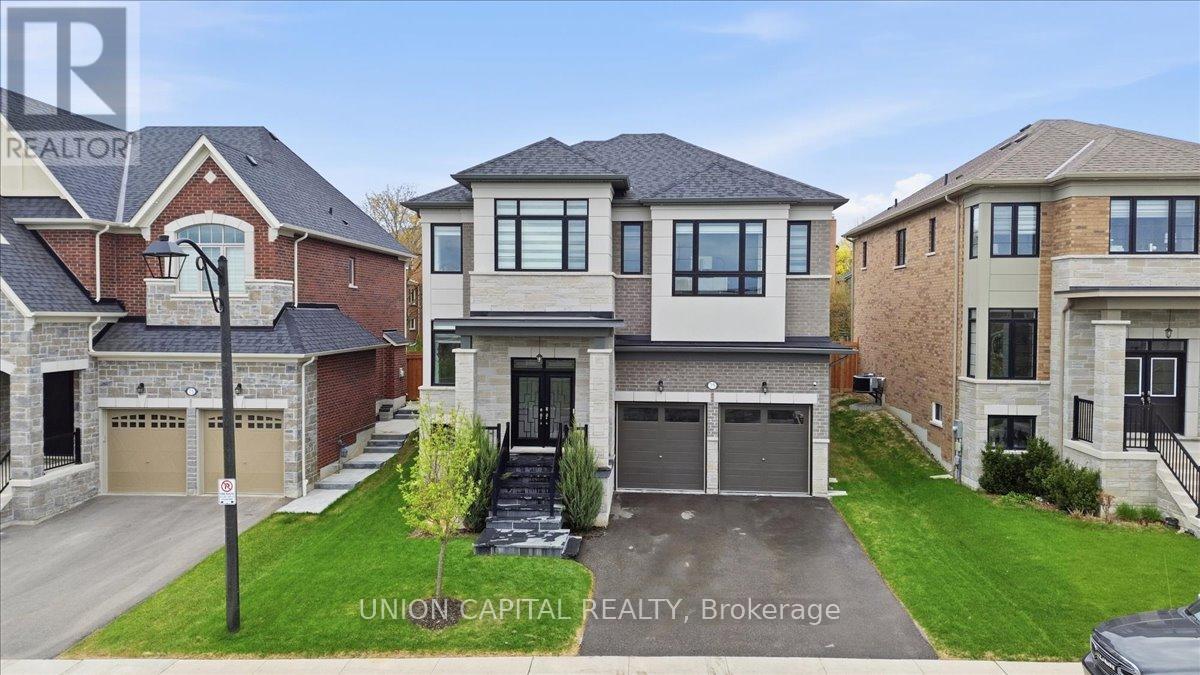
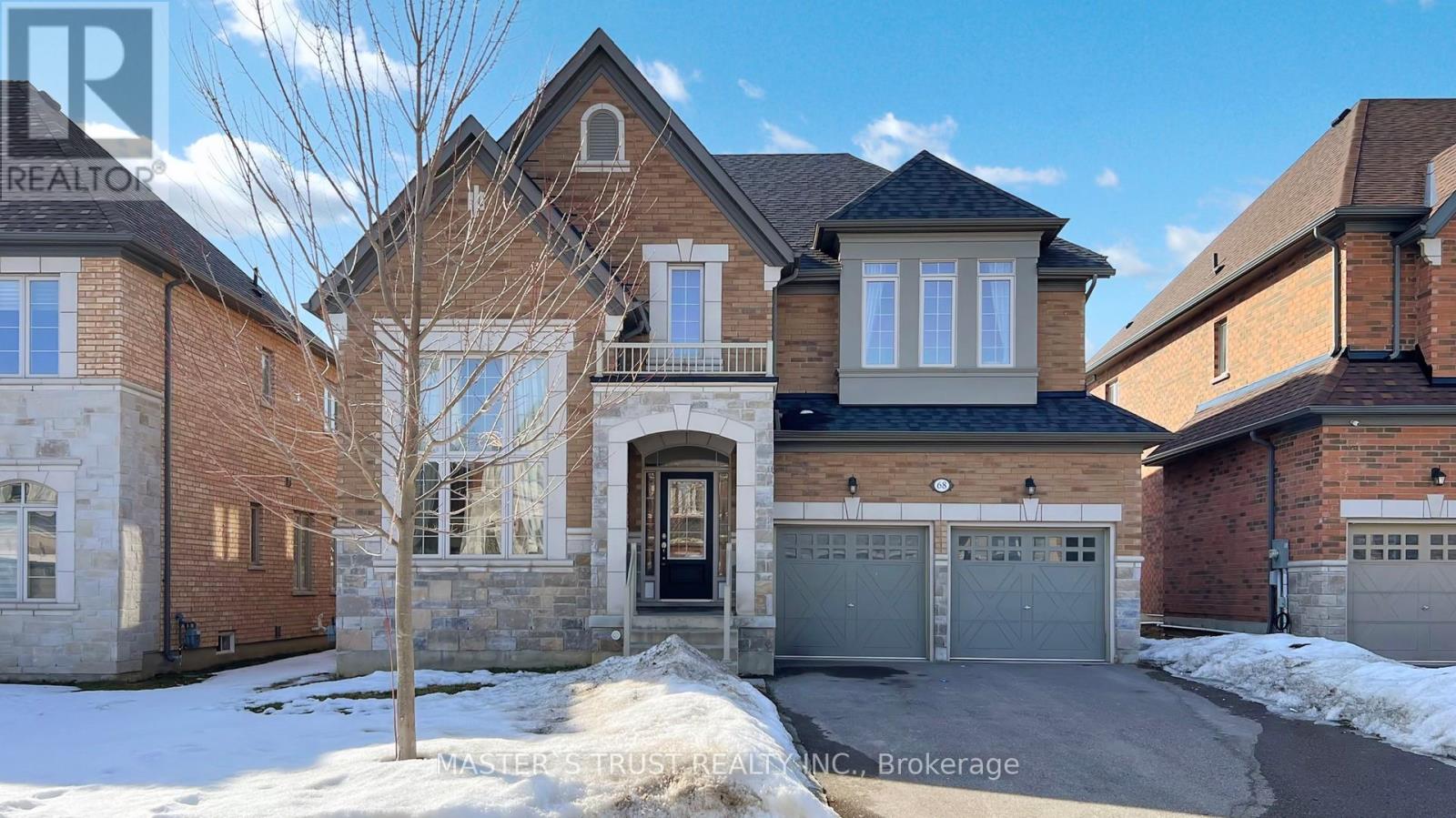
Glenway Estates housing is predominantly detached two-storey homes from the late 1990s through 2010s, with floor plans in the 2,500 to 4,000+ square foot range that reflect the premium positioning of the development. The construction quality is above the standard York Region suburban offering of the era: larger lots, brick exteriors on all four sides in many cases rather than brick front with vinyl or stucco sides, more architectural variation in facades, and landscaped settings that benefitted from thoughtful siting within the former golf course lands.
Lot sizes in Glenway Estates are generally larger than in comparable vintage Newmarket developments. Fifty to seventy foot frontages are common, and some of the estate-oriented properties on the larger lots within the neighbourhood approach the scale of semi-rural residential rather than standard suburban. These larger lots provide genuine outdoor space, privacy screening, and garden opportunities that are not available on the tighter lots of the more recently developed outer Newmarket areas where lot sizes have been compressed by higher land costs.
The housing stock has the well-maintained quality of a neighbourhood where homeowners have invested in ongoing upkeep. Glenway Estates buyers were typically move-up buyers with disposable income, and the maintenance standard reflects that. Kitchen and bathroom renovations have updated many homes from their original construction finishes, and the exterior landscaping throughout the neighbourhood is generally well tended.
Some of the larger properties in Glenway Estates approach the executive home category, with double-height entrance foyers, main-floor libraries or offices, and the room programming that large families and households who work from home use deliberately. For buyers at the upper end of the Newmarket price range who want to maximise size and quality within the city, Glenway Estates offers the best combination of both in the market.
Glenway Estates is among the higher-priced neighbourhoods in Newmarket, competing with Stonehaven and the premium pockets of Woodland Hill for the top tier of the Newmarket detached market. Prices reflect the larger lots, the above-average construction quality, and the planned community premium that the neighbourhood has maintained since its development. Buyers who need maximum square footage and lot size within Newmarket consistently look here alongside Stonehaven as the two primary premium options.
The market in Glenway Estates is thinner than in the higher-volume mid-market Newmarket neighbourhoods: there are fewer transactions per year because the neighbourhood is purpose-built premium and because the buyer pool for homes in this price tier is narrower than for more broadly accessible product. Days on market can be longer than in more active segments, and sellers who price at the top of the achievable range may wait for the right buyer.
Multiple offers are less common here than in the mid-market segments, though they do occur when a well-presented premium property aligns with the specific requirements of the buyer pool active at a given moment. The larger price point means that individual buyer requirements — specific floor plan, specific lot orientation, specific school boundary — filter the pool more precisely, and finding the buyer whose specific needs match the specific property takes longer on average than it does for more fungible suburban product.
The investment in a Glenway Estates home is long-term in the sense that buyers who are patient tend to do well: the combination of quality construction, larger lots, and the planned community positioning has sustained value through the cycles that have affected Newmarket prices generally. Buyers who purchased during the 2016-2017 peak and needed to sell in the 2018-2019 correction faced the same headwinds as buyers in comparable premium GTA suburbs, but those who held have generally recovered and exceeded their purchase prices.
Glenway Estates draws the upper end of the Newmarket buyer market: families who have accumulated equity through previous real estate transactions and who are making what they expect to be their long-term family home purchase. These are buyers who have thought about what they want over the years of previous ownership and are deliberately buying for space, quality, and a specific planned community environment rather than making another transitional purchase.
Dual-income professional households are the primary segment. The combination of larger home sizes, home office spaces, and the edge-of-city setting appeals to households where both adults have professional careers, where working from home for at least part of the week is the norm, and where the home needs to function as a full-service household environment rather than merely a place to sleep. The larger floor plans in Glenway accommodate this multi-use household approach better than the more compact suburban housing stock in the central and eastern parts of the city.
Families with children at the secondary school age are a consistent segment in Glenway Estates. Buyers who are past the elementary school years and focusing on secondary school quality and the final pre-university chapter of their children’s schooling often make their move to a larger, higher-quality home during this period. The neighbourhood’s schools and its proximity to Aurora private school options are part of the evaluation for this segment.
The western Newmarket and King Township rural adjacency appeals to buyers who want more open space in their daily lives than the more urbanised parts of Newmarket deliver. Properties at the northern edge of Glenway Estates with views into agricultural land provide a genuine sense of open space that buyers from more densely developed areas specifically seek. This is not rural living, but it is the urban-rural interface that some buyers prefer over the more enclosed suburban environments of the central residential areas.
Within Glenway Estates, the premium properties are generally on the streets with the largest lots, the best views toward the rural edge, and the longest established mature planting. The northern streets closest to the urban boundary, where some properties back onto or look toward open land, command the highest premiums within the neighbourhood. These streets deliver the most distinct character within Glenway and are the addresses that move most decisively when they come to market.
The streets closer to Bathurst and the neighbourhood’s eastern and southern edges are more conventionally suburban in their setting, with less of the edge-of-city openness that distinguishes the premium northern blocks. These areas are fully part of Glenway Estates in terms of construction quality and lot size, but the setting is more enclosed and the adjacency to surrounding suburban development is more immediately felt.
The internal park and open space within Glenway Estates is part of the planned community design, with green corridors, stormwater management ponds, and trail connections through the neighbourhood that were designed into the original community plan. These internal green spaces are maintained through the neighbourhood’s common area management and provide the walking and cycling connectivity that allows residents to move through the neighbourhood without using the streets. The stormwater ponds double as recreational green space and wildlife habitat, which is a characteristic benefit of post-1990s York Region planned developments that incorporated environmental management into the site design.
School assignment within Glenway Estates may span multiple elementary catchments depending on the specific address, as the neighbourhood is large enough that its edges fall under different school boundary configurations. Buyers with specific school preferences should verify the catchment for their target address before purchasing rather than assuming a single school serves the entire neighbourhood.
Glenway Estates is one of the more car-dependent Newmarket neighbourhoods, sitting in the western part of the city away from the Yonge Street Viva corridor and at a distance from Newmarket GO Station that makes transit commuting a drive-to-station operation rather than a walk-to-station one. Residents drive to the station (roughly 4 to 7 kilometres depending on the specific location within the neighbourhood), take the Barrie GO line to Union Station in approximately 55 to 60 minutes, and drive home. This is a workable commute for buyers who have chosen it deliberately, but it is less convenient than the transit access available from Bristol-London or central Newmarket.
Highway 400 is accessible via Davis Drive or via Bathurst Street, and provides southbound access to the 400 highway network and Toronto. The commute by car to downtown Toronto from Glenway Estates typically takes 55 to 70 minutes in normal conditions, with peak-hour congestion on the 400 adding significantly during the busiest periods. For commuters whose destinations are in the Vaughan employment corridor or in Brampton via Highway 400/427, the western Newmarket location is actually more convenient than the east Newmarket and Highway 404 oriented areas.
The Yonge Street Viva rapid transit, Newmarket’s most useful transit asset, requires a 15 to 20 minute drive from Glenway Estates, which effectively makes it less useful for Glenway residents than for those closer to the corridor. The Viva is not a meaningful transit option for most Glenway Estates households, whose transit experience is limited to the drive-and-park GO commute when they use transit at all.
Two-vehicle households are the standard here. The neighbourhood’s services are accessible by car in reasonable times — Newmarket’s commercial concentration on Yonge Street is 10 to 15 minutes by car — but the walking and cycling access to daily services is limited, and any single-vehicle household will find the western Newmarket location challenging for daily logistics.
The outdoor assets of Glenway Estates draw from both the internal neighbourhood design and the adjacency to the natural areas at the edge of the urban boundary. The internal green corridors, stormwater ponds, and trail connections within the neighbourhood provide the daily walking and cycling infrastructure that residents use routinely. These are maintained to a standard consistent with the neighbourhood’s premium positioning, and the internal pond and green space network provides the kind of naturalistic setting that was designed specifically to distinguish Glenway from the earlier planned suburbs that didn’t incorporate environmental management into their design.
The rural edge at the north of the neighbourhood, where some properties back onto or overlook agricultural land, provides views and a sense of open landscape that is genuinely valued by residents on those streets. The visual access to working farmland, while not providing trail access onto private agricultural land, delivers the spatial openness that buyers who grew up in or near rural areas associate with quality of life in a way that internal suburban green space can’t replicate.
Conservation lands and trail systems managed by the Lake Simcoe Region Conservation Authority are accessible within 15 to 20 minutes of Glenway Estates, providing the larger-scale natural areas, forest hiking, and ecological diversity that the urban neighbourhood cannot provide on its own. The Holland River watershed system to the north and the moraine conservation lands in King Township to the west are the primary natural area resources accessible in a short drive.
Golf continues to be available in the broader area through the courses that remain operational in King Township and the surrounding region, which is of specific interest to residents who were drawn to the neighbourhood’s connection to the former golf course history. The Glenway Golf Club that preceded the residential development has been replaced by housing, but the golf culture of the region persists in the courses still operating nearby.
Glenway Estates residents drive to the Yonge Street commercial corridor for most of their retail and service needs. The 10 to 15 minute drive to the Upper Canada Mall area and the Yonge Street grocery, pharmacy, and restaurant concentration provides the full range of suburban commercial services accessible in a reasonable time. There is no walkable commercial in the immediate neighbourhood, and the commercial areas on Bathurst Street are limited in scope.
The Newmarket Costco and the power centre retail in the Green Lane and Davis Drive corridors are accessible in under 20 minutes from Glenway Estates, which is the practical shopping destination for most households in the neighbourhood. Big-box retail, grocery anchors, and the national chains that form the backbone of suburban household supply are all reachable without a long drive.
Southlake Regional Health Centre is approximately 5 to 8 kilometres from Glenway Estates, accessible in under 15 minutes by car. This is a longer drive than from the more centrally located Newmarket neighbourhoods but still a practical distance for emergency or regular medical access. The specialist medical cluster around Southlake is accessible in the same timeframe, providing the full range of York Region’s medical service infrastructure.
The private member clubs and recreational facilities that serve the premium residential market in the broader area, including tennis clubs, equestrian operations in King Township, and private health and fitness facilities, are accessible from Glenway Estates within 20 to 30 minutes and are part of the lifestyle infrastructure for households at the upper end of the neighbourhood’s buyer profile. This is not a consideration for every buyer, but for the segment that uses private club membership as part of their recreational life, the accessibility of these options from Glenway is worth noting.
Glenway Estates falls within the York Region District School Board for public schools and the York Catholic District School Board for Catholic education. The neighbourhood’s size means that elementary school assignments may vary by address, with some streets assigned to schools closer to the neighbourhood’s edge and others to schools deeper in the system depending on the YRDSB boundary configuration.
Secondary school assignment for most Glenway Estates students in the public system is to Newmarket’s secondary schools, with the specific school depending on the address. The neighbourhood’s western location and its proximity to the King Township boundary means that some boundary questions may arise for students whose homes are at the outer edges of the Newmarket urban area, but the York Region school board manages these catchments and can confirm specific assignments for any address.
The private school options in King Township are particularly accessible from Glenway Estates given the neighbourhood’s western Newmarket location. St. Andrew’s College and Country Day School, both in the King Township area, are approximately 20 minutes by car. For households who are planning private secondary education, the Glenway Estates location is one of the better Newmarket positions for access to the private school options that King Township’s educational landscape offers.
The neighbourhood’s demographic of established professional households has created a school community engagement culture that tends to produce well-funded parent councils, active school volunteers, and supplementary programming beyond the base YRDSB curriculum. This community engagement is a characteristic of the Glenway Estates school experience that buyers with school-age children can investigate before purchase by talking to parents in the neighbourhood or attending school events.
Glenway Estates is a completed neighbourhood: the residential development that the former golf course lands supported is substantially complete, and there is no significant new residential development planned within the neighbourhood boundaries. The changes that affect the Glenway Estates context are external — the continued growth of East Gwillimbury to the north, the development of the King Township rural lands (constrained by the Oak Ridges Moraine Conservation Plan), and the ongoing commercial development along the Bathurst and Davis Drive corridors.
The Bathurst Street corridor south of Davis Drive has seen commercial development that incrementally improves the service accessibility from the western Newmarket neighbourhoods. While the Yonge Street corridor remains the primary commercial destination, the growth of commercial options on Bathurst reduces the distance residents need to drive for some routine needs. This is an incremental benefit rather than a transformative one, but it reflects the direction of commercial development in western Newmarket.
Highway 400 capacity investments and the ongoing improvement of the 400 corridor through York Region affect Glenway Estates commuters directly. The HOV lane additions and the interchange improvements that have been made between Newmarket and Highway 401 over recent years have improved the reliability of the Highway 400 commute, and further investment in the corridor is anticipated as the provincial and regional population continues to grow and the 400 carries increasing commuter volumes.
The neighbourhood’s premium housing stock is well maintained and has generally appreciated in line with the broader Newmarket market while maintaining a consistent premium over mid-market product. Buyers who are purchasing for the long term are buying into one of Newmarket’s most stable and well-regarded residential areas, which provides a degree of market security that newer and less established neighbourhoods don’t have the track record to demonstrate.
Is Glenway Estates worth the premium over other Newmarket neighbourhoods?
The premium reflects three things: larger lots, above-average construction quality, and the planned community setting that was designed specifically for the upper end of the Newmarket market. Whether that premium is worth it depends entirely on what a buyer values. For households who specifically want larger lots, bigger homes, and the edge-of-city openness that the western Newmarket location delivers, Glenway Estates is hard to match within the city. For buyers who weight transit access, walkability, or commercial proximity more heavily, the central and southeast Newmarket neighbourhoods deliver better value for their priorities. The premium is not arbitrary; it reflects genuine differences in what the neighbourhood offers.
What is the transit commute from Glenway Estates to downtown Toronto?
The practical transit commute from Glenway Estates is a drive to Newmarket GO Station (10 to 15 minutes) followed by the Barrie line train to Union Station (approximately 55 minutes). Total door-to-door time to downtown Toronto destinations is typically 80 to 100 minutes including driving and parking at the station. For commuters with flexible schedules or those who commute a few days per week, this is manageable. For daily peak-period commuters, it is a meaningful time commitment that should be honestly evaluated against the benefits of the neighbourhood before purchasing.
Are there issues with the stormwater ponds in the neighbourhood?
The stormwater management ponds in Glenway Estates are designed infrastructure, not natural water bodies, and they are maintained by the City of Newmarket’s infrastructure management. They provide functional stormwater management and green space amenity. Properties immediately adjacent to the ponds have attractive views and green space adjacency, which typically supports property values. The ponds are generally not a flooding concern for adjacent properties, though buyers on the lowest-lying lots adjacent to ponds should confirm grading and drainage with their inspector as a standard due diligence step.
How does Glenway Estates compare to Stonehaven-Wyndham?
Both are premium Newmarket neighbourhoods with larger homes and planned community settings. Glenway Estates is in the west of the city with Highway 400 access and the rural edge character; Stonehaven is in the north end with its own planned community identity. The specific comparison depends on lot orientation, home type, and commute preference. Both neighbourhoods attract similar buyer demographics, and buyers at the premium end of the Newmarket market typically compare both before deciding.
Glenway Estates transactions benefit from agents who understand the premium Newmarket market and the specific characteristics of the neighbourhood. The comparable data set is thinner than in higher-volume mid-market segments, and appraisals on larger Glenway properties sometimes require comparable support from slightly broader geography. An agent who knows how to build a strong comparable analysis in a thin-transaction market, and who understands what specific Glenway Estates attributes drive premiums, will serve buyers and sellers better than one who relies on automated valuation tools that don’t capture the micro-location variation within a neighbourhood of this type.
The home inspection on 2000s construction in Glenway Estates is generally less fraught than on the older central Newmarket housing stock, but it is not routine. Homes of this vintage are reaching the age where HVAC systems, roofs, and appliances are due for replacement, and the larger homes in Glenway have more of these systems to maintain. A complete inspection that identifies what is approaching end of life and budgets accordingly is essential, particularly at the price points involved in this neighbourhood where unexpected capital expenditure is a more significant financial event.
Buyers who are selling a home elsewhere to buy in Glenway Estates should coordinate the timing carefully. The Newmarket premium market moves more slowly than the mid-market, and assuming that a Glenway purchase will happen on a compressed timeline is a planning risk. Having flexibility in the selling timeline, or having bridge financing available, reduces the stress of a purchase that may take longer than anticipated to execute at the right price.
The buyers who are most satisfied with Glenway Estates are those who have lived in the neighbourhood for an extended period and experienced the full cycle of seasons, school years, and daily life that the setting delivers. The initial purchase decision, made correctly with full information about the commute, the services, and the premium positioning, tends to hold up well as buyers settle into the neighbourhood and discover that the planned community investment has delivered the quality of life they purchased it for.
Street-level knowledge is hard to find online. Our team works in Glenway Estates every day. They know which pockets hold value, where the school catchment lines actually fall, and what the market is doing right now. Talk to us before you make a decision about Glenway Estates.
Talk to a local agent For Rent
 For Sale
 For Rent
 For Sale