

The Danforth runs east from Broadview Avenue along the Bloor-Danforth subway line, with six stations between Broadview and Woodbine giving it the best transit-to-value ratio of any freehold neighbourhood in the east end. The core of Greektown, from Broadview to Jones Avenue, is where the brick semis from the 1910s and 1920s sit closest to the subway and where prices reflect it: semis trade between $900,000 and $1.3 million, detached homes from $1.2 to $1.7 million. The Greek cultural presence, visible in the restaurants along the strip, the annual Taste of the Danforth festival, and the churches on the side streets, gives the neighbourhood an identity that newer east-end areas don't have.
The Danforth follows Danforth Avenue east from Broadview Avenue to Woodbine Avenue, with the Bloor-Danforth subway line running directly beneath it the entire length. Six stations serve the neighbourhood: Broadview, Chester, Pape, Donlands, Greenwood, and Woodbine. Most addresses in the neighbourhood are within a five-minute walk of at least one station. From any of them, downtown Toronto is fifteen minutes away. That figure is not an estimate or an approximation. It’s what the ride actually takes.
This is the neighbourhood’s defining asset, and it’s the thing that separates the Danforth from every other freehold neighbourhood in the east end. Leslieville has the Queen streetcar. East York has the bus. The Beaches have limited access east of Woodbine. The Danforth has six rapid transit stops directly beneath its main street, and the housing stock that surrounds them is brick semis from the 1910s and 1920s at prices that have not yet caught up to what that access is actually worth.
The Greek community has shaped this neighbourhood since the 1960s and 1970s, when families settled along the Danforth and built the institutions that still define it: the Orthodox churches on the side streets, the restaurant row around Pape and Danforth, the cultural associations, and the annual Taste of the Danforth festival, which began in 1994 and now draws over a million visitors each August. The residential population has diversified considerably over the past two decades. The cultural markers remain, and they give the neighbourhood an identity and a visual character that’s harder to find in newer east-end areas.
Comparing the Danforth to the Beaches clarifies what each neighbourhood actually offers. The Beaches has lake access, a boardwalk, and a strongly local commercial strip on Queen Street East. It’s also less well connected to transit east of Woodbine, and prices reflect the premium buyers pay for the lake. The Danforth has stronger subway access, a more urban feel, and a value proposition built on transit rather than waterfront. They attract different buyers, and buyers should be honest with themselves about which version of east Toronto they actually want.
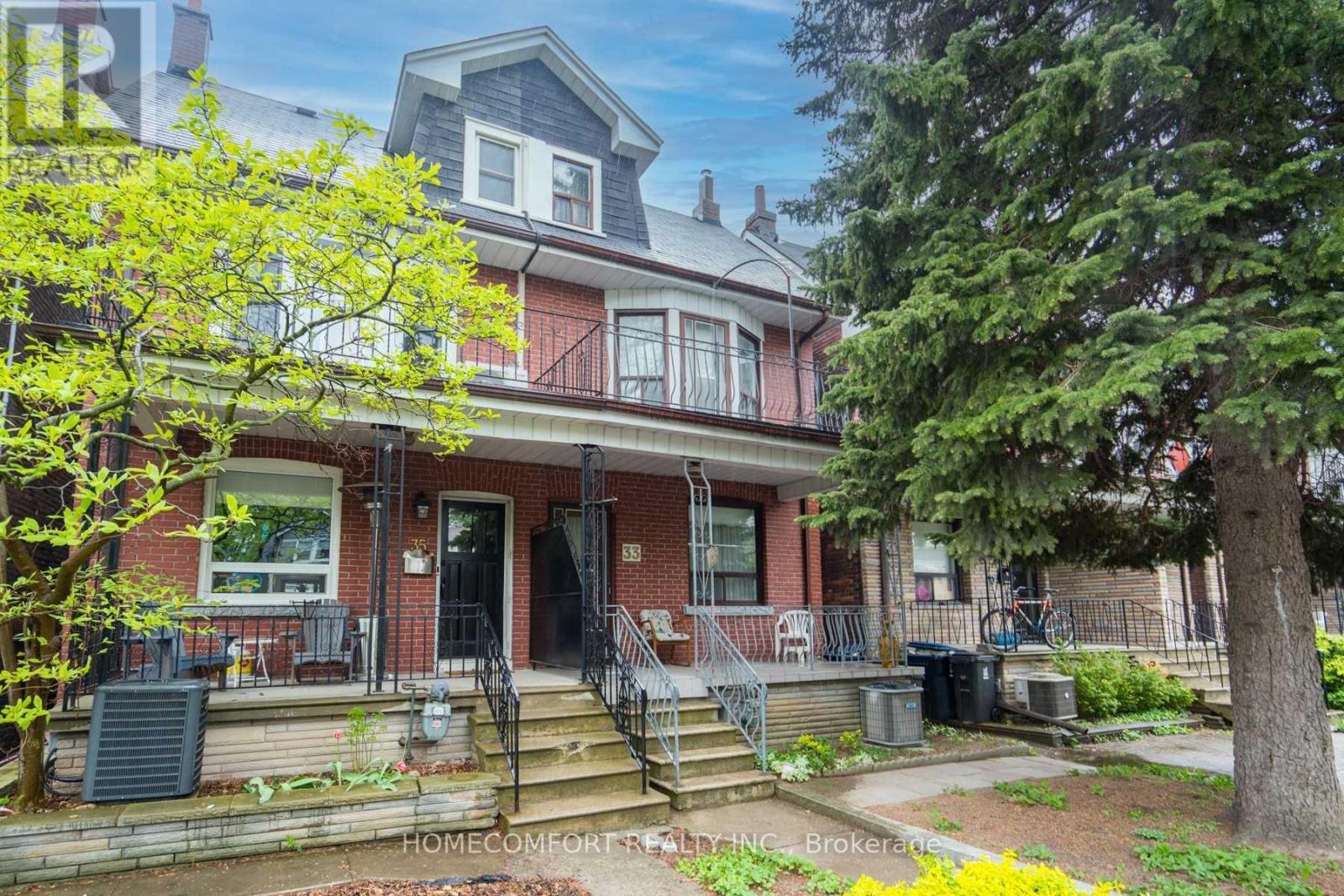
The dominant purchase on the Danforth is the 1910s or 1920s brick semi-detached: two and a half storeys, three bedrooms, a proper backyard, and lane access behind. The construction quality from this era is solid, and the streetscapes on the residential side streets have remained remarkably consistent because the lot widths and setbacks discourage the kind of infill that fragments housing stock in other parts of the city. A well-presented semi in the Broadview-to-Pape corridor, in good condition with a functioning kitchen and updated bathrooms, trades between $900,000 and $1.3 million in 2026. Detached homes in the same area start around $1.2 million and reach $1.7 million for larger renovated properties on decent lots.
The geography within the neighbourhood matters more than most listings acknowledge. West of Pape, from Broadview to Pape station, is the core of Greektown proper. Properties here sit closest to the Broadview Hotel, the densest stretch of the restaurant strip, and the Chester and Pape subway stations. This pocket is consistently more expensive and more competitive than the stretch east of Pape. Buyers who find the Broadview-to-Pape corridor out of reach often move east of Pape toward Woodbine and find similar housing stock at better prices, with Donlands, Greenwood, and Woodbine stations still easily walkable.
The condo market in Greektown is limited. There are some purpose-built apartment buildings and a small number of newer condo projects, but this is predominantly a freehold neighbourhood. East of Woodbine, into the stretch known as Danforth Village, the character shifts and a more mixed building type appears, with condos more common. Buyers looking for a condo on the Danforth will find more options east of Woodbine than within the Greektown core.
Streets worth walking before committing: Logan Avenue, Sparkhall Avenue, and Langley Avenue, all running north-south between Broadview and Pape, are the most sought-after residential pockets. They’re quiet despite being five minutes from the subway, the semis are consistent in type and condition, and the blocks feel residential rather than transitional. Strathmore Boulevard and Milverton Boulevard, east of Pape, offer similar housing stock at a discount to the core Greektown streets.
The Danforth market is more consistent than comparable east-end alternatives because the subway access creates a buyer pool that doesn’t move away from the neighbourhood when broader market conditions soften. Buyers who have decided the Bloor-Danforth line is how they get to work aren’t substituting Leslieville or East York for the Danforth: those neighbourhoods don’t offer the same connection. That stickiness keeps demand relatively steady across market cycles and supports the price floor in the Broadview-to-Pape corridor even when the broader 416 slows.
Spring competition is real in the best pockets. Well-priced semis on Logan, Sparkhall, and Langley attract multiple offers in March, April, and May, with informal offer deadlines appearing even in markets where formal hold-backs have become less common. The west-of-Pape corridor is where competition concentrates. East of Pape, buyers typically have more time and more room to negotiate, which makes that stretch genuinely more accessible than the price gap alone suggests.
The Taste of the Danforth, running for two to three days each August, has an observable effect on the late-summer market. The festival brings the neighbourhood and its name to the attention of a million visitors, many of whom are encountering the Danforth for the first time as a residential address rather than just a dining destination. August listings in the Greektown core tend to receive more attention than equivalent listings in quieter August markets elsewhere in the east end. Whether this translates into material price differences is less clear, but it brings buyers through open houses during a period when buyer activity is otherwise soft.
The buyer who chooses the Danforth has usually run the comparison against Leslieville, Riverdale, and East York, and the transit question has come up in every one of those conversations. The Danforth is the answer for buyers who want to live in a freehold house with a backyard and genuinely not need a car to commute. That combination is available in the west end at Christie or Ossington. It’s rare in the east end outside the Danforth corridor, and buyers who make transit the non-negotiable tend to arrive here.
The comparison to Riverdale is worth making explicitly. Riverdale, centred around Broadview station and extending north into Playter Estates, is contiguous with the Danforth and shares the subway access of the western end. Riverdale prices run higher: renovated semis in Playter Estates start above $1.4 million, and detached properties on the better streets push well past $2 million. Buyers who find Riverdale out of reach often step east onto the Danforth and find housing stock of comparable era and type at 15 to 25 percent less. The transit connection is the same. The neighbourhood character is different but the commute is not.
The comparison to Leslieville usually resolves on the transit question. Leslieville has strong neighbourhood character, good independent retail, and a creative-industry energy that has been consistent for fifteen years. It doesn’t have the subway. Buyers who commute to the financial district or to hospitals along University Avenue make that calculation quickly. Buyers who work from home or drive find the price differential between Leslieville and the Danforth more relevant than the transit comparison. The Danforth also suits buyers who are specifically willing to be in a freehold house in a walkable neighbourhood and who will not own a car. That lifestyle is genuinely practical here in a way it isn’t in most east-end freehold areas.
The divide between west of Pape and east of Pape matters more than most buyers realise going in. The stretch from Broadview to Pape is core Greektown: the restaurant density is highest here, the Broadview Hotel is at the western end, and the Chester and Pape stations make transit access nearly frictionless. Properties in this pocket attract more competition, price at a premium, and sell faster. East of Pape toward Woodbine, the character is more relaxed, the competition is less intense, and the value is noticeably better per square foot. Buyers who find the Broadview-to-Pape pocket out of reach should investigate the Pape-to-Woodbine stretch seriously before writing off the neighbourhood.
Buyers considering street-facing properties on Danforth Avenue between Broadview and Pape should understand the Taste of the Danforth before committing. The festival runs for two to three days each August, brings over a million visitors to the corridor, closes the avenue to traffic, and generates significant noise well into the evenings. One or two streets north or south of the avenue, the effect is minor. Properties with direct frontage on Danforth Avenue will experience that weekend as a genuine disruption rather than a distant event. It’s a small number of days per year, but it’s real, and it’s worth knowing before making an offer on an Danforth Avenue address.
Walk the residential side streets before committing to a specific block. Logan Avenue, Sparkhall Avenue, and Langley Avenue, between Broadview and Pape, are the strongest pockets in the neighbourhood: genuinely quiet streets with consistent housing stock, five minutes from the subway. The contrast with the busier blocks directly on or adjacent to the Danforth strip is pronounced and worth experiencing in person. Chester station is worth noting specifically: it’s the quietest and most residential-feeling station on this stretch of the line, surrounded by streets that feel like a proper neighbourhood rather than a transit node. Properties near Chester consistently attract buyers who want the transit but don’t want the commercial density of the Pape corridor.
The transit argument is the first thing a listing for a Danforth property should establish and the last thing it should leave out. Buyers who are specifically looking for subway access in the east end will test the walk to the nearest station themselves, and they’ll do it before making an offer. A listing that buries the transit connection or treats it as one feature among several is missing the reason this neighbourhood commands a premium over Leslieville, East York, and the upper Beaches. Subway access is the headline. Present it as one.
Presentation standards matter because the buyer pool is experienced. Most buyers shortlisting the Danforth have also toured Leslieville, Riverdale, and the Beaches, and they understand the housing stock. A brick semi that hasn’t been maintained, that shows its age in the wrong places, or that has been renovated in ways that fight the original character of the house will underperform against a comparable property that’s been shown with care. The 1910s and 1920s brick on these streets has good bones and responds well to careful preparation. Original hardwood refinished and shown. Original window trim preserved where possible. A kitchen and bathroom that function well without trying to look like a new build in an old house.
Spring timing is the strongest window. March, April, and early May bring the most concentrated buyer pool and the most competitive conditions. Sellers with flexibility on timing who can target a spring listing consistently outperform those who list in July or November. The Taste of the Danforth in August creates a secondary window of attention for Greektown addresses that is worth being aware of, but spring remains the primary opportunity for the strongest outcome.
The restaurant strip along Danforth Avenue between Broadview and Pape is where the Greek cultural presence is most visible. Mezes, Ouzeri, and Pan on the Danforth are among the established names. The concentration of Greek restaurants around the Pape and Danforth intersection is what has driven the Greektown identity for decades, and despite the demographic evolution of the neighbourhood, the restaurant culture has remained consistent in a way that other ethnic commercial strips in Toronto haven’t always managed.
Allen’s, the pub and restaurant on the Danforth near Chester station, has been running for over thirty years and functions as the neighbourhood’s long-established institution for a different clientele than the Greek restaurant row. It’s the kind of place that appears in real estate conversations because it signals a certain kind of neighbourhood continuity. Soma Chocolate, at the Chester end of the strip, is worth mentioning by name because it’s genuinely excellent and because it draws visitors to a part of the Danforth that most outsiders associate exclusively with the Greek restaurants further east.
The Taste of the Danforth runs each August over two to three days. It began in 1994 as a small street festival and grew into one of the largest street festivals in North America, now drawing over a million visitors across the weekend. The festival genuinely transforms the strip: the avenue closes to traffic, restaurants extend onto the street, vendors set up along the corridor, and the neighbourhood becomes a destination for the rest of the city for those few days. For residents, it’s a fixture of the calendar rather than a discovery. The neighbourhood also runs a weekly farmers market during the summer months, which draws a more local crowd and functions as the everyday version of what the festival does at scale.
The Bloor-Danforth subway is the primary transit asset and the thing that separates this neighbourhood from the rest of the east end. Broadview, Chester, Pape, Donlands, Greenwood, and Woodbine stations all sit on or immediately adjacent to the Danforth corridor. Most properties in the neighbourhood are within a five-minute walk of at least one station. From Pape or Chester, downtown Toronto is fifteen minutes. From Broadview, you’re at Yonge Street in under ten. The frequency and reliability of the subway makes this a genuinely different transit experience from the streetcar connections that serve Leslieville, the Beaches, and most of Riverdale south of the Danforth.
The 504 King streetcar is accessible at the southern edges of the neighbourhood, on King Street East, for residents who need a connection south of the subway line. Cycling is practical and well-used: Danforth Avenue carries a cycling route along the strip, and Broadview Avenue connects south to the Don Valley Trail system, giving cyclists a direct off-road route toward the waterfront and the downtown core. A fit cyclist can be at King and Bay in under thirty minutes from most Danforth addresses, and the route is largely protected.
Driving is easier here than in the west end. Lots along the Danforth tend to be slightly wider than the Victorian semis of the west end, more properties have lane parking, and street parking availability on the residential side streets is better than in Leslieville or the Trinity Bellwoods area. The Don Valley Parkway is accessible at Broadview, giving a direct connection to the 401 north and the Gardiner east. Households that need to keep a car will find the logistics more manageable here than in most comparable inner-city neighbourhoods.
Riverdale is the comparison most Danforth buyers have already run. Riverdale is contiguous with the western Danforth and shares the subway access of Broadview station. The difference is price: renovated semis in Playter Estates start above $1.4 million, and detached properties on the better Riverdale streets push well past $2 million. The housing stock is similar in era and type. The character is slightly more established and slightly more family-oriented. Buyers who find Riverdale out of reach often step east onto the Danforth and find the transit connection is the same and the prices are 15 to 25 percent lower. That gap has been persistent rather than cyclical.
East York and Danforth Village, east of Woodbine, extend the Danforth corridor at a further discount. Woodbine station is the boundary in most buyers minds: east of Woodbine, the neighbourhood character shifts, the restaurant density thins, and the housing stock is a mix of semis and smaller detached homes with larger lot widths. Buyers who cannot absorb the Greektown price often land in Danforth Village and find the daily life difference is smaller than the price gap suggests. The subway still runs. The commercial strip is thinner but functional. The trade-off is the loss of the core Greektown character and the proximity to Allen’s, Soma, and the restaurant row.
The Beaches is not a direct substitute for the Danforth, but many buyers shortlist both before deciding. The Beaches has lake access, a boardwalk, and a strongly local commercial strip on Queen Street East. It has less transit. East of Woodbine station, the Beaches is served by the 501 Queen streetcar, which is a functional connection but a slower one than the subway. Buyers who can choose between the Beaches and the Danforth are usually choosing between the lake and the subway. Most of them know which one matters more to their daily life before they ask the question.
The public elementary school catchment for most of the core Greektown streets flows to Earl Grey Senior Public School and to several JK-to-Grade 6 feeder schools including Frankland Community School near Pape station. Earl Grey has a reasonable academic reputation by Toronto standards and draws from a community that has historically prioritised school involvement. Greek Heritage Language School operates on Saturdays for families who want to maintain Greek language alongside the regular curriculum, reflecting the neighbourhood’s cultural continuity.
Secondary school catchment for most Greektown addresses is Riverdale Collegiate Institute on Gerrard Street East, which has a mixed academic profile and a strong arts community. Families with specific academic priorities often investigate Monarch Park Collegiate, which has an International Baccalaureate program, or apply to program schools across the board. The TDSB boundary tool is the authoritative source for catchment by address: a two-block difference on some Danforth side streets can shift the catchment entirely. Verify current boundaries before relying on any specific address in your decision.
The Catholic system has St. Joseph Catholic School serving the area, which has a strong parent community. Families who are not Catholic but have Catholic-system access through other criteria sometimes investigate the Catholic option independently of the public catchment. Verify eligibility directly with the Toronto Catholic District School Board before factoring this into a purchase decision.
Is the Danforth a good investment compared to other east-end neighbourhoods? The Danforth has held its value more consistently than comparable east-end neighbourhoods because the subway access acts as a price floor. Buyers who prioritise transit aren’t substituting Leslieville or East York for the Danforth when the market softens, because those areas don’t offer the same connection. Six Bloor-Danforth stations between Broadview and Woodbine mean that virtually every address in the neighbourhood is within a five-minute walk of rapid transit, which is genuinely rare in Toronto freehold. The west-of-Pape pocket has consistently attracted the strongest demand and the most competitive spring markets. Prices in that corridor have outperformed the broader east end over most ten-year periods. The east-of-Pape stretch into Danforth Village trades at a discount and has more room for appreciation if the pattern of gentrification moving east continues.
What is the Taste of the Danforth and how does it affect living in the neighbourhood? The Taste of the Danforth is an annual street festival held each August, typically over three days, that draws over a million visitors to the Danforth Avenue corridor. It’s one of the largest street festivals in North America and genuinely transforms the neighbourhood for that weekend: the avenue closes to traffic, restaurants and vendors set up along the strip, and the side streets fill with foot traffic from early afternoon into the evening. For most residents, it’s an event they plan around rather than attend. Properties with frontage directly on Danforth Avenue between Broadview and Pape experience significant noise and pedestrian traffic for those three days. Residents on the quieter side streets one or two blocks north or south are largely unaffected. Buyers considering street-facing properties in the festival corridor should understand this is a specific condition of that location, concentrated into a single August weekend.
How does living on the Danforth compare to Leslieville? Leslieville and the Danforth attract different buyers because they solve different problems. Leslieville has a strong identity, good independent retail on Queen Street East, and a creative-industry character that’s been consistent for fifteen years. It doesn’t have subway access. The 501 Queen streetcar serves Leslieville, and it’s a serviceable connection but not a rapid one. The Danforth trades at a premium to Leslieville in equivalent properties, and that premium is almost entirely explained by the subway. Buyers who commute to downtown Toronto by transit will reach their desk in fifteen minutes from the Danforth and in thirty to forty minutes from Leslieville depending on the route and the day. For households where one or both partners commute daily, that difference compounds over years. Buyers who work from home or drive tend to find Leslieville’s slightly lower prices and Queen Street character more relevant to their daily life.
Which streets off the Danforth are best to buy on? The most sought-after residential streets run north-south between Broadview and Pape: Logan Avenue, Sparkhall Avenue, and Langley Avenue are the pockets buyers return to. These streets are genuinely quiet and residential, lined with consistent 1910s brick semis, and sit within five minutes’ walk of both Chester and Pape subway stations. That combination of quiet residential character with subway proximity is unusual in Toronto and is what drives the premium in this corridor. Strathmore Boulevard and Milverton Boulevard, east of Pape, offer similar housing stock with better value than the Broadview-to-Pape pocket. Glebemount Avenue, further east, is quieter still and considered good value for buyers willing to be east of the core Greektown stretch.
Danforth Avenue takes its name from Asa Danforth Jr., an American contractor who built a road east from York in 1799 as part of the early infrastructure of Upper Canada. The street was one of the first major roads into the interior from the settlement at York, and its straightness reflects the survey logic of that era rather than any natural feature of the landscape. The residential development along the Danforth happened primarily in the 1910s and 1920s, when the Toronto Civic Railways extended service east and made the corridor attractive for working and middle-class families building out of the downtown core.
The Greek community began settling in the area in the late 1950s and 1960s, as immigration from Greece increased and established communities clustered around the Danforth. By the 1970s, the stretch from Broadview to Jones Avenue had become known as Greektown, with Greek restaurants, delis, and cultural institutions replacing earlier businesses along the strip. The Taste of the Danforth festival, launched in 1994, formalised the neighbourhood’s identity as a city-wide destination and codified the cultural identity that the restaurant row had been building for two decades before it.
The demographic character of the neighbourhood has shifted over the past two decades, as it has in most inner-city Toronto areas. The resident population is more diverse than it was in the 1970s or 1980s, and the commercial strip has broadened beyond Greek restaurants. The Greek institutions remain: the Orthodox churches on the side streets, the cultural associations, the Saturday heritage-language schools. The residential streets of 1910s brick semis, built for the families of the first transit-accessible generation of Toronto suburbs, have become among the most sought-after freehold addresses in the east end.
Street-level knowledge is hard to find online. Our team works in The Danforth (Greektown) every day. They know which pockets hold value, where the school catchment lines actually fall, and what the market is doing right now. Talk to us before you make a decision about The Danforth (Greektown).
Talk to a local agent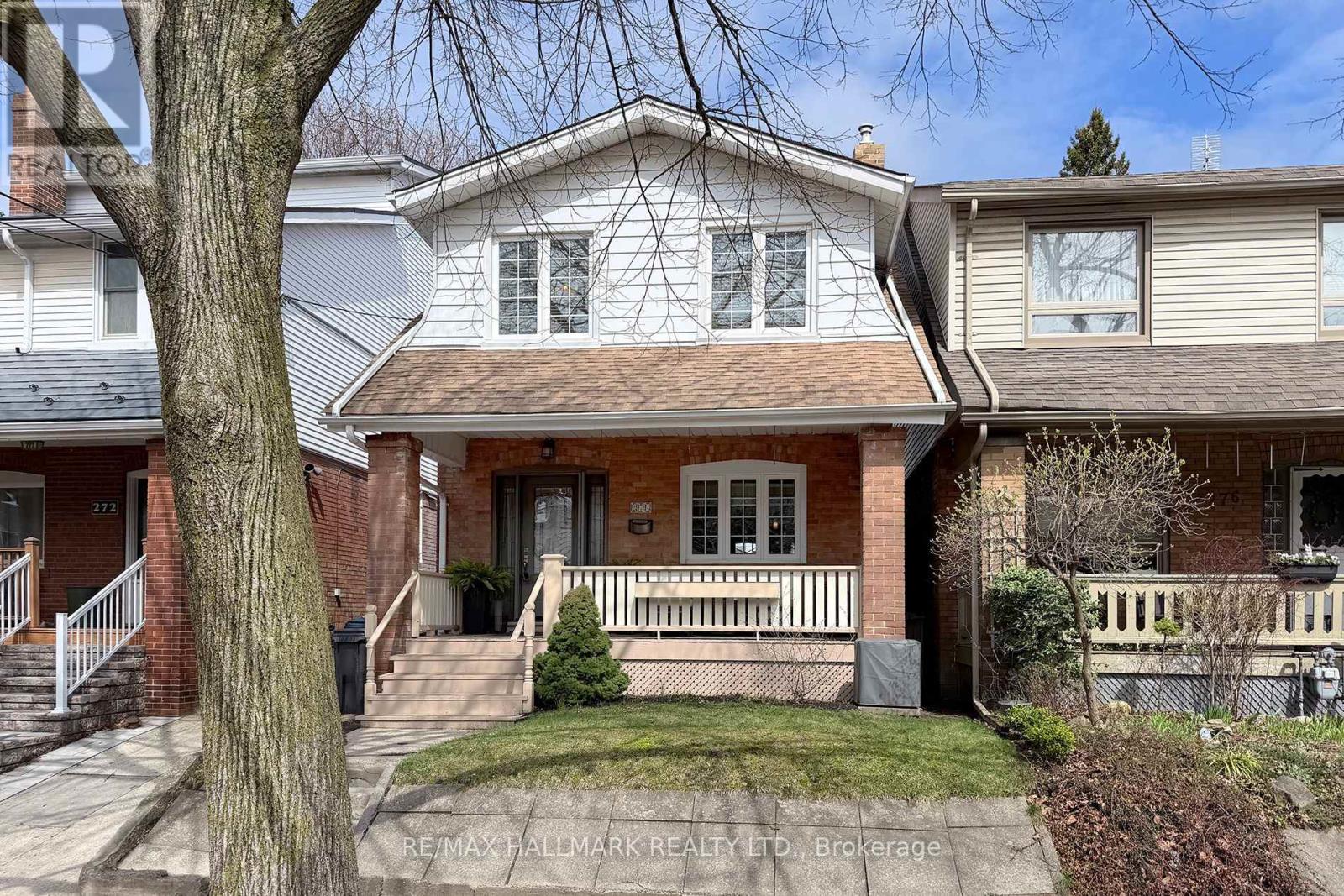 For Sale
 For Rent
 For Sale
 For Rent