
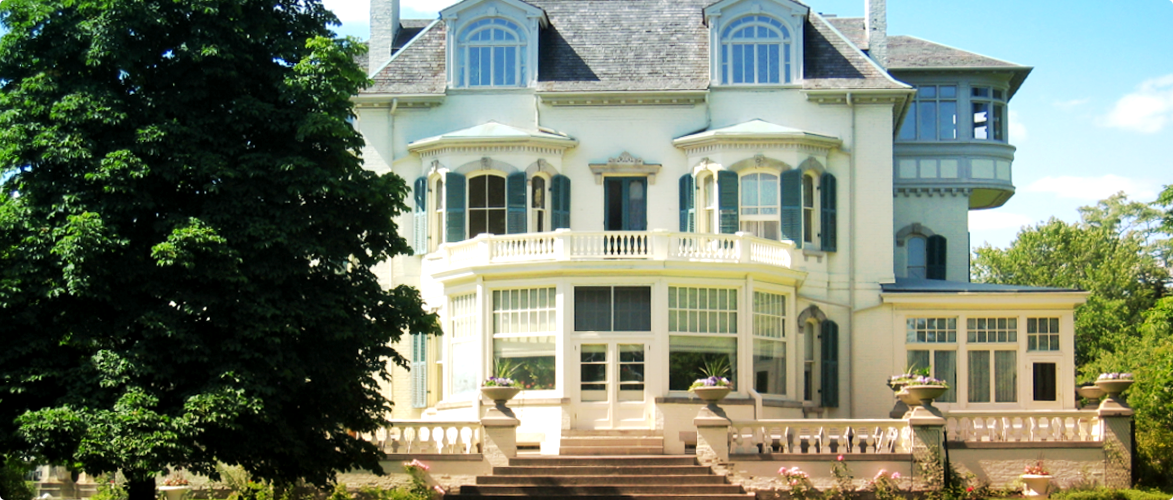
Casa Loma is the residential neighbourhood that wraps around Toronto's castle: quiet, tree-lined streets of Edwardian and Tudor detached homes between Spadina Road and Poplar Plains Road, north of Davenport Road. Detached homes here start around $2.5 million and move quickly toward $4 to 8 million for the significant properties on Wells Hill Avenue, Walmer Road, and Kendal Avenue. Fewer than 30 homes change hands in a typical year, which means the neighbourhood looks the same decade to decade and properties hold their value because supply is genuinely constrained.
Casa Loma is a small residential neighbourhood north of Davenport Road, centred on the castle that Sir Henry Pellatt built between 1911 and 1914. The castle is the defining landmark, but the neighbourhood itself is the collection of large Edwardian and Tudor homes on the streets that surround it: Wells Hill Avenue, Walmer Road, Kendal Avenue, and the northern sections of Spadina Road. These are wide, tree-canopied streets with deep lots and substantial houses, quiet in a way that feels deliberate given how close they sit to the city’s midtown core.
The neighbourhood’s boundaries are loose in the way that well-established Toronto districts often are. Davenport Road forms the southern edge. To the west, the character transitions gradually into Wychwood; to the east, it meets the upper reaches of the Annex. Forest Hill sits on the far side of the ravine system to the west and north. Within Casa Loma’s core, the density is low and the housing stock is among the most architecturally significant in the city outside of Forest Hill and Rosedale.
Spadina Road is the neighbourhood’s main corridor, running south from St. Clair Avenue down through the neighbourhood toward the Annex. The section north of Davenport Road has a particular quality: large lots set back from the street, mature tree canopy, and the occasional glimpse of the castle’s towers visible through the trees. Buyers drawn to this part of the city are usually choosing it for the combination of architectural scale, green space, and the specific quiet that comes from a neighbourhood where very few properties turn over in any given year.
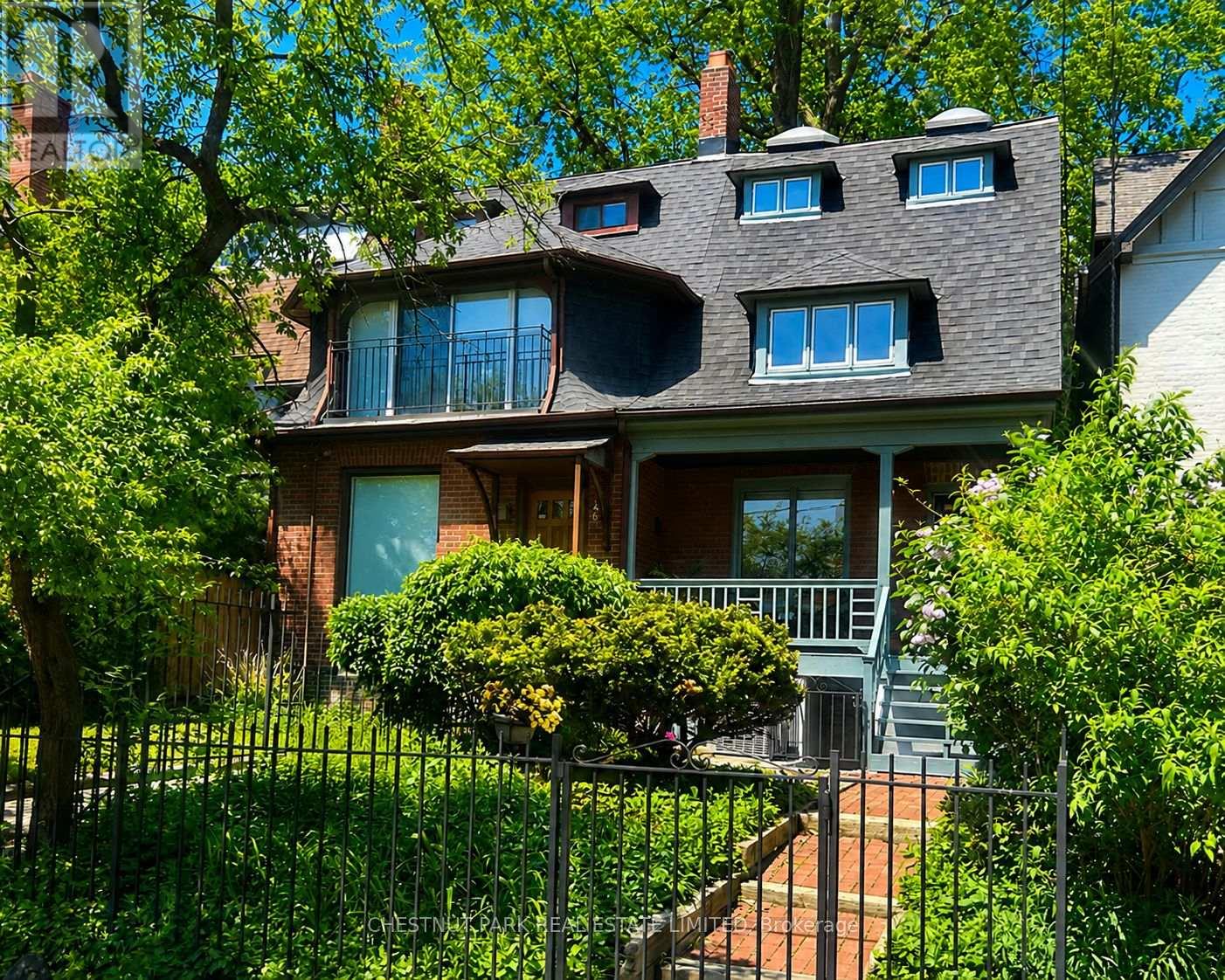
The dominant property type in Casa Loma is a large detached home built between 1910 and 1940, most often in an Edwardian or Tudor style. These are substantial houses: four to six bedrooms, multiple formal rooms on the ground floor, deep lots with rear gardens, and construction quality that was aimed at permanence. The original owners of these properties were wealthy by the standards of early twentieth-century Toronto, and the buildings reflect that. Brick exteriors, stone detailing, slate roofs on many of the unrenovated examples, and interior woodwork that is difficult to replicate today.
Prices start around $2.5 million for a detached home that needs work or sits on a standard-sized lot without distinctive features. The mid-range of the market, covering well-maintained or tastefully renovated four to five bedroom homes on Wells Hill, Walmer, and Kendal, runs from roughly $3.5 to $5.5 million. The significant properties, those with larger lots, ravine exposure, exceptional renovation quality, or architectural distinction, trade above $6 million and the most notable examples have cleared $8 million.
The neighbourhood has essentially no condos and no semis. Every transaction is a freehold detached home. That singular focus on one property type gives the market unusual coherence: the comparable set is consistent and buyers know exactly what they’re getting. The trade-off is that entry price is high with no lower rung to step onto. Buyers coming from more affordable parts of the city or from condo ownership face a significant capital requirement to participate here at all.
Casa Loma trades at very low volume. In a typical year, between 20 and 30 properties change hands across the whole neighbourhood. That figure shapes everything about how the market functions. There are rarely more than four or five active listings at any one time, and the absence of comparable sales data means buyers and sellers are often working from thin precedent. An individual property’s specific attributes, lot depth, renovation quality, views, heritage status, proximity to the ravine, carry outsized weight in pricing decisions.
The buyer pool is narrow and mostly patient. People who buy in Casa Loma tend to have sold significant properties elsewhere in Toronto, or have accumulated capital over a long career, or are relocating from another city with substantial equity to deploy. Speculative buyers and first-time owners are rare. The result is a market that moves slowly and deliberately, without the bidding-war dynamics that characterise parts of the Annex or Rosedale. Correctly priced properties sell, but sellers who push too far above market find that the thin buyer pool simply waits them out.
Timing follows the same seasonal patterns as the rest of Toronto, with spring the most active period. But the low annual volume means a single unusual sale can skew the data. A record-price transaction in a given year does not reliably indicate direction; it often reflects one specific buyer’s circumstances meeting one specific property’s character. Buyers and agents active in this market tend to know individual properties and their histories rather than relying solely on aggregate statistics.
The buyers who end up in Casa Loma are usually considering it alongside Forest Hill, Rosedale, or the top end of the Annex. The comparison with Forest Hill is the most common one: both offer large freehold detached homes with significant architecture, mature tree canopy, and low transaction volume. Forest Hill has a more established Jewish community character and a slightly stronger resale track record at the very top of the market. Casa Loma’s prices are broadly similar but its buyer pool is somewhat thinner, which means sellers have less competitive pressure working in their favour.
Against Rosedale, Casa Loma trades at a modest discount. Rosedale carries a prestige premium that has been consistent for decades, and its proximity to Yonge Street and the Bloor-Yonge subway hub adds a practical accessibility advantage. Buyers who choose Casa Loma over Rosedale are often more interested in the architectural character of specific streets and the castle’s presence as a landmark, and less concerned with address cachet.
The buyers who actually commit to Casa Loma tend to be in their mid-40s to 60s: established professionals or business owners who have been in Toronto long enough to have strong opinions about neighbourhood character, who want space and architectural quality above all else, and who are buying a property they intend to hold for a long time. The neighbourhood rewards that kind of buyer. It does not reward people who need liquid exits or who are relying on rapid capital appreciation to justify the purchase.
Heritage status is the first thing to check. Some properties in Casa Loma are individually listed on the City of Toronto Heritage Register, which triggers review requirements for exterior alterations. Others sit within broader heritage character areas where the city scrutinises applications that could affect streetscape appearance. An individually listed property requires a heritage permit for most exterior work, including window replacement and facade changes. Buyers planning any exterior renovation should confirm heritage status with the city’s heritage planning staff before the offer stage, because the timeline and design constraints of heritage permits are material to a renovation budget.
Ravine lots carry a different set of constraints. Properties that back onto or sit adjacent to the Nordheimer Ravine fall under Toronto and Region Conservation Authority jurisdiction. The TRCA enforces setback rules that restrict construction, additions, and grading within a defined distance of the ravine edge. The exact setback varies by lot and is determined by the TRCA through a site-specific review. Buyers considering a ravine-adjacent property who plan to add square footage or change the rear of the house need to know whether their intended scope of work falls within the regulated zone before they commit.
Lot size varies more than street addresses suggest. Some properties on Wells Hill and Walmer have genuinely large lots with deep rear gardens; others have been subdivided or have irregular shapes that constrain buildable area. A pre-offer survey confirms the lot lines and reveals any encroachments or easements that affect use. The combination of heritage constraints, ravine rules, and lot-specific conditions means that due diligence in this neighbourhood takes longer and requires more specialist input than a typical Toronto freehold transaction. Budget the time for it.
Presentation matters more here than in almost any other Toronto neighbourhood. Buyers spending $3 million and up have seen a lot of properties and they arrive with calibrated expectations. A house that has been thoughtfully maintained, where original character is intact and the renovation work is of genuine quality, sells faster and at a better price than one that has been cheaply updated or left in deferred maintenance. Sellers who invest in preparation before listing, staging, professional photography, and addressing visible maintenance items, consistently outperform those who list as-is and rely on the neighbourhood’s desirability to carry the price.
The marketing strategy needs to match the buyer pool. The people who buy in Casa Loma are not browsing open houses on a Sunday afternoon for casual comparison. They are serious buyers working with agents who know the neighbourhood. A good listing agent in this market has relationships with the likely buyer pool and knows who is actively looking. Off-market conversations before a formal listing can generate real interest, and some properties sell without ever reaching MLS because the agent network is that small.
Timing is worth considering. Spring listings in April and May attract the most serious buyer attention. Summer is slow. The fall window from September through early November is the second-best period. Properties that linger through winter often carry a stigma even if the original pricing was simply too ambitious, so sellers who miss the spring window are generally better served waiting for the following spring rather than persisting through the slower months at a price reduction.
Casa Loma castle is a working cultural venue. Liberty Entertainment Group operates it on behalf of the city, running daily museum hours, special exhibitions, and private events including weddings, corporate functions, and seasonal programming like the annual haunted walks and holiday installations. The grounds include formal gardens on the south side, the restored conservatory, and the stables complex on Walmer Road. Admission to the museum runs through the year and the castle draws several hundred thousand visitors annually.
For residents on the immediately adjacent streets, the practical reality is foot traffic and periodic event noise. Museum visitors park on Spadina Road and walk up toward the Davenport steps or along Austin Terrace. Evening events bring catering trucks and late-night departures. The overwhelming majority of residents treat the castle as an asset: it maintains the grounds at no cost to the neighbourhood, it brings architectural drama to the streetscape, and it draws visitors who support the cafes and shops along Davenport Road and Dupont Street. But buyers on Walmer Road, near the stables entrance, or on the streets immediately adjacent to the Austin Terrace entrance should visit on a busy Saturday and on an event night before committing.
The tunnel connecting the castle to the stables runs under Walmer Road. It is a curiosity that long-term residents mention with affection and new visitors find surprising. The stables themselves are architecturally notable, built in the same period and style as the castle, and their presence on Walmer Road adds to the heritage character of that block. The whole complex is city-owned, which means there is no realistic scenario in which it is demolished or redeveloped. For neighbours, that permanence is a genuine amenity.
The neighbourhood sits between two subway lines. Dupont station on the Bloor-Danforth line is the closest subway stop for most of Casa Loma, a ten to fifteen minute walk from the central residential streets. Spadina station, also on the Bloor-Danforth line, is accessible from the southern part of the neighbourhood. St. Clair station on the Yonge-University line serves the northern edge. The TTC’s 127 Davenport bus runs along Davenport Road, connecting to Spadina and Bay subway stations, and is useful for the streets closest to the south boundary.
The neighbourhood is walkable for daily errands at a moderate level. The commercial strips along Dupont Street and Davenport Road are within walking distance for groceries, coffee, and everyday services. The Annex’s Bloor Street, with its full range of retail, restaurants, and services, is reachable on foot from the south side of the neighbourhood. The walk takes about 20 minutes from Wells Hill Avenue. Cyclists have access to the Spadina Road corridor, though the grades from Davenport up toward St. Clair are steep enough that the ride south is easier than the ride home.
Driving works well from Casa Loma. Spadina Road connects north to Allen Road and the 401, and south to the downtown core. The Allen Road connection makes this one of the more car-accessible midtown neighbourhoods for people with regular highway commutes. Avenue Road and Bathurst Street are both within a short drive, adding options. Street parking in the immediate neighbourhood is available but tighter on the streets closest to the castle during museum hours, which is worth factoring in if multiple cars need to park at a property with no driveway.
Casa Loma sits geographically between two of Toronto’s most established residential neighbourhoods, and understanding its position relative to both helps buyers calibrate what they’re getting and what they’re giving up. The Annex lies to the south, below Davenport Road. Forest Hill lies to the west, on the other side of the ravine system that runs through Nordheimer Ravine. Both are higher-volume markets with deeper buyer pools and, for Forest Hill, a stronger consistent price record at the top end.
The Annex offers a broader price range, more walkability to Bloor Street’s commercial strip, and better subway access. Its Victorian and Edwardian housing stock overlaps with Casa Loma’s, though the Annex lots tend to be smaller and the density higher. Buyers comparing the two neighbourhoods are usually choosing between walkability and neighbourhood energy on one side, and scale, quiet, and the specific character of the Casa Loma streets on the other. Casa Loma’s properties are generally larger and more expensive than comparable Annex homes.
Forest Hill is the more direct comparison. Both neighbourhoods trade in large detached homes on significant lots, both have strong heritage character, and both attract buyers who are buying for the long term. Forest Hill carries a prestige premium that has been consistent for decades and its market is somewhat more active, with more transactions per year creating a more reliable comparable sale record. Buyers who choose Casa Loma over Forest Hill are often doing so because of a specific property or street rather than a preference for the address itself. The price differential between equivalent properties in the two neighbourhoods is not large, but Forest Hill’s resale history is longer and more consistent.
The western edge of Casa Loma blurs into Wychwood and the Hillcrest neighbourhood along Davenport Road and Christie Street. Wychwood is a different kind of neighbourhood: smaller lots, more semi-detached homes, a mix of working-class and professional households, and a more varied commercial strip along Davenport and Christie. The Wychwood Arts Barns at the corner of Wychwood Avenue and Christie Street is the cultural anchor of the broader area, a converted TTC maintenance facility that now houses artists’ studios, a farmers’ market, and community programming.
The boundary between Casa Loma and Wychwood is not sharp and is not officially defined. Properties on the western streets of the neighbourhood, toward Christie Street, tend to be somewhat smaller and less expensive than the core Casa Loma addresses, while sharing some of the same tree canopy and residential quiet. Buyers who find the core of Casa Loma out of reach sometimes look at the western fringe as an entry point, though the housing type begins to change significantly by the time you reach Christie.
Davenport Road itself connects the two areas and is worth understanding as a corridor. Running along the ancient ridge that marks the old Lake Iroquois shoreline, it carries a mix of residential and small commercial properties, with some independent cafes, Portuguese bakeries, and neighbourhood services that reflect the area’s longer history before the current wave of premium real estate took hold. The road is one of Toronto’s oldest, and its character today, a transit-served neighbourhood street with genuine mix, is worth experiencing before buying anything in the surrounding blocks.
For families with children, school catchment is a practical factor. The TDSB elementary school serving the core of Casa Loma is Wells Street Public School, a small school on Wells Street that draws from the immediate neighbourhood. Given the low residential density and modest school-age population in a neighbourhood of this type, Wells Street is a low-enrolment school with a corresponding community feel. Parents who value a smaller school environment often find this a genuine advantage. Those who prioritise the academic programming and resources of larger schools sometimes look at the situation differently.
Secondary school catchment from Casa Loma points toward Bloor Collegiate Institute to the south, one of the TDSB’s more established secondary schools, with strong arts programming through its affiliation with the Bloor CI arts specialisation. Families who prioritise secondary school options have access to several alternative programmes within reasonable distance, including the OISE Lab School and various specialised programmes at the TDSB’s secondary level that accept applications city-wide.
Private school access is also a practical consideration for a neighbourhood at this price point. Upper Canada College, one of Canada’s most prominent independent boys’ schools, is located nearby on Lonsdale Road. Bishop Strachan School for girls is a short drive away on Lonsdale Road as well. Both draw significantly from the Casa Loma, Forest Hill, and Rosedale buyer communities. For buyers for whom private school is part of the plan, the proximity of these institutions to the neighbourhood is a relevant practical factor, particularly for families with multiple school-age children who benefit from being able to walk or cycle to campus.
How many homes sell in Casa Loma each year? The neighbourhood trades at genuinely low volume. In most years, between 20 and 30 detached homes change hands across the full Casa Loma residential area. This is low even by the standards of Toronto’s other premium low-density neighbourhoods. The practical consequence for buyers is that comparable sale data is thin. A single transaction can set a new high-water mark for the area, and there may be months between sales of similar properties. Buyers should work with an agent who has active knowledge of individual properties and their histories, because the MLS record alone gives an incomplete picture of where the market actually sits.
Can I build a laneway suite or garden suite in Casa Loma? Some properties in Casa Loma can support a laneway or garden suite under the city’s current bylaws, but the combination of lot size requirements, heritage constraints, and TRCA setback rules makes this less straightforward here than in higher-density residential areas. A laneway suite requires lane access of sufficient width, minimum lot area, and a setback from the rear lot line that many deep ravine lots can accommodate but some smaller lots cannot. Heritage-listed properties face additional exterior review requirements for any new structure. The practical answer is that it depends on the specific lot, and a site-specific assessment from a laneway housing consultant before purchasing is the right approach for buyers who see this as part of the value proposition.
What are the best streets to buy on in Casa Loma? Wells Hill Avenue is the street most buyers shortlist first: wide, well-treed, with some of the neighbourhood’s finest homes and a consistent demand from buyers who know the area. Walmer Road from Davenport north toward the stables has strong architectural character and a mix of property sizes. Kendal Avenue is quieter and slightly less established but offers good value within the neighbourhood’s range. Spadina Road north of Davenport has large lots and good transit access. There is no single wrong answer, because the quality of individual properties varies more than the quality of streets in a neighbourhood this size. Buyers should prioritise the specific property and lot over street address.
Does living near the castle cause any practical problems? For most residents, no. The museum generates daytime foot traffic on Spadina Road and along Austin Terrace that is noticeable but not intrusive. Evening events at the castle, including weddings and seasonal programming, do bring noise and vehicle traffic on event nights. The streets immediately adjacent to the Walmer Road stables entrance and the Austin Terrace entrance to the castle grounds experience the most direct visitor activity. Buyers on these specific blocks should visit on a busy evening before committing. Residents further from the castle entrances, on the interior streets of the neighbourhood, are largely unaffected by the visitor activity. The majority of long-term residents regard the castle as an asset rather than a liability.
Sir Henry Pellatt made his fortune in electricity. As the founder of the Toronto Electric Light Company, he held the franchise to supply electric power to the city in the 1890s and into the early 1900s, and he accumulated a personal fortune of sufficient scale that he decided, in 1906, to build the most ambitious private residence in Canadian history on a ridge north of the city. He hired architect E.J. Lennox, who had also designed Old City Hall on Queen Street, and construction began in 1911. The project took three years and cost approximately $3.5 million at the time, a figure that would represent hundreds of millions in today’s terms.
Pellatt intended the castle to demonstrate what electricity could do. It was among the first private residences in Canada to have electric lighting throughout, an elevator, and a telephone system with fifty extensions. The building has 98 rooms, three bowling alleys, a wine cellar, and a shooting range. The stables on Walmer Road were equipped to the same standard as the main house, with mahogany stalls and a drainage system that was considered advanced at the time. Pellatt moved in with his wife in 1914 but financial difficulties, largely resulting from the public takeover of the electricity franchise by what became Ontario Hydro, forced him to sell the contents at auction in 1923 and vacate the property.
The city acquired the castle in 1933 and it has remained in public hands since. The Kiwanis Club of Casa Loma operated it as a tourist attraction for several decades before Liberty Entertainment Group took over management. The residential neighbourhood that grew up around the castle in the 1910s and 1920s was built by the wealthy Torontonians who wanted to live in proximity to Pellatt’s grand project. Many of the homes on Wells Hill, Walmer, and Kendal were built by businessmen and professionals who shared Pellatt’s social world. The neighbourhood’s architectural quality reflects that original investment, and the relative stability of its character over the past century reflects the low turnover that has been its defining trait from the beginning.
The castle is Gothic revival in style, a choice that positioned it within a tradition of grand institutional and domestic architecture that Pellatt and Lennox both knew well from Britain. The building mixes Scottish baronial elements with Norman towers and medieval revival detailing in a way that was deliberately theatrical: the point was to create something that looked like it had always been there and that declared wealth through historical reference. The main tower reaches 40 metres. There are two towers in total, one at each end of the main facade facing south over Austin Terrace.
The interior is as significant as the exterior in architectural terms. The great hall has an 18-metre ceiling. The library and drawing room retain much of their original Edwardian character, with carved woodwork and period fireplaces. The conservatory, which opens off the main hall, is a notable interior space with its glass ceiling and ornamental ironwork, restored in the 1990s to something close to its original condition. The wine cellar and tunnel to the stables are original construction and give visitors a sense of the scale of the service infrastructure the building required.
For buyers and residents, the castle’s architectural presence shapes the streetscape of the adjacent blocks in ways that are difficult to overstate. The view of the south facade from Austin Terrace, or of the towers visible from Spadina Road through the tree canopy, gives the neighbourhood a visual anchor that is genuinely unusual in a North American city context. The building is in ongoing use and maintained to a reasonable standard given its age, though it requires continuous investment. The city’s ownership means that maintenance responsibility stays in public hands, and there is no realistic scenario in which the building is altered or demolished.
The Nordheimer Ravine runs along the western edge of Casa Loma, connecting to the larger ravine system that threads through the northern part of the city. It is a natural feature of genuine value: mature tree canopy, a trail system with access points from Spadina Road and from the streets west of Casa Loma, and a degree of green space and natural sound buffer that is rare at this proximity to the urban core. The ravine is part of the city’s ravine system, which is among the largest natural urban green space networks in North America.
The practical implications for property owners are significant. The Toronto and Region Conservation Authority regulates development within a defined distance of the ravine edge. This Regulation Limit, sometimes called the TRCA fill line, restricts construction, grading, and vegetation removal within the regulated zone without a permit. The exact boundary varies by lot and is determined through a site-specific review by the TRCA. Properties that back onto the ravine may have a meaningful portion of their lot within the regulated zone, which affects how much usable rear yard they have and what additions or outbuildings are possible.
The trail access from the ravine connects southward through a trail network that eventually reaches the West Toronto Railpath and the lower parts of the ravine system. The walks available from properties adjacent to the Nordheimer Ravine are among the better nature-adjacent walks accessible on foot from a midtown Toronto address. Buyers with dogs or regular walkers find this a material practical benefit. The combination of the ravine access and the castle’s grounds means that Casa Loma residents have more accessible green space within ten minutes on foot than most Toronto neighbourhoods at comparable density and price.
Spadina Avenue runs through Casa Loma as Spadina Road, its northern extension, and the character of this stretch is different from the commercial corridor of Spadina Avenue in Chinatown or Kensington. North of Bloor Street, Spadina narrows and becomes more residential. North of Davenport Road, it is a fully residential street lined with large homes set back from the road on substantial lots. The transition happens over a few blocks and is noticeable: the urban intensity of the Annex gives way to something quieter and more spacious.
The road itself has had a complicated history in city planning. In the early 1970s, a proposed Spadina Expressway would have cut through this corridor on its way to downtown. The expressway was stopped by a sustained community and political campaign that became a significant moment in Toronto’s planning history. The decision to halt the expressway left the communities along the corridor intact and contributed to the residential character that makes the current neighbourhood what it is. Without that decision, the blocks on either side of Spadina Road between Davenport and St. Clair would look very different today.
Today the Spadina Road corridor through Casa Loma is a quiet residential street with occasional pedestrian access to the castle grounds and a regular flow of visitors during museum hours. The road connects the neighbourhood to St. Clair Avenue to the north, with its larger commercial strip and the St. Clair West subway station, and to Dupont Street and the Annex to the south. For residents, it functions primarily as an address and a transit corridor rather than a destination street, but its tree canopy, lot quality, and visual connection to the castle make it one of the more architecturally interesting residential roads in midtown Toronto.
Wells Hill Avenue is the street that most buyers mention first when they describe what drew them to the neighbourhood. It runs east-west between Spadina Road and Walmer Road and is lined with some of the finest residential architecture in the area: large Edwardian and Tudor homes on wide lots with mature tree canopy overhead and generous setbacks from the sidewalk. The avenue’s character is consistent and deliberate. Buyers walking it for the first time often note that it feels more like a specific place than most Toronto residential streets, which is a function of the scale, the architecture, and the absence of infill development that has altered similar streets elsewhere in the city.
Walmer Road runs north-south parallel to Spadina Road, one block east of Spadina. Its northern section passes the Casa Loma stables and the rear of the castle grounds, giving it an unusual relationship with the landmark. The houses on Walmer vary more than those on Wells Hill: some are very large and substantially intact, others have been renovated with varying degrees of sensitivity. The street has good tree canopy and a residential quiet that belies its proximity to the castle entrance. Kendal Avenue, further east, is narrower and slightly lower-key, with a mix of property sizes that makes it the most accessible address in the neighbourhood from a price perspective while still sharing the same fundamental character.
The streets are all worth walking before buying, and walking them at different times of day reveals different things. A Wednesday morning shows the neighbourhood at its quietest. A Saturday afternoon near the castle entrance shows the visitor activity. An early evening in late September shows the tree canopy at its peak. The neighbourhood rewards that kind of patient observation, and buyers who have spent time on the streets rather than just viewing listed properties consistently make better decisions about which specific address suits them.
Renovating in Casa Loma requires more advance planning than renovating in most Toronto residential neighbourhoods. The potential constraint set is wider: heritage designation at the individual property level, heritage character area protections that affect the broader streetscape, TRCA setback rules on ravine-adjacent lots, and the standard city permit requirements that apply everywhere. Buyers who intend to renovate should complete a full constraints review before finalising an offer, because the scope of possible work varies significantly by property and the timeline for heritage permits adds months to a project that would move quickly elsewhere.
Interior renovation is generally unrestricted for properties with heritage designation. The city’s heritage rules focus on exterior appearance: the street-facing facade, the roofline, windows visible from the street, and in some cases materials. A complete interior gut renovation of a heritage-listed property in Casa Loma is possible without a heritage permit as long as the exterior remains unchanged. Buyers who want to modernise interiors while preserving exterior character, which is actually the most common goal in a neighbourhood like this, face the least constraint.
Additions and rear extensions are where the constraints become most relevant. An addition to the rear of a heritage-listed property that is not visible from the street typically faces less scrutiny than a front or side addition. But on lots with ravine exposure, the TRCA setback may prevent a rear addition entirely or reduce it to a footprint smaller than the project requires. The interplay between heritage rules and TRCA rules on the same lot is the most complex scenario, and it requires both a heritage consultant and a TRCA-experienced architect to navigate. Buyers should budget for this professional input as part of their purchase due diligence cost, not as a surprise after closing.
Casa Loma is a residential neighbourhood with a low service density within its own boundaries. The streets are quiet and residential, and the immediate neighbourhood has no commercial strip of its own. Daily life, for groceries, coffee, restaurants, and services, happens on the surrounding commercial corridors: Dupont Street to the south, Davenport Road along the south boundary, and St. Clair Avenue West to the north. Each of these has a different character. Dupont has become a reliable stretch for independent food shops and cafes in the past decade. Davenport has a mix of neighbourhood commercial and some remnant Portuguese-Canadian businesses that pre-date the current real estate cycle. St. Clair West has a broader commercial offer including supermarkets, restaurants, and the concentration of services that comes with a subway corridor.
The community life in Casa Loma is informal and tends to centre on the castle grounds and the ravine rather than on organised neighbourhood associations or street events. The castle’s public programming, including seasonal events, draws residents as well as visitors. The ravine trail system gives the neighbourhood a shared recreational resource. The low transaction volume means that many residents have been on the same streets for a decade or more, which creates a degree of social continuity that newer, higher-turnover neighbourhoods don’t have.
Upper Canada College on Lonsdale Road functions as an informal community anchor for many families in the neighbourhood, and the school’s calendar, including spring concerts, sports days, and community events, connects Casa Loma residents to a broader network of midtown Toronto families. The neighbourhood skews older and more established than parts of the city where younger buyers and renters create a more fluid community. It is not particularly lively in the way that Queen West or Roncesvalles are lively. What it offers instead is stability, architectural quality, and the specific pleasure of living on streets that have looked essentially the same for decades.
Casa Loma properties hold value reliably over long periods, but the neighbourhood does not produce the rapid appreciation cycles that some parts of Toronto have seen. The reasons are structural: low transaction volume means there is no self-reinforcing bidding dynamic, the buyer pool is narrow, and the properties are too expensive to attract the speculative buyers who drive price spikes in more accessible markets. Owners who hold for ten or fifteen years have historically done well. Buyers who need to exit in two or three years face more uncertainty because the thin market may not have the right buyer available at the right time.
The rental market in Casa Loma is essentially non-existent for the primary house type. A property valued at $4 million does not make financial sense as a rental property at any achievable rental rate. Some owners have created secondary suites, basement apartments, or coach house rentals on properties with the right physical configuration, and these generate income that offsets carrying costs. But this is a neighbourhood of owner-occupiers, and the investment thesis is primarily about capital preservation and long-term appreciation rather than cash flow.
The comparison that matters for buyers thinking about investment value is with Forest Hill and Rosedale. Both of those neighbourhoods have longer track records as Toronto’s premium residential addresses, and their resale history over fifty years is more consistent than Casa Loma’s. Casa Loma offers comparable architectural quality and, in many cases, comparable lot size at a modest discount to those addresses. Whether that discount reflects undervaluation or a genuine difference in desirability is the central question for investment-minded buyers, and the answer depends heavily on individual property characteristics and holding period.
The long-term value case for Casa Loma rests on supply constraint. There is no mechanism by which the neighbourhood’s housing stock grows. The lots are large, heritage protections limit demolition and subdivision, and the TRCA rules prevent development on the ravine-adjacent parcels. The number of homes available in any given year is functionally fixed, and the long-term trend in Toronto is for the pool of buyers capable of purchasing at the $2.5 million and above price point to grow, even if it grows unevenly through economic cycles.
The risks are on the demand side. Casa Loma competes for buyers who have multiple options: Forest Hill, Rosedale, Lawrence Park, and increasingly parts of the Annex for buyers at the lower end of the Casa Loma price range. If those alternatives become more attractive, whether through infrastructure improvements, new amenities, or simply more active marketing by agents in those areas, Casa Loma’s thin buyer pool gets thinner. The neighbourhood has less commercial activity and fewer transit improvements planned than some of its competitors, and the school catchment is a practical concern for families who prioritise public elementary school quality above private school access.
The positive factors are durable. The castle is a permanent landmark that gives the neighbourhood identity. The tree canopy on the core streets is mature and well-maintained. The lot sizes are genuinely large by Toronto standards. The Nordheimer Ravine provides green space adjacency that cannot be replicated in most of the city’s residential areas. These are not arguments for rapid appreciation, but they are arguments for the neighbourhood holding its value relative to the broader market. Buyers who understand that Casa Loma is a neighbourhood for long holders, not fast movers, and who choose it for what it actually offers, tend to be satisfied with both the purchase and the outcome.
Davenport Road forms the southern boundary of Casa Loma and is one of Toronto’s most historically significant streets. The road follows the ancient shoreline of Lake Iroquois, the glacial lake that preceded Lake Ontario and whose waterline sat roughly at the base of the ridge that Davenport Road traces. Indigenous peoples used this ridge as a trail for thousands of years before European settlement, following the natural high ground that offered views south over the lake plain. The road is one of the oldest continuously used routes in the region, predating the city by centuries.
Today Davenport Road is a neighbourhood commercial and residential street, running from the high-end residential of Rosedale at its eastern end, through the mixed Casa Loma and Wychwood zone in the middle, and into the working-class residential streets west toward Dufferin and beyond. The section adjacent to Casa Loma has a mix of small commercial properties, older apartments, and the occasional newer infill building. It is not a destination street in the way that Bloor West Village or Roncesvalles Avenue are, but it has genuine neighbourhood character: independent cafes, a few remaining Portuguese-Canadian businesses, and the kind of low-key commercial activity that serves the households on the surrounding blocks.
For Casa Loma residents, Davenport Road is both a boundary and a connector. It is the southern edge of the residential neighbourhood, and crossing it to the south puts you into the Annex, which has a very different character: higher density, more renters, more active street life, and better direct access to the Bloor-Danforth subway. The transition is visible from the street. The north side of Davenport, looking up toward the castle neighbourhood, has the scale and tree canopy of a premium residential area. The south side steps down immediately into the finer-grained urban fabric of the Annex. It is one of the more clearly legible neighbourhood transitions in the city, and understanding it helps buyers understand exactly what they’re buying when they purchase north of Davenport.
Street-level knowledge is hard to find online. Our team works in Casa Loma every day. They know which pockets hold value, where the school catchment lines actually fall, and what the market is doing right now. Talk to us before you make a decision about Casa Loma.
Talk to a local agent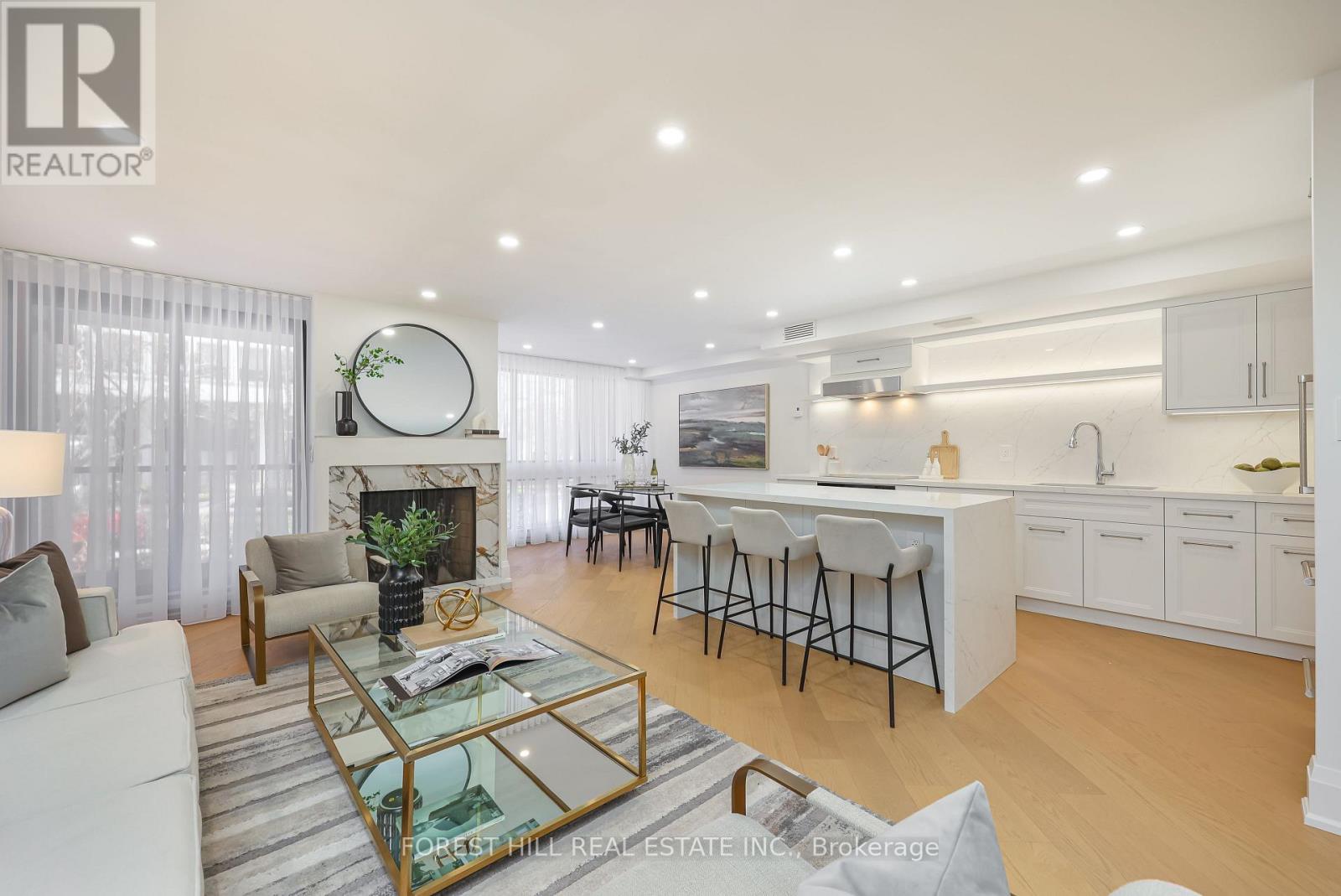 For Sale
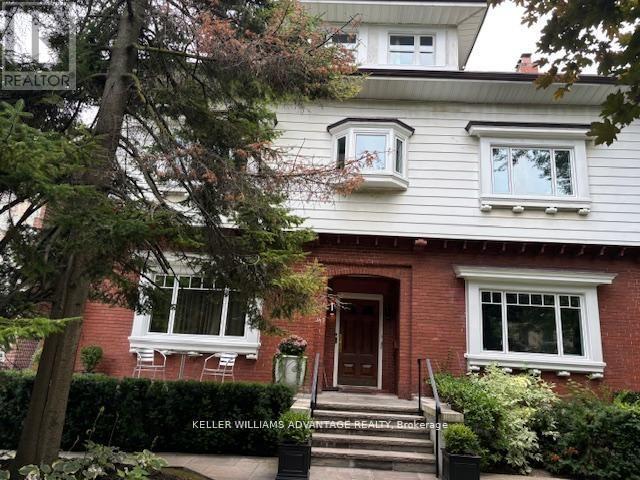 For Rent
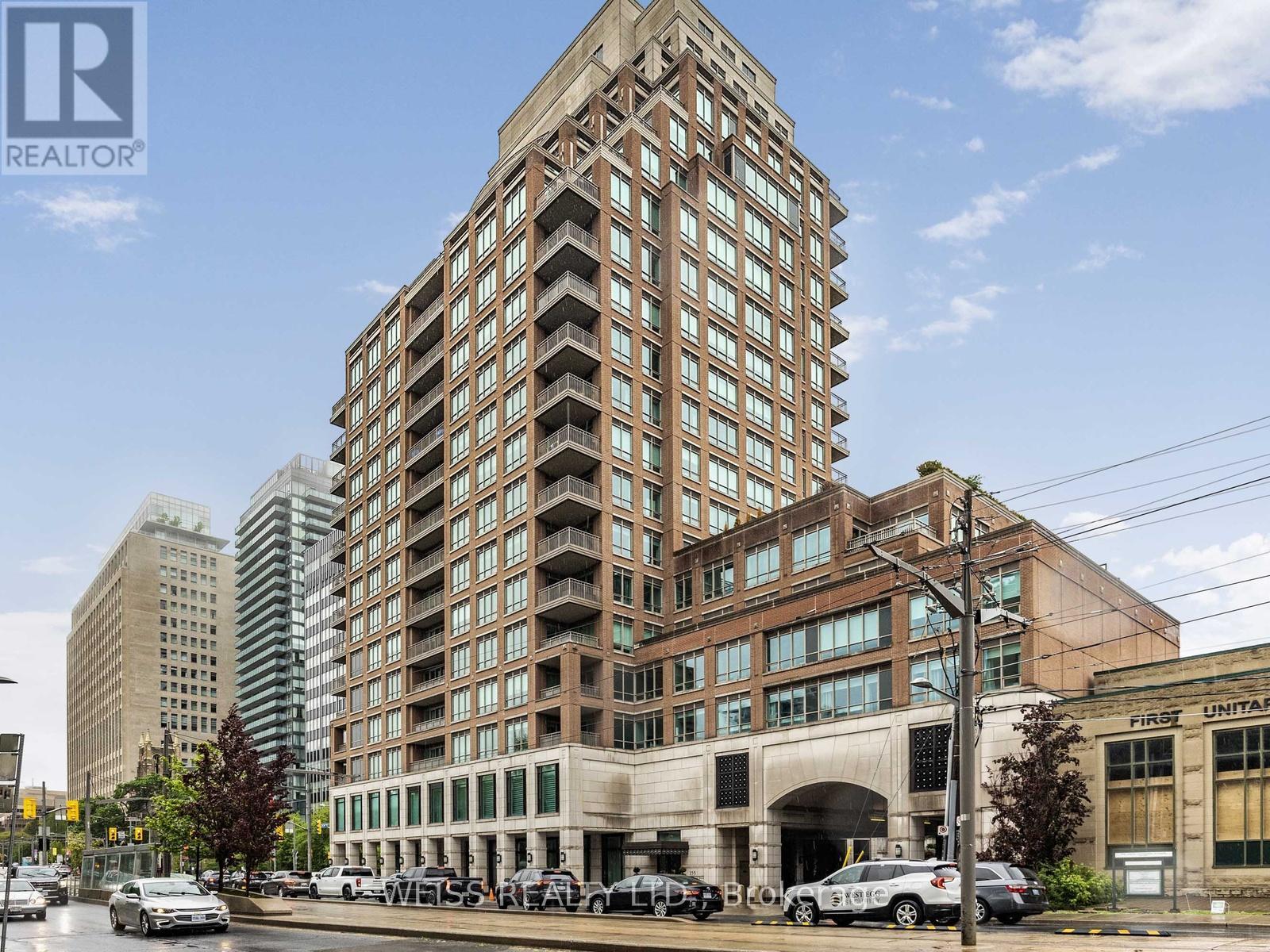 For Sale
 For Sale