

Forest Hill South is the stretch of large-lot detached homes between Eglinton Avenue and Clarendon Avenue, running from Bathurst Street west to the Allen Expressway corridor, where Tudor, Georgian, and colonial revival houses built in the 1920s and 1930s sit on streets like Old Forest Hill Road, Dunvegan Road, and Strathearn Road behind mature tree canopy. Entry-level detached homes started at $3 million in early 2026, with most transactions settling between $3.5 million and $7 million, and larger properties on deeper lots trading well above that. The Forest Hill Village strip on Spadina Road at Lonsdale, the Belt Line Trail along the neighbourhood's southern edge, and Forest Hill Collegiate Institute's school catchment are the three things buyers consistently cite when they explain why they paid what they paid.
Forest Hill South occupies the stretch between Eglinton Avenue to the north and Clarendon Avenue and Lytton Boulevard to the south, from Bathurst Street on the east side to the Allen Expressway corridor on the west. It’s a neighbourhood of large detached homes on wide lots, built mostly between 1920 and 1950 in Tudor, Georgian, and colonial revival styles, behind streets that are heavily treed and notably quiet given how close they are to the geographic centre of the city.
Old Forest Hill Road, Dunvegan Road, Strathearn Road, and Ava Road are the streets buyers focus on. The houses are substantial: most sit on 40 to 60-foot frontages with private rear gardens, and a significant number have been fully renovated or rebuilt on their original foundations in the past decade. The result is a neighbourhood where a 1935 Georgian exterior contains a fully contemporary interior, and both versions of this trade at a premium because the lot and the street are the primary asset.
The Forest Hill Village commercial strip runs along Spadina Road between Lonsdale Avenue and Montclair Avenue. It’s genuinely local in character: a bakery, a handful of cafes, a deli, a pharmacy, and independent shops that have been on the strip for decades. It doesn’t feel like a curated retail district. It feels like a neighbourhood doing its weekly shopping, which is what it is.
The Belt Line Trail enters the southern edge of the neighbourhood near Lytton Boulevard, running east through the ravine toward Davisville and west toward Allen Road. It’s the neighbourhood’s most used green amenity and the connection that makes cycling or walking south toward midtown feel natural. Forest Hill Park at Old Forest Hill Road and Nordheimer Ravine add further green space without requiring residents to leave the neighbourhood to find it.
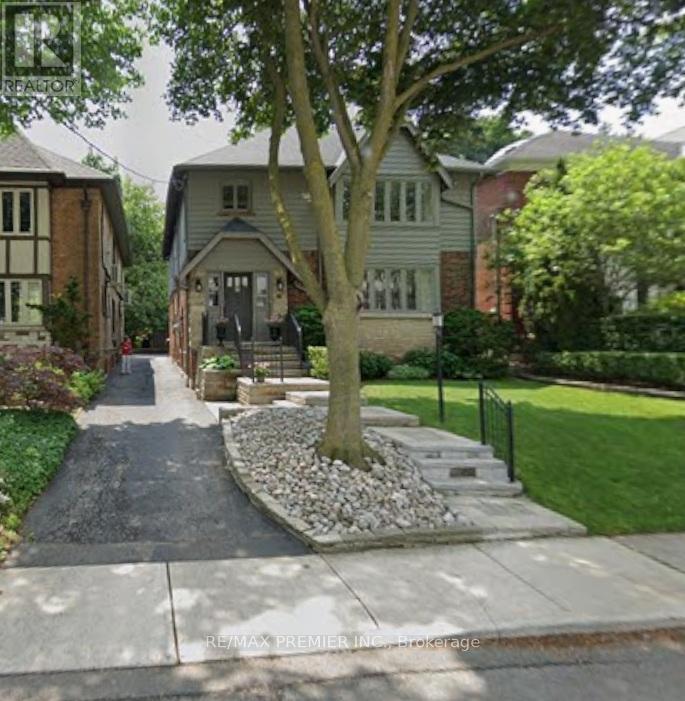
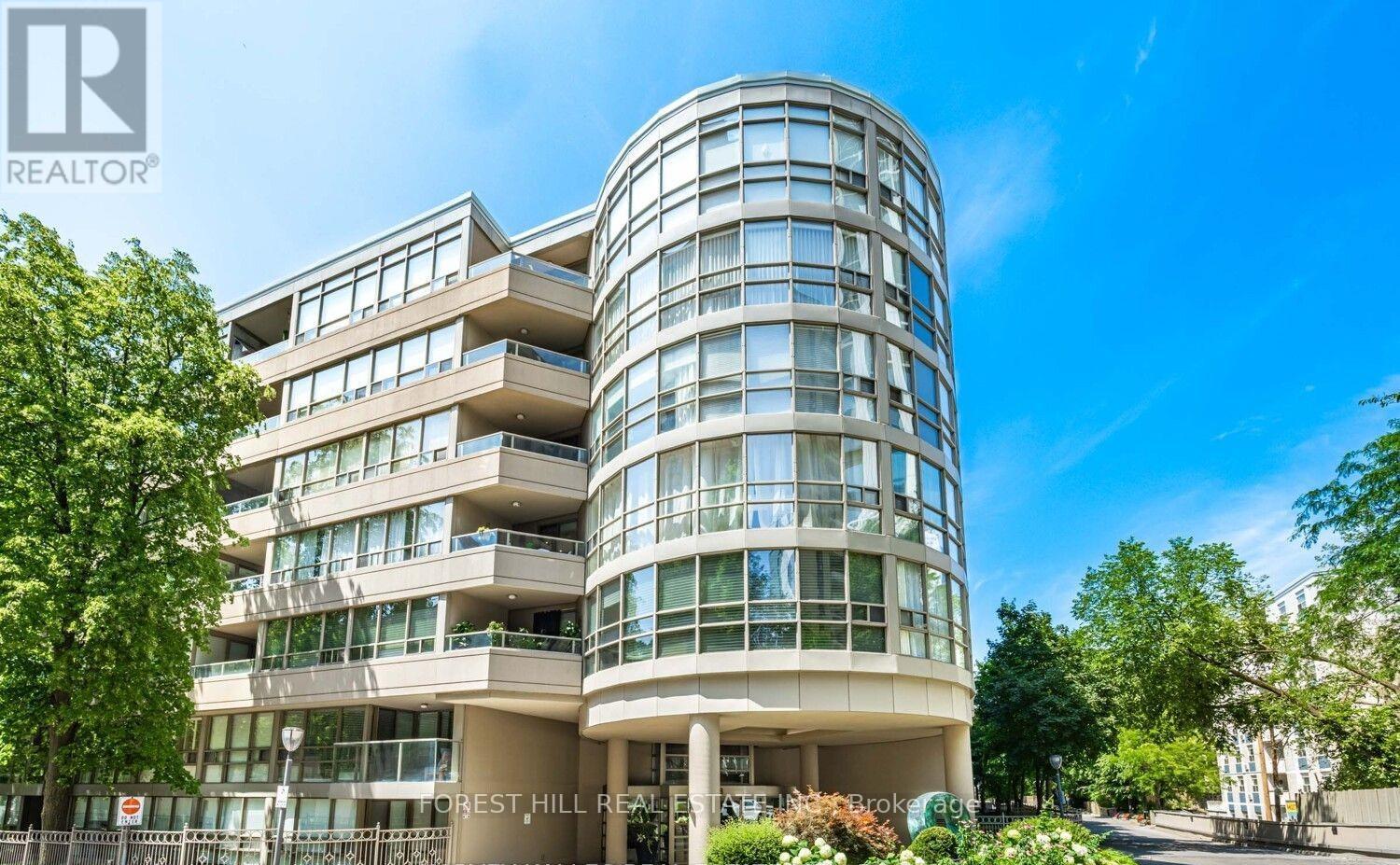
The primary housing type in Forest Hill South is the large detached home on a deep lot, and there is very little else. Semis exist but are uncommon. Condos exist in small numbers along Eglinton but aren’t what the neighbourhood is known for or what most buyers here are looking for. The market is freehold detached, almost entirely, and the transaction prices reflect it.
An entry-level purchase in Forest Hill South in early 2026 starts around $3 million. These properties are typically on narrower lots, 35 to 40 feet, with original finishes or dated renovations that need work, on secondary streets. The core of the market sits between $3.5 million and $7 million: homes with 40 to 55-foot frontages in good to excellent condition on the primary streets. At the top end, renovated or newly built homes on 60-foot-plus frontages on Old Forest Hill Road or Dunvegan Road trade above $10 million and sometimes significantly above it.
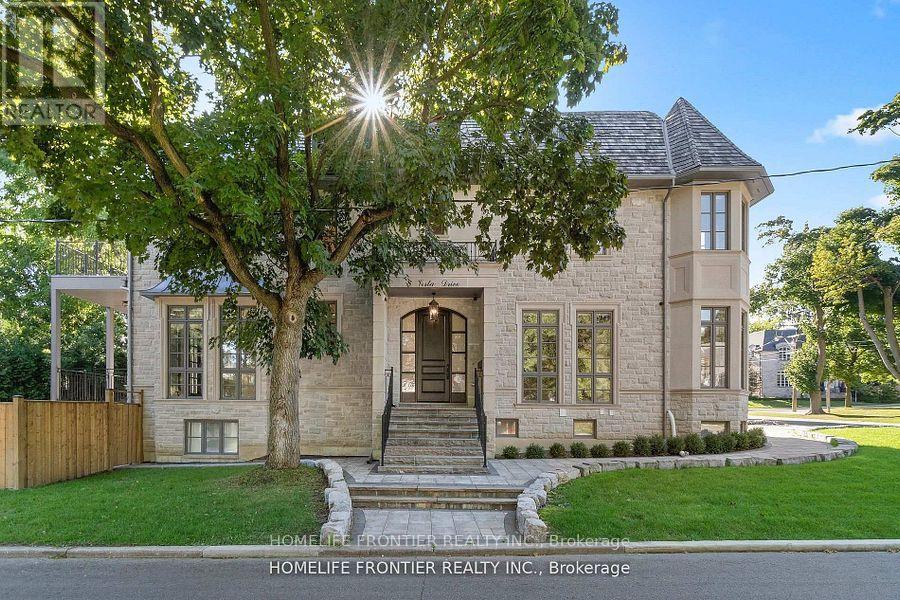
The architecture sets expectations that matter at sale. Buyers here are specifically seeking the 1920s and 1930s character: steeply pitched roofs, brick and stone exteriors, leaded glass details, and mature trees that have grown around the houses over 80 or 90 years. A contemporary glass addition that ignores the original architecture will sell, but it sells to a narrower buyer pool. Renovations that work with the period character and add contemporary function inside consistently produce stronger results than those that replace the character entirely.
Lot depth is a meaningful variable that doesn’t always show in the listing price. A 50-foot by 180-foot lot on Dunvegan is a fundamentally different asset from a 50-foot by 120-foot lot on a similar street. Buyers should look at the survey, not just the frontage number, before drawing conclusions about value.
Forest Hill South is less volatile than the broader Toronto market because its buyer pool is less dependent on mortgage financing. A significant proportion of transactions at $4 million and above involve buyers with substantial equity from a prior property sale, often a home in Davisville Village, Summerhill, or Forest Hill North. These buyers aren’t stretched by rate changes in the way that first-time buyers in the $1 to $1.5 million range are, which produces a market that moves more slowly in both directions: it doesn’t spike as sharply in hot conditions and doesn’t fall as hard when conditions soften.
In early 2026, well-priced homes in Forest Hill South with strong presentation are receiving offers, but the days on market for the neighbourhood average longer than the freehold market at lower price points in Leaside or Leslieville. The buyer pool is smaller at these prices, and the buyers are more deliberate. Multiple-offer situations occur on the right property but aren’t the norm. Most sellers and buyers negotiate directly.
Properties that sit for more than 60 days at their initial asking price usually have a pricing problem, a presentation problem, or both. The market at this price point has enough informed buyers that an overpriced home doesn’t generate the traffic needed to produce a competitive offer. Sellers who price accurately from the start consistently outperform those who test the market high and reduce.
The spring market, February through May, produces the most activity. October is the second window. Properties listed in July or August often wait for the fall buyer pool to return, which can work well if the pricing is right and the seller has the patience for it.
The buyers who end up in Forest Hill South tend to fall into two groups. The first group has sold a home in a midtown or central neighbourhood, typically having bought in Davisville Village, Summerhill, Moore Park, or Forest Hill North 10 to 15 years earlier, and is moving up. The equity from that first or second purchase provides the foundation, and the Forest Hill South purchase represents a deliberate choice to stop moving: these buyers expect to stay for 15 to 20 years.
The second group is buying from outside the Toronto market entirely: families relocating from New York, London, Hong Kong, or Tel Aviv where comparable neighbourhoods at this price point are known quantities. For buyers from cities with established residential markets at these prices, Forest Hill South frequently reads as underpriced relative to equivalent neighbourhoods elsewhere. The architecture, the lot sizes, the school options, and the walkability to a genuine village strip produce a combination they recognise, and the Toronto price looks reasonable by comparison.
The neighbourhood’s Jewish character is relevant to many buyers in both groups. Several synagogues operate on or near Old Forest Hill Road and Spadina Road. The cultural density of the community, including kosher options in the Village, High Holiday timing in the neighbourhood calendar, and a genuine social infrastructure built around the community institutions, is a draw for buyers for whom that matters and a neutral factor for buyers for whom it doesn’t. Forest Hill South doesn’t advertise this aspect of itself. It doesn’t need to.
Families with children in the 10 to 16 age range are a distinct and consistent part of the buyer pool. The Forest Hill Collegiate Institute catchment is a material factor in the purchase decision for many of them, which is discussed in more detail in the schools section.
The east-west divide within Forest Hill South matters in ways that listing prices don’t always reflect. The streets east of Spadina Road, between Spadina and Bathurst, are closer to the Forest Hill Village strip and have easier pedestrian access to Eglinton Avenue transit and the Bathurst bus. The streets west of Spadina, toward the Allen Expressway, are quieter, slightly more removed, and often sit on larger lots. Both sides are legitimately Forest Hill South, but they suit different buyers. A buyer who wants to walk to the Village for coffee every morning should be on the east side of Spadina. A buyer who wants the largest possible lot with maximum privacy should look west.
Properties adjacent to Eglinton Avenue at the northern boundary will eventually benefit from the Eglinton Crosstown LRT. That line has been years in construction and as of 2026 the timeline for full opening has shifted multiple times. Buyers counting on Crosstown access as a present-day asset are getting ahead of reality. Buyers who are purchasing a long-hold property and expect the transit connection to mature over time are thinking about it correctly.
The Allen Expressway forms the western boundary of the neighbourhood. Properties on Strathearn Road west of the ravine have the expressway within earshot, particularly in the warmer months when windows are open. Walk the specific street and stand in the backyard before committing. The difference between a lot that backs onto the ravine buffer and one that faces the expressway noise is audible and persistent.
Lot surveys in this neighbourhood occasionally reveal encroachments, easements, or heritage designation that aren’t immediately apparent from a listing. The housing stock is old enough that formal survey documentation varies significantly in currency. A proper current survey and a review of any heritage overlays should be part of the due diligence before an unconditional offer on any Forest Hill South property.
Buyers in Forest Hill South at these price points have typically toured extensively before making an offer. They’ve seen dozens of properties. They know what a renovated kitchen in a 1930s Georgian looks like when it’s been done well and when it’s been done expediently. A property that has been maintained with care but not substantially updated will sell, but it sells to a buyer making a deliberate choice to renovate themselves. A property that has had work done that doesn’t respect the architecture will raise questions. The market here is sophisticated enough to distinguish these quickly.
Presentation matters at this price point more than many sellers expect. Professional photography, a thorough clean, and staging that respects the home’s period character rather than working against it are the minimum. Properties at $5 million and above increasingly benefit from architect’s renders or renovation plans prepared in advance, offered as information to buyers who want to understand the potential. This is not standard practice across the Toronto market, but it’s become common enough in Forest Hill South that properties without it can feel underprepared.
Pricing requires specific comparables from recent Forest Hill South transactions, not generic upper midtown benchmarks. The market here has its own reference points, and a pricing analysis that draws from Lawrence Park or Leaside will mislead. An agent who regularly sells in the neighbourhood will have the comparable transaction data that matters; one who doesn’t work here regularly won’t have the same precision on where a specific property sits relative to recent sales.
The spring market window from late February through May is when the neighbourhood is most active and buyer depth is greatest. If a property can be prepared and listed by mid-March, that timing consistently produces the best conditions for achieving a strong sale price.
The Forest Hill Village strip on Spadina Road between Lonsdale and Montclair is modest in scale and deliberately so. It has a bakery, a Jewish deli, a handful of cafes, a pharmacy, a bookshop, and the kind of independent businesses that occupy a neighbourhood strip when rents haven’t priced them out. It’s not a destination for people who don’t live nearby. It’s a weekly routine for those who do. The Saturday morning walk to the bakery on the Village strip is genuinely part of the rhythm of life here, which is why it comes up so often in conversations about what makes the neighbourhood work.
The Belt Line Trail enters the southern part of Forest Hill South near Lytton Boulevard, running east through the ravine toward Davisville and Chaplin Crescent. Going west, it connects toward Allen Road and the Mount Pleasant Cemetery corridor. The trail is paved, well maintained, and used by runners, cyclists, and walkers throughout the year. For buyers who commute by bicycle or use the trail for exercise, this is a meaningful amenity: it provides a car-free route south toward midtown that avoids the arterial roads and takes about 20 minutes on a bike to reach the heart of the city.
Nordheimer Ravine runs along the southwestern edge of the neighbourhood, accessible from Old Forest Hill Road and Bathurst Street. It connects into the larger ravine system that threads through Toronto and provides a natural buffer between Forest Hill and the properties to the west. Forest Hill Park on Old Forest Hill Road has tennis courts and space used by the community year-round. The combination of the formal park, the ravine, and the Belt Line gives the neighbourhood more usable green access than its density and price point might suggest.
Forest Hill South is a car-owning neighbourhood. There is no subway station within the neighbourhood itself. The closest rapid transit options are Eglinton station on the Yonge-University line to the east, Glencairn and Lawrence West stations on the Spadina line to the northwest, and Dupont to the south. All of these require a drive or a bus connection first. The 7 Bathurst bus and the 32 Eglinton West bus serve the neighbourhood’s edges, but neither produces the reliable downtown connection that a subway station would. Most residents with a 9-to-5 commitment downtown drive or accept a 35 to 45-minute transit journey.
Eglinton Avenue along the northern boundary will eventually carry the Eglinton Crosstown LRT, which when complete will connect westward to Mount Dennis and eastward to Kennedy Station. The line had a Forest Hill stop planned at Avenue Road and at Chaplin Crescent, improving transit access materially. The opening date for the Crosstown has been delayed repeatedly and was not confirmed as of early 2026. Buyers should not factor the Crosstown into a present-day transit assessment, but its eventual completion will change the neighbourhood’s transit profile.
Cycling on arterial roads here requires tolerance for traffic. Spadina Road, Bathurst Street, and Eglinton Avenue all carry significant vehicle volume. The Belt Line Trail is the practical cycling option for those heading south or east, but it doesn’t connect directly to a downtown office address without eventually meeting a road. Families with children who need to reach Forest Hill Collegiate or Upper Canada College travel a short distance within the neighbourhood on foot or by bike without significant difficulty.
Rosedale is the comparison that comes up first, and it’s a reasonable one. Both neighbourhoods have large detached homes on deep lots, buyers at similar price points, and long histories as established addresses. The differences are real and worth understanding before choosing between them. Rosedale sits in the ravine system east of Yonge Street, which gives it a dramatic natural setting and an easy walk to Yonge Street, Summerhill, and the subway. Forest Hill doesn’t have that topography or that transit proximity. What it has instead is better public secondary school options through Forest Hill Collegiate, more homogeneous architecture across the neighbourhood, and the Forest Hill Village strip as a daily-use amenity. Rosedale buyers tend to value the ravine setting, the Yonge Street proximity, and the address. Forest Hill buyers more often cite the schools first, the Village second, and the quieter residential character third.
Lawrence Park sits immediately north of Forest Hill South, above Eglinton Avenue, and is a comparison that comes up less often but matters. Lawrence Park has similar detached housing stock, similar lot sizes in many areas, and similar tree cover. It’s somewhat less expensive per square foot than Forest Hill South, and the character of the neighbourhood is more conservative: predominantly Anglican church-adjacent in its original social fabric, quieter, less dense in the commercial strip. Buyers who are choosing between the two often find that Lawrence Park offers better value for the square footage and the lot while Forest Hill South offers the school catchment, the Village, and the Belt Line connection. The catchment difference is the factor that most often tips families toward Forest Hill South at a price premium they might not otherwise accept.
Buyers comparing Lytton Park, which sits between Forest Hill South and Lawrence Park, should understand that it’s a distinct area with its own character, generally considered somewhat quieter and more established in feel than Forest Hill proper, and with pricing that reflects that positioning. The streets around Lytton Boulevard near the Belt Line are among the most sought-after in the broader Forest Hill area precisely because of that combination of access, character, and relative quiet.
Forest Hill Collegiate Institute is the public secondary school for the catchment and is the school that drives a measurable portion of buying decisions in this neighbourhood. It consistently ranks among the top public secondary schools in the Toronto District School Board by EQAO scores and university acceptance rates, and its student body reflects the community around it: families who moved here specifically for the school bring a level of academic engagement that compounds across the student population. The school is not a hidden detail. It is publicly known and priced into the neighbourhood. Buyers who are coming for the school should confirm their specific address falls within the catchment boundary using the TDSB boundary tool before proceeding, since the catchment has seen adjustments over time and a two-block difference matters.
Upper Canada College, the independent boys’ school on Lonsdale Avenue, is located within the neighbourhood and is a significant factor for some buyers, particularly those arriving from other cities where independent school culture is standard. UCC draws nationally and internationally and its location in Forest Hill South is a draw for families who intend to enrol regardless of neighbourhood. Bishop Strachan School, the independent girls’ school, is nearby on Lonsdale Avenue as well. The proximity of both schools means that buyers who have already decided on independent school education find Forest Hill South a natural address.
On the elementary side, the public options include Forest Hill Junior and Senior Public School on Dunlace Road and Forest Hill Public School. Both have strong reputations relative to the TDSB average. The concentration of engaged families in the neighbourhood contributes to the culture of these schools in ways that show up in daily experience rather than in provincial test scores alone. Families with children in the elementary years who plan to transition to Forest Hill Collegiate for secondary school find that the path within the neighbourhood school system is straightforward and well supported.
What is the average house price in Forest Hill Toronto in 2026? In early 2026, entry-level detached homes in Forest Hill South start around $3 million for properties on narrower lots with dated interiors or on secondary streets. The majority of transactions fall between $3.5 million and $7 million, covering renovated homes on 40 to 55-foot frontages on primary streets like Old Forest Hill Road, Dunvegan Road, and Strathearn Road. Larger properties on 60-foot-plus frontages, particularly renovated or newly built homes on the deepest lots, trade above $10 million. Forest Hill South is consistently among the five most expensive established residential neighbourhoods in Toronto. The buyer pool at these prices is less dependent on mortgage financing than the broader Toronto market, which contributes to the neighbourhood’s relative stability when interest rates rise.
Is Forest Hill Collegiate Institute a good school? Forest Hill Collegiate is one of the strongest public secondary schools in the Toronto District School Board. It consistently ranks in the top tier by EQAO academic results and university acceptance rates, and the school’s culture reflects a student body from families who in many cases moved to the neighbourhood specifically for it. The school has a strong arts program alongside its academic offerings, and its size, around 1,400 students, gives it enough depth to support specialist programs while remaining a comprehensible community for students. Catchment boundaries are worth confirming before relying on school access in a purchase decision: use the TDSB boundary tool with the specific address, since boundaries have shifted in the past and a two-block difference can matter.
How does Forest Hill compare to Rosedale for buyers? Rosedale and Forest Hill South are comparable in price range and buyer type but have genuinely different characters. Rosedale sits in the ravine system east of Yonge Street, offering a dramatic natural setting, easy access to the Yonge subway line, and proximity to Summerhill. Forest Hill has better public secondary school options through Forest Hill Collegiate, more consistent period architecture across the neighbourhood, and the Forest Hill Village strip for daily errands. Rosedale buyers most often cite the ravine, the Yonge Street proximity, and the address recognition. Forest Hill buyers more often lead with the schools, then the Village, then the quieter residential character. The two neighbourhoods sit at similar price points, which means the choice is genuinely about preference rather than budget for most buyers comparing them.
What are the best streets to buy on in Forest Hill? Old Forest Hill Road and Dunvegan Road command the most consistent premium and the deepest buyer demand. Old Forest Hill Road in particular has the neighbourhood’s largest homes on its deepest lots, and properties there rarely sit long when priced correctly. Strathearn Road is sought after for its setting along the ravine edge and its green sightlines. Lytton Boulevard at the southern end of the neighbourhood draws buyers who want Belt Line Trail access and proximity to the walkable Davisville connection. Ava Road and Vesta Drive offer access to the neighbourhood at the lower end of the price range, typically from the mid-$3 millions for homes needing work, and suit buyers who want the catchment and the address and plan to renovate over time.
Forest Hill was an independent village from 1923 until it was annexed by the City of Toronto in 1967. For those 44 years it operated its own council, set its own tax rates, and maintained its own services, and the identity that formed during that period of independence has persisted in the neighbourhood’s self-conception long after the formal boundary disappeared. The village had been planned deliberately from the start: its residential streets were laid out in the early 1920s with deep lots, wide building setbacks, and architectural guidelines that produced the consistent Tudor, Georgian, and colonial revival character that still defines the area today.
The neighbourhood’s history includes a chapter that most guides skip. From its founding through the 1940s, Forest Hill’s land covenants explicitly barred Jewish buyers from purchasing property. This restriction was common in planned upper-income suburbs of the period, applied across Rosedale and Lawrence Park as well, and was legally unenforceable after 1948 when discriminatory covenants were struck from Ontario property law. The irony that a neighbourhood built with those restrictions is now home to one of the largest and most established Jewish communities in English Canada is not lost on those who know the history. The transition happened quickly once the barriers were removed, driven by postwar prosperity in the community and the obvious appeal of the neighbourhood’s housing stock and character. By the 1960s, Forest Hill’s Jewish character was established, and it has deepened since.
The commercial strip on the Village portion of Spadina Road has been the neighbourhood’s gathering point since the 1940s. Specific businesses have come and gone, but the strip’s function as a place for weekly routines has remained constant. The kosher butcher, the deli, the bakery configurations have changed over the decades; the practice of walking to the Village on a Saturday morning has not.
Street-level knowledge is hard to find online. Our team works in Forest Hill (Forest Hill South, Forest Hill Village) every day. They know which pockets hold value, where the school catchment lines actually fall, and what the market is doing right now. Talk to us before you make a decision about Forest Hill (Forest Hill South, Forest Hill Village).
Talk to a local agent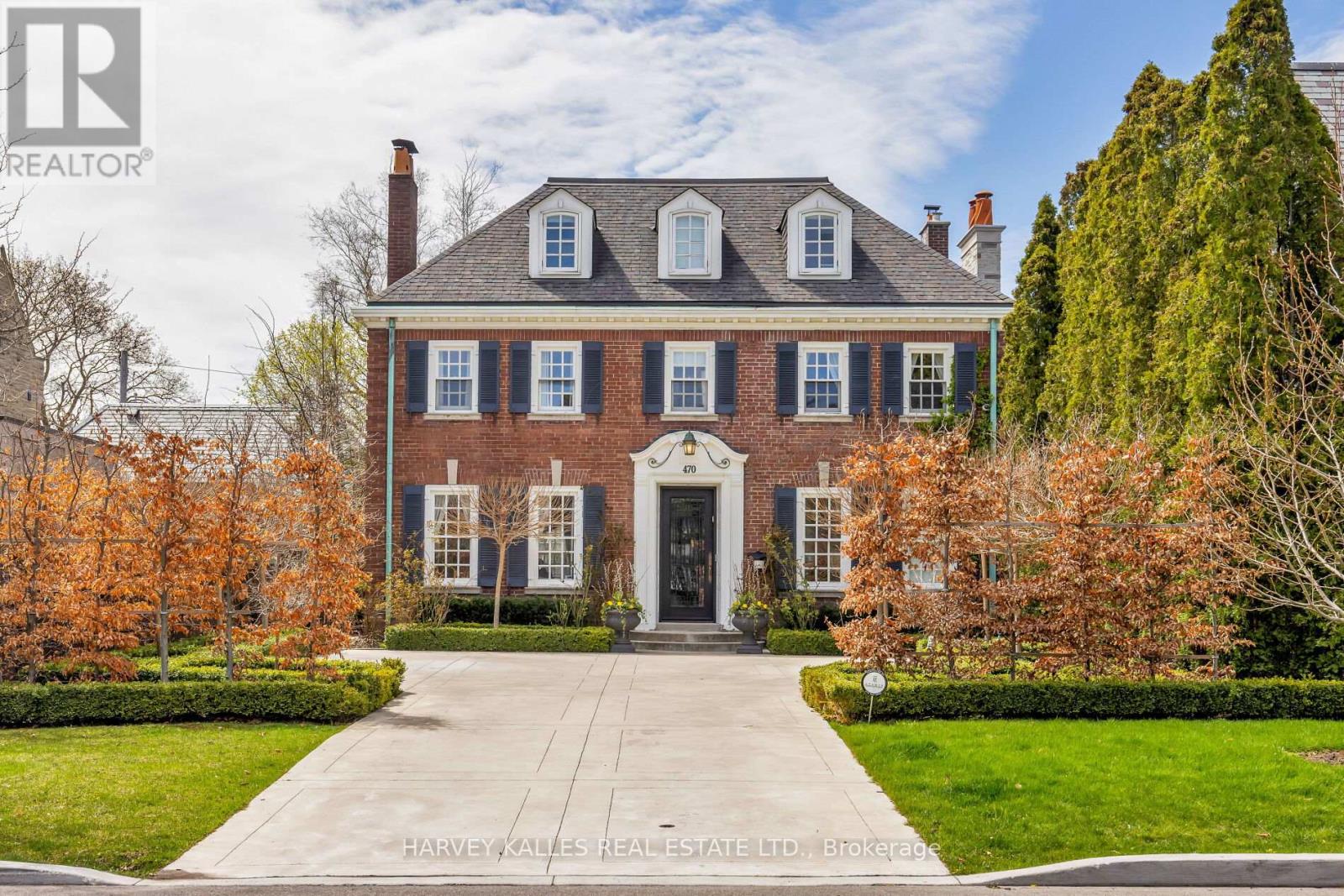 For Sale
 For Rent
 For Sale
 For Sale