
Newtonbrook is an established North York neighbourhood at Yonge and Steeles, split into east and west communities by Yonge Street. It has strong Persian and Iranian community roots on the west side, Finch subway station access, and a teardown-and-rebuild market that has reshaped many of its streets over the past two decades.
Newtonbrook sits at the northern tip of the Yonge Street corridor in North York, where the city transitions toward Vaughan and the 905. It’s divided by Yonge Street into two distinct communities: Newtonbrook West, which runs toward Bathurst Street, and Newtonbrook East, which extends toward Bayview and beyond. Both sides share the same general character of an established, mature neighbourhood that’s been through at least one full generational cycle, but they feel different enough that buyers typically have a preference.
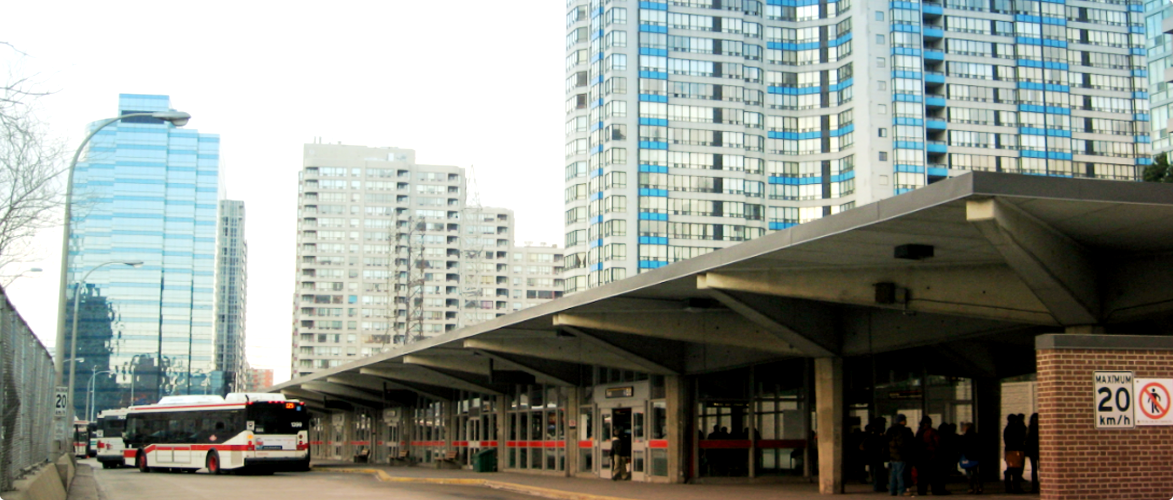
Finch Avenue and Yonge Street form the defining intersection for the neighbourhood. Finch subway station is right here, which makes Newtonbrook one of the more transit-accessible North York neighbourhoods at its northern extreme. That access to the subway, combined with the established commercial strip on Yonge, gives the neighbourhood a completeness that many comparable North York areas lack. You can live here without a car if you’re willing to work at it, which sets it apart from most of the low-rise neighbourhoods in this part of the city.
The community on the west side has a strong Persian and Iranian presence, built over decades of settlement that followed successive waves of immigration from Iran. This has shaped the commercial character of Yonge Street through this stretch considerably, with Persian bakeries, restaurants, and services concentrated between Sheppard and Steeles. The Jewish community also has deep roots in the area, particularly in the streets west of Yonge, with community institutions and synagogues that have been part of the neighbourhood for 50 years or more. These aren’t marketing abstractions; they shape the schools, the food options, the street life, and the texture of the neighbourhood in concrete ways.
The housing stock is a genuine mix. Original bungalows and split-levels from the 1950s and 1960s still exist in meaningful numbers, but the teardown rate has been high for years, and custom-built two-storey homes now occupy a significant share of lots, particularly on the west side. The character of individual streets can range from entirely original postwar stock to almost entirely rebuilt within a few blocks, which makes Newtonbrook one of the more heterogeneous neighbourhoods in terms of what you’re actually walking past.
Newtonbrook’s housing market is a genuine spectrum. On the lower end, you’ll find original bungalows and split-level homes from the 1950s and 1960s that have had minimal updating, sitting on 40 to 50-foot lots with original kitchens and bathrooms. These still trade because the land value supports the price regardless of what’s sitting on it. At the upper end, custom-built detached homes on 50 to 60-foot lots, often with 4,000 square feet or more of finished living space, command prices well above $2 million.
In 2026, detached properties on the west side of Yonge, which consistently attracts premium demand, are trading in a wide range. A well-maintained original bungalow on a 40-foot lot might sell around $1.3 to $1.5 million. A custom-built two-storey on a 50-foot lot with quality finishes is likely in the $1.8 to $2.2 million range. Exceptional builds on larger lots or premium streets can go higher. The east side generally comes in somewhat below the west, though the gap narrows on specific streets with strong demand.
Semi-detached properties are present but not the dominant form. Where they exist, they typically trade at a meaningful discount to detached, often in the $900,000 to $1.2 million range. The market here is predominantly detached-focused, and buyers interested in semi-detached may find the selection limited compared to areas further south on Yonge.
The lot size matters enormously in Newtonbrook because the teardown-and-rebuild market is active. A wider lot is worth disproportionately more than a narrow one because it opens up rebuild options that a narrower lot doesn’t support as well. Buyers who are purchasing an original bungalow with the intention of rebuilding should work through the zoning calculations with their agent and a surveyor before committing, because the difference between a 40-foot and a 50-foot lot can be the difference between building the house you want and building a compromise.
Newtonbrook’s market is active and competitive in ways that reflect its transit access and community strength. Well-priced detached properties on the west side near Yonge typically attract multiple offers, and it’s not unusual for a properly presented bungalow or custom build in the right pocket to sell in under two weeks with competition. The east side is somewhat more patient but still sees competitive conditions on properties that are priced and presented well.
The turnover pattern has two main drivers. One is the estate and downsizing market: families that bought in the 1970s and 1980s are at or past retirement age, and properties that have been held for 30 or 40 years are coming to market. These often require significant updating and are priced accordingly, but they represent genuine entry points for buyers who want to get into the neighbourhood without paying for someone else’s renovation. The second driver is the teardown market, where buyers purchase an original home with no intention of living in it, demolish it, and build a custom home. This segment is alive in Newtonbrook in a way it isn’t in lower-priced North York neighbourhoods.
Days on market in Newtonbrook are generally short for well-priced properties. The neighbourhood has deep demand from within the community, and listings often sell to buyers who are already connected to the area through family, community institutions, or previous proximity. This creates a self-reinforcing pattern: the community stays consistent because new buyers are often drawn to it specifically for the community, not just the housing stock.
One market dynamic worth understanding: some sellers price aggressively, knowing that demand from within the community will hold the market up. Properties that appear overpriced by comparable standards sometimes sell at asking or above if the buyer pool includes a motivated purchaser whose calculus includes non-price factors. This makes comparable sales analysis important but not always the complete picture.
Newtonbrook draws a specific kind of buyer, and understanding who that is helps explain both the pricing and the market dynamics. The most consistent buyer profile on the west side is a family with ties to the Persian or Iranian community who wants to be within walking distance of the community institutions, the restaurants on Yonge, and the social network that comes with living in an established community. This isn’t about ethnicity as a demographic abstraction; it’s about the practical desire to live near the people and places that matter to you, and Newtonbrook West delivers that in a way very few Toronto neighbourhoods can for this community.
There’s also a significant Jewish community buyer pool, particularly for streets in the western portion of the neighbourhood with proximity to synagogues and community services. This buyer pool has been part of the neighbourhood for 50 years and remains active, though some families have moved further north to communities like Thornhill over the past two decades.
For buyers from outside these communities, the attraction is the Finch subway station, the Yonge Street services, and the housing value relative to comparable addresses further south. A buyer who wants a detached house in a settled North York neighbourhood with subway access and doesn’t want to pay Willowdale prices will find Newtonbrook competitive.
The trade-off buyers are weighing is primarily distance from downtown and the nature of the neighbourhood’s character. Newtonbrook is not a gentrifying neighbourhood where coffee shops and wine bars are arriving. It’s an established community with its own well-defined identity that isn’t going to change significantly. Buyers who see that as stability tend to stay for decades. Buyers who expected it to evolve in a different direction sometimes feel they bought in the wrong neighbourhood. The key is being honest about what you’re buying into before you sign.
The distinction between Newtonbrook West and Newtonbrook East is the most important geographic division, and it affects pricing, character, and community feel significantly. West of Yonge, the neighbourhood runs roughly from Yonge to Bathurst, bounded by Steeles to the north and Sheppard to the south. East of Yonge, it extends toward Bayview and beyond, with a somewhat more varied character and generally lower prices than comparable streets on the west side.
On the west side, the streets closest to Yonge, such as Willowdale Avenue and Maxome Avenue, are among the most sought-after. These have good access to the Yonge commercial strip and Finch station, and the lot sizes tend to be more generous than streets further west. The custom rebuilds are concentrated here, and the visual contrast between original 1960s bungalows and 4,000-square-foot modern custom builds is most pronounced on these streets.
As you move west toward Bathurst on Willowdale Avenue West and the streets running south from Steeles, the density of custom builds decreases and the proportion of original housing increases. These streets are quieter and the prices are somewhat lower than the Yonge-adjacent streets, which makes them worth knowing for buyers who want the neighbourhood without the premium for maximum proximity to the commercial strip.
On the east side, Bishop Avenue and Maxome Avenue East are the kinds of streets that show up in estate listings regularly. The properties are solid, the streets are established, and the prices are more moderate than the west side equivalent. Bayview Avenue runs along the eastern boundary, and streets close to Bayview benefit from the Bayview retail strip while sitting in a quieter residential context. For buyers whose priority is value and quietness over community proximity on the west side, these east-side streets are worth investigating carefully.
Finch subway station, at the intersection of Finch Avenue and Yonge Street, is the neighbourhood’s transit anchor. It’s the northern terminus of Line 1 (Yonge-University), which means trains run frequently and the connection to downtown is direct. From Finch station to Union Station is approximately 40 minutes by subway. For North York at this latitude, that’s an excellent result, and it’s one of the reasons the neighbourhood commands a premium over comparable addresses that lack this access.
Bus service along Yonge Street fills in gaps between subway stations and connects to the broader North York network. The 97 Yonge bus provides surface service. On Finch Avenue, east-west bus routes connect to Don Mills, Seneca College, and other destinations across the north end of the city. Steeles Avenue, the city’s northern boundary, has bus service connecting to Brampton and Vaughan transit systems for buyers who need cross-boundary options.
For residents of Newtonbrook West, the walk to Finch station from the streets closest to Yonge is 10 minutes or less. From the streets closer to Bathurst, you’re looking at a 20 to 25-minute walk or a bus connection on one of the Finch Avenue crosstown routes. The east side has comparable walk times to Finch station for streets near Yonge, with longer distances for properties closer to Bayview.
Driving from Newtonbrook connects quickly to Yonge Street heading south, to Highway 401 via either Yonge or Bayview, and to the 400-series highway network via Allen Road or the 404/DVP. Steeles Avenue gives east-west road access across the top of the city. For buyers who drive to work north of Toronto in York Region or Vaughan, Newtonbrook’s northern position is actually an advantage, cutting suburban commutes relative to buyers who live further south in the city.
Newtonbrook doesn’t have a dramatic ravine system running through it, but it’s within reasonable reach of several significant parks and green spaces. Earl Bales Park, one of North York’s better parks, is accessible to the west and south of the neighbourhood. It has a ski hill with a rope tow that operates in winter, a paved ravine trail system, and considerably more tree cover and natural character than the flat residential streets of Newtonbrook itself.
Cummer Park is the primary neighbourhood park for the west side, located on Cummer Avenue with sports fields, a community centre, and the kind of maintained park infrastructure that serves families with children. The Cummer Park Community Centre is a genuine community hub, with pool access, fitness facilities, and programs that residents use year-round. For families evaluating the neighbourhood, the community centre adds practical value that’s easy to underestimate when you’re focused on property attributes.
Newtonbrook Community Park and the smaller parks distributed through the residential streets provide local green space for daily use. They’re the kind of parks that matter when you have a dog or young children, not the kind that draw visitors from other parts of the city. They do their job.
The Don Valley ravine system is accessible from the east side of the neighbourhood, via connections through the Bayview area. The full trail network through the Don Valley connects north to the Rouge and south through the city to the waterfront, and access from this part of North York, while not immediate, is practical for recreational cyclists and hikers. The ravine connections are one of the more underappreciated aspects of living in the northern parts of the city, where the Don Valley is narrower and wilder than it is further south.
Yonge Street through the Sheppard to Steeles stretch is the commercial backbone for Newtonbrook, and it’s more interesting than a typical North York suburban strip. The concentration of Persian restaurants, bakeries, and food shops between Sheppard and Steeles has earned this corridor a genuine culinary reputation. Kolbeh, Pomegranate, and various Persian kebab and stew restaurants are part of a dining culture that draws visitors from across the city. The bakeries, in particular, produce breads and pastries that residents of the neighbourhood take for granted and that outsiders find surprising.
Beyond the Persian and Iranian offerings, the Yonge strip has a reasonable density of general retail: banks, pharmacy chains, grocery stores including several Persian specialty markets with an extensive selection of imported goods, opticians, and the service businesses that characterise busy commercial streets. The supermarket options include both mainstream chains and independently-operated stores with a focus on the neighbourhood’s demographic preferences, which means significantly better selection for Middle Eastern and Mediterranean groceries than you’d find in a standard chain.
The commercial area around Finch and Yonge itself is dense and well-serviced. Grocery stores, restaurants, and retail are concentrated here and accessible on foot for residents near the intersection. For buyers coming from downtown, the character will feel suburban, but it functions well and the ethnic food options are genuinely better than most of Toronto’s more fashionable neighbourhoods.
For shopping beyond daily needs, Centerpoint Mall at Yonge and Clark Avenue provides department store access and general retail. Shops at Don Mills, Yorkdale, and the Promenade Mall in Thornhill are all within a short drive and cover most of what residents might need beyond the immediate strip. The combination of practical daily retail on Yonge and larger mall options nearby means Newtonbrook residents are not undersupported commercially, even without a downtown-style streetscape.
Newtonbrook Secondary School is the main public secondary school for the neighbourhood, and it’s well-regarded within the TDSB. It has a strong academic culture that reflects the neighbourhood’s demographics, with a significant proportion of students heading toward university programs. The school has International Baccalaureate programming and a history of competitive academic results. For families for whom secondary school quality is a major factor in the buying decision, Newtonbrook SS is one of the stronger arguments for choosing this neighbourhood over comparable ones nearby.
Willowdale Middle School serves students in the middle years from much of the neighbourhood, and it feeds into Newtonbrook SS for most students. The public elementary schools in the area, including Cummer Valley Middle School and a cluster of junior schools, are generally well-regarded for TDSB schools in North York. French immersion is available within the district, and families committed to immersion should verify the specific feeder school for their address before purchasing.
On the Catholic side, the TCDSB has elementary schools serving the neighbourhood, including St. Elizabeth Catholic School. Catholic secondary students typically attend Cardinal Carter Academy for the Arts, which is known for its arts specialisation, or Loretto Abbey Catholic Secondary School, depending on catchment. Families intending to use the Catholic system should confirm eligibility and verify the specific catchment for their address.
Private and independent school options are accessible from Newtonbrook, with several established schools in the broader North York and York Region area reachable by car. The neighbourhood’s location near Steeles makes access to York Region private schools practical in a way that’s less true for families further south in the city. Buyers who are committed to private secondary school education should factor in travel time from specific streets rather than assuming all of Newtonbrook is equally well-positioned.
Newtonbrook has been in an active teardown-and-rebuild cycle for at least two decades, and that cycle continues. The original postwar bungalows and split-levels that populate the streets are being replaced by custom-built two-storey homes at a rate that has materially changed the streetscape of the most desirable pockets. This trend is concentrated on the west side near Yonge, where lot values justify new construction most easily, but it’s visible throughout the neighbourhood.
The development is predominantly residential custom builds rather than developer-driven multi-unit construction. The neighbourhood’s zoning has largely protected its low-rise residential character, though provincial housing policy changes are creating pressure for more density on major streets like Yonge and Finch. Applications for mid-rise residential along these corridors have been active, and some approvals have been granted, meaning that the Yonge and Finch intersection area will see more density over the next decade than it has seen in the previous one.
Condo development near Finch station has been ongoing for several years, with towers in various stages of planning and construction in the immediate station area. This adds population and amenity density to the Finch and Yonge intersection without significantly changing the residential streets away from the main corridors. For residents who live on the quieter streets a few blocks from Yonge, the station-area development adds service options without adding noise or congestion to their immediate environment.
The broader Yonge North subway extension, which would extend Line 1 north from Finch into York Region, has been in planning for years and received federal and provincial support. If built, it would extend subway service further north and potentially change commuting patterns for some Newtonbrook residents. The timeline remains uncertain, but the direction of travel is clear, and buyers who care about long-term transit investment in the northern end of the city have reason to watch this project.
What is the difference between Newtonbrook East and Newtonbrook West? Newtonbrook West, the area between Yonge and Bathurst, has a stronger concentration of community institutions and amenities tied to the Persian and Iranian community, and commands higher prices on comparable properties relative to the east side. Newtonbrook East, between Yonge and Bayview, tends to have more original housing stock, somewhat lower prices, and a slightly more varied community character. The transit access is comparable for streets close to Yonge on either side. The east side is often the better choice for buyers who want the neighbourhood’s fundamentals at a lower entry price, while the west side makes sense for buyers whose social and community connections are there specifically.
Is Newtonbrook expensive compared to other North York neighbourhoods? The west side near Yonge is among the pricier residential streets in North York once you factor out the Bayview Village and Lawrence Park South premium addresses. Custom builds on desirable streets are trading well above $2 million. Original bungalows start around $1.3 million and rarely stay on the market long. The east side is more moderate, with detached homes generally in the $1.1 to $1.6 million range depending on condition and location. The premium reflects the Finch subway station access, the Yonge Street services, and the community-driven demand that keeps turnover low and competition consistent.
How good is the transit access from Newtonbrook? It’s genuinely good by North York suburban standards. Finch subway station, the northern terminus of Line 1, is walkable for residents near Yonge and a short bus ride for those further west or east. From Finch station to Union Station is about 40 minutes. For a detached neighbourhood at this latitude, that’s a strong result. Residents who are fully car-dependent won’t feel any different from other North York neighbourhoods, but those who want to avoid car dependency for commuting have a real option here that they wouldn’t have in most comparable neighbourhoods.
What should I know about buying an original bungalow in Newtonbrook with plans to rebuild? The teardown-and-rebuild market is active here, but there are meaningful steps to work through before you commit. The City of Toronto’s zoning bylaws govern what can be built on a given lot, including height, setbacks, and gross floor area ratios. A 40-foot lot is subject to different constraints than a 50-foot lot, and the difference matters for what you can build. You’ll need a survey, a discussion with a designer or architect about what the zoning will support, and a clear-eyed cost estimate before you can know whether the numbers work. Buyers who treat this process as a box to check after closing often find themselves disappointed. Work through the rebuild feasibility before making the offer.
Are the schools in Newtonbrook strong enough to be a deciding factor? Newtonbrook Secondary School has a legitimate academic reputation within the TDSB, with IB programming and consistently solid university placement outcomes. For families who are choosing between Newtonbrook and a comparable neighbourhood without a strong secondary school, Newtonbrook SS is a real advantage. At the elementary level, the schools are good without being exceptional; the secondary school is the stronger argument. Families who are already committed to private school for secondary, or who plan to apply to TDSB specialty programs, will weigh this differently, but for families who intend to use the local public secondary school, Newtonbrook’s catchment is one of the better ones in North York.
Buying in Newtonbrook requires an agent who understands both the community dynamics and the teardown market. These aren’t typical considerations in most Toronto neighbourhoods, but in Newtonbrook they’re central. An original bungalow listed at $1.35 million might be priced as a rebuild opportunity rather than as a livable home, and the buyer’s evaluation process is fundamentally different depending on which it is. An agent who has recent experience in this neighbourhood can tell you quickly which category a given listing falls into and what the appropriate due diligence looks like for each.
The community dimension matters too. A significant portion of Newtonbrook listings sell to buyers with community ties who learn about properties before they’re publicly listed, or who move quickly once a listing goes live because they’ve been watching the neighbourhood for a long time. If you’re a buyer from outside this community, you need an agent who can move fast and has a credible presence in the neighbourhood. Showing up late to a well-priced west side listing is a reliable way to lose it.
For buyers interested in the teardown market specifically, a buyer’s agent who has experience navigating the permit and planning process is worth their weight in saved time. Understanding what the zoning will support, what the Committee of Adjustment process looks like for any variance you might need, and what a realistic build timeline and cost looks like are all questions your agent should be able to help you think through, even if the actual design and construction work involves other professionals.
On due diligence: title searches in Newtonbrook sometimes surface older permitted work orders and minor outstanding items from estate sales where the previous owners were not attentive to compliance. These are usually resolvable but need to be identified before closing. Lot surveys are particularly important if you have any rebuild intentions, since the actual lot dimensions don’t always match what the listing sheet says. Buyers who assume that the municipality’s GIS mapping is survey-accurate sometimes find meaningful discrepancies. Commission a survey early in any purchase where lot dimensions matter to your plans.
Street-level knowledge is hard to find online. Our team works in Newtonbrook every day. They know which pockets hold value, where the school catchment lines actually fall, and what the market is doing right now. Talk to us before you make a decision about Newtonbrook.
Talk to a local agent