
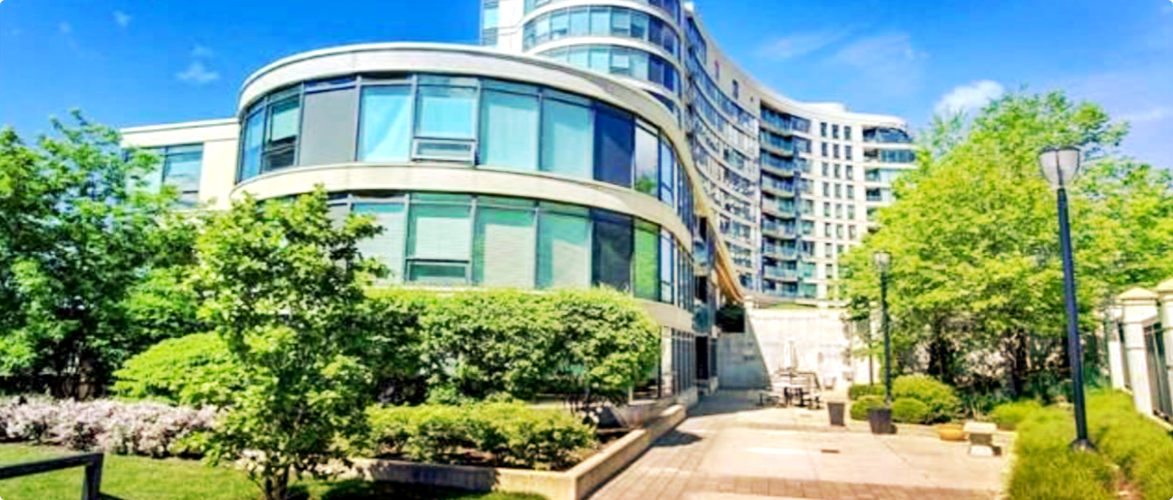
Parkwoods is a quiet North York neighbourhood between the Don Valley Parkway and Leslie Street, built around postwar bungalows on established residential streets. It offers direct ravine access, a stable owner-occupier community, and detached housing at prices that sit below comparable Don Mills addresses nearby.
Parkwoods occupies a quiet corner of North York that most Torontonians drive through without stopping. Bounded by the Don Valley Parkway to the west, Leslie Street to the east, York Mills Road to the north, and Lawrence Avenue East to the south, it’s a neighbourhood of postwar bungalows and split-levels that has changed slowly and deliberately over the past 60 years. The streets are wide, the trees are mature, and the general atmosphere is one of a neighbourhood that has been settled for a long time by people who intended to stay.
What distinguishes Parkwoods from the broader band of North York postwar housing is its relationship to the ravine system. The Don Valley runs along its western boundary, and in some parts of the neighbourhood the ravine comes close enough to residential streets that the green space is felt rather than just seen on a map. Trails into the valley are accessible from several points, and the density of tree cover along the ravine edge gives the western streets a character that’s unusual for a neighbourhood this far from the core.
The name comes from the idea of living among trees, and while it’s not quite as wooded as the name suggests, the street-level experience in many parts of Parkwoods is genuinely pleasant. The lot sizes are reasonable, the streets see little through traffic, and the housing stock has matured into a mix of well-maintained originals, modest renovations, and occasional custom builds where someone decided the original wasn’t worth keeping.
Buyers find Parkwoods by one of two routes: they discover it while looking for an alternative to Don Mills (which it borders) at a lower price point, or they arrive specifically because someone in their network lives here and has been evangelising it for years. It’s a neighbourhood that rewards being known about, and the people who know it well tend to have strong opinions about it. That’s usually a good sign.
Parkwoods is predominantly detached bungalows and split-level homes built between the late 1940s and the early 1960s. The lots are generally 40 to 55 feet wide and 100 to 130 feet deep, which is solid for North York postwar housing. Some streets have larger lots, particularly those closer to the ravine, and these command the premium that width and depth always command in a neighbourhood where land is the primary asset.
In 2026, detached bungalows in Parkwoods are trading in the $1.1 to $1.6 million range. The low end of that range gets you an original home in need of updating on a standard lot. The upper end gets you a well-maintained or partially renovated home with a finished basement on a wider lot, or a more fully renovated property on a typical lot. Split-levels with more usable above-grade space tend to fall in the middle of that range, adjusted for condition and lot dimensions.
Custom builds and significant additions are present but not dominant. The neighbourhood hasn’t seen the same teardown intensity as Newtonbrook or parts of Don Mills, which means the streetscape retains a more consistent postwar character. When custom builds do appear, they tend to be well-executed rather than speculative, because the buyers who choose Parkwoods are generally not doing it for a quick flip.
There are no purpose-built condominiums within the neighbourhood proper, and the townhouse supply is very limited. Parkwoods is a detached freehold neighbourhood, which is precisely what most of its buyers want. The lack of multi-unit infill development has kept the character consistent, and that consistency is something that existing residents actively value. Buyers who need a lower entry price than a detached bungalow here can achieve will need to look at Pleasant View or parts of Victoria Village rather than expecting a semi-detached or townhouse option in this neighbourhood.
Parkwoods is a low-turnover neighbourhood by Toronto standards. Families buy here and stay, sometimes for 20 or 30 years, which means the supply of available properties at any given time is limited. When a well-priced property comes to market, particularly in the more desirable pockets near the ravine or on the wider-lot streets, it tends to attract quick and competitive attention from buyers who’ve been watching the neighbourhood and know what they’re looking at.
The market here rewards preparation more than speed. Because the neighbourhood doesn’t generate a constant flow of listings, buyers who haven’t done the research before a property comes to market often lose it to buyers who have. Understanding which streets you want, what the typical lot dimensions are, what a reasonable price looks like for a given condition level, and what the major due diligence items are for postwar bungalows in this area: these are all things you want to know before the listing goes live, not after.
The typical transaction profile is a detached bungalow priced with an offer date, attracting two to four competing offers, and selling within 5 to 10 percent of the asking price. Properties that are overpriced or that have significant deferred maintenance will sit longer and sometimes require a price reduction before selling. Parkwoods buyers are generally knowledgeable; they’re not going to overpay significantly for a property that needs $150,000 in work just because there’s an offer date.
Estate sales are a meaningful part of the market. The neighbourhood’s age profile means that a consistent stream of properties is coming to market through estate processes, often with limited preparation and priced to sell within a reasonable timeframe. These can represent genuine opportunities for buyers who are willing to take on updating work, provided the inspection reveals a structurally sound and fundamentally functional property underneath the dated finishes.
The buyers who choose Parkwoods are almost universally making a deliberate choice about neighbourhood character over transit convenience. The neighbourhood has no subway station, limited bus service, and a car-dependent daily life for most residents. Buyers who can live with that trade-off in exchange for a detached bungalow on a quiet ravine-adjacent street at a price below comparable Don Mills addresses are the core market.
Many buyers are families with young or school-age children who need detached space and aren’t prepared to compromise on having a real yard. They’ve typically looked at Don Mills, which borders Parkwoods and shares some of its character, found the prices higher, and arrived in Parkwoods having recalibrated. The two neighbourhoods are close enough that the trade-off is genuinely small for many buyers, and the price difference has historically been meaningful enough to justify it.
There’s also a consistent buyer population of people who grew up in the area, moved away in their 20s, and are now returning for the schools, the streets, and the sense of community that a neighbourhood where people stay for 20 years develops naturally. These buyers move quickly because they already know what they want and where they want it.
Investors are not a major presence. The economics of renting a Parkwoods bungalow don’t pencil as an investment at current prices, and the neighbourhood’s character doesn’t attract the kind of speculative redevelopment that would drive a different buyer profile. The people buying here are overwhelmingly owner-occupiers with a long time horizon, which is one of the reasons the neighbourhood stays consistent and well-maintained. You’re not going to find neglected rental properties next to lovingly maintained originals the way you might in some other North York pockets.
The western portion of Parkwoods, closest to the Don Valley Parkway and the ravine, contains the streets that residents most consistently identify as the neighbourhood’s best. Parkwoods Road itself, which runs through the middle of the neighbourhood, gives easy access to the surrounding streets and provides a clear geographic reference point. Streets that back onto or sit adjacent to ravine land carry a premium that reflects the green space access and the privacy it creates.
Fenside Drive is one of the more consistently desirable streets in the neighbourhood, with good lot sizes, mature trees, and a quiet character that suits families. Parkwoods Village Drive, which connects the neighbourhood’s interior, is another reference point for buyers trying to understand the street hierarchy. These aren’t famous streets outside the neighbourhood, but within it, residents have well-developed opinions about which blocks are better than others and why.
The eastern portion of Parkwoods, closer to Leslie Street, is slightly less sought-after because it’s further from the ravine and the parks, and Leslie Street itself carries commercial traffic that affects properties near the boundary. The trade-off is that east-side properties tend to be somewhat more affordable, and for buyers whose priority is the neighbourhood rather than a specific pocket, the eastern streets can offer better value per dollar than the ravine-adjacent western ones.
The southern edge of the neighbourhood, near Lawrence Avenue East, sees more traffic influence from Lawrence and from the broader commercial activity in the area. Streets set back from Lawrence are largely unaffected, but properties on or immediately adjacent to Lawrence itself are not purely residential in character. Buyers who are sensitive to traffic noise should stick to the interior streets rather than the boundary streets, which is standard advice for this kind of rectangular postwar neighbourhood anywhere in North York.
Parkwoods is car-dependent. There’s no subway station in the neighbourhood, and the bus routes that serve it are useful but not frequent enough to make transit the default choice for daily life. The 34 Eglinton East and 51 Leslie routes touch the neighbourhood’s edges, and connections to the broader TTC network are available, but a commute from Parkwoods to downtown by transit is going to involve buses and at least one transfer before you reach a subway line.
York Mills station on Line 1 (Yonge-University) is the nearest subway station, accessible by bus or a 15 to 20 minute drive. The 95 York Mills bus runs along York Mills Road and connects to the station. For residents near the northern edge of the neighbourhood, this connection is the primary transit option for subway access. It’s manageable for people who commute by transit two or three days a week, but it adds real time to a five-day transit commute.
The Don Valley Parkway, running along the neighbourhood’s western boundary, is a double-edged asset. It creates the ravine and green space that residents value, and it also provides fast road access to the 401 to the north and the Gardiner Expressway to the south. For drivers, Parkwoods is genuinely well-connected. Access to the DVP is minutes away, and from the DVP, most of the major employment nodes in the Greater Toronto Area are reachable without extensive surface street driving. This makes Parkwoods a practical choice for buyers who drive to work in Markham, Scarborough, or the North York Employment District.
Cycling is possible within the neighbourhood on its quiet residential streets, but Parkwoods is not a cycling neighbourhood for destination trips. The DVP creates a physical barrier to the west, and the ravine trails, while pleasant, don’t provide fast cycling routes to employment or retail destinations. Residents who cycle seriously tend to use the ravine trails for recreation rather than transportation.
The Don Valley ravine system is Parkwoods’ most significant green space asset, and it’s immediately accessible from the neighbourhood’s western streets. Trails descend into the valley and connect to the broader Don Valley trail network, which runs north through E.T. Seton Park and south through the city to the lake. The section of the valley adjacent to Parkwoods is quieter and less trafficked than the southern reaches of the Don Valley trail, which means residents can access genuine natural experience without dealing with the volume of users that affects the more central trail sections.
Parkwoods Village Park is the main neighbourhood park, with tennis courts, a baseball diamond, a children’s play area, and open grass. It’s a well-maintained community park that gets consistent use, particularly in summer. The park’s central location in the neighbourhood makes it accessible on foot from most streets, and it functions as a genuine gathering point in the way that neighbourhood parks should.
Don Valley Golf Course is accessible from the neighbourhood via the ravine trail system, and while it’s a municipal rather than private course, it’s well-maintained and provides an open green corridor through the valley that residents can walk through even without playing. The golf course land adds to the sense of open space that the ravine provides from the Parkwoods perspective.
E.T. Seton Park, to the north along the Don Valley, is one of the more underappreciated parks in Toronto. It has substantial open space, picnic areas, and trail connections that make it useful for a range of recreational purposes. Access from Parkwoods is by trail or a short drive. The combination of the ravine immediately adjacent to the neighbourhood and the larger park infrastructure accessible through the trail system gives Parkwoods residents a green space endowment that’s well above the North York average.
Parkwoods doesn’t have its own commercial strip. The neighbourhood is almost entirely residential, and residents rely on adjacent areas for retail and dining. The closest commercial options are along Lawrence Avenue East to the south, where strip malls provide grocery stores, pharmacies, and service businesses. Lawrence Plaza, which sits at the Lawrence and Allen intersection a bit to the west, and the various shopping nodes along Lawrence East provide the practical retail that daily life requires.
Don Mills Road is a few minutes’ drive east, and the Don Mills commercial corridor has substantially more retail depth than the Lawrence strip. The Shops at Don Mills, an open-air lifestyle retail centre on Lawrence at Don Mills, provides a higher-end retail experience than anything within walking distance of Parkwoods. It’s a 10-minute drive and has restaurants, clothing, home goods, and food market options that residents of the area use regularly.
York Mills Road to the north connects to the York Mills commercial area, with additional grocery options, restaurants, and services. This is a shorter drive for residents on the northern end of the neighbourhood. The combination of Lawrence to the south and York Mills to the north means that Parkwoods residents have practical retail in two directions without either strip being a destination in its own right.
For dining specifically, the neighbourhood relies on what’s on its borders rather than anything internal. The closest interesting dining clusters are along Don Mills Road and in the Shops at Don Mills area, where there are genuine restaurants worth visiting. For residents who eat out frequently, the car-dependent nature of access to these options is simply part of the neighbourhood’s character, and most residents accept it as the trade-off for the quiet and the green space. It wouldn’t work for someone who wanted to walk to dinner three nights a week, but for families who are largely cooking at home, it’s practical enough.
Parkwoods Village Public School is the primary neighbourhood elementary school, serving junior and middle years students within the catchment. It has a reasonable reputation as a community school and feeds directly into the secondary school pathway for the area. The school community reflects the neighbourhood’s demographics: predominantly families who’ve chosen the area for its residential character and are engaged in the school in the way that stable, owner-occupier communities tend to be.
Don Mills Collegiate Institute is the public secondary school serving much of the neighbourhood, and it has a solid academic reputation within the TDSB. Don Mills CI has a range of programs including arts and technology streams, and its university placement results are consistent. The school benefits from a stable and engaged community in its catchment area, and families who use the public secondary system generally find it a reliable choice.
On the Catholic side, the TCDSB provides elementary education through schools in the broader North York area, and Catholic secondary students from Parkwoods typically attend Don Bosco Catholic Secondary School or another TCDSB school depending on catchment routing. As always with Catholic schools, eligibility is tied to baptismal status, and families planning to use the Catholic system should verify their eligibility early.
French immersion is available within the TDSB for families who want it, though it requires identifying the specific French immersion school for the Parkwoods catchment and understanding the transportation implications. The demand for French immersion spots in North York has historically exceeded supply at the preferred schools, so families committed to immersion should research the registration process and timelines before assuming a spot will be available.
Parkwoods has seen slower development than many comparable North York neighbourhoods, and that’s a deliberate reflection of its character as much as its planning designation. The neighbourhood sits within a low-rise residential zone that has limited infill development opportunities, and the community’s preference for maintaining the postwar bungalow character has been broadly consistent with planning policy. You don’t see the same teardown and custom rebuild intensity here that you see in Newtonbrook or parts of Lawrence Park.
The most significant nearby development story is the Eglinton Crosstown LRT, which runs along Eglinton Avenue to the south of the neighbourhood and, when fully operational, will add a crosstown transit option that significantly improves connectivity to the rest of the city. The Science Centre station and other stations along the Eglinton corridor are a short drive or bus ride south of Parkwoods, and for residents willing to drive or take a short bus connection to a Crosstown station, this will meaningfully expand transit options over what currently exists.
Development along the Don Mills Road and Sheppard Avenue East corridors, to the east and southeast of Parkwoods, has been ongoing with mid-rise and some high-rise residential development adding density to those corridors. This doesn’t affect the interior of Parkwoods but it does change the urban context around the neighbourhood’s edges. The retail and service infrastructure along these corridors improves as population density increases, which benefits Parkwoods residents who use those areas for daily needs.
Within the neighbourhood, there has been gradual renovation and updating of the housing stock rather than wholesale redevelopment. Properties that were original in the early 2000s are now more likely to have updated kitchens, finished basements, and improved mechanical systems. The neighbourhood is improving incrementally rather than transforming, which is probably what most of its residents prefer and what buyers looking for a settled, stable community should find reassuring.
How does Parkwoods compare to Don Mills for a buyer considering both? Don Mills is the more established name and commands a modest price premium over Parkwoods, particularly for properties with direct access to the planned Don Mills community amenities. Parkwoods gets you comparable housing stock and genuine ravine access at somewhat lower prices, with the trade-off being slightly less proximity to the Don Mills Road commercial strip and the amenities around the Shops at Don Mills. For buyers who are indifferent to the Don Mills name and are primarily evaluating the housing and green space, Parkwoods is a reasonable alternative. For buyers who want the full Don Mills package, including proximity to the community centre and the more established commercial node, Don Mills itself is worth the premium.
Is transit access a dealbreaker for Parkwoods? It depends entirely on your lifestyle. Buyers who drive to work and use transit occasionally will not find it a problem. The DVP provides fast road access in multiple directions, and the neighbourhood is genuinely convenient for drivers heading to major employment nodes. Buyers who rely on transit for daily commuting will find the bus-to-subway connection adds meaningful time and effort to their commute. If you’re a five-day-a-week transit commuter to downtown, Parkwoods will require a longer commute than a subway-adjacent neighbourhood. If you drive to work most days or work remotely, the transit limitation is largely academic.
What are the main things to inspect in a Parkwoods bungalow? Foundation waterproofing is the first thing. These houses are old enough that original foundation drainage systems are often due for replacement, and proximity to the ravine on some streets can increase groundwater pressure. The electrical panel and wiring are worth inspecting carefully, since many of these homes still have panels that were adequate for 1960s living but not for current household electrical loads. Knob-and-tube wiring in unfinished attic space is not uncommon. The furnace and water heater age matters, particularly in an estate sale where mechanical maintenance may have been deferred. A thorough home inspection by a qualified inspector with experience in this vintage of North York housing is not optional here.
Are there any concerns about the DVP and noise in Parkwoods? The Don Valley Parkway runs along the western boundary, and residents on the streets closest to the highway can hear traffic, particularly at night and in the early morning when ambient noise is lower. The ravine provides some buffering, but it doesn’t eliminate highway noise at close range. Streets more than two or three blocks from the DVP are largely unaffected. Buyers who are sensitive to traffic noise should visit the specific property at different times of day and be honest about whether what they’re hearing is acceptable to them. The ravine aesthetic and the highway noise are related: you can’t have the green space without the proximity to the highway that created it.
Buying in Parkwoods is straightforward in structure but requires careful due diligence at the property level. The market is consistent enough that an agent with recent transaction experience in the neighbourhood will be able to advise accurately on pricing. The complexity comes at the property level, where the age of the housing stock means that condition variation is wide and the difference between a well-maintained original and a deferred-maintenance one may not be fully visible in listing photos.
A buyer’s agent in Parkwoods should be steering you toward a pre-listing or pre-offer home inspection on any property where the condition is uncertain. The cost of a professional inspection is trivial relative to the cost of buying a house that needs $80,000 in foundation work you didn’t know about. For older North York bungalows at this price point, inspection is not a luxury. The specific items to focus on for this vintage are foundation drainage, electrical panel capacity and wiring condition, attic insulation and ventilation, and the condition of the basement if it’s been finished without permits.
The Parkwoods market is calm enough that most transactions are not decided in a frenzied 48-hour competitive window. You’ll often have time to do a proper inspection before making an offer, and for estate sales in particular, sellers are generally receptive to reasonable conditions. Your agent should be reading each listing’s specific situation rather than assuming that every property requires a conditions-free offer to be competitive.
Title searches in Parkwoods occasionally surface older permits with outstanding conditions, particularly for additions and basement finishing work done in the 1980s and 1990s. These can usually be resolved but require time and sometimes money to close out. Your agent should flag any indication of unpermitted work during due diligence so you know what you’re dealing with before you’re committed. The municipality’s property history is accessible and should be reviewed for any property where the finished state differs meaningfully from what a standard bungalow would have looked like when built.
Street-level knowledge is hard to find online. Our team works in Parkwoods every day. They know which pockets hold value, where the school catchment lines actually fall, and what the market is doing right now. Talk to us before you make a decision about Parkwoods.
Talk to a local agent