
Birch Cliff is a quiet east Toronto neighbourhood on the Scarborough Bluffs escarpment, bounded by Kingston Road to the north and the bluffs above Lake Ontario to the south. The streets are genuinely suburban in character: detached bungalows and two-storeys from the 1940s through 1960s, most on lots wider than anything available at comparable prices west of Victoria Park. In early 2026, detached homes on the south side of Kingston Road were trading between $1.05 and $1.4 million, with larger lots on the bluff-side streets commanding the higher end.
Birch Cliff occupies a specific kind of geography that shapes everything about living here. The neighbourhood sits on the Scarborough Bluffs escarpment, a stretch of glacial sediment cliffs that drop 60 metres to Lake Ontario. From certain streets south of Kingston Road, you can walk to the bluff edge and look across the lake in either direction with nothing in the way. This is not a selling point invented by real estate agents. It is a physical fact about the land, and it draws a specific kind of buyer who wants the combination of city address and landscape access that the bluffs make possible.
Kingston Road is the neighbourhood’s main commercial artery, running northeast from the Beach and carrying the bus routes that connect Birch Cliff to the subway at Victoria Park and Coxwell stations. The strip itself is practical rather than polished: a mix of convenience retail, takeout, a few sit-down restaurants, and the kind of independent businesses that reflect a neighbourhood that has not yet fully gentrified. The Birch Cliff Coffee House on Kingston Road has been there long enough to be a genuine local institution, not a neighbourhood branding exercise. Kew Beach and the Main and Gerrard strip are 15 to 20 minutes west by car, close enough to use regularly but not within walking distance.
The residential streets between Kingston Road and the bluffs are quiet in a way that most Toronto neighbourhoods are not. The escarpment limits through-traffic, and the relatively low density of the area means the street-level experience is genuinely different from anything further west. Streets like Dorset Road, Birchmount Road, and Fallingbrook Drive south of Kingston Road define the core of the neighbourhood. The houses on them are mostly post-war: brick bungalows, solid two-storeys, and the occasional split-level, on lots that are wider and deeper than what buyers find in comparable east Toronto addresses.
The dominant property type in Birch Cliff is the detached bungalow or two-storey built between 1940 and 1965. Lot sizes run 40 to 55 feet wide and 100 to 125 feet deep on most streets, with some larger parcels on the deeper lots closer to the bluff edge. These are real lots, not the 20-foot widths buyers find on Victorian semis in Riverdale or Leslieville. A buyer who wants a detached house with a proper backyard, room for a driveway, and the option to park two cars finds Birch Cliff providing what most of the 416 cannot at the price point.
In early 2026, a standard three-bedroom brick bungalow in good condition on a 45-foot lot was trading between $1.05 and $1.2 million. Updated two-storeys with four bedrooms on deeper lots were running $1.25 to $1.4 million depending on kitchen and bathroom condition, lot depth, and whether there was a finished basement. Properties on the south side of streets that run toward the escarpment, particularly those with bluff access at the rear, command a premium of 5 to 10 percent over comparable properties elsewhere in the neighbourhood. Renovated properties are not common, and the gap between a maintained original and a properly updated home is wide: buyers making an offer on an unrenovated bungalow should budget $150,000 to $250,000 for a realistic kitchen, bathroom, and systems update.
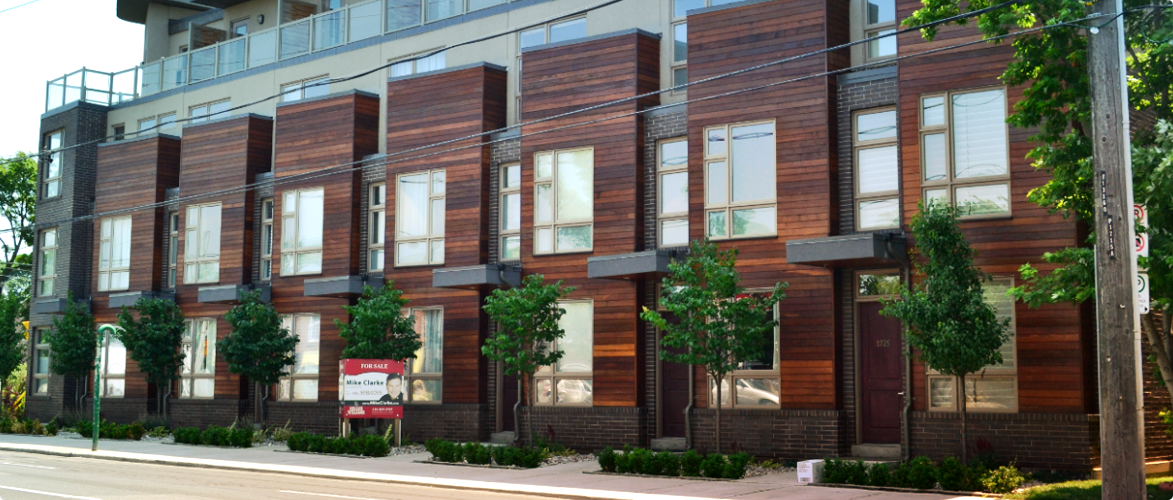
There is essentially no condo market in Birch Cliff. The neighbourhood has no purpose-built condo towers, and the few stacked townhouse units that exist on Kingston Road sell for $600,000 to $750,000 for a two-bedroom. Buyers who want a freehold detached home in the city and are willing to spend an hour on transit come to Birch Cliff. Buyers who want density or walkability to bars and restaurants do not. Both groups are right about what they’re choosing.
Birch Cliff behaves differently from the more active east-end markets west of Victoria Park. The buyer pool is narrower here, drawn from a specific profile: people who want a detached home, don’t need the subway nearby, and find the combination of lot size and bluff access worth the commute trade-off. That narrower pool means the market is less competitive on most properties. Multiple offers happen, but less frequently than in Leslieville or Riverdale, and the premium over list price is typically smaller. Buyers approaching a well-priced Birch Cliff property in 2026 with conditions and reasonable terms are not automatically disadvantaged.
The market follows the broader Toronto seasonal pattern with some amplification at the lower-activity end. Spring listings from late February to May produce the most competition. October is the second active window. From mid-November through January, listings sit longer and sellers are more flexible on price, particularly for properties that have been on the market through the fall. The neighbourhood does not attract the speculative buyer traffic that pushes Leslieville or Riverdale prices; most Birch Cliff buyers are families looking to settle for a decade or more, and they negotiate accordingly.
One factor that moves Birch Cliff prices faster than the broader market is lot size and bluff proximity. A renovated home on a 55-foot lot with direct trail access to the escarpment behaves differently from a standard bungalow on a 40-foot lot with no particular site advantage. When those premium properties come up, they attract buyers from wider geography, including some from Beach neighbourhoods who want more lot for the price. Standard bungalows follow the broader east-end market more closely and tend to reflect the conditions buyers see in Cliffside and Birchcliff Village without much premium distinction.
The buyers who end up in Birch Cliff are, almost without exception, people who decided they need a detached home and can’t find one they can afford anywhere west of Victoria Park. Many have looked at Leslieville, East York, and the upper stretches of the Beach before arriving here. The transit distance from the core is the acknowledged trade-off, and buyers who make peace with that decision tend to be genuinely satisfied with it because the lot sizes and quiet streets deliver something the inner east end can’t. The families who choose Birch Cliff typically have one or two children, a car, and a work pattern that doesn’t require a daily downtown commute at 8 AM.
Some buyers come from Scarborough itself, families stepping up from Cliffside or Scarborough Village who want to stay east of the city’s commercial core and see Birch Cliff’s positioning close to the Beach as a meaningful step up in address. These buyers often have strong local knowledge about the transit routes and the bluffs, and they’re less worried about the downtown commute because they rarely make it. The Bluffer’s Park beach, the escarpment trails, and the Kingston Road amenities are what matter to them, and the neighbourhood delivers on all three.
A third group, smaller but notable, are buyers specifically seeking the bluff proximity. They’ve researched the trail system, they understand the erosion risks, and they want the unusual landscape access that the Scarborough Bluffs provide. These buyers often pay above the neighbourhood median for the right property and plan to stay for the long term. They’re the ones who give Birch Cliff its distinct identity as something other than a generic detached-home neighbourhood. The combination of Lake Ontario views, trail access, and sub-$1.4 million detached homes doesn’t exist anywhere else in the city.
The post-war bungalows and two-storeys in Birch Cliff were well built for their era, but that era was 60 to 80 years ago. Before any offer, a home inspection by someone with specific experience in post-war Toronto housing is not optional. The things that fail predictably in this vintage of house are: the electrical panel (60-amp panels were standard until the 1960s and are inadequate for modern loads), knob-and-tube wiring in the portions of the house that were never updated, original cast-iron drain stacks that are approaching the end of their service life, and foundation waterproofing that was never designed to handle the clay soils common in this part of Scarborough. None of these are disqualifying, but each carries a real cost, and buyers who don’t account for them in their offer price are absorbing someone else’s deferred maintenance.
Lot due diligence matters here more than in denser urban neighbourhoods, because the larger lots are also more likely to carry complications. Some properties south of Kingston Road sit close to the top of the bluffs, and the City of Toronto has active erosion management programs in the Scarborough Bluffs area. Before purchasing a property within 100 metres of the escarpment edge, buyers should request a copy of any City correspondence about erosion risk, check the Ontario Land Registry for any conservation authority notices, and confirm the property isn’t subject to a development setback that would restrict rear additions or accessory structures. This isn’t a reason to avoid these properties, but it is information that belongs in your offer price, not discovered afterwards.
Parking and garage configurations vary considerably in this neighbourhood. Some properties have a detached garage accessed from a rear lane, others have a driveway from the front, and a meaningful number have had garages converted to living space or studios without permits. Confirm that any converted garage structure has the appropriate permits and doesn’t create complications for insurance or financing. Title insurance is worth carrying; the post-war properties in this area have had enough ownership changes and informal modifications that having that protection is reasonable.
Sellers in Birch Cliff face a market that rewards honest preparation more than almost anywhere in the inner east end. The buyer pool here is doing specific research on post-war housing stock, and they’ve typically seen enough unrenovated bungalows to know immediately whether a property has been genuinely maintained or just cleaned up for showings. A fresh coat of paint on original 1958 kitchen cabinets will not confuse a buyer who has been looking in this neighbourhood for three months. What it will do is create distrust about what else might have been cosmetically addressed rather than properly fixed.
Properties that sell well in Birch Cliff are the ones where the seller can document the work done: a panel upgrade with permits, a new roof with the contractor’s invoice, updated plumbing with the inspection certificate. These things cost money to produce, but they remove the inspection contingency argument that otherwise gives buyers licence to renegotiate after the initial accepted offer. In a market where conditions are now common again, a seller who can demonstrate a properly maintained house is in a stronger position than one who simply priced aggressively and hoped for clean offers.
Timing matters in this neighbourhood perhaps more than in higher-demand markets, because the buyer pool is thin enough that the windows of activity are meaningful. Listing in the last two weeks of February or the first week of March catches the spring market before it peaks, with motivated buyers who have been watching inventory through the winter. Listing in September or early October catches a second, smaller wave. Sellers who list in November or December should price with the expectation of sitting, unless the property has a specific attribute, such as bluff proximity or a renovated interior, that draws buyers regardless of season.
The Scarborough Bluffs are the defining physical feature of Birch Cliff and the main reason buyers from outside the neighbourhood start paying attention to it. The escarpment runs for about 15 kilometres along the Lake Ontario shoreline, reaching heights of 60 metres in places. The bluffs themselves are actively eroding, which is both their ecological character and a legitimate planning consideration for properties close to the edge. The trail network along the top of the escarpment connects Birch Cliff to Cathedral Bluffs Park to the east and to the upper section of Bluffer’s Park to the west and below. On a clear day, the views across Lake Ontario extend to the New York State shore on the other side.
Bluffer’s Park is the waterfront destination most Birch Cliff residents use regularly. It sits at the base of the bluffs on a spit of land created by infill, with a beach, a marina, and Bluffer’s Restaurant at the water’s edge. Getting there requires driving down Brimley Road to the base of the escarpment, a five-minute trip from most of the neighbourhood. The beach itself is one of the better freshwater beaches accessible from within the city, and on summer weekends it draws from across the east end and Scarborough. Residents who walk or cycle to the beach rather than drive typically use the Cathedral Bluffs trail connection, which adds time but avoids the parking situation that develops at Bluffer’s Park on hot days.
The upper escarpment trail is a year-round resource that most Birch Cliff residents use more consistently than the beach. It’s accessible via Scarborough Bluffs Park at the end of Munford Crescent or from the Fallingbrook Road access point, and it connects to a broader trail network that allows longer walks east toward Rosetta McClain Gardens in Cliffside. The combination of lakefront trail access, a working beach, and escarpment views is a genuine amenity, and it’s one that buyers coming from west-end Toronto neighbourhoods routinely underestimate until they’ve actually spent time here.
Transit in Birch Cliff requires a direct conversation about what you’re accepting before you commit to a purchase here. The neighbourhood is not subway-adjacent. The nearest subway stations are Victoria Park on the Bloor-Danforth line, about 3 kilometres west, and Warden Station, slightly further northeast. Getting to either requires a bus ride or a drive. The primary route is the 12 Kingston Road bus, which runs along Kingston Road and connects west toward Main Station and Victoria Park. The 22 Coxwell bus runs south from the Danforth to Woodbine and the Beach, but it doesn’t penetrate into Birch Cliff directly. A door-to-downtown commute on transit from the Birchmount and Kingston Road intersection runs 45 to 60 minutes depending on time of day and connections.
Drivers have a better time of it, particularly outside peak hours. Kingston Road connects west to the Gardiner Expressway via Eastern Avenue, and from the Gardiner it’s a straightforward 20 to 30 minute run to the financial district outside rush hour. The DVP is accessible via O’Connor Drive a few kilometres north, providing an alternative to Kingston Road for destinations north of the downtown core. Parking is not an issue in this neighbourhood: the lots are large enough that every property has a driveway, most have a garage, and street parking on the residential streets is unrestricted and available. For a driver-centric household, Birch Cliff is one of the most practical addresses in the east end.
Cycling is possible but not the frictionless experience it is closer to the core. Kingston Road carries heavy traffic and has limited cycling infrastructure. The lakefront trail system, once you can reach it via Brimley or the escarpment access points, is excellent for recreational cycling, but it doesn’t connect efficiently to downtown via a cycling-safe route. Buyers who commute by bike should understand that this neighbourhood is not well served for that purpose, and should factor it honestly into the location decision.
Cliffside is Birch Cliff’s immediate eastern neighbour, and the two are so physically similar that buyers often research them together. Cliffside runs from Birchmount Road east to Midland Avenue, with Kingston Road as its northern boundary and the bluffs to the south. The housing stock is essentially identical: post-war detached bungalows and two-storeys on similar lot sizes. Prices in Cliffside run 5 to 10 percent below Birch Cliff for comparable properties, reflecting Birch Cliff’s closer proximity to the Beach and its slightly stronger transit connection to Victoria Park station. Whether that difference justifies the premium is a personal calculation, but buyers who want more for their money and don’t place value on the address itself often find Cliffside satisfying.
The Beach is the obvious western comparison, and the contrast is stark on price. A detached home in the Beach proper, south of Kingston Road and east of Woodbine, trades between $1.6 and $2.2 million for the same post-war product you can buy in Birch Cliff for $1.05 to $1.4 million. The Beach has better transit, a more developed commercial strip, and the Boardwalk, which is a substantially different lakefront experience than the Scarborough Bluffs. It also has narrower lots on many streets, more competition for every listing, and a waiting-for-a-spot-to-open quality to the market that Birch Cliff doesn’t have. Buyers coming from the Beach to Birch Cliff are almost always motivated by price and lot size, and they usually report being pleasantly surprised by how livable it is once they arrive.
The comparison that matters most is the one between Birch Cliff and the detached-home options available in East York, Leaside, and the Danforth corridor. In East York, a three-bedroom brick detached on a 30-foot lot trades for $900,000 to $1.1 million. In Birch Cliff, a three-bedroom brick detached on a 45-foot lot trades for $1.05 to $1.25 million. The lot premium is real and meaningful, particularly for families who want garden space, room to add a garage suite, or simply a yard that children can actually use. Buyers who run that comparison seriously often find Birch Cliff’s value proposition more interesting than its distance from the subway initially suggested.
Birch Cliff has not gentrified at the pace of the neighbourhoods west of Victoria Park, and that shows on Kingston Road. The commercial strip has some good spots, including the Birch Cliff Coffee House and a handful of solid independent restaurants, but it doesn’t have the restaurant density or retail variety of the Danforth or Queen East. Residents who want a night out with range and choice will drive west to the Beach or east to the Kingston Road strip through Cliffside, where a few more options have opened in recent years. The commercial situation is a genuine limitation for people who use walkable restaurants and shops as part of their weekly routine.
The residential streets themselves are a different experience entirely. Fallingbrook Drive, Dorset Road, and the streets running south from Kingston Road toward the bluffs are quiet, well maintained, and have the feel of a neighbourhood where people stay for a long time. Front yards are kept up. Neighbours know each other. The community associations are active, particularly around bluff access and erosion monitoring. Birch Cliff has a community character that is less about what’s on the commercial strip and more about the specific people who chose to live here, many of whom made the same transit trade-off you’re considering and found it worked for them.
The school situation is worth separate consideration for families. Birch Cliff Public School on Midland Avenue is the main TDSB elementary option and has a good local reputation for its size. For secondary school, students typically feed to Sir Wilfrid Laurier Collegiate on Kingston Road, which offers a range of programming including arts and technology specialisations. Families with specific secondary school priorities should verify current catchment boundaries and available programs through the TDSB directly, as these change. The Scarborough Catholic school board operates separate schools in the area, and families who use the Catholic system will find the same due diligence applies.
What is the average home price in Birch Cliff in 2026? Detached homes in Birch Cliff were trading between $1.05 and $1.4 million in early 2026. Standard three-bedroom brick bungalows on 40 to 45-foot lots sit at the lower end of that range in good original condition. Updated two-storeys on larger lots, particularly on streets with proximity to the bluff escarpment, reach the top of the range. The price spread within the neighbourhood is meaningful because lot size and condition vary so much between properties. A bungalow that hasn’t had a kitchen update since 1985 and a renovated two-storey on a 55-foot lot with a finished basement can differ by $250,000 or more within the same two-block radius. Buyers should compare properties on a price-per-square-foot basis and factor renovation budgets before comparing list prices directly.
Is Birch Cliff safe? Birch Cliff is a quiet, low-density residential neighbourhood with the crime profile you’d expect from post-war suburban streets. Property crime, particularly opportunistic break-ins and vehicle theft, occurs across the east end and Birch Cliff is not exempt, but the neighbourhood doesn’t have the commercial strip activity that tends to drive higher incident volumes. The TTC route on Kingston Road brings through traffic, and the usual sensible precautions apply: don’t leave valuables visible in cars, know your neighbours, use porch lights. It’s not a neighbourhood where safety should be a primary decision factor for buyers coming from comparable parts of the 416.
Are the Scarborough Bluffs eroding and does that affect property values? The Scarborough Bluffs are actively eroding at a rate that varies by year and location along the escarpment, driven by wave action at the base, rainfall, and freeze-thaw cycles. The City of Toronto and the Toronto and Region Conservation Authority monitor the bluffs and manage erosion through various programs. Properties close to the escarpment edge are subject to TRCA setback regulations that restrict development within a certain distance of the top of bluff. Most residential properties in Birch Cliff are set back far enough from the edge that this doesn’t affect their day-to-day use or resale value, but buyers of any property within 150 metres of the bluff edge should request a current TRCA screening before purchase. The erosion situation does not appear to have a measurable negative effect on prices for properties at normal setback distances. It is, however, a legitimate factor for any property on the immediate escarpment edge.
How does Birch Cliff compare to the Beach for families? The Beach has better transit, a more developed commercial strip, and stronger name recognition as a family neighbourhood, but it also costs significantly more for equivalent housing. A family that can access a detached home in the Beach for $1.7 million can typically access a larger detached home in Birch Cliff for $1.1 to $1.3 million, with a bigger lot and comparable school quality at the elementary level. The practical difference in daily life for a family with two children and two cars is smaller than the $500,000 price gap suggests. Birch Cliff families who drive to the Beach on weekends report no great sense of deprivation; they access the same lake on the Bluffs trails on weekdays when the Beach is crowded. The comparison depends heavily on how much weight a family places on the Beach address itself and how much on getting the most livable home for the budget.
Birch Cliff offers a specific exchange that buyers either find compelling or don’t. What you get is a detached home on a genuinely large lot, direct access to one of the city’s most dramatic natural features, and a quiet residential character that most Toronto addresses don’t have at any price. What you give up is subway proximity, a developed commercial strip within walking distance, and the social cachet of a west-end or Beach address. These are real trade-offs and buyers should weigh them honestly rather than convincing themselves the transit distance won’t matter after a few months of commuting.
The price point in early 2026 was one of the last places inside the City of Toronto where a detached home on a 45-foot lot was available under $1.2 million. That window may not persist indefinitely. The Beach has priced out the buyers who could afford it twenty years ago, and those buyers moved to Birch Cliff and Cliffside. As the Beach continues to price upward, and as hybrid work reduces the daily commute frequency for office workers, Birch Cliff’s transit limitation becomes a smaller factor in the purchase decision for a larger share of buyers. The neighbourhood is not hidden. It’s simply been sorted to a buyer profile that values the lot and the bluffs over the subway access, and that profile is growing as the affordability threshold moves east.
Buyers who are serious about Birch Cliff should visit on a Tuesday morning and on a Saturday afternoon. The Tuesday gives you the commute reality check: walk to the bus stop, ride to Victoria Park, and time the full trip to wherever you’d need to be downtown. The Saturday gives you the neighbourhood at its best: the trail system, the views from the bluff edge, the quiet streets, the Birch Cliff Coffee House, and the particular quality of light that the lake and the escarpment produce on a clear spring day. Both visits are necessary for an honest decision, and the buyers who skip one of them are the ones who end up surprised, in either direction, six months after moving in.
Street-level knowledge is hard to find online. Our team works in Birch Cliff every day. They know which pockets hold value, where the school catchment lines actually fall, and what the market is doing right now. Talk to us before you make a decision about Birch Cliff.
Talk to a local agent