
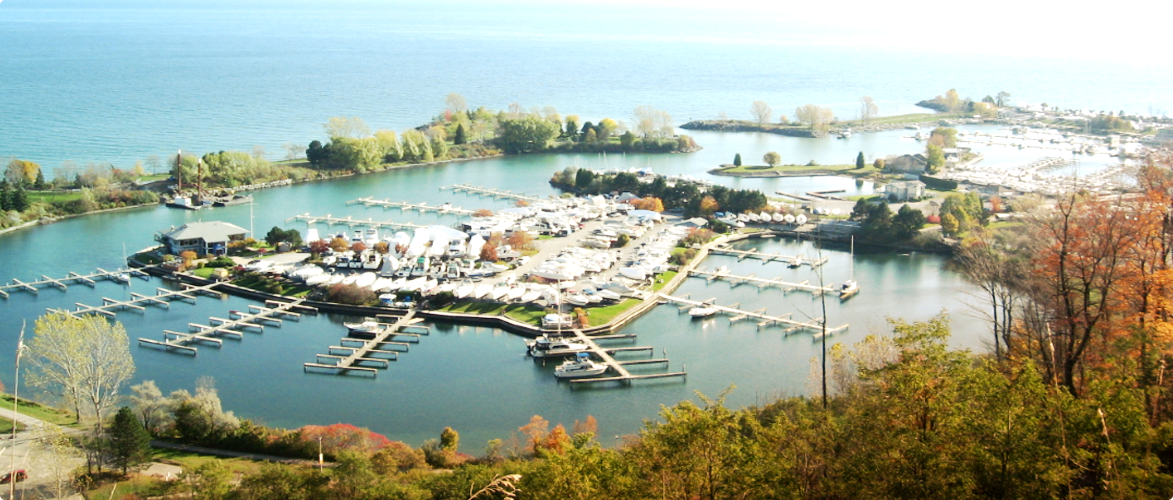
Cliffcrest is a quiet, established neighbourhood in south Scarborough sitting above the Scarborough Bluffs, with post-war detached bungalows on generous lots and access to Bluffer's Park and the bluff-top trail system. It offers bluffs-adjacent residential living at a fraction of the cost of comparable lakefront-adjacent neighbourhoods in the west end.
Cliffcrest sits at the quieter, more removed end of Scarborough’s residential spectrum. Located south of Kingston Road near Midland Avenue, it backs up toward the Scarborough Bluffs, which means the neighbourhood’s southern residents are within walking distance of one of Toronto’s most dramatic natural features. The bluffs themselves define the area’s character as much as the housing stock: there’s a sense here of being at the edge of something, where the city gives way to the lake and the clay cliffs that have been eroding into it for thousands of years.
The neighbourhood developed primarily in the 1950s and 1960s, and the housing reflects that era’s confident suburban vision: solid brick bungalows, well-proportioned lots, modest but serviceable street layouts. There’s no architectural drama in Cliffcrest itself; the drama is in the landscape. Streets like Cliffwood Road and Midland Avenue South run toward the Bluffs, and the further south you go, the more the neighbourhood feels removed from the city’s ambient noise. That removal is what many buyers here are specifically looking for.
Bluffer’s Park and the trail network along the Scarborough Bluffs are accessible within a short drive or moderate walk from most of Cliffcrest. This is the feature that makes the neighbourhood distinctive in a way that comparable post-war bungalow streets elsewhere in Scarborough simply can’t replicate. The park at the base of the bluffs has a beach, a marina, and one of the better waterfront views in the city. Residents of Cliffcrest treat it as a backyard, and buyers from other parts of Toronto consistently underestimate how much that access matters for daily quality of life once you live here.
Kingston Road forms the northern commercial boundary and provides most of the neighbourhood’s retail and service connections. The road is a classic arterial commercial strip with the functional mix of grocery, pharmacy, hardware, and fast food that a residential area needs. The neighbourhood’s relative quietness south of Kingston Road is part of its draw: you buy into a calm residential environment without sacrificing connectivity to the city’s services.
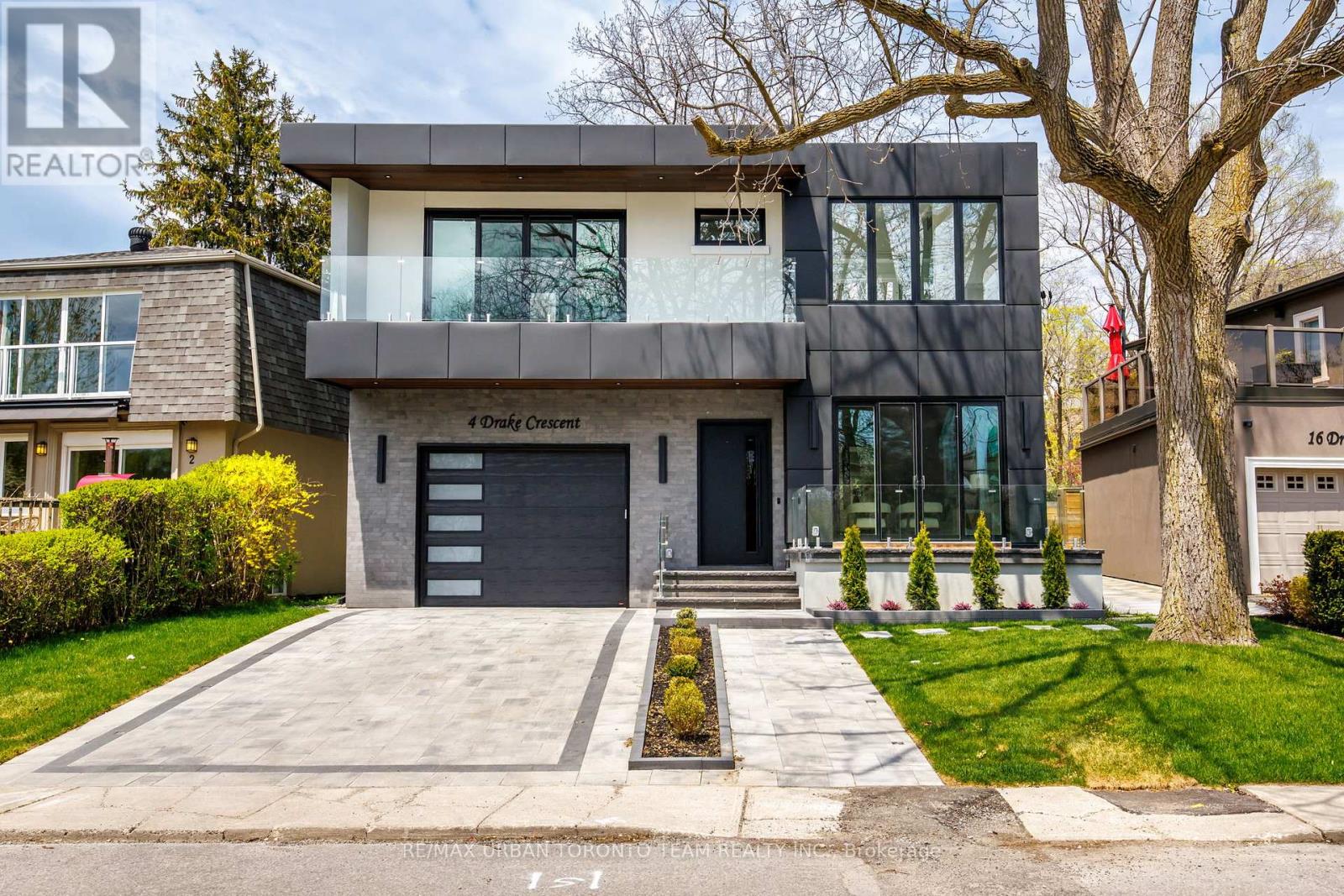
Cliffcrest’s housing is almost exclusively post-war detached bungalows and one-and-a-half storey homes, built primarily between 1950 and 1970. Lots are typically 40 to 50 feet wide and 100 to 125 feet deep, with standard suburban setbacks and rear yards that provide genuine outdoor living space. Some of the streets closer to the Bluffs sit on slightly larger lots, and the occasional two-storey rebuild or infill has appeared over the past decade as owners have captured the value in a Bluffs-adjacent lot by replacing an original bungalow with a larger home.
In 2026, detached homes in Cliffcrest range from approximately $900,000 for a modest bungalow in fair condition on a standard lot, up to $1.4 million or more for well-maintained properties on larger lots with meaningful proximity to the Bluffs. The bluff-adjacent premium is real: homes on the streets that dead-end toward the Bluffs or within a five-minute walk of Bluffer’s Park trail access consistently command $50,000 to $150,000 more than comparable homes further north, depending on specific location and views.
The housing stock in Cliffcrest tends to be in better average condition than comparable post-war bungalows in more affordable Scarborough pockets. This is partly a function of the buyer profile: the people who’ve chosen Cliffcrest over the past two decades have typically come with clear appreciation for what the neighbourhood offers and have invested accordingly in maintaining their properties. Move-in-ready listings are more common here than deep renovation projects, though they do appear when estate sales come through.
There’s essentially no condominium product in Cliffcrest proper. The neighbourhood is a freehold enclave, and the low-rise character is stable given the absence of large development sites and the adjacency to Bluffs parkland that limits southern expansion. For buyers committed to freehold detached ownership near the water, Cliffcrest offers a product that doesn’t exist in most of Toronto at any comparable price point. Waterfront-adjacent detached homes in the Beaches or south Etobicoke cost dramatically more. Cliffcrest is the more affordable version of that proximity.
Cliffcrest moves more slowly than most Scarborough neighbourhoods. Turnover is low, the buyer pool is specific, and sellers who understand what they have don’t need to discount to generate interest. Properties in good condition and well-located relative to the Bluffs don’t sit long when they’re priced honestly. The buyers who’ve been watching Cliffcrest know what the market is worth, and they move when the right property appears rather than waiting for a bargain that won’t come.
The neighbourhood sees some competition on its better listings, particularly in spring when buyers who’ve spent the winter researching the Bluffs-adjacent market are ready to commit. But it’s not the five-to-eight-offer situation that dominates in undersupplied urban markets. Two or three motivated buyers competing on a well-presented property is more typical. This reflects the specificity of the buyer profile: not everyone wants the quiet, bus-dependent, waterfront-adjacent lifestyle that Cliffcrest represents, so the pool is self-selecting and not enormous.
Estate sales and properties from long-term owners who haven’t updated in decades do appear with some regularity. When they do, they represent the opportunity to buy into the neighbourhood at a price that reflects original condition rather than the fully-realised Bluffs premium. Renovation buyers who’ve correctly identified a well-located Cliffcrest property in original condition are buying into one of the better long-term value propositions in Scarborough, because the lot and location hold the value regardless of the cosmetic condition of the structure.
Pricing in Cliffcrest requires knowledge of the micro-geography: a bungalow on a street with Bluffs trail access or a view toward Lake Ontario is not the same as a bungalow four streets north on a standard residential grid, even if the houses themselves are virtually identical. Buyers and agents who treat Cliffcrest as a uniform market will either overpay for well-located properties or miss the premium entirely. The difference between a bluff-adjacent and a standard Cliffcrest listing is one of the more meaningful street-level value distinctions in Scarborough’s residential market.
Cliffcrest draws buyers who’ve made a conscious decision to prioritise natural setting and neighbourhood quiet over urban density and amenity access. This isn’t a neighbourhood that people stumble into; they research it, visit Bluffer’s Park, walk the residential streets, and decide this particular trade-off is right for them. The typical buyer is a family or a couple, often upgrading from a condo or a smaller home elsewhere in Scarborough or East Toronto, who want a detached home with a proper lot and a specific quality of life that proximity to the Bluffs provides.
Many buyers in Cliffcrest come from the broader Scarborough community and have existing connections to the area. Some are returning to the neighbourhood where they grew up, or moving closer to parents who’ve been here for decades. The stability of the neighbourhood’s demographics — well-established families, long-term owners, relatively low transience — is part of what draws people who value that kind of continuity.
Buyers from outside Scarborough, particularly those comparing Cliffcrest to the Beaches or east-end lakefront neighbourhoods, are often surprised by the price difference for ostensibly similar lifestyle features. The Beaches offers a more walkable, amenity-rich environment at a significantly higher price point. Cliffcrest offers the natural setting and the residential quiet at a substantially lower cost, with the trade-off being a more car-dependent daily experience and less immediate access to the restaurant and retail variety that the Beaches provides. For buyers who’ve genuinely decided that the bluff walk and the quiet matter more than the coffee shop at the end of the street, Cliffcrest is compelling.
What buyers give up is substantial: limited transit, no walkable main street of note, and a significant drive to the subway. These are real constraints that rule out Cliffcrest for transit-dependent buyers and for those who want daily urban walkability. Buyers who understand and accept that trade-off tend to be very happy in the neighbourhood. Those who buy hoping the transit and walkability situation will improve are likely to be disappointed in the near term.
The streets south of Kingston Road and east of Midland Avenue form the core of Cliffcrest. Cliffwood Road runs north-south through the neighbourhood and is one of the key streets for orientation. The homes along Cliffwood and the east-west streets crossing it represent the typical Cliffcrest product: post-war bungalows on standard lots, well-maintained, with a settled residential character that hasn’t changed much in decades.
The streets that terminate at or approach the Bluffs and the ravine system to the south are in a different tier. Natal Avenue, Copperfield Road, and the streets in the southern end of the neighbourhood that back onto or approach the ravine and Bluffs parkland carry the location premium that distinguishes Cliffcrest from comparable post-war neighbourhoods further north. Properties here with direct trail access or ravine-adjacent rear yards are among the most sought-after, and they don’t come to market often.
The pocket nearest to Midland Avenue on the western edge of Cliffcrest is slightly more commercially influenced, with the Kingston Road strip close and the noise from Midland Avenue traffic noticeable on the adjacent streets. Buyers looking for the quietest residential experience should focus on the streets between Cliffwood and the eastern boundary, or further south where Midland’s traffic noise doesn’t carry as strongly.
North of Kingston Road, which technically falls outside Cliffcrest into adjacent neighbourhood classifications, the character shifts to a slightly more urban, commercially influenced environment. Buyers who are buying in Cliffcrest proper are typically focused on the streets south of Kingston, where the residential character is consistent and the Bluffs access is the defining geographic feature. The north side of Kingston Road is a different neighbourhood with a different value proposition, and conflating the two is a common source of confusion for buyers researching the area online without walking it first.
Cliffcrest is car-dependent, and buyers should accept this going in rather than hoping transit will solve the commute equation. There’s no subway within easy reach: Kennedy station on Line 2, the nearest subway stop, is approximately 20 to 25 minutes by bus from the heart of the neighbourhood. The 12 Kingston Road bus runs along the northern boundary and provides a connection to Kennedy station, from which the subway gives access to the rest of the city. The total downtown commute, door to subway to downtown, runs 50 to 60 minutes. That’s a real commute, not a convenient one.
The TTC’s bus network serves the basic transit needs of Cliffcrest residents, but frequencies are not high enough on most routes to make transit a comfortable option for time-sensitive commuters. The 12 Kingston Road bus runs reasonably frequently during peak hours but is subject to the delays that affect all surface routes. Residents who commute by transit are generally prepared for an unpredictable experience and plan accordingly with generous time buffers.
GO Transit provides an alternative for commuters heading downtown. The Lakeshore East GO line has stations at Scarborough Junction (on Kingston Road) and further east, and the trains to Union Station run reliably during peak hours. The drive to a GO station from Cliffcrest takes 10 to 15 minutes, and the GO train journey to Union runs 20 to 30 minutes. For buyers who can drive to GO and work in the downtown core, this is a faster and more reliable commute than full TTC. It does require a car for the first leg.
Cycling is pleasant on the quieter internal streets and along the trail routes near the Bluffs, but cycling as a primary commute mode is impractical for most residents given the distances involved and the lack of protected infrastructure on the main roads. Driving remains the default for most Cliffcrest households. The 401 is accessible via Midland or Kingston Road in about 10 minutes, and the DVP is approximately 20 minutes west. Most homes have at least a single-car driveway, and street parking is generally available.
Bluffer’s Park is the headline green space for Cliffcrest, and it’s genuinely extraordinary by Toronto standards. The park sits at the base of the Scarborough Bluffs, accessed by a winding road down the bluff face, and it includes a sandy beach, a yacht club, a boat launch, and some of the most dramatic natural scenery in the city. The clay cliffs rise up to 90 metres above the lake at their highest point, and the views west toward downtown Toronto on a clear day are among the best the city offers anywhere. Residents of Cliffcrest treat Bluffer’s Park as a daily amenity: morning walks, evening visits to the beach in summer, weekend hikes along the bluff-top trails.
The Scarborough Bluffs Park system extends along the top of the bluffs, with trails running east-west above the cliff line. Cudia Park and Scarborough Bluffs Park both provide bluff-top access and connect to a broader trail network that runs along the edge of the escarpment. These trails are maintained by the city and offer walking and running routes with uninterrupted views of Lake Ontario. The combination of the bluff-top trails and the beach at the base gives Cliffcrest residents a natural amenity that functions at multiple scales, from a quick half-hour walk to a full-day exploration.
Midland Park provides a community-scale green space within the neighbourhood proper, with a playground, sports fields, and a splash pad that sees regular use from families on the surrounding streets. For daily neighbourhood use, Midland Park is the practical option; Bluffer’s Park is the destination. Both are accessible without a car, which makes the green space picture in Cliffcrest notably better than it appears on a map of the area’s transit infrastructure.
Highland Creek ravine, accessible within a short drive or longer walk to the east, extends the natural trail options significantly for residents who want more distance hiking or cycling in a natural setting. The TRCA-managed ravine system connects to the Rouge National Urban Park further east, providing a continuous natural corridor that’s accessible from the Cliffcrest area and represents one of the best urban nature amenities in southern Ontario.
Kingston Road is Cliffcrest’s primary commercial artery, running along the neighbourhood’s northern boundary. The strip here has the functional retail mix of most Scarborough arterials: a Real Canadian Superstore and other grocery options within driving distance, pharmacies, banks, and the standard fast-food and chain restaurant presence. The commercial environment is practical without being particularly interesting. Residents who need to run errands can do so efficiently; residents who want curated dining or independent retail need to drive.
The Kingston Road commercial strip through this stretch of Scarborough has a few independent restaurants worth noting, particularly some of the South Asian and Chinese restaurants that are consistent quality destinations for residents. The cultural diversity of the broader Scarborough community means that ethnic grocery stores stocking specialty products are accessible along Kingston Road, even if the immediate neighbourhood retail is fairly standard chain offerings.
For a broader retail experience, the Scarborough Town Centre mall is about 15 minutes north by car and provides the full regional mall experience including a large grocery component. Kingston Road also eventually leads west into the Bluffs neighbourhood retail strip closer to the Beaches, which has a more independent and walkable commercial character, though the drive west along Kingston adds 15 to 20 minutes to reach those options.
Cliffcrest itself has no walkable main street with independent shops and restaurants. This is one of the neighbourhood’s most significant practical limitations. Residents who rely on having amenities within walking distance — a coffee shop, a corner restaurant, a local pharmacy — will find Cliffcrest frustrating compared to neighbourhoods built around pedestrian commercial strips. The trade-off the neighbourhood offers is natural amenity and residential quiet in exchange for commercial walkability. Buyers who’ve made that trade consciously tend to live with it happily. Those who hope the retail situation will change shouldn’t expect it to improve dramatically in the near term.
Cliffcrest Junior Public School serves the neighbourhood’s elementary students through the Toronto District School Board, offering standard English instruction and French Immersion options. The school sits within the neighbourhood and is walkable for most residential streets, which is a practical advantage in a neighbourhood where car dependence is otherwise the default. School community involvement has been consistent, and the relatively stable residential demographics of Cliffcrest means enrolment is not subject to the volatility that affects schools in higher-turnover neighbourhoods.
For secondary school, Cliffcrest students in the public board system typically attend R.H. King Academy, one of the more academically regarded TDSB secondary schools in east Scarborough. King has a reputation for strong university preparation and competitive enrolment in some of its special programs. The school draws from a wide east Scarborough catchment and has a student population that reflects the area’s diversity while maintaining consistent academic outcomes. Students within the catchment attend by right, but specialty program admission is competitive.
On the Catholic board side, the TCDSB serves Cliffcrest-area families through its own elementary and secondary structure. St. Brendan Catholic School and surrounding TCDSB elementaries cover the area. Secondary Catholic students typically attend schools in the east Scarborough TCDSB network. As always, specific school assignment depends on exact address and current boundary configurations, and families with strong preferences should verify boundaries directly with the relevant board.
The neighbourhood’s proximity to the Bluffs and its relatively affluent-for-Scarborough buyer profile have historically attracted families who invest in their children’s education and participate actively in school community life. This cultural factor, alongside the formal school options, makes Cliffcrest a neighbourhood where the public schools tend to punch slightly above the average for the broader Scarborough area. That said, buyers making decisions with education as a primary factor should always do their own current research rather than relying on historical reputation.
Cliffcrest is one of the more development-resistant neighbourhoods in Scarborough, and that’s largely by geography. The Bluffs parkland to the south limits any expansion in that direction, and the low-rise residential zoning throughout the neighbourhood’s interior has not attracted the development pressure that hits transit-adjacent neighbourhoods. The neighbourhood’s character has been stable for decades and is likely to remain so, which is part of its appeal to buyers who want predictability in their residential environment.
The incremental intensification that’s happening city-wide is present here in small doses. A handful of garden suites have been built in Cliffcrest rear yards since the city expanded permissions, and the occasional infill rebuild has replaced an original bungalow with a larger two-storey detached. These changes are gradual and don’t alter the neighbourhood’s fundamental character. The lots are large enough to accommodate accessory structures, and the citywide garden suite framework makes this an option for owners who want to generate rental income without the disruption of a basement apartment.
Kingston Road is the more active development frontier. The corridor has been identified in city planning documents as a mixed-use intensification zone, and mid-rise and mixed-use projects along Kingston Road have been approved and are advancing in the broader Scarborough area. The immediate impact on Cliffcrest’s residential streets is indirect: more density on Kingston Road could eventually improve the quality of the commercial strip and bring more services, but it won’t change what the residential streets south of Kingston look like.
The bluff erosion issue is worth acknowledging as a long-term environmental consideration. The Scarborough Bluffs are actively eroding, and the rate of erosion is influenced by weather patterns and lake levels. The TRCA manages the bluff edge and undertakes stabilisation work, but the long-term trajectory of the bluffs is outward recession. Properties near the bluff edge have always carried this as a background consideration, though the practical impact on standard residential lots in Cliffcrest, which sit well back from the cliff edge, is minimal in any near-term timeframe.
How close are Cliffcrest homes to Bluffer’s Park, and does proximity matter for price? The neighbourhood sits above the bluffs rather than at the water’s edge, so all residents are looking at a walk or drive down to the park rather than stepping out the door onto the beach. The streets in the southern part of the neighbourhood, closest to the bluff top, are within a 5-to-10-minute walk of trail access and bluff-top views. Streets further north, closer to Kingston Road, are a 15-to-20-minute walk from bluff access. This difference is meaningful for daily use and shows up in prices: bluff-adjacent streets command a premium of $50,000 to $150,000 over comparable properties further north, depending on lot and condition. For buyers who want the Bluffs lifestyle to be truly part of daily life rather than an occasional outing, the southern streets are worth the premium.
Is Cliffcrest practical for commuters who work downtown? This depends heavily on whether you can drive to a GO station. By pure TTC, the commute is 50 to 60 minutes to downtown and involves surface bus travel to Kennedy station before the subway. It’s doable but not comfortable for daily commuters who value reliability. By car to the Lakeshore East GO line and then GO train to Union, the commute drops to 35 to 45 minutes and is significantly more reliable. For hybrid workers who commute two or three days a week rather than daily, the commute length matters less and Cliffcrest’s quality of life on non-commute days is a genuine asset. Full-time daily transit commuters to the Financial District should carefully consider whether the commute is sustainable before committing to the neighbourhood.
What should buyers know about the Scarborough Bluffs erosion and its effect on properties? The bluffs do erode, and there are restrictions on building within the Bluffs hazard zone designated by the TRCA. Standard residential lots in Cliffcrest sit well back from the cliff edge and are not directly affected by erosion. The TRCA’s hazard zone setback applies to a strip along the bluff edge, and any property within or near that zone should be checked against current TRCA mapping before purchase. For most Cliffcrest addresses, this is a background fact rather than a practical concern. If you’re buying a property that backs onto ravine lands or sits unusually close to the bluff edge, however, you should obtain a site-specific review from the TRCA as part of your due diligence. Your agent should be able to direct you to the relevant mapping and regulatory contact.
Are there any flood risk concerns in Cliffcrest? The neighbourhood sits above the bluffs and is not in a traditional floodplain. The risk profile is different from low-lying Scarborough areas near creek flood plains. That said, the clay soils common in parts of Scarborough can cause basement water ingress during heavy rain events, and some properties have experienced drainage issues during significant storms. A home inspection that includes a careful look at foundation drainage, weeping tile condition, and basement wall integrity is worth doing on any Cliffcrest property. This is a standard Scarborough caution rather than a specific Cliffcrest hazard, but it’s worth flagging given the neighbourhood’s post-war housing stock.
Buying in Cliffcrest well requires understanding the micro-geography before you start looking at listings. The neighbourhood appears homogeneous from a distance — post-war bungalows, standard lots, similar price ranges — but the value difference between a street near the bluff-top trail access and a comparable street four blocks north is significant. An agent who can walk you through the specific location value drivers in Cliffcrest before you start booking showings will save you from either overpaying on a northern property or missing a southern one because you didn’t understand the premium was justified.
The TRCA hazard zone mapping is a due diligence item that comes up more in Cliffcrest than in most other Scarborough neighbourhoods. Any property adjacent to ravine land or in the general bluff-adjacent area should be checked against current TRCA designations. This is straightforward to do, and your agent should be able to facilitate the check or connect you with the TRCA directly. It’s a protective step that rarely surfaces actual problems but occasionally reveals a property with development restrictions that weren’t disclosed in the listing.
The market in Cliffcrest rewards preparation. The listings that represent genuine value tend to be recognised quickly by the buyers who’ve been watching the neighbourhood. If you arrive without a pre-approval and a clear sense of your budget and criteria, you’ll find yourself consistently one step behind the buyers who’ve been doing their homework. This is true across most Toronto markets, but it’s particularly true in a lower-turnover neighbourhood like Cliffcrest where good properties don’t come up on a predictable schedule.
For buyers coming from outside Scarborough who are attracted by the Bluffs lifestyle and the relative value compared to the Beaches, an agent with genuine Cliffcrest knowledge is worth seeking out specifically. Generic Scarborough or east-end expertise doesn’t necessarily translate to understanding the specific value drivers here. The neighbourhood is small enough and specific enough that knowing it well makes a real difference in both the properties you’re shown and the advice you receive on whether a given listing is worth pursuing.
Street-level knowledge is hard to find online. Our team works in Cliffcrest every day. They know which pockets hold value, where the school catchment lines actually fall, and what the market is doing right now. Talk to us before you make a decision about Cliffcrest.
Talk to a local agent For Rent
 For Sale
 For Rent
 For Sale