
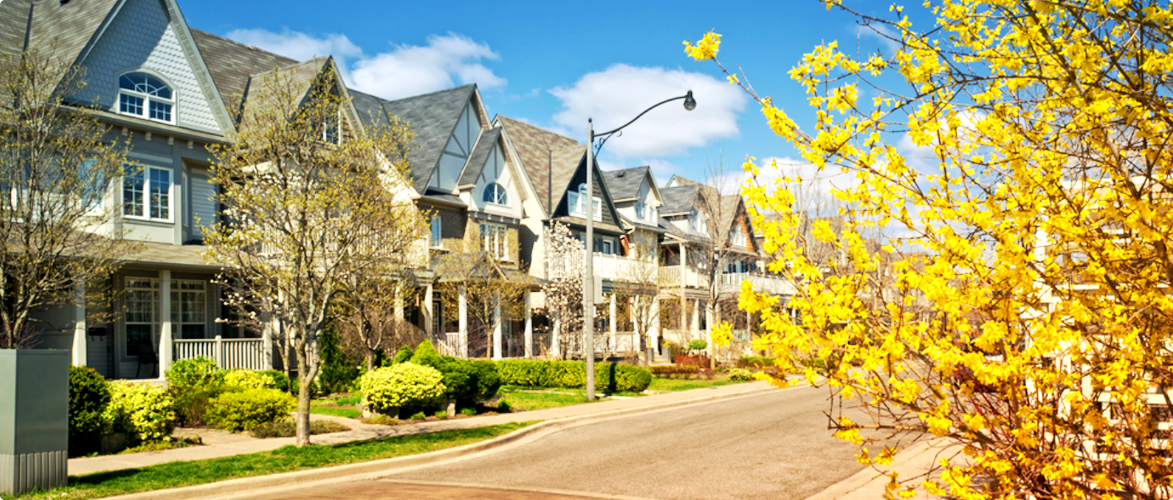
Guildwood is one of east Scarborough's most distinctive neighbourhoods, sitting above the Scarborough Bluffs with large lots, ravine-backing properties, and the historic Guild of All Arts estate. Guildwood GO station gives peak-hour commuters 20 to 25 minutes to Union Station. Detached homes range from $1.0M to $1.8M, with bluff-adjacent and ravine lots commanding the top of that range.
Guildwood sits at the eastern end of Scarborough, roughly between Kingston Road to the north, the Scarborough Bluffs to the south, and the Guildwood Parkway corridor running through its heart. It’s one of Toronto’s most distinctive neighbourhoods in an architectural sense: the Guild of All Arts property, now known as Guild Park Estate and operated as a park by the City, preserves fragments of heritage buildings from demolished Toronto structures, creating an open-air collection of stone facades, columns, and sculptures that has no real equivalent anywhere else in the city. That heritage character extends into the neighbourhood’s streets, where custom-designed homes on large lots, some of them with ravine or bluff exposure, give the area a settled and unhurried quality.
Most people who know Guildwood either live there or discovered it by accident. It doesn’t come up in the generic Scarborough conversations the way Agincourt or Scarborough Town Centre do. That relative obscurity has historically benefited buyers who found it: a neighbourhood with genuine natural and architectural character, access to the Scarborough Bluffs park system and the Guildwood GO station, and detached homes with space and individuality that you don’t find in the post-war grid neighbourhoods further north and west.
Guildwood is not a neighbourhood in transformation. It’s a neighbourhood that has been itself for several decades and is largely content to remain that way. For buyers who want an established, low-density, greenery-rich part of Scarborough with a GO station and bluff proximity, it makes a straightforward case. The trade-off is price: detached homes here start at $1 million and the most desirable lots, those adjacent to the bluff, the ravines, or with the larger footprints, reach well above that.
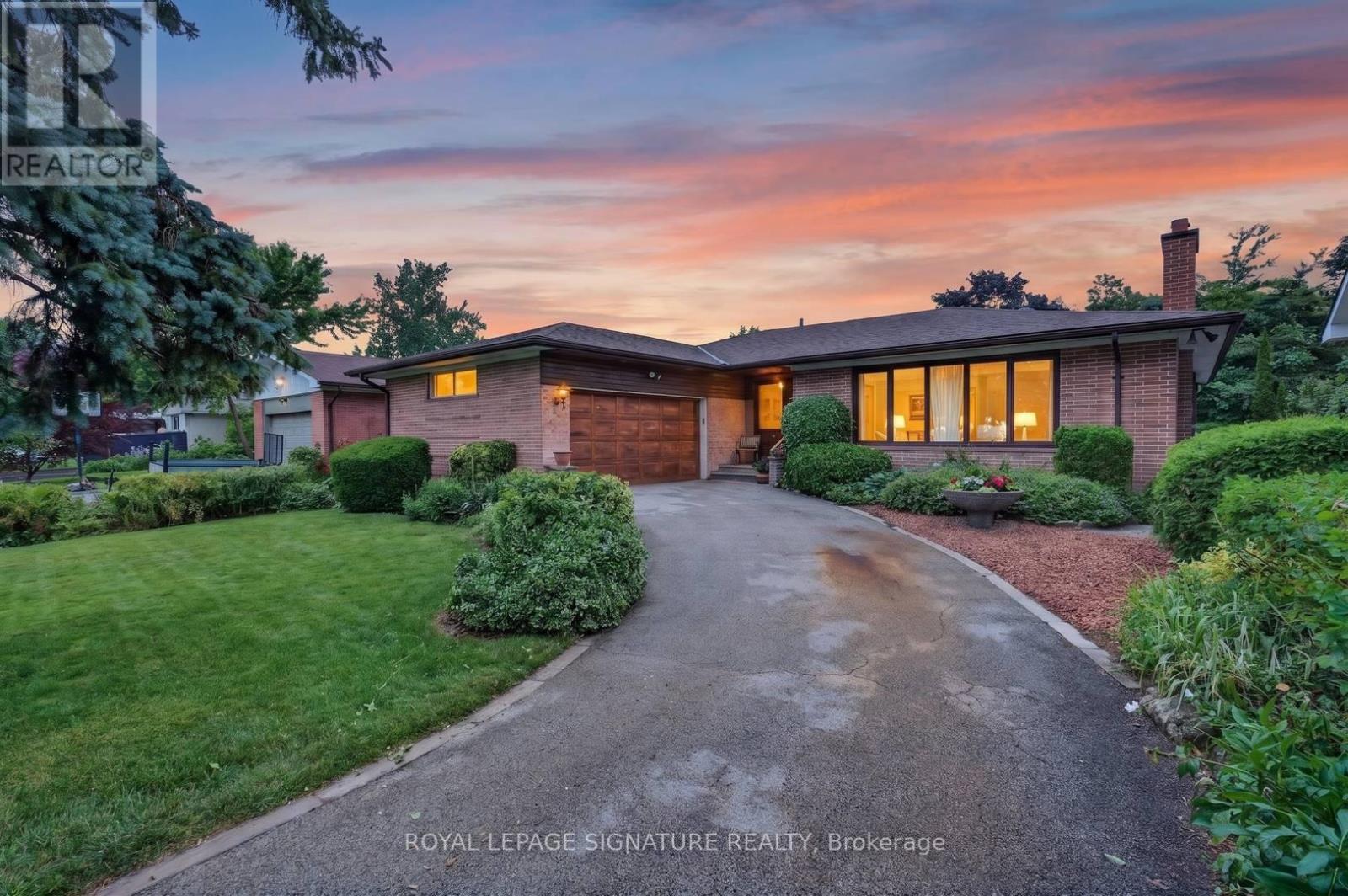
The housing stock in Guildwood is more varied and individual than most of Scarborough. The neighbourhood was developed with less of the cookie-cutter subdivision approach that defined post-war Toronto suburbs, and the result is a mix of custom-built homes, architect-designed midcentury houses, bungalows on large lots, and two-storey residences ranging from modest to substantial. Many homes have been significantly renovated over the decades, adding square footage through additions, second-storey builds, and finished lower levels.
Lot sizes are notably generous by Toronto standards. Many properties sit on 60-to-80-foot lots, and some of the ravine-adjacent and bluff-adjacent properties are larger still. This lot size advantage matters practically, since it means usable outdoor space, potential for future additions, and a degree of separation from neighbours that smaller-lot neighbourhoods don’t provide. It also contributes to the neighbourhood’s quiet, leafy character: the streets are wide and tree-lined, with a scale that feels more eastern Ontario town than suburban Toronto.
Properties backing onto ravines are the premium product in Guildwood. These homes typically command 10 to 20 percent above comparable street-facing properties, and they trade infrequently. When a ravine-backing lot on a good street comes to market in Guildwood, it draws attention from buyers who’ve been waiting specifically for that. Bluff-adjacent properties, those on streets closest to the Bluffs park system, similarly command premiums, though buyers should check the TRCA setback requirements on any property near the bluff edge, since conservation authority rules affect what can be built and how close to the edge.
Prices in 2026 range from roughly $1.0 million for a dated bungalow on a standard lot to $1.8 million or more for a well-maintained larger home on a ravine or oversized lot. The range is wide because the variation within Guildwood is genuine, not statistical noise.
Guildwood’s market is defined by low turnover and concentrated demand. Fewer homes trade here per year than in higher-density Scarborough neighbourhoods, and when they do, the buyer pool is typically specific: people who know the neighbourhood, have done their research, and are buying for the long term. This isn’t a neighbourhood where buyers stumble in because it was at the top of a search filter. Most buyers arrive with prior knowledge and a clear thesis about why Guildwood suits them.
The consequence of low turnover is that comparable sales data is thin. Pricing a Guildwood property accurately, whether you’re buying or selling, requires judgment rather than mechanical application of averages, since the variation between properties is large and the data points are sparse. An experienced agent working with Guildwood-specific comparables and knowledge of individual properties will arrive at better assessments than one who applies broad Scarborough statistics.
In the 2021 to 2022 peak, premium Guildwood properties saw prices that reflected the general Toronto frenzy. The 2022 and 2023 correction brought those back, and the recovery since has been gradual and selective. Properties in genuinely desirable pockets, particularly ravine-backing and larger lots, have held value better than the neighbourhood averages, since there’s no substitute for those specific characteristics. Standard street-facing bungalows have been more subject to the broader market’s movements.
One market dynamic specific to Guildwood: because many properties have been held for decades by original or long-term owners, when they do come to market they’re sometimes in dated condition but on excellent lots. Buyers comfortable with renovation and able to assess the structural condition of older homes can find genuine opportunity here. The lot value often represents the floor, and the house is the variable. A poor house on a good lot is not a bad buy if you know what you’re doing with it.
Guildwood attracts buyers who are specifically looking for what it offers: architectural character, large lots, bluff and ravine proximity, and a neighbourhood that doesn’t feel like the typical Toronto suburb. A meaningful share of buyers here are downsizing from larger homes elsewhere in the city, or they’re families that want the space and green quality of a rural setting without leaving Toronto. The neighbourhood has an older demographic skew than many parts of Scarborough, reflecting both the cost of entry and the long tenure of many current owners.
Buyers with a connection to the arts or architectural history often find the Guild of All Arts property and the heritage character of the neighbourhood specifically appealing. This isn’t abstract: the neighbourhood’s identity is genuinely tied to its unusual history, and people who care about that history tend to become long-term residents who are invested in preserving what makes Guildwood distinct.
Commuters who need to be downtown regularly are a consistent segment of the Guildwood buyer pool. The GO station at Guildwood, on the Lakeshore East line, provides a fast and reliable commute: roughly 20 to 25 minutes to Union Station during peak hours. For buyers who work downtown and want a detached home with serious outdoor space without leaving the city, Guildwood’s GO access is a genuine draw. It’s one of the few Scarborough neighbourhoods where you can have a large-lot home with natural surroundings and still make a reasonable daily commute by train.
Buyers from outside Canada sometimes arrive at Guildwood by recommendation from others in professional networks, particularly people in fields like academia, architecture, and the arts who’ve built those networks through the UTSC campus or Toronto’s cultural institutions. The neighbourhood has a quiet reputation in those circles as somewhere to look if you want space and character in Toronto without the cost of a similar property in Rosedale or the Annex.
Guildwood Parkway is the spine of the neighbourhood, running roughly east-west and connecting to Kingston Road at the eastern end and to the Guild of All Arts property and park in the west. The streets running north and south off Guildwood Parkway form the core residential grid. Guildwood Parkway itself is a quiet road by Scarborough arterial standards, tree-lined and low-traffic, which makes it more pleasant as a neighbourhood street than its main-street status might suggest.
The streets closest to the bluff, on the south side of the parkway toward Lake Ontario, include some of the neighbourhood’s most desirable properties. Morning Glory Road, Fernwood Park Avenue, and the streets running toward the bluff edge carry the premium bluff-adjacent addresses. The TRCA (Toronto Region Conservation Authority) has setback requirements for properties near the bluff that restrict building within a certain distance of the cliff edge, which protects the natural character but also limits what owners can do with land close to the boundary. Buyers should have the specific TRCA setbacks confirmed before purchasing any property near the bluff, since this affects both current and future use.
North of Guildwood Parkway, the streets extend toward Kingston Road and include a range of property sizes and conditions. This side of the neighbourhood is less premium than the bluff-adjacent south side but still has the large-lot, established character that defines Guildwood broadly. Livingston Road and the streets off it give access to the GO station and to Kingston Road transit and services.
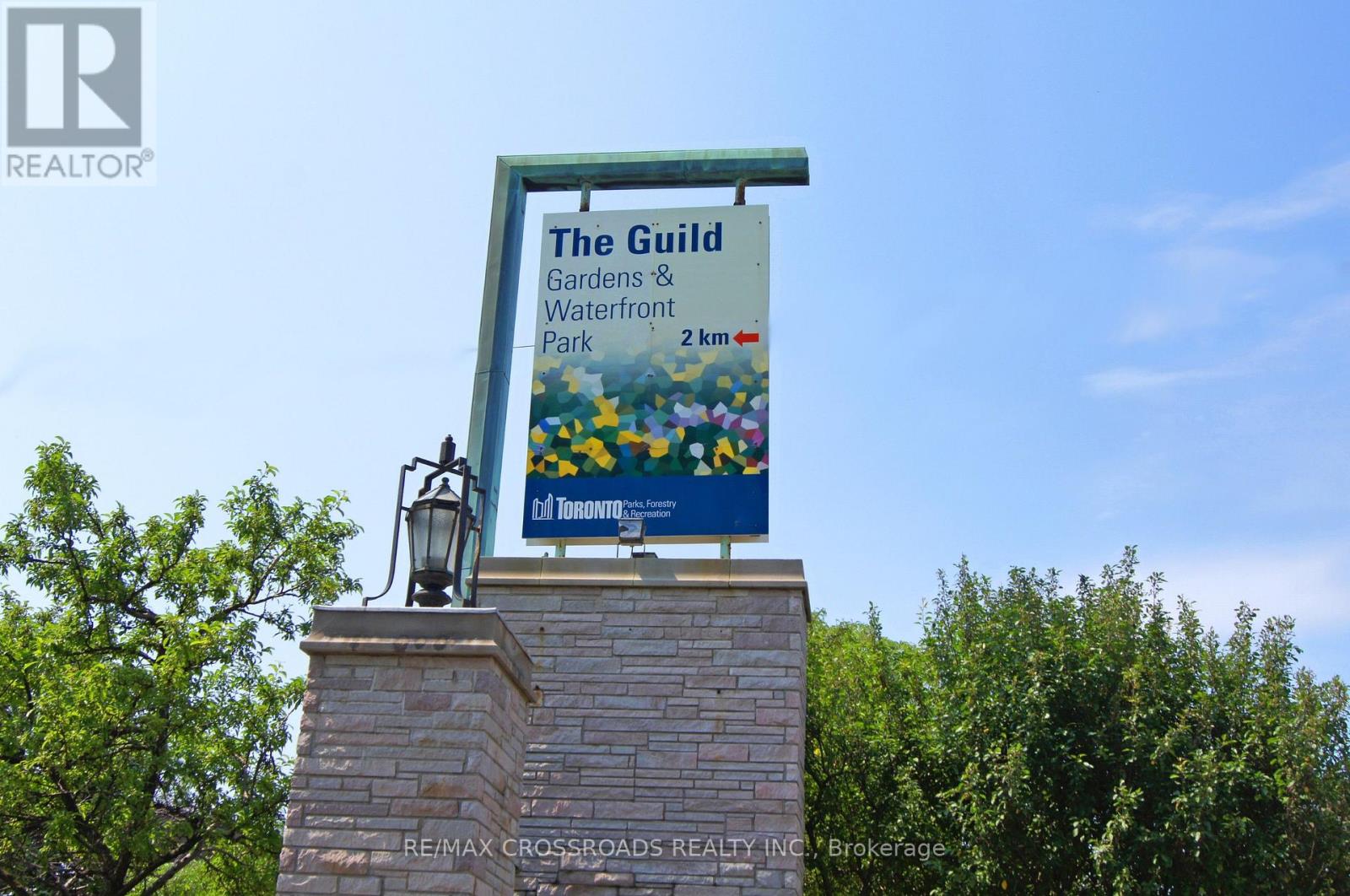
The Guild of All Arts property, now Guild Park Estate, anchors the western end of the neighbourhood. The park is publicly accessible and the sculpture garden, with its salvaged architectural fragments from demolished Toronto buildings, is one of the more unusual public spaces in the city. The streets immediately around the estate benefit from adjacency to this park, since it ensures a green buffer that won’t be developed.
Guildwood GO station, on the Lakeshore East line, is the neighbourhood’s primary transit asset. During peak hours, GO trains run frequently enough that the commute to Union Station takes 20 to 25 minutes, which is genuinely fast for a detached-home neighbourhood in Toronto. Off-peak and weekend service is less frequent, and buyers who need to commute at irregular hours or on weekends should check the GO schedule carefully. But for a conventional Monday-to-Friday, 9-to-5 commute, Guildwood GO delivers one of the better suburban train commutes in the city.
TTC bus service operates on Kingston Road and provides a connection to Scarborough Town Centre and to the subway further west. The 86 Scarborough bus and connecting routes give residents a transit option that doesn’t rely on GO, though the bus route adds time compared to the GO train. For destinations that aren’t downtown, such as UTSC, Scarborough Town Centre, or east Scarborough destinations, the bus network is the more direct option.
Driving is how most Guildwood residents handle everything except the downtown commute. Kingston Road provides an east-west route that connects to Scarborough Town Centre west and to Pickering and beyond to the east. The 401 is accessible via Port Union Road to the east or via Midland and McCowan to the north. The Don Valley Parkway is about 20 minutes west by car, which is the route most Guildwood residents would take for destinations in midtown or north Toronto.
Cycling within the neighbourhood is pleasant on the parkway and the local streets, but cycling to Scarborough Town Centre or to the nearest subway requires navigating Kingston Road, which is a wide, fast arterial without consistent cycling infrastructure. For recreational cycling, the Waterfront Trail is accessible from the neighbourhood and provides a dedicated route along the lakefront east and west of Guildwood.
The Scarborough Bluffs are Guildwood’s most compelling natural asset. The clay and sand cliffs rising up to 90 metres above Lake Ontario run for roughly 15 kilometres along Scarborough’s south shore, and the section adjacent to Guildwood is among the most accessible. Bluffer’s Park, at the foot of the bluffs, provides a beach, a marina, picnic areas, and the visual spectacle of the cliffs rising behind it. Getting to the park from Guildwood involves a short drive or a longer walk on paths that descend through the park system. Residents of the neighbourhood access it regularly in all seasons.
The cliff-top parks along the bluffs, including Cathedral Bluffs Park directly adjacent to the neighbourhood’s southern edge, provide cliff-edge walking with views across Lake Ontario. On clear days the view extends to the New York shoreline. These parks are maintained by the City and the TRCA and are well-used year-round by residents from across Scarborough. For the families living in the streets immediately above the bluffs, this access is part of daily life rather than an occasional excursion.
Guild Park Estate, at the western end of the neighbourhood, operates as a City park and the sculpture garden is publicly accessible. The grounds include mature trees and garden plantings around the heritage building fragments, creating a setting that feels more like an English country estate than a Toronto public park. It’s used for outdoor events, weddings, and quiet walks. Residents who back onto or are adjacent to the estate property benefit from the effective green buffer it provides.
Ravine access is another feature of certain Guildwood streets. The ravine system associated with the Highland Creek watershed has spurs that reach into the neighbourhood’s north, and homes backing onto ravine land have a combination of privacy and natural visual amenity that drives the premiums these properties command. Unlike the bluff land, ravine areas closer to the developed streets don’t carry the same TRCA restriction complexity, though drainage and escarpment considerations still apply in some cases.
Guildwood’s day-to-day retail is modest. There’s a small commercial cluster near Kingston Road and Guildwood Parkway with a pharmacy, a few take-out restaurants, a bank branch, and some professional services. It covers the basics without being a destination in its own right. Residents who want a broader grocery or retail selection drive to Scarborough Town Centre, about 10 to 15 minutes west on Kingston Road, or to the Kingston Road commercial strip further east toward Pickering.
The neighbourhood’s grocery options reflect its low density and relatively affluent demographics. There’s a Sobeys within reasonable driving distance on Kingston Road, and the Scarborough Town Centre area adds No Frills and other options. For specialty food, the drive to T&T in Agincourt or the diverse grocers in the Kennedy Road area takes 20 to 30 minutes. Guildwood residents who cook varied meals typically do one major shop per week and treat the neighbourhood’s own retail as a top-up resource rather than their primary grocery option.
Restaurants in and immediately around Guildwood are limited, which is one honest gap in what the neighbourhood offers. There are a handful of dining options on Kingston Road within a short drive, and Scarborough Town Centre adds more. But the neighbourhood doesn’t have the restaurant density that urban-minded buyers might want, and anyone who eats out frequently will be driving for most of their restaurant meals. This is a consistent trade-off in lower-density Scarborough neighbourhoods at the eastern end of the city, and it’s worth acknowledging clearly rather than glossing over.
Healthcare access is reasonable: there are family medicine clinics and walk-in facilities on Kingston Road and in the Scarborough Town Centre area. Scarborough Health Network’s main hospital campus is about 15 minutes by car. Specialist care and most hospital-level services require a drive, as they do from most of Scarborough’s eastern neighbourhoods.
Guildwood Junior Public School is the primary elementary school serving the neighbourhood within the Toronto District School Board. It’s a smaller school that reflects the neighbourhood’s demographics: lower enrolment than many Scarborough schools because the neighbourhood’s density is low, with a community feel that larger schools don’t always replicate. The school’s boundaries cover the core Guildwood area, and families typically find the scale suits young children well.
Secondary school students from Guildwood attend David and Mary Thomson Collegiate Institute, a large TDSB secondary school in Scarborough. Thomson CI has a broad range of programs and a diverse student body drawn from the wider east Scarborough area. It’s a larger school than many Guildwood families are accustomed to given the elementary experience, and the transition is significant for some students. For families who want specialist secondary programs, the TDSB offers various program schools across the city that are accessible by transit or arranged transportation, and these are worth researching for secondary-age children if a standard comprehensive school isn’t the right fit.
TCDSB Catholic schools serve families in the area who want a Catholic education. The specific schools serving Guildwood addresses should be confirmed with the board before buying, since catchment boundaries in east Scarborough can be counterintuitive.
UTSC is a 15-minute drive from Guildwood and has strong undergraduate and graduate programs in several fields. Families who anticipate their children potentially attending a Toronto university may find the UTSC proximity an asset, though the university is far enough that it doesn’t function as a walkable neighbourhood institution the way it does for Morningside Heights residents. The Scarborough campus has been investing in its academic programs and physical infrastructure, and its reputation has grown considerably over the past decade.
Guildwood is one of the less likely candidates for dramatic change in Scarborough. Its physical constraints, the bluff to the south, the ravine systems on its edges, and the heritage property at its western end, limit the development land available. The established residential streets are largely zoned for low-density residential use, and the community has historically been resistant to intensification proposals. This combination means the neighbourhood is likely to remain substantially as it is for the foreseeable future.
Kingston Road, which forms the northern boundary of the neighbourhood, is designated for mid-rise intensification under the City’s planning framework. Some redevelopment has already occurred and more is likely over time, particularly at major intersections. This doesn’t affect the residential streets significantly but does mean the commercial and mixed-use character of Kingston Road will continue to evolve. Buyers on streets that abut Kingston Road should be aware of that planning context.
The Guildwood GO station area has some potential for transit-oriented development given its proximity to the Lakeshore East line. The City’s transit-oriented communities planning for GO stations is an active policy area, and while the Guildwood station doesn’t have the same development pressure as larger stations, it’s worth monitoring. The land immediately around the station is currently parking and commercial use, and future development there is possible over a long time horizon.
The TRCA’s role in governing the bluff and ravine areas around Guildwood is a form of permanent planning protection. Conservation authority lands are not subject to development approvals in the normal sense, and the bluff itself is managed as a natural heritage system. This is one of the things that makes bluff-adjacent properties in Guildwood genuinely different from other premium properties in Scarborough: the natural feature protecting their value is not going to be built on or urbanised.
What are TRCA restrictions and how do they affect properties near the bluff?
The Toronto Region Conservation Authority regulates land within a certain distance of the Scarborough Bluffs edge and within ravine systems. If a property is subject to TRCA regulation, any significant alteration, construction, grading, or removal of vegetation within the regulated area requires a permit from the TRCA in addition to standard City of Toronto building permits. This affects what you can build, where you can build it, and sometimes what you can plant. The specific constraints depend on how close the regulated area is to the buildable portion of the property. Your agent should confirm whether a property is subject to TRCA regulation, and if so, what that means for any plans you have for the property before you firm up.
Is the Guildwood GO commute actually reliable?
For peak-hour commuting downtown, yes. GO Transit’s Lakeshore East line is one of the more reliable GO lines, and the 20-to-25-minute trip to Union Station compares well against other suburban locations in Toronto. The caveats are off-peak frequency, which drops significantly outside of rush hours, and the occasional service disruption that affects all GO lines. For a conventional weekday commuter, Guildwood GO is a genuine asset. For someone who works unpredictable hours or needs to travel on weekends, the schedule limitations matter. Anyone buying partly on the strength of the GO commute should ride it at the times they’d actually use it before committing.
How does Guildwood compare to other Scarborough Bluffs neighbourhoods?
The Scarborough Bluffs area includes several distinct communities: Cliffside and Cliffcrest to the west, Guildwood in the middle, and the Scarborough Village area further east. Guildwood has the GO station and the distinctive heritage property as differentiators. Cliffside and Cliffcrest are somewhat more accessible to the Kingston Road bus network and are slightly less remote, but lack the large-lot character of Guildwood. Prices vary significantly between these pockets, with Guildwood’s larger lots commanding more than the narrower streets in Cliffside. All share the bluff adjacency as their primary natural asset.
Are there properties in Guildwood with private lake or bluff views?
Some properties on the streets closest to the cliff edge have lake views from upper floors or from rear decks. Actual bluff-edge lots are rare and heavily regulated by the TRCA, so private ownership of land right to the cliff is unusual. The view properties that do exist command significant premiums and trade infrequently. More commonly, buyers get proximity to the bluff park system and easy walking access to cliff-top viewpoints, rather than private lake views from their property. Setting realistic expectations about this before viewing is useful, since the neighbourhood’s marketing sometimes implies more dramatic lake views than specific properties deliver.
Buying in Guildwood benefits from working with an agent who knows this specific neighbourhood rather than one who covers Scarborough broadly. The variation between properties, lots, and streets here is large enough that generic Scarborough market knowledge doesn’t substitute for familiarity with Guildwood’s particular dynamics. An agent who has listed and sold properties on Guildwood Parkway, on the bluff-adjacent streets, and on the Kingston Road-adjacent north end of the neighbourhood will assess value differently and more accurately than one who’s relying on MPAC assessed values and broad comparables.
The TRCA regulation question is one area where specific local knowledge matters from the start. A buyer’s agent who regularly works Guildwood will know which streets and properties are subject to TRCA regulation, what that means practically, and whether the constraints affect your plans for the property. This knowledge affects what you should offer, what conditions you should include, and how you should structure your due diligence period.
Given the low turnover of properties in Guildwood, it’s worth asking your agent to be proactive about finding properties that may come to market before they’re listed publicly. Long-tenure owners sometimes sell off-market or respond to buyer interest before listing. An agent with genuine neighbourhood relationships may be able to open conversations that the public MLS market wouldn’t surface. This is particularly true for the most desirable pocket, the bluff-adjacent streets, where listings are genuinely scarce.
For buyers financing a Guildwood purchase, lenders will typically want an appraisal. The thin comparable sales data in Guildwood can sometimes complicate appraisals, particularly for higher-end properties where the specific lot and position premiums aren’t well-supported by recent transactions. Knowing this in advance means you can discuss with your agent and mortgage broker how to manage potential appraisal gaps before they become a closing-week problem.
Street-level knowledge is hard to find online. Our team works in Guildwood every day. They know which pockets hold value, where the school catchment lines actually fall, and what the market is doing right now. Talk to us before you make a decision about Guildwood.
Talk to a local agent For Sale
 For Rent
 For Sale
 For Sale