
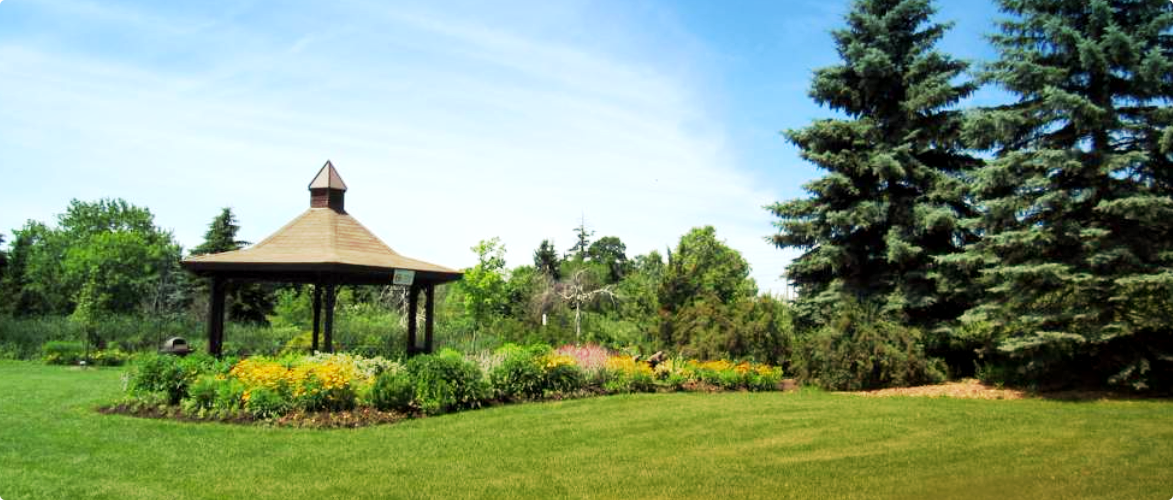
Milliken is a suburban neighbourhood at the northern edge of Scarborough near Steeles Ave E and Kennedy Rd. Home to one of Toronto most significant Chinese-Canadian communities, with Pacific Mall nearby, Milliken GO station, and newer housing in the $1M to $1.5M range.
Milliken sits at the very northern edge of Toronto, where Scarborough meets Markham along Steeles Avenue East. It’s one of the city’s most distinctly suburban communities, built mostly between the mid-1980s and the early 2000s on a grid of crescents and courts that unfolds from major arterials like Kennedy Road, Middlefield Road, and Steeles Avenue. The character is unambiguously residential and suburban: newer housing, family-scaled streets, and a daily life organized around cars, schools, and community rather than urban density.
The neighbourhood is anchored by one of the most significant cultural and commercial landmarks in the Greater Toronto Area: Pacific Mall, the largest indoor Asian shopping mall in North America, sits just over the Markham boundary at Kennedy and Steeles. Its presence shapes the entire area. The streets around Kennedy and Steeles are dense with restaurants, grocery stores, and specialty retailers serving the large Chinese-Canadian community that defines this part of north Scarborough and southern Markham. Cantonese, Mandarin, and Hakka are widely spoken; signage is frequently bilingual or in Chinese alone; and the food options within a short drive are exceptional.
Milliken GO Station sits within the neighbourhood and provides direct service into Union Station on the Stouffville corridor, which makes the commute to downtown materially different from the bus-only options available in most of Scarborough. That access point is a significant practical advantage and one of the main reasons the neighbourhood commands prices above the Scarborough average for comparable housing stock.
For buyers coming from a Chinese-Canadian cultural background who want a neighbourhood where that culture is the majority rather than a minority, Milliken is one of the clearest choices in Toronto. For buyers from any background who want newer construction, GO train access, and proximity to excellent East Asian food, it’s worth taking seriously.
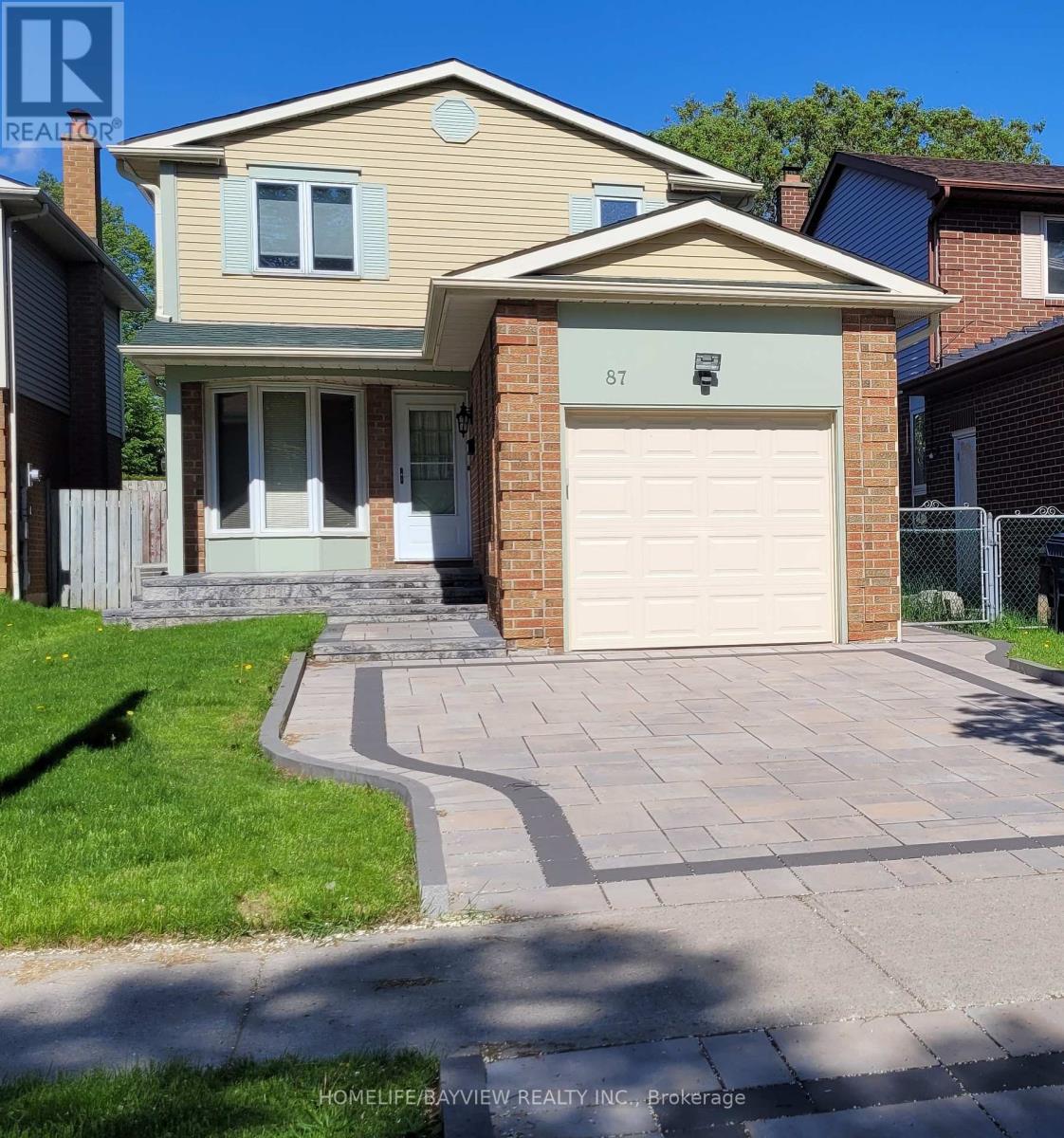
Milliken’s housing stock is predominantly detached single-family homes built between the mid-1980s and the early 2000s. These are suburban homes of their era: two-storey, brick construction, attached double garages, with floor plans that include separate formal living and dining rooms alongside open-concept kitchen-family room areas. They’re larger than the postwar bungalows that dominate most of Scarborough, with total living area often in the 1,800 to 2,500 square foot range on main and upper floors, plus a basement.
Lot sizes in Milliken are typically in the 30 to 45 foot frontage range, consistent with the suburban subdivision pattern. Larger corner lots and backing-onto-park or backing-onto-trail lots carry modest premiums. The backyards are usable, though not large by the standards of older postwar neighbourhoods with wider lots.
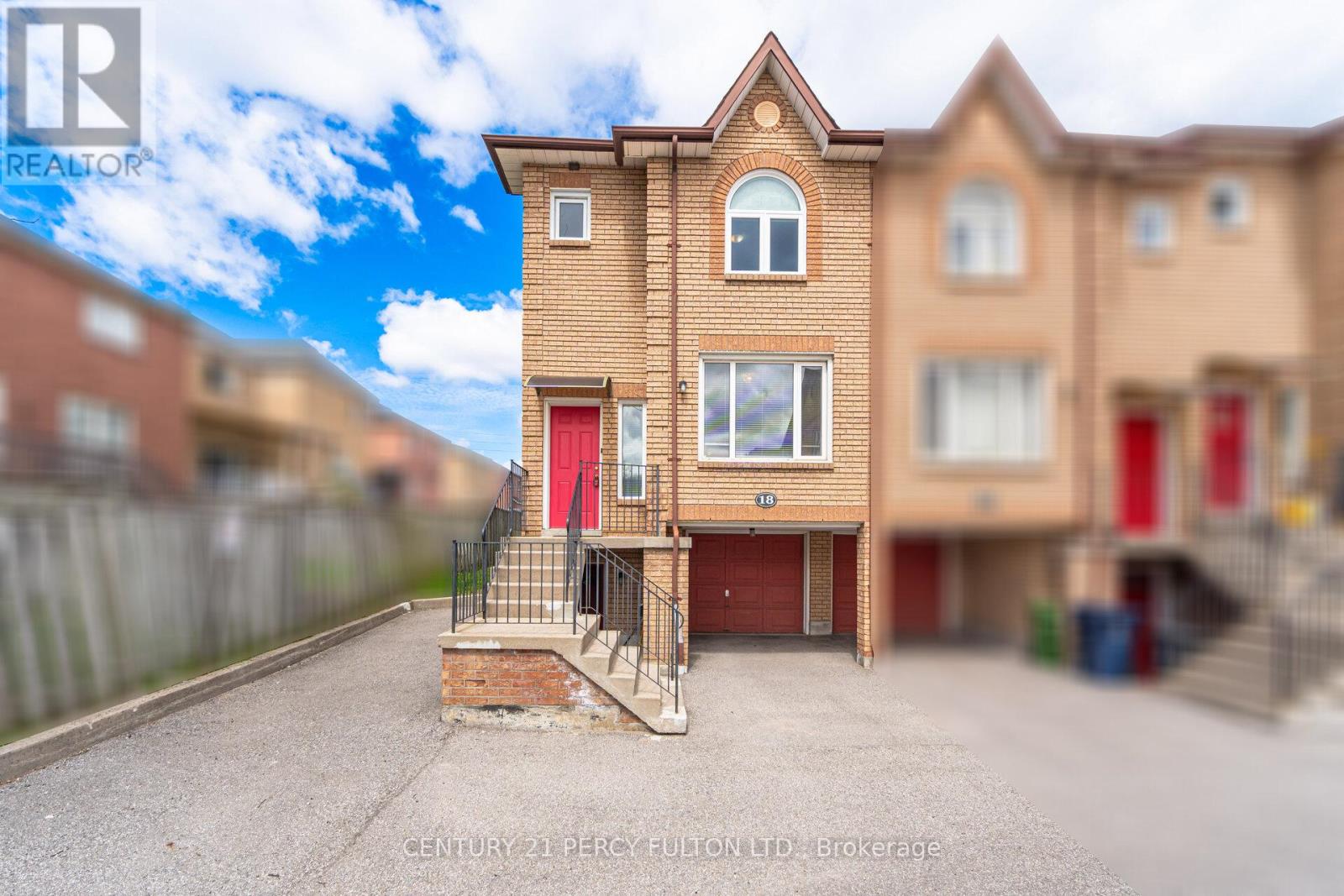
Semis are present in the neighbourhood alongside the detacheds and come in at lower price points. Townhouses, both freehold and condo-tenure, are scattered through the area, particularly in the Port Royal section. Condo apartment buildings exist along the main arterials and near Steeles Avenue but are less central to the neighbourhood’s identity than the ground-level homes.
Condition tends to be reasonably good compared to older Scarborough housing stock. Homes from the late 1980s and 1990s are at the age where major systems are approaching end of life or have been recently updated. It’s worth checking the state of the furnace, roof, and windows on any specific property, as these are the items most likely to need attention in a 30-to-40-year-old house.
The price range in 2026 for detached homes runs from roughly $1,000,000 to $1,500,000, with meaningful variation based on size, lot, and condition. Semis come in at $800,000 to $1,100,000. The neighbourhood’s price ceiling reflects its combination of GO train access, newer housing, and the cultural infrastructure that makes it irreplaceable for its core demographic.
Milliken’s market is more competitive than most of Scarborough’s. The combination of GO train access and the neighbourhood’s strong cultural identity creates a concentrated demand that keeps competition meaningful even when the broader Toronto market softens. Homes that are priced accurately and in good condition tend to receive multiple offers, particularly in the spring market.
The buyer pool here is distinctly anchored by Chinese-Canadian families, both those already in the neighbourhood and those relocating from Markham, Richmond Hill, or other parts of the GTA who want to return to or join this community. That concentrated demand source makes the neighbourhood’s market less correlated with the general Toronto market than some other communities. When broader market conditions weaken, Milliken often holds up relatively better because the demand drivers are specific to this community rather than general to all buyers.
The high end of the market, homes over $1,300,000, takes longer to sell and requires patience from sellers. The upper price points attract a smaller pool of buyers and are more sensitive to rate changes. Below $1,200,000, well-presented detacheds move with reasonable speed.
Investors are present in the neighbourhood, particularly in the townhouse and semi market, where rent-to-price ratios can work reasonably well. The student rental market associated with nearby Centennial College and the broader employment base provide a tenancy pool.
New listings in Milliken generate attention quickly when they’re priced right. The neighbourhood has enough regular turnover that comparable sales data is reasonably available, making valuation more straightforward than in lower-volume east Scarborough communities. Your agent should be able to run a clear comparable analysis with sales from the past three to six months on any property you’re seriously considering.
The market slows noticeably in January and February and in late July and August. Those quieter windows can produce motivated sellers willing to negotiate on price or conditions, which experienced buyers take advantage of when their timeline allows.
Milliken has a clearly defined primary demographic: Chinese-Canadian families, often multi-generational, who want to live in a community where the cultural infrastructure matches their daily life. The restaurants, grocery stores, language services, places of worship, and community organizations that make a neighbourhood feel like home to this community are concentrated here and in the immediate Markham area across Steeles. For those buyers, Milliken is not one option among many; it’s the specific community they want to be part of.
Beyond that core demographic, the neighbourhood attracts families who prioritize newer housing stock and GO train access. Buyers who commute into Union Station find the GO connection a meaningful practical advantage over the bus-only options in most of Scarborough. A 40-to-50-minute GO ride to Union Station is materially different from a 70-minute TTC journey with multiple transfers, and buyers making that calculation often choose to pay the price premium that comes with the GO access.
Move-up buyers already in north Scarborough or south Markham who want more space or a better-maintained neighbourhood often settle on Milliken as a stepping stone that keeps them close to their existing community networks. The school connections, friend groups, and family proximity that come from staying in the same general area carry real weight in the decision for families who’ve already established themselves here.
The neighbourhood is also a common destination for newly arrived immigrants from mainland China and Hong Kong who have community connections in the area and want to begin their Toronto life within that network. The language, cultural, and commercial infrastructure that Milliken and the adjacent Markham communities provide is a genuine practical asset during a transition period.
Buyers looking for the Beach aesthetic, walkable urban density, or proximity to downtown nightlife will not find what they’re looking for in Milliken. It’s a suburban neighbourhood that does what a suburban neighbourhood does, and it does it well for the people whose life it fits.
Milliken is divided by its main arterials into recognizable sub-areas. The streets immediately surrounding the GO station, in the area between McNicoll Avenue to the south and Steeles to the north, and between Kennedy and Middlefield, form the core. This is the most accessible part of the neighbourhood for GO commuters and consequently prices at the upper end of the local range for comparable product.
The Port Royal area occupies the western portion of the broader Milliken community, between Kennedy Road and Midland Avenue in the area south of Steeles and north of Sheppard. It has a mix of detacheds, semis, and townhouses with a slightly more varied streetscape than the newer sections to the north and east. Some of the townhouse product here is older and represents a more affordable entry into the neighbourhood.
The streets east of Middlefield, particularly those backing onto the Milne Creek trail corridor and parks, offer a combination of trail access and slightly more separation from the busy arterials. These blocks are popular with families who value the trail connection and want the feel of a quieter address while still being within a few minutes’ drive of the Kennedy-Steeles commercial area.
Streets bordering Steeles Avenue itself get more road noise and have the commercial activity of the Steeles corridor as a backdrop. Buyers should weigh the walkability to Kennedy-Steeles retail against the noise and traffic impact when evaluating addresses on or immediately adjacent to Steeles.
The Markham boundary at Steeles is both meaningful and arbitrary. The houses on the Toronto side and the Markham side of Steeles are built to the same patterns and serve the same community. The school boards, property taxes, and municipal services differ slightly, but the day-to-day neighbourhood experience is continuous across the boundary. Some buyers with flexibility will consider both sides; the differences are worth understanding but rarely decisive.
Milliken GO Station is the neighbourhood’s transit anchor and the main reason Milliken’s commuter profile differs from most of Scarborough. The station sits on the Stouffville Line and provides direct service to Union Station in downtown Toronto. Peak-hour trains run regularly and the journey takes roughly 40 to 50 minutes. Off-peak, the service thins out and the schedule requires planning, but for standard weekday commuters, the GO connection is a genuine advantage. Parking is available at the station, which matters for residents who drive to the GO rather than walk from home.
TTC bus service covers the neighbourhood via routes on Kennedy Road, Steeles Avenue, and Middlefield Road. The Kennedy bus connects south to Kennedy subway station on Line 2. The Steeles Avenue East bus runs the length of Steeles and connects to other routes across north Scarborough. Bus frequency is decent during peak hours and diminishes in evenings.
The nearest subway station on Line 2 is Kennedy, which is approximately a 10-to-15-minute bus ride south of central Milliken. From Kennedy station, the subway connects west to downtown. Total transit travel time from Milliken to downtown using bus and subway, rather than the GO, runs 60 to 80 minutes. Most commuters heading downtown from Milliken prefer the GO when schedules align.
Driving is the primary mode of transport for daily errands and for commutes that don’t align well with GO schedules. Highway 407, accessible from Kennedy Road via McNicoll Avenue, connects east toward Durham Region and west across the top of the GTA. The 401 is further south. Traffic on Kennedy Road during morning rush hours is heavy; the side street grid can offer some relief on short local trips.
For residents working in Markham, the Steeles Avenue bus connects to York Region Transit, and much of Markham’s employment base is accessible with a combination of bus routes. The cross-boundary commute works reasonably well by regional transit standards.
Milliken Park is the neighbourhood’s primary green space and is one of the better suburban parks in north Scarborough. It covers a substantial area between McNicoll Avenue and Steeles Avenue East, with Milne Creek running through it. The park has sports fields, a cricket oval, a splash pad, playground equipment, and walking paths that connect into the Milne Creek trail corridor. It’s heavily used by the local community, particularly on weekends, and functions as a genuine gathering place for the neighbourhood.
The Milne Creek trail system connects through the park and extends north into Markham and south through the creek valley. It’s a useful walking and cycling corridor that provides a green route through an otherwise suburban environment. Families with children use the trail regularly; cyclists use it for recreational riding and in some cases for commuting to Milliken GO station from further along the trail.
McNicoll Park and several smaller neighbourhood parks distribute through the residential grid, providing playground access for children without the need to cross major arterials. This distributed park structure is one of the things the neighbourhood’s planners got right: most residential blocks have some park access within a few minutes’ walk.
The formal cricket facility in Milliken Park reflects the neighbourhood’s demographic composition. Cricket is not a fringe sport here; the ground is maintained to a usable standard and league play happens regularly. It’s a small but telling detail about how thoroughly the community has shaped the neighbourhood’s public infrastructure.
Rouge National Urban Park is accessible by a short drive or a longer cycling trip north, providing access to a very different scale of natural environment. For families who want occasional access to genuinely wild land without leaving the city, the park’s proximity from Milliken is a real benefit.
The Kennedy Road and Steeles Avenue East intersection is the commercial heart of this community and one of the densest concentrations of East Asian retail and food in the Toronto area. Pacific Mall, just across the Markham border, is the obvious anchor: its hundreds of stores cover electronics, fashion, jewelry, food court stalls, and an enormous range of goods oriented toward Chinese-Canadian consumers. Market Village, adjacent to Pacific Mall, extends the shopping complex further. These are not novelty destinations; for many residents, they’re where daily and weekly shopping happens.
The restaurants in the Kennedy-Steeles area are a genuine strength. Hong Kong-style cafes, dim sum restaurants, hot pot, Sichuan, Shanghainese, Taiwanese, and Vietnamese options are all represented. Several of the dim sum restaurants in particular are known across the GTA, drawing visitors from well outside the neighbourhood. For residents, having this level of food variety at the end of the street is not a minor detail.
Grocery shopping is well covered. T&T Supermarket, the major Chinese-Canadian grocery chain, has a location nearby, alongside independent Asian supermarkets. Conventional grocery chains are accessible along Kennedy Road and at Scarborough Town Centre to the south. The combination means most household grocery needs can be met within the neighbourhood’s immediate orbit.
For the full range of general retail, Scarborough Town Centre is approximately 15 minutes south by car or bus. It carries national chains, a cinema, and the breadth of retail that a major suburban mall provides. Most Milliken residents treat it as a complement to rather than a replacement for the Kennedy-Steeles commercial area.
Healthcare, banking, pharmacy, and professional services are well represented along the main arterials. Many medical and dental practices in the area operate in multiple languages, which matters practically for patients who prefer to discuss health matters in their primary language.
The schools serving Milliken fall under both the Toronto District School Board and the Toronto Catholic District School Board, depending on the specific address. The Markham boundary at Steeles means some families just north of Steeles fall into York Region District School Board territory, which is a different system with its own schools and catchment patterns. Confirming which board and which school serves a specific address matters more here than it does in areas further from a municipal boundary.
Milliken Mills High School, despite its name, sits in Markham rather than in the Toronto portion of Milliken. It’s a well-regarded secondary school with strong academic programs and a large Chinese-Canadian student population consistent with the broader community. Some Toronto-side students attend it via discretionary transfers or through living close to the boundary; confirm current transfer policies with the York Region board if this is relevant to your purchase decision.
On the Toronto side, L’Amoreaux Collegiate Institute and other Scarborough TDSB secondary schools serve the area depending on the address. Elementary schools including Milliken, Chartland, and several others are distributed through the neighbourhood’s residential grid. French immersion is available at designated schools within the TDSB system, and demand for those programs in this community is significant given how many families here value multilingual education.
The academic culture in this community is notably oriented toward achievement. The schools draw students from families with high educational expectations, and peer culture tends to support academic effort more than in some other Scarborough communities. This cultural dynamic is difficult to quantify in school ranking tables but is directly experienced by students and families who know the community.
Post-secondary access is strong. The University of Toronto Scarborough, Centennial College, and York University are all accessible from Milliken. The concentration of students and families with post-secondary ambitions in the neighbourhood means there’s a well-worn path from local schools into those institutions.
Milliken’s development landscape is shaped by its position at the suburban boundary: most of the land within the neighbourhood is already built out, leaving limited opportunity for large-scale new development. The growth pressure that characterizes more centrally located Toronto communities is present here in a different form: densification of arterial sites, townhouse development on underused commercial parcels, and occasional infill on lots that have been assembled.
The Kennedy Road corridor through north Scarborough is a designated intensification area in the City’s planning framework. That designation will continue to attract mixed-use proposals over time, with residential units over ground-floor commercial along the arterial, while leaving the residential subdivision streets behind largely unchanged. The pace of change along Kennedy will be gradual rather than transformative in any short-term frame.
Steeles Avenue East continues to evolve with both sides of the street now attracting development interest. The Markham side has seen more active development in recent years, with new mixed-use mid-rise buildings replacing older commercial strips. That activity on the Markham side doesn’t directly change the Toronto side, but it does improve the commercial and services environment that both sides share.
The GO station and its parking infrastructure will eventually be looked at as an opportunity for transit-oriented development, consistent with Metrolinx’s approach at other GO stations across the network. Station-area planning typically allows taller residential development within a short walk of the station. When and how that translates into actual construction depends on Metrolinx’s capital plans and developer interest, but buyers should know it’s a credible medium-term scenario.
For existing homeowners, the development trajectory is generally positive: more density along the arterials brings more retail and services to the area without materially changing the interior residential streets. The neighbourhood’s fundamental character is likely to remain recognizable through the next decade of gradual change.
Is Milliken in Toronto or Markham?
It’s both, which can be confusing. Steeles Avenue East is the boundary between the City of Toronto (south side) and the City of Markham (north side). Pacific Mall and Market Village sit on the Markham side. Milliken GO Station and most of what people refer to as the Milliken residential neighbourhood sits on the Toronto side. When you’re buying, the side of Steeles matters because it determines which municipality’s property tax rates apply, which school boards serve the address, and which city handles services and planning. If a listing says “Milliken” without clarifying the address, confirm whether it’s Toronto or Markham before spending time on it.
How reliable is the GO train for downtown commuters?
The Stouffville Line from Milliken GO is one of the more reliable GO corridors for peak-hour service. During the morning and evening commute peaks, trains run frequently enough that missing one doesn’t mean an hour’s wait. Off-peak, the service is less frequent, so commuters with irregular hours or who need to travel mid-day or on weekends need to check schedules carefully. Parking at the station is available but fills during peak hours; arriving early or walking or biking from home if you’re within range solves that. Overall, for a standard weekday downtown commute, the Milliken GO connection is a meaningful practical advantage over bus-only transit access.
What language is primarily spoken in the neighbourhood?
Cantonese and Mandarin are widely spoken and much of the commercial and community infrastructure operates in Chinese alongside English. Many residents, particularly newer arrivals and older generations, are more comfortable conducting daily transactions in Chinese than in English. English is the language of the schools and municipal services. If you don’t speak Cantonese or Mandarin, you’ll get along fine in everyday life, but you’ll be in the minority rather than the majority in many social contexts in the immediate neighbourhood.
What should I know about the housing stock before making an offer?
Milliken’s homes from the late 1980s and 1990s are at the age where major mechanical systems, specifically the furnace, air conditioning unit, roof shingles, and windows, may be original or recently replaced. The state of those systems is the first thing to check in any home inspection. Homes from this era also tend to have poly-b plumbing, a flexible plastic pipe that degrades over time and has been a source of significant water damage in homes where it hasn’t been replaced. Check whether the plumbing has been updated. Some homes have also had basement finishing done over the years; if there’s a finished basement, confirm it was done with permits and that the finishes don’t conceal drainage or structural issues.
The Markham-Toronto boundary adds a layer of complexity to buying in Milliken that buyers and their agents need to handle deliberately. If you’re open to properties on both sides of Steeles, you’re effectively searching in two different municipalities with different planning rules, tax rates, and school systems. Your agent needs to be comfortable operating in both and explaining the material differences for each address you’re considering.
The concentrated demand from a specific community in Milliken means that local knowledge of what drives buyers here matters more than in a more general market. An agent who works this area regularly will know which streets are most sought after, which pockets of the neighbourhood come with noise or traffic concerns, and what the realistic competition looks like for any specific property type. That knowledge makes a practical difference in whether you submit at the right price and whether you succeed.
The poly-b plumbing issue mentioned in the FAQ is worth flagging specifically to your home inspector before they start. Ask explicitly whether poly-b is present and in what condition. Insurance premiums can be affected by its presence, and some insurers require replacement before issuing coverage. Getting clarity on this before an offer avoids a renegotiation conversation after the fact.
For buyers using the GO station as a major factor in their decision, walk or drive the route from any specific property to the station before committing. The distance and route quality vary enough across the neighbourhood that a 10-minute bike ride on safe streets is not the same as a 10-minute walk along Kennedy Road. Know what you’re actually committing to.
School catchment confirmation is essential here. Call the relevant board with the specific address and confirm which school it feeds into, including whether French immersion is available at that school and what the wait list situation looks like if that matters for your family. TorontoProperty.ca works with buyers across north Scarborough and can connect you with an agent who knows the Milliken and Port Royal area specifically. Get in touch to talk through your search.
Street-level knowledge is hard to find online. Our team works in Milliken (Port Royal) every day. They know which pockets hold value, where the school catchment lines actually fall, and what the market is doing right now. Talk to us before you make a decision about Milliken (Port Royal).
Talk to a local agent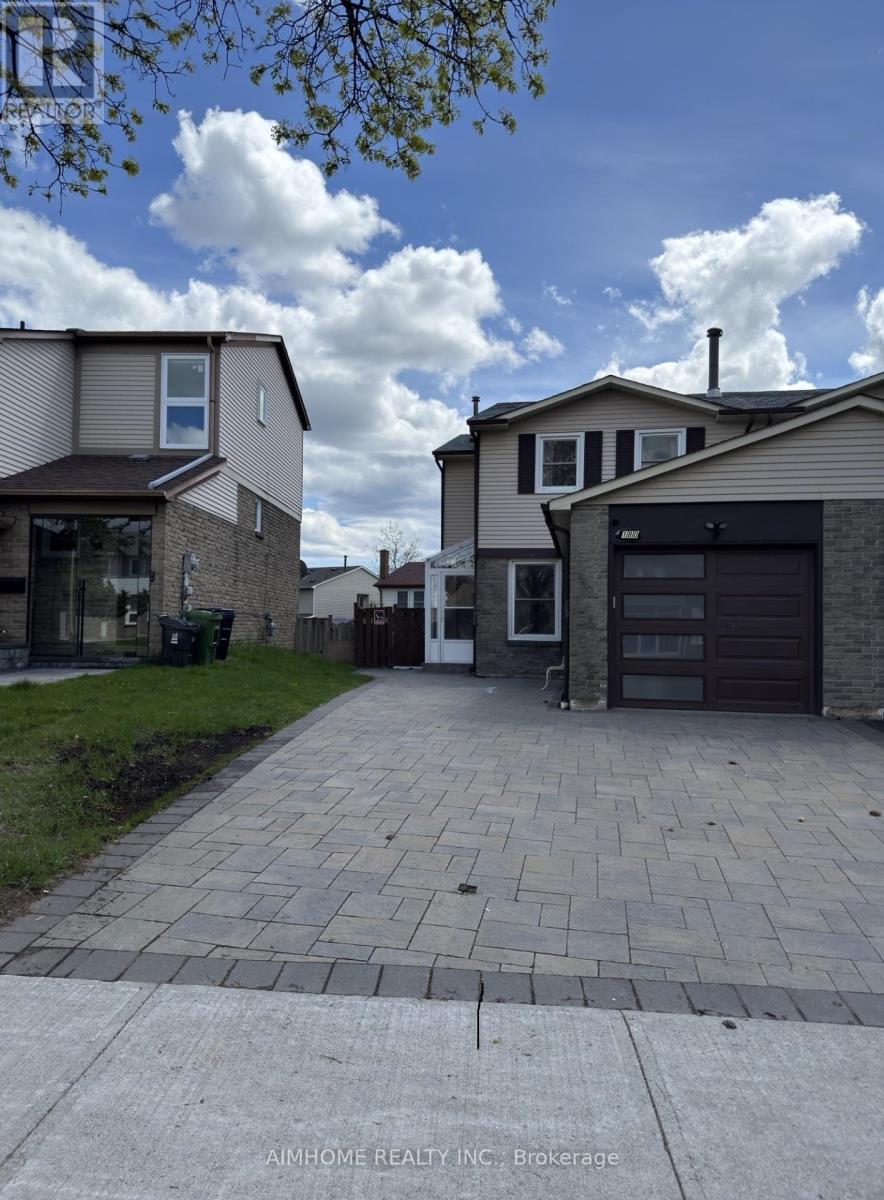 For Sale
 For Sale
 For Rent
 For Sale