

Bickford Park is the quietly residential quarter of Little Italy: Victorian and Edwardian brick semis on Clinton, Roxton, and Beatrice between College Street and Harbord, with the park itself anchoring the middle of the neighbourhood and Bar Raval two blocks north. Renovated semis on Clinton Street were trading between $1.2 and $1.6 million in early 2026. The College strip has been rooted here long enough that Café Diplomatico opened in 1968 and still fills its patio on summer evenings.
Bickford Park occupies the residential interior of Little Italy: College Street along the north, Harbord Street along the south, Ossington on the west, and Bathurst on the east. The park that gives the neighbourhood its name sits roughly at the centre, a mid-sized green space with a wading pool and baseball diamond that functions as the neighbourhood’s communal backyard rather than a destination for the city at large. On a weekday morning in July, it’s mostly local parents and dogs. On a weekend afternoon, it fills with the specific mix of people who have chosen to live within walking distance of it.
College Street is what defines the address. The strip through Little Italy, roughly from Bathurst to Shaw, has held its character longer than most Toronto commercial strips. Café Diplomatico opened in 1968 and still runs its patio as a neighbourhood institution. Bar Raval sits on College and routinely appears on lists of the city’s best bars. The World Cup tradition of closing College Street when Italy plays is not a marketing invention, it’s a thing that actually happens, complete with blocked traffic and people watching from balconies. That kind of embedded local culture is specific to this part of the city.
The residential streets between College and Harbord are the parts buyers are actually choosing. Clinton Street is the most sought-after: quiet, well-maintained, park-adjacent, with a streetscape of Victorian and Edwardian brick semis that has barely changed in character since the 1920s. Roxton Road and Beatrice Street offer similar housing at slightly less competition. Manning Avenue runs north-south through the middle of the neighbourhood and carries more through-traffic than the parallel streets, which is reflected in its pricing.
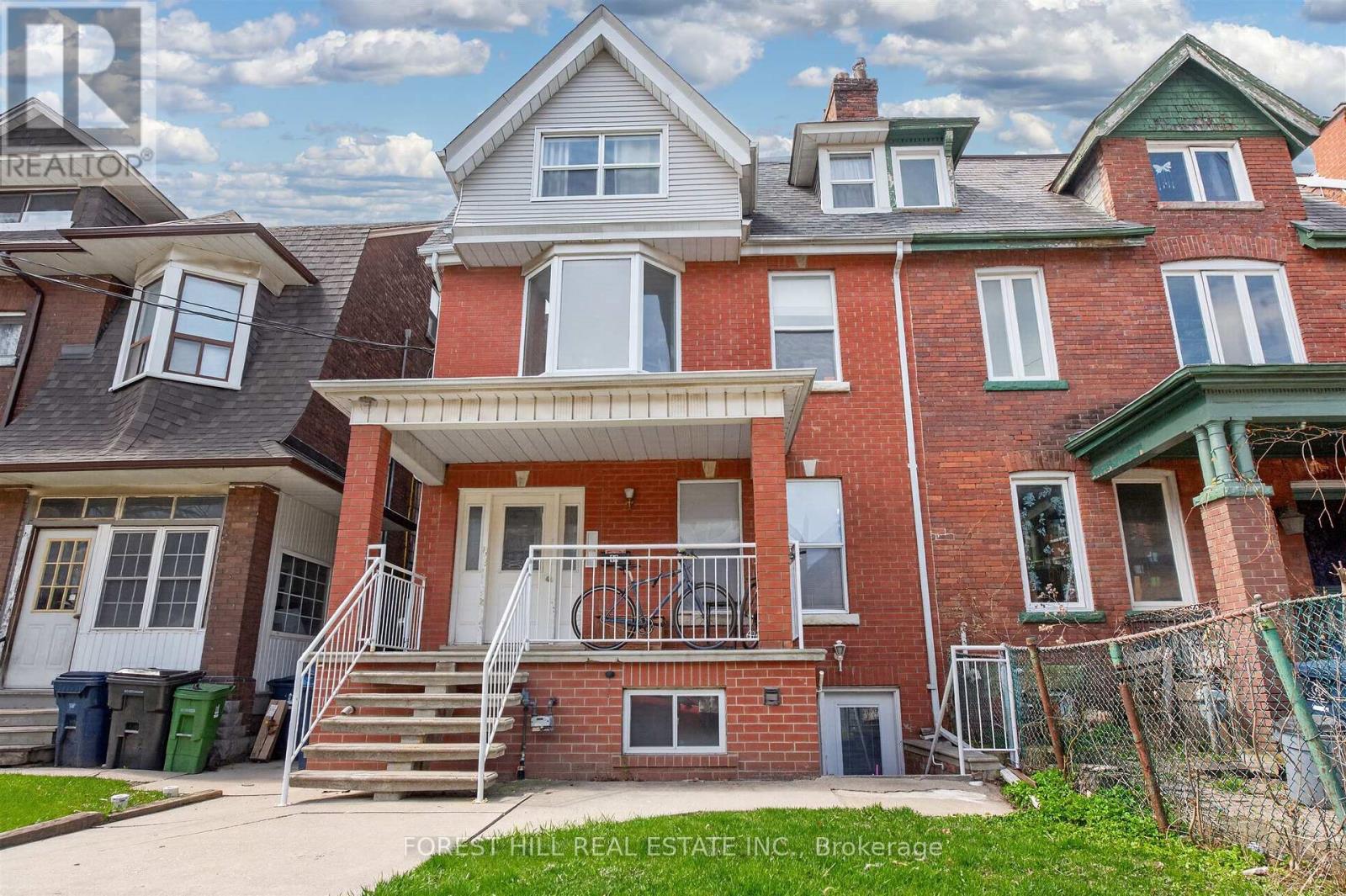
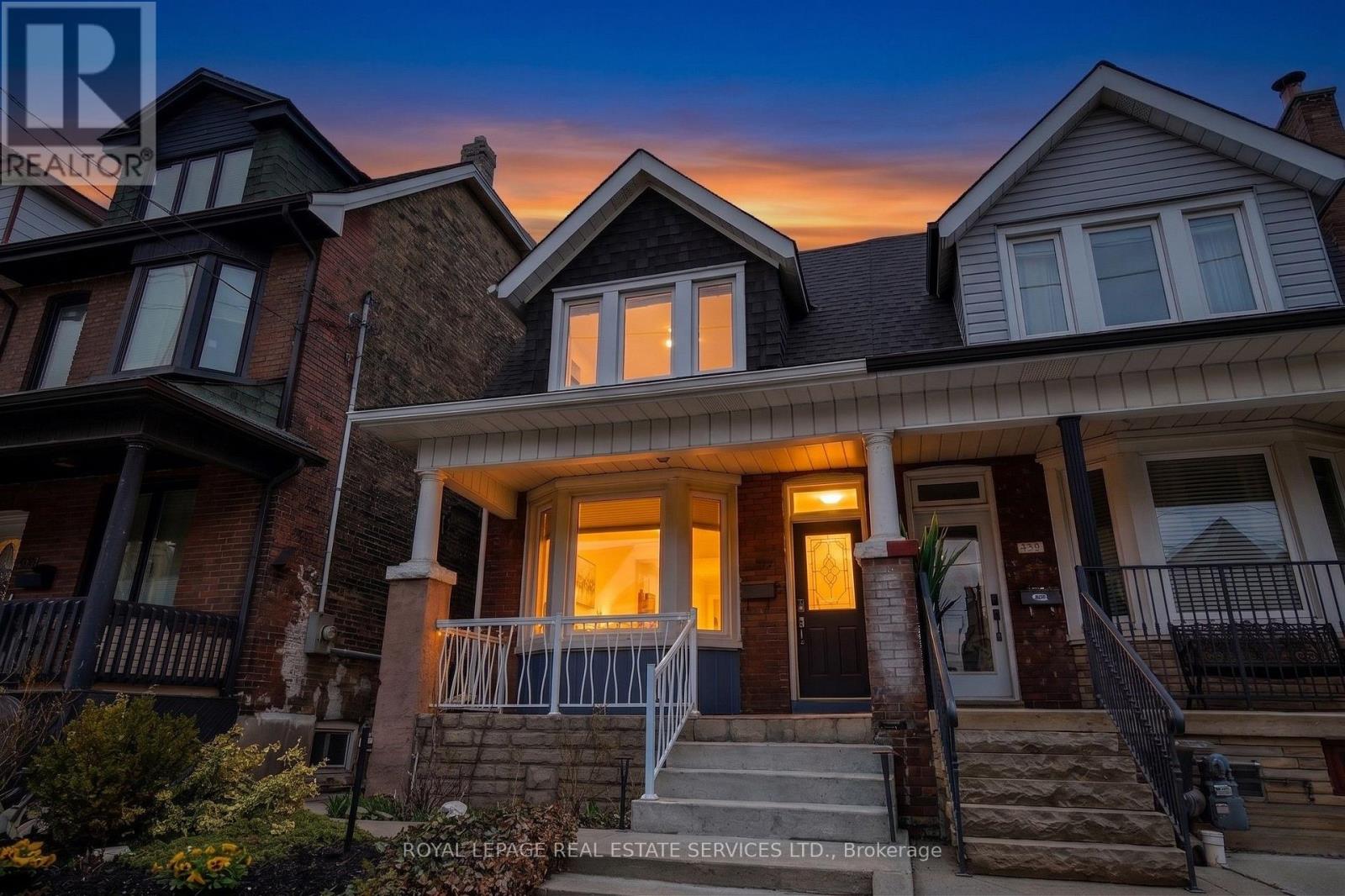
The dominant housing form is the Victorian and Edwardian brick semi-detached, built between the 1890s and the 1920s on narrow lots with small backyards. These are not large houses. A typical semi on Clinton runs 16 to 18 feet wide, three bedrooms, one or two bathrooms, with a rear lane behind. The houses were built for working families and have since been renovated by buyers with different expectations and larger budgets. The quality of that renovation work varies considerably by street and by block.
A renovated semi in good condition on Clinton, Roxton, or Beatrice traded between $1.2 million and $1.6 million in early 2026. The variation in that range comes from lot depth, parking (which is not a given), the extent and quality of renovation, and proximity to the park. A property with rear parking via the lane, a properly updated kitchen and bathrooms, and original hardwood floors refinished sits toward the top of that range. A property with a functional but dated interior and no parking sits toward the bottom.
Detached homes exist in the neighbourhood but they’re less common and priced accordingly. A three-bedroom detached in reasonable condition starts around $1.5 million. Updated four-bedroom properties on deeper lots have sold above $2.2 million. The premium for detached over semi is significant here, driven partly by the scarcity of detached homes in a neighbourhood that is predominantly semi-detached.
Condo supply is limited. The neighbourhood is almost entirely freehold, which is one of its defining characteristics. A few small condo buildings sit on the College Street edge, but buyers who want a condo in this part of the city typically look slightly further east along Bloor or on the College strip itself, where the supply is larger.
Bickford Park doesn’t generate the same headlines as Trinity Bellwoods or the Annex, but the market for well-presented semis on its best streets is consistently competitive. Clinton Street properties priced correctly attract multiple offers in the spring market without exception. The buyer pool is educated about the neighbourhood, people looking here have usually been looking at Seaton Village and Roncesvalles as well and have made a deliberate choice to pay the Bickford Park premium.
In early 2026, most properties are listing without a formal offer date and reviewing offers as they arrive. For desirable properties on Clinton and Roxton, informal offer deadlines still appear, typically a few days after the listing goes live. The spring window, from late February through May, is when competition is most concentrated. The October market produces a second active period. Mid-November through January slows, and buyers willing to look in that window find sellers with more flexibility.
Properties that sit are usually priced incorrectly or have a condition issue that’s visible on the walk-through. The neighbourhood is small enough that buyers and agents know the comparable sales well. Sellers who test the market with aggressive pricing on properties in mediocre condition don’t find the same tolerance for hope pricing that a more liquid market might absorb.
The buyers who choose Bickford Park are usually deciding between here and Seaton Village, Trinity Bellwoods, or Palmerston. The decision against Seaton Village is often about the park and the College Street proximity: Seaton Village has quieter streets and better value, but the Little Italy strip and Bickford Park itself belong to this neighbourhood in a way they don’t to the blocks west of Bathurst. Buyers who make the choice deliberately tend to be the ones who eat at Diplomatico on weekends and want to walk home afterward.
The decision against Trinity Bellwoods is financial for many buyers. Trinity Bellwoods is 15 to 25 percent more expensive for comparable properties. The park at Trinity Bellwoods is larger and has a different social energy. Bickford Park is smaller and more residential-feeling, buyers who find Trinity Bellwoods a bit too active on summer Saturdays sometimes choose Bickford Park precisely for that difference.
The typical buyer is in their late 30s or early 40s, often with a young child or a first on the way, choosing the neighbourhood partly for the school proximity and partly for the specific street life on College. Established residents who’ve lived here for 15 or 20 years are a visible presence, and the neighbourhood has the stability that comes from a relatively low turnover rate, people who buy here tend to stay.
Manning Avenue carries noticeably more traffic than the parallel streets and has bus service running along it. The sound level on Manning, particularly in the block between College and Bloor, is different from the quiet of Clinton or Roxton. Properties on Manning list at a discount that reflects this, and buyers who need to be on that street should walk it at rush hour and on a weekend evening before committing. The character difference between Manning and Clinton is larger than the distance between them suggests.
College Street noise is worth thinking through carefully. Properties on the north side of Beatrice and on Clinton close to College are within earshot of the strip’s patio and restaurant activity from May through September. The College strip is busy on weekends, particularly when there’s a World Cup match involving Italy. Buyers who work early mornings or who are light sleepers should understand what summer Friday and Saturday nights sound like in those specific blocks. Walking the street on a Saturday night in August takes about ten minutes and answers the question directly.
Parking is not standard on these lots. Many of the Victorian semis were built without laneway access, and some streets in the neighbourhood have lanes that are too narrow for reliable vehicle use. The listing will usually say whether parking is available, but it’s worth confirming the specific situation: whether there’s a garage, a pad, or simply laneway access without a designated space. For buyers bringing a car home daily, this is a decision-critical point rather than a minor inconvenience.
Buyers in this neighbourhood know the stock. They’ve walked Clinton Street multiple times before making an offer, they’ve compared your kitchen to the one two doors down that sold in March, and they can identify renovation work that was done properly from work that was done to look good at a showing. The houses that attract the strongest prices are the ones where the Victorian character has been respected rather than erased. Original hardwood refinished and shown, exposed brick where it exists naturally, plaster ceiling details preserved rather than boarded over with drywall. A contemporary kitchen that fits the house rather than fighting it.
The College Street address is an asset in a listing. Buyers who have shortlisted Bickford Park want to be close to Diplomatico, Bar Raval, and the cluster of Italian restaurants on College, and they want to be able to walk home from those places rather than needing a car. A listing that mentions the walk to College accurately (four minutes from Clinton, seven from Roxton, eight from Beatrice) is more useful to buyers than one that vaguely references “proximity to College Street shopping.”
Timing the listing to spring is worth doing if you have any flexibility. The window from late February through early May produces the largest concentration of active buyers and the most competitive offer environments. Properties listed in that window on Bickford Park’s best streets consistently outperform July or November listings on equivalent homes.
The College Street strip through Little Italy is not a recent development. Café Diplomatico has been at College and Clinton since 1968, operating as a neighbourhood anchor through every wave of change on the strip around it. The patio fills from April through October with a consistent mix of regulars, people who have been coming here for decades, and newer arrivals who have adopted it as their local. Bar Raval, which opened in 2015 a few blocks east on College, established itself quickly as one of the city’s best bars and functions as a neighbourhood institution despite its relatively recent arrival.
The Italian cultural presence on College remains genuine even as the neighbourhood’s demographics have evolved. The World Cup tradition of closing the street when Italy plays is worth naming specifically because it’s one of those neighbourhood facts that distinguishes this strip from any other commercial street in the city. It doesn’t happen every summer, but when it does, it’s a reminder that the strip has a community attachment that predates the current restaurant market.
Bickford Park itself is smaller than Trinity Bellwoods and draws differently. It’s a local park, residents use it, children play in the wading pool, dogs are walked around the perimeter, rather than a destination that draws visitors from across the city. That’s part of what makes it work as a neighbourhood park. The relative quiet of the park on most days, compared to the weekend intensity of Trinity Bellwoods, is a characteristic that appeals specifically to buyers who want a park they can use on a Tuesday morning without navigating a crowd.
Christie subway station on the Bloor-Danforth line is the neighbourhood’s primary rapid transit connection. It sits at the northwest edge of the neighbourhood, at Christie and Bloor, and is within a 10 to 15-minute walk of most Bickford Park streets. Bathurst subway station is an alternative for the eastern streets, adding another five minutes but with the same Bloor-Danforth access. From either station, downtown takes about 15 minutes by subway, a reliable commute that doesn’t depend on street conditions.
The 506 Carlton streetcar runs along College Street and provides east-west surface transit. It’s useful for connections further east that subway doesn’t serve directly, and for trips that start or end on the College corridor rather than at Bloor. Like most streetcar routes in the city, it’s more reliable in off-peak hours than during rush periods, where the College strip’s narrow lanes and turns create bunching.
The Harbord Street Cycleway runs along the southern edge of the neighbourhood and is one of the more useful cycling routes across the central west end. From Harbord, a cyclist can reach the University of Toronto campus in 10 minutes, the Financial District via Bay Street in 20, and the waterfront trail connection in 25. Most residents who cycle do so year-round, the infrastructure on Harbord is protected enough to make it practical on most days. A car is optional for daily life here and many households in the neighbourhood manage without one.
Seaton Village sits immediately west of Bathurst and shares almost everything with Bickford Park: same housing era, same lot sizes, same general architecture. The price difference is real and consistent, equivalent semis in Seaton Village run $100,000 to $200,000 less than comparable Bickford Park properties. The gap comes from the Little Italy address and the park’s position within the neighbourhood. Buyers who find the gap significant and don’t have strong feelings about College Street specifically often choose Seaton Village and find daily life barely different. Buyers who eat on College regularly and want to walk to Diplomatico rather than cycle to it choose Bickford Park and absorb the cost.
Trinity Bellwoods is larger, more expensive, and has a different energy. The park there is a city-wide destination that draws crowds on summer weekends. Bickford Park is local. Trinity Bellwoods buyers and Bickford Park buyers are often different kinds of people: Trinity Bellwoods attracts buyers who want the most active version of west-end living; Bickford Park attracts buyers who want the Little Italy neighbourhood with a quieter park at its centre. The price difference between the two, roughly 15 to 25 percent in favour of Trinity Bellwoods, reflects that difference in demand depth rather than a meaningful difference in housing quality.
Palmerston sits immediately east, sharing the Palmerston-Little Italy designation. Palmerston Avenue itself is one of the neighbourhood’s more attractive residential streets, lined with larger Victorian homes on wider lots. Prices on Palmerston proper can exceed Bickford Park’s for the best properties. Buyers who need more square footage than a standard Bickford Park semi provides sometimes find it on Palmerston without moving neighbourhoods entirely.
The main public elementary option for Bickford Park is Ossington-Old Orchard Junior Public School, which draws from the central part of the neighbourhood. Dewson Street Junior Public School serves some of the southern streets near Harbord. Neither school has a strong academic reputation that drives buyers specifically, though both have decent community attachment from the parents who send their children there. The Catholic school system has options nearby through the Toronto Catholic District School Board for families who prefer that stream.
French Immersion is available through the TDSB but requires a separate application and is not guaranteed at the catchment school. Families who prioritise French Immersion should confirm which school they’d be applying to before purchasing, since the application process and waitlist situation vary by location and year.
Secondary school catchment flows primarily to Bloor Collegiate Institute. Families who are buying with a 10 or 12-year horizon and care specifically about secondary school options tend to research this carefully before committing to the neighbourhood. The pattern common to much of the west end applies here: the neighbourhood works well for young children, and the secondary school question is the one that most often prompts families to consider a move east or north when the time approaches. Confirm current catchment boundaries using the TDSB boundary tool before making any decision based on a specific school.
What are typical house prices in Bickford Park in 2026? Renovated Victorian and Edwardian semis on the best streets, Clinton, Roxton, and Beatrice, were trading between $1.2 million and $1.6 million in early 2026, depending on lot size, condition, and whether parking is included. Detached homes in good condition start around $1.5 million and reach $2.2 million for larger renovated properties on deeper lots. The neighbourhood commands a premium over comparable Seaton Village properties across Bathurst, primarily because of the College Street address and the park’s central role in daily life. Condos are limited here, the neighbourhood is predominantly freehold, which keeps the buyer pool focused on families and owner-occupiers.
How does Bickford Park compare to Seaton Village? The two neighbourhoods share similar housing stock: Victorian and Edwardian brick semis from the same era, built on comparable lots, with the same transit proximity. The practical difference is location. Bickford Park sits east of Bathurst with direct access to College Street’s restaurant strip and the park at its centre. Seaton Village sits west of Bathurst with quieter commercial streets and a slightly calmer residential feel. The price gap reflects this: equivalent semis in Seaton Village tend to run $100,000 to $200,000 less. Buyers who prioritise quiet and value without sacrificing the west-end character often choose Seaton Village. Buyers who want the Little Italy address and the park tend to absorb the premium.
Is Clinton Street really the best street in Bickford Park? Clinton Street consistently produces the strongest prices and fastest sales in the neighbourhood. The houses on Clinton are well-maintained, the street is quiet despite its proximity to College, and its park-adjacent position makes it genuinely different from streets two blocks away. Roxton Road offers similar character at a slight discount. Manning Avenue and Beatrice Street are solid alternatives with good transit access but less of the park-adjacent premium. Palmerston Avenue sits at the neighbourhood’s eastern boundary and trades at prices that reflect its broader Palmerston-Little Italy character. Within Bickford Park, buyers are paying for proximity to the park and for streetscape consistency, Clinton delivers both most reliably.
What transit options are there from Bickford Park? Christie subway station on the Bloor-Danforth line is the primary rapid transit connection, within walking distance of most neighbourhood streets. Bathurst subway station is also accessible from the eastern blocks. The 506 Carlton streetcar runs along College Street and connects east to the Financial District and west toward Dundas West station. The Harbord Street Cycleway runs along the southern edge of the neighbourhood and is one of the more useful cycling routes across the central west end, connecting east toward the University of Toronto and west toward Dufferin. Most residents use a combination of subway and cycling for daily commuting.
The streets of Bickford Park were laid out and built up between the 1890s and the 1920s, part of the westward expansion of Toronto’s residential grid that filled in the blocks between Bathurst and Ossington during that period. The houses built then are the houses selling now. The Victorian and Edwardian brick semis on Clinton, Roxton, and Beatrice were built for working and trades families, the same houses now trading above $1.2 million housed multiple families in some cases during the era of their construction. The physical stock has changed less than the economics surrounding it.
The Italian-Canadian community that defines the College Street strip arrived primarily in the postwar period, from the late 1940s through the 1960s, when significant numbers of immigrants from Italy settled in the area bounded by College, Bloor, Bathurst, and Ossington. Café Diplomatico, opened in 1968, represents that era and has outlasted most of what came after it. The demographics of the residential neighbourhood have shifted substantially since then, the neighbourhood is no longer predominantly Italian-Canadian, but the commercial and cultural institutions on College have maintained a continuity that makes the Little Italy designation still accurate rather than historical fiction.
Bickford Park as a named neighbourhood has always sat somewhat quietly beside the louder identity of Little Italy. It’s a designation that most residents use to describe where they live rather than a brand they market around. That quality of being genuinely residential rather than self-consciously defined is part of what makes it function as it does: a neighbourhood where people live, walk to coffee, and go to the park, without much interest in the neighbourhood’s own profile.
Street-level knowledge is hard to find online. Our team works in Bickford Park every day. They know which pockets hold value, where the school catchment lines actually fall, and what the market is doing right now. Talk to us before you make a decision about Bickford Park.
Talk to a local agent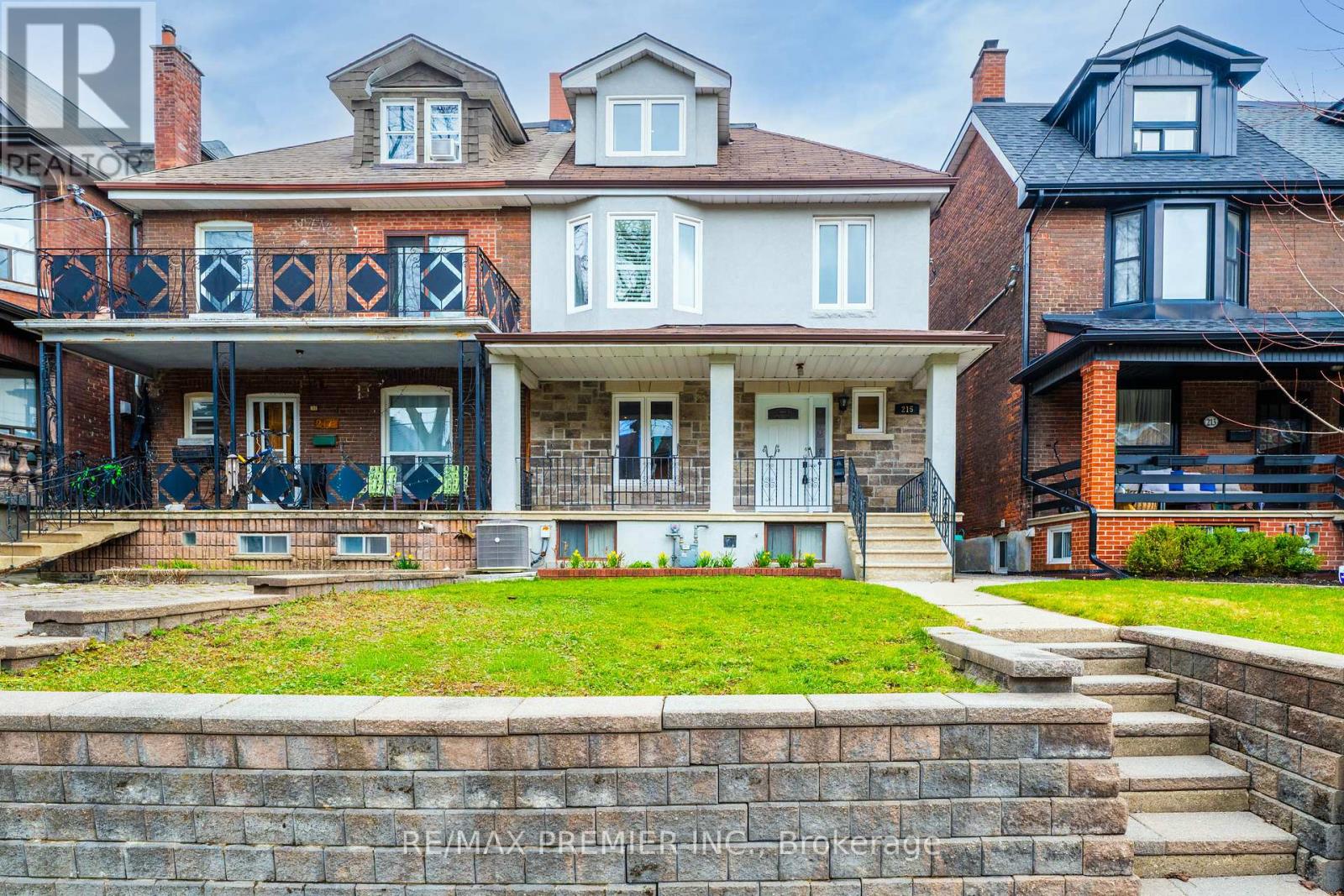 For Sale
 For Rent
 For Sale
 For Rent