
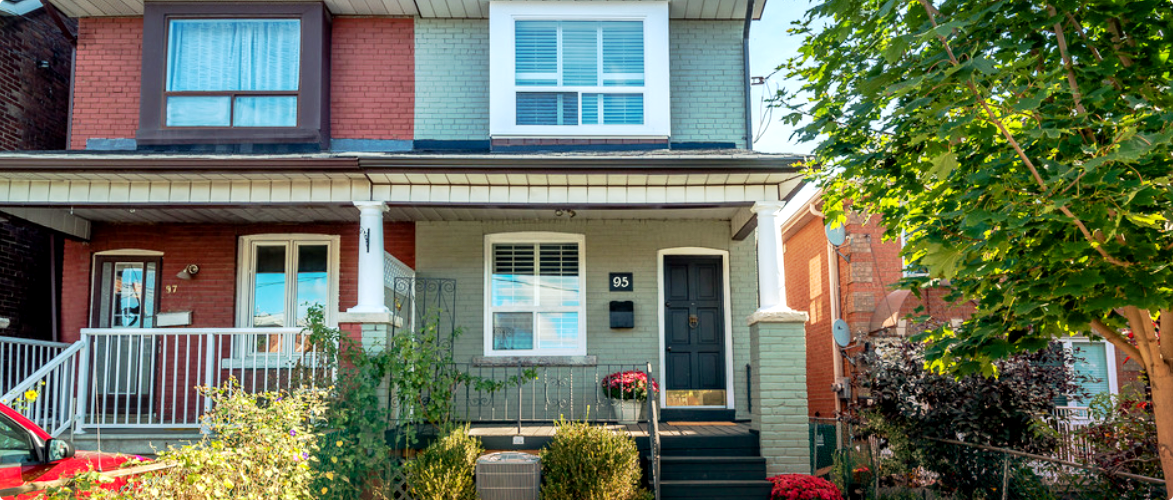
Corso Italia is a post-war Italian-Canadian neighbourhood centred on St. Clair Avenue West between Dufferin Street and Caledonia Road, where the commercial strip still runs cafes, bakeries, and soccer-watching culture alongside a growing number of independent shops that signal the neighbourhood's direction. The housing stock is primarily 1940s and 1950s brick semis and detached homes on wider lots than you'd find in Roncesvalles or Trinity Bellwoods, with semis trading between $800,000 and $1.1 million and detached homes between $1 million and $1.5 million in early 2026. For buyers who need space and are priced out of the trendier west-end addresses, Corso Italia is the most direct comparison.
Corso Italia real estate sits in a different era of Toronto’s west end: not the Victorian brick-and-narrow-lot streets of Roncesvalles or Trinity Bellwoods, but the post-war housing that filled in the grid above St. Clair in the 1940s and 1950s, when Italian immigrants built a community that left a commercial strip unlike anything else in the city. St. Clair Avenue West between Dufferin Street and Caledonia Road is still recognisably what it was: cafes where the coffee is served in demitasse, bakeries selling cornetti and sfogliatelle, a soccer-watching culture that spills onto the sidewalk when Juventus plays, bocce courts at Earlscourt Park that fill on summer evenings.
The streets running north and south off St. Clair tell the real story of the neighbourhood’s appeal to buyers. Boon Avenue, Uxbridge Avenue, Caledonia Road, and Dufferin Street itself are wider than the side streets of the Victorian west end. The houses sit on deeper lots, with backyards that actually accommodate a table and chairs. Semi-detached homes built in 1948 are a different proposition from semi-detached homes built in 1895: more functional layouts, fewer idiosyncratic structural quirks, furnaces that haven’t been extended three times, basements that were designed to be finished.
The neighbourhood is in an earlier stage of the cycle that Roncesvalles and Wychwood went through a decade ago. Independent cafes have arrived. A small number of restaurants are drawing diners from outside the area. The Italian businesses that gave the strip its character are ageing rather than replacing themselves at the same pace. What exists now is a neighbourhood where the original culture is still present and legible, and where the price hasn’t caught up to the trajectory. That combination is what draws the buyers who are paying attention.
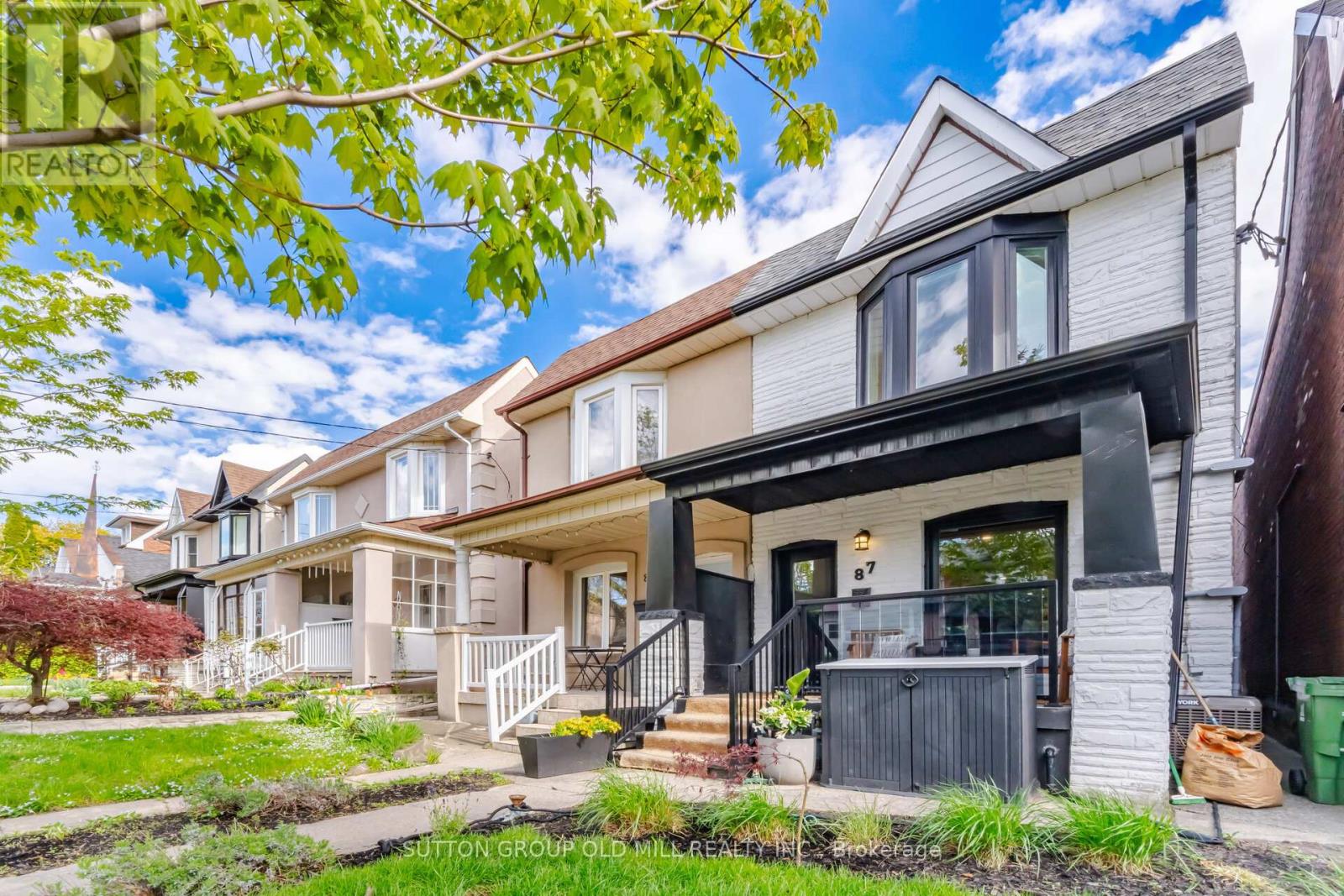
The dominant housing type in Corso Italia is the post-war brick semi, built between roughly 1940 and 1965, with a footprint that’s meaningfully larger than a Victorian semi on a comparable street further west or south. A typical semi here runs three bedrooms, one or two bathrooms, a proper basement that wasn’t an afterthought, and a backyard deep enough to feel useful. Lot widths of 18 to 25 feet are common; on some of the side streets off St. Clair, you’ll find 30-foot frontages on semis that photograph like detached homes from the front. In early 2026, these properties were trading between $800,000 and $1.1 million depending on renovation quality, exact street, and whether there’s parking.
Detached homes make up a meaningful portion of the stock here, which distinguishes Corso Italia from most of the Victorian west end where detached properties are scarce. A detached home in original or lightly updated condition starts around $1 million. A well-renovated three-bedroom detached with a finished basement and rear parking can reach $1.4 to $1.5 million. The deeper lots on streets like Boon Avenue and Uxbridge Avenue occasionally support larger footprints, and a small number of four-bedroom detached properties have sold above $1.5 million when condition and location justified it.
The renovation context matters here. Post-war brick construction is more consistent than Victorian-era building, but it carries its own set of considerations: knob-and-tube wiring is common in homes that haven’t been fully updated, original plumbing is frequently cast iron, and the flat or low-slope roofs on some additions are a different maintenance profile than a peaked Victorian roof. Buyers should get a building inspection that specifically addresses electrical and plumbing age, not just visible condition. The bones are generally sound. The systems are where the surprises tend to live.
There are no large condo buildings in Corso Italia proper. The neighbourhood is almost entirely freehold. Buyers looking for a condo entry point in this part of the west end are better served looking at buildings near the Davenport corridor or on St. Clair further east.
Corso Italia runs at a slower pace than the most competitive west-end markets. Properties here don’t routinely attract seven competing offers on a Tuesday night; the neighbourhood has a buyer pool that is interested, not frantic. That relative calm is part of the value: buyers who’ve been bruised by the offer process in Roncesvalles or who’ve missed multiple properties in Wychwood find more breathing room here, which doesn’t mean the prices are soft, just that the process is more rational.
Well-priced properties in good condition on the better streets, including Boon Avenue, Uxbridge Avenue, and the blocks between St. Clair and Davenport Road, do attract multiple offers, particularly in spring. The difference is that the multiples tend to be two or three buyers rather than six or eight, and the price outcomes are more predictable as a result. In early 2026, most properties were listed with offer review dates a few days after listing, and sellers with realistic price expectations were getting deals done within two weeks of listing.
Properties that need work sit longer. Buyers in Corso Italia are increasingly sophisticated about renovation costs, and a property priced as though it’s turnkey when it isn’t will find resistance. The buyers here have often done the math: they know what it costs to update an electrical panel, re-plumb a bathroom, or finish a basement, and they price their offers accordingly. Sellers who price for the finished version of a house that isn’t finished yet are the ones who end up relisting after a failed offer night.
The spring window from late February through May is when the market runs hottest. Fall activity picks up in September and October. A property listed in December or January sits for a reason, and that reason isn’t always obvious from the listing.
The buyers who end up in Corso Italia have usually run the comparison to Roncesvalles and Wychwood and come up short on budget, or run the comparison and decided the price premium for those addresses doesn’t buy them enough additional quality of life to justify it. These are different people making the same choice for different reasons, and they both end up in Corso Italia satisfied.
The first group is budget-constrained: dual-income households in their mid-30s who want a freehold home with a real backyard in the west end, who’ve been watching the Roncesvalles market for 18 months and concluded that a fully renovated semi at $1.5 million doesn’t work with their down payment and carrying costs. Corso Italia gives them a semi at $900,000 on a wider lot with more usable space, a neighbourhood on an upward trajectory, and enough left in the budget to actually renovate it to the standard they want.
The second group has a connection to the neighbourhood itself: people who grew up in Italian-Canadian communities in Toronto and want to stay connected to that culture, or people who moved to the area as renters and find themselves unwilling to leave. For this group the character of the commercial strip is the draw, not the consolation prize.
Families prioritising lot size make up a third cohort. They’re often comparing Corso Italia to Davenport, which offers somewhat similar housing stock at comparable prices, or to Earlscourt, which overlaps geographically. The park is a real factor: Earlscourt Park is a 12-hectare space with an outdoor pool and sports fields that no equivalent-priced neighbourhood further west or south can match.
The north-south divide within the neighbourhood changes the character of what you’re buying more than most listings make clear. Streets between St. Clair and Davenport Road to the south are closer to the commercial strip and more walkable but also noisier and denser in feel. Streets north of St. Clair toward Rogers Road have a quieter, more residential character and marginally lower prices. The difference is not dramatic, but a buyer who wants to walk to a cafe in the morning and a buyer who wants a quiet street for children to play are optimising for different things, and the right street depends on which one you are.
The electrical systems deserve specific attention. A meaningful proportion of the post-war homes in Corso Italia still have original or partial knob-and-tube wiring. This matters for two reasons: first, it’s a safety concern if it hasn’t been maintained or updated. Second, some insurers won’t provide standard coverage, or will charge higher premiums, for homes with active knob-and-tube. Get a pre-purchase inspection from an inspector who will open the electrical panel and check the attic, not just visually assess the visible wiring. Ask specifically whether knob-and-tube is present and whether it’s active or abandoned. The answer affects your financing, your insurance, and your renovation budget.
Parking is less constrained here than in the Victorian west end, but it’s not universal. Many of the post-war homes have a driveway along the side of the lot or a rear parking pad accessed from the lane. Some don’t. If you’re bringing a car, confirm the parking situation at the specific property and walk the lane to assess whether it’s passable year-round. Some of the laneways in this area are narrower than they appear on a map and aren’t practical for daily use in winter.
The zoning context around St. Clair West is changing. The city has identified the St. Clair corridor as a priority for intensification. This means that some of the properties directly adjacent to St. Clair Avenue West may see increased density approved for neighbouring sites over the next decade. Buyers who want a quiet residential street should look at the blocks one or two streets back from St. Clair, not the properties directly on or immediately adjacent to the main street.
Corso Italia buyers are practical and have usually done their research. They’re comparing your property against the three or four other semis they’ve toured in the neighbourhood that week, and they’re aware of what $900,000 buys in Wychwood versus what it buys here. That comparison works in your favour as a seller: the dollar stretches further in Corso Italia, and a well-presented property makes that obvious. The mistake sellers make is assuming that because the prices are lower than Roncesvalles, the presentation standards are lower too. They’re not.
The post-war bones of these homes present well when the work respects what they are. Clean, bright, and functional beats ornate and half-finished. A kitchen that’s been properly updated, floors that are in good condition, a bathroom that isn’t embarrassing: these are what moves property here. The buyers aren’t usually looking for the original-character renovation play that Trinity Bellwoods buyers pursue; they want a house that works and that they can live in before they undertake any further renovation. Show them that.
The basement matters more in Corso Italia than in the Victorian west end because the basements here are more usable. A finished basement with a proper ceiling height and a second bathroom adds real value to the asking price, not just cosmetically but functionally. Buyers calculate the in-law suite or rental potential of a finished basement in a neighbourhood where that income can make a meaningful difference to carrying costs.
Timing follows the same logic as the broader city: spring is when the buyer pool is deepest. A property listed in late February or March, presented well and priced correctly against recent comparables on similar streets, has the best chance of a competitive result. Sellers who list in November because they want to “test the market” are paying for that experiment in time and carrying costs.
The commercial strip along St. Clair Avenue West between Dufferin Street and Caledonia Road is the reason the neighbourhood has a character other parts of the city’s west end don’t. It isn’t a curated destination strip; it’s a functioning community main street that happens to still carry the imprint of the Italian immigration that built it. The espresso bars where the coffee is ordered in Italian, the pasticcerie with their glass cases of cornetti and crostata, the social clubs where the older men play cards: these aren’t preserved as heritage features. They exist because the people who use them still want them to exist.
Alongside that, the strip is changing. Bar Centrale on St. Clair West has become a reference point for coffee in the west end that extends well beyond the neighbourhood. Independent restaurants have moved in to spaces that previously held Italian social clubs or auto parts shops. The stretch between Dufferin and Lansdowne in particular has seen the most change, with a cluster of wine bars, casual restaurants, and independent retail that reads like the early-cycle version of what the Ossington strip became ten years ago.
Earlscourt Library, a branch of the Toronto Public Library on St. Clair West, is one of the neighbourhood’s genuine community assets: small, well-used, and not the sort of thing that gets mentioned in real estate listings but matters significantly to families with children and to anyone who uses the library as a third place. Earlscourt Park itself runs from St. Clair north to Rogers Road and contains an outdoor pool operated by the city, a skating rink, tennis courts, and the bocce courts that give the park a specific character in summer. On a July evening the park holds multiple uses simultaneously without feeling crowded, which is a function of its 12 hectares.
The 512 St. Clair streetcar runs along St. Clair Avenue West and is the primary transit connection for most of the neighbourhood. It runs the length of the commercial strip and continues east to St. Clair station on the Yonge subway line. From the middle of Corso Italia, that ride takes 15 to 20 minutes in normal conditions; in heavy traffic, it can stretch to 25. The streetcar is reliable in the sense that it comes regularly, but it runs in mixed traffic and is subject to the same congestion as the cars around it. Residents who need certainty of travel time tend to cycle or budget extra time in their commute.
The Bloor-Danforth subway is accessible but not within walking distance for most of the neighbourhood. Dufferin station sits at the southwest corner of the neighbourhood, reachable by bus south on Dufferin Street or on foot in about 20 minutes from the western blocks. Lansdowne station is slightly further east on the same line. Both provide a faster downtown connection than the streetcar for trips to the financial district or the east end.
Cycling works well here. The streets north and south of St. Clair are residential and relatively low-traffic. Davenport Road to the south connects into the Annex and the university district. A cyclist can reach the waterfront via a route through Dufferin Grove and along the Martin Goodman Trail without touching a major arterial for most of the distance. The commute from Corso Italia to King and Bay by bike is around 30 minutes, which is competitive with transit during rush hour.
Car ownership is practical here in a way it isn’t in some denser west-end neighbourhoods. The wider streets have on-street parking that’s available most of the time, and many properties have driveways. Buyers who need to commute by car to locations outside the core will find the Gardiner and the 400 series highways accessible via either Dufferin or Keele Street without significant additional time.
Wychwood is the comparison that comes up most often. It sits immediately to the east, anchored by the Wychwood Barns and its Saturday artisan market, with a housing stock that mixes late-Victorian semis on the southern blocks with post-war brick closer to St. Clair. Prices in Wychwood run 20 percent higher than equivalent properties in Corso Italia on average. What you’re paying for is Wychwood Barns, a slightly more established restaurant and cafe scene, and the address itself, which carries more recognition with buyers who’ve only glanced at a map. The practical difference in daily life is not 20 percent better. Buyers who find Wychwood aspirational rather than accessible end up in Corso Italia and discover that the gap in lived experience is narrower than the gap in price suggests.
Davenport is the neighbourhood directly south and slightly east, running along Davenport Road and into the blocks between there and Bloor Street West. Housing stock in Davenport skews smaller and denser than Corso Italia, with a mix of Victorian rowhouses and post-war semis. Prices overlap at the lower end of the Corso Italia range. The transit access is arguably better in Davenport given the proximity to multiple Bloor-Danforth stations, but the park space doesn’t compare to Earlscourt. Buyers looking at both tend to decide on the basis of lot size: Corso Italia gives you more of it.
Earlscourt, as a distinct neighbourhood designation, overlaps geographically with parts of what’s considered Corso Italia, particularly the blocks north of St. Clair toward Rogers Road and around Caledonia. The housing stock and price points are essentially the same. The distinction matters to residents more than to buyers: the area north of St. Clair has a slightly more working-class residential character, fewer cafes, and a quieter pace. Some buyers find this preferable. Others want the walkability to the St. Clair strip and will pay slightly more for proximity to it.
Dovercourt, to the east across Dufferin Street, is a different neighbourhood in character and price. Its Victorian housing stock runs older and smaller than the post-war brick of Corso Italia, and prices overlap significantly at the semi level. Dovercourt buyers are usually choosing between the two on the basis of architectural preference: Victorian character versus post-war functionality. The transit access is slightly better in Dovercourt given proximity to Dufferin station. Corso Italia gives you Earlscourt Park and the cultural character of St. Clair West. These aren’t equivalent trade-offs; they reflect genuinely different priorities.
The public elementary catchment for most of Corso Italia flows to a small number of TDSB schools including Regal Road Junior Public School to the south, Fairbank Memorial Community School on Dufferin, and St. Clare Catholic School for families in the Catholic system. None of these schools carries a particularly strong academic reputation in the way that some schools in wealthier parts of the city do, but that’s a function of the demographics of the catchment as much as the schools themselves. Families with specific academic priorities investigate TDSB French Immersion options, which require separate applications and aren’t guaranteed, or pursue the Catholic system if that fits their situation.
Oakwood Collegiate Institute is the main secondary school catchment for the neighbourhood, a mid-sized TDSB high school with a general academic program and some arts programming. Parents who are concerned about the secondary school picture often factor this into their planning horizon when buying: the neighbourhood works well for families with young children buying now, and the secondary school question becomes one to address in ten years, either by choice of program school or by considering a move. That’s a real planning consideration that agents don’t always raise and buyers should think about explicitly.
Always verify the current catchment boundaries using the TDSB or TCDSB boundary tools before finalising any purchase decision based on school access. Catchment boundaries in this part of the city have shifted in recent years and a two-block difference can place you in a different school entirely.
What are typical home prices in Corso Italia in 2026? Post-war brick semis in Corso Italia were trading between $800,000 and $1.1 million in early 2026, depending on lot size, renovation quality, and exact street. Detached homes run from around $1 million for an original-condition property needing work to $1.5 million for a well-renovated three-bedroom with a usable backyard and parking. These figures sit 20 to 35 percent below comparable-sized freehold properties in Roncesvalles or Wychwood, which explains why the neighbourhood attracts buyers who’ve been outpriced on those addresses but aren’t willing to trade lot size or transit access.
How does Corso Italia compare to Wychwood for buyers? Wychwood runs roughly 20 percent more expensive than Corso Italia for equivalent-sized properties. You get Wychwood Barns and the artisan farmers’ market, a slightly more established café culture, and what buyers perceive as a more prestigious address. Corso Italia gives you more square footage per dollar, wider lots, similar transit access on the St. Clair streetcar, and a neighbourhood that’s still in an earlier stage of the change cycle. Buyers who prioritise space over address prestige, or who find Wychwood’s prices aspirational rather than accessible, consistently land in Corso Italia and report the practical difference in daily life is smaller than the price difference suggests.
Is Corso Italia a good neighbourhood for families? It works well for families who want freehold space without paying Roncesvalles prices. The post-war detached homes have real backyards, the streets are wider than the Victorian west end, and Earlscourt Park provides a 12-hectare outdoor space with a city-run outdoor pool and sports fields. The school situation requires research: the catchment public schools are adequate but not exceptional, and families with specific academic priorities often pursue TDSB French Immersion or the Catholic system. The neighbourhood’s relative affordability within the west end means families can buy more usable space here than almost anywhere else at a comparable distance from downtown.
What transit options are available in Corso Italia? The 512 St. Clair streetcar runs along St. Clair Avenue West through the commercial strip, connecting east to St. Clair subway station on the Yonge line. The ride from the middle of Corso Italia to St. Clair station takes 15 to 20 minutes in normal conditions. There’s no subway station in the neighbourhood itself. Dufferin station on the Bloor-Danforth line is accessible by bus south on Dufferin or on foot from the western blocks, adding a second downtown connection. The 512 streetcar is reliable enough that car ownership is optional for people who work downtown, though many households in the neighbourhood do keep a car given the lot sizes, available driveways, and access to the 400 series highways via Dufferin or Keele.
The neighbourhood that became Corso Italia was largely open land at the turn of the twentieth century, developed in pieces as Toronto grew northward from the city’s Victorian core. The streets north of St. Clair along Dufferin and Caledonia filled in gradually through the 1920s and 1930s, with the post-war building boom of the 1940s and 1950s producing the brick semis and detached homes that define the neighbourhood today. These weren’t prestige houses: they were built for working families, often by Italian immigrant builders for Italian immigrant buyers, which is how the neighbourhood acquired its character.
Italian immigration to this part of Toronto accelerated after the Second World War. Many of the men who came worked in construction and manufacturing; the women ran the households and, in many cases, the small businesses on St. Clair. The commercial strip evolved to serve the community: cafes modelled on the bars of Calabria and Sicily, bakeries producing bread and pastry from memory rather than recipe cards, social clubs where men from the same village could meet on Saturday afternoons. By the 1970s St. Clair Avenue West between Dufferin and Caledonia was informally known as Corso Italia, the name the city eventually made official.
That Italian-Canadian community has aged in place. The children and grandchildren of the original residents often left for the suburbs or the outer 905 belt as they accumulated enough capital to do so, leaving behind a neighbourhood where the original culture exists alongside a newer generation of residents attracted by the value. The result is a neighbourhood that’s genuinely in transition without having lost what made it specific. How long that balance holds is one of the more interesting real estate questions in this part of the city.
Street-level knowledge is hard to find online. Our team works in Corso Italia every day. They know which pockets hold value, where the school catchment lines actually fall, and what the market is doing right now. Talk to us before you make a decision about Corso Italia.
Talk to a local agent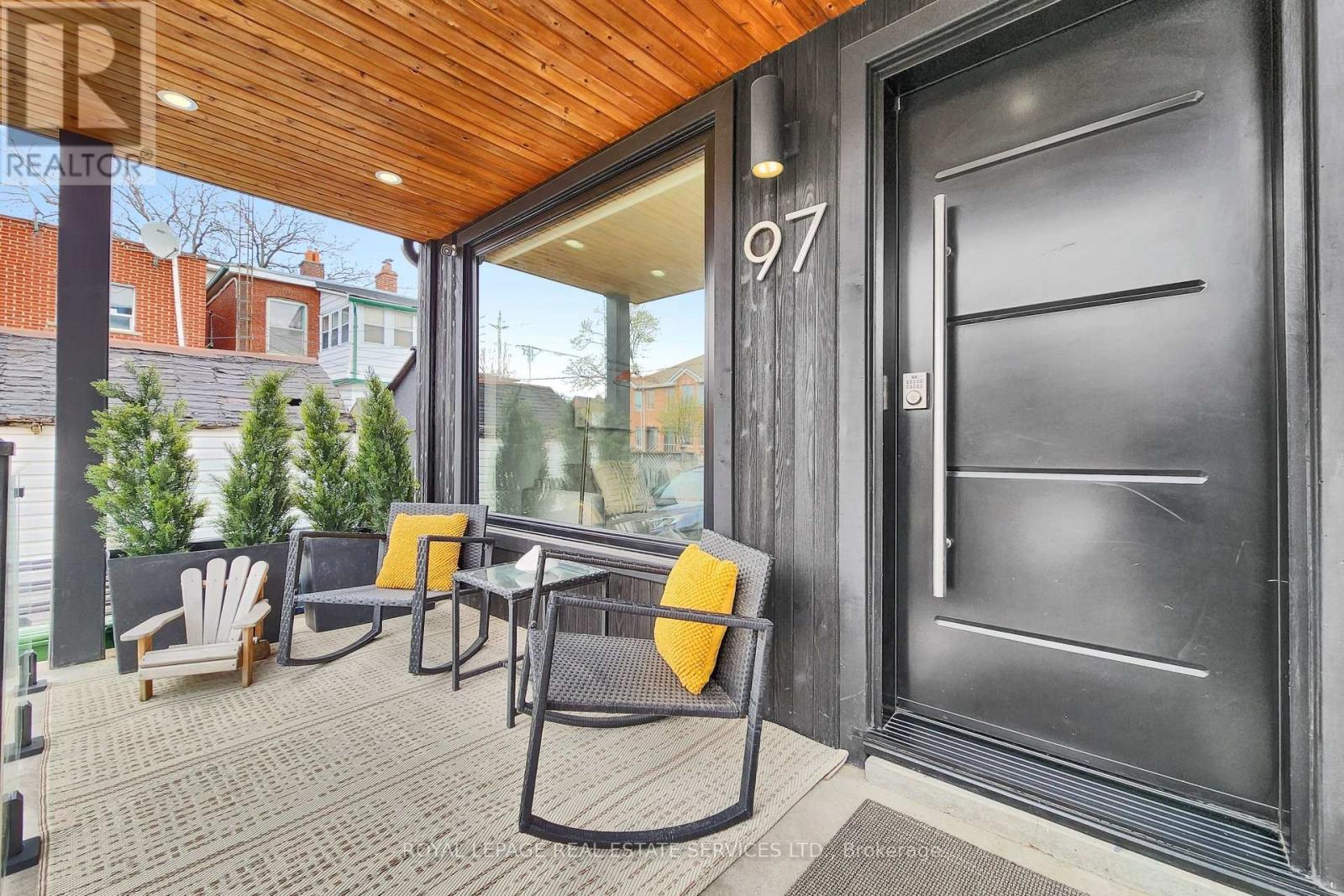 For Sale
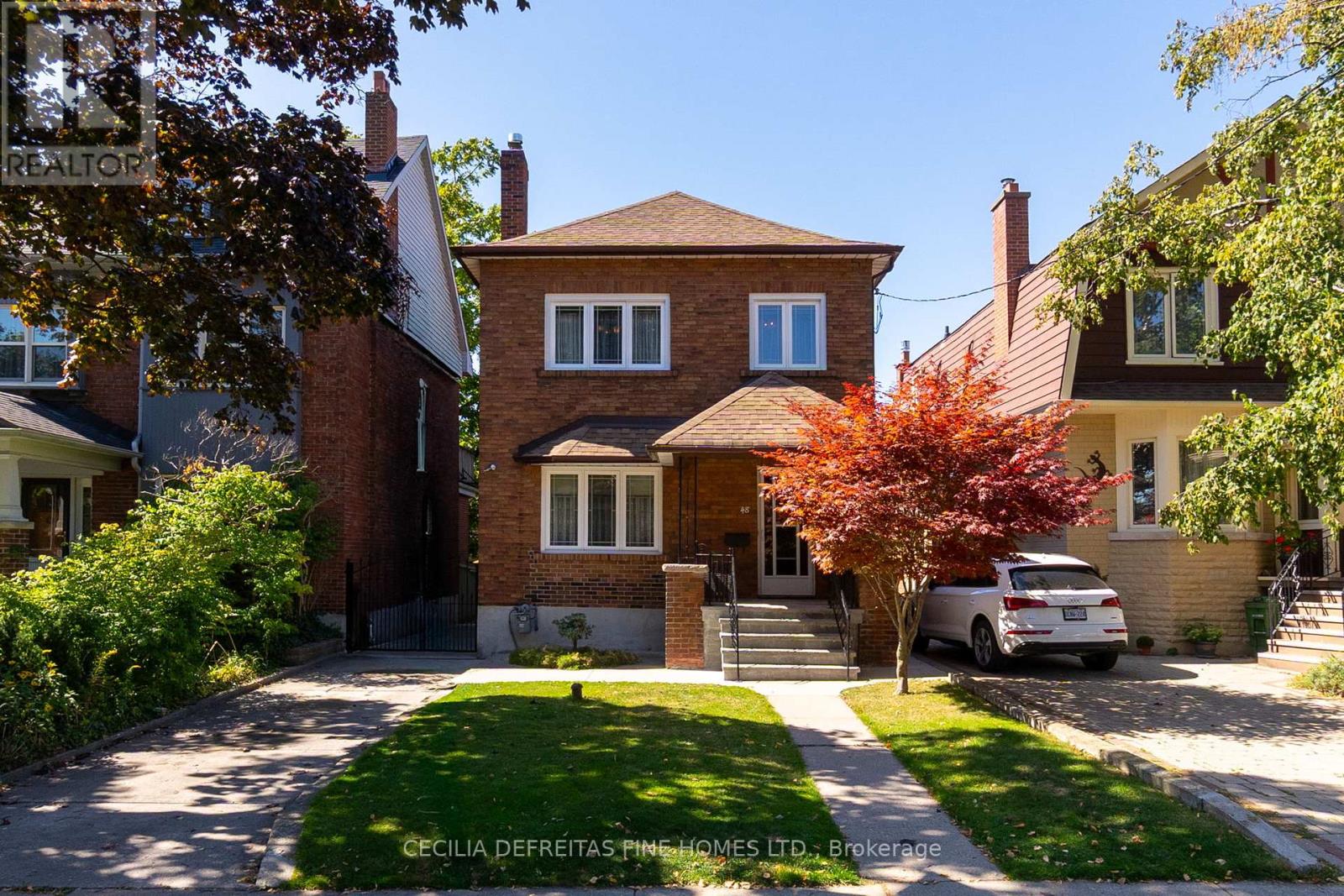 For Sale
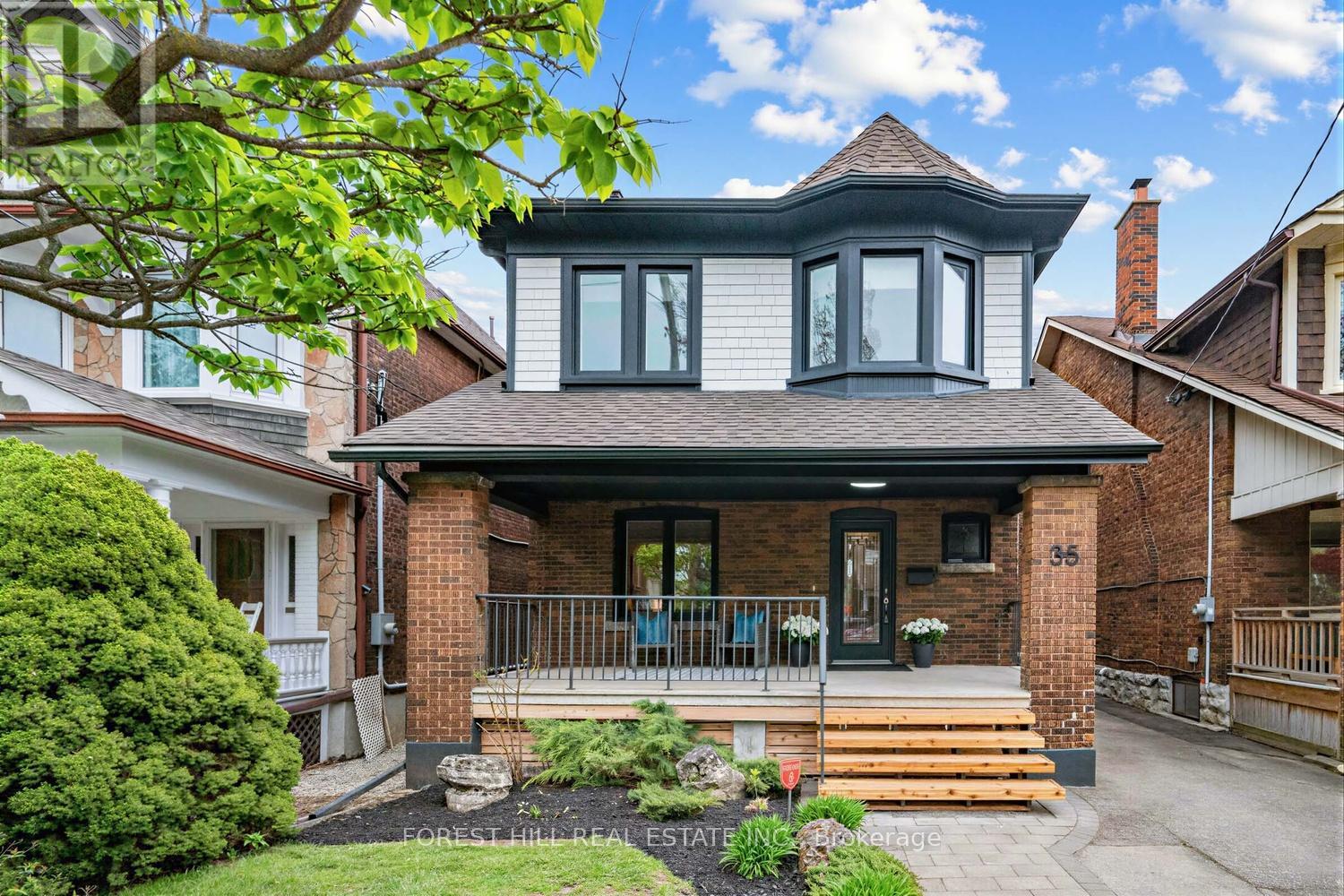 For Sale
 For Sale