
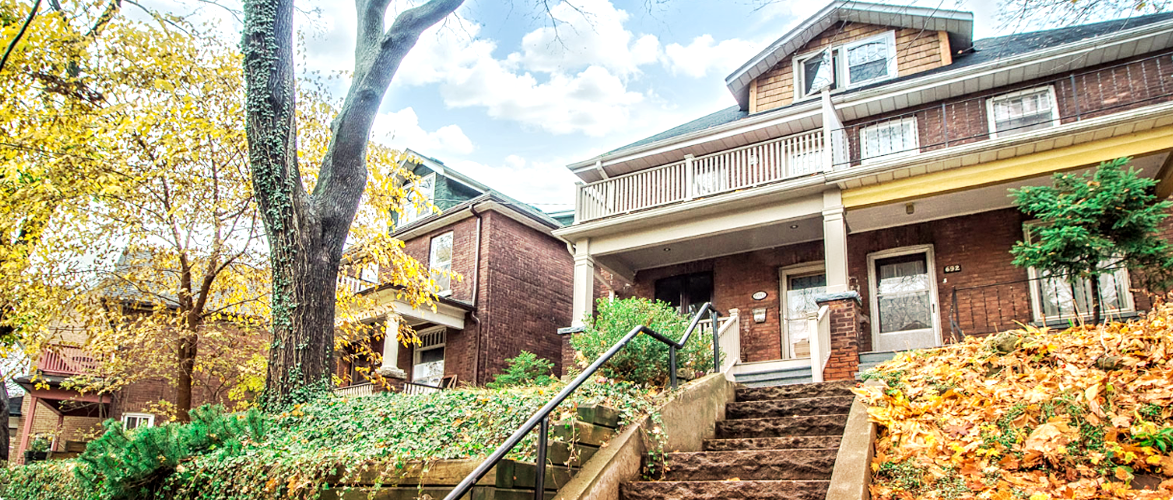
Roncesvalles runs along its namesake avenue from Bloor Street West down to Queen West, shaped by a Polish community that arrived in the 1940s and built the institutions that still define the strip: the churches, the delis, the annual September festival that brings 60,000 people to the neighbourhood for a weekend. The housing stock is Edwardian brick semis built between 1900 and 1920, selling in the $1.1 to $1.5 million range, with detached homes on the deeper lots west of the avenue running $1.5 to $2 million. High Park sits on the neighbourhood's western edge, 399 acres of trails and green space, and on Saturday mornings from May through October the farmers market on Roncesvalles Avenue pulls the neighbourhood together in the way that a good market does.
Roncesvalles runs along its namesake avenue from Bloor Street West down to Queen West and King West, with High Park forming the western boundary and Parkdale sitting to the east. The avenue is the spine: a functioning main street with butchers, bakeries, an independent bookstore, a jazz bar, and the kind of Polish deli tradition that doesn’t exist anywhere else in the city at this scale. On a Saturday morning the farmers market fills the pavement and the neighbourhood uses it as most good neighbourhoods use their markets, as a reason to leave the house and see people.
The character is family-oriented without being suburban. The streets are quiet, the lots are proper, and the housing stock is Edwardian brick with the original details still largely intact. What makes Roncesvalles different from Trinity Bellwoods, immediately to the east, is the absence of bar-heavy street life and the presence of High Park. Trinity Bellwoods buyers are buying proximity to Queen West. Roncesvalles buyers are buying access to 399 acres of green space and a quieter street on the other side of the front door.
The comparison to Parkdale is a different one. Parkdale occupies the blocks directly east of Roncesvalles and carries a lower price point, a longer and more uneven gentrification track record, and a concentration of social housing in its southern blocks that the neighbourhood hasn’t absorbed cleanly. Roncesvalles is more established, more expensive, and better maintained across the housing stock. Buyers shortlisting both areas are usually asking how much the price difference is worth to them, and most conclude it’s worth paying.
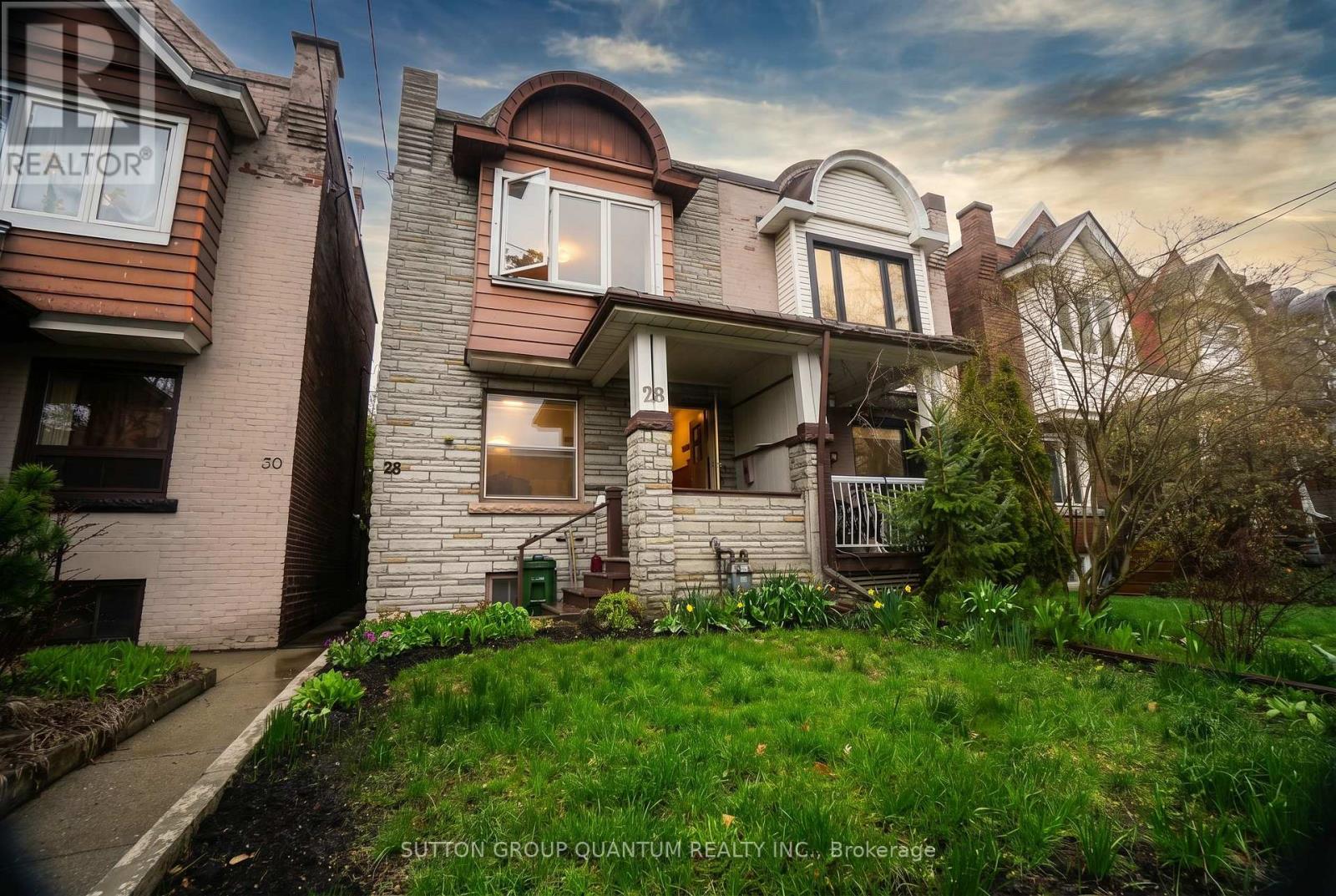
The dominant purchase in Roncesvalles is the Edwardian brick semi, built between 1900 and 1920, on a street that still looks like it did a hundred years ago from the front and has been updated in layers from the inside. Most are two and a half storeys, three or four bedrooms, with a proper backyard and lane access behind. A renovated semi in the core of the neighbourhood, on streets like Geoffrey, Wright, or Galley, was trading between $1.1 and $1.5 million in early 2026. Condition matters here because the neighbourhood has enough sales volume that buyers can compare directly.
Streets west of Roncesvalles Avenue, closer to High Park, command a 5 to 10 percent premium over streets on the east side of the avenue. The Howard Park and Galley Avenue pocket is the most sought-after in the neighbourhood. Properties there sit on slightly wider lots with quicker park access, and that combination moves the floor upward consistently. Buyers who want the best of Roncesvalles should focus their search on the west-of-avenue streets and budget accordingly.
Detached homes on deeper lots, concentrated on Howard Park Avenue and the western pocket, run $1.5 to $2 million depending on size and renovation quality. Fully renovated detached properties with rear additions have sold above $2 million and don’t stay on the market. The condo supply is nearly absent: a small number of apartment buildings sit on the edges of the neighbourhood, but Roncesvalles is an almost entirely freehold market. Buyers looking for condo options will find more depth in Trinity Bellwoods or along Bloor West.
Parking is easier here than in Trinity Bellwoods. The lots are somewhat wider, more properties have functioning laneways with garages or pads, and street permit parking exists on the residential streets. Households with one car can make it work readily. Two cars requires confirming the specific property before proceeding, but it’s a more manageable problem here than in the narrower Victorian streets to the east.
Roncesvalles is a steady market. It doesn’t generate the bidding war intensity of Leaside or the speculative interest of an emerging neighbourhood. Demand is consistent, driven by buyers who’ve researched the west end thoroughly and concluded that Roncesvalles offers the best combination of housing quality, park access, and price for what they need. Well-priced semis in the Howard Park and Galley pocket attract multiple offers in spring, but the competition is more rational than what buyers encounter in Trinity Bellwoods or the established Annex streets.
The High Park factor keeps the floor values stable in a way that purely transit-oriented or commercial-strip-adjacent neighbourhoods don’t always hold. Buyers who come specifically for park access aren’t substituting Roncesvalles for another neighbourhood when the market softens. That stickiness shows up in days on market: well-priced properties in good condition typically sell in two to three weeks, and that figure hasn’t moved dramatically even when the broader 416 market has softened.
The condo market is nearly absent, which means the neighbourhood is almost entirely freehold. The condo-specific weakness that’s running across the city in 2026 doesn’t affect Roncesvalles the way it affects Trinity Bellwoods or the Ossington strip. Buyers here are choosing between a semi and a detached, not between a condo and a townhouse.
The buyers who end up in Roncesvalles are usually choosing it over Trinity Bellwoods, Parkdale, or Bloor West Village. The decision against Trinity Bellwoods is almost always about High Park and quieter streets: buyers who want the park as a daily-use amenity rather than a weekend destination find that Roncesvalles makes that possible without the Queen West premium. Trinity Bellwoods is the better choice if street life and the active commercial strip matter more than park scale.
The decision against Parkdale is usually about housing stock condition and neighbourhood stability. Roncesvalles costs more and is more consistent. Buyers who choose Parkdale are betting on continued gentrification and accepting that the southern blocks have more social complexity. Buyers who choose Roncesvalles want the established version of the same west-end character.
Bloor West Village sits north of the Roncesvalles neighbourhood boundary and represents the comparison at the upper end of the price range. It has a more established retail strip along Bloor, a stronger school catchment in some blocks, and prices that run 10 to 15 percent above comparable Roncesvalles properties. Buyers who find Bloor West Village slightly out of reach often arrive in Roncesvalles and find that the trade-off is smaller than they expected.
The specific buyer profile that consistently chooses Roncesvalles is family-focused, values outdoor space as a daily-use amenity rather than a distant destination, and is willing to accept a quieter street life in exchange for High Park access and better value per square foot. They’ve usually run the numbers on Trinity Bellwoods, decided the premium isn’t justified for what they need, and chosen Roncesvalles deliberately.
The west-of-avenue premium is the single most important piece of local knowledge in Roncesvalles. Streets west of Roncesvalles Avenue, from Howard Park up through Galley and Fern and Wright, sit closer to High Park and trade 5 to 10 percent above streets on the east side of the avenue for equivalent properties. This is a consistent and persistent pricing pattern that most listing searches won’t surface automatically because properties on both sides of the avenue carry the same Roncesvalles address. Buyers should map the street against the avenue before comparing prices.
Parking is worth investigating at the specific property level before making an offer. More Roncesvalles houses have functioning laneways and parking pads than comparable Trinity Bellwoods semis, because the lots are somewhat wider. But not every property has parking, and the presence or absence of a pad affects both carrying costs and resale options. Walk the laneway before you proceed.
The 504 King streetcar runs along the southern end of the neighbourhood on the Roncesvalles branch, which means properties on the streets directly adjacent to the streetcar route carry some road noise. It’s worth visiting the specific street at a weekday morning peak to understand the actual noise level, which varies considerably by how far back the house sits from the street.
The seasonal character of the neighbourhood is worth experiencing before you commit. The farmers market runs from May through October. The Polish Festival in September changes the avenue for a weekend in a way that some buyers love and some find difficult. The High Park cherry blossoms in late April and early May draw the whole city to the streets adjacent to the park. These are features, not drawbacks, but they change the practical experience of the neighbourhood in ways that a January viewing won’t reveal.
The buyer profile in Roncesvalles is family-focused and outdoor-oriented. They’re buying the park as much as the house, and they want the house to reflect the care taken with the outdoor space as much as the interior. A property that shows a well-maintained backyard, a usable laneway situation, and a front garden that acknowledges the Edwardian character of the street will outperform a comparable property that treats the outdoor space as an afterthought.
The Edwardian bones of these houses respond well to presentation that works with the original character rather than against it. Original hardwood refinished and shown. Bay windows dressed properly. The brick detail on the front and the original trim inside both read as authenticity to buyers who’ve done their homework on the neighbourhood. Roncesvalles buyers have usually toured several properties in the neighbourhood before making an offer. They know what the houses look like and they notice when a renovation respects the original structure.
Spring timing aligns with High Park in a way that no other season does. A listing in late March or April benefits from the full buyer pool and from the neighbourhood looking its best: the park is leafing out, the cherry blossoms along the High Park streets draw attention from across the city, and the farmers market is opening for the season. If you have flexibility on timing, the spring window from late February through May is consistently the strongest in Roncesvalles, and the park adjacency makes it more pronounced here than in most other west-end neighbourhoods.
Roncesvalles Avenue functions as a main street in the way that most Toronto commercial strips stopped doing twenty years ago. The Polish deli tradition persists: Cafe Polonez has been serving traditional Polish food for decades in a dining room that moves at its own pace. The Monforte Dairy Market brings its award-winning Ontario cheese. Karelia Kitchen has built a following for its Nordic-influenced menu. Grapefruit Moon is the jazz bar that keeps the avenue from being entirely family-coded. The Tallinn Book Exchange operates on a model that trusts its customers. The Saturday Roncesvalles Farmers Market runs from May through October and anchors the neighbourhood’s food culture in the same way that a good market should, as a gathering point, not just a shopping trip.
High Park is 399 acres. That number matters because most Toronto parks are measured in hectares and feel like it. High Park is large enough to get genuinely lost in, to have a different experience every visit, and to absorb 40,000 visitors on a cherry blossom weekend without the trails becoming impassable. Grenadier Pond sits in the southwest corner and freezes reliably enough for skating in most winters. The zoo is small but the children’s playground beside it is excellent. The off-leash dog area is one of the better ones in the city. The spring cherry blossoms in the Japanese cherry grove in late April and early May have become a city-wide event that draws visitors from across Toronto and beyond.
The Roncesvalles Polish Festival runs each September across a full weekend. Over 60,000 people attend, which is a number that genuinely changes the neighbourhood for those two days: the avenue closes to traffic, food stalls run the length of the commercial strip, and the cultural programming reflects the community that built Roncesvalles over seventy years. The festival has aged into the neighbourhood’s identity in a way that outlasts the demographic shift of the past two decades. The Polish institutions, including St. Casimir’s and St. Vincent de Paul, and the social clubs are aging, but the festival maintains the connection to what the neighbourhood was.
The 504 King streetcar is the primary transit connection, running along Roncesvalles Avenue on the Roncesvalles branch and connecting south through the King corridor to the financial district. The 504 is more reliable than the 501 Queen streetcar to the south, which is prone to bunching and long gaps, particularly at peak hours. For residents who commute downtown, the King branch is the practical choice and residents near the southern end of the neighbourhood use it accordingly.
Dundas West subway station on the Bloor-Danforth line sits 10 to 15 minutes north by foot from the upper end of the neighbourhood. The Roncesvalles bus connects to the station more quickly. The subway provides the reliable high-frequency connection that the streetcar can’t guarantee, and most Roncesvalles residents learn to combine the two depending on the time of day and their destination.
Cycling is genuinely practical from Roncesvalles. High Park has an internal bike path network that connects to the Queensway bike lane running east-west along the southern boundary of the park. The Martin Goodman Trail along the lakeshore is accessible from the south end of the neighbourhood. A fit cyclist can reach King and Bay in under 25 minutes from the middle of the neighbourhood, and the route via King Street is flat the whole way.
Car access is straightforward. The Gardiner Expressway and Lake Shore Boulevard are both accessible from the south end of the neighbourhood, within a five-minute drive from most streets. This makes Roncesvalles more practical for car-commuting households than Trinity Bellwoods, where the same trip involves more surface street navigation. Parking, as noted, is easier here than in Trinity Bellwoods or the Annex because the wider lots mean more properties have laneway access.
Trinity Bellwoods is the comparison that every Roncesvalles buyer has run. The housing stock is similar in type and construction era. Trinity Bellwoods is 15 to 25 percent more expensive for equivalent properties, reflecting the Queen West proximity, the park’s community character, and a buyer pool that’s consistently deeper than Roncesvalles. The park in Trinity Bellwoods is 15 hectares. High Park is 399. Buyers who treat park access as a practical daily-use consideration rather than a lifestyle statement tend to run those numbers and end up in Roncesvalles. Buyers who want the active west-end commercial strip and the specific social scene around Trinity Bellwoods Park pay the premium and don’t regret it.
Parkdale sits immediately east of Roncesvalles and offers a lower price point on the same housing stock. The gap for a comparable semi runs around 15 to 20 percent. What Parkdale hasn’t resolved is the social housing concentration in its southern blocks along Queen West and King Street, which has slowed the gentrification process relative to what happened in Roncesvalles over the same period. Buyers who choose Parkdale are accepting a neighbourhood that’s still in transition. Buyers who choose Roncesvalles are paying for the version that’s already arrived.
Bloor West Village sits north of the Roncesvalles neighbourhood boundary, running along Bloor Street West toward Jane. It’s more established, the retail strip is longer and better supplied, and the school catchment in some blocks is stronger at the secondary level. Prices run 10 to 15 percent above comparable Roncesvalles properties. The buyer who chooses Bloor West Village over Roncesvalles typically has a school-age child, has done the secondary school comparison, and has concluded that the premium is worth the catchment. The buyer who chooses Roncesvalles over Bloor West Village usually finds the High Park access and the avenue’s character more relevant to their actual daily life than the school question, at least at the elementary stage.
The main public elementary schools serving Roncesvalles are Parkdale Junior and Senior Public School, Fern Avenue Junior Public School, and St. Vincent de Paul Catholic School. Fern Avenue is the school most directly associated with the neighbourhood’s core streets. St. Vincent de Paul serves the Catholic families and has a strong community connection to the Polish parish history of the neighbourhood. The elementary school situation is adequate for most families, without the standout academic reputation that drives buyers specifically into the Leaside or Davisville catchments.
For secondary school, the catchment flows to Parkdale Collegiate Institute. Parkdale Collegiate has a mixed academic reputation and a genuine arts program. Families with specific secondary school priorities, academic or otherwise, often investigate separate-application programs at other TDSB schools before the secondary school decision arrives. The Catholic secondary option is Bishop Marrocco/Thomas Merton CSS, which draws students from across the west end.
The catchment question in Roncesvalles is worth mapping carefully before buying. The neighbourhood sits at the boundary of several TDSB attendance zones, and a few blocks east or west can change the school assignment for both elementary and secondary. Verify the specific address against the current TDSB boundary tool before treating any neighbour’s school report as applicable to the property you’re buying.
Is Roncesvalles a good neighbourhood for families? Roncesvalles is one of the better family neighbourhoods in the west end for the price. The Edwardian semis have proper backyards and laneways, and the streets see limited through-traffic. High Park is the decisive asset: 399 acres of trails, a zoo, a wading pool, an adventure playground, and Grenadier Pond provide outdoor programming year-round without leaving the neighbourhood. The Saturday farmers market runs May through October and functions as the neighbourhood’s social anchor. Elementary schools are adequate, and the neighbourhood has a higher proportion of young children than the city average for freehold areas, which drives good park programming and active school communities. Families who prioritise outdoor space over school ranking consistently choose Roncesvalles over Trinity Bellwoods.
How does Roncesvalles compare to Trinity Bellwoods for buyers? The housing stock is similar in type, age, and construction quality. Roncesvalles is 15 to 25 percent less expensive for comparable properties. Trinity Bellwoods has a more active commercial strip along Queen West, with more bars and restaurants per block. Roncesvalles is quieter and more residential, and High Park provides a significantly larger and more varied green space than Trinity Bellwoods Park. Families with children who prioritise outdoor access and quieter streets consistently choose Roncesvalles. Buyers who want proximity to the Queen West strip and the concentrated social scene around Trinity Bellwoods Park tend to choose Trinity Bellwoods and accept the premium. Both are well-established neighbourhoods with consistent buyer demand and no obvious sign of that changing.
What is the Roncesvalles Polish Festival? The Roncesvalles Polish Festival runs each September, typically over a full weekend, and draws over 60,000 visitors to the avenue. It’s one of the larger street festivals in Toronto, stretching several blocks along Roncesvalles Avenue with food stalls, live music, and cultural programming rooted in the Polish community that settled the neighbourhood from the 1940s onward. The avenue closes to traffic, parking becomes difficult across the surrounding streets, and the neighbourhood takes on a genuinely different character for those two days. For residents, it’s an annual fixture. The festival has maintained its connection to the original community even as the neighbourhood’s demographic composition has shifted considerably over the past two decades.
Which streets are best to buy on in Roncesvalles? The streets west of Roncesvalles Avenue, closer to High Park, consistently command 5 to 10 percent above streets on the east side of the avenue for comparable properties. Howard Park Avenue, Galley Avenue, Fern Avenue, and Wright Avenue form the most sought-after pocket. Properties here have quicker park access and tend to sit on slightly wider lots. Geoffrey Street and Boustead Avenue also perform well. Streets directly east of the avenue, including the blocks toward Parkdale, trade at a discount but offer the same Edwardian housing stock at better value per dollar. Buyers who prioritise High Park access should focus their search west of the avenue. Buyers who prioritise walkability to the streetcar and the commercial strip will find the east-of-avenue streets a more practical trade-off.
Roncesvalles was built between 1900 and 1920, when the city of Toronto was expanding westward and the Toronto Street Railway extended its lines out to what had been the village of Parkdale. The Edwardian brick semis that now sell for over a million dollars were built for working-class and tradesperson families, and the streets were laid out to reflect that: modest frontages, rear laneways, small gardens, churches within walking distance. The neighbourhood took its name from the avenue, which itself was named after the Battle of Roncevaux Pass in 778, part of the Victorian-era fashion for romantic European place names in the expanding Toronto suburbs.
The Polish community that defines the neighbourhood’s modern identity arrived in two main waves: the first in the 1940s and 1950s, largely refugees and displaced persons from the Second World War, and the second in the 1980s, during the Solidarity-era emigration. St. Casimir’s Church on Roncesvalles Avenue became the community anchor, along with the Polish credit unions, social clubs, and the delicatessens and restaurants that gave the avenue its character for fifty years. At its peak, Roncesvalles was home to the largest Polish community in Toronto, and arguably in Canada.
High Park’s history is older than the neighbourhood. John Howard, a Toronto architect and city surveyor, donated his estate to the City of Toronto in 1873 on the condition that it remain as public parkland. Howard had lived on the property in his house, Colborne Lodge, which still stands in the park and operates as a museum. The 399-acre park that resulted from Howard’s donation has been expanded and programmed over the following century and a half, and the cherry grove planted in the mid-20th century has grown into the annual spring blossom event that now draws the entire city to the park’s paths for two weeks each April.
Street-level knowledge is hard to find online. Our team works in Roncesvalles Village every day. They know which pockets hold value, where the school catchment lines actually fall, and what the market is doing right now. Talk to us before you make a decision about Roncesvalles Village.
Talk to a local agent For Sale
 For Sale
 For Rent
 For Sale