
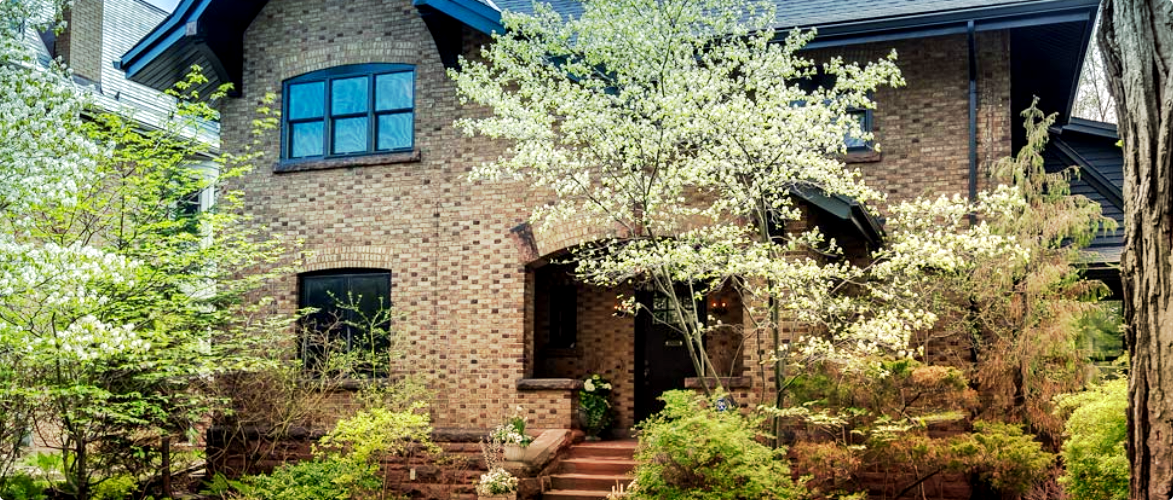
Swansea is a small residential neighbourhood on the western edge of High Park, bounded by Bloor Street West to the north, Ellis Avenue to the west, Roncesvalles Avenue to the east, and the Gardiner Expressway to the south. Detached homes from the 1910s through the 1940s on streets like Clendenan, Windermere, and Morningside were trading between $1.4 and $2.5 million in early 2026, with the premium reflecting direct High Park access that comparable properties further west simply can't match. The 399-acre park is genuinely Swansea's backyard.
Swansea occupies the land directly west of High Park, between Bloor Street West to the north and the Gardiner Expressway to the south. Ellis Avenue marks the western edge, where the neighbourhood meets the Humber River greenway. Roncesvalles Avenue is the eastern boundary, and across it is a different neighbourhood with a different character. Swansea is small, predominantly residential, and built to a scale that feels more like a village than a city district.
The park defines almost everything about how the neighbourhood works. High Park is 399 acres: off-leash dog areas, Grenadier Pond, the zoo, tennis courts, baseball diamonds, mature trail systems, and the cherry blossoms along the hillside that draw large crowds in late April and early May each year. For residents of Swansea, this isn’t a weekend destination that requires planning. It’s where they walk the dog in the morning, where the kids go after school, where they sit on a Sunday in October and watch the leaves on Grenadier Pond. The park is, in a practical daily sense, their backyard.
The streets of Swansea reflect a neighbourhood that was largely built between 1910 and 1945, with a coherence that comes from that contained period of construction. The houses are detached and semi-detached, brick and stucco, on lots that feel generous by Toronto standards. The residential streets are quiet. Bloor West Village, the commercial strip at Bloor and Jane, supplies the neighbourhood’s shopping needs with independent retail and everyday services that are better maintained than most comparable strips in the city.
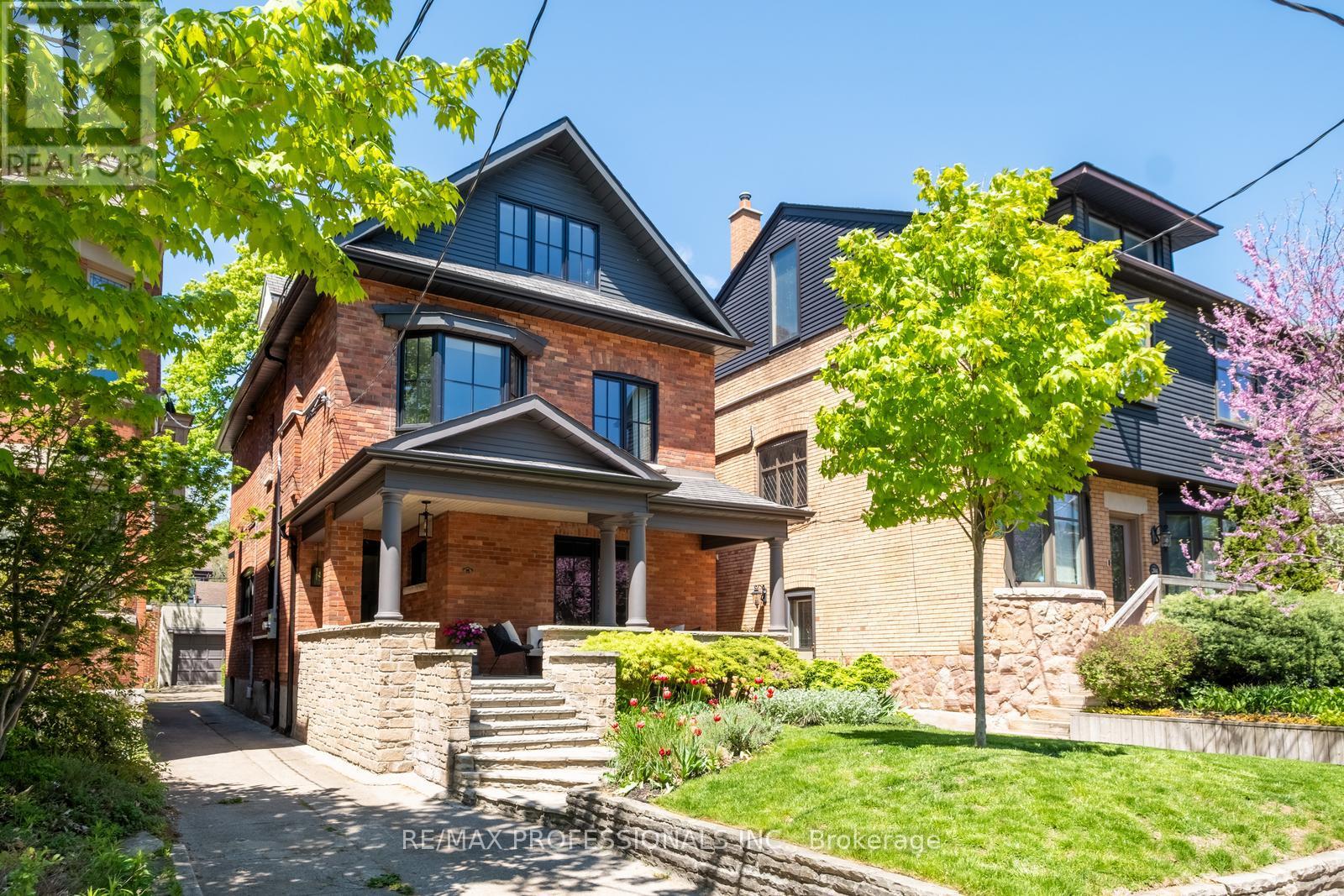
The typical Swansea purchase is a detached home built between 1910 and 1945: three or four bedrooms, brick or stucco exterior, a proper backyard, and a full-width front porch on the better examples. The housing stock is more consistently detached than comparable west-end neighbourhoods. Roncesvalles, immediately to the east, runs heavily toward Victorian semis. Swansea has more detached homes on wider lots, and that’s a meaningful difference for families who want the separation that a fully detached house provides.
In early 2026, a detached home in good condition on Clendenan, Morningside, or Windermere was trading between $1.4 million and $2 million depending on size, condition, and whether the property sits on higher ground. The top end of the market, for renovated four-bedroom properties with park or lake views from upper floors, reached $2.5 million and above. Semi-detached homes run from $1.2 million to $1.7 million. The premium over equivalent properties further west along Bloor is persistent and reflects the fixed supply of homes this close to 399 acres of parkland.
The southern blocks of Swansea, closest to the Gardiner Expressway, are meaningfully different from the middle and northern sections. Highway noise affects these properties to a degree that varies by specific location, construction quality, and wind direction. Properties here sometimes price at a discount to their northern equivalents. That discount can represent genuine value if the noise is acceptable, but buyers should test it in person, not by listing description.
There are no significant condo buildings in Swansea proper. The neighbourhood is houses. Buyers looking for a condo with High Park access are typically looking at buildings on or near Bloor in the High Park North area, north of the neighbourhood, or along the Lake Shore corridor to the south.
Swansea’s housing market moves more slowly than comparable west-end neighbourhoods because the neighbourhood is small and the number of transactions in any given year is limited. Well-priced detached homes on desirable streets attract strong interest, particularly in spring, but the market doesn’t generate the volume of competing offers that a larger, denser neighbourhood like Roncesvalles or Leslieville might. Buyers sometimes wait months for a specific street or house type to appear.
In early 2026, most properties were listed without a formal offer date and reviewed as offers came in. The frenzied multi-offer conditions that characterised 2021 and 2022 had eased. Buyers with conditions were present in transactions and, on most properties, sellers accepted them. Well-priced homes on the best streets still moved in the first two weeks. Properties with Gardiner noise exposure or condition issues were sitting longer, which gave buyers more room to negotiate.
The buyer pool for Swansea is specific. It draws families who have done the comparison between neighbourhoods and chosen High Park proximity over commercial strip proximity. It draws buyers who want a detached home and can’t find the combination of lot size, condition, and park access anywhere else at comparable prices. It draws people relocating from other cities who identify the park as non-negotiable. That pool is smaller than Roncesvalles or Trinity Bellwoods, which means Swansea’s market is steadier but not as liquid.
Most buyers who end up in Swansea have run the comparison with Roncesvalles and made a deliberate choice. They’ve decided that daily High Park access matters more to them than a strong commercial strip at the end of the street. They want a detached home and the separation it provides. They have a dog, or young children, or both, and want a park that takes thirty seconds to reach from the front door rather than fifteen minutes.
A meaningful portion of Swansea buyers are making a long-term commitment. They’re not buying with a five-year horizon and a plan to sell when the kids need more space. The homes here are large enough for families at most stages, the schools are serviceable, and the park access keeps the neighbourhood functional for every age group. Residents stay longer in Swansea than in many comparable neighbourhoods, which suppresses the number of properties that come to market in any given year and keeps the supply tight.
Active households are well served here. The off-leash areas in High Park are among the best in the city. The park’s trail network connects to the Martin Goodman Trail and, via the waterfront, to a cycling route that runs east and west across the entire city. Grenadier Pond offers skating in cold winters, and the hillside above it is where families go with sleds when the snow arrives. Buyers who evaluate neighbourhoods by what they can do on a Saturday morning, rather than by the restaurant count on the nearest strip, tend to find Swansea fits their priorities better than anywhere in the same price range.
The most important thing to check before making an offer in Swansea is where the property sits relative to the Gardiner Expressway. The highway runs along the southern boundary of the neighbourhood, and its noise context is not uniformly disclosed in listings. The southern blocks, between Fermanagh Avenue and the expressway, experience highway noise that is audible outdoors during most hours and can be noticeable inside older homes that haven’t been updated. The blocks north of Fermanagh are not meaningfully affected. This is not a subtle distinction. Visit the specific street at rush hour on a weekday before deciding.
The topography of Swansea matters in ways that listings rarely explain. The neighbourhood rises as you move north from the flat southern section toward Bloor. Properties on higher ground, particularly on the upper sections of Windermere and Morningside, can have views over the park or toward the lake from upper floors. That’s worth investigating: the difference between a house that looks at a fence and one that looks over Grenadier Pond affects both the daily experience and the resale value.
Swansea Town Hall on Lavinia Avenue is the community hub and it’s worth knowing what’s active there if community involvement matters to you. The neighbourhood has an active ratepayers association and a genuine local identity that isn’t performed for real estate marketing purposes. It’s a neighbourhood where people know their neighbours, which is either appealing or it’s not.
Ellis Avenue along the western edge sits adjacent to the Humber River greenway, which provides trail access south toward the lake. Properties on Ellis have a different relationship to green space than the park-adjacent streets: the Humber corridor is quiet and lightly used, and the views west from upper floors of Ellis properties look over the river valley rather than into another backyard.
Swansea buyers have typically done thorough research before they arrive at your door. They’ve compared the neighbourhood to Roncesvalles and The Junction, they understand the price difference and why it exists, and they’ve walked the park. A listing that doesn’t address the specific qualities of the property and its location will underperform against one that does.
The homes that command the strongest prices in Swansea are the ones that present the interwar character without apology: refinished original hardwood, original millwork maintained rather than replaced, a kitchen renovation that respects the age of the house while functioning properly. Swansea buyers are drawn to the neighbourhood partly because it doesn’t look like a renovated version of somewhere else. They’re sceptical of work that strips the character in favour of a generic contemporary finish, and that scepticism shows in offers.
Timing a Swansea listing follows the same logic as the rest of the Toronto freehold market. Spring, from late February through May, concentrates the strongest buyer pool. The second-best window is September through October. Listings that appear in July often sit longer than equivalent spring listings, and mid-winter listings outside of genuinely motivated sellers tend to underperform. The neighbourhood’s limited transaction volume means that listing at the right time against the right comparable properties matters more here than in a neighbourhood where dozens of similar homes sell each season.
If the property is in the southern section near the Gardiner, pricing honestly to reflect the noise context is the right approach. Buyers who are specifically looking in Swansea already know the geography, and a listing priced without acknowledging the location’s trade-off will draw enquiries from buyers who arrive, notice the highway, and leave. The buyers who will live there happily exist. Pricing accordingly finds them faster.
High Park is the reason most Swansea buyers are looking in this specific neighbourhood rather than somewhere else at a comparable price. The 399-acre park contains more usable green space than most Toronto residents ever experience in a single visit. The off-leash dog area in the northeast corner of the park is one of the city’s largest and busiest. Grenadier Pond sits near the western side of the park, drawing ice skaters in hard winters and cyclists and walkers year-round. The zoo, the tennis courts, the baseball diamonds, the spring cherry blossoms along the hillside path that descend from Colborne Lodge Drive, the trail network that connects through the park from Bloor to the lake: all of this is accessible on foot within fifteen minutes from any Swansea address.
Bloor West Village, the commercial strip centred at Bloor and Jane, is Swansea’s primary shopping area. It’s one of the better-maintained independent retail strips in west Toronto, with a range of cafes, restaurants, independent food shops, and everyday services. It doesn’t have the density of Queen West or Roncesvalles Avenue, but it functions reliably for daily needs and the quality of tenancy has held up better than many comparable strips over the past decade.
The waterfront is accessible, though it takes a bit more intention. The Martin Goodman Trail runs along the Lake Shore below the Gardiner, reached from the south end of Swansea via a pedestrian connection. Cyclists from the neighbourhood use it regularly for the lakefront route east toward downtown and west toward the Humber Bay parks. It’s not the waterfront access you’d have in Mimico or South Etobicoke, but it’s closer than most Torontonians get from their front door.
High Park subway station sits at the northeastern corner of Swansea, at Bloor and Parkside Drive. It’s on the Bloor-Danforth line and puts downtown within twenty minutes by TTC. Runnymede station is one stop east and slightly more accessible from the central Swansea streets. Either station is within reasonable walking distance from most of the neighbourhood, though residents on the southern blocks closer to the Gardiner have a longer walk to either station than those on the northern streets near Bloor.
The 506 Carlton and 508 Lake Shore streetcars operate south of the Gardiner along the Lake Shore, but they serve a different part of the city and aren’t the natural connection for Swansea residents commuting downtown. The Bloor line is the transit backbone here, and most residents orient their commute around it.
Cycling is a genuine option for fit commuters. The Bloor bike lanes begin east of the neighbourhood and a motivated cyclist can be at Bay Street in under thirty minutes from Swansea. The Martin Goodman Trail provides a separated option for those who prefer to avoid Bloor’s traffic. Parking in Swansea is easier than in denser neighbourhoods, and most detached homes have a driveway, so car commuters are accommodated better here than in Roncesvalles or Trinity Bellwoods where parking is frequently absent.
The Gardiner Expressway, which is the source of the noise concern for southern Swansea properties, is also the fastest driving connection to the downtown core and the highway network. That’s the trade-off the southern blocks present: more highway noise, faster car access. Northern Swansea residents get the subway and a quieter street at the cost of a slightly longer on-ramp connection.
Roncesvalles is the comparison buyers run most often, and it’s a legitimate one. The two neighbourhoods sit side by side, share a boundary at Roncesvalles Avenue, and overlap in price range. The differences are real and worth understanding before deciding. Roncesvalles Avenue itself is a stronger commercial strip than Bloor West Village: more concentrated, more restaurants, more of the streetcar energy that defines that part of the city. It also carries the Polish community character, which gives the neighbourhood a distinct feel that Swansea doesn’t have. Swansea’s streets are quieter. Swansea’s housing stock runs more heavily toward detached homes, where Roncesvalles is predominantly Victorian semis with narrower lots and shared walls. Buyers who have children and a dog and want a detached home with a proper backyard tend to end up in Swansea. Buyers who want the active commercial strip at the end of the block and don’t need the separation that a detached home provides tend to stay in Roncesvalles.
High Park North sits directly north of Swansea, across Bloor Street West. It’s technically a different neighbourhood, with Bloor as the dividing line, and it has its own access to the Bloor West Village strip. High Park North properties are also close to the park but they’re north of Bloor, meaning the entrance to High Park requires crossing the street. That’s a small practical difference that most buyers shrug at, but it’s worth knowing. High Park North also has a mix of housing types that includes post-war apartment buildings alongside detached homes, which gives it a different character than Swansea’s more consistent residential fabric.
The Junction, further north along Dundas West, competes for buyers who want a west-end detached home at lower prices. The Junction’s commercial strip has developed considerably in the past decade. Prices for a detached home in The Junction are meaningfully lower than Swansea, and the trade-off is the park. Buyers who conclude that High Park proximity is worth the premium stay in Swansea. Buyers who conclude it’s not often move north to The Junction and don’t report significant regret.
Swansea Public School on Lavinia Avenue is the primary elementary option for the neighbourhood. It’s a small school with a strong community feel, and the small size is both its appeal and its constraint: the programming options are more limited than at a larger school, but the culture tends to be more cohesive. Parents who value a tight-knit school community find it works well. Parents with specific academic or specialist program priorities sometimes look further afield.
Runnymede Junior and Senior Public School serves the eastern portion of the neighbourhood catchment. It’s larger than Swansea Public School and has more programming options as a result. Parents in Swansea who are not in the Swansea Public catchment typically land at Runnymede. Confirming which catchment a specific address falls into matters here: the two schools have different characters, and a half-block difference can place a family in one or the other.
For secondary school, the catchment flows to Western Technical-Commercial School, which has a strong arts and technology program profile and a physical campus on Dundas Street West. Western is a specialty school where some programs require applications rather than automatic catchment entry. Families with students interested in the arts or technical trades often find it a genuinely good fit. The catchment also has access to Runnymede Collegiate Institute for students who prefer a more traditional secondary environment.
The Catholic system offers St. Pius X Catholic School as the primary elementary option. For families considering Catholic education, the school serves a larger geographic area than the public catchment and has a more established community of families who have planned specifically for it. Always verify current catchment boundaries using the TDSB’s online tool before relying on any school assignment in your purchase decision.
What are house prices like in Swansea, Toronto in 2026? Detached homes in Swansea were trading between $1.4 million and $2.5 million in early 2026. The range reflects condition, lot size, and location within the neighbourhood: properties on higher ground with park or lake views from upper floors sit at the top end, while properties in the southern section near the Gardiner, or in need of significant work, sit toward the lower end. Semi-detached homes run from roughly $1.2 million to $1.7 million. The High Park premium is real and persistent: comparable detached homes further west, away from park adjacency, sell for meaningfully less. That premium has held up through multiple market cycles because the supply of homes this close to 399 acres of parkland doesn’t grow.
Does the Gardiner Expressway noise affect homes in Swansea? Yes, and buyers should investigate this directly before making an offer on any property in the southern part of the neighbourhood. The streets closest to the Gardiner, south of about Fermanagh Avenue, experience highway noise that is audible outdoors and, depending on the house and its construction, indoors as well. The middle and northern streets are not meaningfully affected. This isn’t uniformly disclosed in listings, and it varies by specific property, street, and which side of a block you’re on. Walk the specific block on a weekday at rush hour before deciding. Properties with noise exposure sometimes price at a discount, which can represent genuine value if the noise is acceptable to your household.
How does Swansea compare to Roncesvalles for families? Swansea and Roncesvalles share a boundary and a price range but have different housing stock and daily feel. Swansea has more detached homes on wider lots, quieter residential streets, and closer proximity to High Park since it sits directly on the park’s western border. Roncesvalles has a stronger commercial strip with more restaurants and independent shops, more Victorian semis, and the Polish community character. Families who want High Park as their literal backyard and prefer quieter residential streets tend to choose Swansea. Families who want an active commercial strip closer to home and don’t need a detached home tend to prefer Roncesvalles. Prices are comparable for equivalent property types; the choice is usually about what you want your street to feel like.
Which streets in Swansea are the best to buy on? Clendenan Avenue, Morningside Avenue, and Windermere Avenue are the most consistently sought addresses in Swansea. Properties on higher ground in the northern and central parts of the neighbourhood, where the topography rises above the flat southern section, command a premium for the views they can provide over the park or toward the lake from upper floors. Ellis Avenue along the western edge has its own character, adjacent to the Humber River greenway and with a quieter, more removed feel than the central streets. Fermanagh Avenue sits in the transition zone where Gardiner noise starts to register: worth investigating block by block rather than assuming one side or the other. Streets close to High Park station on Bloor have the best transit access and tend to attract buyers who commute downtown by TTC.
Swansea was incorporated as a village in 1926, taking its name from the Welsh city. It existed as a separate municipality from the city of Toronto until 1967, when it was amalgamated into the Borough of Etobicoke. That independent history left a mark: Swansea Town Hall on Lavinia Avenue still stands and still functions as a community centre, and the neighbourhood retains a self-contained character that reflects its years as a distinct place rather than just another Toronto district.
The houses were built primarily between 1910 and 1945, during the period when Swansea was developing as a residential community for people who worked in the city but wanted a quieter home environment close to the lake and the Humber River. High Park had been donated to the city by John Howard in 1873, long before the neighbourhood’s residential streets were built. The park was already an established asset when Swansea’s houses went up, which means the builders and buyers of those homes already understood what they were buying access to.
The neighbourhood’s relative isolation, bounded by the park, the river, the expressway, and Bloor, has worked in its favour over time. It didn’t absorb the intensification that changed the character of Roncesvalles and West Queen West over the past two decades. The housing stock is largely the same in type and scale as it was in 1950. That consistency is what attracts the buyers who are specifically looking for it, and it’s what has kept Swansea a sought-after address in a city where consistent, quiet, park-adjacent residential neighbourhoods are genuinely scarce.
Street-level knowledge is hard to find online. Our team works in Swansea every day. They know which pockets hold value, where the school catchment lines actually fall, and what the market is doing right now. Talk to us before you make a decision about Swansea.
Talk to a local agent For Sale
 For Sale
 For Sale
 For Sale