
Ajax is the wartime town on Lake Ontario between Pickering and Whitby, about 140,000 people on 67 square kilometres, with seven kilometres of public waterfront and a GO station 50 minutes from Union. Toronto buyers come because a detached house here costs about half what one does in Toronto, and a condo roughly a quarter less. A house here costs less than in Pickering or Whitby. Two residents in three belong to a visible minority. Everything currently listed in Ajax appears below.
Ajax sits on the Lake Ontario shore 11 kilometres east of the Toronto boundary, with Pickering wrapped around its west and north sides and Whitby to the east at Lake Ridge Road. It’s the smallest of the Durham lakeshore municipalities, about 67 square kilometres, and the most built out: there’s no Seaton here, only the last subdivisions of the northeast and whatever the town can fit along Kingston Road, Harwood Avenue and Bayly Street. The 2021 census counted 126,666 people, and Statistics Canada’s July 2025 estimate was 141,111.
There was no Ajax before 1941. Defence Industries Limited built what the town still calls the largest defence plant in North America on farmland south of what is now Kingston Road. Thousands of workers moved into company housing laid out around Harwood Avenue, and the settlement took its name from HMS Ajax, one of the three cruisers that fought the Graf Spee off Uruguay in 1939. The Ontario Municipal Board made it a town in 1954. In 1974, when Durham Region was formed, the old village of Pickering on Church Street, with its mills and its 1951 high school, was moved into Ajax, which is why Pickering High School is in Ajax.
Ajax grew in rings from that wartime core: 1950s and 1960s houses around Harwood and the lake, 1970s and 1980s subdivisions north of Kingston Road either side of Westney, and from the mid-1990s to the 2010s the big northern neighbourhoods up to Taunton Road, where the town ran out of land. Two residents in three are members of a visible minority, and the largest immigrant groups come from India, Sri Lanka, Jamaica, the Philippines and Pakistan. More than 65 languages are spoken here.
An Ajax freehold costs about half the Toronto figure; an Ajax condo, about a quarter less than a Toronto one. Houses here cost about a quarter less than in Pickering, the next town toward Toronto, and a little less than in Whitby; a condo costs the same as in Pickering. Northeast Ajax and Northwest Ajax, the newest neighbourhoods, are the dearest. Central Ajax around Harwood Avenue and Kingston Road, the oldest, is the cheapest. Today’s figures for Ajax are in the panel beside this text and refresh daily.
Six Ajax listings in seven are freehold. This is a town of houses, built in 60 years of subdivisions, and the condominium apartment is a recent arrival confined to a few towers and mid-rises along Kingston Road, Bayly Street and Harwood Avenue.
The wartime houses are still here. South of Kingston Road and either side of Harwood Avenue, the 1940s DIL bungalows and storey-and-a-halves sit on small lots with the plant’s grid of streets around them, and they’re the cheapest detached houses in Ajax. The 1950s and 1960s houses between Harwood and the lake, around Paradise Park and Pickering Beach, are the next ring, bungalows and side-splits on bigger lots. The 1970s and 1980s two-storeys of Central West and Central East, north of Kingston Road either side of Westney Road and up toward Rossland Road, are the standard Ajax family house of that era: three or four bedrooms, a single or double garage, a crescent that backs onto a school.
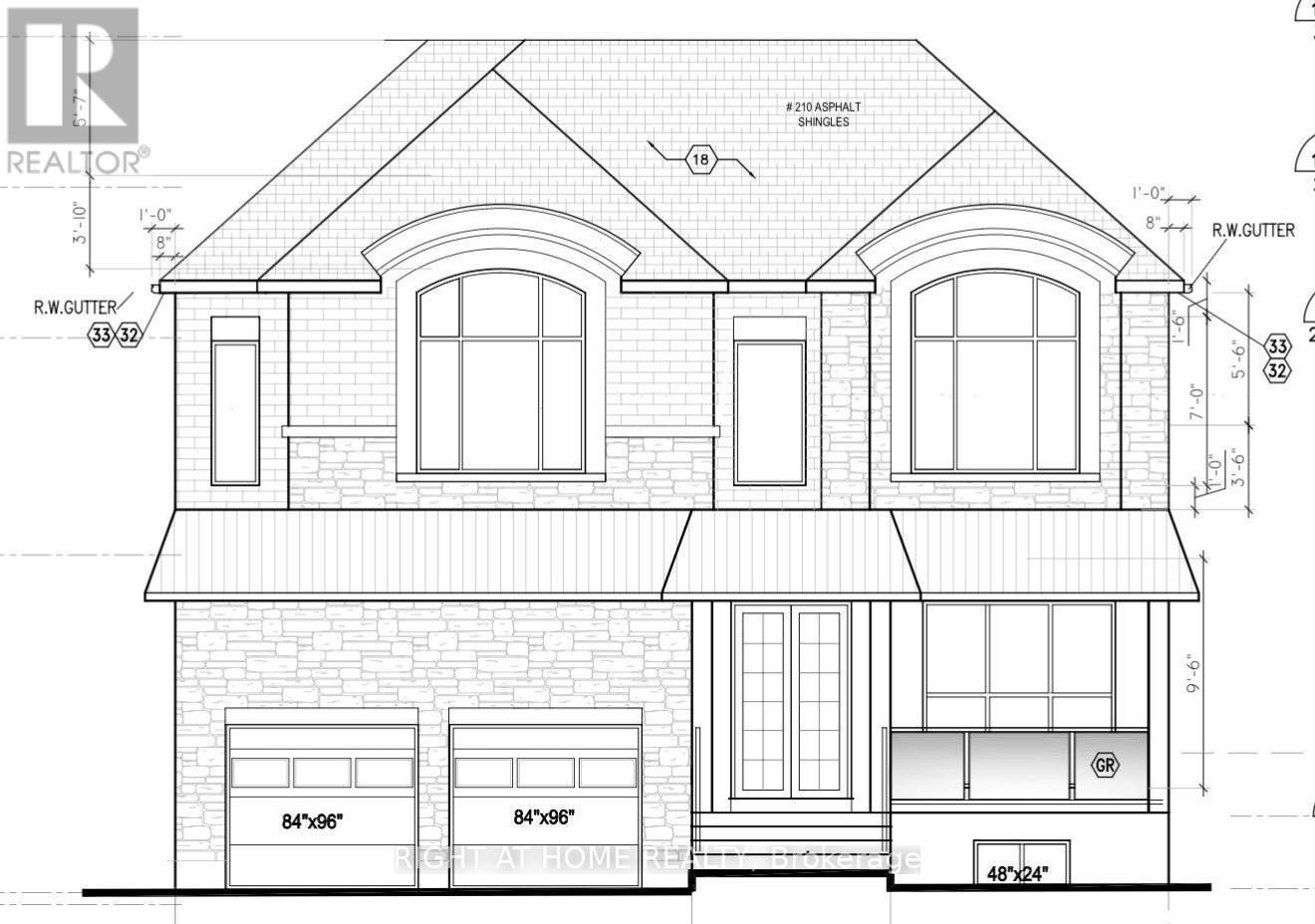
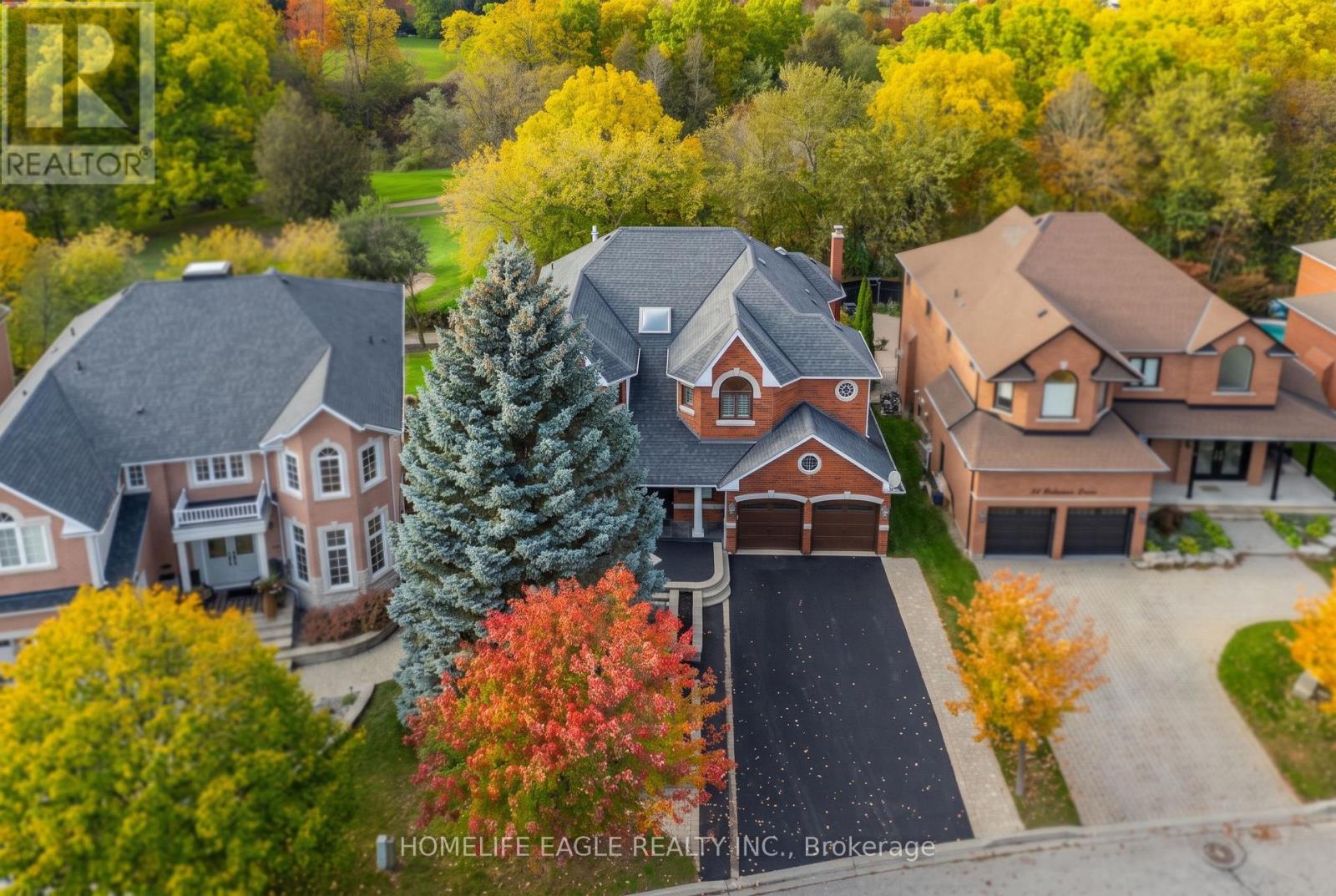
The newest and largest houses are north of Rossland. Northwest Ajax, west of Salem Road, was built from the late 1990s, and Northeast Ajax, east of Salem out to Audley Road and up to Taunton, from 2002 onward. Both are brick four-bedrooms with double garages on streets laid out for families.
A four-bedroom costs about 30 percent more than a three-bedroom across the town, and a five-bedroom costs little more than a four.
Townhouses are a large part of the market, and many are freehold: 1980s and 1990s rows in Central East and Central West, and the 2000s and 2010s towns of the northeast. Condominium townhouses, with a monthly fee for the common ground, cluster near Kingston Road and in the newer blocks of the north, and the listing feed files both kinds together, so look for a fee.
Condominium apartments are scarce. A handful of buildings along Bayly Street and Kingston Road and the newer mid-rises around Pat Bayly Square in the downtown make up most of the supply, and three-bedroom condos outnumber two-bedrooms here almost two to one. Families that can’t reach a house have more to choose from among condos than the small total suggests. A house costs about double a condo on average, a narrower gap than Pickering’s.
Renting here means renting a house, or part of one. The rental listings are almost all freehold, and they run from basement apartments to whole houses, so the average asking rent for a house sits below the rent for the few condos. Check which floor you’re renting, whether the unit has its own entrance, and whether it’s registered with the town.
Ajax moves with Toronto. The same rates and the same east-end buyers set prices here, and the gap against Toronto, about half on houses, is wider than Pickering’s or Whitby’s. That gap is the reason to buy here, so if it starts closing, the case for Ajax over Pickering gets weaker with it.
The house market follows the school year. Family houses in Northeast and Northwest Ajax and in Central West list from late February to May and again from September to November. In July and January there’s less on the market and more room to negotiate.
South East Ajax has more listings than any other part of the town. It takes in everything south of Kingston Road and east of Harwood, from the wartime grid down to Pickering Beach and the Carruthers Creek marsh, so wartime bungalows and lakeside houses sit on the same list. Read the street before the average.
The condo market is too small to behave like one. With condos at one listing in seven, a buyer looking for a two-bedroom apartment has a short list, and a seller has no building next door to compete with. The mid-rises at Pat Bayly Square and along Harwood are the newest condo supply the town has.
Pickering Village is the exception to everything above. The old village on Church Street has houses from the 1800s on lots that follow the old road rather than a subdivision plan, and they sell to people who want exactly that.
Ajax is the first town east of Toronto where a detached house costs half the Toronto average, and that alone brings buyers here. A family selling an average Toronto freehold can buy a four-bedroom in Northeast Ajax with money left over. The train from Ajax GO takes 50 minutes to Union, five more than from Pickering, and the house is a quarter cheaper for those five minutes.
A lot of Ajax buyers already live in Durham. Children of the 1980s subdivisions buy in the northeast; Pickering households priced out of Pickering move one exit east; Whitby and Oshawa buyers who work in Toronto move one or two stops closer to the city. The town describes its population as one of the fastest growing in the eastern GTA.
The trade against Toronto is a car for each adult and a longer day. Outside Pickering Village and the downtown blocks around Pat Bayly Square, Ajax is plazas and arterials: Durham Centre at Harwood and Kingston Road for the big boxes, and the plazas at Westney Heights, Clover Ridge and along Bayly Street for the rest. A night out in Toronto means the last train home, and the last train runs late.
The town’s diversity is its own draw. Two in three residents are members of a visible minority, and the largest immigrant communities are from India, Sri Lanka, Jamaica, the Philippines and Pakistan. Half the town identifies as Christian and one in seven as Muslim. Many buyers here are moving to be near family, a temple, a mosque or a church that’s already here, and the grocers and restaurants along Kingston Road, Harwood and Westney reflect who lives on the streets behind them.
This site has pages for Ajax’s two northern neighbourhoods, and the rest of the town is described below until their pages are written. Listings for every part of Ajax show below this text.
Northwest Ajax is the area north of Kingston Road and west of Salem Road, up to Taunton Road and the Pickering boundary at Duffins Creek, built mainly from the late 1990s through the 2000s. It’s detached four-bedrooms on wide streets around Hermitage Park, with Vimy Ridge and Nottingham public schools, and it has the second-highest prices in the town. Northeast Ajax is its twin east of Salem Road, the Salem Heights and Imagination subdivisions built from 2002 onward out to Audley Road. It has the Carruthers Creek ravine along its western edge, J. Clarke Richardson Collegiate and Notre Dame Catholic Secondary sharing a building on Harwood Avenue North, and the highest prices in Ajax. There are no condos here.
Central West, between Kingston Road and Rossland Road west of Harwood, is the 1970s and 1980s Ajax of Westney Road and Church Street, three- and four-bedroom two-storeys and rows of freehold townhouses, with Pickering High School inside it. Pickering Village, at Church Street and Kingston Road, is the oldest settlement in the town, a mill village older than Ajax itself, with its own main street and houses from the 1800s. Central East, between Harwood and Salem north of Kingston Road, is the same era of house as Central West at a lower price.
Central is the wartime town: the DIL grid around Harwood Avenue from Kingston Road down to Bayly Street, Ajax Plaza, the town hall, Ajax High School, Pat Bayly Square and the GO station. It has the cheapest detached houses in Ajax, the oldest, and a share of the town’s few condominiums. South East runs from Harwood east to the Whitby line and south from Kingston Road to the lake, and holds the wartime streets near Bayly, 1960s and 1970s subdivisions, Pickering Beach on the shore and the Carruthers Marsh. It has more listings than any other part of the town, at every price in Ajax. South West, between Harwood and the Pickering boundary south of the 401, is the 1950s and 1960s neighbourhood around Paradise Park, the Rotary Park waterfront and the mouth of Duffins Creek, and, because of the lake, the dearest of the southern areas.
The two linked pages go street by street through schools, transit and sold prices. The others follow.
Ajax GO is on the Lakeshore East line at Westney Road and the 401, and the train to Union takes about 50 minutes. Service runs all day both ways, thickening in the morning and afternoon rush, and continues past midnight and through the weekend. The station opened in 1988 and has about 2,150 parking spaces, most of them in a garage that opened in 2013. It’s the hub for Durham Region Transit’s Ajax routes, including the PULSE 915 and 917, and the PULSE 900 along Kingston Road runs every 15 minutes or better until 7pm, seven days a week, between Scarborough and Oshawa.
The 401 cuts the town in half, and only four streets cross it: Church, Westney, Harwood and Salem. Everyone in north Ajax funnels through one of those four to reach the station or the lake, so drive the one you’d use at 8am before you buy north of the highway. The 407 runs along the top of the town, toll-free from Brock Road in Pickering eastward since June 2025, and Highway 412 at the Whitby line has linked the 401 to the 407 toll-free since April 2022. A commute to Markham, Vaughan or Pearson from Northeast Ajax is a straightforward highway drive. Pearson is about 50 kilometres away.
Kingston Road is being rebuilt. The Durham-Scarborough Bus Rapid Transit, dedicated bus lanes in the middle of the road from Scarborough Centre to downtown Oshawa, began construction in Ajax in August 2025 on the stretch from Rotherglen Road to just west of Harwood Avenue. From fall 2026 that stretch drops to one lane each way while the median platforms are built, and the whole project is due to finish in 2030. A buyer on or near Kingston Road should expect construction for several years and faster buses after it.
Inside the town you drive, though the town has started to build for anything else: a cycling network it promotes as Explore Ajax by Bike, an e-scooter and e-bike program, and the seven-kilometre waterfront trail, the one stretch where you can ride without traffic.
Ajax owns its waterfront. The whole southern edge of the town, about seven kilometres and 70 hectares, is public parkland, with bridges over the creeks and a paved trail the length of it that belongs to both the Waterfront Trail and the Trans Canada Trail.
From the west: Rotary Park at the mouth of Duffins Creek, with a beach, a boat launch into the creek, an accessible playground, a splash pad and a pavilion. Paradise Park, with beaches, tennis courts and old trees, is where the 1950s neighbourhood goes to swim. Lion’s Point, 20 metres above the shore, is the highest ground on the waterfront and the place to see Toronto across the lake. Veterans’ Point Gardens at the foot of Harwood Avenue is built in the shape of a ship, with the Ajax Legacy Obelisk, and is dedicated to HMS Ajax and the DIL plant. East of Harwood the trail runs past Pickering Beach to Carruthers Marsh, with its own pavilion and splash pad, at the Whitby boundary.
North of the lake the town has another 400 hectares of parks and open space, most of it along the two creek valleys. Duffins Creek forms the western boundary and carries a trail north through Pickering Village to Greenwood Conservation Area, whose southern half the town manages and whose northern half belongs to the conservation authority. Carruthers Creek runs down the eastern side, through the ravine that edges Northeast Ajax, to the marsh at the lake.
The town’s recreation is in three complexes: the Ajax Community Centre, the Audley Recreation Centre in the northeast and the McLean Community Centre. The Ajax Centre for the Arts, with a 150-seat theatre, is the town’s performance venue.
Ajax has no mall of its own. Durham Centre, at Harwood Avenue and Kingston Road, is the big-box power centre, and the rest of the town’s shopping sits in plazas: Ajax Plaza downtown, the oldest of them, Harwood Place, Clover Ridge, Discovery Bay, Westney Heights and Baywood along the arterials. The Shops at Pickering City Centre is a short drive west along the 401 and the Oshawa Centre a longer one east.
The downtown is being rebuilt. The town sold nine acres at Bayly Street and Harwood Avenue to a developer in 2012, and Pat Bayly Square opened in September 2018 as a civic square with mid-rise residential, shops and offices around it. It and Pickering Village on Church Street are the two places in Ajax where you can eat at a restaurant on a street rather than in a plaza. Kingston Road, Harwood and Westney carry the South Asian, Sri Lankan Tamil, Caribbean and Filipino grocers and restaurants of the communities that live here.
Lakeridge Health Ajax Pickering, on Harwood Avenue South, is the town’s hospital and Pickering’s too. It opened in 1954 with 38 beds and has 144 today, with an emergency department designed for 20,000 visits a year that sees about 45,000. Lakeridge Health’s regional plan adds 300 beds across Durham, with a new hospital in Whitby and later phases that expand this one. Lakeridge Gardens, a 320-bed long-term care home, opened beside it in 2022.
Durham Live sits on the Pickering side of the boundary at Bayly Street and Church Street, and for Ajax it’s next door: the Pickering Casino Resort with its casino, 275-room hotel and 2,500-seat arena, open since 2021. Ajax Downs, the quarter-horse track at Kingston Road and Audley Road, races from May to October.
Ajax’s jobs are in the hospital, the schools and the industrial lands along Bayly Street and the 401 that Defence Industries left behind, where Volkswagen and DuPont had set up by 1969 and where the town counts eight key sectors today. Many residents commute: to Toronto by train and 401, to Pickering’s nuclear station, to the Region’s offices in Whitby and to Oshawa.
Public schools in Ajax belong to the Durham District School Board and Catholic ones to the Durham Catholic District School Board. Ajax has three public high schools and two Catholic, one more public school than Pickering for a larger population.
Ajax High School south of Kingston Road and Pickering High School on Church Street North in Pickering Village both run French immersion alongside the English track, two of the seven public secondary schools in the board that do. Pickering High School opened in 1951, was rebuilt and expanded in 2007, has more than 2,000 students and runs gifted classes. J. Clarke Richardson Collegiate on Harwood Avenue North opened in 2002 for the new northern neighbourhoods and runs Specialist High Skills Majors in arts and culture, construction, hospitality, information technology, sports and transportation. It shares its building with Notre Dame Catholic Secondary, opened in 2001. Archbishop Denis O’Connor Catholic High School on Mandrake Street is the older and smaller Catholic school, in Ajax since 1984 with about 600 students.
French immersion is the program families ask about. Look the specific house up on each board’s site rather than going by the area, and ask the board directly how a child gets into the immersion stream from a given elementary school, because the answer isn’t a neighbourhood boundary.
There’s no college or university campus in Ajax. Durham Region Transit runs routes to Durham College, Ontario Tech University and Trent University’s Durham campus in Oshawa, and to the University of Toronto Scarborough and Centennial College across the Rouge, and students from Ajax commute to all of them.
Ajax is out of land, so what changes the town now is what gets rebuilt rather than what gets built.
The Kingston Road busway is the largest of them, 36 kilometres and 49 stops from Scarborough Centre to downtown Oshawa, and the Ajax section runs to 2030 with a year or more of one lane each way from fall 2026. If you’re looking at a house or a condo on Kingston Road, price in four more years of construction outside.
Pat Bayly Square was the start of the new downtown, nine acres of former town land at Bayly and Harwood that opened in 2018 with a civic square, mid-rise residential and ground-floor retail. The blocks around it, the wartime plaza and the surface parking between Harwood and the GO station are the largest sites left in the town, so a buyer in Central should expect more building nearby.
The new hospital is in Whitby. Lakeridge Health’s redevelopment adds 300 beds across Durham, with a new hospital at Lake Ridge Road and the 407 in Whitby that the province hopes to have open within 10 years of its 2024 announcement, and later phases that expand Ajax Pickering Hospital. Until then the Harwood Avenue emergency department carries more than twice the load it was built for.
Beyond the town’s boundary, Pickering’s Durham Live has promised a convention centre, more hotels and towers since 2019 and delivered a casino, a hotel and an arena. Northeast Pickering, approved in May 2026 for 72,000 people, sits on Ajax’s northern edge.
Is Ajax cheaper than Pickering and Whitby?
Yes for houses, by about a quarter against Pickering and a little against Whitby, and no for condos, which cost about the same in all three. A detached house in Ajax costs about half the Toronto average, and the gap is widest in the town’s oldest streets: the 1940s DIL houses around Harwood Avenue and the 1960s bungalows of South East are the cheapest detached houses in the town. The northern neighbourhoods close the gap with Pickering; Northeast Ajax averages above Pickering as a whole, and Northwest Ajax sits a little below it.
The property tax works the other way. Durham Region’s share of the bill, which pays for police, transit, water and regional roads, is large and the same in Ajax, Pickering and Whitby, so all three carry a residential rate well above Toronto’s 0.7673 percent of assessed value in 2026. The Region added 4.8 percent to its share in January. Ajax council adopted its 2026 budget on 15 December 2025 with a 1.28 percent effective increase in the town’s share.
Both Ajax and Toronto still tax on 2016 assessed values, so compare like with like: ask the listing agent for last year’s tax bill and set it beside the bill on a Toronto house of the same assessed value. The purchase gap covers the tax gap many times over, but put the tax into the monthly figure before you compare mortgages, and add a second car if you’d be giving up a Toronto commute on foot or by subway. Refreshed daily, the town’s live prices are on this page.
How long is the commute from Ajax to downtown Toronto?
About 50 minutes by GO train from Ajax station to Union, five minutes longer than from Pickering and eight shorter than from Whitby. Lakeshore East trains run in both directions all day, more often through the morning and afternoon rush, with service past midnight and at weekends; check the current Metrolinx timetable for the trains you’d actually catch. The station at Westney Road and the 401 has about 2,150 parking spaces, most in a garage. Add the drive to the station, which from Northeast Ajax means Salem or Harwood across the 401 in rush-hour traffic, and a transfer at Union before you count your door-to-door time to a Bay Street desk. Make the trip once on a weekday morning before you offer on a house that depends on it. A house within walking distance of the station, in Central or the west end of South East, saves you the drive and the parking.
If you drive, the 401 from Ajax to the Don Valley is slow from early morning, and the trip downtown at rush hour takes a good deal longer than the train. For work in Markham, Vaughan or at Pearson, the 407 across the top of the town is toll-free from Brock Road east and tolled west of it, and the 412 at the Whitby line connects it to the 401. The Kingston Road busway, open by 2030, will speed the PULSE 900 into Scarborough; the train stays the way downtown.
Which Ajax neighbourhoods are best for families?
Northeast Ajax, Northwest Ajax and the northern half of Central West are where families with school-age children buy, for the same reasons in each: a four-bedroom brick house with a double garage on a crescent, an elementary school and a park within walking distance, a ravine at the back of the subdivision, and a short drive to the 407 or down Salem and Westney to the GO. Northeast Ajax, built from 2002 onward, has the newest houses, J. Clarke Richardson Collegiate and Notre Dame Catholic Secondary in one building on Harwood North, and the Carruthers Creek ravine, and it’s the most expensive part of the town. Northwest Ajax, from the late 1990s, has Hermitage Park at its centre, Vimy Ridge and Nottingham public schools, and the Duffins Creek valley on its western edge at a slightly lower price.
Central West, around Westney Road, has the 1970s and 1980s houses on bigger lots at a lower price again, with Pickering High School inside its boundaries and Ajax High School a short drive south, and the French immersion stream at each. Families who want the lake look at South West around Paradise Park and Rotary Park, where a 1960s bungalow a few streets from the water costs less than a four-bedroom in the north. School boundaries are drawn by the boards and don’t follow neighbourhood names, so check the board’s address lookup for the house you’re offering on, and ask the board how the immersion stream is entered. The two Catholic high schools and three public ones serve the whole town, and every neighbourhood is within a short drive of one.
Is the Ajax waterfront a good place to buy?
Yes if you want to live beside a seven-kilometre public park, and it’s the one part of Ajax unlike anywhere else in Durham. The whole shoreline is town-owned, about 70 hectares of parkland with a paved trail the length of it, so a house on Lake Driveway or in Pickering Beach backs onto parkland rather than onto someone’s private frontage, and the land between you and the water is public. The houses nearest the lake are the 1950s and 1960s bungalows and side-splits of South West around Paradise Park and the older cottage-era streets of Pickering Beach in South East, and the streets with a view or a direct path to the trail cost more than the same house three blocks north.
Most of what’s near the water is 60 to 70 years old, and some of it is bought for the lot and rebuilt, so a bungalow priced like a bungalow may be competing with a builder; ask what the last three sales on the street were and whether the houses are still standing. The 401 runs a kilometre or so north of the shore and is the only way in and out for drivers; the four crossings, Church, Westney, Harwood and Salem, are slow at rush hour, and the waterfront neighbourhoods sit south of all of them. The GO station is on the south side of the 401 at Westney, so from the western waterfront the train is a walk or a short cycle along the trail.
Everyone in north Ajax drives to the station or the lake by Church, Westney, Harwood or Salem, the only four streets that cross the 401, and a Toronto agent has never sat in that queue at 8am. Nor will they know how the Kingston Road bus lanes, under construction until 2030, land on a particular plaza, or that a South East Ajax average mixes wartime bungalows with houses on the lake.
The agent we send Ajax buyers to drives those four crossings every week. Give them a brief like a wartime bungalow near the waterfront trail that a builder hasn’t bought yet, or a four-bedroom in Northeast Ajax inside one elementary boundary, and they’ll come back with the streets that fit and the sold prices on each.
Read the Northwest and Northeast Ajax pages first. Then contact us, and we’ll put you in touch with that agent.
Street-level knowledge is hard to find online. Our team works in Ajax every day. They know which pockets hold value, where the school catchment lines actually fall, and what the market is doing right now. Talk to us before you make a decision about Ajax.
Talk to a local agent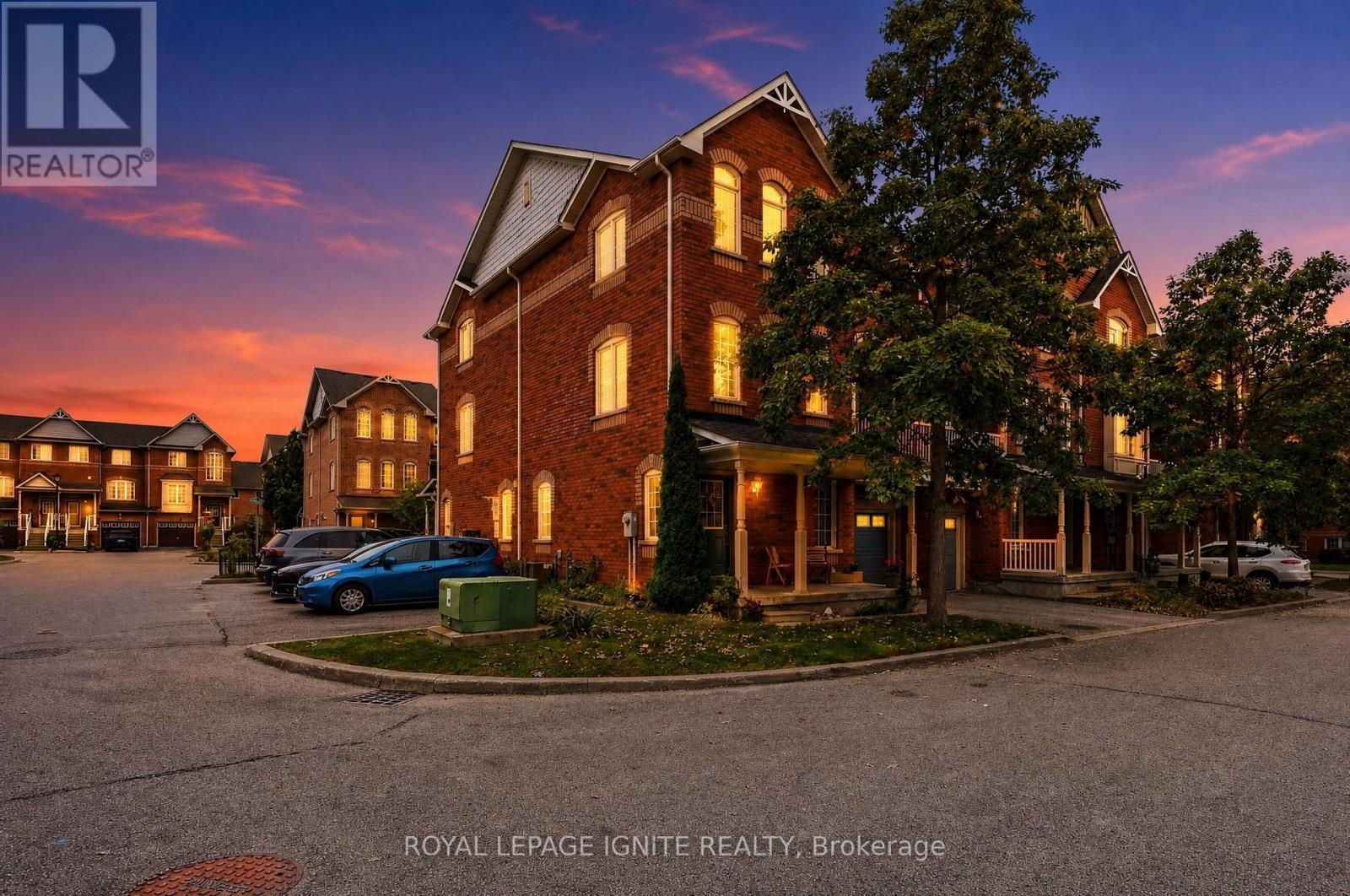 For Sale
 For Rent
 For Sale
 For Sale