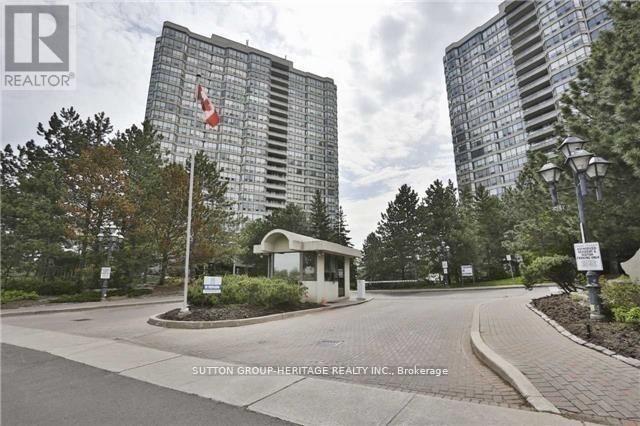
The Brampton 407 Corridor is a mixed commercial and industrial area along Highway 407 in southwest Brampton. It includes employment lands, power centres, and some residential development near major highway interchanges. Key access point for GTA-wide highway travel.
The Brampton 407 Corridor refers to the area along Highway 407 in the southern and western parts of Brampton, where the highway and its associated interchanges have shaped the land use pattern. This is not a single residential neighbourhood but rather a corridor designation covering a mix of employment lands, power centre retail, and some residential development that has filled in around the highway infrastructure. The corridor designation recognises that the 407 is a defining feature of this part of Brampton in terms of both daily movement and land value.
The 407 itself is a tolled highway, and that toll cost is a real consideration for residents who would use it daily for their commute. Buyers attracted to this corridor because of the highway access need to factor in toll costs as an ongoing expense, which vary by distance travelled and time of day. For buyers whose work is in the western GTA, Mississauga, or the Airport Employment Zone, the 407 access is a genuine time-saver. For buyers commuting downtown on the Kitchener GO line, the relevant access point is the GO station, and the 407 is secondary.
The residential component of the Brampton 407 Corridor is primarily modern townhouses and detached homes built in the late 1990s and 2000s, similar in character to the Bram West neighbourhood. Detached homes in the areas closest to the 407 interchanges list in the $1.0 million to $1.4 million range depending on size and condition. Townhouses run $850,000 to $1.05 million. There are no significant condo buildings in this corridor, which is consistent with the suburban, car-dependent character of the area.
The commercial and industrial properties along the corridor are priced at industrial rates that are substantially higher on a per-square-foot basis than residential property because of the land’s strategic highway location. Employment land along the 407 in Brampton has been among the most sought-after commercial real estate in the city.
The residential market in the 407 corridor tracks the broader Bram West and southwest Brampton market. Detached homes here have seen the same correction as elsewhere in Brampton since the 2022 peak, and recovery has been gradual. The employment land component remains active because the industrial and commercial demand for 407-adjacent locations has not softened in the same way residential has. For buyers looking at the residential portions, this is a functional suburban market with steady but not spectacular price movements.
The buyer profile for residential properties in this corridor is typically a dual-income professional household that values highway access over transit access. Both partners may work at different locations in the GTA, and the 407 and 427 allow each to reach their workplace without transferring to transit. That profile tends toward higher incomes than the Brampton average, which partly explains why prices in the corridor stay above the city average despite the industrial character of some adjacent land.
The residential streets within this corridor are largely contained within subdivisions that back onto or sit adjacent to commercial and employment lands. Buyers should pay close attention to what their specific lot backs onto: some homes in this corridor have views of warehouse rooftops or highway infrastructure that meaningfully affects quality of life. Those properties trade at a discount and are often reasonable value for buyers who are realistic about the trade-off. Homes on streets shielded from the employment lands by berms, landscaping, or other residential streets are priced at a premium relative to the discount properties.
Highway 407 is the defining feature of this corridor and provides direct east-west access across the GTA. Highway 427 is accessible from the corridor and connects south to the 401. For drivers, this is among the best-connected locations in Brampton. For transit users, the options are limited. Brampton Transit routes connect to the GO station network but the trip times are long. Mount Pleasant GO Station is the closest Kitchener line stop for many parts of this corridor, reachable by bus or a short drive.
The 407 corridor does not have significant natural green space within the area itself. Residents access parks through the Bram West neighbourhood parks to the north, and the Credit River valley trails are within a reasonable drive. The highway infrastructure and employment lands leave less room for the green corridor systems that exist in other parts of Brampton. Buyers who value natural areas and trail access within walking distance should look at other neighbourhoods.
The retail along this corridor is predominantly power centre format: big-box stores, home improvement retailers, and quick-service restaurants positioned for highway-passing traffic as much as local residents. Shoppers World at Steeles and Hurontario and the Heartland Town Centre just over the Mississauga boundary are both accessible. For premium grocery and specialty retail, residents drive to Mississauga options rather than relying on the corridor strip.
The Brampton 407 Corridor is served by the Peel District School Board and the Dufferin-Peel Catholic District School Board. Schools serving the residential portions of this corridor are the same ones serving the broader Bram West area: Fletcher’s Meadow Secondary School and St. Roch Catholic Secondary School are the main secondary options. Elementary schools in the area are relatively modern, built to serve the post-2000 residential growth. Buyers should confirm specific catchments with the school boards before purchasing.
The long-term planning for the 407 Transitway West project, which would create a rapid transit corridor along the 407, is the most significant development change on the horizon for this area. If built, stations at key interchange locations would transform the transit access available to residents and workers in this corridor. The planning is progressing but no construction timeline has been confirmed. Employment land development along the corridor continues, with Brampton attracting logistics and light industrial users who value the highway access. Any residential buyer in this corridor should factor in the longer-term possibility of increased truck traffic and intensity on adjacent employment lands.
Q: Is the Highway 407 toll a significant ongoing cost for residents of the Brampton 407 Corridor?
A: For a commuter using the 407 daily across a meaningful distance, toll costs are real and should be calculated before buying. A typical commute along a 20 to 30 kilometre stretch of the 407 during peak hours can cost $8 to $15 each way depending on the ETR toll rates, which have increased regularly. That works out to roughly $300 to $600 per month for a daily commuter. This is a legitimate carrying cost that should be added to mortgage and tax costs when comparing this corridor to transit-accessible locations where daily commuting by car is not necessary.
Q: What employment areas are accessible from the Brampton 407 Corridor?
A: The 407 provides direct access to employment clusters in Mississauga, Brampton, Vaughan, and across the north GTA without using the congested 401. The Pearson Airport Employment Zone is accessible via 427 south. The Brampton Gateway Employment Area, the Peel Regional Police headquarters, and the Amazon and distribution centre clusters on Airport Road are all within a short drive. For workers whose jobs are anywhere in the arc from Oakville to Vaughan, the 407 Corridor is among the better-positioned residential options in the GTA for keeping commute times manageable.
Q: Are there new residential developments being built in the Brampton 407 Corridor?
A: The greenfield residential development in this corridor is largely complete. New construction is sporadic and infill-based rather than large subdivision development. The focus for new residential growth in Brampton has shifted to the northwest and to intensification along transit corridors in the older parts of the city. Buyers looking for new construction near the 407 will find limited options and may be directed toward pre-construction projects further north or west.
Q: How does the industrial land adjacent to the 407 Corridor affect residential property values?
A: Properties directly adjacent to employment lands trade at a discount to comparable homes without that adjacency, typically 5 to 10 percent depending on the nature of the use next door. A home backing onto a landscaped business park is a different situation from one backing onto an active truck depot. Buyers in this corridor should physically visit and assess what their specific lot backs onto, not just look at the map. The discount for industrial adjacency can represent genuine value for buyers who are not bothered by the view, and it is often the way to get into this corridor at a price that makes financial sense.
Buying in the Brampton 407 Corridor requires understanding the commercial land context alongside the residential market. A buyer’s agent who knows which streets deliver the quiet suburban feel and which are compromised by proximity to employment lands will help you avoid a purchase you later regret. TorontoProperty.ca covers southwest Brampton including the 407 corridor. Get in touch for an honest conversation about what your budget buys in this area.
Street-level knowledge is hard to find online. Our team works in Brampton 407 Corridor every day. They know which pockets hold value, where the school catchment lines actually fall, and what the market is doing right now. Talk to us before you make a decision about Brampton 407 Corridor.
Talk to a local agent