
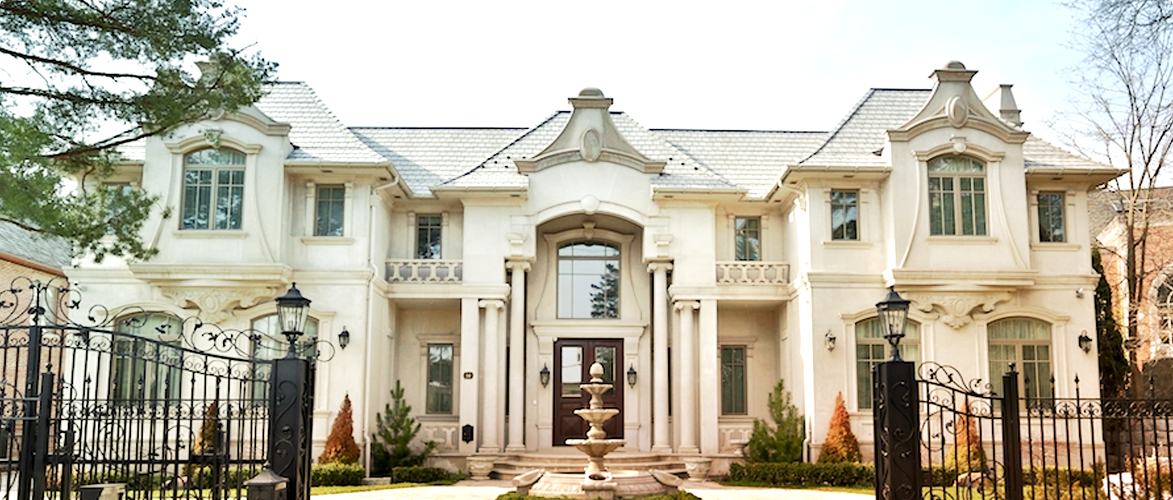
The Bridle Path is Toronto's estate district: a cluster of streets north of Lawrence Avenue, east of Bayview Avenue, where the lots are measured in acres rather than feet and the houses were designed by architects rather than builders. Most of the properties on The Bridle Path street itself, Post Road, and Devondale Drive sit behind gates. The Granite Club anchors the social life. Entry is around $5 million and serious properties run from $8 million to well above $20 million. There are roughly a dozen sales in the neighbourhood per year.
The Bridle Path is a small cluster of streets in north Toronto, roughly bounded by Lawrence Avenue East to the south, York Mills Road to the north, and Bayview Avenue to the west. The neighbourhood takes its name from The Bridle Path street itself, a private-feeling road where properties run behind walls and gates and the lots extend back far enough that you can’t see the houses from the street. Post Road and Devondale Drive carry similar weight. These are not addresses with numbers that buyers find by accident.
What makes this neighbourhood distinct from every other expensive address in Toronto is scale. A semi-detached house in Rosedale sits on a 30-foot lot. An entry-level property in the Bridle Path is on half an acre. Serious estate properties run to two acres and beyond, with pools, tennis courts, and coach houses that would qualify as substantial homes elsewhere in the city. The housing stock reflects this: the dominant building type is the large custom house, most built between 1960 and the present, replacing or substantially rebuilding whatever occupied the lot before.
The neighbourhood has no commercial strip, no subway station, and no public park within its boundaries beyond the ravine trails of the Don River system that run along its eastern edge. These are not oversights. They’re the point. The Bridle Path is designed to offer the experience of living in a private estate while technically being inside Canada’s largest city.
The housing stock in the Bridle Path is almost entirely custom construction on large lots. There’s no Victorian era to speak of here: the neighbourhood developed primarily in the 1950s through 1980s as Toronto’s post-war wealthy moved north from Rosedale and Forest Hill. A buyer coming from those neighbourhoods will see a completely different scale of property. Where Rosedale offers beautiful architecture on 40 to 60-foot lots, the Bridle Path offers similar or larger buildings on land that dwarfs the house.
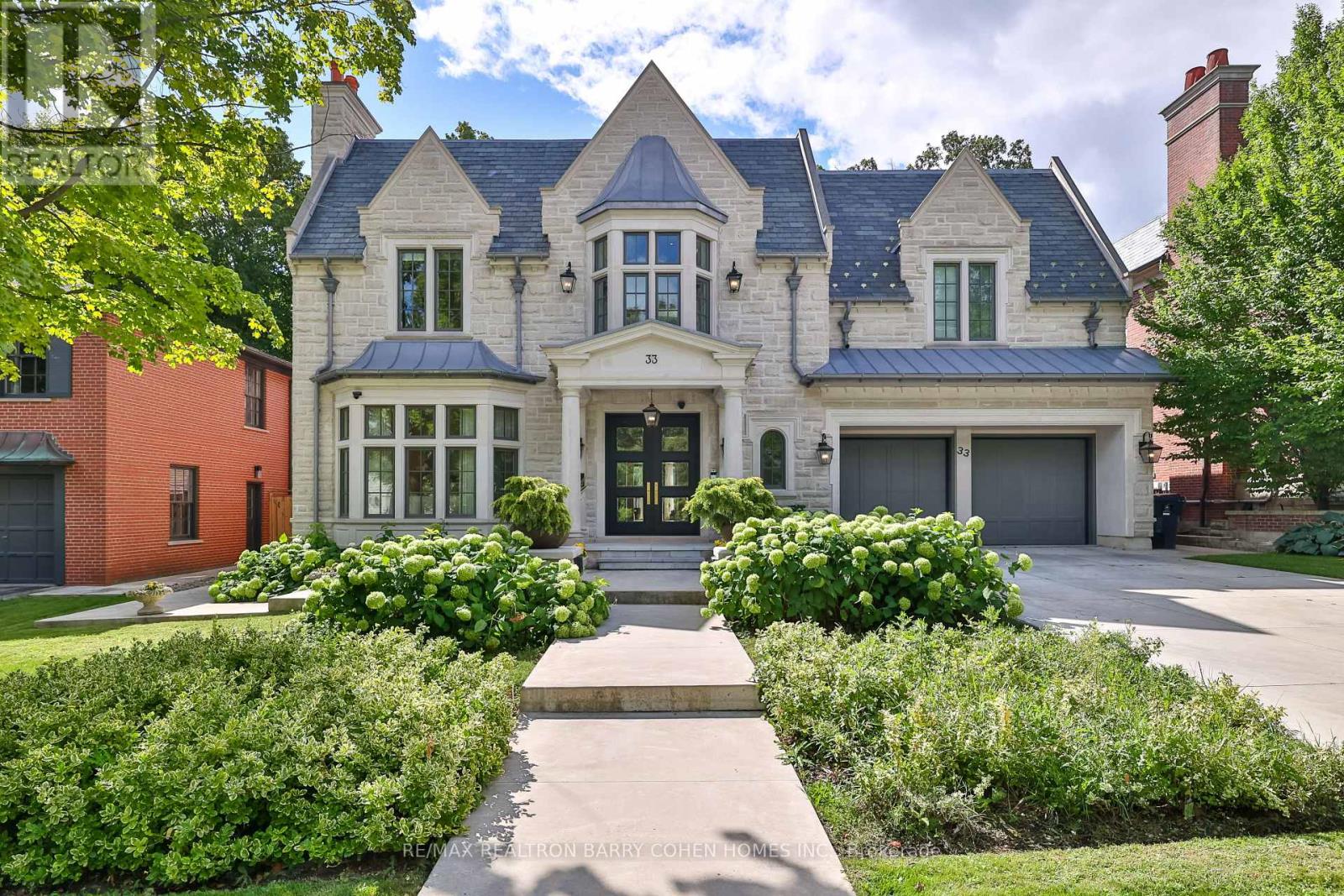
The architecture varies considerably. Older properties from the 1960s and 1970s are often in the process of being rebuilt, replaced with contemporary or neoclassical mansions designed to current tastes and built to current standards. Some of the more interesting properties are not the newest: a well-preserved late-20th century house on a two-acre ravine lot has qualities that no new build replicates. The market for each type is different. Recent custom builds attract international buyers and those who want a turnkey experience. Older properties on significant lots attract buyers who want to build their own project.
A typical transaction involves a property with a main house of 8,000 to 15,000 square feet, a three or four-car garage, a pool, and guest or staff accommodation. Gardens are significant and professionally maintained. Security systems are standard. These are households that employ people to run them, and the properties are built accordingly.
The lots on The Bridle Path street itself and on Post Road are the neighbourhood’s most sought after. Bayview Avenue frontage properties, while technically adjacent, are different in character: more visible, noisier from traffic, and assessed differently by buyers who know the neighbourhood well.
The Bridle Path is one of the thinnest real estate markets in the country. Eight to fifteen sales per year is a typical range, and some of those are never publicly listed. Off-market transactions are common in a neighbourhood where privacy is a primary value and where sellers don’t want open houses, public listings, or strangers walking through their homes. A buyer looking for opportunities in this neighbourhood needs relationships, not just access to the MLS.
When properties do list publicly, days on market are long by Toronto standards. A correctly priced property at $10 million may still sit for three to six months while the right buyer from a global pool of perhaps a few dozen qualified prospects considers it. There is no urgency in this market because the supply of buyers is finite and the urgency that drives bidding wars in the $1 million to $2 million range simply doesn’t exist here. Price reductions are common and don’t carry the stigma they do in other segments.
In 2025 and into 2026, the Bridle Path market has been slow by historical standards. Higher carrying costs, some uncertainty in Canadian residential real estate, and reduced international movement during pandemic recovery years combined to extend average days on market considerably. Properties that sold at peak 2022 prices would not achieve those prices in 2026 without a new construction premium or significant improvements. Buyers in this environment have more negotiating power than they have had in a decade.
The Bridle Path has attracted three distinct buyer profiles over its history as an established luxury address. The first is the multigenerational Canadian business family, often with connections to manufacturing, finance, or retail, for whom this neighbourhood has carried social meaning for decades. Some families have been in the neighbourhood for two or three generations. These buyers know the specific streets, the specific lots, and the specific properties, and wait for the right address to become available rather than accepting a compromise.
The second profile is the international buyer, particularly those with family and business connections from Iran and China. Both communities have had a significant presence in this neighbourhood since the 1980s and 1990s. The Iranian community, which established itself in North Toronto following 1979 and grew considerably through the subsequent decades, is well represented. The Chinese buyer presence, particularly buyers with business interests in both countries, grew substantially through the 2010s. These buyers bring specific requirements around lot size, house size, specific streets, and often specific compass orientations.
The third profile is the first-time luxury buyer: an entrepreneur or executive who has achieved a liquidity event and is purchasing their first estate property. These buyers sometimes need more guidance about what distinguishes a genuinely exceptional property from one that is merely expensive. A new build on a half-acre lot is not the same as a property on two ravine acres with established gardens, and the price difference doesn’t always capture the full gap.
The most important due diligence in this market happens before the offer, not after. At these price points, conditional offers are possible but the negotiation dynamic is different than in the sub-$2 million market. A seller of a $12 million property expects a buyer who has done serious homework. Arriving with basic conditions for inspection and financing, with no knowledge of the property’s history, signals inexperience. Experienced buyers at this level commission reports before making an offer and use conditions sparingly.
The specific lot matters enormously. A 1.5-acre lot on The Bridle Path street with a mature tree canopy and ravine views at the rear has qualities that photographs don’t convey and that a listing description won’t articulate. Walking the property at different times of day, understanding the orientation, knowing what a survey shows about the rear lot line and setbacks. These things change the decision. Two properties priced within 10 percent of each other can be genuinely unequal in ways that take local knowledge to see.
Heritage designation is absent from most Bridle Path properties, which means renovation and redevelopment rights are relatively unconstrained. The main planning considerations are setbacks, lot coverage, and height limits, all of which have been tested and established by the rebuilds that have happened across the neighbourhood. A buyer who intends to rebuild should commission a planning opinion and a soil review before proceeding. Ravine lots carry additional constraints under the Toronto and Region Conservation Authority’s jurisdiction that can meaningfully restrict what gets built near the ravine edge.
Property taxes on Bridle Path estates are significant by any standard but not proportional to price in the way buyers from outside Ontario sometimes expect. MPAC assessment values lag market values considerably in this segment, which means a $15 million property may carry taxes calculated on an assessment well below market. Buyers should request the current assessment and tax bill as part of standard review.
Selling a Bridle Path property takes longer than selling in most Toronto neighbourhoods and requires a different approach to marketing. The buyer pool is global in one sense and local in another: the people who can afford this neighbourhood come from around the world, but the people who know what they’re buying, who understand the specific streets, and who have the relationships to act quickly are a smaller group. Marketing needs to reach both.
International marketing through established networks matters here in a way it doesn’t in the $2 million market. A buyer for a $15 million property may be based in London, Dubai, or Hong Kong and making their purchase decision partly remotely. Professional video, aerial photography, and high-quality visual documentation of the property are not optional at this level. A listing that looks like a typical MLS entry with six smartphone photos will be dismissed by the buyers who could actually purchase it.
Pricing is the hardest part of selling here because the comparables are thin and dated. Two sales in the past eighteen months on adjacent streets may differ by 40 percent because the lots differ by an acre and the construction quality is entirely different. Sellers who price based on what they paid, what they spent on renovations, or what a neighbouring property sold for five years ago consistently misjudge the current market. A properly conducted valuation for a Bridle Path property requires looking at lot value as a development site alongside the value of the existing structure, which may be very different numbers.
The Granite Club on St. Clair Avenue East is the social anchor for this community and has been since it relocated from the downtown site it occupied for a century. The Club offers curling, tennis, squash, a full fitness facility, dining, and event space. Membership is not open to the general public and the waitlist is real. For many Bridle Path families, the Club is where children grow up in sport, where business relationships are maintained over lunch, and where the neighbourhood’s social life concentrates in winter. Its proximity to the Bridle Path is not accidental: the two are historically connected.
Daily errands concentrate on Bayview Avenue, which runs along the western edge of the neighbourhood. The Bayview Village Shopping Centre is the closest full-service retail option, anchored by Pusateri’s Fine Foods. The shops and restaurants along Bayview between Eglinton and York Mills cover most daily requirements: dry cleaning, pharmacy, specialty food, several consistently good restaurants. This is where Bridle Path residents actually shop for groceries and run errands. Lawrence Avenue East has a secondary commercial strip further east.
Sunnybrook Hospital is genuinely close, on Bayview just north of Lawrence. For a neighbourhood of this demographic, proximity to Sunnybrook, which operates one of the country’s strongest cardiac and trauma programs, is a practical consideration that buyers sometimes mention explicitly.
The Bridle Path is one of the few Toronto neighbourhoods where the transit question is genuinely irrelevant to buyers. The nearest subway station is Eglinton on the Yonge line, roughly a 10-minute drive south. The Crosstown LRT on Eglinton will add a station at Bayview, which will be somewhat closer, but the usage pattern in this neighbourhood will not change meaningfully. These are households with multiple vehicles, drivers, and no practical need for public transit.
The Bayview Extension connects the neighbourhood directly to the DVP south toward downtown and the 401 north toward the highway network. The commute to Bay Street by car during morning rush takes 25 to 35 minutes depending on conditions. Lawrence Avenue East connects west to the Allen and Yonge Street. Residents heading to Pearson typically take the 401 west, a 30 to 40-minute drive without traffic. These are the relevant transit facts for buyers in this neighbourhood.
Cycling is used by some residents for recreation along the ravine trail system rather than for commuting. The Don Valley trail network connects through the ravine land at the eastern edge of the neighbourhood south to the waterfront and north toward the suburbs. It’s a genuine amenity but a leisure one.
Buyers considering the Bridle Path typically have also looked at Rosedale and Forest Hill South, and sometimes at Hoggs Hollow, Wychwood, or specific streets in Moore Park. Each serves a different buyer and shouldn’t be reduced to a price comparison.
Rosedale is the old-money urban address. Properties sit on 30 to 60-foot lots with Victorian and Edwardian architecture. The subway stops at Rosedale station. You can walk to Bloor Street shops and Summerhill market. The neighbourhood has genuine urban density compared to the Bridle Path. Buyers who want the prestige address with city access choose Rosedale. Buyers who want the estate experience choose the Bridle Path. A buyer in both markets simultaneously usually ends up in one or the other based on whether they fundamentally want to walk to coffee or not.
Forest Hill South, along Dunvegan Road, Russell Hill Road, and the streets east of Bathurst near St. Clair, has similar wealth and similar architectural quality but in a tighter urban format than the Bridle Path. Lots are larger than Rosedale but smaller than the Bridle Path. It’s the most expensive of the three for comparable square footage because it combines prestige address with good schools nearby and urban practicality. Buyers with school-age children often rank it first.
Hoggs Hollow, in the Don Valley just north of York Mills Road, offers a genuine village feel within the city, with ravine properties and a residential quiet that approaches the Bridle Path. Prices are meaningfully lower, lots are smaller, and the address doesn’t carry the same market recognition internationally. For buyers who care less about the specific address and more about the actual living experience, it’s worth serious consideration.
The Bridle Path falls within the Toronto District School Board catchment. The local public elementary is Dunlace Public School. Rippleton Public School serves some of the area depending on the specific address. Neither carries a particular academic distinction among TDSB schools. The relevant secondary catchment flows to York Mills Collegiate Institute, which has a reasonable academic reputation and strong sports programs.
The practical reality is that most families purchasing in the Bridle Path send their children to independent schools. The neighbourhood is within reasonable distance of Upper Canada College on Lonsdale Road, which is the most established boys’ school in the city and has educated several generations of Toronto’s business and political class. Havergal College on Lawrence Avenue East, a girls’ school with strong academic standing, is essentially adjacent. Toronto French School’s Lawrence campus is close by. Families arriving from outside Toronto often default to these schools as a known quantity before investigating the full landscape.
Buyers with children in the independent school system often find the school decision made before the neighbourhood decision, particularly for families coming from international contexts where the specific school’s reputation matters for university placement. Confirm catchment using the TDSB boundary tool and contact specific schools directly for admissions timelines, as independent school waiting lists at this level are real and sometimes years long.
What is the entry price for a home in the Bridle Path? Entry on The Bridle Path street itself and the surrounding estate streets typically starts around $5 million for a property that needs updating or sits on a smaller lot by neighbourhood standards. Most transactions fall between $8 million and $20 million. Properties above $20 million are not unusual: several have sold above $30 million in recent years, usually on lots exceeding two acres with significant custom construction. Price per square foot of lot is often more meaningful than price per square foot of house at this level, since buyers frequently intend to rebuild or substantially renovate the existing structure rather than occupy it as found. Older properties on exceptional lots can be underpriced relative to their potential compared to finished new builds.
How does the Bridle Path compare to Rosedale? The two neighbourhoods attract different buyers and shouldn’t be treated as interchangeable. Rosedale is urban and walkable, with subway access at Rosedale station and a commercial strip on Yonge Street a short distance away. Lots in Rosedale run 40 to 60 feet wide. The Bridle Path is suburban in scale and private by design, with no transit relevance and no commercial strip within walking range. Lots run from half an acre to several acres. Rosedale buyers typically want the prestige address with urban practicality. Bridle Path buyers want the estate format: scale, privacy, gates, and the absence of density. Rosedale properties run from roughly $3 million to $12 million. The Bridle Path starts where Rosedale’s top ends.
Is the Bridle Path a good investment compared to other Toronto luxury areas? The Bridle Path is a thin market. Annual transaction volume across the neighbourhood is typically eight to fifteen sales per year, and some of those never list publicly. That illiquidity means prices are less subject to short-term market forces and more subject to individual property characteristics and buyer circumstances. Properties priced correctly for their lot and condition sell. Properties priced ambitiously sit for months regardless of broader market conditions. Appreciation over twenty years has been strong, tracking growth in ultra-high-net-worth wealth in Canada and internationally, but comparisons need to be made on individual assets rather than market-wide averages. Buyers treating this as a financial investment should factor in significant carrying costs, transaction costs, and genuine illiquidity at resale.
Who are the typical buyers in the Bridle Path? Three profiles dominate. First, established Canadian business families, often multigenerational, for whom the address carries decades of social meaning and who wait for the right street and lot rather than accepting a compromise. Second, international buyers, particularly those with family and business connections from Iran and China, communities with a significant presence in this neighbourhood since the 1980s and 1990s. Third, first-time luxury buyers: entrepreneurs and executives who have had a liquidity event and are making their first estate purchase. Each profile has different priorities around specific streets, house size, and lot characteristics. A buyer’s agent who knows which streets each profile prizes, and why, is worth considerably more here than elsewhere in the city.
The Bridle Path as a residential address is largely a post-war creation, which makes it unusual among Toronto’s wealthy neighbourhoods. Rosedale was established in the late 19th century. Forest Hill developed through the 1920s and 1930s. The Bridle Path emerged as a significant address through the 1950s and 1960s, when the expansion of Toronto’s north-end infrastructure and the prosperity of the postwar decades made large suburban estate development possible north of Lawrence Avenue.
The street name itself reflects an older land use: the bridle path that ran through the area when this was the rural edge of the city and equestrian use was a practical reality. The neighbourhood developed differently from Rosedale and Forest Hill in part because it came later, which meant larger lots (land was cheaper and available in larger parcels), no inherited Victorian architecture to work around, and a buyer profile that was new-money rather than old-money. Over the subsequent decades, the distinction blurred. The neighbourhood became established on its own terms.
The international character of the neighbourhood developed particularly through the 1980s and 1990s, as significant wealth migration from Iran following 1979 found Toronto a preferred destination, and as Canadian immigration policy through the 1980s created pathways for business-class immigrants. The Bridle Path, with its estate format and private feel, suited both communities well. The neighbourhood’s social mix shifted and then stabilised into something different from the Anglo-Canadian exclusivity that characterised it in its early decades. That change has been part of the neighbourhood’s story for forty years now.
Street-level knowledge is hard to find online. Our team works in Bridle Path every day. They know which pockets hold value, where the school catchment lines actually fall, and what the market is doing right now. Talk to us before you make a decision about Bridle Path.
Talk to a local agent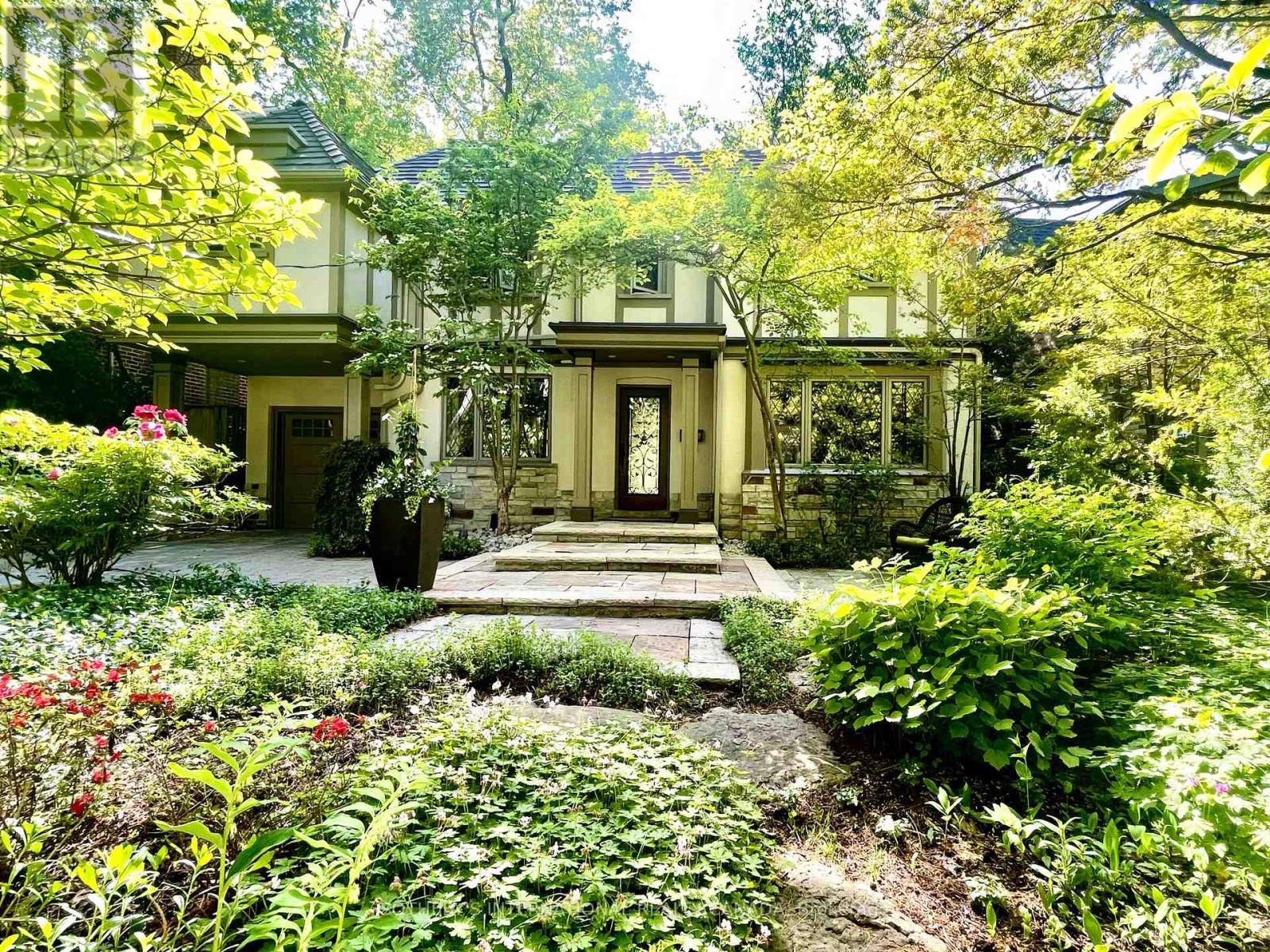 For Sale
 For Sale
 For Sale
 For Sale