
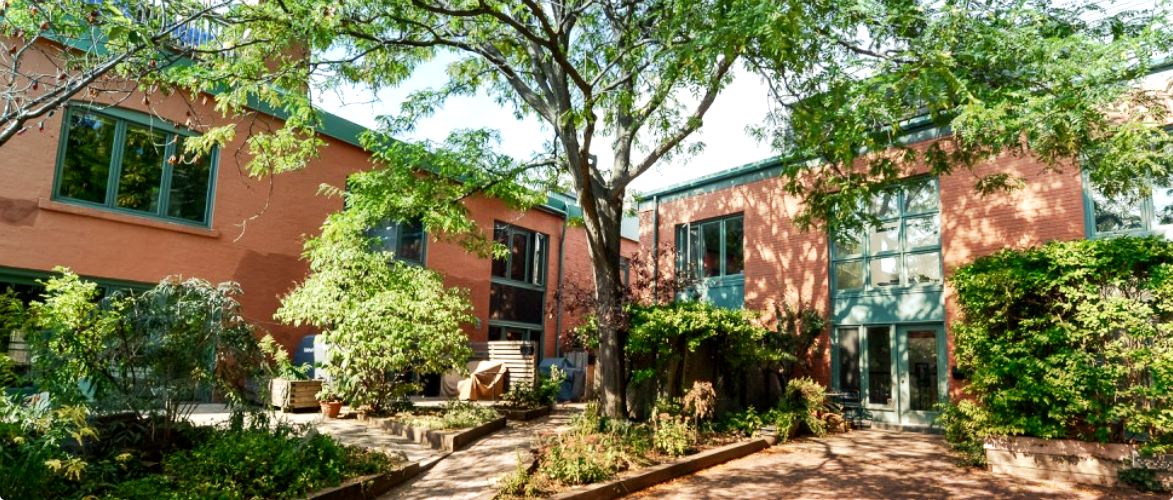
Brockton Village is a west-end neighbourhood of Victorian and Edwardian brick semis between Dufferin Street and Lansdowne Avenue, south of Bloor. The housing stock dates mostly from 1895 to 1925 and sits on the modest 16 to 20-foot lots that characterise this part of the city. Semis were trading between $850,000 and $1.1 million in early 2026, with detached homes from $1.1 million to $1.5 million. The Bloor Street edge has been changing: Bar Begonia, Sugo, and a run of independent coffee shops have arrived in the past three years, and the stretch between Dufferin and Lansdowne now has genuine character rather than just vacancy.
Brockton Village sits between Dufferin Street on the west and Lansdowne Avenue on the east, running south from Bloor Street toward Dundas Street West. The neighbourhood is compact: roughly six blocks east-west and eight blocks north-south. The residential streets are Perth Avenue, Symington Avenue, Brock Avenue, and Sheridan Avenue, with a grid of side streets between them. These are narrow, tree-lined blocks of Victorian and Edwardian brick semis that have barely changed in physical form since they were built a century ago.
The neighbourhood has a working-class history that’s still visible in the housing stock. These semis were not built for doctors and lawyers. They were built for tradespeople’s families in the late 19th and early 20th century, and they show it: modest frontages, small rooms, low basement heights in the oldest stock. The quality gap between a well-renovated semi here and a poorly maintained one is wide. Buyers do their best work when they buy the roughest house on a good block rather than the finished house on a marginal one.
The Bloor Street edge is where the neighbourhood’s story is changing most visibly. The stretch between Dufferin and Lansdowne, known to some as Bloordale Village, has seen a meaningful shift in the past three years. Bar Begonia arrived in 2022 and immediately raised the profile of the strip. Sugo followed. Independent coffee shops opened and held. The vacancy rate on the strip has dropped and the remaining legacy businesses now share the block with genuinely destination-worthy restaurants and cafes. The residential streets behind this strip haven’t yet fully repriced for what’s happened, which is the case for buyers tracking where value currently lives in the west end.
The dominant housing type in Brockton Village is the Victorian or Edwardian brick semi, most built between 1895 and 1925. Frontages run 16 to 20 feet. The standard configuration is three bedrooms and one bathroom on the main and upper floors, with a basement of variable height and usefulness. Lot depths are typically 100 to 120 feet, which allows for a reasonable rear garden and, on some lots, a parking pad accessed from the lane.
Condition varies considerably and the price range reflects it. A semi that’s been updated throughout, with a functional kitchen, renovated bathroom, decent flooring, and working mechanical, trades between $900,000 and $1.1 million depending on specific street and lot. A semi that needs a full kitchen and bathroom update trades from $850,000. A genuinely well-done renovation, with a proper rear extension, a finished basement with ceiling height, and high-quality finishes, can push above $1.1 million and occasionally approach $1.2 million when the lot is large and the location is strong.
Detached homes exist in the neighbourhood but are less common than semis. A three-bedroom detached in average condition trades from $1.1 million. A four-bedroom with a rear addition and a finished basement on a deeper lot can reach $1.4 to $1.5 million. The detached premium over an equivalent semi runs roughly $200,000 to $300,000 and reflects the combination of space, privacy, and the flexibility to expand without shared-wall complications.
There are no purpose-built condo buildings of significance in Brockton Village proper. Buyers looking for condos in this part of the west end are looking at the Bloor corridor, where some mid-rise buildings exist, or further east toward Dufferin station. Most buyers in this neighbourhood are looking for freehold, which is what the housing stock is built for.
Brockton Village is not the tightest market in the west end, which is a statement about how the west end has evolved rather than a reflection on the neighbourhood. In the years when Roncesvalles and the Junction were attracting bidding wars on every presentable semi, Brockton Village was running quieter and offering meaningful value to buyers who widened their search past the most established addresses. That dynamic has been closing slowly as the Bloor strip improves and as buyers priced out of adjacent markets look further.
In early 2026, well-priced semis in the neighbourhood are drawing two to four offers in the spring market rather than the seven to ten seen in peak years. Conditional offers are accepted on properties that aren’t attracting immediate competition. Buyers who need conditions for financing or inspection can get them here in a way that’s genuinely difficult in the most contested segments of the west end. That’s a practical advantage for first-time buyers who can’t afford to waive conditions.
Days on market for overpriced properties has stretched. Sellers who listed at peak 2022 comparable prices in 2023 and 2024 found the market unforgiving. In 2026, sellers who price with current comparable data move their properties within two to four weeks. Those who price at aspirational numbers based on older transactions are doing price reductions and extended listings. The gap between realistic and aspirational pricing is smaller than in harder markets, but it’s present and visible in the listing history data.
The buyers who end up in Brockton Village are mostly people who have been looking in the broader west end and have concluded that the value equation here is better than Roncesvalles or the Junction for their budget. They’ve typically lost out on a property or two in a more contested neighbourhood and have widened their search rather than escalating their budget further.
First-time buyers with a household income in the $150,000 to $200,000 range, combining a down payment accumulated over several years with a mortgage that stretches but doesn’t break, account for a meaningful share of transactions. The price range here is accessible to that buyer in a way that Roncesvalles, at $1.2 million to $1.5 million for an equivalent semi, is not. They’re buying a neighbourhood whose trajectory they’re betting on rather than paying for an already-established address.
A second group is the move-up buyer: a couple that bought a condo in the downtown core in the mid-2010s, has equity from appreciation, and is buying their first house. They value the Bloor line access because they’re accustomed to transit dependence. They want a freehold with outdoor space. They’re comfortable with the idea that the neighbourhood is in transition because they watched the same process happen in Leslieville a decade earlier.
The Portuguese and working-class families who have historically been the neighbourhood’s backbone are still present, particularly in the owner-occupied portion of the stock. The neighbourhood hasn’t displaced its existing community in the way some west-end streets have. That’s partly a reflection of ownership rates: a significant portion of the older stock is owned outright by families who have no reason to sell at current prices and no intention to.
The east-west position within the neighbourhood matters. Properties on Perth Avenue and the blocks closest to Dufferin station are the most transit-convenient and tend to hold value more consistently. Properties closer to Lansdowne on the eastern side are slightly further from the subway but benefit from proximity to the evolving Bloor strip. The middle blocks on Symington and Brock are quieter and slightly less expensive. These differences are granular but they affect both daily life and eventual resale.
Basement height is worth checking carefully in this housing stock. The Victorian-era semis were built with low basements designed for storage rather than habitation. Some have been underpinned and now offer genuinely usable space. Others have 6-foot basement heights that make a proper secondary suite impossible without significant expense. Buyers who are counting on rental income from a basement unit need to verify actual ceiling height against the 6-foot-5 minimum for a legal basement suite before placing an offer, not after.
The laneways behind most of these semis have parking pads on some lots but not all. If parking matters to you, confirm it exists for the specific property rather than assuming it. Parking on the street in this neighbourhood is residential permit parking, which means a permit comes with the address, but visitors and second cars are constrained. The lane access also determines whether a rear addition or laneway suite is feasible if you’re thinking about that.
The Bloor-Lansdowne area has seen some CPR-adjacent properties come to market. The rail corridor runs east-west through the area to the south of Dundas Street. Properties within a block or two of the rail line need to be assessed for noise impact at the specific address: some are materially affected, others less so depending on setback and orientation. Walk the specific street at different times and listen before committing.
Sellers in Brockton Village are competing against a broader set of west-end neighbourhoods, which means presentation matters more than it does in markets where buyers are committed to a specific street before they look at the first property. A buyer who has Brockton Village on their shortlist alongside Dufferin Grove and the southern Junction is making a comparative decision. The property that shows better gets the offer.
The renovated semis here have a characteristic look that buyers in this segment have come to expect: original brick exterior, painted or updated windows, a rear kitchen extension opening to the garden, original hardwood where it survives. Sellers who work with this aesthetic, rather than against it with renovations that misread the architecture, consistently outperform the comparable sales. A modern kitchen that respects the ceiling height and character of the house reads as done well. A kitchen that fights the house reads as a flip.
Spring listings, particularly February through April, attract the deepest buyer pool. The second window runs through September and October. Listings appearing in July or between mid-November and January consistently face thinner buyer traffic and extended days on market. Sellers who have timing flexibility should hold for spring. Sellers who don’t should price with the seasonal reality factored in.
The Bloor Street strip between Dufferin and Lansdowne is Brockton Village’s most visible story in 2026. Bar Begonia has been the anchor of the new arrivals: a natural wine bar with a serious kitchen that draws diners from well outside the neighbourhood. Sugo on Bloor, a Italian restaurant with a short menu and a consistent lineup, is similarly destination-level. The coffee shop situation has improved markedly in the past two years, with two or three independently operated cafes now covering the strip. The strip still has its legacy businesses, the Portuguese bakeries and the corner stores that have been there for decades, and they sit alongside the new without obvious tension.
Dufferin Grove Park is technically across Dufferin Street in the adjacent Dufferin Grove neighbourhood, but for residents of Brockton Village it’s accessible in a 5-minute walk. The park’s farmers market, which runs Thursday afternoons through much of the year, and the bread oven community, which has baked bread and hosted community events for two decades, give the park a character that few green spaces in the city match. The park is well maintained, has active programming for children, and hosts a winter skating rink. For families, proximity to Dufferin Grove Park is a genuine quality-of-life consideration.
Dufferin Mall, one stop south on the 29 Dufferin bus or a 15-minute walk, provides the full-service retail that the local strip doesn’t. Loblaws at the Mall gives grocery access that doesn’t require a car or a long transit trip. For a neighbourhood that’s still building out its local commercial strip, the Mall provides the practical backstop for daily errands.
Transit access is one of the clearest strengths of living in Brockton Village, and it’s underappreciated by buyers who focus on the neighbourhood’s transitional commercial strip and miss what’s under their feet. Dufferin subway station on the Bloor-Danforth line sits at the western edge of the neighbourhood. Lansdowne station is at the eastern edge. Most residential streets are within an 8-minute walk of at least one station and within 12 minutes of both. A buyer at Perth Avenue and Bloor can be at Bloor-Yonge in 10 minutes and at Spadina in 5.
The 29 Dufferin bus runs south from Dufferin station past Dufferin Mall, King Street, and Exhibition Place, giving a direct surface connection southward without requiring a transfer. The 501 Queen streetcar is accessible at the southern end of the neighbourhood on Dundas and then a short connection east or west. The Bloor-Danforth subway line eastbound from Dufferin reaches St. George in three stops, connecting to the University line and the entire downtown core.
Cycling from Brockton Village to downtown is practical for a significant portion of the year. The Bloor Street bike lanes connect east from Dufferin toward the University corridor. The Martin Goodman Trail along the waterfront is accessible via Dufferin south. For commuters going to the financial district, a well-ridden bike can match or beat the door-to-door transit time, particularly off-peak.
Buyers looking at Brockton Village have almost always also looked at Dufferin Grove and the Junction Triangle. The comparison is worth making honestly rather than with the optimism that sometimes creeps into neighbourhood descriptions.
Dufferin Grove, across Dufferin Street to the west, is the most direct comparison. The housing stock is essentially identical: Victorian and Edwardian brick semis on similar lots. The park gives Dufferin Grove its identity and draws a committed buyer pool. Prices run 5 to 10 percent higher for equivalent properties, which the market has consistently supported. The practical difference in daily life between the two is smaller than the price difference, particularly given that Dufferin Grove Park is walkable from Brockton Village. Buyers who can’t absorb the Dufferin Grove premium find Brockton Village the most natural alternative.
Junction Triangle is west of Brockton Village, across the CPR rail corridor. It’s more isolated by the rail infrastructure, which creates a physical break that affects both noise and the sense of connection to the broader west-end street grid. The housing stock is similar and prices are comparable. The Bloor strip access is weaker from the Triangle because the subway stations are further. The neighbourhood has its own identity, centred on the West Toronto Railpath and the emerging Bloor-Lansdowne area, but buyers who want active Bloor strip proximity should compare distances carefully before treating the two as equivalent.
Roncesvalles is a different market. The commercial strip on Roncesvalles Avenue is established and draws destination diners and shoppers. The elementary schools have a stronger reputation. Prices are $150,000 to $250,000 higher for equivalent semis. The premium reflects all of those things and has been consistent. Buyers who can stretch to Roncesvalles should probably do it. Buyers who can’t should look seriously at Brockton Village rather than the Junction Triangle, given the transit advantage.
The main public elementary catchment for Brockton Village runs to Shirley Street Public School and nearby schools in the TDSB system. Neither of the primary schools serving this area has an exceptional academic profile. Families with strong views about elementary school programming often look at the TDSB French Immersion application process, which requires applying outside your catchment school and typically begins in junior kindergarten, or at the Catholic system, which has options in the area.
Secondary school catchment in this area generally flows to Bloor Collegiate Institute on Bloor Street West. Bloor CI has a performing arts focus and a mixed academic reputation. Families for whom secondary school quality is a primary criterion in their neighbourhood decision often find the west end between Dufferin and Lansdowne a harder case to make than Roncesvalles or the Annex, where secondary school options are stronger. This is one of the genuine differences between Brockton Village and the more established west-end addresses, and it affects the buyer profile: buyers with school-age children who care about secondary school often look further west or east.
Verify current catchment using the TDSB boundary tool at your specific address before making any decisions based on school. Catchment boundaries in this part of the city have shifted in recent years and a specific address can produce unexpected results.
What are homes selling for in Brockton Village in 2026? In early 2026, semi-detached homes are trading between $850,000 and $1.1 million depending on renovation quality, lot size, and specific street. The semis here are predominantly Victorian and Edwardian brick, built between 1895 and 1925, on 16 to 20-foot frontages. Detached homes run from $1.1 million to $1.5 million, with fully renovated properties on deeper lots at the top of that range. The neighbourhood sits at the value end of the west-end freehold market, which is its primary attraction relative to Roncesvalles or the Junction, where equivalent homes carry a $150,000 to $250,000 premium. Buyers should budget for updates in most properties: kitchens and bathrooms in the stock tend to be partially done rather than properly finished.
Is Brockton Village walkable and well-served by transit? Transit access is one of the neighbourhood’s genuine strengths and often underappreciated by buyers focused on the commercial strip’s transitional state. Dufferin subway station sits at the western edge; Lansdowne station at the eastern edge. Most addresses are within 5 to 12 minutes walk of a Bloor-Danforth station. That gives a direct connection to both downtown and the University corridor. Daily errands are manageable on foot: Bloor Street between Dufferin and Lansdowne has a grocery option, pharmacy, and a growing number of cafes. Dufferin Mall, a single bus stop south, provides full-service retail including a Loblaws. Walk scores vary by block but the transit picture is consistently strong throughout.
How does Brockton Village compare to Dufferin Grove? Dufferin Grove is across Dufferin Street to the west, centred on Dufferin Grove Park and its farmers market and bread oven community. The housing stock is similar in type and age. Prices run roughly 5 to 10 percent higher, reflecting the park’s reputation and a slightly deeper buyer pool. In practical terms, the two neighbourhoods are close substitutes. The park is accessible from both on foot. The transit access is identical. The difference is that Dufferin Grove has a more established identity in the market, which means competitive offers appear more regularly. Buyers who lose out in Dufferin Grove sometimes find better value a block east. The distinction matters less after you’ve moved in than it does when you’re comparing asking prices.
What is the Bloor Street strip actually like right now? The Bloor Street strip between Dufferin and Lansdowne is mid-transition in 2026. Three years ago it had significant vacancy and the remaining businesses were largely legacy retailers serving the local Portuguese community. That’s changed materially. Bar Begonia arrived in 2022 and quickly became a destination. Sugo on Bloor followed and draws diners from well outside the neighbourhood. Several independent coffee shops have opened and held. Vacancy on the strip is down and the remaining legacy businesses sit alongside the new arrivals without obvious friction. The strip hasn’t arrived the way Ossington has, but the trajectory is clear and the residential prices haven’t yet fully caught up to what’s happened on the commercial street. Buyers in 2026 are getting in ahead of that repricing.
Brockton Village developed in the 1880s and 1890s as Toronto expanded west from its original core. The area was annexed to the City of Toronto in 1884, and the semi-detached housing stock that still defines the neighbourhood was built largely between 1890 and 1930 to house the working families who worked in the factories and trades that occupied the industrial land further south and along the CPR corridor.
The Portuguese community began arriving in Toronto in the 1950s and 1960s, settling first in the Kensington Market area and spreading west along Dundas Street and into Brockton Village and Dufferin Grove over subsequent decades. By the 1970s and 1980s, the neighbourhood had developed a strong Portuguese character that shaped its businesses, its community institutions, and its social life. Portuguese bakeries, social clubs, and Catholic parishes gave the neighbourhood an identity that persisted through economic shifts and demographic change. Some of that character is still present in the legacy businesses and the long-term owner-occupied households.
The gentrification of the broader west end, which began in Roncesvalles and the Junction in the late 1990s and early 2000s, reached Brockton Village later and less completely than those neighbourhoods. Rising land prices pushed buyers and renters further from established addresses, and the neighbourhood absorbed some of that demand over the 2010s. The current state, a working-class neighbourhood with an improving commercial strip and a mix of legacy and newer residents, reflects the later stage of that process rather than its conclusion. Where the strip ends up in five years will determine how the residential market reprices in that period.
Street-level knowledge is hard to find online. Our team works in Brockton Village every day. They know which pockets hold value, where the school catchment lines actually fall, and what the market is doing right now. Talk to us before you make a decision about Brockton Village.
Talk to a local agent For Rent
 For Sale
 For Sale
 For Rent