
Cachet is a luxury residential neighbourhood in north Markham built through the 1990s and early 2000s. Large-lot executive detached homes, a prominent Asian Canadian community, strong public schools, and quick Highway 404 access define the area. Homes trade between $1.5M and $3M.
Cachet sits in the northern reaches of Markham, bounded roughly by Woodbine Avenue to the west, Major Mackenzie Drive to the south, and the grid of crescents and courts that define executive suburban planning at its most deliberate. The neighbourhood took shape through the 1990s and into the early 2000s, when Markham’s growth machine was producing some of the most ambitious residential projects in the Greater Toronto Area. Builders here were not working with starter homes. They were constructing the kind of properties that executives, professionals, and successful entrepreneurs buy when they want space, quality, and a postal code that signals both.
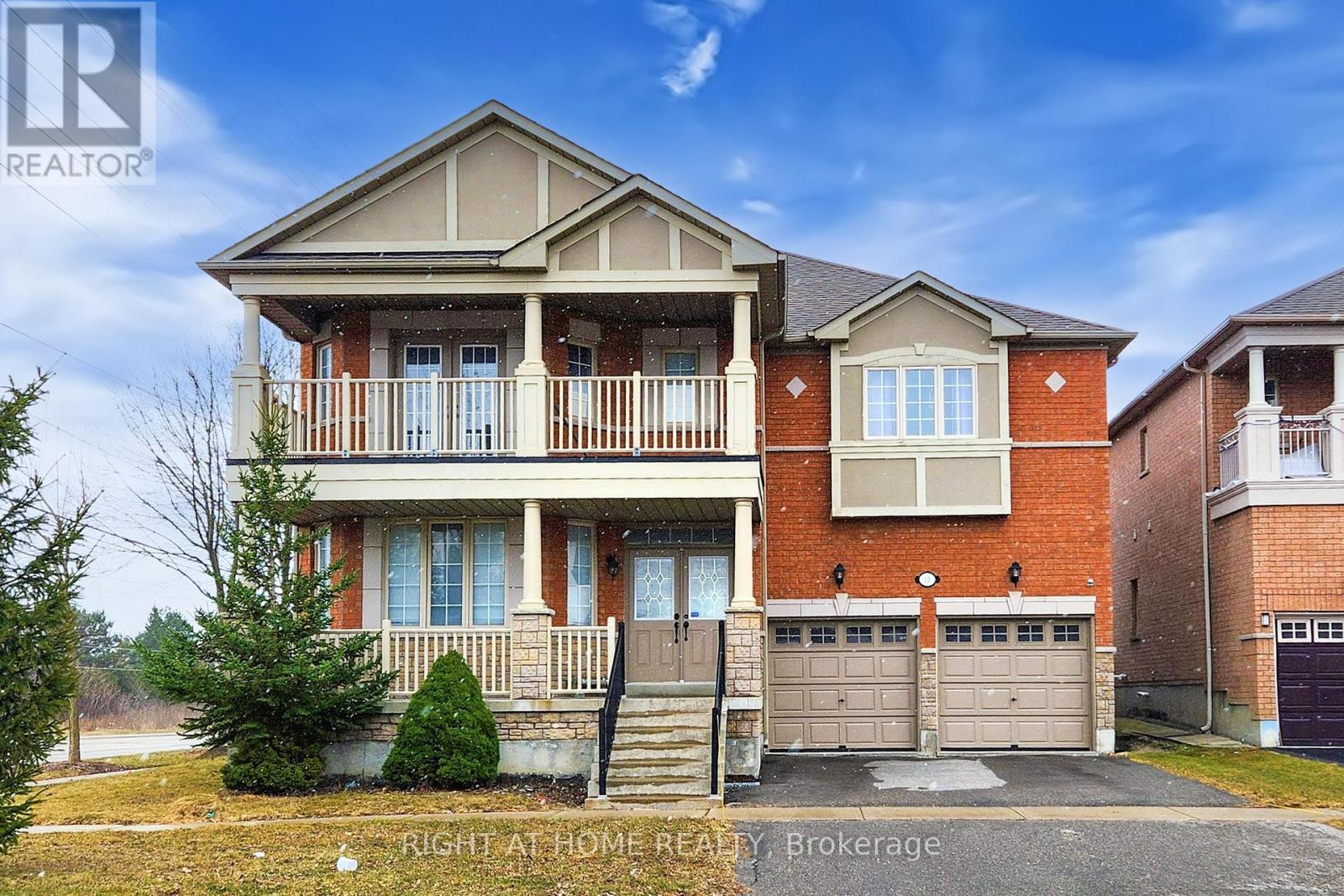
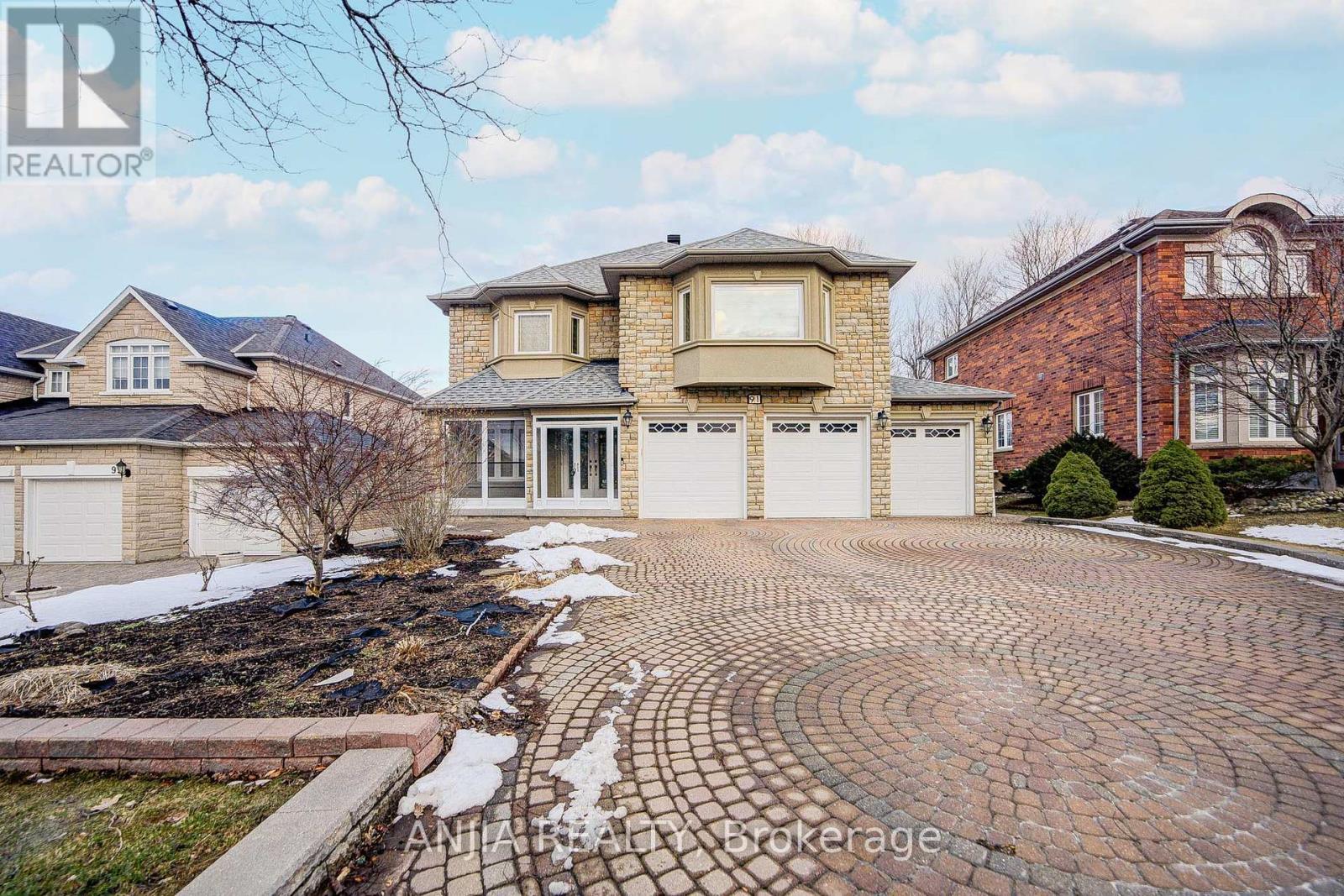
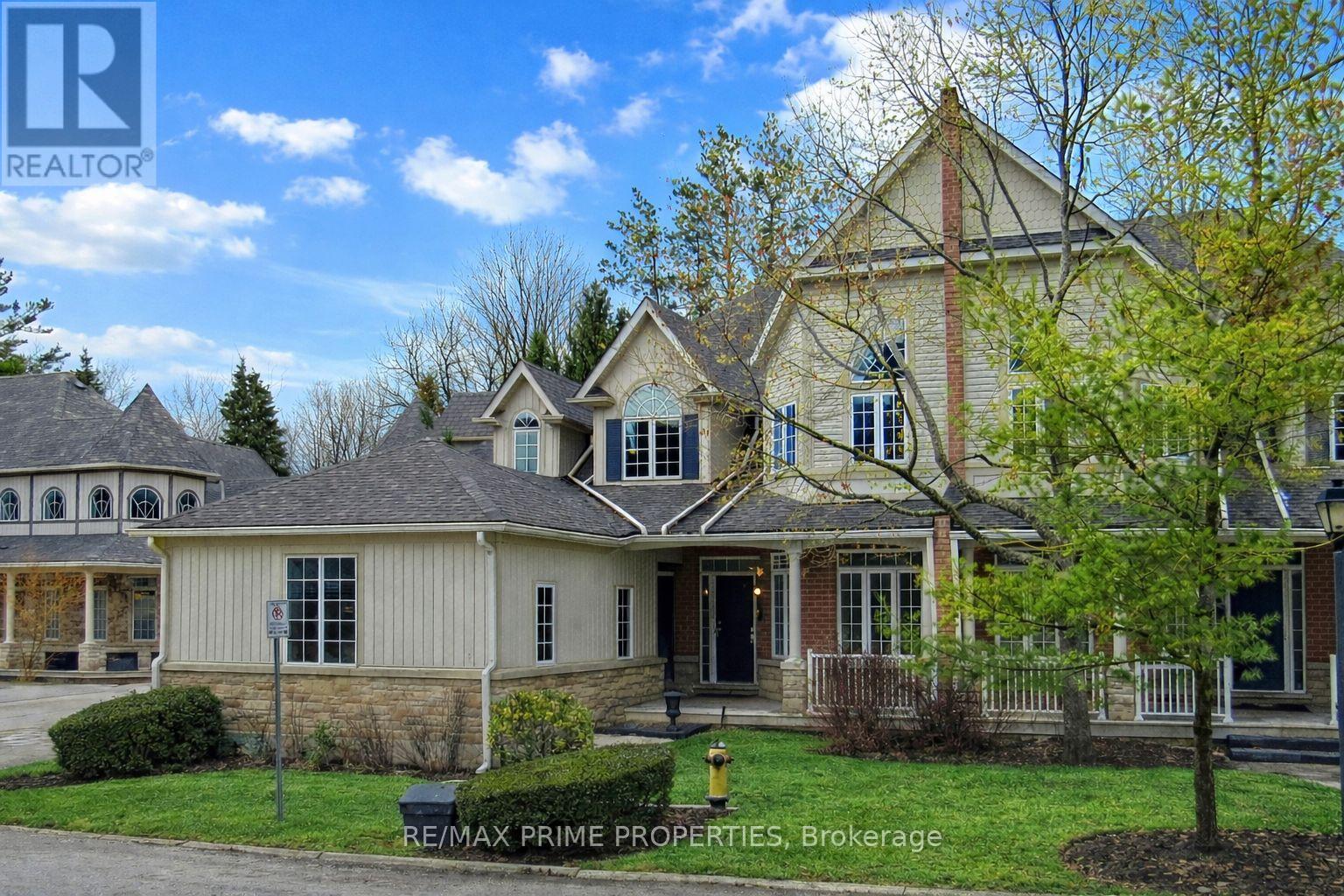
The built form reflects that ambition. Brick and stone detached homes on large lots, with double and triple garages, generous setbacks, and mature trees that have had three decades to grow into the streetscape. The lots here run wider and deeper than in most Markham neighbourhoods, which gives Cachet a suburban scale that feels genuinely spacious rather than merely suburban. Walking the streets on a summer evening, you feel the difference: longer sight lines, quieter cul-de-sacs, less density pressing in from all sides.
The demographic profile has shifted considerably since those original buyers settled in. Cachet today is one of Markham’s most prominently Asian Canadian communities, with a large Mainland Chinese and Taiwanese population that arrived through the 1990s and 2000s and has stayed. The community anchors produce a level of care about schools, property upkeep, and neighbourhood stability that keeps Cachet among the most consistently desirable addresses in York Region. Turnover is low. When a home does come to market, interest is immediate.
Access works well. Highway 404 is minutes to the west, connecting downtown Toronto in under forty minutes outside rush hour, and the 407 ETR provides an eastern bypass option. The neighbourhood sits close enough to the amenities of Unionville and the commercial corridors along Highway 7 to feel connected without being urban. That balance, quiet and established on the residential streets, with genuine services nearby, is what buyers in this price range typically seek and what Cachet has consistently delivered.
Cachet operates in a price range that places it among Markham’s most expensive residential addresses. Detached homes here trade between $1.5 million and $3 million depending on lot size, finishes, and whether the property has been updated or retains its original 1990s interior. The lower end of that range typically represents a four-bedroom home on a standard Cachet lot with a functional but dated kitchen and bathrooms. The upper end captures larger homes on premium lots, with full renovations, additions, or both.
Lot premiums matter here more than in most Markham communities. A pie lot at the end of a cul-de-sac commands a significant markup over a narrower mid-block lot with comparable square footage. Corner lots are valued differently. Backing onto one of the golf courses or ravines that exist along the neighbourhood’s edges adds another layer of premium. Buyers in this market understand the lot geometry and factor it into their offers.
The detached home is essentially the only product type in Cachet. There are no condominiums, no apartment buildings, and very few semi-detached homes. This single-product market means that demand concentrates on a relatively small pool of available listings, which has historically kept prices firm through softer market conditions. When the broader York Region market corrects, Cachet tends to hold better than lower-priced pockets because the buyers here are less dependent on highly leveraged financing.
Interior square footage typically runs from 2,500 to 5,000 square feet above grade, with finished basements common. Many of the original basements have been finished as in-law suites or entertainment spaces over the years. Lot sizes generally run from 45 by 100 feet on the smaller side to over 60 by 130 feet on the premium lots. Garages are double as a minimum, with triple garages present on the larger properties. Buyers coming from Toronto’s detached market frequently find the value proposition striking when they calculate cost per square foot against what equivalent money buys in Leaside or Rosedale.
Cachet’s market moves differently from the broader GTA residential market, and understanding those differences matters for anyone buying or selling here. The neighbourhood attracts a buyer pool with above-average financial depth, which means it responds to interest rate changes more slowly than entry-level markets. When borrowing costs rise and first-time buyers pause, Cachet can continue transacting at reasonable velocity because many purchases involve significant equity or cash components.
Listing frequency is low. The neighbourhood’s homeowners tend to stay, and when they do sell, it’s often a life-stage decision, downsizing after children leave home, or relocating out of province, rather than opportunistic selling. This structural low inventory means that well-presented homes at accurate prices typically sell with limited competition from comparable listings. A buyer looking at three or four genuinely comparable homes in Cachet at any one time would be operating in an unusually active market.
The spring market, running from late February through May, remains the dominant selling season. Fall produces a secondary pulse in September and October. The Christmas-to-February period is slow, which creates opportunities for buyers willing to move during that window. Sellers who list in January and February often face a smaller buyer pool but also less competition from other listings. Whether that tradeoff favours the seller depends on how urgently they need to move.
Days on market for properly priced homes typically run in the two-to-four week range. Properties that sit longer are usually priced above what the market will support at that moment or have a feature, backing onto a busy road, unusual floor plan, deferred maintenance, that narrows the buyer pool. Multiple offer situations occur but are less common here than in the $900,000-to-$1.3-million detached market in Markham’s southern precincts. When they do occur, the premiums tend to be smaller in percentage terms because buyers at this price point conduct more deliberate due diligence.
The buyer profile in Cachet is relatively consistent and has remained so for the better part of two decades. The dominant group is professional families, typically dual-income households with children in or approaching high school, who are buying their second or third home after building equity elsewhere in the GTA. Many are Chinese Canadian families who have specifically targeted Cachet because of its school performance, neighbourhood stability, and community character. The neighbourhood’s reputation within that community is self-reinforcing: strong schools attract families who value strong schools, which keeps school performance high.
A secondary buyer group consists of move-up buyers from Markham’s own mid-range neighbourhoods, Unionville, Thornhill, Milliken, who have accumulated equity through ownership and are stepping up in both price and size. These buyers know the York Region market well and typically negotiate with more information than buyers relocating from elsewhere. They understand which streets and pockets carry premiums and which do not.
Executives relocating from other cities, particularly those arriving with major tech or professional services firms that have operations along the Highway 7 corridor or in nearby Markham’s technology cluster, represent a third segment. These buyers are often on corporate relocation packages and move quickly. They value proximity to IBM, Huawei Canada, and the constellation of technology firms in the area, combined with the quality of housing stock and schooling that Cachet delivers.
Investors are not absent but are a minority. The rental yields on a $2-million detached home are thin, and the maintenance requirements of large older homes make them less attractive as pure investment vehicles than condominiums or townhomes in other parts of Markham. The buyers who purchase in Cachet as investors are typically doing so for long-term capital preservation rather than current income, holding properties for children who may eventually occupy them or planning for a rental period before a resale in five to ten years.
The internal geography of Cachet rewards careful attention. The neighbourhood is not homogeneous, and the differences between streets translate directly into price differences that buyers who haven’t spent time here sometimes miss. The streets immediately north of Major Mackenzie Drive offer the most established lots with the tallest trees, having had the longest time to mature. These blocks have a settled quality that newer parts of the neighbourhood lack.
The cul-de-sacs and crescents that branch off the main arterials are where the premium properties concentrate. End-of-cul-de-sac lots often have irregular shapes that allow for wider rear yards, and the reduced traffic makes them genuinely quieter than through-streets. Families with young children specifically seek these locations, and the demand premium is real and consistent. Cachet Park Court, Cachet Woods Court, and the surrounding cluster of closes and courts represent the neighbourhood’s most sought-after addresses.
The eastern edge of Cachet, closer to Woodbine Avenue, has properties that back onto or face open space and golf course land. This provides views and the psychological benefit of green space that many buyers in this price range actively seek. The trade-off is slightly longer drives to the 404 compared to properties on the western side. Most buyers in this price range find that trade-off acceptable.
Condition variation within Cachet is significant because the housing stock is now 25 to 35 years old. Original-condition homes with 1990s kitchens and bathrooms intact are selling at a discount to fully renovated equivalents. The gap between updated and original-condition homes has widened in recent years as renovation costs have increased, since buyers now factor in $150,000 to $300,000 in realistic renovation costs when assessing an original-condition home. Streets where recent renovations are clustered tend to show the highest average sale prices, not because of any intrinsic locational premium, but because the improvements have been concentrated there.
Cachet is a car-dependent neighbourhood, and buyers should understand that clearly before committing. The transit options exist but are designed for occasional use rather than daily commuting. York Region Transit operates routes along Major Mackenzie Drive and Woodbine Avenue that provide connections to the broader YRT network, and from there riders can reach Unionville GO or other transit hubs. The journey from Cachet to Union Station by transit takes between 75 and 100 minutes depending on connections and time of day, which most residents find impractical for daily use.
Highway 404 is the neighbourhood’s primary commuting artery, accessible within five minutes from most addresses in Cachet. Southbound, it connects to the Don Valley Parkway and downtown Toronto. The drive to the Financial District outside rush hour runs 35 to 45 minutes. During peak morning and evening rush, that extends to 60 to 90 minutes, which is why many Cachet residents time their commutes around the peak or have shifted to remote or hybrid work schedules.
The 407 ETR provides an east-west option and is accessible a short drive south. For residents whose employment is along the Highway 7 corridor in Markham or Richmond Hill, or in Mississauga, Brampton, or Vaughan, the 407 is genuinely practical. The toll costs add up over a working month, but buyers in the Cachet price range typically budget for them as a cost of saving commute time.
The planned Yonge North Subway Extension and the broader York Region rapid transit projects would, if completed on their current timelines, bring rapid transit closer to northern Markham. The immediate effect on Cachet will be indirect: better connectivity to Richmond Hill Centre station and bus rapid transit improvements along Highway 7. These improvements are years away from completion but are factored into the long-term infrastructure narrative for the area. For current buyers, the practical reality is that car ownership is not optional in Cachet.
Cachet’s park and green space provision reflects its upscale suburban planning origins. The neighbourhood was designed with green buffers, stormwater management ponds that double as visual amenities, and internal pathways that connect residential streets to parks without requiring residents to use arterial roads. This internal path network is one of the neighbourhood’s underappreciated assets, allowing children to move between parks and friends’ homes without crossing major roads.
Cachet Park itself is the neighbourhood’s main gathering space, with sports fields, a playground structure, and open lawn areas used for informal recreation. The park sees consistent use on summer evenings and weekends. The community has historically organized itself around outdoor activities, and the park serves as the primary setting for informal neighbourhood social life. During winter, the cleared pathways and occasional rink activities keep the space in use year-round.
The golf courses adjacent to the neighbourhood’s eastern side, while private, contribute meaningfully to the visual and ecological character of Cachet’s edges. The mature trees and open fairway land provide a green backdrop for homes that back onto this corridor, and the soundscape is significantly quieter on these edges than on streets near the main arterials. The ecological buffer also means that the backing properties tend to have more bird activity and a greener outlook than interior lots.
Quantz Pond Park, located near the neighbourhood’s northwest quadrant, provides an additional destination for walking and casual recreation. The pond attracts waterfowl and provides a natural focal point that neighbourhood trails connect to. Families with dogs make regular use of this corridor. The broader trail network in northern Markham, including connections toward Rouge National Urban Park to the south and the open countryside to the north, is accessible by car within minutes. The park infrastructure within Cachet itself is well-maintained by the City of Markham, reflecting the tax base and political expectations of the community it serves.
The retail and service environment around Cachet is oriented toward the needs of a high-income family community, with the most significant concentration along Major Mackenzie Drive and the Highway 7 corridor to the south. Cachet itself has no internal commercial strip, by design, which preserves the residential character of its streets. Residents drive or cycle to the commercial nodes at the neighbourhood’s edges.
The plazas along Woodbine Avenue and Major Mackenzie Drive provide daily essentials: grocery anchors, pharmacies, dental offices, and a range of food options including the Chinese restaurants, bubble tea shops, and Asian bakeries that serve the neighbourhood’s demographic character. The food options in this part of north Markham are genuinely excellent by suburban standards, reflecting the culinary preferences and standards of the community rather than the lowest-common-denominator strip mall fare that dominates in less demographically specific suburban areas.
For a broader retail experience, First Markham Place and the surrounding commercial cluster at Highway 7 and Warden Avenue is a 10-to-15-minute drive south. Pacific Mall, at Kennedy Road and Steeles Avenue, is the destination for Asian specialty goods, electronics, phone services, and the kind of small-shop retail that has made it a regional destination. The drive from Cachet to Pacific Mall runs 20 to 25 minutes without traffic. Most residents visit a few times a year for specific purposes rather than weekly.
Markville Shopping Centre, at Hwy 7 and McCowan Road, provides the traditional mall experience with Hudson’s Bay anchoring a range of national fashion and home retailers. It serves the broader Markham residential market and is a 15-minute drive from Cachet. For higher-end retail and restaurant experiences, residents frequently make the trip to Yonge and Sheppard in Toronto or to Yorkdale. The local retail is strong for everyday purposes; premium retail requires a commute.
Schools are among the primary reasons families choose Cachet, and the neighbourhood’s consistent academic results are a direct product of the demographic concentration: a community that prioritises academic achievement generates students who achieve academically, which produces Fraser Institute rankings that attract more families who prioritise academic achievement. The cycle is self-reinforcing and has operated continuously for twenty-plus years.
Cachet Public School feeds into the York Region District School Board’s elementary system. The school serves the immediate neighbourhood and has consistently produced strong EQAO results. Cachet PS draws from a neighbourhood where tutoring, supplementary educational programs, and parental academic involvement are close to universal, which places any comparison of raw school scores in context. The school’s outcomes reflect its intake as much as its instruction, though the instruction quality is consistently rated well by local parents.
Pierre Elliott Trudeau High School serves Cachet’s secondary students within the YRDSB system and is consistently one of the top-performing public secondary schools in York Region. Its enrollment includes students from across northern Markham’s high-achieving communities, and its academic programs, including AP course offerings and a strong extracurricular structure, reflect the expectations of that student body. University acceptance rates at top Canadian and American institutions are well above provincial averages.
Within the York Catholic District School Board, Holy Trinity Catholic Secondary School is an option for families seeking Catholic secondary education. The YCDSB elementary schools in the area similarly serve the Catholic population of northern Markham. Private school alternatives exist in the broader area, including TMS School in Aurora and a range of independent schools along the Highway 7 corridor, though the strength of the public options in this part of Markham means that private school uptake is lower here than in comparable high-income communities in Toronto proper.
Cachet is a built-out neighbourhood with very limited remaining development potential within its existing boundaries. The original subdivision plan has been fully executed, and infill opportunities are almost nonexistent given the lot sizes and the opposition of existing residents to densification. This distinguishes Cachet from many other Markham neighbourhoods where development continues to reshape the character and density of surrounding areas.
The more significant development story for Cachet involves what is happening at its periphery rather than within it. The continued growth of north Markham along the Major Mackenzie Drive corridor has brought increasing residential density to adjacent areas, which affects Cachet primarily through traffic and infrastructure loading. Major Mackenzie Drive itself has been widened and improved over the years to handle the growing traffic volumes from northern Markham’s expanding population.
The City of Markham’s Official Plan designates much of the land immediately north of Cachet for eventual urban development under the city’s intensification targets, which derive from provincial growth plans for the Greater Golden Horseshoe. This means that the rural and semi-rural character of the land north of Major Mackenzie Drive is unlikely to persist indefinitely. How quickly development proceeds, and what form it takes, will affect Cachet’s northern edge. Current projections suggest this is a 10-to-20-year horizon rather than immediate.
Within the existing neighbourhood, the development activity that matters most is at the individual property level. Major renovations, additions, and tear-down-rebuilds are occurring. Several of the original 1990s homes have been demolished and replaced with custom builds that can run significantly larger than the originals within what the lot and zoning allow. These rebuilds affect neighbouring property values positively in most cases, raising the average quality of the streetscape. Buyers should verify the specific zoning provisions applicable to any property they are considering and assess whether adjacent lots show signs of near-term redevelopment activity.
Q: What makes Cachet different from other luxury neighbourhoods in Markham?
A: Cachet distinguishes itself through lot size, tree maturity, and the consistency of its housing stock. Where other high-end Markham communities mix different product types or have commercial uses integrated into their residential areas, Cachet is uniformly large-lot detached housing built within a fairly narrow time window. That consistency means the streetscape reads as coherent rather than eclectic. The tree canopy has had 25 to 35 years to establish, which gives the neighbourhood a maturity that newer developments cannot replicate. The community character, a concentration of professional families with high educational attainment, strong school involvement, and shared expectations about property maintenance and neighbourhood conduct, also differentiates it from areas with more transient demographics. These factors together create a stability premium that buyers pay for and, historically, have been rewarded for at resale.
Q: Are homes in Cachet good candidates for rental income or as investment properties?
A: Cachet homes can generate rental income, but the yield on a $2-million property is thin. Gross rents for a large detached home in this location run $4,500 to $6,000 per month depending on size and condition, which represents a gross cap rate well under 4% before taxes, insurance, maintenance, and vacancy periods. The investment case is primarily capital appreciation rather than current income, and appreciation is inherently uncertain. Some owners rent basement suites or the entire home between occupancies, and the tenant pool for high-end rentals in Markham is real, particularly from corporate relocations. However, anyone planning to purchase in Cachet primarily for rental income should run the numbers honestly rather than optimistically. The neighbourhood is better suited to owner-occupiers building long-term equity than to investors seeking current cash flow.
Q: How do Cachet schools compare to other parts of York Region?
A: Within the York Region District School Board, the schools feeding from Cachet consistently rank among the top performers in the region by EQAO outcomes. Pierre Elliott Trudeau High School and Cachet Public School both have strong records. The honest context is that these results reflect the student intake as much as the institutional quality. Cachet’s demographic profile means students arrive at school with high parental support, extensive supplementary tutoring, and strong pre-existing literacy and numeracy. That said, the schools themselves are well-resourced, the teaching staff are experienced, and the programs on offer at the secondary level are genuinely strong. For families making a housing decision based on school quality, Cachet delivers what its reputation promises. The difference between Cachet’s schools and those in adjacent communities is real but narrower than the Fraser rankings suggest once intake variables are accounted for.
Q: What should buyers know about renovating an older Cachet home before purchasing?
A: The original Cachet housing stock is now 25 to 35 years old, and buyers should budget renovation costs honestly into their purchase analysis. A home that presents well cosmetically but has original mechanical systems, kitchen, and bathrooms carries deferred capital expenditure that will arrive regardless of the buyer’s preference. The typical full renovation of a large Cachet home, including kitchen, bathrooms, mechanical systems, windows, and flooring, runs $250,000 to $400,000 depending on scope and finishes. Additions and structural changes add further cost. Buyers who purchase an original-condition home at a discount and renovate can create equity if they manage the project competently and sell into a rising market. Buyers who underestimate renovation costs and experience overruns can erode that equity quickly. Get a home inspection from a qualified inspector experienced with 1990s construction, and get contractor quotes before you firm up your offer if the property has obvious deferred maintenance. The cost of that diligence is small relative to the purchase price.
Buying in Cachet requires an agent who understands the specific premiums within the neighbourhood, not just York Region averages. The difference in value between a renovated home on a premium cul-de-sac lot backing onto green space and an original-condition home on a through-street near a busy intersection can be $400,000 or more within the same neighbourhood. An agent quoting you board averages is not giving you the information you need to buy or negotiate intelligently.
The right agent for Cachet works the north Markham luxury market consistently, has relationships with the listing agents who handle high-end properties in the area, and can tell you from current knowledge which properties represent genuine value and which are priced on seller optimism rather than comparable sales. They can also tell you what renovated homes in Cachet have actually sold for in the last six months, not what they were listed for, but what they sold for, which is the only number that matters.
On the selling side, presentation quality matters significantly in this price range. Buyers spending $2 million will look at a home multiple times, conduct due diligence, and compare it carefully to alternatives. Professional staging, high-quality photography, and accurate, specific marketing copy are not optional at this price point. An agent who treats a Cachet listing like a volume transaction is the wrong choice. You want someone who takes individual listings seriously and markets to the specific buyer pool that Cachet attracts.
Our team has worked the north Markham market for years and sells consistently in Cachet, Unionville, and the surrounding executive communities. We track every sale and know the internal geography of the neighbourhood in the detail that matters. If you’re considering buying or selling in Cachet, reach out and we’ll give you a current, honest assessment of where the market sits and what a specific property is actually worth.
Street-level knowledge is hard to find online. Our team works in Cachet every day. They know which pockets hold value, where the school catchment lines actually fall, and what the market is doing right now. Talk to us before you make a decision about Cachet.
Talk to a local agent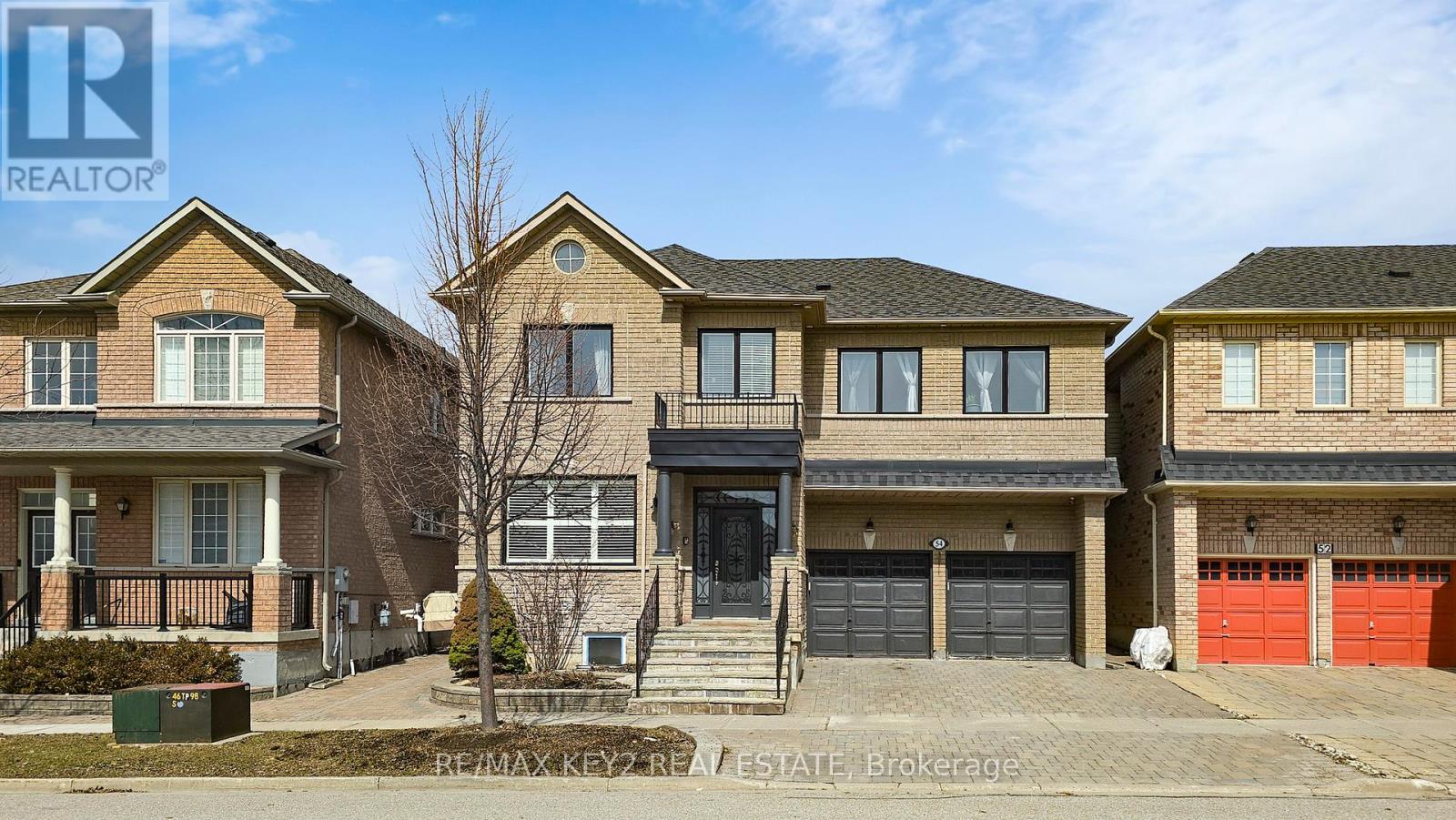 For Rent
 For Sale
 For Sale
 For Sale