
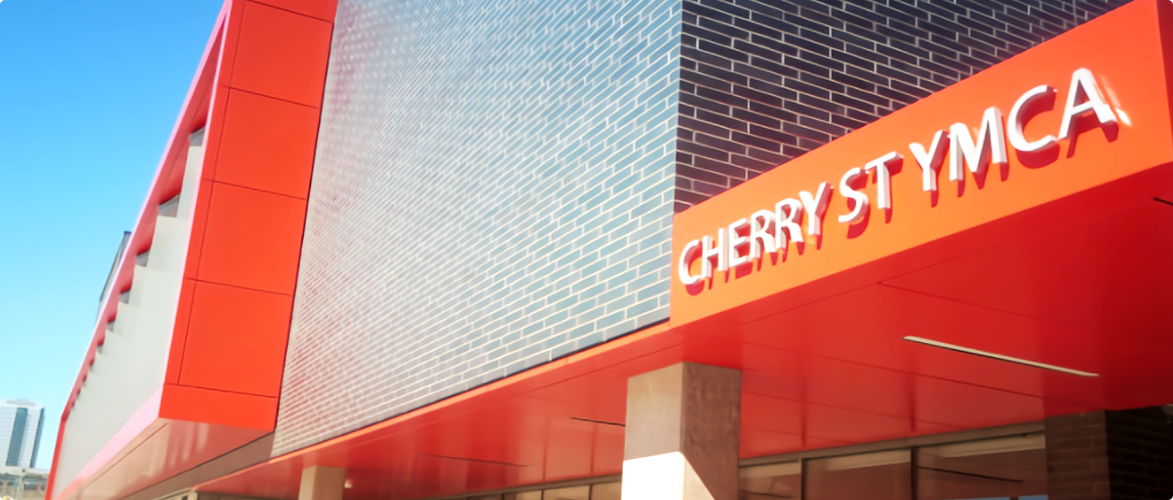
The Canary District is a purpose-built residential neighbourhood on the former site of the 2015 Pan Am Games Athletes' Village, bounded by Cherry Street, Front Street East, the Don River lands, and the rail corridor. A mix of condos, townhouses, and rental apartments sold new from 2016 onward; resale condos in early 2026 were trading between $620,000 and $820,000 for one and two-bedroom units. It is one of the most deliberately planned pieces of the city, and whether that's a selling point or a caveat depends on what you want from a neighbourhood.
The Canary District is a neighbourhood that began as logistics. The 2015 Pan Am and Parapan Am Games needed an athletes’ village, and the city chose a 35-acre brownfield site in the east end, between Cherry Street and the Don River, to build it. When the games ended, the buildings were converted to residential use: condos were sold to private buyers, a rental block remained affordable housing, and the institutional facilities including the YMCA were retained as community assets. The neighbourhood that resulted is planned in the way that almost nowhere in Toronto is planned, which makes it interesting to study and occasionally strange to inhabit.
The streets have names from the start: Canary Commons, Bayview Wharf, Kiever Lane, Tannery Road. The buildings are consistent in their massing and quality. The park connections are deliberate. There are no legacy buildings from earlier eras, no surviving industrial structures, no previous residential layers to excavate. What you see is what was built, and it was built between 2012 and 2018 under a set of design guidelines that kept the neighbourhood coherent in a way that organic city development never is. That coherence is genuine and its effect on how the neighbourhood feels is real.
What the planning cannot substitute for is time. The Canary District in 2026 has been a functioning residential neighbourhood for roughly eight years. The trees are still young. The commercial tenants are still establishing. The community institutions are forming. Residents who moved in at first occupancy in 2015 and 2016 are the neighbourhood’s longest-tenured residents, and many of them speak with the particular affection of people who watched a place grow from nothing and feel ownership of its progress. Buyers arriving now are inheriting a neighbourhood that has done most of its growing pains and is entering a more settled phase.
The Canary District’s residential supply divides into three categories: condos in mid-rise buildings (mostly six to ten storeys), townhouses with private ground-floor entrances on the interior streets, and purpose-built rental apartments. The condos are the dominant form and the most active resale market. The rental buildings do not trade on the resale market by design. The townhouses come up occasionally and attract significant interest when they do.
In early 2026, a one-bedroom condo of 550 to 650 square feet in the Canary District trades between $620,000 and $720,000. Two-bedrooms from 800 to 950 square feet run $740,000 to $850,000, with larger layouts at the top of that range. The neighbourhood’s buildings are 8 to 12 years old, which is an age at which maintenance fees tend to be relatively predictable and reserve funds are accumulating. Monthly fees on a typical one-bedroom run $550 to $700. Buildings that include more amenities run at the higher end. The YMCA membership is not subsidised through building fees and requires a separate cost, which is worth noting for buyers comparing the value against building-specific gym facilities.
The townhouses on Tannery Road, Bayview Wharf, and the interior streets are two and three stories, with 1,000 to 1,400 square feet, private entrances, and often a rooftop terrace or small private outdoor space. These properties are rare and priced accordingly. A three-bedroom townhouse in the Canary District in early 2026 trades between $950,000 and $1.15 million when it comes up, which is not frequently. Buyers interested in the townhouses should set up alerts and be prepared to move quickly. They attract end users almost exclusively: families and downsizers who want the neighbourhood’s location with more space than a condo provides.
Building orientation matters in the Canary District as it does in all condo neighbourhoods. Units facing the Don River Greenway and the park have the best aspect and command premiums. Units facing the rail corridor to the north have compromised views and some noise exposure. The mid-rise format means fewer units are fighting for premium views than in a tower neighbourhood, but the principle still applies: understand the specific unit’s aspect before deciding on a floor and orientation.
The Canary District condo market has followed the broader Toronto pattern: strong through 2021, softening in 2022 and 2023, and stabilising in 2024 and 2025 at price levels that are lower than the peak but supported by genuine demand from end users. The neighbourhood did not see the same extreme investor concentration as Fort York or some King West buildings, partly because the buildings were sold at the end of the pan Am era with a mix of buyer types from the start. This has made the correction shallower here than in some comparable neighbourhoods.
In early 2026, well-priced one-bedrooms move in three to four weeks. Two-bedrooms that are priced correctly and in good condition sell in similar timeframes. Overpriced listings sit. The list-to-sale ratio is running at approximately 97 to 98 percent of asking on properties that attract genuine offers within two weeks of listing. The conditions environment is more buyer-friendly than it was at the 2021 peak: financing and inspection conditions are common and accepted by sellers on most listings.
The townhouse market is tighter. With few available at any given time and a concentrated buyer pool of families and end users, well-priced townhouses attract competition and sometimes sell over asking. The rental market for Canary District condos is healthy: a one-bedroom rents for $2,100 to $2,400 per month, and two-bedrooms run $2,600 to $3,000. At current mortgage rates the numbers are tight for investors, but the rental demand is genuine and vacancies are low.
The buyers who end up in the Canary District tend to have run the comparison against the Distillery District and decided that the Canary District’s value per square foot justifies the shorter history and the longer wait for transit improvements. They’re buying a newer building at a lower price point than the Distillery, with a YMCA and a Loblaws already in place, and they’re within a ten-minute walk of one of the more interesting dining and cultural precincts in the city.
A second group is the buyers who are drawn to the planned neighbourhood itself. They appreciate the design consistency, the park connections, the absence of traffic noise from major arterials running through the residential core, and the sense that the neighbourhood was built with a coherent idea of what it should be. This is more unusual in Toronto than it sounds. Most Toronto neighbourhoods grew incrementally over decades and show every decision made in that process. The Canary District shows one decision, made at once across the whole site, and some buyers find that genuinely appealing.
Young professionals and first-time buyers make up a significant portion of the buyer pool, attracted by price points that are more accessible than comparable units in the Distillery or the downtown core. The neighbourhood also attracts families, particularly townhouse buyers, who value the park proximity, the YMCA, and the lower-density mid-rise form compared to the high-rise towers in Fort York or the Entertainment District. The demographic is somewhat younger and more varied than the investor-heavy profile of many comparable new-build neighbourhoods, which has contributed to a community feel that took root faster than in some comparable developments.
The status certificate review matters in the Canary District as in any condo purchase, and the buildings are at an age where the early signs of what the long-term maintenance picture looks like are becoming visible. Buildings completed in 2015 and 2016 are now roughly a decade old, which means the initial reserve fund contributions are established and the first major capital repairs are starting to come into view. Pull the reserve fund study included in the status certificate and look at what’s scheduled over the next five to ten years. An assessor or a condo-specialist lawyer can tell you whether the reserve is funded appropriately for what’s coming.
The Canary District’s planned nature means its boundaries and adjacent development are more predictable than in organic neighbourhoods. The West Don Lands to the north is a major city-approved development that will add significant residential and commercial density directly adjacent to the Canary District. This is a positive for the neighbourhood’s long-term vitality but it means an active construction environment on the neighbourhood’s northern edge for several more years. Buyers who are sensitive to construction noise and activity should walk the specific block of the property they’re considering and understand what’s being built and when it finishes.
Cherry Street is the western boundary of the neighbourhood and carries traffic from the Port Lands and from the Gardiner/Lake Shore interchange. Units and townhouses on the western edge facing Cherry Street have more noise exposure than those facing interior streets or the Don River. The difference is meaningful: an interior-facing unit on Canary Commons feels like a quiet residential street. A Cherry Street-facing unit facing west does not. Walk both on a weekday afternoon before deciding which orientation matters to you.
The Ontario Line is coming to Cherry Street at some future date. All infrastructure projections have uncertainty built in, and buyers who are pricing in a specific transit improvement by a specific date are taking a risk. The neighbourhood is functional and desirable without the Ontario Line. Buy it for what it is, and treat the transit improvement as a genuine upside that may arrive on time or somewhat later.
The Canary District seller’s position depends significantly on when you bought. Buyers who purchased at original occupancy in 2015 and 2016 have built meaningful equity through a period of strong appreciation followed by partial correction. Sellers who purchased during the 2020 to 2021 peak are in a thinner position. Understanding your specific cost base against current market values before listing is the first step: the neighbourhood is not uniform, and individual building and unit performance has varied.
The buildings in the Canary District are newer and more consistent in construction and finish quality than in older neighbourhoods. That means buyers are comparing apples to apples more directly, and the things that differentiate your unit are the specific orientation and floor, the renovation or upgrade quality, and the condition of the space. A unit that has been lived in carefully, with original finishes in good shape, competes well. A unit with worn carpet, builder-grade lighting throughout, and a kitchen that hasn’t been touched since 2015 will underperform relative to refreshed comparable units.
Timing follows the Toronto-wide pattern: the spring window from February to May is the strongest, and the fall window from September to early November is the second. Sellers in the Canary District benefit from listing before the West Don Lands construction reaches its most active phases, which will increase buyer awareness of the adjacent site. The neighbourhood’s proximity to the Distillery District and the Don River trail system are genuine selling points that should be in every listing description: those assets are specific to this address and belong in the narrative.
Corktown Common is the park that sits immediately adjacent to the Canary District to the west, on the other side of Cherry Street. It opened in 2013 as part of the waterfront revitalisation and includes a splash pad, a playground, a marsh, a fire pit area, and a pavilion. The park serves the Canary District, Corktown, and Riverside and draws people from a wider catchment on summer weekends when the splash pad is running. It is significantly more varied in its programming and landscape than a standard city park of similar size. Residents of the Canary District can be there in five minutes on foot.
The Don River Park and trail system runs along the eastern edge of the neighbourhood. The trail connects south to the Port Lands and north to the Don Valley trail network, which extends for kilometres through the ravine system. For cyclists, this is a direct off-road route north that avoids the Gardiner and the downtown core entirely. Runners use it year-round. The trail is not the Martin Goodman Trail in terms of user volume, but it is more peaceful for it, and the Don River corridor has been steadily improving in quality with each year of the waterfront revitalisation effort.
The Distillery District is roughly a ten-minute walk west from the core of the Canary District. The pedestrian laneway precinct, built into restored Victorian industrial architecture from the 1880s, has restaurants, galleries, a chocolate factory, a microbrewery, and permanent public art installations. The Christmas Market in November and December draws significant crowds. From a daily life perspective, residents of the Canary District treat the Distillery as a restaurant and entertainment destination rather than a grocery or services hub, and that distinction is worth maintaining in how you assess the walking distance. It is ten minutes to dinner. It is not ten minutes to everything you need daily.
The 504 King streetcar is the Canary District’s main transit route, accessed from King Street East via a short walk west through Corktown. A westbound King car from the Canary District to King and Bay takes roughly 20 to 30 minutes depending on traffic and time of day. The Cherry Street bus runs south to Commissioners Street and north to Dundas Street East. Neither connection is rapid transit, and the neighbourhood’s transit grade in 2026 reflects that honestly: it is functional but not fast for downtown commuters relying exclusively on TTC surface routes.
The Ontario Line will change this when it opens. The planned Cherry Street station will put the Canary District within rapid transit reach of the downtown core, Eglinton Crosstown connections, and the airport express link at Union Station. The projected opening is 2031. That is five years away at current estimates, and infrastructure projects in Toronto have a documented history of running over. Buyers buying transit accessibility should buy what exists today, with the Ontario Line as upside.
Cycling is where the Canary District is strongest for getting around. The Don Valley trail connects north, the waterfront trail connects west toward the Harbourfront and east toward the Beaches, and the neighbourhood is flat. Front Street East is a manageable cycling route into the downtown core. A cyclist from the Canary District can be at King and Bay in 15 minutes and at Front and Yonge in 10. For residents who cycle, the transit gap largely disappears and the neighbourhood’s location becomes genuinely central rather than merely adjacent to central. This matters for buyers who are comfortable on a bike: the neighbourhood rewards that mode in a way its TTC score does not capture.
The Distillery District is the most frequent comparison for Canary District buyers. The Distillery has heritage architecture and a pedestrian precinct that gives it a character the Canary District has not had time to develop. Condos in the Distillery District run 15 to 20 percent higher per square foot for comparable size and finish. The premium reflects the heritage setting and the established amenity base, and it has proven durable through market corrections. Buyers who buy in the Distillery pay for character and get it. Buyers who buy in the Canary District get newer construction, lower fees in many buildings, and the YMCA and Loblaws as on-site anchors the Distillery does not have. The walking distance between the two is roughly ten minutes. The price gap is real and the decision between them is genuinely close for buyers who can afford either.
The West Don Lands is the piece of this picture that is most relevant to the Canary District’s future. The West Don Lands is a 50-acre site directly north of the Canary District, bounded by King Street East, Cherry Street, the Don River, and the rail corridor. The city and CreateTO have been developing it in phases for years. When complete, the West Don Lands will add thousands of residential units, significant park space, a new elementary school, and commercial ground-floor uses that the Canary District currently lacks in concentration. Canary District residents will benefit directly from the amenities built in the West Don Lands without paying West Don Lands prices. The construction activity is the near-term cost; the completed neighbourhood is the long-term benefit.
Riverside and Leslieville, to the north and east, are the older established east-end neighbourhoods that the Canary District borders in spirit more than in geography. They have Victorian housing stock, mature trees, and the commercial strips of Queen Street East. They’re a different type of neighbourhood entirely, built for a different type of buyer. But they inform the Canary District’s context: the east end of Toronto has been one of the city’s more consistent value performers over the past decade, and the Canary District benefits from being part of that broader story even if its built form is entirely different.
The Canary District’s mid-rise form produces a street-level experience that is fundamentally different from a tower neighbourhood. The buildings top out at 10 to 12 storeys rather than 40. The streets have proportions that feel close to human scale. Canary Commons, the neighbourhood’s main internal street, has trees that are now six to eight years established and beginning to provide canopy. The atmosphere on a summer evening is notably different from Fort York Boulevard, which is windier and more exposed. This difference matters for buyers who will spend time outside in the neighbourhood, not just inside it.
The ground-floor commercial is honest work in progress. The neighbourhood has a Loblaws, a YMCA, some cafes and a pharmacy, and a handful of ground-floor units on the main streets that are occupied by businesses still establishing their footing. What it does not have is the concentration and variety of King West or even Riverside. Residents of the Canary District in 2026 walk to the Distillery for dinner out and use the Loblaws for groceries. The in-neighbourhood dining scene is thin. That is not a permanent condition but it is the current one.
The Don River trail is a genuine asset that residents use and value. Dog owners in particular treat the trail access as a significant part of the neighbourhood’s appeal, and the trail’s quality has improved as the Port Lands and waterfront revitalisation work has progressed. The neighbourhood is also genuinely quiet by inner-city standards: the interior streets see minimal through traffic, the mid-rise buildings don’t create the wind tunnel effect of a tower district, and the rail corridor to the north is buffered by building placement in the planning. Residents consistently describe the neighbourhood as calmer than they expected given its central location.
When is the Ontario Line coming to the Canary District? The planned Cherry Street station on the Ontario Line is projected to open in 2031, according to Metrolinx’s current schedule. The station would put the Canary District within rapid transit reach of the downtown core, Ontario Science Centre, and the airport via Union Station connections. Infrastructure projects of this scale in Toronto have historically run past projected dates, and the 2031 estimate carries uncertainty. Buyers should assess the neighbourhood on its current transit merit, which is functional surface streetcar service via the 504 King and the 172 Cherry bus, and treat the Ontario Line as a genuine improvement that may arrive on time or somewhat later. The pricing difference between the Canary District and better-connected neighbourhoods partially reflects that gap, and it will narrow when the line opens.
What is included in the Canary District YMCA? The YMCA at 70 Eastern Avenue is one of the better-equipped Y facilities in Toronto. It includes a 25-metre pool, a full fitness centre with weights and cardio equipment, group fitness studios, a gymnasium, and program rooms for children and youth. The facility is public, accessible with a standard YMCA membership, and draws users from the broader Corktown, Riverside, and Distillery area as well as Canary District residents. For buyers comparing buildings with in-suite gym facilities to buildings without, the nearby YMCA is a meaningful substitute. A full YMCA membership in 2026 runs roughly $55 to $75 per month, considerably less than the cost embedded in higher maintenance fees for buildings with large amenity suites.
How does the Canary District compare to the Distillery District for buyers? The Distillery District carries a 15 to 20 percent per square foot premium over comparable Canary District units. That premium reflects the heritage architecture and the established restaurant and gallery precinct in the Distillery’s pedestrian laneways. The Canary District offers newer construction, buildings that are 8 to 12 years old rather than 15 to 20, and generally lower maintenance fees. The YMCA and Loblaws are Canary District anchors the Distillery does not have. The walking distance between the two neighbourhoods is roughly ten minutes. Buyers who prioritise living within an established visual environment, where the streets have history, tend to pay the Distillery premium and consider it worthwhile. Buyers who prioritise newer buildings and lower entry cost tend to the Canary District and report being satisfied with the walk to the Distillery for evenings out.
Is the Canary District a good place to raise children? The neighbourhood was designed with families in mind to a degree unusual in Toronto condo development. The townhouses provide private-entrance ground-floor living that suits families with young children. Corktown Common’s splash pad and playground are within five minutes on foot. The Don River trail system is accessible for outdoor activity and is flat enough for young cyclists. The YMCA provides swimming, camps, and programming. The school question requires honest investigation: Nelson Mandela Park Public School serves the area and is a smaller community school appropriate for younger children, but families should use the TDSB boundary tool to confirm current catchment and should look separately at French Immersion availability. The West Don Lands development, when complete, includes a planned new school that will serve the broader district. Families buying now should verify the timeline on that provision and plan around current options in the interim.
The Canary District in 2026 is roughly at the midpoint of its development story. The residential core is established and the founding institutions are in place. What comes next is the West Don Lands to the north, which will add thousands of units and a layer of street-level amenity that will change the neighbourhood’s relationship to King Street East and the surrounding area. The plans include parks, a school, and ground-floor commercial uses that are designed to connect the West Don Lands and the Canary District into a single coherent east-end district rather than two separate developments facing each other across a boundary.
The Ontario Line station at Cherry Street is the infrastructure piece that will most visibly change the neighbourhood. When the line opens, the Canary District will shift from a neighbourhood that requires tolerance for surface transit into one with rapid transit at its door. The experience of comparable neighbourhoods in Toronto and elsewhere suggests this kind of transit upgrade produces sustained price appreciation in the surrounding area. The timeline uncertainty is real, but the destination is not in doubt: the station is planned, funded, and under environmental assessment.
The Port Lands development to the south is a longer-term story. The Port Lands is a 400-hectare site being remediated and redeveloped over several decades. The near-term pieces, including Villiers Island and the naturalised mouth of the Don River, are actively progressing. When the waterfront between the Canary District and Lake Ontario is developed, the neighbourhood’s southern edge will shift from an industrial border to a waterfront connection. That is a decade or more away from being fully visible, but it is the direction of travel. Buyers who are looking at the Canary District as a long-term hold are buying into a neighbourhood that is visibly becoming more connected, better served, and more valuable over time.
Street-level knowledge is hard to find online. Our team works in Canary District every day. They know which pockets hold value, where the school catchment lines actually fall, and what the market is doing right now. Talk to us before you make a decision about Canary District.
Talk to a local agent