
Cathedraltown is a master-planned north Markham community built around the Cathedral of the Transfiguration, the largest Coptic Orthodox church in North America. Newer detached homes, semis, and townhomes across a broad price range, strong YRDSB schools, and Highway 404 access within minutes.
Cathedraltown takes its name from the Cathedral of the Transfiguration, the landmark Coptic Orthodox church that anchors the neighbourhood’s identity and gives its skyline a character unlike any other residential community in the Greater Toronto Area. The cathedral, with its distinctive domes visible from Highway 404, was completed in the early 2000s and became the spiritual and architectural centrepiece around which a master-planned residential community was developed. The result is a neighbourhood with a specific origin story: not the gradual accretion of streets and subdivisions over decades, but a deliberately conceived community built around a single cultural and religious institution.
The residential development came through the 2000s and into the 2010s, filling in the grid of streets that surrounds and extends from the cathedral’s grounds. Builders including Fieldgate, Tribute, and others constructed a mix of detached homes, semi-detached houses, and townhomes that cover a broad price range, making Cathedraltown one of the more accessible entry points into north Markham ownership. The architecture leans toward the traditional: brick and stone exteriors, pitched roofs, and the standard suburban detached and attached forms that define most new-build York Region communities from this era.
The Coptic Christian community, originally concentrated in parts of Toronto’s north and east end, found in Cathedraltown a neighbourhood purpose-built around its most significant spiritual institution in Canada. The Cathedral of the Transfiguration is the largest Coptic Orthodox church in North America. Its presence draws observant Coptic families who want to live within a short distance of their church, and the community around it has maintained a cohesion that many master-planned suburbs fail to develop.
Beyond the Coptic community, Cathedraltown attracts the broader north Markham buyer profile: families seeking newer construction, good school access, and proximity to Highway 404 without the premium pricing of Cachet or Unionville. The neighbourhood is still maturing, with some commercial and institutional elements of the original master plan either recently completed or still arriving, which gives it a slightly unfinished quality at its edges that will resolve over the coming years as the surrounding area fills in.
Cathedraltown’s pricing reflects its position as a newer, mid-to-upper-range community in north Markham. Detached homes trade from approximately $1.1 million to $1.8 million, with the range driven primarily by size, lot configuration, and finish quality. The larger detached homes on wider lots at the upper end of the range compete with entry-level Cachet product, while the more modest detached homes at the lower end represent a genuine value proposition for buyers who need north Markham’s school performance and Highway 404 access without the Cachet price tag.
Semi-detached homes, which represent a meaningful portion of Cathedraltown’s housing stock, trade between $850,000 and $1.1 million. These provide the school catchment and community access of the neighbourhood at a lower entry point. The semi-detached form is well-built here and the lots are not unusually small for the type, which makes them a practical choice for buyers who want ownership in north Markham and are willing to accept shared walls to get there at a manageable price.
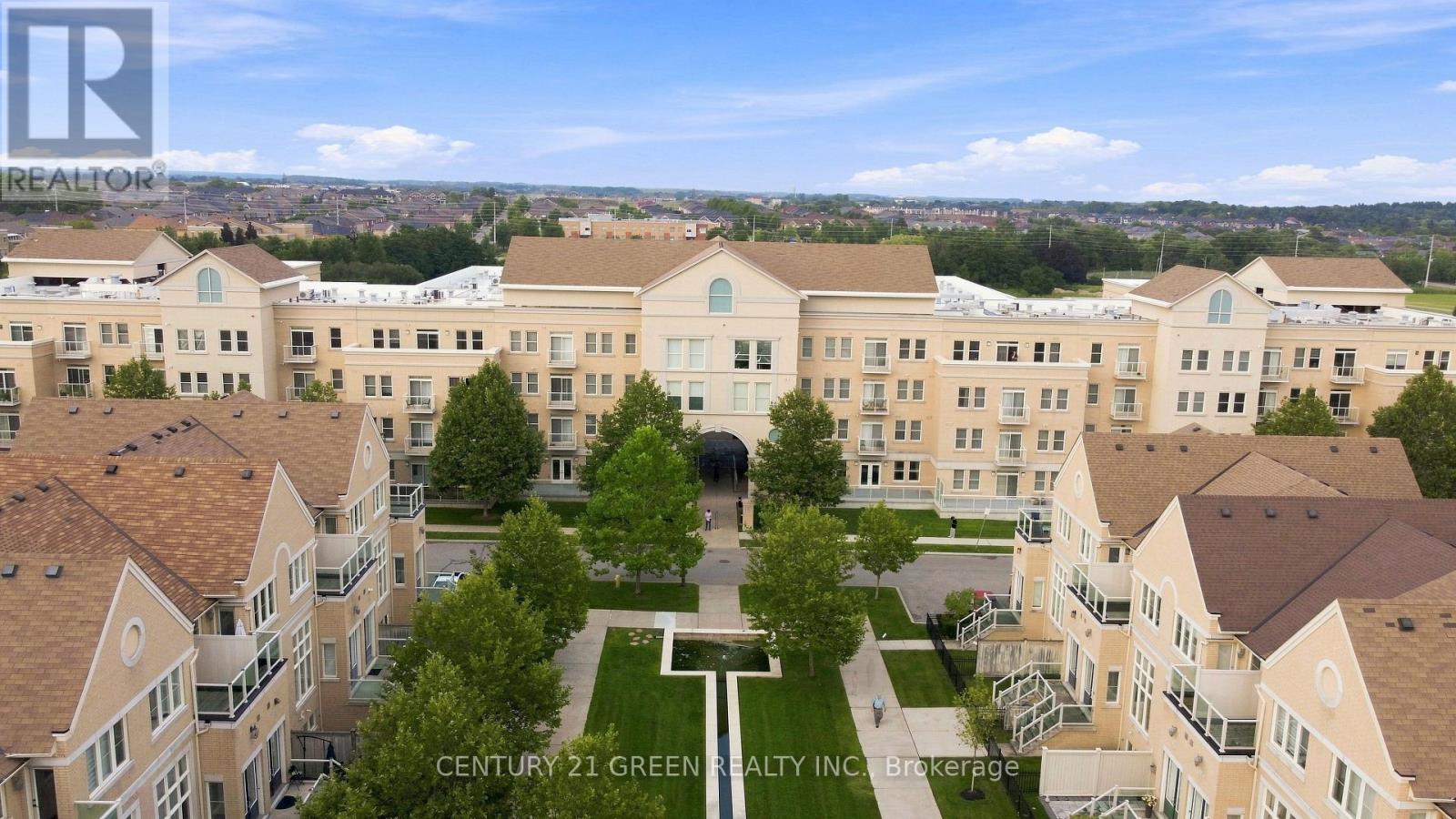
Townhomes, both freehold and condominium-style, complete the product mix. Freehold towns run from $750,000 to $950,000 depending on size and end-unit premiums. Condo towns are generally at the lower end of the pricing range and carry monthly fees that buyers need to factor into their carrying cost calculations. The townhome inventory turns over faster than detached product because the buyer pool is broader and includes first-time buyers and investors alongside the family buyers who dominate Cathedraltown’s detached market.
Overall, Cathedraltown offers a price gradient that allows buyers to enter north Markham at different budget levels and potentially trade up within the same community as equity builds. That flexibility, combined with the neighbourhood’s school catchment and community character, has made it consistently attractive to families at various stages of the property ladder rather than exclusively to the executive household profile that dominates Cachet to the west.
Cathedraltown’s market tracks the broader north Markham residential market reasonably closely, with some local variations. The townhome segment is the most liquid: inventory turns relatively quickly because demand is broad and price points are accessible to a wide buyer pool. The detached segment moves more slowly by comparison, with buyers in the $1.3-to-$1.8-million range taking more time to compare options across Cathedraltown, Cachet, and Berczy Village before committing.
The neighbourhood’s newer construction vintage is a double-edged characteristic in the market. On one hand, buyers get modern layouts, newer systems, and better insulation than they’d find in comparable-priced homes in older Markham communities. On the other hand, the soil settlement and minor deficiencies that are common in newer subdivisions generate more home inspection concerns than well-maintained older homes. Buyers who are new to purchasing recently built homes should understand that minor cracking, grading issues, and warranty items are normal rather than alarming in homes under fifteen years old.
Tarion Warranty coverage, applicable to homes built in recent years, adds a layer of protection for buyers of newer Cathedraltown homes and is a legitimate factor in the value proposition of newer construction. Buyers should verify the Tarion status of any property they are considering, particularly homes built in the last seven years that may still carry remaining structural warranty coverage.
The spring market drives the most activity, consistent with York Region broadly. The late winter to early spring window, January through April, concentrates both listings and buyer activity. Fall sees a secondary market pulse. The Christmas period is genuinely slow, but buyers who are flexible can sometimes find motivated sellers during this window who are not able to wait for the spring market and are willing to negotiate on price. Days on market for well-priced Cathedraltown homes typically run two to three weeks in an active market and longer when conditions soften.
The Coptic Christian community forms a significant and visible component of Cathedraltown’s buyer profile. Families from this community who have been renting in Scarborough or North York, or who have owned in other parts of the GTA, make purchasing decisions in Cathedraltown specifically to be near the Cathedral of the Transfiguration. For observant Coptic families, the ability to walk to church for regular services and major religious celebrations is a genuine quality-of-life factor that drives location decisions in a way that non-religious buyers may underestimate.
The broader family buyer segment accounts for the majority of purchases across the neighbourhood’s different product types. These are households with children in elementary and early secondary school, buying their first or second detached home after accumulating equity in a townhome or smaller property elsewhere in York Region or Toronto. They’ve done the school research and confirmed that the YRDSB schools serving Cathedraltown perform well. They want newer construction, a manageable commute to employment along Highway 404 or the 407, and a community with an active family character.
Investors are present in the townhome segment in meaningful numbers. The rental demand in north Markham is real, driven by the same employment corridors and school quality that attract owner-occupiers, and newer townhomes in Cathedraltown are practical rental properties. Some investor buyers purchase specifically for future family occupancy, buying a few years before they intend to move in so that children are in the right school catchment when they arrive.
Buyers relocating from outside the GTA, particularly those arriving for technology sector employment along the Highway 7 and 404 corridors, make up a smaller but consistent portion of purchases. These buyers are often moving quickly on a corporate timeline and rely heavily on agent recommendations about neighbourhoods. Cathedraltown’s combination of newer construction, accessible pricing relative to Cachet, and transit and highway access makes it a frequent agent recommendation for this category of buyer.
Cathedraltown’s street layout reflects its master-planned origins: a relatively orderly grid punctuated by crescents and courts, with the cathedral grounds providing an anchor point around which the residential fabric is organised. The streets closest to the cathedral are among the most sought-after, with a proportion of buyers specifically seeking the ability to walk to services on foot regardless of weather. These blocks tend to have slightly higher demand and correspondingly firmer prices than equivalent homes on streets at the neighbourhood’s outer edges.
The detached home streets along the northern and eastern edges of the development tend to have the larger lots and more spacious feel. These areas were often among the later phases to be built out, and the planning reflected lessons from earlier phases. The trade-off is that they are slightly further from the neighbourhood’s primary amenity, the cathedral, and from the community park infrastructure that concentrates in the neighbourhood’s core.
Townhome clusters are distributed throughout the neighbourhood, often on the interior streets or along the edges of the development near commercial nodes. End units command premiums of $30,000 to $60,000 over interior units of otherwise equivalent configuration, reflecting their larger lot exposures and additional windows. Buyers who can stretch to an end unit generally find the premium worth paying for the light and outdoor space it provides.
The area around Cathedral of the Transfiguration Drive itself is the neighbourhood’s most distinctive address, with views of the cathedral’s dome available from certain orientations. These properties attract buyers who value the architectural landmark and the sense of identity it provides, and they carry a modest premium that reflects the limited supply of homes with that specific aspect. Buyers who are indifferent to proximity to the church or its views can generally find equivalent homes at lower prices further from the cathedral’s immediate environs.
Like most north Markham communities, Cathedraltown is fundamentally car-dependent. The neighbourhood was designed around highway access and the assumption of private vehicle use, and the transit options, while present, are not sufficient for daily commuting without significant time investment. YRT bus routes serve the Major Mackenzie Drive and Woodbine Avenue corridors, from which riders can connect to other YRT services and ultimately to GO Transit or the TTC. The total journey time from Cathedraltown to downtown Toronto by transit runs 80 to 100 minutes in favourable conditions.
Highway 404 is the primary connection to the broader GTA. The on-ramps are accessible within five to seven minutes of most Cathedraltown addresses, making the highway practical for daily use. Southbound 404 connects to the Don Valley Parkway and downtown Toronto, with the drive running 35 to 50 minutes outside rush hour and 60 to 90 minutes during peak periods. The 407 ETR is accessible a short drive south and west, providing the east-west option for residents whose employment is in Vaughan, Brampton, or Mississauga.
The GO Stouffville line at Unionville GO station, approximately 10 to 12 minutes by car from Cathedraltown, provides the most practical rapid transit option for downtown commuters. The Lakeshore East branch of GO connects Unionville to Union Station in about 45 to 55 minutes during peak hours. This is a viable daily commute option for Cathedraltown residents employed in the core, and it is one of the reasons the neighbourhood attracts professional families whose workplaces are downtown.
The York Region Rapid Transit plans for the Yonge North Subway Extension would eventually bring improved connectivity to communities west of Cathedraltown, but the direct impact on this specific neighbourhood will remain modest until bus rapid transit or other feeder services improve the first-mile connection to rapid transit hubs. For current buyers, the car plus occasional GO Transit combination is the practical commuting model.
Cathedraltown’s park and open space infrastructure reflects its relatively recent development. The neighbourhood has the designed-in parkland that York Region planning requirements mandate for new residential communities, with park blocks distributed across the development to serve the different residential clusters. The parks are clean, well-equipped with playground structures appropriate for young families, and include the basketball courts and sports fields that active family communities need.
The Cathedral of the Transfiguration grounds themselves function as a significant green space in the neighbourhood’s core, even though they are private rather than municipal. The landscaped setting around the cathedral provides a visual openness and greenery that residents of surrounding streets benefit from. During major religious celebrations, the grounds come alive with community activity that gives the neighbourhood a public gathering character unusual for a residential subdivision.
Stormwater management ponds are woven into the neighbourhood’s open space network, as is standard for Markham developments from this era. These ponds attract waterfowl, provide a walking circuit for residents, and give the neighbourhood a landscaped quality that purely hard-surfaced development would lack. They’re not wilderness, but they’re a functional and pleasant element of the neighbourhood’s outdoor environment.
The broader north Markham green space network is accessible by car from Cathedraltown. Rouge National Urban Park, one of Canada’s largest urban parks, is approximately 20 minutes south and offers serious trail networks, wildlife habitat, and a genuine outdoor experience that the neighbourhood’s own parks cannot match. Milne Dam Conservation Park and the surrounding creek corridors provide additional hiking and cycling options within a short drive. Residents who want more than the neighbourhood’s internal parks can access genuinely significant natural landscapes without leaving Markham.
Cathedraltown’s own commercial footprint is limited. The neighbourhood was planned with some commercial nodes at key intersections, but the retail that has established itself is primarily service-oriented: convenience stores, coffee shops, takeaway food, and personal services designed to handle daily errands. For a full grocery shop, pharmacy, or broader retail experience, residents drive to the commercial corridors along Major Mackenzie Drive or Highway 7.
The Major Mackenzie Drive corridor provides accessible grocery and pharmacy options, including the large format stores that north Markham residents rely on for weekly shopping. The mix of Chinese and mainstream grocery options in this corridor reflects the demographic reality of north Markham: there is genuine choice, and the Asian grocery stores are well-stocked with the products that a significant portion of the neighbourhood’s residents cook with daily.
Highway 7 to the south is the major retail and restaurant corridor for the broader north Markham area. The concentration of restaurants along this stretch, particularly East Asian cuisine, is one of the genuine lifestyle advantages of living in this part of York Region. The quality and variety of dining options accessible by a 10 to 15 minute drive from Cathedraltown is significantly better than what most suburban communities of comparable distance from downtown Toronto would offer.
Pacific Mall at Kennedy Road and Steeles Avenue East is 20 to 25 minutes south and provides the specialist Asian retail, electronics, phone, and service options that the broader community uses for specific purchases. Markville Shopping Centre on Hwy 7 at McCowan handles mainstream mall retail. For premium retail experiences, residents travel to Yorkdale or the Yonge and Eglinton corridor in Toronto. The daily retail situation in and around Cathedraltown is adequate; the aspirational retail requires a longer trip.
The schools serving Cathedraltown operate within the York Region District School Board for the public system and the York Catholic District School Board for Catholic education. The YRDSB elementary schools in this part of north Markham have benefited from the same demographic concentration that drives strong results across northern Markham: a student body with high levels of parental involvement, frequent tutoring and supplementary education, and strong pre-existing academic preparation from home.
Cathedraltown Public School is the primary neighbourhood elementary school and has developed a solid academic reputation since opening as the community built out. It feeds into the secondary system alongside students from adjacent communities. The newer school building means modern facilities, which is an advantage both practically and as a signal of the infrastructure investment that York Region has made in its growing northern communities.
At the secondary level, Pierre Elliott Trudeau High School serves students from Cathedraltown and surrounding north Markham communities. It is consistently among the top-performing public secondary schools in York Region, with strong university placement outcomes and AP course offerings that reflect the academic expectations of its student body. The school’s extracurricular program, including competitive sports, arts, and academic clubs, is well-developed for a school of its size.
The Coptic community’s relationship with the Catholic school system is an interesting local dynamic. Coptic Christianity is not Roman Catholicism, and Coptic families are not automatically entitled to Catholic school enrollment under Ontario’s funding rules. However, many Coptic families find that the values emphasis and faith-based character of Catholic schools aligns with their own priorities, and some families pursue enrollment in the YCDSB system. Families considering this should verify current enrollment eligibility rules with the YCDSB directly. Private options including Montessori programs and independent schools are available in the broader north Markham and Aurora area for families whose needs are not met by the public or Catholic systems.
Cathedraltown is still completing its original development program. Several of the later phases of the master plan are either recently built or under construction, which means the neighbourhood continues to gain new residents and new homes. This active development phase brings the expected trade-offs: construction noise and traffic in some areas, new homes coming to market at builder prices that compete with resale listings, and the gradual arrival of commercial and community facilities that were planned from the start but take time to materialise.
The commercial nodes planned for Cathedraltown’s edges are at various stages of development. Retail development follows residential density, and as the neighbourhood’s population has grown, the commercial viability of the planned nodes has improved. Some retail has established itself; more is likely to follow over the next five to ten years as the community matures. Buyers who are patient about the retail environment being in development should find the neighbourhood’s trajectory positive.
Adjacent lands along Major Mackenzie Drive and in north Markham broadly are subject to the City of Markham’s intensification policies and the province’s growth targets. Development applications for medium and higher density residential in the areas adjacent to Cathedraltown are a regular part of the planning landscape, and some will proceed over the coming decade. How these affect Cathedraltown specifically will depend on proximity and the specific nature of the development. Buyers interested in a specific property should review any active planning applications for adjacent lands as part of their due diligence.
The Cathedral of the Transfiguration itself continues to serve as an anchor for community development. The Coptic Archdiocese owns land adjacent to the cathedral that has been earmarked for community facilities, and plans for additional institutional and community uses on those lands have been discussed publicly. How this develops will directly affect the neighbourhood’s character and the value of nearby properties. The general expectation among long-term residents is that development on cathedral-adjacent lands will be consistent with and supportive of the community character that already exists.
Q: Do you need to be Coptic Christian to buy in Cathedraltown?
A: No. Cathedraltown is an open residential community. The Coptic community is a significant and visible presence, but the neighbourhood has always attracted buyers from many backgrounds. The cathedral is a landmark that most residents appreciate architecturally regardless of their faith. The neighbourhood’s appeal is based on its newer housing stock, school access, and highway proximity, all of which are equally relevant to buyers from any background. Many residents have no connection to the Coptic community and chose Cathedraltown for entirely secular reasons. The community character, which tends to be stable, family-oriented, and oriented around neighbourhood care, reflects a shared set of values about community investment that transcends any single religious or cultural group.
Q: How does Cathedraltown compare to Cachet for families considering north Markham?
A: The two neighbourhoods serve related but different buyer profiles. Cachet offers larger lots, older tree canopy, and a more established community character, but at a higher price, typically $1.5M and above for detached homes. Cathedraltown offers newer construction, a broader range of product types including townhomes and semis, and a lower entry price for detached homes starting around $1.1M. Both have access to strong YRDSB schools, including Pierre Elliott Trudeau High School at the secondary level. Families prioritising space and lot size will lean toward Cachet; families prioritising newer construction, product variety, and a lower entry price will find Cathedraltown the more practical choice. The commute profiles are similar since both communities are close to Highway 404.
Q: What are the Tarion warranty implications for buying a newer Cathedraltown home?
A: Ontario’s Tarion Warranty program covers new homes built by registered builders and provides tiered protection: one year for workmanship and materials defects, two years for mechanical systems including plumbing, electrical, and HVAC, and seven years for major structural defects. If you’re buying a Cathedraltown home built within the last seven years, verify its Tarion registration status and check whether any warranty claims have been filed. Homes that still carry structural warranty coverage have a material advantage over older homes, and this should factor into your purchase price analysis. Homes from the earlier Cathedraltown phases, now 15 or more years old, are outside Tarion coverage entirely. In either case, a home inspection remains worthwhile: Tarion covers builder defects, not general maintenance issues or previous owner modifications.
Q: Is Cathedraltown still being built, and how does active construction affect daily life?
A: Some phases of Cathedraltown are still under construction or in final stages of completion as of 2024. The impact on daily life depends on where in the neighbourhood you live. Properties adjacent to active construction sites will experience noise, dust, and construction traffic that are disruptive during building hours. Streets further from active construction are largely unaffected. Buyers should identify the current status of adjacent lots as part of their due diligence: what is the construction timeline, what will be built there, and what will the street look like in two to three years? New subdivisions in their final development phases are a normal buying environment in Markham, and the long-term outcome once construction completes is typically positive. The short-term reality during active construction requires realistic expectations about noise and disruption.
Buying in a neighbourhood that is still partially under development requires an agent who understands builder contracts, assignment sales, resale pricing in active construction contexts, and the planning applications that could affect what gets built on adjacent lands. These are not skills every residential agent develops, because most of their work is in fully established communities where none of these factors apply.
In Cathedraltown, a buyer working with a well-informed agent can make better decisions about which streets and lots to target, which new-build phases represent genuine value relative to resale alternatives, and which properties carry location-specific risks, backing onto a future commercial node, adjacent to lands with active planning applications, near a stormwater pond that carries insurance implications, that a less-informed buyer would discover only after purchase.
On the selling side, Cathedraltown sellers need agents who can position their resale home accurately relative to the builder competition that remains active in the area. A resale home has advantages over a new-build, finished landscaping, established window treatments and appliances, no assignment risk, but it also needs to be priced honestly relative to what new product is offering in the same size and price range. The agent who pretends that competition doesn’t exist and chases a price the market won’t support costs the seller time and money.
Our team works the north Markham market consistently and knows Cathedraltown’s internal geography and the planning context that affects individual addresses. We can tell you which lots carry premiums, which streets are near active construction that will resolve in 18 months, and where the long-term trajectory of the neighbourhood is headed. Get in touch if you’re considering buying or selling in Cathedraltown and want an assessment grounded in current market knowledge.
Street-level knowledge is hard to find online. Our team works in Cathedraltown every day. They know which pockets hold value, where the school catchment lines actually fall, and what the market is doing right now. Talk to us before you make a decision about Cathedraltown.
Talk to a local agent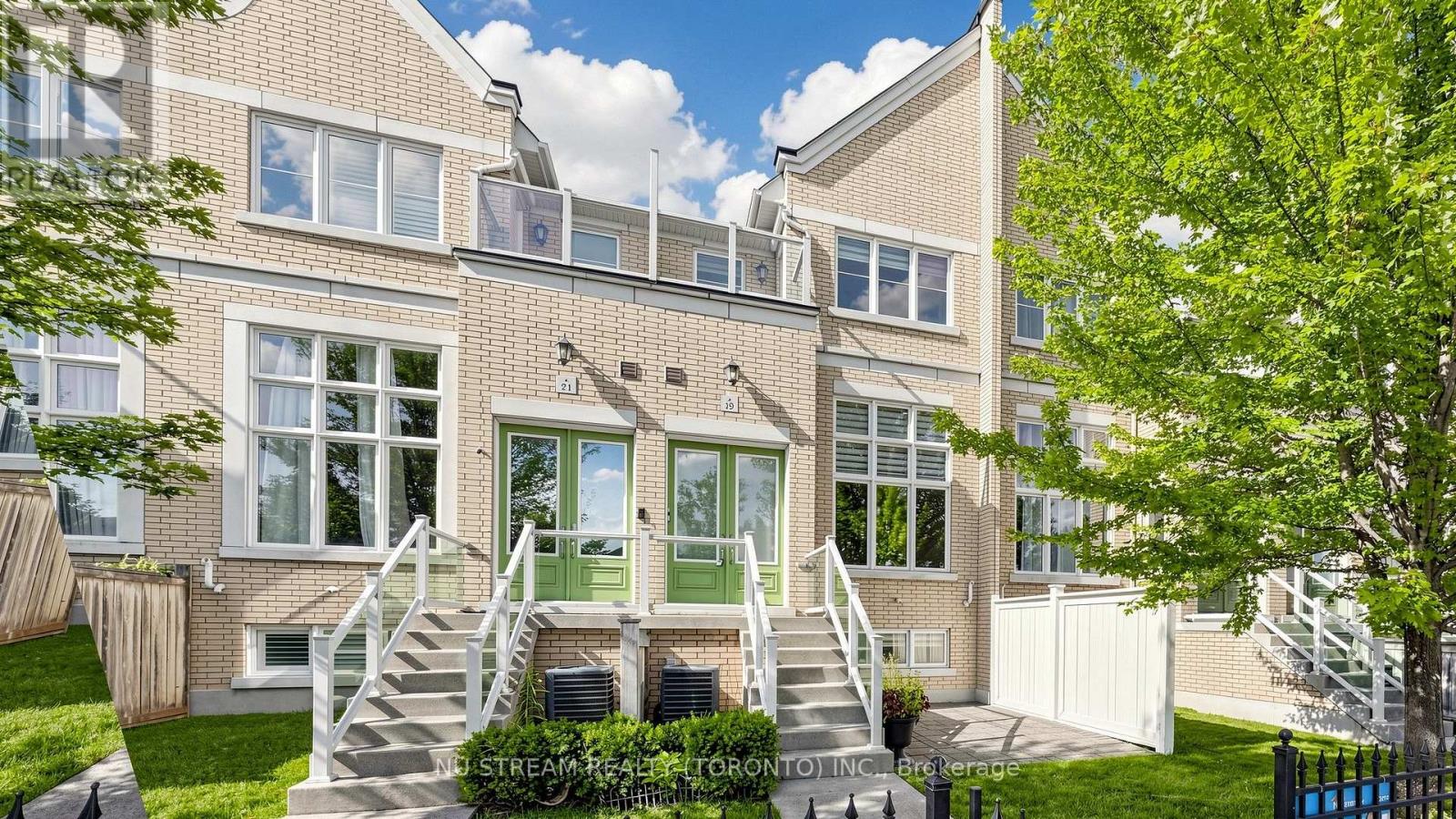 For Rent
 For Sale
 For Sale
 For Sale