
Clarington is the eastern edge of the GTA: Courtice, Bowmanville, Newcastle and Orono and the farmland between them, from Lake Ontario up to the Oak Ridges Moraine, with about 110,000 people and the Darlington nuclear station on its shore. Houses here run about half the Toronto average, condos about a third below it, and the GO train doesn't reach it yet. The Lakeshore East extension to Courtice and Bowmanville has been under construction since January 2026 with no opening date. Scroll down for what is listed in Clarington today.
Clarington runs from the Oshawa line east along Lake Ontario for 34 kilometres of shore and north past the 407 onto the Oak Ridges Moraine. It covers 611 square kilometres, more than four times the area of Oshawa, and most of it is farmland. The 2021 census counted 101,427 people, a tenth more than in 2016, and Statistics Canada’s estimate had passed 114,000 by mid-2025. Bowmanville, with about 57,000 people, is the largest of the four communities, Courtice next with about 23,000, Newcastle about 9,000 and Orono a village of roughly 1,000.
The municipality dates from 1974, when the Town of Bowmanville, the Village of Newcastle and the townships of Clarke and Darlington were merged as the Town of Newcastle and brought into the new Regional Municipality of Durham. The name was forever confused with the village inside it, and in 1993 the town renamed itself Clarington, a blend of its two old townships. Bowmanville had been a town since 1858 and Newcastle since 1856, and both kept their Victorian main streets.
A house in Clarington costs about half the Toronto freehold average, about the same as a house in Whitby and about a quarter more than one in Oshawa next door. A condo costs about a third less than in Toronto. The current numbers appear beside this text and are updated daily.
Houses outnumber condominiums about five to one in the listings, and the condos that exist are in Bowmanville, Courtice and Newcastle, most of them in Bowmanville. Newcastle has the lowest house average of the four communities, Bowmanville sits just under the municipal average, and Rural Clarington’s is high because what sells there is acreage. Courtice’s average sits above all of them because its listings include development parcels, several of them around the future GO station, at prices no 1990s two-storey commands.
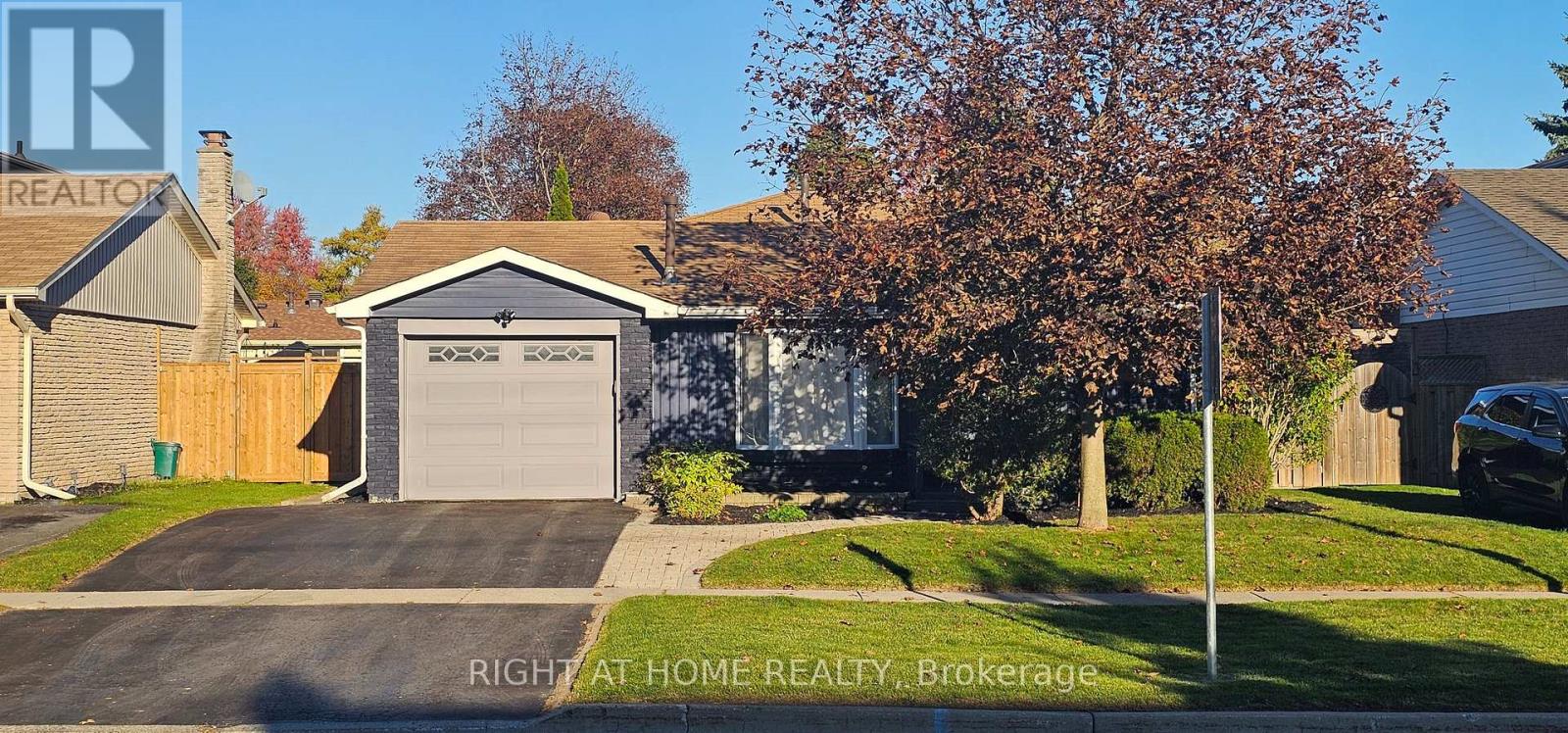
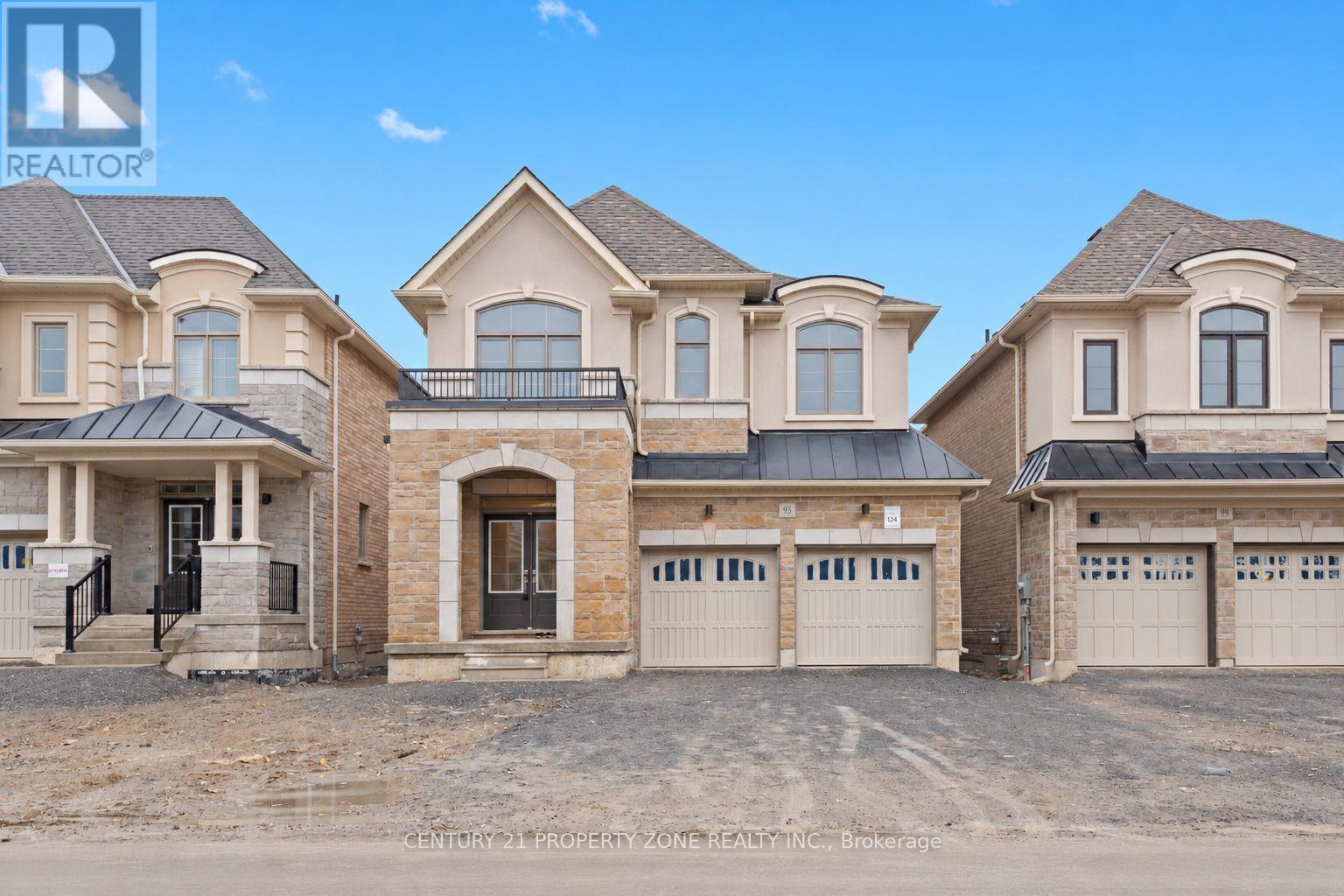
The typical Clarington listing is a detached house built in the last 40 years. Courtice grew from a hamlet on Highway 2 into a suburb of Oshawa through the late 1980s, 1990s and 2000s, and its streets are the GTA subdivision of those years: two-storey brick on 30- to 40-foot lots, three and four bedrooms, attached garage, some semis and townhouses at the edges. Bowmanville’s north and west sides, off Longworth Avenue and north of Concession Street, are the 2000s and 2010s version, four- and five-bedroom detached with double garages, and the builders are still working north toward the 407. Newcastle was a town of a few thousand until the 1990s and has grown fast since, with new subdivisions wrapped around the old grid.
The older stock is the other half of the story. Bowmanville’s downtown streets east of Liberty Street have Victorian and Edwardian brick houses on wide lots, Italianate and Gothic Revival among them. Newcastle’s King Avenue and the streets off it have the same nineteenth-century houses at a smaller scale. Orono is a market village of century homes and mid-century infill on lots 50 to 100 feet wide. Those streets are what north Oshawa, at the same price, doesn’t have.
A four-bedroom costs about a quarter more than a three-bedroom across the municipality. A five-bedroom, on average, costs no more than a four-bedroom, so a buyer who wants the biggest house for the money should read the five-bedroom listings first.
Condominiums are a small market. Bowmanville has most of them, Courtice and Newcastle the rest. A one-bedroom condo costs well under the average two-bedroom house, and a three-bedroom condo costs about two-fifths more than a one-bedroom. There is no high-rise condo market in Clarington yet; the first mid-rise buildings are on paper around the Courtice GO site.
Renting is thin. Clarington has fewer rental listings than any of the Lakeshore East cities west of it, most of them houses, and a house rents for about a fifth less than in Toronto. If you want to rent for a year before buying, start looking early and expect to compete.
Clarington follows Toronto. The same rates and lending rules set prices here, and the gap to Toronto, about half, is the number to watch. If it narrows, the discount you drove east for is shrinking.
New construction sets the tone in Bowmanville and Newcastle. A resale four-bedroom on a built-out street competes with the builder’s next phase a few streets north, often the same floor plan with a longer closing. Find out what that builder is asking before you offer on a resale.
The resale family market is a spring and fall market, timed to the school year as everywhere in Durham, and it’s quiet from mid-December to late January. Farms and acreages list in spring, when the land shows well.
Darlington is the other constant. The refurbishment of the four existing reactors finished in March 2026, four months early and $150 million under its $12.8 billion budget. The first of four small modular reactors is under construction next door, with a 2030 in-service date and a projected 18,000 jobs across the build. That is a decade of skilled work a short drive from Courtice and Bowmanville, on top of the station’s 3,000 permanent staff.
The GO extension is the unknown. Metrolinx broke ground in January 2026 and has not said when trains will run to Courtice and Bowmanville. A station adds to a house price once the trains run, not when the plan is announced. Until then, treat the station as a plan and price the house as a house.
Many Clarington buyers come from Durham. Families in Oshawa and Whitby who want a new four-bedroom find it in north Bowmanville or Courtice for about what a 1990s resale costs in north Oshawa. Toronto buyers come for one of two things: a Victorian house on a Bowmanville or Newcastle street for about half what a house costs in Toronto, or a farm or acreage on the moraine.
The trade is the commute. There is no GO train. The drive to Union from Bowmanville is the 401 through Oshawa and Scarborough, and the practical route is to drive to the Oshawa GO station on Bloor Street and take the train from there, adding a drive and a parking lot to an hour on the rails. Courtice is the closest to the station.
What they get is a lot of house and a town. Bowmanville has a main street with its own shops, a hospital, a regional sports complex and a Santa Claus parade that has run every November since 1961. Newcastle has a smaller main street, a marina and a beach. Orono has a village street, a fairground that draws 30,000 people every September and the Ganaraska Forest at the end of the road. Courtice has none of that; it has the houses closest to Oshawa and the 401, and that’s what its buyers want.
The other trade is services that haven’t caught up. Clarington is still building the rec centres, parks and schools its new subdivisions were approved with, and the hospital in Bowmanville is to be more than doubled in size. A family buying a new house in north Bowmanville should ask which school their children will attend this September and whether it is the one on the plan or a portable at a school across town.
Clarington’s five areas each have a page on this site. Here they are, from west to east, then north.
Courtice is the suburb on the Oshawa line, grown from a Highway 2 hamlet through the 1990s and 2000s into a community of about 23,000, with two-storey brick houses on curving streets, plazas along Highway 2, Highway 418 running down its east side to the 401, and the Darlington station on its lakeshore. The Courtice GO station site and a planned community of 16,800 homes around it sit on its south side. Its average is pulled up by development parcels around the station site, not by its houses.
Bowmanville is the town. About 57,000 people live around a Victorian downtown on King Street, with the houses to match east of Liberty Street, 1950s to 1980s streets around it, and the new subdivisions running north and west toward the 407. It has the hospital, Clarington Central and Bowmanville High, the Garnet B. Rickard recreation complex, Camp 30 on its north edge, a harbour and beaches at Port Darlington, and the largest share of the municipality’s listings and most of its condos. Its average sits just under the municipal figure.
Newcastle is the small town 18 kilometres east of Oshawa where Highways 35 and 115 meet the 401. It has a nineteenth-century main street on King Avenue, the Community Hall the Massey family gave the town in 1923, a marina and beach at the Port of Newcastle, and 30 years of new subdivisions around all of it. Its house average is the lowest of the four communities, and it’s where a buyer who wants a town and a lake and can take the longer drive gets the most house.
Orono is the village in the north, founded in 1832 on what is now Highway 35/115, with a market-town main street, century homes on wide lots, the Orono Fair on the first weekend after Labour Day, Canadian Tire Motorsport Park up the road and the Ganaraska Forest to the east. A handful of houses come to market in a year.
Rural Clarington is everything else, and it is most of the municipality: the hamlets of Tyrone, Enniskillen, Hampton, Kendal, Newtonville and Bond Head, working farms on the clay plain between the 401 and the 407, estate lots and horse properties on the moraine, and lakefront east of Newcastle. Prices here are high because the land comes with the house, and two listings side by side on a concession road can be a hobby farm and a 200-acre cash-crop operation with nothing in common but the address.
Each of the five pages sets out the streets, the schools, the buses and the sale prices for that community.
There is no GO train in Clarington yet. The nearest station is Durham College Oshawa GO on Bloor Street West in Oshawa, where Lakeshore East trains run all day in both directions and reach Union in about an hour. From Courtice that’s a short drive; from Bowmanville it’s a drive along the 401 or Highway 2 before the train; from Newcastle longer again. Durham Region Transit’s route 902 runs from Lakeridge Health Bowmanville along King Street and Highway 2 to the Oshawa GO station, and route 507 links Newcastle, Orono and Bowmanville.
That changes with the Bowmanville extension. Metrolinx is extending the Lakeshore East line about 20 kilometres from Oshawa with four new stations, two of them in Clarington: Courtice GO, south of Bloor Street near the 401 and Highway 418, with 1,100 parking spaces planned, and Bowmanville GO on Bowmanville Avenue, the end of the line, with 770 spaces and a bus loop. Early works began in spring 2025 and construction in January 2026. Metrolinx plans trains every 30 minutes at rush hour, hourly off-peak and every two hours on weekends, and has published no opening date. The line was first promised for 2024.
For drivers, the 401 crosses the whole municipality, and from Bowmanville to downtown Toronto it is a long drive at the best of times. The 407 runs across the top of Clarington to Highway 35/115, with Highway 418 connecting it to the 401 at Courtice; the province took the tolls off the 418 in April 2022, but the 407 itself still charges, so the fast route to Markham or Pearson costs money every day. Highways 35 and 115 leave the 401 at Newcastle and run north to Peterborough, Lindsay and cottage country, which puts Clarington on the way to the Kawarthas every Friday afternoon in summer.
Inside the municipality, Durham Region Transit runs local buses in Courtice, Bowmanville and Newcastle on routes that mostly feed the Highway 2 corridor. The hamlets have no transit. Cycling is on the Waterfront Trail along the lake and on country roads; the towns were not built for it.
Clarington has 34 kilometres of Lake Ontario shore, and most of it is still open: a provincial park, the nuclear station, a cement works, two small harbours and farmland. Darlington Provincial Park at the Courtice end is 209 hectares with a long sand beach, nature trails and 323 campsites, open for camping from May to October and for walking all year. East of it, Bowmanville’s waterfront at Port Darlington has beaches on both sides of the creek mouth, a harbour and the Bowmanville Westside Marshes. Newcastle’s waterfront is the marina, the beach at Bond Head and the Samuel Wilmot Nature Area at the mouth of Wilmot Creek. East of that, the shore is farmland to the Port Granby lands, where the former low-level radioactive waste site has been remediated and is planned as a nature reserve.
The municipality endorsed a draft Waterfront Strategy in March 2026 that names five of those places: a new Courtice Waterfront Park of 16 hectares inside the newly approved Courtice Waterfront Secondary Plan, two improved parks and a boat launch at Bowmanville, a marina village at Newcastle, an agricultural heritage area and the Port Granby reserve. No budget or dates came with it.
Three creek valleys run north from the lake through the towns: Bowmanville Creek and Soper Creek through Bowmanville and Wilmot Creek through Newcastle. The Bowmanville Valley Conservation Area and the Soper Creek trail carry walkers from downtown Bowmanville to the lake and north toward the countryside. Further up, the Central Lake Ontario Conservation Authority’s Enniskillen, Long Sault and Stephen’s Gulch conservation areas sit on the moraine slopes, with Long Sault the one people drive to for cross-country skiing and mountain biking; the authority counts more than 45 kilometres of trail across its eight areas.
North of the 407 the land climbs onto the Oak Ridges Moraine and, east of Orono, into the Ganaraska Forest, 11,000 acres of replanted pine and hardwood that is the largest continuous block of forest in southern Ontario, with trails for hiking, horses, mountain bikes and, in a separate zone, trail bikes and snowmobiles. The Orono Crown Lands beside the village are the old provincial forestry station, which grew seedlings for the province from 1922 to 1996 and is now a public woodland with trails. Canadian Tire Motorsport Park, the old Mosport circuit opened in 1961, sits north of Orono and fills the back roads on race weekends.
Bowmanville’s King Street is the retail heart of the municipality: independent shops, restaurants and the Victorian storefronts that survived the 1960s. The big-box retail is on Highway 2 at the west end of Bowmanville, where the municipality’s supermarkets, hardware and home stores cluster, and along Highway 2 through Courtice. Newcastle’s King Avenue has a smaller run of shops and restaurants, and Orono’s Main Street a few. For a mall or most chains, Clarington drives to the Oshawa Centre, a short way west on the 401.
Lakeridge Health Bowmanville on Liberty Street is the municipality’s hospital, with an emergency department, critical care and day surgery. The province issued the request for proposals for its expansion in October 2025: up to 32 new beds, more than doubling capacity, a larger emergency department, expanded critical care, a rooftop helipad, an ambulatory care centre and dialysis stations. Clarington has committed $7.5 million and OPG donated $2.5 million. No completion date has been given. Lakeridge Health Oshawa, the region’s largest hospital with the regional cancer centre, is the next one west.
Darlington is the employer. Ontario Power Generation’s four CANDU reactors on the Courtice lakeshore produce about 3,500 megawatts and employ more than 3,000 people. The refurbishment finished in March 2026. Beside it, OPG is building four BWRX-300 small modular reactors, the first in a G7 country; site preparation began in December 2022, the construction licence came in April 2025, the first reactor’s foundation module was set in place in April 2026, and the province projects 18,000 jobs across the project. OPG’s head office moved to Oshawa in 2025, a short drive from the plant. St. Marys Cement runs a cement plant and quarry on the Bowmanville shore, and much of the rest of Clarington’s workforce commutes to Oshawa or further west.
Clarington is not in the Durham school boards. Its English public schools belong to the Kawartha Pine Ridge District School Board and its Catholic schools to the Peterborough Victoria Northumberland and Clarington Catholic District School Board, both headquartered in Peterborough. Families moving from Oshawa or Whitby should expect different boundaries, different programs and a different bus system from the ones they know; each board’s website looks up an address. Check it for the house before you offer.
The public board has four secondary schools here: Bowmanville High School and Clarington Central Secondary in Bowmanville, Courtice Secondary in Courtice, and Clarke High School in Newcastle. The Catholic board runs St. Stephen’s Secondary in Bowmanville and Holy Trinity Secondary in Courtice. Elementary schools follow the subdivisions, and in south Courtice the plan for the GO community alone calls for six new elementary schools and two secondaries, none of which exist yet. Ask the board, not the builder, where a child will go this year.
There is no university or college in Clarington. Ontario Tech University and Durham College’s north Oshawa campus are a short drive from Courtice and Bowmanville, Durham College also has a campus in Whitby, and Trent University’s Durham campus is in Oshawa. Students who live at home in Clarington drive or take the 902 and a connecting bus.
The Courtice Transit-Oriented Community is the largest plan in Clarington. The secondary plan for almost 400 hectares south of Bloor Street, between Robinson Creek and Highway 418, around the future Courtice GO station, calls for 16,800 homes, 30,000 residents and 8,000 jobs at full build-out, with at least 13 parks, six elementary schools and two secondary schools. Staff recommended that council adopt it in December 2025, and it goes to the province for approval. It was first drawn in 2018 as an employment park; the station turned it into a town. Nothing is built, and the land is what’s trading.
The Courtice Waterfront Secondary Plan, approved in February 2026 after years of delay, covers 101 hectares between Darlington Provincial Park and Courtice Shores Drive and puts a 16-hectare public park on a stretch of shore that has always been private, with a mixed-use neighbourhood behind it. The municipality’s own estimate is about $20 million each to develop the Courtice waterfront, the former Bowmanville Zoo lands as a signature park, and the Camp 30 cafeteria building. Camp 30 is the last surviving German officers’ prisoner-of-war camp in Canada and a National Historic Site that Clarington bought in 2016 and has not yet found the money to restore.
In Bowmanville, the 2026 budget funds a new South Bowmanville Recreation Centre and an operations depot with a fire station, and the hospital expansion is in procurement. Subdivisions continue north toward the 407 off Longworth Avenue and in Newcastle around the old town.
Behind all of this sit the GO stations at Courtice and Bowmanville, under construction with no date, and the four small modular reactors at Darlington, the first due in service in 2030. A buyer who wants in before either one is finished should look at south Courtice and the Bowmanville streets within a walk of Bowmanville Avenue, buy the house on its merits, and let the rest arrive.
Is Clarington cheaper than Toronto?
Yes, by about half for a house and about a third for a condo. The reason is distance and the missing train. Clarington is the first municipality east of Toronto without GO rail service. Even so, a house here costs about the same as one in Whitby, which has the train, and about a quarter more than one in Oshawa, which has the train and more 1950s bungalows, because what Clarington sells is newer and bigger. Much of what’s for sale was built in the last 40 years, a fourth bedroom adds about a quarter to a three-bedroom’s price, and a fifth adds nothing on average. The cheapest houses are in Newcastle, and the dearest are the farms and estates of Rural Clarington, where the land comes with the house.
Property tax and the car run against the saving. Clarington’s share of the 2026 tax bill rose 0.99 percent, about $56 a year on an average assessment, while the Region of Durham’s share rose 4.8 percent, about $14 a month. If the move means a second car for the drive to the Oshawa GO station, price that too. Put both in the budget before you compare mortgages, and the saving is still large.
How do you commute from Clarington to Toronto?
By car to the Oshawa GO station and then an hour on the train, or by car all the way, and for now there is no third option. Durham College Oshawa GO on Bloor Street West is the end of the Lakeshore East line, with all-day two-way service to Union every 15 to 30 minutes and a ride of about an hour; from Courtice that is a short drive, from Bowmanville a longer one along the 401 or Highway 2, and the parking lot fills early. Durham Region Transit’s 902 bus runs from Bowmanville along Highway 2 to the station. If you drive the whole way, Bowmanville to downtown Toronto is a long run on the 401 and a slow one at 8am through Scarborough; the 407 is faster to Markham and Pearson but tolled on every trip, since only the 418 connector is free.
The Bowmanville GO extension changes this. Metrolinx broke ground in January 2026 on four new stations, including Courtice GO near the 401 and Highway 418 and Bowmanville GO on Bowmanville Avenue, with trains planned every 30 minutes at rush hour and hourly off-peak. It has published no opening date, and the line was first promised for 2024. Anyone buying here for the train should buy a house they’d be happy driving from for several more years.
Which part of Clarington should a family choose?
Bowmanville for the town, Courtice for the commute, Newcastle for the price, and the country if you can work from home. Bowmanville’s new subdivisions north of Concession Street and off Longworth Avenue have the four- and five-bedroom detached houses with double garages that families moving up from Oshawa and Whitby come for, with Clarington Central and Bowmanville High, the Garnet B. Rickard complex, the hospital and a real downtown. Courtice has the same style of house from the 1990s and 2000s, is closest to the Oshawa GO station and the 401, and will have its own station and a planned 16,800-home community on its south side. Newcastle has the lowest house average in the municipality, a main street, a marina and a beach, and the longest drive. Rural Clarington and Orono suit a family that wants land and can live without a bus.
In all four, check the school for the specific house with the Kawartha Pine Ridge or the Peterborough Victoria Northumberland and Clarington Catholic board, because the boundaries do not follow the subdivision names, and the eight schools planned for the Courtice GO community are not yet built. A child in a new subdivision may be bused across town until the school on the plan exists.
Is Clarington a good place to buy an investment property?
It can be, if the tenant you have in mind works at Darlington. The nuclear station employs more than 3,000 people, and the construction of four small modular reactors, with the first due in service in 2030 and a projected 18,000 jobs across the project, keeps skilled trades arriving on contracts measured in years. The plant is a short drive from Courtice and Bowmanville, and a tenant who works there isn’t commuting to Toronto. Beyond that, the market is thin: Clarington has fewer rental listings than any city west of it on the 401, and there are few condos and no towers. A house rents for about a fifth less than in Toronto while costing about half, so the arithmetic is reasonable, but the pool of tenants is smaller than Oshawa’s student and hospital market.
The GO stations and the Courtice transit-oriented community are the long bet; land near the Courtice site is already listed at development prices, and a house there is being bought for its lot. If a listing counts basement rent, ask for the permits, because a unit that was never inspected is a cost, not an income. And read the Clarington Official Plan’s schedule for the street you’re buying on, since a future road, school or park on a neighbouring parcel changes what the house is worth in both directions.
Clarington’s schools are run from Peterborough, by the Kawartha Pine Ridge and the Peterborough Victoria Northumberland and Clarington Catholic boards, and a Toronto agent who has only dealt with Durham’s boards won’t know their boundaries or their bus rules. Nor will they know that a Bowmanville resale is priced against the builder’s next phase up the road, or that the Courtice GO station has been under construction since January 2026 with no opening date and a planned community of 16,800 homes around it.
The agent we refer Clarington buyers to deals with those three things on every file. Give them a brief: a Victorian on a Bowmanville side street with room for a garage, or a Newcastle house a walk from the marina with a drive to Oshawa GO you can live with. They’ll bring the builder’s price list, the board’s boundary map and the development applications on the fields behind the house.
Start with the five community pages above. When you want to see houses, get in touch, and we’ll put you together with that agent.
Street-level knowledge is hard to find online. Our team works in Clarington every day. They know which pockets hold value, where the school catchment lines actually fall, and what the market is doing right now. Talk to us before you make a decision about Clarington.
Talk to a local agent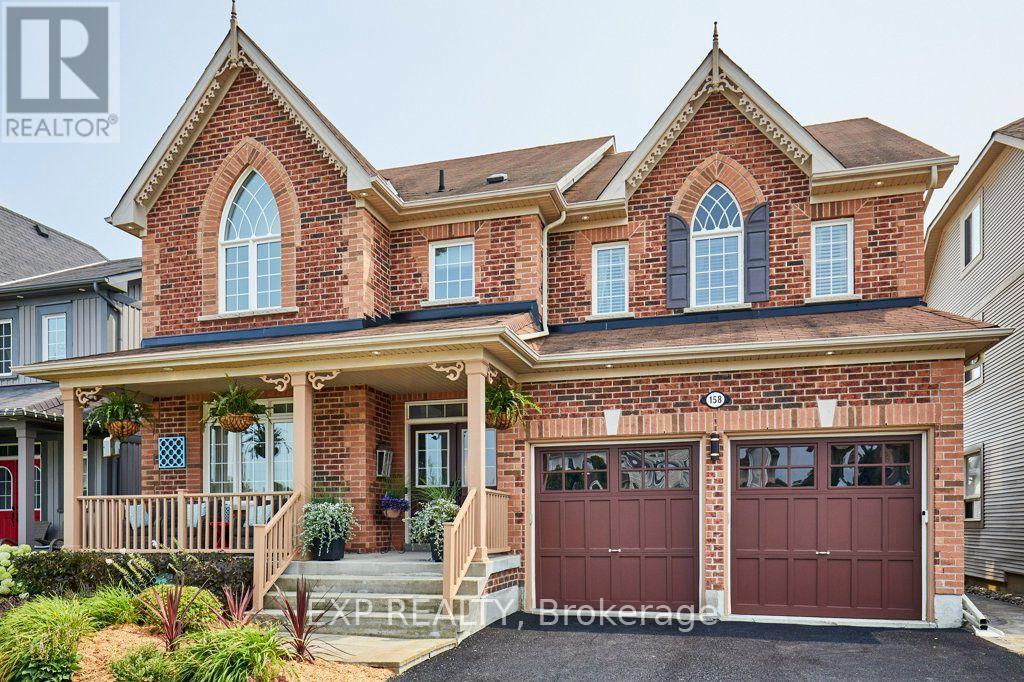 For Sale
 For Sale
 For Sale
 For Rent