
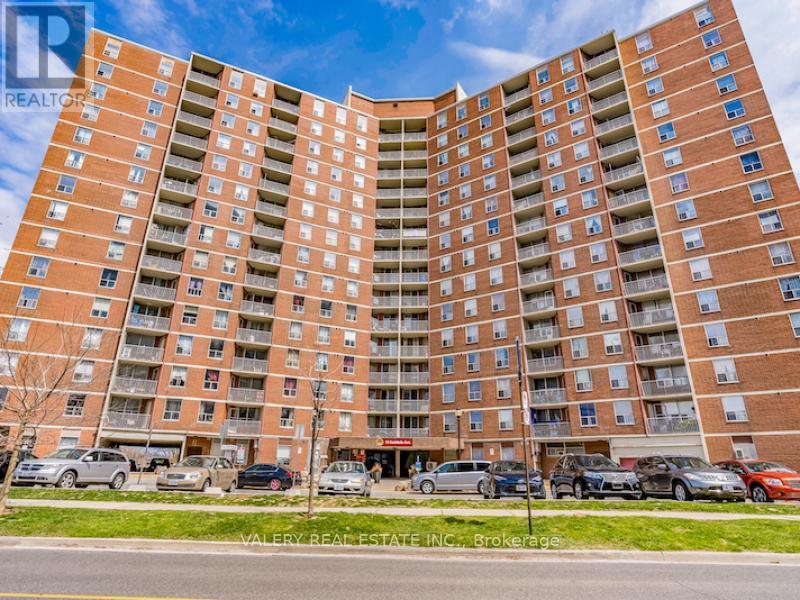
Crescent Town is a large planned residential community in East York at Danforth Avenue and Victoria Park Avenue, developed in the early 1970s. The community includes apartment towers, townhomes, and the Crescent Town Club with a pool, gym, and community programming. Victoria Park subway station on Line 2 is immediately adjacent. Primarily a rental community; ownership condos range from $400K to $650K.
Crescent Town is a large planned residential community in East York, located at the corner of Danforth Avenue and Victoria Park Avenue. It was built in the early 1970s as an integrated residential development, combining high-rise towers, townhomes, and community amenities within a single planned site. It’s one of the more distinctive residential environments in the east end: dense, diverse, and deliberately self-contained in a way that most Toronto neighbourhoods are not.
The community includes several apartment towers, townhouse units, and a commercial component that serves residents’ daily needs. The Crescent Town Club, the community centre at the heart of the development, provides recreational facilities including a pool, gym, and programming that serve both residents and the broader East York community. Victoria Park subway station, just outside the eastern edge of the development, gives the community direct Line 2 subway access.
The resident profile in Crescent Town has always been diverse. The community has historically attracted recent immigrants, newcomers to Toronto, working families, and long-term renters who value the transit access and the self-contained community amenities at a price point below what private-market housing in the surrounding neighbourhood commands. The diversity of the community is genuine and longstanding rather than aspirational, and it shapes the social character of the place in ways that residents either embrace or find they don’t fit with.
For buyers, Crescent Town is primarily a condo market, with ownership units available in the towers and townhouses at prices below what comparable size or amenity would cost in private-market freehold or condo buildings nearby. For renters, it’s a significant rental community with high occupancy and a strong word-of-mouth reputation among specific communities for whom the location and affordability combination is important.
Taylor Massey Creek runs nearby, giving the community some access to the east end’s ravine and creek trail network. The Danforth and Victoria Park intersection provides bus connections across the city alongside the subway access at the adjacent station.
Crescent Town is predominantly a rental community, which is the first and most important thing for buyers to understand. The majority of the residential units in the towers and townhouses are rental units, and the ownership component represents a smaller fraction of the total housing stock. For buyers looking for an ownership opportunity in Crescent Town specifically, the available inventory is limited to the units in buildings with a condo ownership structure, which are a subset of the development’s towers and townhouse blocks.
Ownership condos in Crescent Town range from studios and one-bedroom units to larger two and three-bedroom configurations in the towers, and townhouse units that offer ground-level access and private outdoor space. Prices for ownership units are generally in the $400,000 to $650,000 range, which represents meaningful value relative to comparable ownership condos in buildings elsewhere in the east end at comparable sizes.
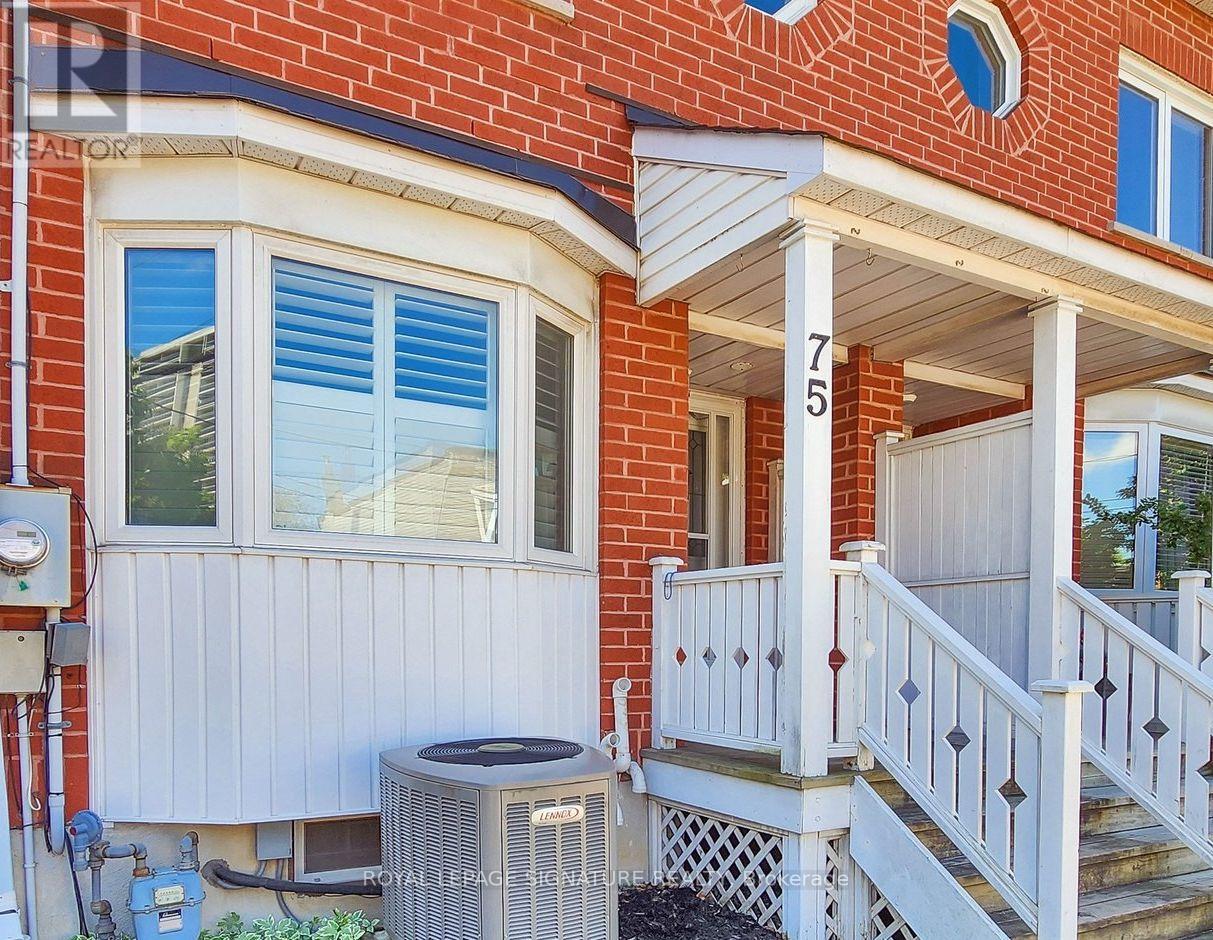
The townhouse units within the Crescent Town complex offer a different product from the tower condos: front doors that open to grade, small yards or patio spaces, and a scale of living that’s closer to freehold than high-rise. These tend to be well-regarded among the ownership units available here and attract buyers who want some ground-level presence and outdoor space that the tower units don’t provide.
Buyers considering ownership in Crescent Town should look carefully at the condo corporation’s financial health, reserve fund status, and maintenance fee history. Large planned communities from the 1970s can carry significant capital needs for infrastructure, building envelope, mechanical systems, and common area maintenance, and the status certificate review is a critical part of due diligence in this kind of purchase. A lawyer with condo purchase experience is not optional here.
The maintenance fees in the Crescent Town towers typically include utilities, which affects the comparison to units where utilities are billed separately. When comparing costs of ownership across buildings, it’s worth doing the calculation on a total housing cost basis rather than comparing maintenance fees in isolation.
The ownership condo market in Crescent Town operates differently from the general Toronto condo market. The community’s identity as a predominantly rental development, combined with the older building stock, creates a buyer pool that’s primarily composed of value-seeking purchasers rather than speculative investors or buyers focused on prestige. This keeps the market relatively calm relative to newer condo developments in more sought-after parts of the city.
Prices in the ownership segment have historically been held back by the community’s rental-majority reputation and the older building stock, even as Toronto condo prices generally have risen significantly. This creates a real value gap: buyers who are comfortable with the community’s character and have done their due diligence on the specific building they’re purchasing in can find substantially more space per dollar here than in comparable transit-accessible buildings elsewhere in the east end.
The trade-off is that the investment case for Crescent Town ownership is more complicated than for newer buildings. Resale liquidity can be lower, because the buyer pool for ownership units in this kind of community is narrower than for units in more mainstream condo buildings. Buyers who are purchasing for the long term and who value the quality of daily life over the potential for appreciation are better positioned here than buyers who are thinking primarily about exit strategy.
Listings in the ownership portion of Crescent Town are not numerous in most years. When they appear, they tend to attract buyers who’ve been specifically looking at this community and know what they want. The negotiation dynamic is typically less frenetic than in the competitive ownership condo market elsewhere in Toronto, which gives buyers more time and space to do proper due diligence before committing.
For buyers whose primary goal is affordable, transit-accessible ownership housing in the east end, with space and the amenities of the Crescent Town Club, the ownership market here deserves serious consideration despite the reputational complexity the community carries in Toronto real estate conversations.
Crescent Town’s community is built around affordability, transit access, and the self-contained residential environment that the development offers. The people who choose to live here, whether as renters or as ownership buyers, tend to be making a practical decision that puts transit, price, and amenity above neighbourhood prestige and architectural character.
Newcomers and recent immigrants to Toronto have historically been a significant part of the community. The combination of transit access, affordability, and a diverse, established resident community makes Crescent Town a practical landing point for people building a new life in the city. Community organisations, multilingual services, and social networks that operate within and around the development reflect this history and make it a genuinely welcoming environment for many people who are new to Toronto.
Long-term renters who have lived in Crescent Town for years and have become interested in ownership are a meaningful buyer type in the ownership segment. These buyers already know the community, use the Club facilities, and have established social connections in the development. When a unit comes available at a price they can reach, they’re sometimes in the best position of any buyer to act, because they have no information gap to fill about what they’re actually buying into.
Budget-conscious buyers who’ve been comparing options across the east end and have concluded that the space-per-dollar proposition in Crescent Town’s ownership segment outweighs the neighbourhood’s limitations are another distinct group. These buyers tend to be analytical rather than emotionally attached to a particular address, and they’ve done the math on what $450,000 to $600,000 buys in Crescent Town versus what it buys in a new condo building elsewhere. The answer, in terms of square footage and amenity, often favours Crescent Town significantly.
Crescent Town is a single large planned development rather than a collection of streets with distinct pockets, but within the development there are meaningful differences between the tower units, the townhouse blocks, and the various sections of the community that are worth understanding before buying.
The towers within Crescent Town range in height and condition. The specific building within the complex matters significantly for ownership purchases. Reserve fund health, building envelope condition, elevator reliability, and management quality vary between the towers, and these differences affect the quality of daily life and the financial obligations of unit owners through maintenance fees and special assessments. The status certificate for any specific unit purchase covers the specific corporation, not the development as a whole, and should be reviewed carefully by a lawyer before any purchase commitment.
The townhouse units within the development are clustered in low-rise blocks that face internal pedestrian paths and green spaces rather than streets. This creates a particular environment: quiet, pedestrian-scale, with a sense of enclosure from the towers that either feels intimate or confining depending on how you experience density. Buyers should spend time in the townhouse areas at different times of day before deciding whether the environment suits them.
The western portions of the development, closer to Victoria Park Avenue and the subway station entrance, have the most direct station access. Units at the eastern edges of the complex are further from the station entrance, adding a few minutes to the transit walk. This is a minor factor in daily life but worth knowing if station proximity is a priority.
The Crescent Town Club, centrally located within the development, functions as the community’s primary amenity hub. Proximity to it within the complex affects convenience for residents who use it regularly, which for the families and active residents who make up much of the community is a daily consideration rather than an occasional one.
Victoria Park subway station is immediately adjacent to Crescent Town’s eastern edge and is the primary transit connection for the community. It sits on Line 2, connecting westward through the Danforth stations toward Bloor-Yonge and eastward toward Kennedy Station and the Scarborough RT corridor. From Victoria Park station, a westbound train reaches Bloor-Yonge in about 15 minutes, and the connections there open up the full transit grid. This is genuine subway access, not aspirational proximity, and it’s one of the primary reasons Crescent Town functions as well as it does for car-free or low-car households.
The Victoria Park Avenue bus routes provide north-south connectivity along the avenue itself, serving destinations along Victoria Park that the subway doesn’t directly reach. The Danforth Avenue bus routes supplement the subway for east-west movement on the surface. Together, these routes give Crescent Town residents a reasonable transit network that extends well beyond what the subway station alone covers.
The development was planned around its community amenities rather than car access, and this shows in the internal street and path layout. Driving into and through Crescent Town is possible but the circulation is internal and somewhat complex for visitors. Residents who own cars find parking within the development, but the car-centric lifestyle that suburban development typically supports isn’t the design intent here. Most daily needs can be met without leaving the development or walking to the adjacent transit and commercial options.
Cycling from Crescent Town is possible but requires navigating the Victoria Park Avenue and Danforth Avenue intersection, both busy arterials. The Taylor Massey Creek trail is accessible with a short ride and connects to the broader east end trail network. For residents committed to cycling as a primary transport mode, the trail access helps, though the immediate street environment is more car-oriented than the Danforth’s inner stretches to the west.
For drivers, the location at Danforth and Victoria Park gives quick access to the 401 via Victoria Park Avenue northbound, and to Kingston Road and the Beaches via Victoria Park southbound. The DVP is a few minutes west via Danforth. This is a well-positioned intersection for car travel, even if the development itself was designed for non-car living.
Green space within and adjacent to Crescent Town is available, though the development’s density means it’s distributed rather than concentrated. Internal green spaces within the planned community provide outdoor areas for residents, and the landscaping of the development includes trees, paths, and informal open space between the towers and townhouse blocks. These areas function as shared outdoor living space for the dense residential community around them.
Taylor Massey Creek, which flows along the northeastern boundary of East York before joining the Don River, is accessible from the Crescent Town area via the Taylor Massey Creek Trail. The trail runs along the creek through a ravine environment and connects to the broader east end trail network. For residents who want access to a natural, car-free trail experience, it’s reachable on foot or bike from the development in a manageable time, giving Crescent Town a green connection that its density would not otherwise suggest.
Dentonia Park, along Kingston Road east of Victoria Park, includes a golf course and open parkland that’s accessible by transit or bicycle. It functions as the larger-format recreational green space for the east York and Crescent Town area and provides active recreation options, particularly for golfers and those who prefer open parkland to ravine environments.
Warden Woods and the East Highland Creek ravine are accessible further east for residents with bicycles or who are willing to make a longer transit trip for a trail experience. These ravines represent a significant natural corridor running through Scarborough that’s largely unknown to west-end Toronto residents but is part of the recreational landscape that east-end residents, including those in Crescent Town, have practical access to.
The internal green spaces of the Crescent Town development are maintained by the property management of the development rather than the city, which means their quality is tied to the management standards of the specific buildings and corporations responsible for them. Buyers evaluating ownership units should pay attention to the condition of the common outdoor areas as a proxy for the overall standard of building and property management.
Crescent Town has its own commercial component built into the development: a small-scale retail and service precinct that covers the basic daily needs of the community. Grocery, pharmacy, and everyday services are available within the development without requiring a trip outside. This self-contained retail offer is a deliberate part of the original development plan and has been maintained as a service to the community, though the quality and selection available is limited compared to the broader commercial options in the surrounding area.
The Danforth Avenue and Victoria Park Avenue intersection, immediately adjacent to the development, provides access to the broader retail landscape of this part of the east end. A grocery store, banking services, restaurants, and other retail are available within a short walk of the development’s main entrance. The Greektown dining concentration on the Danforth is accessible by subway in a few stops westward or by a bus ride along the avenue.
Victoria Park Avenue itself carries retail and service businesses along its length, with more concentrated commercial activity at the Danforth and O’Connor intersections. The Kingston Road commercial corridor to the south, accessible by bus or bicycle, extends the retail range further, including some specialty food and independent retail that the Victoria Park strip doesn’t offer.
Crescent Town residents with cars find the Scarborough Town Centre accessible within 15 minutes, which covers the large-format retail and entertainment options that the neighbourhood’s own commercial offer doesn’t include. Residents without cars rely on the Victoria Park and Danforth TTC routes for access to the broader city’s retail landscape.
The practical daily retail within and immediately around Crescent Town is adequate for a household’s basic needs. For a more diverse or quality-driven retail experience, residents need to travel a short distance by transit or car, which is no different from most residential communities of this density in Toronto.
Crescent Town sits within the Toronto District School Board and the Toronto Catholic District School Board. The elementary schools serving the community and the surrounding East York area include Crescent Town Elementary School, which is located within or immediately adjacent to the development and primarily serves the community’s families. This close-proximity school is one of the practical family amenities that makes Crescent Town work as a family residential community despite its density.
The TDSB schools serving Crescent Town have student populations that reflect the community’s diversity, with multilingual student bodies and a range of supports for students whose first language is not English. For newcomer families in particular, the multilingual and newcomer support resources available through Toronto’s inner-east TDSB schools are a meaningful practical asset.
Secondary school students from Crescent Town typically attend Wexford Collegiate School for the Arts or R.H. King Academy, both accessible by transit from Victoria Park station. Wexford has developed a particular reputation for its arts programs, and students interested in those pathways often seek it out specifically. R.H. King is a traditional academic high school with a strong community standing in Scarborough. Both are different enough in character that the choice between them matters and is worth understanding before secondary school entry.
Catholic school families in the community fall within the TCDSB’s east end and Scarborough boundaries. Several Catholic elementary schools serve the area, and secondary students typically attend TCDSB high schools accessible by transit. Confirming specific catchments directly with the board is necessary, as the Crescent Town location at the boundary between Toronto and Scarborough planning areas creates some complexity in school boundary mapping.
The Crescent Town Club offers community programming, youth activities, and recreational programs that supplement formal schooling and provide constructive structured activities for children and teenagers. For families, this community amenity within the development is a meaningful supplement to the broader school and recreational landscape.
Crescent Town as a planned development from the 1970s faces the long-term capital challenges common to large residential complexes of that era. The building envelopes, mechanical systems, elevators, and common infrastructure of the towers are all aging, and the condo corporations responsible for the ownership towers carry ongoing capital planning obligations that reflect this. Some of the towers have already gone through major capital programs for cladding, window replacement, or mechanical system renewal. Others have deferred capital work that will eventually be addressed through special assessments or increased maintenance fees.
This is not unique to Crescent Town, but it’s more visible here than in newer buildings because the age of the stock is greater and the scope of eventual capital work is correspondingly larger. Buyers need to treat the status certificate review as a fundamental part of their due diligence and specifically look at the reserve fund’s adequacy relative to the building’s capital plan. A professional reserve fund study review is available from engineering firms that specialise in this work, and it’s worth commissioning for a significant ownership purchase in a building of this age and type.
The surrounding area at Danforth and Victoria Park is subject to intensification planning, and some development proposals in the vicinity would add residential density to the intersection. This is the broader Toronto planning context for most major intersections and doesn’t represent a unique risk to Crescent Town specifically, but buyers should be aware that the urban context around the development may change materially over the coming decade.
The development itself is not likely to face redevelopment as a whole, given the complexity of existing ownership interests and the sheer scale of the housing it represents. Individual buildings may undergo refinancing or ownership structure changes, but the residential use of the site is not at risk. The community’s long-term trajectory depends more on the quality of building management and the continued investment of the resident community than on external development forces.
Victoria Park station is included in long-term TTC accessibility improvement planning. The subway service itself is stable; improvements would address the physical condition and accessibility of the station rather than the service.
Is Crescent Town primarily a rental community, and does that affect ownership value?
Crescent Town is predominantly a rental community, and yes, this affects ownership value in specific ways. The majority rental character means that the buildings have historically attracted lower-income and newcomer residents, and the neighbourhood’s reputation in the general Toronto real estate conversation reflects this history. Buyers who are sensitive to how an address is perceived will find that Crescent Town carries a different status than a comparable-cost condo in a newer building elsewhere in the east end. On the other hand, the value proposition for ownership buyers who look past the reputation is real: the space per dollar available in the ownership condos here is substantially better than in comparable transit-accessible buildings in the surrounding area, the subway access is immediate, and the community amenities through the Crescent Town Club are genuine and maintained. The ownership market here rewards buyers who make their decision based on what they’re actually getting rather than what the address conveys. If that calculation works for you, there is meaningful value here. If the address matters to you for professional or social reasons, that’s a legitimate consideration too, and it’s better to be honest about it than to buy on value grounds and regret it later.
What should I look for in the status certificate when buying in Crescent Town?
The status certificate review is more important in a 1970s planned community than in most condo purchases. The reserve fund is the primary concern: it should be adequately funded relative to the building’s capital plan, which for a 50-year-old tower includes eventual work on the building envelope, windows, elevators, mechanical systems, and common areas. A reserve fund that’s significantly underfunded relative to anticipated capital needs means future special assessments, which are costs that ownership buyers inherit. Look also at the financial statements of the corporation for recent or pending special assessments, for the corporation’s debt situation, and for any ongoing litigation or disputes that could affect unit owners. The rules and bylaws of the corporation are worth reviewing too, particularly around rentals, pet policies, and any restrictions that might affect how you plan to use or eventually sell the unit. Engage a lawyer who has done condo purchases in older buildings and who will actually read and explain the status certificate rather than treating it as a formality.
Is Crescent Town a good option for newcomers to Toronto?
It has historically been one of the more practical options for newcomers, and the reasons are structural rather than coincidental. The transit access at Victoria Park station is immediate and connects to the full TTC network. The community has existing infrastructure for newcomers, including multilingual services, community organisations, and social networks that have built up over decades of diverse resident populations. The price point, both for ownership and rental, is more accessible than much of inner Toronto. And the self-contained character of the development means that new residents can establish a daily routine within a manageable geographic area while building familiarity with the broader city. The trade-off is the building age and the reputation the community carries in some Toronto circles. For newcomers whose primary concerns are transit, affordability, and a welcoming community, those trade-offs are often acceptable. For those whose priority is establishing themselves in a prestigious Toronto address, other neighbourhoods make more sense.
What are the Crescent Town Club facilities and who can use them?
The Crescent Town Club is a full-service community recreation centre located within the development, operating as a membership-based facility. It includes an indoor swimming pool, gymnasium, fitness equipment, squash courts, and programming for various age groups and activities. Membership is available to both residents of Crescent Town and non-residents from the broader East York community. The facility has been maintained and updated over the years and represents a genuine recreational asset that’s a significant part of what makes Crescent Town a livable community rather than just a residential complex. For families with children, or adults who use recreational facilities regularly, the Club’s within-development location means that a swim or a gym session requires a short walk rather than a transit trip, which changes how consistently people actually use it. This kind of daily-life convenience is hard to quantify but easy to appreciate once you have it.
Buying an ownership unit in Crescent Town requires a specific kind of buyer’s agent: one who understands the condo purchase process thoroughly, who knows how to read a status certificate and what to flag from it, and who can provide an honest, unsentimental assessment of what this community offers and what it doesn’t.
The status certificate review is the most critical piece of due diligence in any Crescent Town purchase. An agent who treats it as a formality is not the right agent for this transaction. The reserve fund adequacy, the financial health of the specific corporation, and the history of special assessments in the building are all material to the value of the purchase and to the total cost of ownership over the years you hold it. Your agent should be asking for the status certificate early in the process, not as an afterthought after an offer is accepted.
An agent with knowledge of the Crescent Town ownership market specifically will know which buildings within the development have the strongest management, the most adequately funded reserve funds, and the best track record on maintenance. Not all towers within the complex are equal, and the difference between buying into a well-managed building and one with deferred capital obligations and dysfunctional condo governance is significant.
The legal component of a condo purchase in Crescent Town deserves investment. A real estate lawyer who has handled condo purchases in older buildings, and who will spend real time on the status certificate rather than simply confirming its existence, is worth the fee. This is not a transaction where cutting corners on legal review saves money; it’s one where a gap in that review can cost significantly more later.
For buyers who’ve done this analysis and determined that Crescent Town’s ownership market makes sense for their situation, the process of finding and securing a unit is typically less competitive and more measured than in the general Toronto condo market. That’s a genuine advantage for buyers who value time to think and due diligence to do properly.
Street-level knowledge is hard to find online. Our team works in Crescent Town every day. They know which pockets hold value, where the school catchment lines actually fall, and what the market is doing right now. Talk to us before you make a decision about Crescent Town.
Talk to a local agent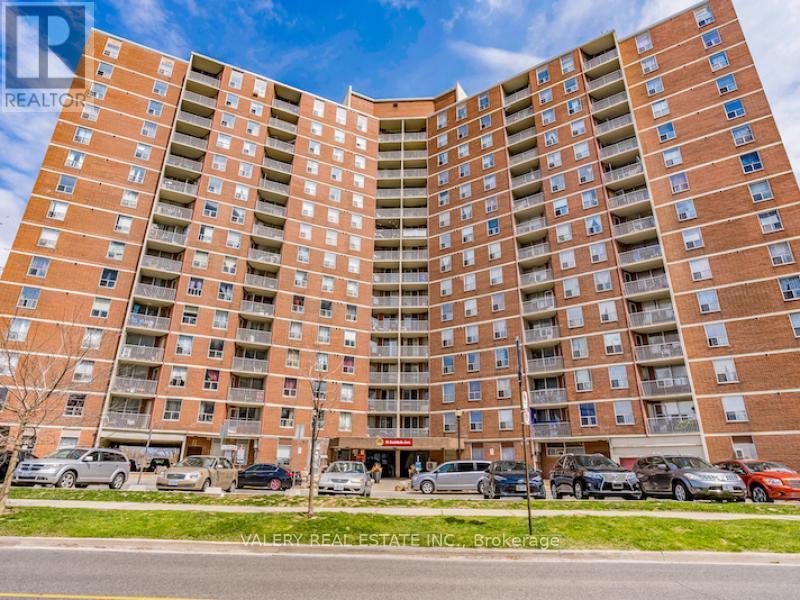 For Rent
 For Rent
 For Sale
 For Sale