
The Danforth neighbourhood runs from Woodbine to Main Street along one of Toronto's most recognisable commercial corridors. Greektown anchors the western stretch with restaurants, bakeries, and cultural institutions that have been established for decades. Residential streets north of Danforth offer post-war semis and detacheds with subway access at Woodbine and Main Street stations. Detacheds range from $1.0M to $1.6M.
The Danforth is the long commercial and residential corridor running east from Pape Avenue to Main Street, anchored by one of Toronto’s most well-known strips of shops, restaurants, and community life. For the purposes of real estate, the neighbourhood encompasses the residential streets north and south of Danforth Avenue in this eastern stretch, with post-war housing forming the backbone of the residential character above the main strip.
The corridor’s Greek heritage runs deep. Greektown, centred roughly between Pape and Woodbine, has been a cultural anchor in this part of the city since Greek immigrants settled here from the 1950s onwards. The restaurants, bakeries, and specialty grocers that define the strip draw people from across Toronto on weekend evenings, and the Taste of the Danforth festival in August brings the neighbourhood’s street life to a scale few other Toronto events match. That heritage is still visible and actively maintained, even as the strip has diversified considerably over the past two decades.
East of Woodbine, the Danforth corridor transitions in character. The residential streets feel more suburban in scale. Housing stock shifts toward post-war semis and detacheds rather than Victorian-era construction. The commercial activity thins out approaching Main Street, though the subway remains accessible at both Woodbine and Main Street stations.
What brings buyers to this part of the Danforth is value relative to the Pape-to-Chester stretch to the west. The subway access is comparable, the residential streets are quiet and practical, and the Greektown dining and shopping offer is a short walk or bus ride west for anyone who wants it. The price differential relative to Playter Estates or North Riverdale can be meaningful, and buyers who’ve been priced out of those markets often find their best east-end fit in this section of the Danforth corridor.
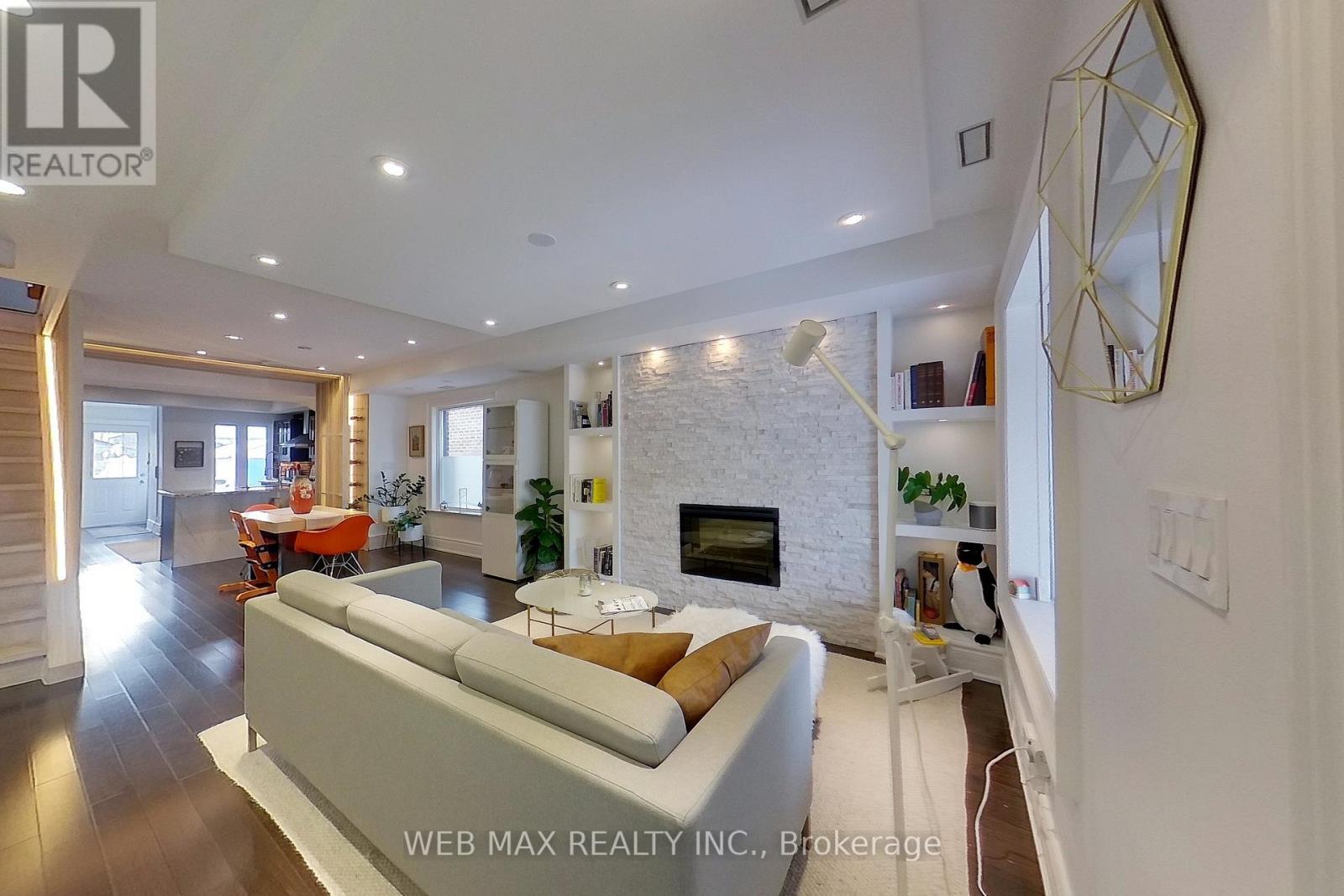
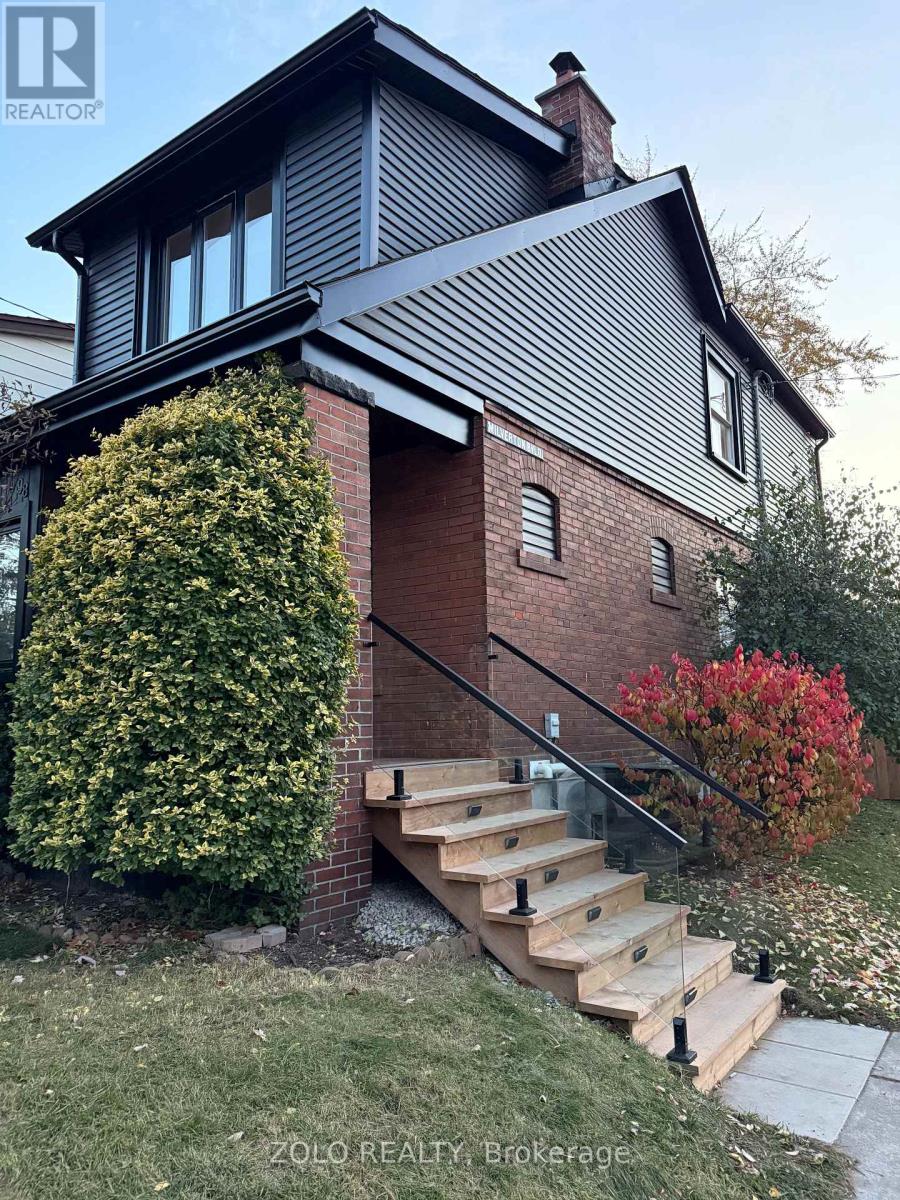
The residential housing stock in the Danforth neighbourhood east of Pape is predominantly post-war, built in the 1940s through the 1960s. This is different from the Victorian and Edwardian stock that defines the Danforth’s western stretches. Post-war semis and detacheds here tend to be brick construction, lower ceilings than Victorian equivalents, and layouts that reflect the family housing preferences of mid-century Toronto: a living room at the front, a kitchen and dining area at the rear, two or three bedrooms above, and a basement that was often finished at some point in the last few decades.
These homes are generally practical and durable. Brick construction from this era holds up well, and the lot configurations often include reasonable rear yards and either street parking or a driveway. They’re not architecturally distinctive in the way Victorian semis are, but they’re solid shelter that maintains well with basic upkeep and doesn’t require the kind of ongoing restoration that older housing stock sometimes demands.
Closer to Woodbine, where the Greektown character is stronger, you’ll find some earlier housing mixed in with the post-war stock. Some of these homes have had significant renovations. Others are relatively original, which can mean dated bathrooms and kitchens but also no accumulated renovation mistakes to undo. Whether you prefer the clean slate of an original home or the convenience of a recent renovation is a matter of personal preference and renovation capacity.
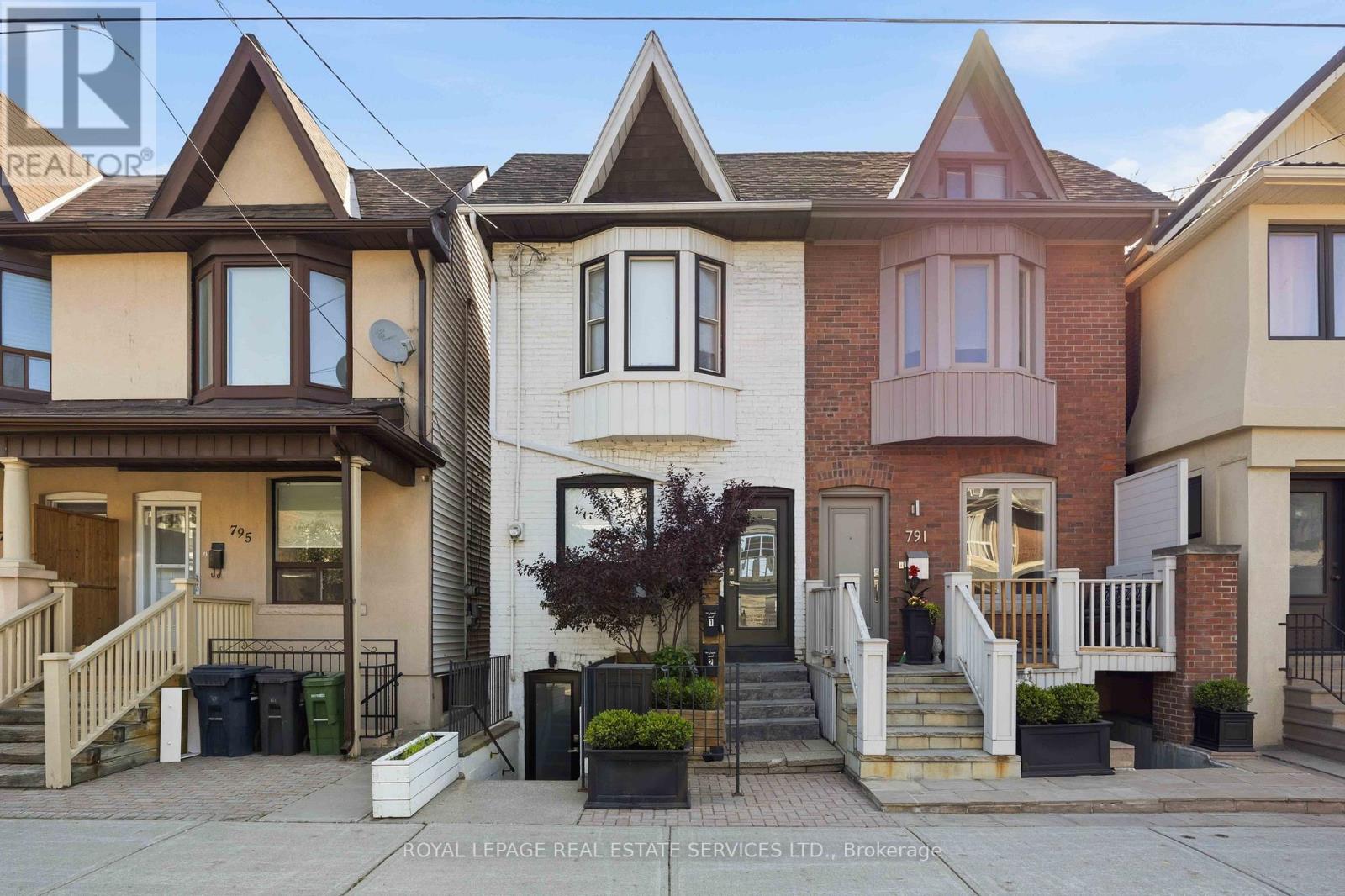
Basement suites and accessory apartments are common in this part of the Danforth. Many owners have converted their basements into separate units, which affects purchase decisions in a few ways: it provides rental income potential, but it also means a shared entrance and the dynamics of a landlord relationship to consider. Some buyers find a lower suite useful for income or for extended family. Others prefer a house that’s entirely theirs. Both are available in this market.
Prices along the Danforth east of Pape tend to reflect the post-war character: more accessible than the Victorian corridor to the west, but still subject to the premium that subway proximity and east-end desirability commands. Detacheds in the $1.0 million to $1.6 million range represent the bulk of the market here.
The Danforth corridor from Woodbine to Main represents a more accessible price point than the Pape-to-Chester stretch to the west, but it’s not a discount market. Detacheds trade broadly from $1.0 million to $1.6 million, with significant variation based on lot size, condition, and proximity to a subway station. Semis sit below that range. Properties close to Woodbine station or Main Street station command a premium over those mid-block between the two.
The market here is competitive but not as consistently multiple-offer as Playter Estates or North Riverdale. There’s more room to negotiate, particularly on homes that have been sitting or that have visible deferred maintenance. A buyer who’s done their homework on comparable sales can work with more confidence here than in some of the more heated stretches of the east end.
Seasonal patterns apply. Spring and fall are the strongest markets, with more listings and more competing buyers. Summer can produce opportunities, particularly for sellers who listed in spring and didn’t sell at their initial price. Winter is slow, which works for patient buyers who are willing to look at fewer options in exchange for a less competitive landscape.
The eastern Danforth tends to attract buyers who have run through the math on more expensive east-end options and concluded that the transit and lifestyle offering here is good enough at a meaningfully lower entry price. This creates a buyer profile that’s often practical and value-conscious, which affects the negotiating dynamic. These buyers do their research, run realistic comparables, and tend to walk away from overpriced listings rather than get caught up in the feeling of a neighbourhood.
For investment purposes, rental demand in the Danforth corridor east of Pape is steady. The transit access makes the area attractive to renters who don’t own cars, and the residential character appeals to families and young professionals who want something quieter than downtown but more connected than the inner suburbs. Basement suites and upper units in two-unit configurations are a viable income strategy in this market, and many of the homes here already have the configuration in place.
The buyers who end up in the Danforth corridor between Woodbine and Main tend to fall into a few clear groups. The most common are buyers who’ve looked at the western Danforth and Leslieville and found that those markets are out of reach, but who don’t want to leave the east end or give up subway proximity. This stretch offers a viable path into east Toronto freehold real estate at a price that, while still significant, opens the door for households that might otherwise be looking at condos.
Greek-Canadian families have been part of this community for generations, and buying into the Greektown corridor carries cultural and social weight that goes beyond a real estate transaction for some buyers. The community institutions, churches, community organisations, and food businesses that make up Greektown are not just amenities for these buyers; they’re reasons. That kind of connection to a place doesn’t move with the market cycle.
First-time buyers with parents or family members who can help with a down payment find the Danforth’s eastern stretch workable in a way that more expensive addresses are not. The post-war housing stock here doesn’t require the same renovation capital that a Victorian semi in worse condition might, and the practical layouts suit first-time ownership well. You’re not starting with a blank canvas or a complete restoration project; you’re starting with something livable that you can improve incrementally.
Landlord-investors looking for properties that work as income assets with good transit access also participate in this market. The dual-unit configuration common in these homes, a main floor and upper unit over a basement apartment, can produce rental yields that pencil out better than in more expensive stretches of the east end. These buyers are typically experienced, move decisively, and know their numbers. They’re part of the competitive landscape for the right properties.
The residential streets north of Danforth Avenue between Woodbine and Main vary in character more than the Playter Estates or North Riverdale streets do. This part of the Danforth corridor includes several distinct micro-areas that buyers should understand before assuming the neighbourhood is uniform.
The blocks immediately north of Danforth and west of Woodbine sit in the heart of the Greektown influence area. Streets like Glebemount Avenue and Monarch Park Avenue have a community feel shaped by decades of established families and the cultural institutions nearby. These blocks tend to attract buyers who specifically want the Greektown identity, not just the transit proximity.
East of Woodbine, the character shifts. Streets like Clonmore Drive and Natal Avenue are solidly post-war residential, quiet, and practical. The housing here is more consistent in age and type: brick semis and detacheds from the 1940s through 1960s with standard lot configurations. These streets appeal to buyers for whom the housing makes sense and the transit is adequate, without strong attachment to the specific neighbourhood identity.
Monarch Park itself, the large park near Greenwood Avenue and Cosburn, anchors its surrounding streets and makes the properties near it particularly attractive for families. The park’s sports fields and community presence give those blocks an activity and community feel that pure residential streets don’t always have.
The blocks closest to Main Street station, around Dawes Road and Gerrard Street East, have a slightly different character again. This is transitional territory, closer to the upper Beaches area and more variable in terms of housing condition. Buyers who want to be closest to the Main Street subway will find more inventory here at the lower end of the price range, but should evaluate each property carefully because the variation in condition is higher than in the central Greektown blocks.
The Danforth corridor from Woodbine to Main is well served by Line 2 of the TTC. Woodbine station sits at the western end of this stretch and Main Street station at the eastern end. Both provide direct subway access to Bloor-Yonge, and from there the connections to Line 1 and the downtown core are quick. Travel times from these stations to the financial district or hospital row on University Avenue are in the 20-to-25-minute range for most destinations, which is competitive with many inner-city addresses.
Danforth Avenue carries regular TTC bus service that fills in the gaps between subway stations and connects to the eastern parts of the city beyond Main Street. The 12 Kingston Road bus, accessible from Woodbine, links to the Beaches and Kingston Road corridor to the south. Multiple routes along the north-south streets intersecting Danforth provide access to the Gerrard strip and other crosstown routes.
Cycling in this part of the Danforth is practical for confident cyclists. The street grid is regular and manageable, and the Don Valley trail is accessible from the western end of the neighbourhood for longer recreational or commuting routes. There’s no dedicated cycling infrastructure on Danforth Avenue between Woodbine and Main, which means sharing road space with buses and vehicles, but many residents cycle this stretch regularly without significant issues.
For drivers, the Danforth corridor provides access to the DVP via the Danforth and O’Connor connections. The 401 is reachable within 15 to 20 minutes in reasonable traffic via Victoria Park Avenue to the east. Street parking on most residential streets is regulated by permit, and many homes in this area have driveways, which is a meaningful practical difference from the Victorian-era streets to the west where driveways are less common.
The presence of driveways and garages on many post-war homes along this stretch is worth noting for buyers who own vehicles. It removes one of the friction points that affects the older Victorian neighbourhoods to the west, where rear lane parking is common but not universal.
Monarch Park is the significant green space in this stretch of the Danforth corridor. The park occupies a full block near Greenwood Avenue and Cosburn Avenue and has sports fields, a community centre, and recreational facilities that serve both the immediate residential streets and the broader neighbourhood. It’s an active park rather than a passive one, heavily used for organized sports, community programs, and informal recreation throughout the year.
Greenwood Park, a few blocks south of Danforth near Gerrard Street East, serves as a community gathering point for the residential streets between Danforth and Gerrard. It’s a neighbourhood park rather than a destination park, but it fills that function well for families on the surrounding blocks.
The Don Valley trail system is accessible from the western edge of this neighbourhood via the Woodbine Ave access near the bridge and through the Riverdale area, a short bike ride or transit trip. For residents who use the trail system for recreational cycling, running, or walking, the connection is manageable even if it’s not as immediate as it would be from North Riverdale or Playter Estates.
Taylor Creek Park and ravine system, which runs along the northern boundary of East York, is accessible by bicycle or car for residents of this neighbourhood and represents a significant natural area that’s part of the broader east end green corridor. The creek and its ravine provide a contrast to the residential streetscape and give the area a natural anchor that connects to the city’s larger ravine network.
The tree canopy in this part of the Danforth is variable. On some streets the post-war planting has matured into a reasonable shade canopy. On others the street trees are younger or have been replaced more recently, which means sunnier streets in summer. Buyers who care strongly about tree cover should walk specific blocks they’re considering rather than assuming the canopy is consistent across the neighbourhood.
Greektown on the Danforth, the stretch between Pape and Woodbine, is the defining commercial asset for this neighbourhood. It’s a strip that has genuine depth: Greek restaurants that have been at the same address for 30 years sit alongside newer cafes, bakeries, and specialty grocers. The food offer here is one of the stronger concentrated dining options in the east end, drawing destination visitors from across the city on weekends while also functioning as the everyday commercial strip for local residents.
The Taste of the Danforth festival in August is the public expression of this, and it brings a scale of activity to the street that most Toronto neighbourhoods never see. For residents who embrace the neighbourhood’s identity, it’s part of the reason they’re here. For those who prefer quieter weekends, it’s worth knowing about in advance.
East of Woodbine the commercial strip thins out. There are local amenities, a Tim Hortons, a few restaurants, and the practical services that residential neighbourhoods need, but the density and quality of retail drops off relative to the Greektown core. Residents on the eastern half of this neighbourhood stretch treat the Greektown commercial concentration as a destination they travel to, rather than a walkable daily resource, depending on exactly where they live.
The Main and Danforth intersection has a small commercial node of its own, with a grocery store, pharmacy, and a handful of restaurants. For residents on the eastern blocks it’s the practical everyday option. The selection is functional rather than inspiring, but it covers the daily needs without requiring a trip back west.
For larger shopping, Victoria Park Avenue to the east and Scarborough Town Centre are within reasonable driving distance. The Beaches retail and restaurant scene is accessible by transit or car to the south and adds some variety for residents who want a different feel from the Danforth strip on a given weekend.
The Danforth corridor from Woodbine to Main falls within both the Toronto District School Board and the Toronto Catholic District School Board. The public elementary schools serving the area include Earl Haig Junior Public School near Greenwood and Secord Elementary School in the eastern portion of the neighbourhood. Both are community schools with strong local roots in neighbourhoods that have been family-oriented for generations.
Monarch Park Collegiate Institute is the secondary school most closely associated with this part of the Danforth. The school has been a community institution for decades and has both regular academic and some specialised programming. Like most Toronto high schools, the experience is shaped largely by the specific courses and extracurriculars a student engages with. Parents who are active in helping their kids navigate those choices tend to find the school serves them well.
The area also has access to French immersion and other specialty programs through the TDSB’s broader application process. These programs are not limited by local catchment in the same way that regular programming is, and families interested in them should contact the board directly to understand eligibility and availability for the current year.
Catholic school families fall within the TCDSB’s east end school boundaries. The specific schools serving this area include St. John and St. Brigid at the elementary level, with secondary students typically attending local TCDSB high schools accessible by transit. As always, confirm catchment boundaries directly with the board before making school-catchment-dependent purchase decisions.
The neighbourhood has a family-oriented character, and local schools reflect this with consistent engagement from parents in school programs and events. The post-war residential character of the neighbourhood means that many blocks have a density of family households that supports a strong school community feel. Children on these streets often attend the same school as their neighbours, which contributes to the social fabric of the community in ways that matter to families choosing a place to put roots down.
The Danforth Avenue corridor is designated as an avenue in Toronto’s official plan, which creates the framework for gradual intensification of the commercial strip through mid-rise mixed-use development. This process has been happening in fits and starts along the entire Danforth for years, and it will continue. The pace in the Woodbine to Main stretch has been slower than in some other parts of the city, partly because land assembly is more difficult in established commercial streets and partly because the existing building stock is still functional and generating income for owners.
The Greek-owned buildings along the Greektown stretch represent a particular case. Many have been in family ownership for decades, and the owners’ priorities don’t always align with maximising redevelopment value in the short term. This creates a degree of stability in the built environment that pure market logic wouldn’t predict, and it’s one reason Greektown has maintained its physical character better than some other avenue-designated commercial streets in the city.
East of Woodbine, the properties along Danforth are more likely to see gradual transition over time, as the commercial character is less defined and the case for building renewal is more straightforward. The form this takes is typically replacement of one or two-storey commercial buildings with five-to-nine-storey mixed-use buildings that bring ground-floor retail and residential units above. This is happening at individual sites rather than at any coordinated pace.
On the residential streets themselves, development pressure is limited. The post-war housing stock is fully built out on most blocks, and the zoning doesn’t permit significant intensification of the interior residential streets. Garden suites and laneway housing are possible where rear lane access exists, and some owners in this part of the city have begun exploring these options, though the take-up has been slower here than in the more expensive Victorian neighbourhoods to the west.
Transit infrastructure remains stable, with Woodbine and Main Street stations serving the area as they have for decades. There are no announced service changes that would materially affect the neighbourhood in the near term.
What makes the Danforth corridor different east of Pape compared to west of it?
West of Pape toward Chester and Broadview, the Danforth runs through Playter Estates and North Riverdale, where the housing stock is predominantly Victorian and Edwardian and the prices reflect that heritage and the exceptional transit positioning between Chester and Pape stations. The architecture, the Playter Gardens green corridor, and the overall premium of those two neighbourhoods put them in a consistently higher price tier. East of Pape toward Woodbine and Main, the residential streets shift to post-war housing, the commercial strip transitions from the dense Victorian-era retail blocks to something more varied and thinner on the eastern end, and the overall price level drops to a range that’s more accessible for buyers who want east-end freehold without the premium pricing of the established Victorian corridor. The subway access is comparable. The lifestyle difference is real but manageable. For many buyers the eastern Danforth represents the best available entry into east Toronto freehold real estate at a price that works.
Is the Greektown identity still strong, or has the neighbourhood changed significantly?
Greektown is still recognisably itself along the Pape-to-Woodbine stretch, and this is worth saying clearly because the story of other Toronto ethnic commercial corridors has often been one of rapid displacement. The Greek-Canadian community has maintained a significant presence both as business owners and as residents in this part of the Danforth, and the cultural institutions, churches, and community organisations that anchor that identity are still active. The dining offer on the strip has always included non-Greek restaurants, and that’s more true now than it was 30 years ago, but the Greek character is not nostalgic or performed. The annual Taste of the Danforth remains one of the largest street festivals in Canada, and it draws a genuine mix of community members and visitors. The neighbourhood has evolved and diversified without losing the thread of what made it distinctive. That’s a relatively unusual outcome for a Toronto ethnic commercial corridor and it’s one of the things that gives Greektown a durability that’s worth understanding when buying here.
What should buyers know about the post-war homes in this area?
Post-war homes from the 1940s to 1960s have a different maintenance profile from Victorian-era houses. They were built during a period when standard construction shifted from masonry and plaster to more standardised framing and drywall, and when mechanicals like electrical and plumbing systems were beginning to modernise but weren’t yet at current standards. In a home of this age, key inspection items include the electrical panel capacity and wiring type, the condition of the plumbing supply and drain lines, the state of the original heating system, and the integrity of the flat roof sections that often appear on additions or carport conversions. Basement waterproofing is a common issue given the age of the foundation work. None of these are reasons to avoid the housing stock, but they are reasons to do a thorough inspection rather than a cursory one, and to have a clear sense of what you’re inheriting before you commit to a price. The homes are generally solid and durable, but every building of 60 to 80 years in age carries some deferred maintenance unless it’s been consistently and professionally maintained throughout.
How close are the subway stations to the residential streets?
Woodbine station is accessible on foot from most of the residential streets north of Danforth between Greenwood and Woodbine Avenue, typically within a 5-to-10-minute walk. Main Street station serves the eastern portion, with most of the residential streets east of Greenwood within a 10-minute walk. The blocks midway between the two stations, around Dawes Road or Monarch Park, are the furthest from either station, at roughly 10 to 15 minutes walking to whichever is closer. Transit riders in those mid-stretch blocks often take the Danforth bus to the station rather than walking, particularly in winter. The TTC frequency on the Danforth bus routes makes this a reasonable option, adding only a few minutes to the overall commute. Buyers who are transit-dependent and want minimised walking time should target the blocks closest to either station and factor walking distance into their property comparisons.
Buying in the Danforth corridor east of Pape benefits from an agent who understands the specific dynamics of this stretch rather than applying a broad east-end generalisation. The market here has its own rhythms: it’s more negotiable than the western Danforth in most conditions, but there are still pockets within it, particularly the blocks closest to Woodbine station and the Greektown core, where competition is consistent.
An agent with working knowledge of this area will be able to distinguish between a home that’s sitting at an overpriced list and one that’s sitting because something came up in a previous inspection. Both scenarios look the same from the outside, and buyers who don’t have access to that context can make poor decisions in either direction: paying too much because they didn’t recognise the issue, or passing on a good property because they assumed the lingering time was a red flag.
The post-war housing stock in this neighbourhood benefits from inspection more than almost any other factor in the due diligence process. Unlike Victorian homes where the architectural character often reflects genuine quality, post-war semis and detacheds require closer scrutiny of systems and structure. Your agent should either have a good inspector they work with regularly or be open to your choice of a qualified one. Do not skip the inspection to make your offer more competitive unless you have strong independent knowledge of the property’s condition.
For buyers at the lower end of the Danforth market, working with an agent who understands mortgage qualification realities is equally important. At the $1.0 to $1.3 million price range, the difference between a home you can qualify for and one you can’t is often narrower than buyers expect, and the costs of ownership beyond the mortgage, insurance, property tax, and maintenance, affect what price actually makes sense for a given household’s income and savings picture. A good buyer’s agent helps you think through total cost of ownership, not just purchase price.
Street-level knowledge is hard to find online. Our team works in Danforth every day. They know which pockets hold value, where the school catchment lines actually fall, and what the market is doing right now. Talk to us before you make a decision about Danforth.
Talk to a local agent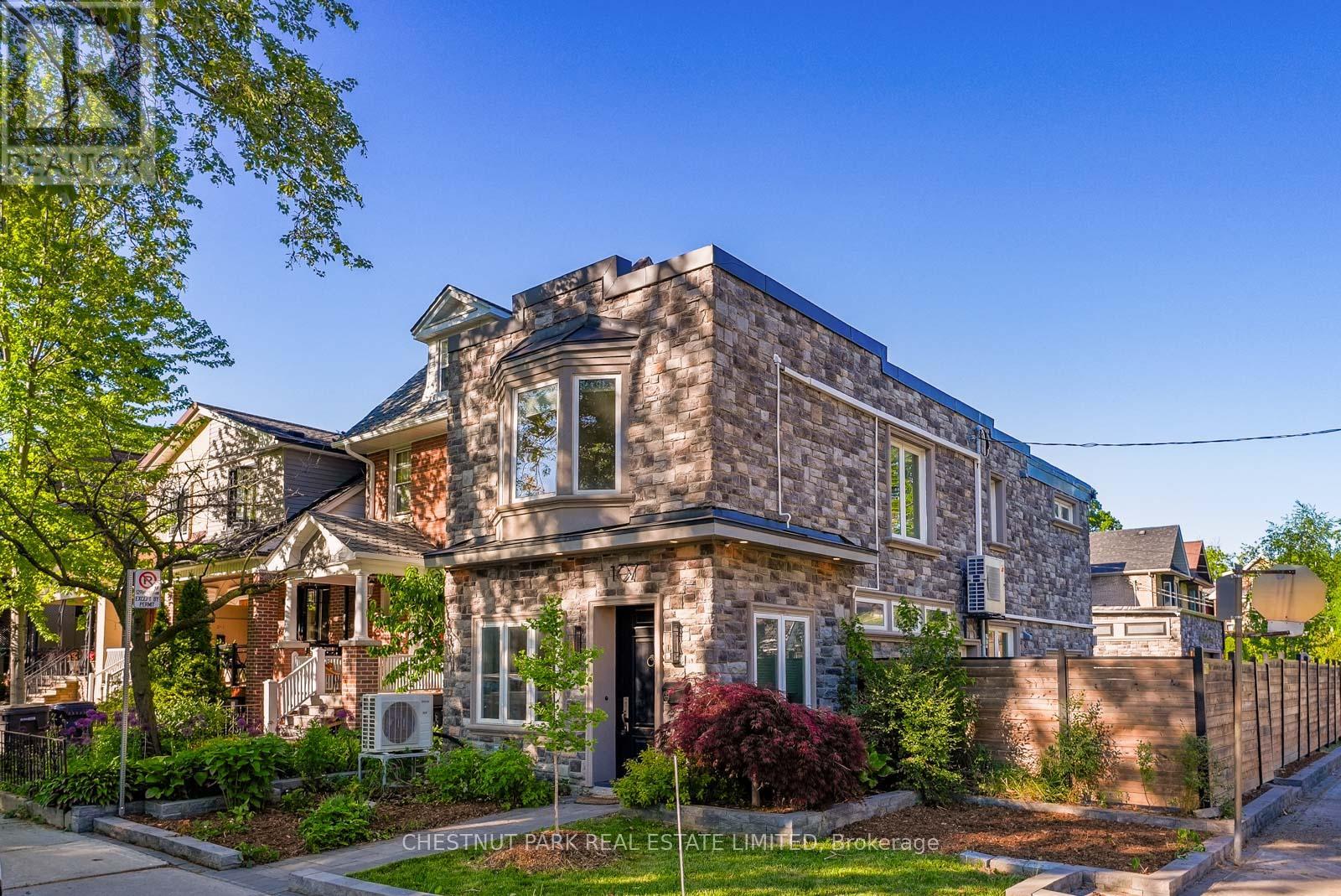 For Sale
 For Sale
 For Sale
 For Rent