
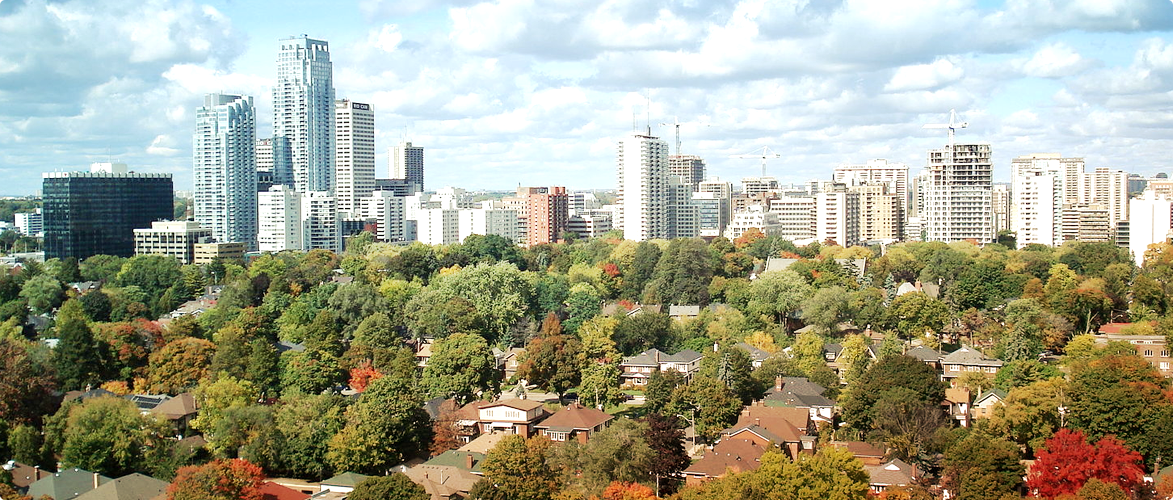
Davisville Village is a midtown Toronto neighbourhood built for families who need both a good school and a subway stop, and aren't willing to compromise on either. Post-war brick detached and semi-detached homes on residential streets between Davisville Avenue and Merton Street make up the bulk of the housing stock. Detached homes sold between $1.8 million and $2.8 million in early 2026, with semis typically between $1.3 million and $1.8 million. The North Toronto Collegiate catchment is the primary reason buyers pay those prices.
Davisville Village real estate draws a particular kind of buyer: a family that has outgrown a smaller place in the west end or the Annex, has children approaching school age, and has done enough research to know that both the school situation and the subway stop here are genuinely hard to replicate at a lower price point. The neighbourhood sits in midtown Toronto, centred on Davisville Avenue and Mount Pleasant Road, and it doesn’t pretend to be something it isn’t. The Yonge Street commercial strip through the neighbourhood is functional, not destination. The streets behind it are quiet, residential, and built for people who bought here to live here.
Davisville subway station sits on the Yonge-University line, which is the busiest subway line in the system. Downtown is three stops from Davisville to Bloor-Yonge, five to King. Most buyers who choose this neighbourhood do so because that commute is 25 minutes on the worst morning rather than 45 minutes in traffic. The families who have done that calculation arrive here with a clear sense of what they’re paying for.
The housing stock is predominantly post-war brick, built between the late 1940s and early 1960s. These are proper houses: detached and semi-detached, with actual basements, garages on many lots, setbacks from the street, and backyards that can accommodate a swing set without rearranging the furniture. They’re larger than the Victorian semis of Trinity Bellwoods or the Annex, and they were built for families. That physical reality is part of why families choose this neighbourhood rather than simply the reputation.
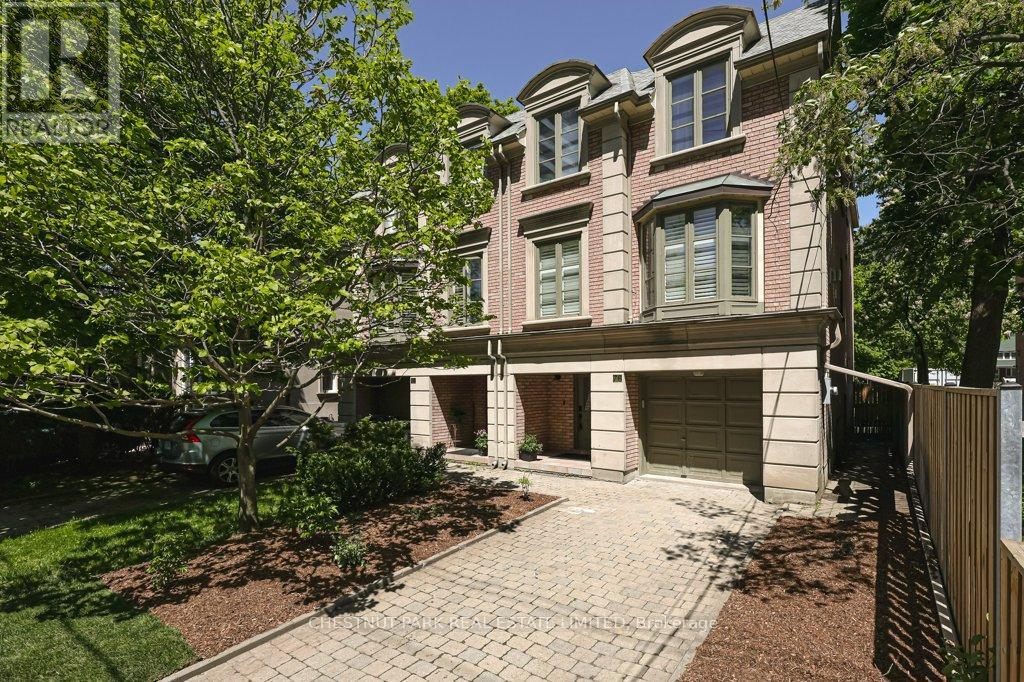
The dominant purchase in Davisville Village is a post-war brick semi-detached on a residential street running east or west off Mount Pleasant Road or Yonge Street. These homes typically have three bedrooms upstairs, a finished or partially finished basement, an attached or detached single-car garage, and a backyard of reasonable depth. That combination is rare enough in midtown Toronto that it commands a premium. In early 2026, a well-maintained semi on a street like Balliol or Chaplin Crescent trades between $1.3 million and $1.8 million depending on renovation quality, lot depth, and whether parking is included.
Detached homes are more widely available here than in many comparable midtown neighbourhoods, and that availability is part of Davisville’s appeal to families making the step up from a semi elsewhere. A three-bedroom detached in good condition starts around $1.8 million. Renovated four-bedroom properties on deeper lots, particularly those on Chaplin Crescent or Belsize Drive, have sold above $2.8 million. The spread between the bottom and top of the detached market is wide because condition, lot size, and renovation quality vary considerably between properties of similar age.
Condos are less central to this neighbourhood than to the Yonge-Eglinton corridor a few stops north. There are mid-rise buildings along Yonge Street and near the subway station, mostly from the 1970s and 1980s, that trade at lower per-square-foot prices than newer product further north. Buyers who want to enter the Davisville area at a lower price point find these buildings offer transit access and the neighbourhood address at a fraction of the freehold cost, though the buildings themselves tend to be older and the suites smaller.
The garages are worth noting specifically. Much of the post-war housing stock was built with a garage as a standard feature, either attached or on a rear lane. This distinguishes Davisville from older west-end neighbourhoods where laneway garages are a bylaw-era addition rather than original construction. Buyers who need to park two cars have realistic options here that simply don’t exist in many comparable Toronto neighbourhoods.
Davisville Village holds its value through broader market corrections more consistently than many comparable midtown neighbourhoods, because the buyer pool is driven by a specific combination of school catchment and transit that doesn’t soften when general sentiment does. Families who have planned a purchase around North Toronto Collegiate’s catchment and the Yonge subway access don’t stop needing those things because the broader market is uncertain. That structural demand keeps the floor higher than it might otherwise be.
In early 2026, well-priced freehold properties in the neighbourhood are attracting offers within a few weeks of listing. The spring window, roughly February through May, concentrates the most active family buyers and produces the most competitive conditions. Properties that come to market in September also see strong activity from families who missed the spring and want to be settled before the school year is fully under way.
Sellers who hold the best-positioned properties on Chaplin Crescent or Balliol Street can still expect competitive offer situations when they price correctly. The broader condo market in the city has softened, and that weakness carries into the Davisville condo stock along Yonge, where buyers have more time and more choices than freehold buyers do. Freehold and condo are running on different clocks here in 2026.
The core Davisville Village buyer is a family that has already lived in Toronto, typically in a smaller semi in the west end or a condo near downtown, and is making a deliberate upgrade timed to a school decision. They’ve usually done the research on North Toronto Collegiate before they’ve done the research on the specific streets, because the school is the anchor for most of the purchase decision. By the time they’re viewing properties on Balliol or Chaplin Crescent, they’ve already mapped the catchment boundary and confirmed their address falls inside it.
The second wave of buyers is families coming from Leaside or Moore Park who want to stay in the same general midtown family market but need either a larger property than their current neighbourhood offers, or a price point that gives them more house for their budget. Davisville is the accessible version of the Moore Park proposition: the same general quality of neighbourhood, with more properties on the market at any given time and slightly more room at the lower end of the detached range.
There’s also a returning buyer: people who grew up in the neighbourhood or went to North Toronto Collegiate and are specifically trying to come back to the area where they already have roots. This is a different decision from the calculated school-plus-transit calculation, and it tends to produce buyers who are less price-sensitive than others at equivalent income levels because the location has personal meaning beyond its market attributes.
The catchment boundary for North Toronto Collegiate is the single most important due diligence item for family buyers in this neighbourhood. It doesn’t follow perfectly intuitive lines. A property on one side of a street may fall inside the catchment; a property on the other side may not. The TDSB boundary tool is accurate for current catchments, but boundaries have shifted in the past and there’s no guarantee a specific address will remain in catchment through a child’s full secondary school career. Buyers for whom North Toronto Collegiate is the primary reason for the purchase should treat catchment confirmation as a prerequisite to any offer, not a detail to verify later.
The post-war construction period means most homes in Davisville Village are now between 60 and 80 years old. The bones are typically sound, but the mechanical systems, roofing, and windows on unrenovated properties often haven’t been updated since the 1980s or earlier. A home inspection is worth doing on any property that hasn’t been recently renovated, and the inspection should look specifically at the furnace, electrical panel, and the condition of the original plaster walls where they haven’t been replaced with drywall. These are the categories where post-war brick houses typically carry the most deferred cost.
Properties on Mount Pleasant Road itself carry more traffic noise than the residential streets running east and west from it. Mount Pleasant is a four-lane arterial with meaningful rush-hour volume. Buyers who are sensitive to street noise should walk their shortlisted property at 8am on a Tuesday before deciding. The difference between a property on Mount Pleasant and one a block east on Belsize Drive is significant in daily life terms, even though both addresses carry a Davisville Village designation.
Chaplin Crescent and Balliol Street are the streets that produce the strongest resale history, and properties there are priced accordingly. Buyers who find those streets beyond their budget often look at the blocks off Merton Street or the quieter streets further from the subway, where the trade-off is a longer walk to the station in exchange for a lower entry price. That trade-off is worth calculating against your actual commute frequency before deciding it’s acceptable.
Davisville Village buyers are a specific audience with specific priorities, and they respond to presentation that acknowledges those priorities rather than generic staging. A family buying here has usually toured multiple properties in the neighbourhood and understands the housing stock well. They know what a well-maintained post-war brick semi looks like and they can price the gap between a properly done renovation and a cosmetic one. Sellers who treat their preparation accordingly consistently outperform those who don’t.
The functional details matter here as much as the aesthetic ones. Buyers in Davisville are typically moving up from something smaller, which means they’re already thinking about how the house works rather than just how it looks. A garage that functions, a basement that’s genuinely usable, a backyard that’s level and not eaten by old concrete, a main floor that flows between rooms: these are the things that determine how a property actually shows to the buyers this neighbourhood attracts.
Spring is the strongest selling window, and within spring, March and April produce the most concentrated buyer pool. Families trying to be settled before September enrol in school are making decisions in spring, not fall. A property that comes to market in late February or early March, properly prepared and priced to the comparable sales rather than to wishful thinking, is well-positioned for that peak. Sellers who miss the spring and list in July face a much thinner buyer pool and are typically competing for buyers who missed the spring for their own reasons.
The Yonge Street commercial strip through Davisville Village is functional and local rather than destination. There’s an LCBO, several cafes, a few restaurants, dry cleaners, a pharmacy, and the kind of mix that means residents can run most ordinary errands on foot without getting in a car. That’s the honest description. Buyers who want the density of the Yonge-Eglinton strip or the character of the Queen West restaurant scene won’t find it here, and listings that oversell the retail environment are doing buyers a disservice.
What the neighbourhood does have is June Rowlands Park on Balliol Street, a small but well-maintained green space with a splash pad that draws the immediate residential population on summer afternoons. The park isn’t a destination for people who don’t live nearby, which is precisely why residents value it. Beltline Trail access is within cycling distance for most of the neighbourhood, and the Kay Gardner Beltline Park provides a dedicated off-road cycling and walking route that runs through the midtown corridor toward both Leaside and the west end.
The Yonge strip in the neighbourhood is also home to the Davisville subway station entrance itself, which is more centrally located to the residential streets than many stations in the city. A resident on Balliol or Chaplin Crescent is a five to eight minute walk from the platform, not a fifteen-minute walk with a transfer. That proximity is a genuine daily-life advantage over neighbourhoods that claim good transit access but require a longer walk to reach it.
Davisville station puts the Yonge-University line at the centre of the neighbourhood’s transit argument, and that line is a different proposition from the east-west Bloor-Danforth or the streetcar network in the west end. The Yonge line runs at subway frequency with short headways through the peak. From Davisville, Bloor-Yonge is three stops, King is five, Union is six. The realistic door-to-door time from a house on Chaplin Crescent to an office building at King and Bay is 28 to 32 minutes on a typical morning, which is the kind of commute that eliminates the car-for-work calculation entirely for most households.
The 97 Yonge bus runs along the corridor and extends service north toward Eglinton and south where the subway doesn’t operate overnight. Mount Pleasant Road has bus service that connects the neighbourhood north toward Eglinton and south toward St. Clair. Neither replaces the subway for the downtown commute, but both fill in coverage for trips that don’t head downtown.
Cycling from Davisville Village is practical for midtown trips but less convenient for downtown commutes than cycling from the west end, where the Bloor bike lanes and the waterfront trail create a cleaner route. That said, the Kay Gardner Beltline provides car-free cycling east to Leaside and west toward the Cedarvale Ravine. Families who need two adults to commute to different parts of the city often find the combination of the Yonge subway for the downtown-bound commuter and cycling or driving for the commuter heading to a less central destination works well from Davisville.
Eglinton Crosstown LRT stations at Eglinton and Mount Pleasant opened as part of the broader Crosstown project, adding east-west rapid transit connectivity one stop north of Davisville. That connection is new enough that its effect on Davisville property values hasn’t fully settled into the market, but proximity to two rapid transit lines is a genuine long-term asset for the area.
Moore Park sits immediately south of Davisville Village and is the comparison most buyers in this price range run first. The housing stock is similar in character, the schools serve the same general catchment area, and the transit access is comparable. The difference is supply and price. Moore Park is physically small and rarely has more than a handful of active freehold listings at any given time. When a desirable property comes to market there, it moves fast and typically above the Davisville equivalent. Buyers who find Moore Park’s combination of price and scarcity frustrating often move their search north into Davisville and find the practical difference in daily life is smaller than the price gap suggests.
Leaside is east of Bayview Avenue and attracts a similar family buyer profile, particularly for families focused on school quality and a residential neighbourhood feel. Leaside’s detached homes tend to run somewhat more expensive than Davisville’s at the higher end of the market, partly because Leaside’s lots are often larger and the neighbourhood’s housing stock skews toward detached more heavily than Davisville’s. The transit argument favours Davisville: Leaside residents drive or take the 56 Leaside bus to reach the subway, while most Davisville residents walk to Davisville station. That difference is meaningful for dual-income households where one or both partners commute downtown daily.
Rosedale is south and east and operates in a different price bracket. Properties in Rosedale routinely exceed what Davisville’s top end produces, and the neighbourhood character is quite different: older homes, ravine lots, more established landscaping, and a buyer pool that rarely overlaps with Davisville’s family market. Buyers moving between Rosedale and Davisville are usually trading off lot character and prestige against school catchment and the practical advantages of a newer housing stock.
The midtown Yonge-Eglinton corridor, specifically the area around Eglinton and Yonge one stop north, is dominated by condo towers and is a different product entirely from the freehold residential streets of Davisville. Buyers who start a search at Eglinton and move it south to Davisville are typically making a conscious choice toward family-oriented housing rather than the high-density amenity environment around Eglinton station.
North Toronto Collegiate Institute is the school that drives buying decisions in this neighbourhood, and it’s worth being clear about why. North Toronto has consistently ranked in the top tier of Toronto public secondary schools on academic measures. It operates a gifted program and a strong arts stream alongside its standard curriculum. Its alumni network in Toronto’s professional and creative industries is genuine and active. Families who have specifically researched Toronto public secondary schools arrive at Davisville knowing what the school is, and many of them time their purchase explicitly around when their oldest child will reach Grade 9.
For elementary school, Maurice Cody Junior Public School on Millwood Road serves the core of the neighbourhood and has a solid community reputation. It runs from Junior Kindergarten through Grade 6. Hodgson Middle School on Bayview Avenue serves Grades 6 through 8 and is the natural feeder into North Toronto Collegiate for many Davisville families. The sequence from Maurice Cody through Hodgson into North Toronto is a coherent public school path that families can plan around from the time their children are young.
Catholic school options are also available in the area. St. Monica Catholic School serves the immediate neighbourhood, and there are several other Catholic elementary and secondary options within a reasonable distance. Families committed to the Catholic system find the neighbourhood serves them as well as the public system does.
Two caveats that matter for buyers. First, school catchment boundaries shift, and a property that falls inside the North Toronto Collegiate catchment today may not in five years if the TDSB revises boundaries to manage enrolment. This has happened in other Toronto neighbourhoods and there’s no structural reason it couldn’t happen here. Second, the gifted and specialty programs within TDSB schools operate on separate application processes and don’t guarantee placement based on address alone. Buyers whose school plans depend on a specific program rather than a specific school should verify placement independently of catchment confirmation.
What schools are in the Davisville Village catchment? The school story in Davisville Village centres on North Toronto Collegiate Institute, the secondary school that has consistently ranked in the top tier of Toronto public schools on academic measures. For elementary years, Maurice Cody Junior Public School on Millwood Road is the primary option for much of the neighbourhood, with Hodgson Middle School on Bayview serving Grades 6 through 8. The natural sequence is Maurice Cody, then Hodgson, then North Toronto Collegiate, and many families plan their purchase specifically around that path. Catchment boundaries have shifted in Toronto before, so confirm your specific address using the TDSB boundary tool rather than assuming proximity equals catchment.
How does Davisville Village compare to Leaside for families? Both neighbourhoods target the same buyer: a dual-income family wanting a residential neighbourhood with strong schools and manageable commutes. Leaside’s housing stock skews more heavily toward larger detached homes, and its upper-end prices are somewhat higher than Davisville’s for comparable lot sizes. The more meaningful difference is transit. Most Davisville Village residents walk to Davisville subway station on the Yonge line in five to ten minutes. Leaside residents drive or bus to the subway, typically to Broadview or Eglinton. For a household where one or both partners commute downtown daily, that difference translates into real time and real cost over years of ownership.
What are the best streets in Davisville Village for resale value? Chaplin Crescent and Balliol Street consistently produce the strongest resale prices in the neighbourhood and attract the most competitive buyer interest. Both streets are quiet, residential, and within easy walking distance of Davisville station. Belsize Drive and the residential streets off Merton Street also have strong demand, with deeper lots and more detached stock than some of the streets closer to Yonge. Properties directly on Mount Pleasant Road carry traffic noise that limits buyer enthusiasm compared to the quieter streets one block east or west. Buyers who accept the Mount Pleasant Road trade-off often find better value per square foot than comparable properties a block away.
Is Davisville Village worth the price premium over nearby neighbourhoods? That question has a direct answer for families: yes, if North Toronto Collegiate is the school and the Yonge subway is the commute. The combination of those two things at a detached-house price point in midtown Toronto is available in very few neighbourhoods. Moore Park delivers something similar at a higher price with less supply. Leaside delivers comparable schools with weaker transit. Rosedale delivers stronger prestige at significantly higher prices. Davisville is the neighbourhood where the school argument, the transit argument, and the practical housing argument converge at a price that’s expensive but achievable for dual-income professional households. Buyers who don’t need North Toronto Collegiate catchment and who work primarily outside downtown will likely find better value per square foot in Leaside, East York, or further east along the Danforth.
Davisville Village takes its name from John Davis, a potter who established a pottery works near the intersection of Yonge Street and what is now Davisville Avenue in the 1840s. The pottery became the economic centre of a small community that grew around it, and the community took the name Davisville when it incorporated as a village in 1889. It remained a separate municipality for only a few years before being absorbed into the Town of North Toronto in 1890, which was itself annexed by the City of Toronto in 1912. The pottery is long gone, but Davisville Avenue carries the name forward.
The residential neighbourhood as it exists today is mostly a product of the postwar housing expansion of the late 1940s and 1950s. Returning veterans and the growing professional class of mid-century Toronto built or purchased the brick detached and semi-detached homes that still make up the bulk of the housing stock. The neighbourhood was planned with families in mind: lots were deeper than in the older Victorian areas further south, garages were included as standard, and the street pattern was quieter and more residential than the grid of the older city. North Toronto Collegiate Institute, which dates to 1912, was already an established school by the time the post-war housing went in, and the combination of good transit on Yonge and a reputable secondary school created a stable, family-oriented neighbourhood that has maintained that character through the decades since.
The subway arrived at Davisville in 1954, when the first segment of the Yonge line opened between Union Station and Eglinton. That connection locked in the neighbourhood’s commuter advantage at almost the exact moment the post-war residential development was completing, which explains in part why Davisville Village developed the character it has rather than the more transient character of areas that got subway access later, after their residential identity was already set.
Street-level knowledge is hard to find online. Our team works in Davisville Village every day. They know which pockets hold value, where the school catchment lines actually fall, and what the market is doing right now. Talk to us before you make a decision about Davisville Village.
Talk to a local agent For Sale
 For Sale
 For Sale
 For Sale