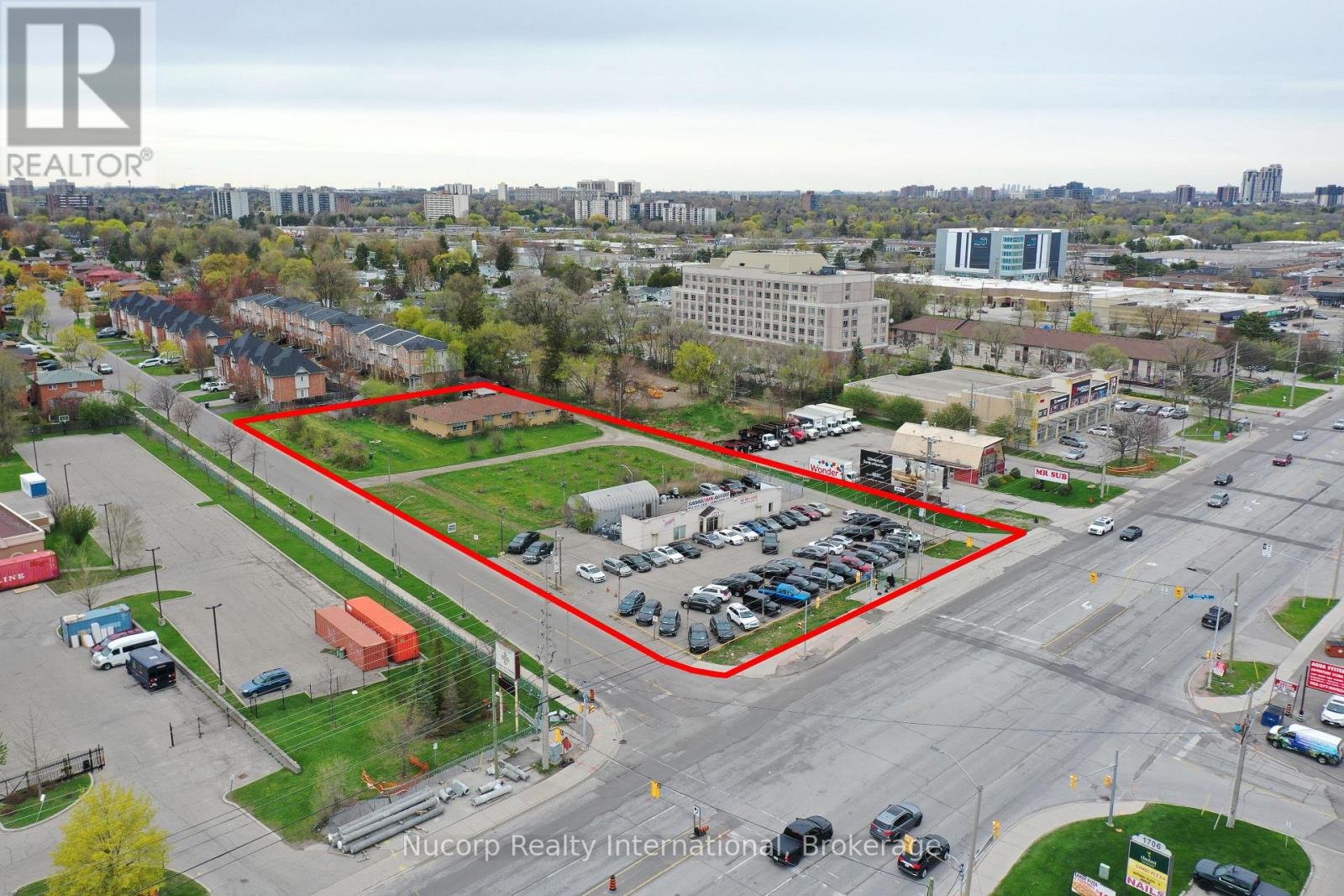
Dixie is an east Mississauga neighbourhood on the Toronto border with Etobicoke Creek ravine access, Port Credit GO proximity, and detached homes at prices below the adjacent south Mississauga premium communities.
Dixie occupies the eastern edge of Mississauga, bordering Etobicoke along the Etobicoke Creek and sitting just west of the Toronto boundary. The neighbourhood takes its name from the Dixie Road corridor that runs through it and was historically one of the main north-south routes in this part of the region before the highway network was built. Today Dixie sits in a mid-tier position in the Mississauga market: established, functional, and more affordable than the south Mississauga communities to its west, but without the prestige address character that drives premium pricing in Port Credit or Lorne Park.
The neighbourhood’s eastern edge along Etobicoke Creek is its most distinctive natural feature. The creek corridor carries a trail system and valley green space that provides walking access through a natural environment unusual for this dense part of the inner GTA. Some Dixie addresses back onto the creek valley, providing the same ravine-adjacent character that drives Toronto ravine premiums at a fraction of the cost. Buyers who find these addresses often describe them as among the best-value properties in eastern Mississauga.
The QEW runs through the southern portion of the area and provides direct highway access east to Toronto and west through Mississauga. Port Credit GO station is accessible south along Dixie Road, providing Lakeshore West GO train access for commuters. The proximity to Toronto’s Etobicoke neighbourhoods means that Dixie residents are closer to Toronto in actual driving time than any other Mississauga community, which is relevant for buyers who work in the city but want Mississauga prices and Mississauga taxes.
Dixie’s housing stock reflects its development across several decades, from the older commercial strips and postwar housing near Lakeshore to the more recent residential development further north. The Dixie Outlet Mall, one of the area’s commercial anchors, defines the retail character of part of the neighbourhood. The overall impression of Dixie is of a practical, working neighbourhood without strong aspirational character, which keeps prices accessible and appeal broad.
Dixie’s housing stock spans a wide range of types and price points. On the Etobicoke Creek-facing streets in the western part of the neighbourhood, ravine-adjacent detached homes trade in the $1,100,000 to $1,600,000 range, reflecting the premium buyers pay for backing onto a natural valley system. The majority of the neighbourhood’s detached homes sit in the $900,000 to $1,200,000 range, making Dixie one of the more accessible entry points for detached freehold ownership in south Mississauga relative to the neighbourhoods further west.
Along the Lakeshore Road corridor in south Dixie, a mix of older apartments, commercial properties, and smaller residential homes reflects the longer history of development in this section. These addresses are more urban in character and lower in price than the interior residential streets. Condo and apartment options in south Dixie provide entry points well below the detached market, with prices typically in the $450,000 to $650,000 range depending on building age and size.
The north Dixie area near Highway 401 carries industrial and commercial land uses that transition into residential only as you move south. Properties near the northern industrial edge are less desirable for residential buyers and trade accordingly. The mid-section of the neighbourhood, between Burnhamthorpe and the QEW, carries the core Dixie detached residential stock and represents the most consistent residential character of the area.
As of 2025, Dixie’s average home listing prices run around the city-wide mid-range, below the south Mississauga communities to the west and roughly comparable to Applewood, Rathwood, and Cooksville as peer neighbourhoods at similar price points. The eastern location adjacent to Toronto creates some additional demand from buyers who are cross-shopping Mississauga with Etobicoke and find that Dixie offers more space and lower prices than comparable Etobicoke detached homes.
Dixie’s market behaves like an accessible mid-range Mississauga community with the added dynamic of Toronto border crossover demand. When Toronto’s Etobicoke condo and detached markets run hot, buyers who are priced out of Etobicoke look across the municipal boundary to Dixie and find that prices for comparable detached homes are meaningfully lower. This cross-border demand has helped support Dixie values through market cycles in a way that is less pronounced in western Mississauga communities that do not have a Toronto adjacency.
The ravine-adjacent properties on the Etobicoke Creek are the most stable part of the Dixie market. Ravine lots in any GTA community have demonstrated consistent premium stability because the supply of ravine-adjacent land is finite and the natural environment cannot be replicated. These properties attract a slightly different buyer than the standard Dixie detached buyer, typically someone who has been actively searching for a ravine address and is willing to compete for it when one becomes available.
The industrial and commercial character of the northern Dixie area depresses overall neighbourhood averages and can create pricing confusion when buyers look at area-wide statistics without accounting for the land use variation across the neighbourhood. A comparison of detached residential sales in the mid-Dixie and south-Dixie zones, excluding the northern commercial-adjacent properties, shows a more accurate picture of what the residential market actually does.
Days on market in Dixie run in line with Mississauga mid-range averages, approximately 40 to 55 days in the current market. Properties with ravine access are faster. Properties with industrial adjacency or highway exposure are slower. Well-priced mid-Dixie detached homes attract genuine interest from multiple buyer types, typically transacting within a few weeks of listing at prices close to asking when priced accurately.
Dixie attracts buyers who are maximising the value of their budget rather than the prestige of their address. The typical Dixie buyer is a first-time freehold buyer who has been watching the Mississauga market and has identified Dixie as the most accessible entry point for detached home ownership in south Mississauga with good highway access and a short drive to Toronto. This buyer profile is stable and consistent, maintaining baseline demand for the neighbourhood across different rate environments.
Toronto cross-shoppers, buyers who are actively comparing Mississauga to Etobicoke for the same budget, represent a secondary buyer pool. These buyers typically arrive with experience looking at Etobicoke properties in the $900,000 to $1,200,000 range and find that Dixie delivers more space, a garage, and often a larger lot for comparable prices. The property taxes and Mississauga municipal services (compared to Toronto municipal services, which include transit subsidies and certain city programmes) are factors some of these buyers assess before crossing the boundary.
Long-term area residents also buy within Dixie when they are right-sizing or switching from rental to ownership. The neighbourhood has a stable long-term population with a higher proportion of owner-occupied properties than the city-centre condo-heavy communities. This owner-occupier stability tends to maintain street condition and building standards at a level that benefits all buyers looking at the area.
Investors find Dixie more attractive than many south Mississauga communities for rental properties, partly because the price point is more accessible and partly because the proximity to Toronto and GO Transit makes the neighbourhood rentable to a wide pool of tenants. The GO access at Port Credit station, a short drive south, and the QEW are both strong practical draws for renters who value transit and highway access over neighbourhood prestige.
The most desirable residential streets in Dixie are those backing onto or facing Etobicoke Creek in the western reaches of the neighbourhood. Cawthra Road, Trotwood Avenue, and the streets running toward the creek valley between Burnhamthorpe and the QEW carry some of the most sought-after detached addresses in the area. Properties that back onto the creek valley provide a natural backyard environment of a kind that is exceptionally rare at Dixie price points. Buyers who discover these streets often describe them as the best discovery of their home search.
The mid-Dixie residential streets running between Dixie Road and Cawthra Road form the primary family housing inventory. These streets carry the standard Mississauga mid-era detached stock: bungalows, sidesplits, and two-storey homes from the 1960s through the 1980s on lots of 40 to 60 feet. The character is consistent, the streets are established, and the pricing reflects a market that works well without glamour. For buyers who want a functioning family home rather than a showcase property, these streets represent solid value.
South of the QEW, toward Lakeshore Road and the lake, Dixie transitions into a more mixed character with apartment buildings, commercial uses, and smaller residential properties on the streets running to the water. This section has some of the most affordable housing in the broader area but also less residential coherence than the mid-neighbourhood streets. Buyers who are drawn to lakefront proximity should understand that the Dixie section of the Lakeshore Road corridor is significantly less polished than Port Credit or Clarkson’s lakeside streets.
The Dixie Road corridor itself carries commercial uses from automotive to retail to restaurant, and properties immediately adjacent to Dixie Road experience both noise and traffic exposure that reduces their residential appeal. The best approach is to look at streets that are set back from the arterial by at least one block. The difference in day-to-day experience between a property on Dixie Road and one on a parallel street 200 metres away is substantial and is reflected in pricing differences that can be $50,000 to $100,000 on otherwise comparable properties.
Port Credit GO station on the Lakeshore West line is the primary GO Transit access for Dixie residents. The station is a 10 to 15 minute drive south via Dixie Road and Lakeshore Road, and it offers one of the most frequent and fastest GO Train services to Union Station on any line. Express trains from Port Credit reach Union Station in approximately 28 to 32 minutes. This GO access, while requiring a drive to the station, provides a commute into downtown Toronto that is faster than many addresses within Toronto itself once travel time to the subway is factored in.
The QEW provides direct highway access east to Toronto and west through Mississauga. The QEW interchange at Cawthra Road provides easy on-ramp access for the mid-Dixie residential streets. Highway 401 is accessible north via Dixie Road or Cawthra. The proximity to the Toronto border means that the drive to western Toronto destinations along the QEW or Lakeshore Road is shorter from Dixie than from any other Mississauga community.
MiWay bus routes along Dixie Road and Cawthra Road provide local transit connections within Mississauga. The service is adequate for occasional transit use and for connections to Port Credit GO. For residents who commute regularly by transit, the MiWay to GO transfer at Port Credit is the standard pattern. The Hurontario LRT, when it opens, will not serve Dixie directly as it runs further west along Hurontario Street, but its connection to Port Credit GO will improve overall transit network connectivity.
The Waterfront Trail runs along Lake Ontario and is accessible south of the QEW, providing cycling and walking connections east to Toronto and west toward Port Credit. For south Dixie addresses within cycling range of the trail, this provides an active-transportation commute option to Port Credit GO and access to the broader trail network.
Etobicoke Creek Conservation Area runs along the eastern boundary of the Dixie neighbourhood, providing the primary natural green space for the area. The valley trails along the creek connect north toward Brampton and south toward Lake Ontario, offering a natural trail system that is longer and more varied than many urban creek corridors in the inner GTA. The Credit Valley Conservation authority manages significant sections of the creek valley, and the trail quality is good for most of the accessible length through this area.
Cawthra Park, a large neighbourhood park on Cawthra Road, provides active recreation facilities including sports fields, a skating oval, and playground equipment serving the mid-Dixie residential area. The park is well-used and well-maintained, providing the standard City of Mississauga park infrastructure that families in the surrounding streets depend on for daily recreation.
The proximity to Port Credit and the Lake Ontario waterfront means that south Dixie residents are within a short drive of J.C. Saddington Park, Jack Darling Memorial Park, and the Waterfront Trail access that characterises Port Credit’s waterfront. For Dixie residents who want regular lake access, the drive to these Port Credit parks is short enough to be used regularly rather than occasionally.
The northern Dixie area has more limited park access given the industrial character of that zone. Residents of mid and south Dixie are better served by the combination of Etobicoke Creek trails, Cawthra Park, and the accessible Port Credit waterfront. The overall park situation is adequate rather than outstanding, with the creek valley access being the standout feature that differentiates the best Dixie addresses from the average ones.
The retail picture in Dixie is dominated by the Dixie Road commercial corridor and the nearby Dixie Outlet Mall. The outlet mall carries discount and brand-name retail across a large format that attracts shoppers from across the region. For day-to-day shopping, the Dixie Road strip has grocery options including a Food Basics and a Real Canadian Superstore within a short drive, along with the standard plaza retail of pharmacy, fast food, and service businesses. The retail is functional and accessible without being distinctive or attractive as a destination.
Port Credit village is a short drive south and provides the nearest genuine independent restaurant and cafe district. For sit-down dining and independent retail, the Port Credit strip is the practical destination for most Dixie residents, and the drive is short enough to make it a regular rather than occasional option. This proximity to Port Credit’s lifestyle amenities at lower residential prices is one of the core value propositions of the Dixie location.
Square One is accessible north via Hurontario or west via the QEW in approximately 15 to 20 minutes. For major retail needs, Square One is a practical option for Dixie residents without being as conveniently close as it is for Cooksville or City Centre residents. The Heartland Town Centre in north Mississauga is a longer drive but provides the big-box retail options that households doing major shopping need.
The diverse population of Dixie has created a good selection of ethnic grocery stores and restaurants along Dixie Road and the adjacent commercial strips. South Asian, Caribbean, and various other cuisines are represented in independent and semi-independent restaurants along the corridor. This dining variety, while not polished in the way Port Credit’s restaurant scene is, provides genuine options for residents who want to eat well without driving far.
Dixie is served by the Peel District School Board (PDSB) and the Dufferin-Peel Catholic District School Board (DPCDSB). The primary secondary school for the Dixie public catchment is Cawthra Park Secondary School, which carries the same strong reputation and Regional Arts Program that serves the Cooksville and Mississauga Valleys catchments. Cawthra Park’s arts program accepts students from across the region by audition, and its general academic programming is well-regarded. Secondary school quality is a genuine strength of the Dixie location given the Cawthra Park catchment.
Elementary schools in the Dixie catchment include Cawthra Park Public School at the elementary level and several other PDSB schools serving the residential streets. Catholic elementary schools under DPCDSB serve the Catholic-school families in the area. The elementary school picture in Dixie is adequate by Peel District standards without reaching the upper tier of rankings that schools in western Mississauga’s premium communities achieve.
Port Credit Secondary School is available as an alternative for families in the southern Dixie catchment who can access it. Port Credit Secondary is well-regarded and serves a different geographic zone of south Mississauga, with its catchment typically covering addresses further south and west. Families should confirm specific catchment through the PDSB school finder rather than assuming access to a specific school based on general neighbourhood description.
The school situation in Dixie is similar to what buyers find in Cooksville or Applewood: solid secondary options, particularly at Cawthra Park, with elementary schools that perform adequately without generating the top-tier rankings that drive premium pricing in Lorne Park or Churchill Meadows. For families who are weighting transit access, price, and Toronto proximity alongside school quality, the school picture in Dixie is unlikely to be a disqualifying factor.
Dixie’s development landscape is shaped by its proximity to the Toronto border and the ongoing intensification of the Hurontario corridor to its west. The neighbourhood itself has limited large-scale residential development sites, as it is largely built out with a mix of residential, commercial, and industrial uses. Incremental intensification is occurring along some commercial strips, where older one-storey plaza retail is being replaced by mixed-use mid-rise proposals. This intensification adds housing supply to the area while improving the commercial quality of some corridors.
The Lakeview Village development to the east, in the Gateway area, is the largest nearby development project with potential to affect the broader east Mississauga market over time. As Lakeview Village delivers new residents and amenities to the eastern lakeshore, the character of the broader corridor from Dixie through Gateway will evolve. Dixie sits just outside the direct Lakeview Village impact zone but is close enough that the development’s eventual completion will affect regional demand and pricing in adjacent communities.
Provincial planning policy continues to push for increased density around major transit stations, and the Port Credit GO station nearby is a major development node. The growth around Port Credit GO has been ongoing for several years and is adding population and amenity density to the area that south Dixie residents can access. This regional growth at the transit node supports sustained demand for properties in the adjacent communities even when Dixie itself does not have the transit node directly.
The industrial lands in north Dixie represent a long-term conversion opportunity as industrial uses in the inner ring of the GTA gradually give way to residential and mixed-use development over decades. This is a slow-moving trend rather than an imminent development story for Dixie, but the direction of conversion is consistent across the inner GTA and will eventually affect the character of the northern neighbourhood edge.
Q: What do homes cost in Dixie Mississauga and how does it compare to adjacent communities?
A: Dixie sits in the mid-range of Mississauga pricing, with detached homes on the residential streets typically trading in the $900,000 to $1,200,000 range. Ravine-adjacent properties on the Etobicoke Creek-facing streets command premiums of $100,000 to $200,000 over comparable interior homes. Condos and apartments along the Lakeshore and Dixie Road corridors provide entry points in the $450,000 to $650,000 range. Compared to Port Credit, which starts at around $1,295,000 for an average home, Dixie is significantly more affordable for detached freehold. Compared to Etobicoke communities on the Toronto side of the boundary, Dixie typically offers more space at lower prices for comparable detached properties. The affordability relative to its immediate neighbours is Dixie’s clearest competitive advantage in the market.
Q: How accessible is Port Credit GO station for Dixie residents and what is the commute like?
A: Port Credit GO station is approximately 10 to 15 minutes south by car from mid-Dixie residential addresses. For Lakeshore West express service, Port Credit is one of the best stations on the line, with trains reaching Union Station in approximately 28 to 32 minutes. The limitation is that reaching the station requires a car or a MiWay bus connection, which adds 15 to 25 minutes to the total trip depending on the specific origin address and connection timing. For daily commuters, this is manageable. For less regular transit users, the pattern of needing to drive to the GO station and park reduces the spontaneity of transit use. The parking at Port Credit GO fills by mid-morning on weekdays, so commuters who leave after 8:30am typically use paid parking overflow or plan around this constraint.
Q: What is the character of the Etobicoke Creek valley in Dixie and how accessible are the trails?
A: The Etobicoke Creek corridor along Dixie’s eastern boundary is a genuine ravine trail system managed partly by Credit Valley Conservation and partly by municipal parks. The trails run through the valley from north to south, connecting the residential streets that back onto the ravine to a continuous natural environment. The trail quality is good in most sections, with a mix of hard surface and natural trail depending on the section. Access points from the residential streets are in the western Dixie area near the ravine edge. Properties that back directly onto the ravine have the most immediate access, but residents on streets within a few blocks can walk to the trail head in 10 to 15 minutes. In the context of the inner GTA, this type of ravine access at Dixie price points is genuinely good value.
Q: Is Dixie a good area for first-time buyers who want a house rather than a condo?
A: Dixie is one of the more accessible entry points for detached freehold ownership in south Mississauga. The combination of Toronto proximity, Port Credit GO access, ravine-adjacent options on a subset of streets, and prices below the more prestigious south Mississauga communities makes it a rational choice for first-time buyers who have been priced out of Port Credit, Mineola, or Lorne Park. The honest trade-offs are the mixed industrial character of the northern area, the lack of a village-style commercial district, and elementary school rankings that are mid-tier rather than exceptional. Buyers who assess these trade-offs and decide they are acceptable typically find that Dixie delivers good value for the price and the practical benefits of the location are consistent with their daily needs.
Dixie is a market where the land use variation within the neighbourhood requires specific local knowledge to navigate effectively. The difference between a property backed onto the Etobicoke Creek ravine and a property backed onto an industrial parcel on the northern edge is enormous in terms of daily living experience, yet both carry the Dixie neighbourhood label and the distinction is not always clearly communicated in listing descriptions. A buyer’s agent who knows the specific streets and the specific land use context of each address can prevent buyers from making a purchase that doesn’t match their intentions.
The Toronto cross-shopping dynamic creates a specific market context in Dixie. When Etobicoke prices are elevated, Dixie draws Toronto buyers who cross the boundary. When Etobicoke softens, those buyers focus there instead. A buyer’s agent who tracks both markets can advise on the relative timing and value of purchasing in Dixie versus adjacent Etobicoke communities at any given point, which is a comparison that most buyers are making whether or not their agent is helping them frame it clearly.
The ravine-adjacent properties in Dixie are one of the best-value propositions in the GTA for buyers who understand ravine premiums in Toronto. The same ravine exposure that commands $200,000 to $400,000 premiums in Etobicoke communities commands significantly smaller premiums in Dixie simply because the neighbourhood brand is less prominent. For buyers who are informed about the ravine value argument and are comfortable with the Mississauga side of the boundary, this represents a genuine arbitrage opportunity. A buyer’s agent with this specific perspective can guide the search effectively.
Pricing negotiation in Dixie follows Mississauga mid-range patterns. The current market with elevated inventory provides negotiating room on most properties that have been sitting for 30 days or more. For the ravine-adjacent properties and any property with genuinely distinctive attributes, multiple interest situations still occur. Knowing which properties are likely to attract competition versus which are more negotiable requires tracking the neighbourhood in real time rather than relying on historical averages.
Street-level knowledge is hard to find online. Our team works in Dixie every day. They know which pockets hold value, where the school catchment lines actually fall, and what the market is doing right now. Talk to us before you make a decision about Dixie.
Talk to a local agent