
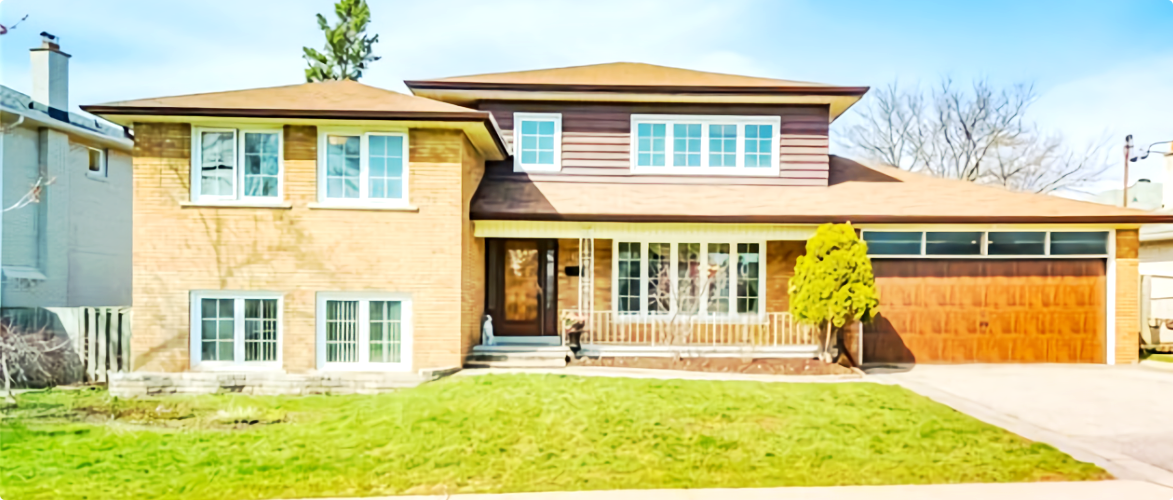
Don Valley Village is a practical, well-connected North York neighbourhood east of the Don Valley that offers a range of housing from affordable condos to detached family homes, with Sheppard subway stations nearby.
Don Valley Village sits in the northern tier of North York, bounded roughly by Sheppard Avenue East to the south, the Don Valley and the 404 corridor to the east, and Leslie Street to the west. It’s a neighbourhood built in earnest during the 1960s and 1970s, when the City of North York was expanding rapidly and the land here was developed for apartment towers, townhouse complexes, and subdivisions of detached homes all at once. That layered history is visible today in the building stock: you’ll find 1960s high-rise rental blocks sitting a short walk from postwar bungalows and 1980s townhouse courts.
The neighbourhood doesn’t have the kind of concentrated main street that defines older Toronto communities. Its commercial anchors are Fairview Mall at the intersection of Don Mills Road and Sheppard, and a stretch of Don Mills Road with plazas, ethnic grocery stores, restaurants, and service businesses that reflect the population. The community has been home to significant Chinese, South Asian, and Caribbean immigrant populations for decades, and the businesses along Don Mills Road are a direct expression of that. This isn’t a neighbourhood that performs diversity; it just is diverse, in the way that neighbourhoods shaped by successive waves of immigration over fifty years tend to be.
For buyers, the draw is practical: subway access on the Sheppard line, a broad range of housing types, and prices that remain meaningfully lower than comparable properties in more centrally located parts of the city. It’s a neighbourhood that rewards buyers who know what they need and aren’t paying for a postcode.
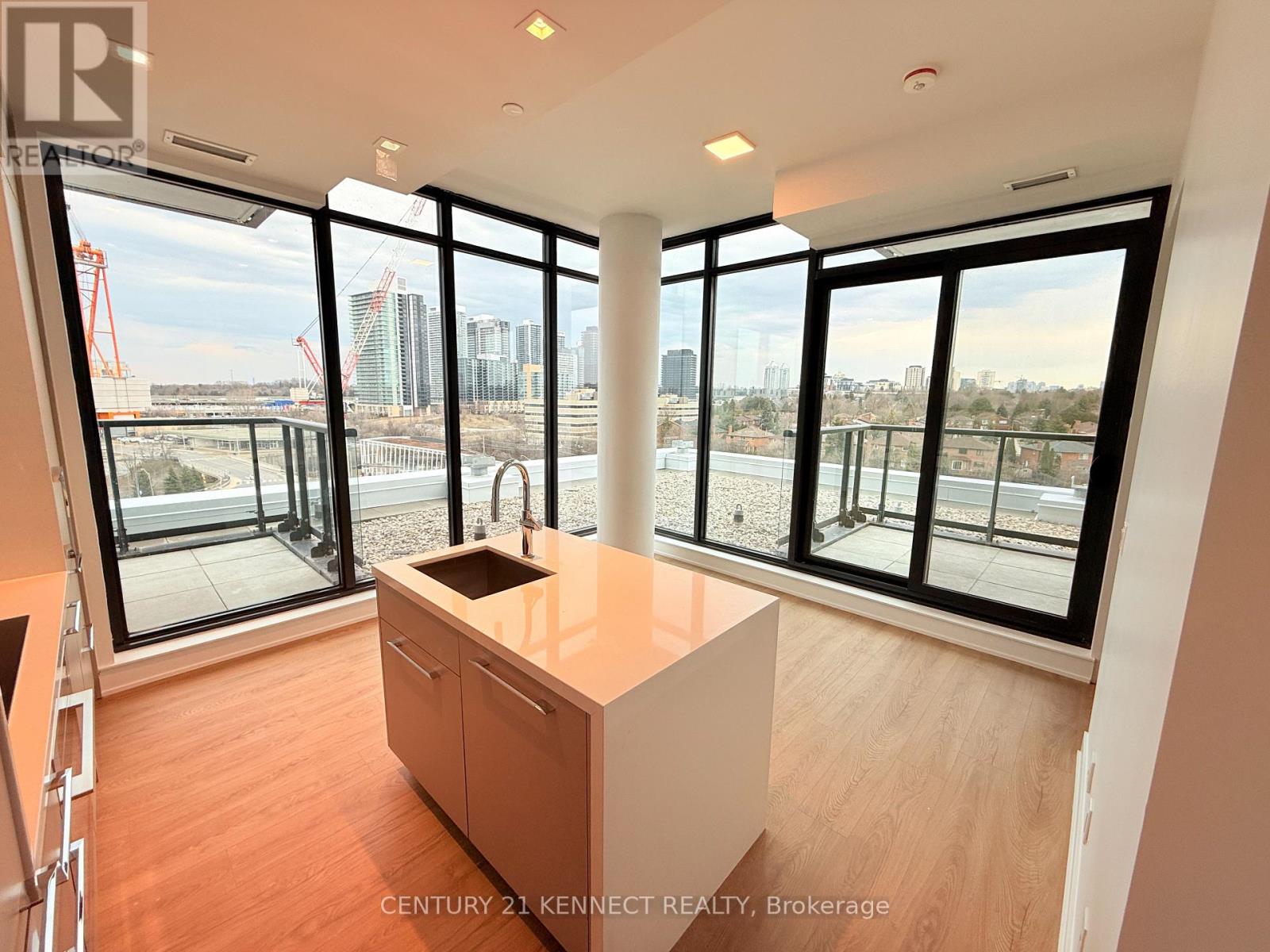
The housing stock in Don Valley Village is more varied than the neighbourhood’s suburban reputation suggests. The most visible element is the high-rise apartment and condominium towers, mostly built between 1965 and 1985, that line Don Mills Road and cluster near the Sheppard corridor. Some of these buildings are still purpose-built rentals; others have been condominiumised or converted over the years. Condo units in these buildings range from studios and one-bedrooms to large three-bedroom suites that were built at a time when units were actually sized for families. Prices in 2026 run from roughly $400,000 for a compact one-bedroom to $700,000 for a larger two- or three-bedroom unit in a well-maintained building.
Townhouses represent the middle tier. These are generally stacked or row townhouses in complexes developed through the 1970s and 1980s, with layouts that give buyers two or three floors, a small private outdoor space, and square footage that genuinely works for families. Finished basements are common. Prices in 2026 fall between $700,000 and $1.1 million depending on size, interior condition, and whether the complex has been updated. Some complexes are freehold; others are on common element condominiums with monthly fees, so the ownership structure matters and buyers should clarify it before going firm.
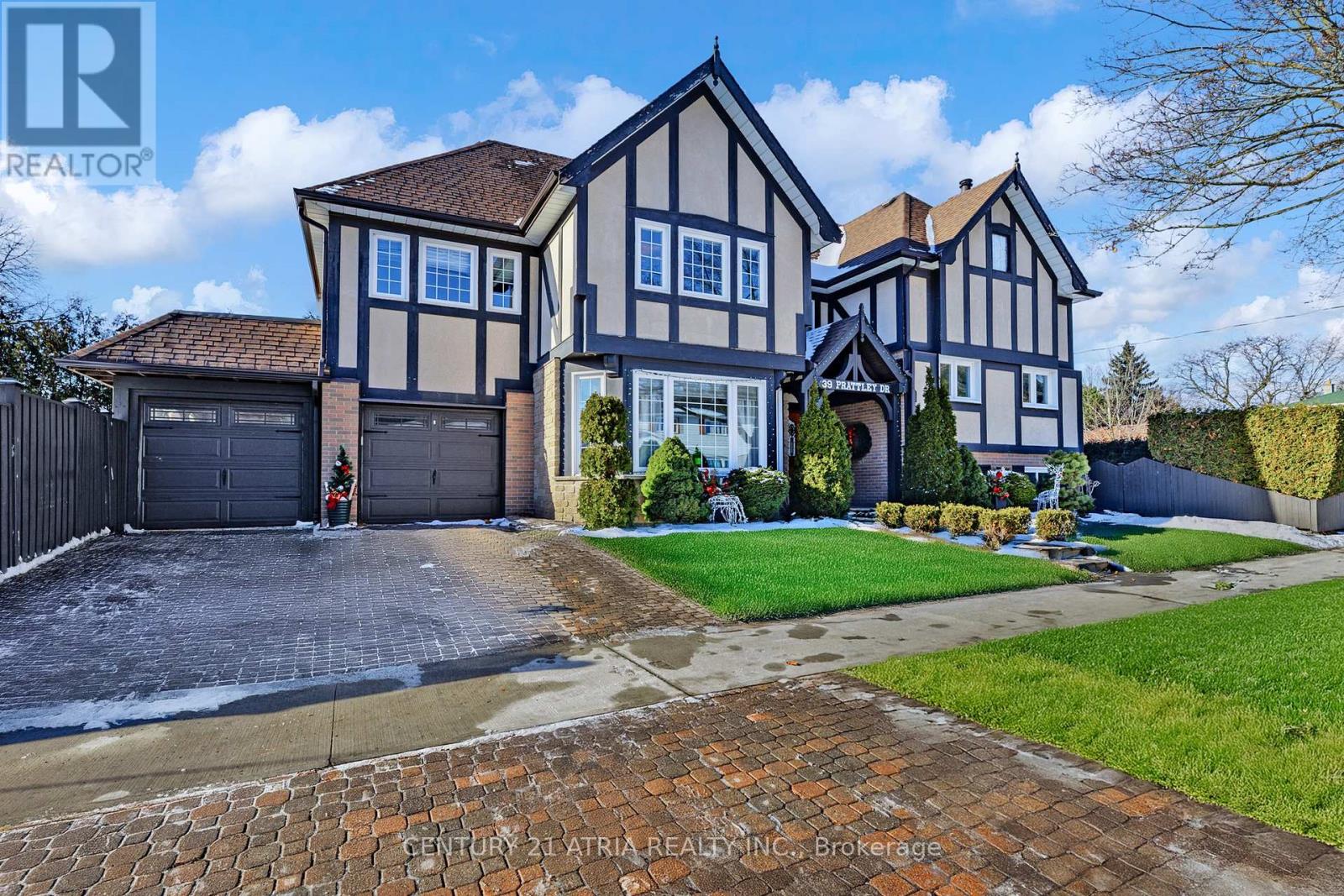
Detached homes occupy the quieter residential streets that run north of Sheppard and east of Don Mills Road. These are mostly postwar bungalows and two-storey detached houses on lots that vary considerably in depth. Some have been renovated substantially; others are original condition and priced accordingly. In 2026, detached homes in Don Valley Village trade between $1.1 million and $1.5 million. That range positions the neighbourhood clearly: it’s not Scarborough prices, but it’s also not Don Mills or Leaside. Buyers get genuine suburban detached housing with subway proximity at a number that remains achievable for two-income households.
Don Valley Village doesn’t behave like the fast-moving inner-city markets where every offer night produces a bidding war. The condo market here, particularly in the older high-rise towers, tends toward longer days on market and more negotiating room. Buyers who approach these listings with patience often do better than those who feel urgency. The exception is well-maintained, recently renovated suites in buildings with reasonable monthly fees, which attract more competition and move closer to list price.
The townhouse segment is tighter. Good townhouses in this neighbourhood are genuinely scarce relative to demand, particularly freehold properties with private garages. When a well-maintained townhouse comes to market, it typically sells within two to three weeks and frequently above list price during the spring and fall peaks. Buyers competing for townhouses here should come prepared with financing in order and, if possible, a pre-inspection, because conditional offers are at a disadvantage when sellers have multiple interested parties.
The detached market is more transaction-by-transaction. Condition matters enormously. A renovated detached home on a wide lot will sell quickly and close to or above asking; an original-condition bungalow needing a full update may sit for five or six weeks before finding the right buyer. The neighbourhood attracts a steady stream of buyers who are specifically looking for a detached home with subway access at a sub-$1.5 million price point, so listings that are priced correctly don’t stay available long regardless of condition. Sellers who misprice to the upside tend to chase the market down through price reductions rather than landing strong from the start.
First-time buyers make up a significant share of transactions here, drawn by the combination of subway access and prices that are still achievable without a parental gift or a decade of saving. A couple buying a two-bedroom condo near Don Mills station can commute downtown without a car and have meaningful equity in a real asset. That calculus is getting harder to find in Toronto, and Don Valley Village remains one of the places where it still works.
Investors have always been active in the high-rise buildings, partly because of the large existing rental stock, which normalises tenancy in the area, and partly because rental demand from the Seneca College Newnham campus and from new immigrant families is consistent. The buildings built in the 1960s and 1970s were designed for families and often have larger suites than newer condo construction, which means they rent to households who genuinely need the space rather than competing for the same micro-unit tenants as downtown towers.
There’s also a strong returning buyer cohort: families who originally came to Don Valley Village as immigrants, built roots here, and now return to buy a home near parents or siblings who stayed in the neighbourhood. This is particularly noticeable in the Chinese and South Asian communities that have been anchored here since the 1980s. It’s the kind of buyer motivation that rarely shows up in market statistics but is real and constant, and it provides a floor of demand that keeps the neighbourhood stable even when the broader market is soft.
Condo buyers in the older towers need to look carefully at the status certificate before going firm on anything. These buildings were built at a time when reserve funds were not a legal requirement and many have been playing catch-up for decades. A building with a well-funded reserve and a recent engineer’s report is worth significantly more than a building carrying a large special assessment or facing near-term capital work on elevators, garage membranes, or balconies. Your lawyer should review the status certificate in full and flag any upcoming work or deficit in the reserve fund. The monthly maintenance fee alone doesn’t tell you whether the building is financially healthy.
For townhouses in common element or condominium complexes, the same review applies but with the added consideration of parking and locker ownership. Some complexes have exclusive use parking that isn’t owned outright; others have deeded parking spaces. The distinction matters for financing and resale. Buyers should also confirm what the condo corporation covers, particularly whether exterior maintenance and roofing fall to the corporation or the individual owner, since misunderstandings here create expensive surprises.
On detached homes, the biggest due diligence items are the basement and the mechanical systems. Many of these houses still have original knob-and-wiring or mid-century electrical panels that insurers won’t touch without an upgrade. Basement waterproofing is another consistent issue in the area, particularly on homes that back onto lower ground. A pre-offer home inspection is worth the cost on every detached purchase here. Buyers who skip it to be competitive on an offer night occasionally win a house and inherit problems that cost more to fix than they saved at negotiation.
Sellers in Don Valley Village need to be precise about positioning. The neighbourhood’s name recognition isn’t as strong as nearby communities like Don Mills or Willowdale, and buyers searching online may not find your listing unless it’s also tagged clearly with the cross-streets and nearby landmarks. A listing that leads with “steps to Don Mills subway” and “walking distance to Fairview Mall” will pull in more search traffic than one that relies on buyers knowing the neighbourhood boundaries.
Presentation matters more here than in neighbourhoods where location alone sells the listing. Condos in the older towers compete directly with dozens of similar units in adjacent buildings, so staging, professional photography, and a clean, updated interior all move the needle on final sale price. A freshly painted unit with updated fixtures and a clear floor plan will consistently outsell an equivalent unit left in original condition, even if the price gap at listing appears small. Sellers who invest in cosmetic preparation before listing tend to recover that cost and more.
The optimal listing windows are March through May and September through November. The summer market in Don Valley Village is noticeably slower, partly because many buyers in the neighbourhood travel during the summer months and partly because fewer people are actively relocating in July and August. Sellers who can hold until September will generally see better results than those who list in July out of impatience. If you do need to sell in summer, price to account for the slower market rather than expecting spring-market dynamics.
Fairview Mall at Don Mills Road and Sheppard Avenue East has been the commercial heart of this part of North York since it opened in 1970. It’s a full-size enclosed mall with anchor tenants, a food court, and a supermarket, serving not just Don Valley Village but also parts of Flemingdon Park, Thorncliffe Park, and the communities along the Sheppard corridor. For residents, it means that grocery shopping, pharmacy needs, banking, and most daily errands are within a fifteen-minute walk or a very short drive from virtually any address in the neighbourhood.
The Don Mills Road corridor running south from Sheppard is a dense, practical commercial strip rather than a curated main street. You’ll find Chinese supermarkets, South Asian grocery stores, Vietnamese restaurants, Cantonese BBQ, halal butchers, and a mix of service businesses that reflect who actually lives here. It’s not the kind of strip you visit as a tourist, but it’s one of the most functionally useful commercial streets in North York for people who want to do their weekly food shopping without defaulting to a large chain supermarket.
The Sheppard Avenue East corridor is also evolving. Since the Sheppard subway opened in 2002, the city has encouraged higher-density development along the Sheppard corridor and there’s been ongoing mid-rise and high-rise construction at several sites between Don Mills and Leslie stations. This means the neighbourhood immediately around the stations is gradually changing, with newer residential buildings joining the 1970s towers. For buyers, this adds longer-term upside: the infrastructure is already in place and the development pressure toward intensification near subway stations is consistent city-wide policy.
Don Valley Village is served by two stations on the Sheppard subway line: Don Mills station and Leslie station. Both opened in 2002 when the Sheppard line connected Yonge Street to the Scarborough border. The line runs east-west and connects at Sheppard-Yonge station to the Yonge-University line, from which downtown is accessible in roughly thirty minutes under normal conditions. It’s not as fast as a direct Bloor-Danforth commute from the west end, but for people working in the Financial District or along the Yonge corridor, the connection is genuinely functional rather than aspirational.
The 25 Don Mills bus is the north-south spine of the area, running from Sheppard south through Flemingdon Park and Thorncliffe Park to Pape station on the Bloor-Danforth line. It runs frequently during peak hours and connects the neighbourhood to the crosstown subway for anyone who needs to travel east-west through the city. The 54 Lawrence East bus connects the western edge of the neighbourhood along Lawrence Avenue, and several other routes serve the Sheppard and Leslie corridors. TTC coverage isn’t as dense as it would be in an older, grid-plan part of the city, but the subway access at both ends of the neighbourhood means most residents are within a fifteen-minute walk of rapid transit.
By car, the Don Valley Parkway is accessible from the south end of the neighbourhood via Don Mills Road, and Highway 404 is the eastern border of the community. For commuters heading to the 401 or to employment nodes in Markham or Scarborough, the neighbourhood’s location is genuinely convenient. The Gardiner and DVP are reachable in ten to fifteen minutes without highway traffic. Parking is plentiful by Toronto standards: most detached homes have a driveway, most townhouse complexes have assigned parking, and the older condo towers often have surface or underground parking included or available for purchase.
The most direct comparison is to Flemingdon Park and Thorncliffe Park, the communities immediately to the south along Don Mills Road. Both of those neighbourhoods have similar demographic profiles and similar housing mixes with a heavy lean toward apartments and townhouses, but they’re south of Sheppard and generally have lower prices for equivalent property types. The trade-off is subway access: Flemingdon Park and Thorncliffe Park rely primarily on surface bus routes and don’t have the same rapid transit proximity that Don Valley Village offers. Buyers who need the subway and want to be in this general corridor will pay a modest premium to be north of Sheppard.
Compared to the Don Mills neighbourhood immediately to the west, Don Valley Village is noticeably less expensive and has a different character. Don Mills was a planned community built in the 1950s and 1960s with intentional design, and it has cultivated a degree of cachet that translates into price premiums. Detached homes in Don Mills regularly trade above $1.5 million and in some pockets well above that. Don Valley Village is the more affordable alternative for buyers who want proximity to Don Mills without the Don Mills price point, and the two communities share the Sheppard subway infrastructure equally.
Compared to Willowdale and the broader North York centre area around Yonge and Sheppard, Don Valley Village is quieter, less dense at street level, and meaningfully cheaper. Willowdale has seen years of high-rise intensification and has a more urban feel. Don Valley Village remains suburban in its bones and feels it. That’s an advantage for buyers who specifically want space, calm, and a neighbourhood scaled to families rather than commuters. It’s a disadvantage for buyers who want walkable retail and restaurants on their doorstep.
Schools in Don Valley Village are administered by the Toronto District School Board. Crestview Public School serves younger students in the central part of the neighbourhood. Secondary students are zoned primarily to Georges Vanier Secondary School and Don Mills Collegiate Institute, both of which have been serving the area for decades. Don Mills Collegiate in particular has a long history in the community. Families moving to the neighbourhood should confirm their specific catchment with the TDSB before purchasing, since boundaries do shift and some addresses fall into adjacent catchments depending on exact location.
Daily life in Don Valley Village is suburban in pace and practical in character. Most residents drive for most errands, though the proximity of Fairview Mall means those on the Don Mills bus route can manage without a car for the majority of household needs. The neighbourhood has several parks, including Gwendolen Park and the green spaces along the Don Valley edge of the community, which give residents access to trails and open space without leaving the area. The Don River valley trail system is accessible from the eastern edge of the neighbourhood and connects south through Flemingdon Park and ultimately to the Don Valley trail network running into the city.
The population is genuinely diverse and has been for a long time. The Chinese community established itself here in the 1980s and 1990s, drawn initially by the affordability and the proximity to employment in the Don Mills business park corridor. South Asian and Caribbean communities followed through similar patterns of chain migration and affordability. The neighbourhood today has a stable, multigenerational character in its immigrant communities: families who arrived in the 1980s have adult children and grandchildren who continue to live nearby. This creates a kind of social cohesion that’s different from, but not lesser than, what you find in established Anglo-Canadian neighbourhoods elsewhere in the city.
What are home prices like in Don Valley Village in 2026? Condos sell in the $400,000 to $700,000 range depending on size, building condition, and monthly fees. Townhouses trade between $700,000 and $1.1 million, with freehold townhouses at the higher end of that range. Detached homes fall between $1.1 million and $1.5 million. These figures represent a meaningful discount to comparable property types in more central Toronto neighbourhoods, and the subway proximity makes the trade-off in commute time genuinely manageable for most downtown workers.
Is Don Valley Village a good investment? It has performed steadily over time without the dramatic swings of more volatile inner-city markets. The two Sheppard subway stations provide a reliable infrastructure anchor, and the city’s intensification policies along the Sheppard corridor support continued development near the stations. Investors buying condos for rental should focus on buildings with healthy reserve funds and reasonable monthly fees, since those are the properties that attract quality long-term tenants and don’t carry the special assessment risk that some of the older towers do. It’s not a neighbourhood where you’ll see speculative gains driven by rapid gentrification, but it’s stable and the demand is consistent.
How long is the commute downtown? From Don Mills or Leslie station, a Sheppard subway trip to Sheppard-Yonge takes around ten minutes. From there, the Yonge line south to King or Union is another fifteen to twenty minutes depending on the stop. Door-to-door from most addresses in Don Valley Village to the Financial District, you’re looking at forty to fifty minutes by transit. That’s longer than commutes from the Annex or Leslieville, but shorter than most inner suburbs without rapid transit, and it’s faster than the 401-corridor drive for anyone working downtown.
Are the older condo buildings worth buying in? Some yes, some no. The key variable is the state of the reserve fund and the quality of property management. Buildings that have been conscientiously maintained and have funded their reserves properly are solid purchases at prices that reflect their age. Buildings that have deferred maintenance and underfunded reserves carry real financial risk in the form of upcoming special assessments. The status certificate review is non-negotiable on any purchase in these buildings. A good real estate lawyer with condo experience in the area can identify the warning signs before you go firm.
The land that became Don Valley Village was largely farmland and ravine until the postwar suburban expansion of North York accelerated in the late 1950s and 1960s. The area was developed not as a single planned community but as a series of individual projects by different builders across roughly three decades, which explains the heterogeneous character of the housing stock. Apartment towers went up along the main arteries as developers responded to the city’s growing rental housing demand. Detached subdivisions filled in the quieter streets. Townhouse complexes came later, in the 1970s and 1980s, as land values increased and density per parcel became more economically important to developers.
The Don Mills Road and Sheppard Avenue intersection, now anchored by Fairview Mall, was identified early as a regional commercial node. Fairview Mall opened in 1970 and immediately became the commercial centre for a large swath of North York that had limited local retail. The mall’s presence shaped residential development in the surrounding area and continues to define the neighbourhood’s commercial character fifty years later. It’s a reminder that in suburban North York, commercial anchors have outsized influence on how communities develop and what buyers expect to find when they move in.
The opening of the Sheppard subway in 2002 was the most significant infrastructure event in the neighbourhood’s recent history. Prior to the subway, the Sheppard corridor was primarily a surface bus route and the neighbourhood’s transit access, while functional, wasn’t a selling point. The subway changed that calculation and contributed to the sustained interest in the neighbourhood from buyers who need rapid transit access. The line has also been the catalyst for ongoing intensification proposals and development near the Don Mills and Leslie stations, which will continue to shape what the neighbourhood looks like over the next decade.
Street-level knowledge is hard to find online. Our team works in Don Valley Village every day. They know which pockets hold value, where the school catchment lines actually fall, and what the market is doing right now. Talk to us before you make a decision about Don Valley Village.
Talk to a local agent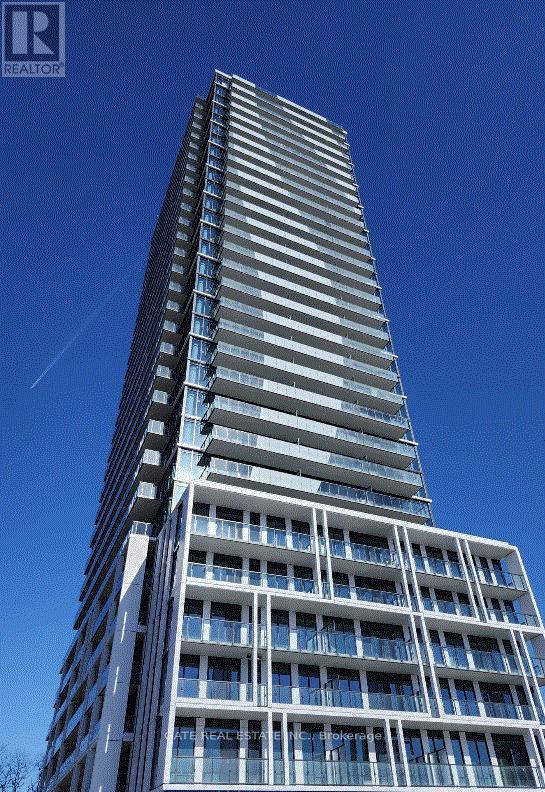 For Rent
 For Rent
 For Sale
 For Rent