
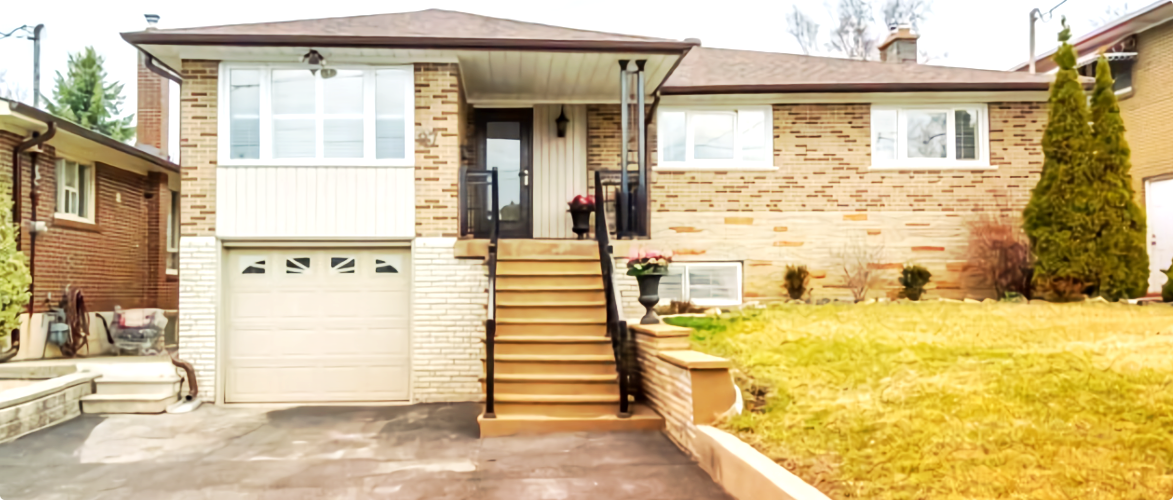
Downsview-Winston Park is a North York neighbourhood in active transformation, anchored by Sheppard West subway station and adjacent to the Downsview Park master-planned community being built on hundreds of acres of former military and Bombardier lands. Older semis and bungalows trade from $900K to $1.2M while newer builds in the development precinct price higher. Downsview Park itself is one of the largest urban parks in Canada at over 290 acres.
Downsview-Winston Park is one of the most interesting neighbourhood stories in current Toronto real estate, and also one of the most complex. The area sits in North York, anchored by the intersection of Keele Street and Sheppard Avenue West, and it encompasses both a long-established residential community and what is becoming one of the largest urban redevelopment projects in Canadian history on the former Bombardier and Department of National Defence lands.
The Downsview name carries history. This was an active military base and aircraft manufacturing site for most of the 20th century. The de Havilland and later Bombardier Aerospace operations shaped the physical and economic character of the area for generations, and the gradual wind-down of those operations, completed with Bombardier’s departure in 2023, opened the way for the master-planned community that is now being built on hundreds of acres of land in the heart of North York.
The existing residential neighbourhood surrounding this development site is older and more modest: post-war bungalows and semis, apartment towers from the 1960s and 1970s, and an immigrant-heavy population that reflects North York’s broader demographics. The streets around Keele and Sheppard have a functional, unpretentious character. The neighbourhood is not defined by prestige or architectural charm. It is defined by transit access, proximity to a massive park, and its position adjacent to the largest development opportunity in the city.
Winston Park, a residential area to the west of Keele near Wilson Avenue, is the quieter and more established part of the broader neighbourhood designation. It’s worth distinguishing between the development-adjacent Downsview area and the more settled Winston Park streets, because they offer quite different experiences and involve different risks and considerations for buyers.
The existing housing stock in Downsview-Winston Park is predominantly post-war: bungalows, semis, and side-splits built in the 1950s through 1970s, with lot sizes similar to other North York working-class communities from that era. Lots typically run 25 to 40 feet wide with depths of 100 to 130 feet. These are modest, functional homes that have served successive generations of owner-occupants and renters.
Older apartment towers are clustered along Keele Street and near Sheppard, built in the 1960s and 1970s during the era of suburban tower development. These are rental-dominant buildings that form a significant part of the neighbourhood’s housing fabric, particularly for the lower-income and recent-immigrant households that make up a substantial portion of the population.
The newer construction associated with the Downsview Park development is a completely different product. Condominiums and stacked townhouses in the first phases of the Canary District-style master-planned community have been built on the eastern edge of the former base lands, and prices here reflect the newness and the investment thesis around the broader project rather than the surrounding neighbourhood’s values. New build condominiums in these phases were selling in the $700,000 to $1.1 million range for one and two-bedroom units in 2026, which is above the resale price of freehold bungalows in the surrounding area.
The resale freehold market, the original bungalows and semis around Keele and Sheppard, was priced in the $900,000 to $1.2 million range for detached homes in reasonable condition in 2026. Semis ran $800,000 to $1 million. Proximity to Sheppard West station was the strongest positive pricing driver, with homes within comfortable walking distance commanding a premium over otherwise comparable properties a kilometre away. Unrenovated properties with deferred maintenance were available at the lower end of the range and attracted buyers willing to do the work.
The market in Downsview-Winston Park has two distinct dynamics running in parallel. The resale freehold market, the bungalows and semis in the established residential streets, behaves like other working-class North York neighbourhoods: moderate competition on well-priced properties, price sensitivity in the buyer pool, and investor activity that drives demand for the entry-level end of the freehold market. This segment is not dramatically different from Brookhaven-Amesbury or Humber Summit in how it moves.
The new construction condo market, tied to the Downsview Park master plan, is driven by investor speculation and end-user demand for new builds near a subway station. It has its own pricing logic, often disconnected from the resale freehold market around it. Buyers in this segment are making a bet on the full build-out of the master plan: that the retail, community amenities, and urban character promised in the master plan drawings will actually be delivered on a timeline that benefits their investment horizon. That bet is not unreasonable but requires understanding what has actually been approved and funded versus what exists only in planning documents.
The resale freehold market has benefited somewhat from the attention and investment associated with the broader Downsview development narrative. Sheppard West station has always been a driver for the neighbourhood, but the prospect of the master-planned community maturing over the next 10 to 20 years has kept some buyers focused on the area who might otherwise overlook it. Whether that development upside is already priced in, or whether there is still meaningful appreciation to come, is a genuine question and not one with a certain answer.
Days on market for resale freehold properties in the neighbourhood are typically 2 to 4 weeks for well-priced homes. The buyer pool is less competitive than around the Yonge subway corridor to the east, which means buyers in this market have somewhat more negotiating room than in the higher-profile North York neighbourhoods. Conditions, including home inspection conditions, are achievable in a way they often aren’t in hotter markets.
The buyer profile for Downsview-Winston Park covers a wider range than most comparable North York neighbourhoods, because the neighbourhood itself is more varied. At the freehold end, the buyer profile is similar to Brookhaven-Amesbury: first-time buyers seeking detached ownership within Toronto at accessible price points, immigrant families with community ties to the area, and investors looking for older bungalows with basement suite potential or land value.
The condo and new-build segment attracts a different buyer: transit-oriented urban buyers who want new construction near a subway station, investors looking for a foothold in what is positioned as an appreciating development precinct, and younger buyers who want to be in Toronto proper at a price point that works for them. These buyers are often making a trade-off between the amenity-sparse environment that currently exists around Downsview and the projections for what the neighbourhood will look like in 10 or 15 years when the master plan is further along.
A third buyer profile is worth noting: families and individuals who work at the institutions anchoring the area, York University to the northwest via the subway, Humber River Hospital a short distance away, and the various government and health sector employers in the Sheppard corridor. Proximity to workplace matters here, and for employees of these institutions the neighbourhood’s transit access and relative affordability make practical sense.
The trade-off buyers are making to be here, relative to more established North York neighbourhoods, is amenity depth and neighbourhood polish. Downsview-Winston Park has the transit infrastructure and the development potential, but the daily experience of the neighbourhood, the retail, the dining, the streetscape quality, is rougher than in more expensive comparables. Buyers who are buying the future rather than the present need to be clear-eyed about what the present actually looks like.
The streets immediately around Sheppard West subway station, within a five-minute walk, carry the strongest pricing in the neighbourhood’s freehold market. These include sections of Sentinel Road, Replin Road, and the streets that feed directly to the station entrance. The walk to a Line 1 subway station without needing a bus connection is a material quality-of-life advantage that buyers who commute by transit value concretely, and it’s priced accordingly.
Winston Park, the residential area west of Keele near Wilson, is distinctly quieter and more established than the Downsview core. Streets like Hucknall Road and the crescents running off Keele in the Winston Park section have a settled, family-oriented character with less apartment tower presence and less transient population than the Sheppard-Keele intersection area. Buyers who want the broader neighbourhood’s price points but less of the development-site energy of the Downsview core should look more carefully at Winston Park’s residential interior.
The new build development area, on and adjacent to the former base lands east of Keele and south of Sheppard, is its own distinct pocket. The Canary Wharf-developed sections have a new urban feel that is architecturally coherent but still sparse in terms of street-level activation. The retail and community amenities planned for these sections are arriving in phases, and buyers purchasing here are living in a construction zone for several years until the surrounding blocks fill in.
Keele Street itself is a busy arterial that divides the eastern Downsview development zone from the established residential streets to the west. Properties directly on Keele face traffic noise and commercial adjacency that reduces their residential appeal. One block in from Keele, the character changes meaningfully. Buyers should walk the specific street, not just the general area, before committing.
The streets north of Sheppard toward Downsview Park are adjacent to the park boundary, and properties that back onto or are immediately adjacent to the park have a quality of natural outlook that the price points in this neighbourhood don’t normally include. When these come available, they tend to sell relatively quickly to buyers who understand what they’re getting.
Sheppard West station is the neighbourhood’s transit anchor and one of its primary assets. It sits at the intersection of Line 1 Yonge-University and the Sheppard West bus terminal, making it one of the better-connected stations in North York for surface transit connections. From Sheppard West, downtown Union Station is approximately 25 to 30 minutes by subway, and the station also connects to York University campus via the Yonge-University line extension that runs north to Vaughan Metropolitan Centre.
The Downsview Park station, a separate stop on the line that opened with the Vaughan extension, serves the eastern portions of the development area. It’s one stop north of Sheppard West and primarily serves the emerging Downsview Park development precinct. For buyers purchasing in the new build sections adjacent to Downsview Park station, transit to downtown is genuinely convenient: a short walk to the platform and a direct subway ride without transfers.
Bus service along Sheppard Avenue West connects east toward Sheppard-Yonge and the broader Sheppard bus network, and west toward Etobicoke. The 41 Keele bus runs north-south along Keele, connecting to the subway and to York University. For residents in Winston Park, the Wilson bus on Wilson Avenue connects east to Wilson subway station, providing a second subway connection option.
Driving is reasonable. The 401 is accessible south via Keele or Dufferin, and the 400 north is reachable within 10 to 15 minutes. Allen Road provides a fast southern connection toward the city’s downtown core, though it congests during peak hours. For residents commuting by car to offices in the downtown or midtown core, the combination of 401 access and Allen Road gives reasonable options, though the commute time during peak hours is still 30 to 45 minutes to most downtown destinations.
Cycling infrastructure is improving but not yet well-developed. Keele Street has some bike lanes in sections, and the Downsview Park grounds include internal cycling paths, but connecting by bike to the broader city network involves navigating arterial roads without full protection. The long-term master plan includes cycling infrastructure commitments, but the existing reality for utility cyclists is limited.
Downsview Park is the neighbourhood’s dominant natural and recreational asset, and it’s a genuinely impressive one. The park occupies over 290 acres on the former military base lands, making it one of the largest urban parks in Canada and significantly larger than many of Toronto’s well-known parks. It has open meadows, a lake, forested sections, an off-leash dog area, sports fields, and a network of trails that accommodate running, cycling, and walking across a varied landscape.
The park’s scale means it never feels crowded except during major events, and on a weekday morning it offers the kind of open, quiet, expansive experience that is genuinely rare at the centre of a major city. For families with children, the open field space and the lake are practical assets. For runners and cyclists, the trail network within the park alone is substantial enough to vary routes without leaving the grounds.
The Hangar, the large aircraft hangar on the former base that has been converted to a community event and market space, hosts a weekly farmers market through the warmer months and various community events through the year. It gives the park a social infrastructure dimension beyond passive recreation that distinguishes it from purely natural parks.
G. Ross Lord Park is accessible to the west and provides additional ravine and trail capacity. The Black Creek trail system connects south from the neighbourhood’s edges toward the Humber River trail network, giving residents who use these routes access to a much larger linked trail system that extends to the waterfront.
Chalkfarm Park and Esther Shiner Park are smaller local parks within the residential streets that provide playground facilities and sports fields for immediate neighbourhood use. They’re functional community parks rather than destination spaces, but they serve the day-to-day recreation needs of families with young children who don’t want to walk to Downsview Park for every outing.
The retail and dining environment in Downsview-Winston Park is functional but limited. Sheppard Avenue West has a strip of commercial uses around the Keele intersection, including fast food, pharmacies, banks, and a mix of independent and chain restaurants. It’s the kind of commercial strip you use for daily needs rather than one you go out of your way to visit. The grocery options include a Walmart Supercentre to the east on Sheppard, which covers most household shopping needs at competitive prices.
The Downsview Park Merchants Market at the Hangar is worth noting as an emerging retail and food option. The Saturday market runs through the warmer months and has grown into a genuine destination for local produce, prepared food, and artisan goods, drawing visitors from beyond the immediate neighbourhood. It’s not yet the daily commercial environment residents need for convenience, but it adds quality to the neighbourhood’s retail character in a way that typical commercial strips don’t.
The long-term plan for the Downsview development includes substantial retail, restaurant, and community facility components built into the base of the residential blocks. Some of this street-level retail has opened in the earliest completed sections, with coffee shops and convenience services serving the new condo buildings nearby. The full commercial program is years away from completion, which means current residents in the new builds are dependent on the existing strip commercial for most daily needs.
For significant shopping, Yorkdale Shopping Centre is approximately 15 minutes by car via the 401 or Allen Road, and also accessible by subway from Sheppard West station in about 20 minutes to Yorkdale station. It covers the full range of major retail, dining, and entertainment needs. Wilson Avenue to the south has its own commercial strip with the services and restaurants typical of North York’s working-class corridors.
The honest assessment of the current retail environment in Downsview-Winston Park is that it’s below what most buyers in this price range expect, and improving slowly as the new development fills in. Buyers who need a walkable, diverse commercial neighbourhood from day one should look elsewhere. Buyers who are buying for the long term and are comfortable with a car or subway trip for most retail needs will find it workable.
The public schools serving Downsview-Winston Park reflect the neighbourhood’s working-class and diverse character. Chalkfarm Public School and Downsview Public School are the primary elementary schools for the area, both Toronto District School Board. They serve dense, diverse populations and have the range of settlement worker supports and ESL programming that the TDSB provides to schools with large newcomer populations.
Sheppard Public School and Chester Le Junior Public School serve specific parts of the neighbourhood depending on address. As with all TDSB schools in the area, catchment boundaries should be verified against the specific address you are purchasing, as they don’t always follow intuitive geographic logic.
Westview Centennial Secondary School is one of the secondary school options for the area, shared with parts of Brookhaven-Amesbury. C.W. Jefferys Collegiate Institute is the other main secondary school serving this part of North York. Both are large schools with diverse programs, including co-op, SHSM, and technological education streams. Neither carries a top-tier academic reputation in the way that Earl Haig or Northview Heights do, which is a factor families with secondary school-age children need to factor into their decision-making.
For the Catholic board, Our Lady of the Airways Catholic School and Madonna Catholic Secondary School serve portions of the neighbourhood. Catchment verification with the TCDSB is necessary for Catholic families, as the boundaries in this area have been adjusted in recent years to reflect population changes associated with the Downsview development.
As the Downsview development builds out, new school capacity will be required and the city and school boards are in various stages of planning for new elementary and secondary facilities within the development area. Buyers purchasing in the new build sections should understand that school infrastructure in those specific blocks is still being planned and that catchment assignments may shift as new schools open.
Downsview-Winston Park is experiencing the most significant development change of any neighbourhood in this guide. The Downsview Lands redevelopment, led by Canada Lands Company on the federal government-owned former military base, is a multi-decade, multi-phase project that will eventually add tens of thousands of residents, millions of square feet of commercial and institutional space, and an entirely new urban neighbourhood to this part of North York. The scale is comparable to the redevelopment of the Port Lands, but in an already-populated neighbourhood rather than on previously industrial waterfront land.
The first phases of construction, completed through 2023 and 2024, delivered the earliest residential buildings and some street-level retail in the precinct south of Sheppard and east of Keele. Further phases are in various stages of approval, including blocks that will bring taller mixed-use buildings, a new community centre, school sites, and the park connections and public spaces shown in the master plan. The phasing timeline is long: full build-out is a 20-plus year project, and buyers purchasing anywhere near the development zone should understand that construction activity and a work-in-progress environment will be the reality for the foreseeable future.
For the existing residential neighbourhood around the development, the long-term effect is expected to be positive: increased transit investment, better retail, improved infrastructure, and a rising tide of attention to the area that typically supports property values over time. Whether that value appreciation materializes on a timeline that benefits buyers purchasing today depends on execution risk, market conditions, and the pace of development that is not entirely within any single buyer’s ability to predict.
The Finch West LRT to the north and the existing Yonge-University subway extension through the neighbourhood represent the transit investment that underpins the development thesis. Both are operating or near-operational, which removes a layer of uncertainty that existed when the development was in earlier planning stages.
Q: Is buying near Downsview a good investment bet on the development? The development thesis is credible and the transit infrastructure that supports it is real. That said, the appreciation you might expect from a 20-year urban transformation project won’t all come quickly, and the construction environment around the development site will affect quality of life for years before the finished neighbourhood materializes. Investors who bought in the earliest condo phases in 2018 and 2019 have seen mixed results depending on timing and unit type. Buyers purchasing today are buying into a project that is more advanced and therefore carries less early-stage risk, but also has less of the speculative upside that very early buyers were chasing. The freehold bungalows in the surrounding residential streets are a more conventional investment proposition: stable demand, limited supply, and modest appreciation without the development bet.
Q: What should I know about buying a new build condo in the Downsview development? New build condos in the development precinct come with the standard risks of pre-construction and early-construction purchases in Toronto: occupancy fees during the interim occupancy period, closing costs that can be materially higher than in resale transactions, assignment restrictions, and the reality that the building’s neighbourhood amenities won’t exist until the surrounding development fills in. Read the purchase agreement carefully with a real estate lawyer who specializes in new construction, not just a general real estate lawyer. The disclosure statement, which developers are required to provide under the Condominium Act, contains important information about what is and is not guaranteed in the development program.
Q: How does Sheppard West station compare to other North York subway stations for daily commuting? Sheppard West is a strong transit hub for residents commuting downtown. The line 1 connection takes you to St. George in about 20 minutes and to Union Station in about 25 to 30 minutes without a transfer. The bus terminal at Sheppard West provides good connections for residents arriving from the surrounding area who are not within walking distance of the station. Compared to Wilson station to the south, Sheppard West is slightly further from downtown but the ride quality and connection options are comparable. Compared to Sheppard-Yonge to the east, it lacks the Sheppard subway line connection but offers the York University extension north.
Q: Is Downsview Park accessible from the residential streets, and is it safe to use? The park is accessible from several entry points along Sheppard Avenue West and from the internal streets of the development precinct. During the day and through the active summer months, it is well-used and functions as a genuine public park. The park perimeter along the less-activated edges does not have the same level of passive surveillance as a park fully surrounded by established buildings, and the experience of the park at night or in the off-season is more isolated than in a fully built-out urban context. Most residents use it without issue. The more active sections near the Hangar and the lake area are the best-activated and most comfortable to use.
Buying in Downsview-Winston Park requires clarity about which part of the neighbourhood you are purchasing in and why. The freehold bungalow market, the new build condo market, and the investment thesis around the development precinct are three quite different decisions that happen to share a postal code. Make sure you understand which decision you are actually making.
For freehold buyers in the established residential streets, the due diligence is standard North York aging-stock work: thorough home inspection, permit history check, catchment verification, and a realistic renovation budget built into the offer price. The same principles that apply to Brookhaven-Amesbury or any comparable working-class North York neighbourhood apply here. The proximity to the development zone adds a long-term positive but doesn’t change the short-term diligence requirements.
For new build or pre-construction buyers in the development precinct, the additional due diligence is specific to that product: development disclosure statement review, closing cost calculation with a new-construction-experienced lawyer, careful reading of what is and is not guaranteed in the development program, and realistic assessment of interim occupancy periods and their carrying costs. The condo corporation fees, amenity package, and reserve fund schedule all need to be reviewed before you are committed.
Regardless of which segment you are buying in, understanding the development plan is worth the time. Canada Lands Company publishes the current master plan and phasing information publicly, and attending community planning meetings or reading the approved planning documents for the Downsview area gives you a grounded picture of what has actually been approved versus what is still aspirational. The difference between an approved zoning amendment and a line on a concept drawing is real and matters for your understanding of when the neighbourhood around your property will reach the state the developer’s marketing implies.
A buyer’s agent with knowledge of both the freehold resale market and the new build development landscape in this specific neighbourhood is worth finding. The two segments require different expertise, and an agent who covers one well may not cover the other. Be direct about which type of purchase you are focused on when you start the conversation.
Street-level knowledge is hard to find online. Our team works in Downsview (Winston Park) every day. They know which pockets hold value, where the school catchment lines actually fall, and what the market is doing right now. Talk to us before you make a decision about Downsview (Winston Park).
Talk to a local agent