
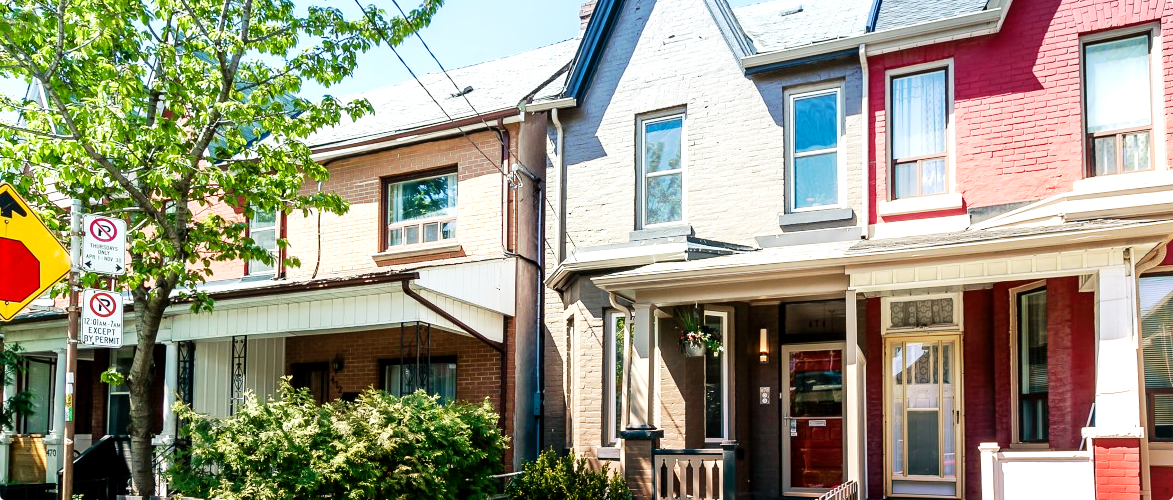
Dufferin Grove is a west-central Toronto neighbourhood built around one of the city's most genuinely unusual parks: Victorian and Edwardian brick semis on streets like Sylvan Avenue, Hepbourne Street, and Delaware Avenue, with Dufferin Grove Park at the centre and the Bloor-Dufferin subway station at the northern edge. Renovated semis were trading between $900,000 and $1.25 million in early 2026, with detached homes running from $1.2 to $1.7 million, a real discount to Trinity Bellwoods for equivalent housing stock. The Friday farmers market in the park has run for over two decades.
Dufferin Grove real estate sits in a part of Toronto that most buyers find by process of elimination: they’ve looked seriously at Trinity Bellwoods, understood what they’d have to spend, and started asking where else that housing stock exists at a different price. The answer is here, on Sylvan Avenue, Hepbourne Street, Delaware Avenue, and Emerson Avenue, in a grid of Victorian and Edwardian brick semis that were built at the same time and by the same methods as the houses trading $300,000 higher on Crawford and Euclid.
The neighbourhood sits between Bloor Street West to the north and College Street to the south, with Dufferin Street as the eastern commercial artery and Ossington Avenue as a rough western boundary. Dufferin Grove Park occupies a substantial central block and is the reason the neighbourhood has the character it does. The park isn’t a passive green space. It has a Friday farmers market that has run for over two decades, an outdoor clay bread oven that community members use by bringing their own dough and sharing the bake, a natural ice rink with supervised winter programming, and a volunteer culture that has been actively shaping the space since the 1990s. The Friends of Dufferin Grove Park is one of the more organised and persistent community groups in the city, and the park’s unusualness is their work.
The Bloor-Dufferin subway station is at the northern edge, which makes transit access real in a way it isn’t in every comparable west-end neighbourhood. College Street along the southern boundary carries the 506 streetcar east through Kensington and Little Italy. Dufferin Street itself is an arterial, busier and more commercial than the residential interior streets, and buyers who’ve seen it from a car and assumed it represents the neighbourhood have often missed what’s on the streets behind it.
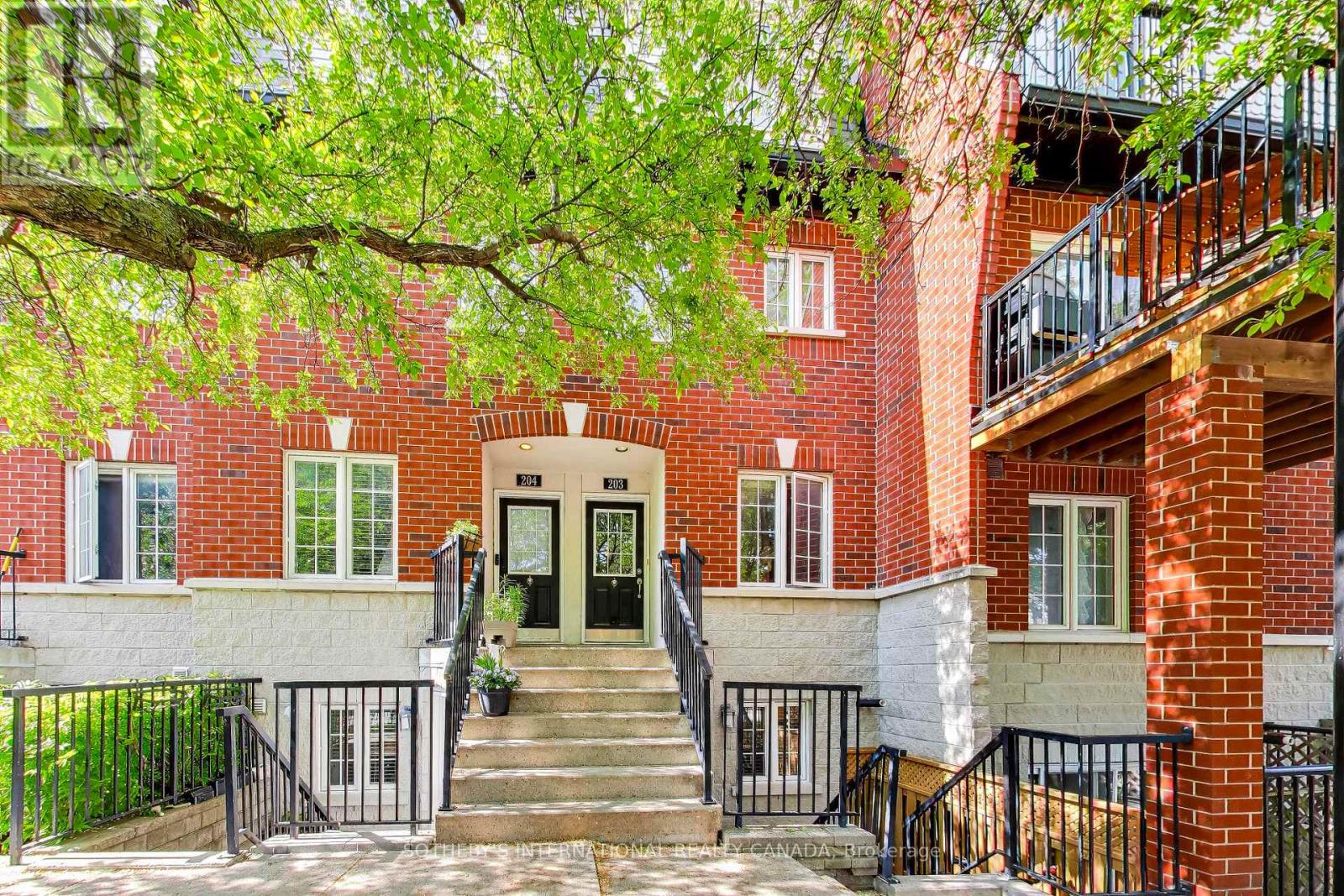
The dominant purchase in Dufferin Grove is a Victorian or Edwardian brick semi built between 1890 and 1925, on a street wider than Trinity Bellwoods but with less renovation density. The key difference between the two neighbourhoods is not the housing stock itself but the renovation history: Trinity Bellwoods semis have had more money spent on them on average over the past two decades, and it shows in condition and asking price. In Dufferin Grove, the renovation quality is more variable, which cuts both ways. An updated semi on Sylvan or Hepbourne with a functional kitchen and refinished hardwood trades between $900,000 and $1.25 million. A property that hasn’t been touched since the 1990s is priced below that, and buyers who can do the work themselves often find the best value in the neighbourhood here.
Detached homes exist but aren’t common. When they come to market in good condition, they run from $1.2 million to $1.7 million depending on lot depth, whether there’s parking, and the extent of any recent renovation. A larger detached on a double-wide lot in this neighbourhood still sits below equivalent square footage in Roncesvalles or Trinity Bellwoods, and for buyers with that budget the value case is real.
There are no significant condo buildings in Dufferin Grove proper. Buyers who want a condo in this price range are looking at the Bloor Street corridor, where purpose-built towers are accessible from Dufferin station, but that’s technically outside the neighbourhood boundary. The freehold semi is what Dufferin Grove sells, and it’s what buyers come here for.
Parking is less constrained than in Trinity Bellwoods because the streets are wider and the rear laneways more consistently functional. Many Sylvan Avenue and Hepbourne Street properties have working garage access from the lane. This is a genuine practical advantage for households with a car, and it matters in negotiations when a buyer is comparing two otherwise similar semis.
Dufferin Grove doesn’t have the same demand intensity as Trinity Bellwoods, and that’s partly what makes it interesting to buyers who are prepared to be patient. Well-priced, well-presented semis on Sylvan Avenue and Hepbourne Street attract genuine competition in spring, but the neighbourhood doesn’t have the frenzied multiple-offer pace that Trinity Bellwoods and Roncesvalles produce as a matter of course. For buyers who found the west-end hot core exhausting, that’s a reason to look here rather than a sign of weakness.
In early 2026, most properties are listed without a formal offer date and reviewed when offers arrive. Sellers of better-condition properties on the interior streets push back on price conditions. Sellers of properties that need work are often more flexible than listings suggest, particularly if the property has been sitting for two or three weeks. The neighbourhood rewards buyers who have done their research and can move quickly when the right property appears, rather than buyers who need weeks of consideration and multiple visits before committing.
Days on market run longer here than in Trinity Bellwoods for equivalent-condition properties. The cause is a smaller buyer pool, not a weaker fundamental. Buyers who understand that distinction and use the extra time to do proper due diligence rather than hesitating out of uncertainty tend to be satisfied with what they buy here.
Seasonality follows the wider Toronto pattern. Spring, from February through early May, is when competition peaks and well-priced properties move fastest. Late October through November produces a secondary window. December and January are slower, and the properties listed in that period are often there because they didn’t sell in the fall and buyers have more room to negotiate.
Almost every buyer who ends up in Dufferin Grove has been through Trinity Bellwoods first. The typical path is: look seriously at Trinity Bellwoods, understand what a renovated semi on Crawford or Euclid actually costs in 2026, decide the budget doesn’t extend there, and then ask what else the west end offers at a discount for similar housing. The search that follows usually surfaces Roncesvalles, Ossington, and Dufferin Grove. Roncesvalles is still expensive. Ossington is closer in price to Trinity Bellwoods than it used to be. Dufferin Grove represents the real gap in the market.
The buyers who choose Dufferin Grove tend to be in their mid-30s to mid-40s, often with one child or planning for one, with incomes that could stretch to Trinity Bellwoods on paper but would leave nothing for anything else. They care about the park. The Friday farmers market, the bread oven, the rink with supervised programming in winter: these are the features that turn a reasonable compromise into an active choice. Buyers who discover the park community and understand what it actually does are usually the ones who stay in the neighbourhood for a decade or more.
There’s also a segment of buyers who chose Dufferin Grove before it became the default overflow from Trinity Bellwoods, bought on Sylvan or Hepbourne in 2015 to 2018, and are now sitting on significant equity at a price point they couldn’t access today. Those buyers describe the neighbourhood as having changed noticeably in the last five years: more renovation activity, more independent cafes, more foot traffic around the park on weekends. The trajectory is clear and buyers in 2026 are pricing ahead of where things are now.
Dufferin Street itself is not the neighbourhood. Buyers who drive along Dufferin Street, clock the traffic and the commercial density, and write the area off are making a navigation error. The residential quality is on the interior streets: Sylvan Avenue runs east-west through the middle of the neighbourhood and is the address most people who live here point to first. Hepbourne Street, Delaware Avenue, and Emerson Avenue are quieter and carry similar housing stock. The two or three blocks immediately adjacent to Dufferin Street are noisier and slightly less desirable. The further west into the interior grid, the more the neighbourhood settles into itself.
The park is the other thing to assess in person before committing. Dufferin Grove Park is not a quiet greenspace. On a Friday it has a working farmers market, on summer weekends it has events and programming, in winter the outdoor rink runs with supervised skating sessions. For buyers who want to live adjacent to all of that, it’s a selling point. For buyers who need quiet on weekend mornings, it’s worth walking the blocks directly bordering the park before deciding how close you want to be. Properties on the park perimeter command a premium for the view and access, but they’re also within earshot of the activity.
The renovation variable matters more in Dufferin Grove than in Trinity Bellwoods because the spread is wider. Trinity Bellwoods has been renovated so consistently that an unrenovated semi stands out. In Dufferin Grove, unrenovated properties are more common, and their condition varies considerably. A pre-offer inspection is worth having. Older semis in this neighbourhood frequently have knob-and-tube wiring in at least part of the house, original cast iron drainage, and basement moisture patterns that reflect the clay soil common to this part of west Toronto. None of these are necessarily deal-breakers, but all of them affect the real cost of the purchase and should be understood before the offer goes in.
The buyers who shop in Dufferin Grove in 2026 are experienced. They’ve looked at Trinity Bellwoods, understood the prices there, and chosen Dufferin Grove on the basis of value. They’re not naive about what the neighbourhood is, and they respond badly to presentation that oversells. A semi that’s been properly cleaned, painted in neutral tones, and shown with refinished floors and working fixtures will outperform an equivalent property that went to market without preparation. A semi staged to look like a Trinity Bellwoods property it isn’t will turn off exactly the buyers who understand the area.
The buyers here respond to the park narrative because it’s genuine. If the property backs onto the laneway that connects to the park, mention it. If there’s a view of mature trees from the rear, show it. The Friday farmers market, the bread oven, the rink: these are real features of living in this neighbourhood and they belong in the listing narrative. Sellers who lead with them are speaking the language of the buyer pool. Sellers who lead with generic west-end language miss the specific thing that makes this address attractive.
Timing follows the west-end pattern. Spring listings from late February through April see the most concentrated buyer interest. A well-priced semi on Sylvan or Hepbourne in a good spring window will attract offers from buyers who’ve been waiting. Fall, from September through late October, produces the second window. The summer months are slower, and December listings are typically there because something went wrong in the fall. If you have flexibility on timing, the spring window is worth waiting for consistently.
Dufferin Grove Park is the neighbourhood’s reason for existing in the form it does. The Friday farmers market runs year-round, with a winter version that’s smaller but genuine and a summer version that draws people from surrounding neighbourhoods. The outdoor clay bread oven is operated by the community: you bring your own dough, use the schedule posted in the park, and bake alongside whoever else has shown up that week. It’s been running in various forms since the 1990s and is about as far from a passive park amenity as it’s possible to get. The natural ice rink floods in winter and comes with supervised free skating, skating lessons for children, and fire pits. The Friends of Dufferin Grove Park, the volunteer group that shaped these programs, is one of the reasons the park works the way it does rather than being maintained like every other city park.
Bloordale Village, the stretch of Bloor Street West between Dufferin and Lansdowne, is where the neighbourhood does most of its commercial life. The stretch is in a genuine transition: independent cafes, a growing restaurant presence, some vintage retail. It’s not yet what Ossington was ten years ago, but the direction is clear and the prices haven’t caught up to the activity. Buyers who understand where a commercial strip is going rather than where it is tend to value the Bloordale proximity more than the current listings acknowledge.
College Street along the southern boundary runs through a stretch of Italian-Canadian businesses, cafes, and restaurants between Dufferin and Ossington. Bar Raval, at College and Montrose, is one of the city’s most recognised bars and a ten-minute walk from most of the neighbourhood. The College streetcar connects east through Kensington Market, Little Italy, and the university corridor. Residents who work at UofT or CAMH find the College transit route direct in a way that the subway-first geography of other west-end neighbourhoods doesn’t offer.
Dufferin station on the Bloor-Danforth line is the transit asset that separates this neighbourhood from some of its comparable alternatives. It’s at Bloor and Dufferin, the northern boundary of the neighbourhood, and it’s within a 10-minute walk of most of the residential streets on the interior grid. Subway access at that distance is real and usable daily, not theoretical. Buyers who commute to downtown, the Financial District, or the eastern part of the city find the Bloor line ride direct and fast.
The 506 College streetcar runs along College Street at the southern edge. It connects east through Kensington Market, University Avenue, and through to Broadview, and west to Roncesvalles. For buyers working in the hospital district or the university corridor, the College car is often more direct than the subway. Like most Toronto surface routes, it’s subject to bunching in peak hours, and residents who need certainty on arrival time tend to combine it with cycling.
Cycling works well in this neighbourhood. The streets on the interior grid are low-traffic. There are dedicated lanes on several routes that connect north to Bloor and east toward the university. A fit cyclist can reach King and Bay in under 25 minutes from Sylvan Avenue, faster than the transit combination on most mornings, and significantly faster than driving and parking in that part of downtown.
Car ownership is manageable but not necessary. Dufferin Street has street parking on off-peak hours and most of the rear laneways have some off-street parking available. The neighbourhood is better served by transit than many parts of the west end at this price point, which reduces car dependency for households with two incomes and flexible schedules.
Little Portugal, immediately to the west and south, has the most similar housing stock to Dufferin Grove at a further price discount. The semis on the streets around Dundas West and Ossington in Little Portugal are the same era and construction. The commercial strip on Dundas through Little Portugal is developing, though less concentrated than what you find on Bloor or Queen West. Buyers who prioritise value over an established address often end up in Little Portugal and find the practical experience of living there closer to Dufferin Grove than the price difference suggests. The area has been in a slower gentrification cycle than the streets immediately east, which means buyers who bought there five years ago have done well and buyers buying now are still ahead of where the prices will settle.
Bloordale Village, the Bloor Street corridor between Dufferin and Lansdowne, is the commercial strip that Dufferin Grove residents use most. It’s worth comparing separately from Ossington because it’s in a different stage: earlier, scrappier, with lower commercial rents and faster turnover of independent businesses. Ossington, just east of Trinity Bellwoods, is further along that trajectory and its residential prices reflect it. Ossington’s housing stock is the same Victorian and Edwardian semis, at prices 10 to 15 percent above Dufferin Grove and 10 to 15 percent below Trinity Bellwoods. Buyers who want the commercial energy of Ossington at Dufferin Grove prices face a straightforward trade-off: the address costs more.
Roncesvalles is the comparison that comes up most often among buyers who’ve been looking at the west end for several months. The housing stock is comparable. Transit access is similar. Roncesvalles has High Park on its western edge, a much larger park than Dufferin Grove Park, but one that functions differently: High Park is a destination and a regional draw, while Dufferin Grove Park is a neighbourhood park that operates like a village commons. The Friday market, the bread oven, the supervised rink: none of that exists in High Park. Buyers choose between them based on what they actually want from park proximity, and the answers are more personal than a size comparison suggests.
The public elementary options in Dufferin Grove are modest, and most families buying in the neighbourhood know this before they arrive. Dovercourt Junior and Senior Public School at Dovercourt and Hepbourne is the main catchment school for much of the residential grid. It’s a functional neighbourhood school without an exceptional academic reputation or distinctive programming. Perth Avenue Junior Public School is a smaller option on the western side of the neighbourhood. Neither has the profile that drives buyers specifically to the area for schooling.
The Catholic system offers St. Mary of the Angels Catholic School in the broader area, which is an option for Catholic families and worth checking catchment boundaries for. The TDSB runs French Immersion programs that require separate applications and don’t follow the catchment boundaries of English-stream schools, which means French Immersion families in Dufferin Grove are applying through the same process as families anywhere else in the city.
For secondary school, the catchment flows primarily to Bloor Collegiate Institute on Bloor Street West. Bloor Collegiate has a strong arts program and a student population that reflects the surrounding neighbourhoods. Academic results are mixed, and families with specific secondary priorities often look at program schools, the TDSB’s specialized arts and technology programs that accept applications city-wide, or private options.
The honest framing is that buyers choosing Dufferin Grove for the housing value and the park community are usually doing so with a separate school plan in mind, or with children young enough that the secondary school question is years away. Families for whom an exceptional public school in catchment is a primary requirement will find better options in other parts of the city. Verify current boundaries using the TDSB school locator before relying on any address in your decision.
What are homes selling for in Dufferin Grove in 2026? Renovated brick semis on the interior streets, Sylvan Avenue, Hepbourne Street, Delaware, and Emerson, were selling between $900,000 and $1.25 million in early 2026. Condition, lot size, and whether there’s off-street parking all move the price within that range. A semi that hasn’t been updated since the 1990s prices below $900,000. A fully renovated semi with a finished basement and garage access from the lane pushes toward the upper end. Detached homes, which are less common, run from $1.2 to $1.7 million depending on lot size and the extent of any renovation. The neighbourhood trades at a genuine discount to Trinity Bellwoods, roughly 20 to 30 percent for equivalent housing, and that gap has been consistent over several years.
What makes Dufferin Grove Park different from other Toronto parks? Most Toronto parks are maintained by the city and function as passive greenspace: grass, trees, benches, a playground. Dufferin Grove Park is different because the Friends of Dufferin Grove Park, an organised volunteer group, spent decades working with the city to add active programming and infrastructure that most parks don’t have. The Friday farmers market has run for over 20 years in the park itself, not in an adjacent parking lot. The outdoor clay bread oven was built with city support and community fundraising; residents use it by following a shared schedule, bringing their own dough, and baking with whoever shows up. The natural ice rink floods in winter and comes with supervised skating and fire pits. These aren’t events. They’re recurring, year-round features that shape what it feels like to live near the park, and they’re the reason residents describe the neighbourhood the way they do.
Is Dufferin Grove a good investment compared to Trinity Bellwoods? The question depends on the time horizon and what you’re comparing. Over the decade from 2015 to 2025, Dufferin Grove properties appreciated at a rate consistent with the broader west-end market, without the same peaks that Trinity Bellwoods saw in 2021 and 2022. The price floor is lower, which means less downside in a correction, and the gap to Trinity Bellwoods has remained relatively stable, which suggests buyers aren’t mis-pricing the discount. The neighbourhood is clearly in a positive trajectory: more renovation activity, the Bloordale strip developing, more foot traffic around the park. Buyers who bought on Sylvan or Hepbourne in 2016 have done well. The question for 2026 buyers is whether the current price reflects where the neighbourhood is or where it’s going, and the evidence points toward the latter.
Which streets in Dufferin Grove are the best to buy on? Sylvan Avenue is the street most buyers shortlist first: it runs east-west through the residential interior, away from Dufferin Street traffic, and has consistent semi stock with good lane access. Hepbourne Street is comparable in character and slightly less expensive on average, which makes it the better-value choice for buyers who’ve done the comparison properly. Delaware Avenue and Emerson Avenue are quieter and a bit further from the park, which lowers demand slightly and produces opportunities for buyers who prioritise a quieter street over park proximity. The blocks immediately adjacent to Dufferin Street, particularly on the east side of the neighbourhood, are noisier and less desirable than the interior streets, and buyers should walk those blocks at different times of day before committing to them. The best blocks are the ones where you can’t hear Dufferin Street from your front porch.
The residential streets of Dufferin Grove were laid out and built largely between 1890 and 1930, as Toronto expanded westward from its early commercial centre. The neighbourhood developed as a working-class and lower-middle-class area, with the semis on Sylvan, Hepbourne, and Delaware built for tradespeople and factory workers employed in the industries that once operated along Bloor Street and Dufferin Street. The housing type, the narrow semis with shared walls and rear lane access, was the standard affordable housing model of the era and is why so much of west Toronto looks the way it does.
Dufferin Grove Park has existed in various forms for most of the neighbourhood’s history, maintained as a city park through the 20th century in the conventional way: grass cut, benches maintained, a playground installed. What changed the park’s character was the work of the Friends of Dufferin Grove Park, a community group that formed in the early 1990s and began making specific proposals to the city for programming and infrastructure. The outdoor bread oven was one of the earliest projects, built in 1994 with a combination of city support and community fundraising. The farmers market followed. The natural ice rink replaced a conventional artificial rink with a flooding system that produces a different kind of ice surface. Each project required sustained advocacy, and the group’s history is as much a record of how citizens can shape public space as it is a history of a park.
The neighbourhood’s current residential character, the renovation activity, the café openings, the buyers arriving from Trinity Bellwoods with equity to spend, is a development of the last ten to fifteen years. Before that, Dufferin Grove was understood primarily as a working-class neighbourhood that happened to have a good park. The park came first. The neighbourhood’s desirability followed it.
Street-level knowledge is hard to find online. Our team works in Dufferin Grove every day. They know which pockets hold value, where the school catchment lines actually fall, and what the market is doing right now. Talk to us before you make a decision about Dufferin Grove.
Talk to a local agent For Rent
 For Rent
 For Rent
 For Sale