
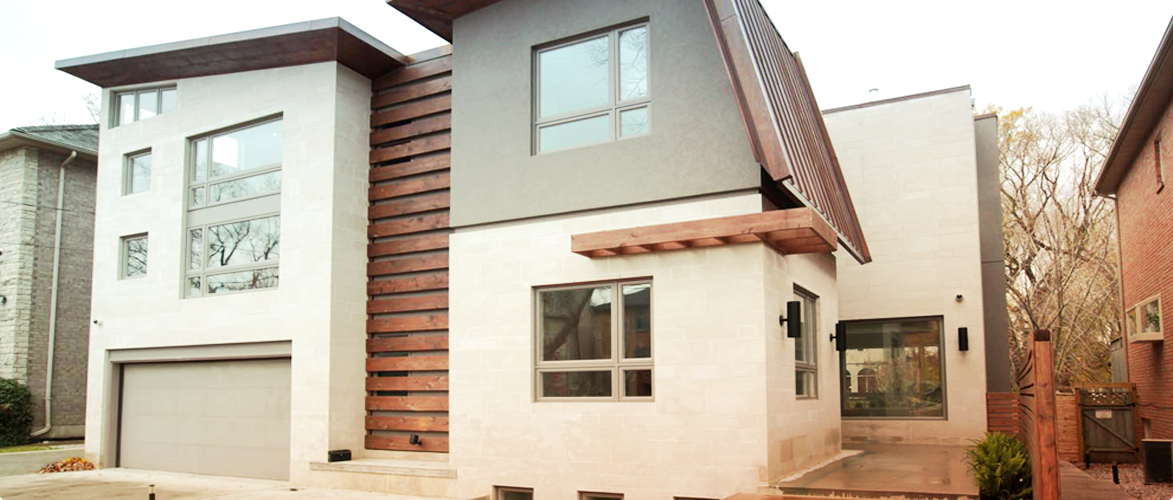
Englemount-Lawrence is an established North York neighbourhood between Bathurst Street, Allen Road, Lawrence Avenue West, and Glencairn Avenue. It shares the strong Jewish community character of nearby Bathurst Manor but sits closer to Lawrence West subway station and benefits from fast Allen Road access to the 401. Detached bungalows trade from $1.2M to $1.8M in 2026, representing genuine value compared to the Forest Hill addresses a short distance south.
Englemount-Lawrence sits in the western part of North York, roughly between Bathurst Street to the east, Allen Road to the west, Lawrence Avenue West to the south, and Glencairn Avenue to the north. It shares a great deal with its neighbour Bathurst Manor, including a substantial Jewish community presence, a post-war housing stock, and the Bathurst Street corridor as a commercial and community spine. But Englemount-Lawrence is its own neighbourhood, with its own character and its own pricing dynamics, and buyers looking at either area should understand the distinctions.
The neighbourhood developed in the same postwar period as Bathurst Manor, with bungalows and side-splits replacing farmland through the 1950s and 1960s. The community that settled here was predominantly Jewish, and that character has persisted. Synagogues, Jewish community organizations, and the commercial services they support are visible throughout the neighbourhood and along Lawrence Avenue West. The Jewish community here is perhaps slightly more modern Orthodox in character than the Bathurst Manor community to the north, with the concentration of shuls and day schools reflecting that demographic.
Lawrence Avenue West is the southern commercial artery and gives the neighbourhood a second retail spine beyond Bathurst. The Lawrence strip between Bathurst and Allen has a mix of Jewish food and service establishments, some standard chain retailers, and the kind of mixed-use strip development that lines a busy arterial road in a working neighbourhood. It’s functional rather than charming, but it’s densely useful.
The proximity to Allen Road on the western edge is a defining geographic fact. Allen connects quickly to the 401, which makes driving in this neighbourhood genuinely efficient. It also means the streets directly adjacent to Allen experience road noise that affects their character and pricing. The neighbourhood’s interior, away from both Allen and the main streets, has the quieter residential quality that buyers are looking for.
The housing stock in Englemount-Lawrence is closely parallel to Bathurst Manor: detached bungalows and side-splits dominating, with modest lot sizes (35 to 45 feet wide, 100 to 130 feet deep) and original construction from the 1950s and 1960s. The same range of condition exists, from well-maintained and thoroughly renovated homes to estates that haven’t been updated since the original owners bought them. Semis are present but not the dominant form.
A few streets in the neighbourhood have larger lots, particularly in the section closest to Allen Road and Lawrence Avenue where some properties have depths that accommodate significant additions or garden suites. The introduction of the City of Toronto’s as-of-right garden suite policy has made these deeper lots more valuable for buyers who see the additional unit potential as a practical feature rather than just a planning exercise.
Pricing in 2026 ran from approximately $1.2 million for a smaller or less-updated bungalow to $1.8 million for a well-renovated home with a good-sized lot in the interior of the neighbourhood. This range positions Englemount-Lawrence as slightly more expensive than Bathurst Manor on average, reflecting proximity to Lawrence West subway station and the convenience of Allen Road access. Homes at the top of the local price range, those with extensive renovations or full custom rebuilds, can reach $2 million on the right streets.
The comparison buyers often make is against Forest Hill, which is directly to the south and east. Forest Hill’s equivalent properties run $800,000 to $1 million more for comparable square footage and lot dimensions, and the price difference is a direct function of the Forest Hill address premium rather than a meaningfully different product. Buyers who are honest about that comparison tend to find Englemount-Lawrence compelling value. Buyers for whom the Forest Hill address is the point rather than just the geography will not find it an adequate substitute.
Englemount-Lawrence is a stable and moderately active market. It shares Bathurst Manor’s characteristic of low turnover in the core, community-rooted ownership segment, with the supply of active listings constrained by the fact that owners here tend to stay. The community ties that brought families to the neighbourhood keep them through stages of life that might push people elsewhere, and the result is a market where good properties don’t accumulate.
The market has consistent demand from within the Jewish community, which provides a base that has supported prices through multiple Toronto market cycles. The buyer pool is specific enough that broad market downturns sometimes affect Englemount-Lawrence less sharply than more generic Toronto neighbourhoods, because the buyers competing for properties here are driven by community fit rather than pure investment calculation. That same specificity, however, limits upside when broader Toronto markets run hot, because the pool of buyers willing to pay a significant premium for the address is bounded.
Well-priced homes in the $1.2 to $1.5 million range, particularly those that are move-in ready or require only cosmetic work, sell within two to four weeks in active market conditions. Homes priced at the upper end of the range require buyers with larger budgets and more flexibility, and they take somewhat longer to find the right match. Estate sales and unrenovated properties attract a different buyer, often more price-sensitive, and selling times can extend to six to ten weeks if the pricing doesn’t clearly reflect the condition.
Multiple offer situations do occur on well-prepared properties at the lower end of the range. The spring market in particular can see competitive offers on homes priced in the $1.1 to $1.3 million range where demand is strongest and supply is most constrained. Buyers who have been through the process in hotter Toronto markets will find the competition here more manageable and the offers more likely to include conditions than in markets where unconditional offers are the norm.
The buyer profile in Englemount-Lawrence is closely parallel to Bathurst Manor, with one meaningful addition: buyers who are priced out of Forest Hill or Lawrence Park and are looking for comparable community character at a lower entry point. The Forest Hill and Lawrence Park Jewish communities overlap with Englemount-Lawrence in terms of synagogue and school affiliations for many families, which means that a family whose first choice is Forest Hill but who can’t achieve it at their budget may find Englemount-Lawrence a genuine alternative rather than a consolation prize.
The core buyer is a family with children, typically with some existing connection to the neighbourhood or the community it represents. They’re buying a detached house on a real lot because they need the space and the backyard, and they’re choosing this neighbourhood because the community infrastructure matters to their daily life: the schools, the synagogues, the proximity to the Bathurst and Lawrence commercial strips. The purchase is as much about belonging to a place as it is about the physical property.
A second profile is the empty-nester or downsizer from a larger Forest Hill or Lawrence Park home, who is trading down in square footage but staying within their community geography. These buyers often have substantial equity and purchase without financing pressure, which can make them formidable competition for families who are stretching to buy their first or second home in the area.
First-generation immigrant families, particularly those from Israel and elsewhere in the diaspora who are newly establishing themselves in Toronto, are also present in the buyer pool. The neighbourhood’s established community infrastructure and the visibility of a functioning Jewish daily life are important practical factors for these buyers. Englemount-Lawrence’s price points are more accessible than Forest Hill for buyers building equity from a first purchase rather than rolling over a mature property.
The streets in the interior of Englemount-Lawrence, particularly those running between Bathurst and Marlee Avenue in the central section, are the neighbourhood’s most desirable residential addresses. Englemount Avenue itself, which gives the neighbourhood part of its name, is well-established and quiet, with the tree coverage and settled streetscape character that buyers associate with the neighbourhood at its best. Brookfield Road and Glengrove Avenue in the southern portion are worth attention for buyers who want to be close to Lawrence Avenue and the subway without being on the main road itself.
The northern section of the neighbourhood, closer to Glencairn Avenue, is slightly less prestigious and tends to price a bit lower than the Lawrence Avenue end. Glencairn is a busy road and properties directly on or very near it experience traffic noise. The interior streets that parallel Glencairn without fronting it are better for residential use and not significantly discounted relative to the Glencairn premium that doesn’t exist.
Streets adjacent to Allen Road on the western edge are the most significantly affected by road noise in the neighbourhood. Allen is a controlled-access expressway through this section, and the noise level adjacent to it is materially different from the interior streets. Properties here are priced to reflect the exposure. Buyers who are sensitive to traffic noise should visit these properties on a weekday, not just a weekend, before deciding whether the discount justifies the trade-off.
The Marlee Avenue corridor through the middle of the neighbourhood has some mixed use and is noisier than the interior residential streets, but it provides convenient north-south movement and is home to some of the neighbourhood’s local retail and service businesses. Streets one block east or west of Marlee have the residential quiet buyers prefer without sacrificing convenient access to the strip.
A handful of streets in the northwest corner of the neighbourhood, between Allen and Marlee near Glencairn, have smaller lots and more modest house sizes than the rest of Englemount-Lawrence and price accordingly. These represent the entry point to ownership in the neighbourhood for buyers whose budget doesn’t reach the more established sections. The trade-off is less house and a tighter lot, but the community and transit access are the same.
Lawrence West station on Line 1 Yonge-University is the neighbourhood’s primary transit connection. The station is on the Allen Road corridor at Lawrence Avenue West, and the walk from most of the neighbourhood is 10 to 20 minutes or a short bus ride on the Lawrence or Bathurst routes. From Lawrence West, downtown Union Station is approximately 25 to 30 minutes by subway. The Eglinton station is one stop south, and the connection to the Eglinton Crosstown LRT there opens east-west movement across the midtown belt without requiring a surface bus.
The 7 Bathurst bus runs north-south along Bathurst Street and provides access to the subway at Lawrence West or Wilson stations for residents closer to Bathurst. The 52 Lawrence West bus runs along Lawrence Avenue and connects to the Lawrence subway station on the Yonge line to the east. These bus connections make the neighbourhood reasonably served by transit for residents who don’t live within walking distance of Lawrence West station.
Driving benefits directly from Allen Road. Allen connects to the 401 at Lawrence Avenue, making this neighbourhood one of the more efficient drive points from the city’s highway network for residents commuting by car. The 401 west to Mississauga and Brampton, or east toward Scarborough, is accessible within 5 to 10 minutes of most addresses in the neighbourhood. Midtown is a straightforward drive south on Bathurst or Allen to St. Clair, and downtown is achievable in 20 to 30 minutes outside peak hours via Allen to the Gardiner or via Bathurst to the core.
The Eglinton Crosstown connection at Eglinton station improves east-west transit options for residents willing to take the subway two stops south from Lawrence West. This matters for residents commuting to destinations along the Eglinton corridor: Leaside, the Mount Pleasant area, or the western sections of Eglinton are now more accessible by transit than before the Crosstown opened.
Walkability is moderate. The Lawrence Avenue commercial strip and the Bathurst corridor are both walkable for daily errands from much of the neighbourhood. The density of grocery, food, and service options within a 10-minute walk is reasonable by North York standards, putting the Walk Score of most addresses in the 65 to 75 range.
Englemount-Lawrence doesn’t have a landmark park on the scale of Downsview Park or the Bayview ravine system, but it’s within reasonable distance of some significant natural and recreational assets. Beltline Trail access is the most notable. The Kay Gardner Beltline Park, which runs through the midtown belt on an old rail corridor, begins a short distance to the south and connects east-west through Midtown Toronto. It’s a popular off-road walking and cycling route and reaches it in about 10 to 15 minutes from the southern part of the neighbourhood by foot or bike.
Earl Bales Park, to the north and accessible by a short drive or a longer walk, is the large North York park with wooded areas, a ski hill (operating in winter with snowmaking), picnic facilities, and trail connections into the ravine system. It also has the Bathurst Jewish Community Centre nearby, which provides indoor and outdoor recreational programming that many neighbourhood families use regularly.
Glen Long Community Centre is the local recreation facility, with a pool, arena, gymnasium, and fitness area. For residents who want indoor recreation without driving, it’s the practical option within the neighbourhood. Summer outdoor pool programming at local parks supplements the indoor options.
The Glencairn ravine park to the north gives the neighbourhood’s northern edge some green buffer and trail walking access that the streets closer to Lawrence lack. It’s not extensive, but for residents in the northern section it provides a nearby natural space that the dense residential environment doesn’t otherwise have.
The Wilson-Allen corridor and the developed greenway along the Allen Road expressway provide some linear park space that residents use for dog walking and recreational walking, though it’s more of a green buffer alongside a highway than a designed park. The overall green space provision in Englemount-Lawrence is adequate rather than exceptional, which is consistent with its character as a dense residential neighbourhood prioritizing community infrastructure over natural amenity.
Lawrence Avenue West between Bathurst and Allen is the neighbourhood’s primary commercial strip, and it functions as a genuinely useful daily resource rather than a destination. The Jewish community orientation of much of the strip’s retail is pronounced: kosher restaurants, Jewish bakeries, Judaica shops, and the services associated with observant Jewish community life cluster here. Alongside them are the standard urban retail categories: pharmacies, opticians, dry cleaners, banks, pizza, and Chinese food.
The Bathurst Street corridor, which runs along the eastern edge of the neighbourhood, adds significant depth to the retail offering. The full stretch of Bathurst between Lawrence and Wilson has the kosher grocery options, delicatessens, and specialty food shops that make this entire corridor one of the best-stocked for Jewish food shopping in the city. Residents of Englemount-Lawrence use both Lawrence and Bathurst for their food and services, which gives the neighbourhood a more comprehensive walkable retail environment than its size would suggest.
Marlee Avenue through the centre of the neighbourhood has smaller local retail nodes: a few convenience stores, a pizza shop, and scattered independent businesses. It’s not a commercial destination but adds to the practical retail coverage within the neighbourhood.
For mainstream grocery shopping beyond the kosher options, the Metro and Loblaws on Lawrence Avenue and the larger grocery stores accessible on Bathurst are the main options. The Lawrence Allen Centre complex to the south, anchored by a Walmart, provides large-format retail at reasonable distance. Yorkdale is 15 minutes north via Allen for anything the local strips don’t cover.
Dining options within the neighbourhood are oriented toward the Jewish food spectrum: Israeli, Middle Eastern, deli, and kosher Chinese are all represented. For a wider dining scene, the midtown Eglinton and Forest Hill restaurants are accessible by a short drive or subway. The neighbourhood isn’t a destination for casual dining from outside the community, but it feeds its own residents well with what they typically want.
Englemount Avenue Public School is the main public elementary school serving the neighbourhood’s core. It’s a Toronto District School Board school with strong parental involvement and a community character that reflects the neighbourhood’s Jewish population. The school has a solid reputation and is well-supported by an engaged parent community, which contributes to the kind of program richness and extracurricular activity that parent-driven fundraising and volunteering typically provide.
Lawrence Heights Middle School is nearby for Grades 6 to 8 and serves students from Englemount and the surrounding area. The school is larger and more diverse than Englemount Avenue PS given its wider catchment, which reflects the transition from a small neighbourhood elementary to a school drawing from several different communities.
Forest Hill Collegiate Institute is within the secondary school catchment for some addresses in the southern portion of Englemount-Lawrence, and this is a meaningful detail for buyers whose children are approaching secondary school age. Forest Hill CI has a strong academic reputation and is considerably more sought-after than the other secondary school alternatives in the broader area. Buyers should verify catchment for their specific address with the TDSB before treating Forest Hill CI access as a given, as the boundary runs through the neighbourhood and not all addresses qualify.
For addresses that fall outside the Forest Hill CI catchment, the typical public secondary school option is Vaughan Road Academy or North Toronto CI depending on exact address, both of which are solid schools but at a somewhat different level of academic profile than Forest Hill. Getting this detail right before buying matters.
The Jewish day school options in the broader Bathurst-Lawrence corridor are relevant for families for whom Jewish education is a priority. Several day schools serving different religious denominations from Modern Orthodox to Reform are accessible from the neighbourhood, and the choice among them is typically driven by family observance level and community affiliation rather than proximity alone.
Englemount-Lawrence has been subject to intensification pressure along Lawrence Avenue West and around Lawrence West station, consistent with the City of Toronto’s policy to add density near subway stations. The Allen-Lawrence node in particular is identified in city planning documents as an area suitable for mixed-use, mid-rise development. Some proposals and approvals in this corridor have been moving through the planning process, and the character of the streets immediately adjacent to Lawrence West station and Lawrence Avenue is expected to change over the medium term.
For buyers purchasing on or near Lawrence Avenue itself, awareness of what has been approved or is under application in the immediate vicinity is worthwhile. A check of the city’s planning application map for the Englemount-Lawrence area takes an hour and gives you a clear picture of what the blocks around your potential purchase may look like in 5 to 10 years. This is particularly relevant for properties that currently have a pleasant view or outlook across a low-rise commercial building that could be redeveloped.
The residential interior of the neighbourhood, away from Lawrence Avenue and Allen Road, is significantly more protected from intensification pressure. The low-density residential zoning that covers most of the freehold streets is not easily changed, and the practical incentive for land assembly on 35-foot lots isn’t compelling for most developers. The interior streets that buyers are primarily targeting are unlikely to look dramatically different in 20 years.
The Bathurst corridor to the east continues its slow evolution, with some commercial properties being replaced or intensified. The impact on the residential character of Englemount-Lawrence is limited, but any significant new residential development on Bathurst near the neighbourhood’s edge would add population that affects local services and transit loading without fundamentally changing the neighbourhood’s residential streets.
Garden suite permissions, which the City of Toronto made as-of-right for most low-density residential lots in recent years, are quietly changing the potential use of deeper lots throughout the neighbourhood. This isn’t development pressure in the traditional sense, but it does mean that some lots in the neighbourhood will gradually develop secondary structures that change the character of specific streets. It’s worth understanding which lots around a property you are considering are eligible and whether any garden suite development has been applied for in the immediate vicinity.
Q: How does Englemount-Lawrence compare to Forest Hill for a buyer with a $1.5 million budget? At $1.5 million, Forest Hill will get you a semi-detached house in need of work or a very small detached on a narrow lot. Englemount-Lawrence at the same budget gets you a solid detached bungalow on a proper lot, potentially well-renovated. The physical property is materially better in Englemount-Lawrence at that price. What Forest Hill offers is an address that carries more social currency in certain circles, proximity to a slightly more upscale commercial strip, and in some cases the Forest Hill Village CI or UCC catchment. Whether those factors are worth $400,000 to $600,000 to you is a genuinely personal question. For buyers focused on the physical quality of what they are getting and the practical quality of their daily life, Englemount-Lawrence is the rational choice at this price point.
Q: Is the Forest Hill CI catchment actually accessible from Englemount-Lawrence? Some addresses in the southern portion of the neighbourhood do fall within the Forest Hill CI public school catchment. The boundary runs through the neighbourhood, and which side of it your address falls on is not always obvious from the geography. Before making a purchase decision that relies on Forest Hill CI catchment, call the Toronto District School Board directly with the specific address and ask them to confirm the secondary school assignment. Do not rely on a real estate agent or a listing description for this information. The boundary has been adjusted over the years and the only reliable source is the school board itself.
Q: What do I need to know about Allen Road noise near the western edge of the neighbourhood? Allen Road is a controlled-access expressway through the Englemount-Lawrence section, and it generates significant traffic noise during operating hours. Properties within one or two blocks of Allen, particularly those with backyards or windows facing west, experience this noise continuously during the day. Night noise is reduced but not eliminated. If you are considering a property in this range, spend time there on a weekday evening rather than a Sunday morning. Some buyers find the noise acceptable given the price discount; others don’t. That’s a personal tolerance question, but you should be making the choice with accurate information about what the noise level actually is.
Q: Are there garden suite opportunities in this neighbourhood? Yes. The City of Toronto’s 2022 changes to permit garden suites as-of-right on most residential lots opened this option for many properties in Englemount-Lawrence. The typical qualification requirements are a minimum lot area and depth, setback clearances from the rear property line, and height restrictions. Lots with depths of 120 feet or more generally have workable configurations. A garden suite adds a separate dwelling unit at the rear of the property, which can generate rental income or provide space for family members. The cost of a garden suite build runs from $200,000 to $350,000 depending on size and finish. If you are buying partly for this potential, have a designer or contractor walk the lot before you finalize the purchase to confirm it is actually feasible for the specific property.
Buying in Englemount-Lawrence involves the same aging-stock due diligence as any North York post-war neighbourhood, with a few specific additions worth noting. The Allen Road noise question needs to be resolved clearly before you commit to any property within a few blocks of the expressway. Visit at multiple times of day and in varying wind directions (wind from the west carries the noise further into the neighbourhood). If noise is a dealbreaker, eliminate any property within 200 metres of the Allen corridor before proceeding.
School catchment verification is particularly important here given the Forest Hill CI boundary question. If secondary school assignment is a factor in your decision, confirm it directly with the TDSB before you make an offer. This is one of those details that is easy to confirm in advance and expensive to discover after closing.
For properties with large lots, the garden suite potential is worth assessing specifically rather than assuming. A site visit with someone who knows the city’s current garden suite requirements, checking setbacks and lot coverage against the specific property’s dimensions, takes an hour and gives you clarity on whether the potential is real. If you are pricing that potential into your offer, you need to know it is actually achievable.
The standard home inspection on a bungalow or side-split from this era needs to cover knob-and-tube wiring (common in homes that haven’t been updated), older plumbing, and the condition of the roof, furnace, and water heater. These aren’t unusual findings but they add up. A realistic renovation budget built into your financial model before offering protects you from discovering after closing that the cost of getting the house to your standard is materially more than you expected.
The community character of Englemount-Lawrence is worth experiencing before you commit. Walk the streets on a Friday afternoon before Shabbat and on a Saturday. Visit the Lawrence Avenue strip. If the neighbourhood’s rhythm suits you, it’s a strong purchase. If the community character feels like something you’re tolerating rather than valuing, look at comparable-price properties in neighbourhoods where the daily environment matches what you actually want. There’s enough choice in this price range in North York to find the right fit.
Street-level knowledge is hard to find online. Our team works in Englemount-Lawrence every day. They know which pockets hold value, where the school catchment lines actually fall, and what the market is doing right now. Talk to us before you make a decision about Englemount-Lawrence.
Talk to a local agent For Sale
 For Rent
 For Sale
 For Sale