
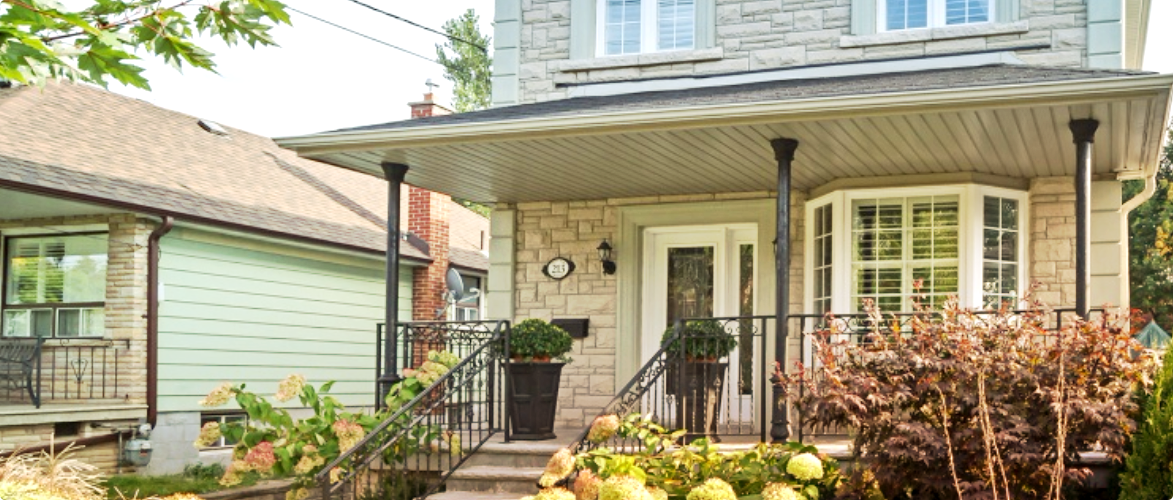
Glen Park is a quiet, established neighbourhood west of Bathurst Street near Lawrence Avenue, built out in the postwar decades and shaped by a strong Jewish community that remains central to its character today. It offers larger lots, well-maintained mid-century homes, and access to the Cedarvale ravine system, at prices that reflect its stability rather than its excitement.
Glen Park sits in what most Torontonians would call the Bathurst and Lawrence area, on the west side of Bathurst Street between Lawrence Avenue West and Glencairn Avenue. It’s a compact neighbourhood that most people drive through without quite recognising as a distinct place, yet buyers who know it tend to feel strongly about it. The character here is quiet and established in a way that’s genuinely different from the busier corridors nearby. Streets are tree-lined, properties are well-maintained on average, and the neighbourhood has a social stability that comes from long tenure: many households have been here for decades.
Glen Park developed primarily through the mid-20th century and carries a strong Jewish community identity that has shaped its institutions, its commercial character, and its social fabric for generations. This is not a neighbourhood in transition in the same way that Mount Dennis or Fairbank are. It arrived, it settled, and it has held. The community institutions, including synagogues, schools, and cultural organisations, are woven into the neighbourhood’s day-to-day life in a way that gives it a coherence unusual in Toronto’s residential areas.
The geography helps too. Allen Road runs along the western edge of the neighbourhood, providing quick access north to the 401 and south toward Eglinton. The Lawrence West subway station, while a bus ride from most of Glen Park, keeps the area connected to the transit network. And the neighbourhood has good access to some of Toronto’s best green space: Ledbury Park is right in the neighbourhood, and the ravine system running through this part of the city is accessible without a car.
Buyers come here for stability, quiet, and community. The trade they’re making is paying more per square foot than they’d pay in comparable housing in Fairbank or Keelesdale, in exchange for a neighbourhood that is simply more settled, more maintained, and more coherent. For many buyers, that trade is obvious and correct.
Glen Park’s housing stock is a mix of detached bungalows, backsplits, sidesplits, and two-storey houses from the 1950s through the early 1970s. Lot sizes tend to be generous by Toronto standards: 40 to 50 foot frontages are common, and some properties run wider. This is a neighbourhood where the original homes were built with a certain expectation of space, and that shows in the lot dimensions, the setbacks from the street, and the backyard sizes that are meaningfully larger than what you’d find in the older pre-war neighbourhoods south of Lawrence.
The housing stock is in generally good condition. This is a neighbourhood where properties have been maintained over the decades rather than left to deteriorate, partly because the owner base skews toward long-tenure households who take pride in the property and partly because values have been high enough that reinvestment made financial sense. That doesn’t mean every home is updated: you will still find original 1960s kitchens and bathrooms on the market, particularly in estate sales, but the bones are usually sound.
In 2026, detached homes in Glen Park trade in the $1.1 million to $1.7 million range. A modest bungalow in original condition on a standard 40-foot lot might come in at the lower end of that range. A well-renovated sidesplit or a property on a 50-foot lot with a clear development envelope will push toward or through $1.5 million. The higher end of the range is occupied by recently rebuilt homes on wider lots, custom infill, or fully renovated properties where the original structure has been substantially expanded.
Infill is a real part of this market. Glen Park has seen a steady stream of teardowns followed by new custom builds over the past fifteen years, and that activity continues. Buyers who want a larger, more modern home and are comfortable with a higher price point can find that here. Buyers looking for the original postwar character and a lower entry price should look for the unrennovated stock, which still exists in meaningful numbers but is becoming less common each year.
Glen Park is a steady, moderate-competition market rather than a frenetic one. It doesn’t generate the bidding wars of the Beaches or Leaside, but it also doesn’t sit vacant. Properties in good condition, priced accurately, typically sell within three to four weeks. Multiple offers happen on well-presented homes at the right price point, particularly in the spring market, but they’re not a given the way they are in higher-profile neighbourhoods.
Turnover is relatively low for a Toronto neighbourhood of this age and price point. The long-tenure ownership pattern means that inventory is genuinely constrained in some years. When a well-maintained home on a good street does come to market, it often attracts buyers who have been waiting for something in this specific area. That dynamic can produce strong results for sellers and requires buyers to move with some decisiveness when the right property appears.
Estate sales are a recurring and significant part of the Glen Park inventory. The original homeowners who bought here in the 1950s and 1960s are no longer in the market, and their properties are coming to market through estate processes that can be more complex and slower than conventional sales. These can be good opportunities for buyers who are patient and comfortable making offers on properties that are often in original condition and may require significant updating. The estate sale process sometimes produces motivated sellers willing to accept pre-emptive offers to avoid the uncertainty of a public offer date.
One market dynamic specific to Glen Park is the community preference factor. Buyers with connections to the neighbourhood’s Jewish community institutions are often specifically targeting this area and will pay a premium to be within walking distance of their synagogue or community centre. This creates a layer of demand that doesn’t always show up in broad market statistics but influences pricing on specific streets in real ways.
Glen Park attracts a buyer profile that’s noticeably different from the first-time buyers and investors who dominate in neighbourhoods like Fairbank or Mount Dennis. The typical buyer here is a family making a considered move, often one that involves staying within a specific community network. Families with children in the local Jewish day schools or who are members of nearby synagogues constitute a significant and consistent portion of demand. For these buyers, the neighbourhood choice is partly about community, not just real estate, and they’ll stretch their budget to get the right location within the neighbourhood.
Second-time buyers and upsizers are another consistent group. Buyers who started in a condo downtown or in a smaller detached in a cheaper neighbourhood, have built equity, and now want a proper family home with a real backyard and good schools. Glen Park is in the consideration set alongside Lawrence Park, Cedarvale, and Forest Hill for this group, and it generally represents better value than those neighbourhoods at an equivalent spec level, with the trade-off being less prestige and less immediate walkability to high-end retail.
A smaller but real portion of buyers are seniors or near-seniors looking to right-size. They’re selling a large home elsewhere in Toronto or the suburbs and want a manageable, well-maintained bungalow in a stable community where they have existing connections. These buyers are often motivated by community ties as much as by square footage or price.
What Glen Park buyers share is a preference for stability over excitement. They’re not buying into a neighbourhood-in-transition play. They’re buying a place to live for a long time, in a community they understand, where the fundamentals are solid. That’s a very different motivation from the buyers in the Crosstown-adjacent neighbourhoods, and it produces a very different transaction dynamic.
Glen Park is a small neighbourhood, which means sub-area distinctions are meaningful but not dramatic. The streets running east-west between Bathurst and Allen Road carry most of the desirable residential inventory. Hillmount Avenue, Ava Road, and Ranee Avenue are among the streets buyers typically identify as representative of what the neighbourhood does well: established tree cover, well-maintained mid-century homes, and a quiet residential feel that doesn’t get disrupted by cut-through traffic.
The eastern edge of the neighbourhood, closest to Bathurst Street, has more traffic noise from the Bathurst corridor and the commercial uses along it. Properties right on Bathurst are generally less desirable than those a block or two west. Buyers who are sensitive to noise should look at interior streets rather than the arterial edges.
The western boundary at Allen Road is a different consideration. Allen carries significant highway-style traffic and the noise from it is real on the streets immediately adjacent. Properties facing Allen or on the first street east of it typically trade at a modest discount to otherwise comparable homes further into the neighbourhood. For buyers who aren’t sensitive to traffic noise or who are buying for the land value and development potential, this can be an opportunity. For families with young children, it’s a material issue.
The northern portion of the neighbourhood, above Glencairn Avenue, transitions toward a different character. The Glencairn and Bathurst intersection is a busy commercial node, and the area north of it begins to feel more like the broader Lawrence Heights vicinity. The streets in the southern portion of Glen Park, between Lawrence and roughly halfway to Glencairn, tend to command small premiums and represent the neighbourhood at its most cohesive. Ledbury Park anchors this area nicely, and the streets around it are among the most sought-after.
Glen Park’s transit picture is honest rather than great. The neighbourhood does not have a subway station within walking distance. The Lawrence West station on Line 1 (Yonge-University) is accessible by bus, typically a 10 to 15 minute bus ride from the interior of the neighbourhood via the 52 Lawrence West bus. This is a real transit trip, not a walk, and buyers who rely on transit for daily commuting should build that into their thinking.
The 52 Lawrence West bus connects to Lawrence West station and also runs east to Lawrence Station on Yonge Street, giving residents two subway access points. Service frequency during peak hours is reasonable, with buses running every 5 to 8 minutes at rush hour. Off-peak and late-night service is less frequent, as with most Toronto surface routes. The 7 Bathurst bus provides a north-south option, though Bathurst Street is a local bus rather than a rapid transit line.
Allen Road is the car-dependent resident’s main advantage. The Allen expressway runs along the western edge of the neighbourhood and connects quickly to Highway 401, making a drive north to the suburbs or to the airport substantially faster than navigating through surface streets. For buyers who drive to work or who travel frequently, this is a genuine asset. Eglinton Avenue to the south connects to the Crosstown, though Glen Park residents are not particularly close to any Crosstown stations.
Cycling from Glen Park to downtown is possible via the Bathurst corridor and onto the bike lane network, though it’s a real ride in terms of distance and not the kind of trip you’d do in work clothes. The neighbourhood is primarily car-oriented for daily tasks, with transit as a secondary option for commuters willing to accept the transfer at Lawrence West. Buyers who are fully car-free and want to walk everywhere will find Glen Park a harder fit than a denser, more commercially rich neighbourhood.
Ledbury Park is the neighbourhood’s anchor green space, a well-maintained park on Ranee Avenue with a playground, sports fields, a wading pool, and enough open space for the neighbourhood’s families to use daily. It’s the kind of park that gets genuinely used rather than just existing on a map, which says something about the neighbourhood’s family orientation and the quality of the space itself.
The ravine system running through this part of Toronto is a significant green asset for Glen Park residents. The Cedarvale Ravine, accessible to the east via Glen Cedar Road and the surrounding Lawrence Park area, offers several kilometres of natural trail running through a wooded valley. This is not a manicured park, it’s genuine Toronto ravine terrain, with forest, creek, and a trail system that connects to the broader ravine network running across the northern part of the city. Residents who walk or run regularly find this one of the most valuable aspects of living in this part of Toronto.
Further north, Earl Bales Park in the Bathurst and Sheppard area provides a larger green space with ski hills in winter, sports fields in summer, and significant trail coverage. It’s a short drive from Glen Park and accessible by bike for residents willing to make the trip. Together, these green amenities give Glen Park residents access to a quality of natural space that is genuinely above average for an urban neighbourhood at this price point.
The neighbourhood itself has good street tree coverage on most interior streets, which contributes to the quality of the pedestrian experience even if it doesn’t constitute parkland. Streets like Hillmount Avenue have mature canopy cover that makes the neighbourhood pleasant to walk through in a way that newer or more intensely redeveloped areas can’t match. This is something buyers who’ve only seen the neighbourhood on a map sometimes don’t appreciate until they visit in person.
The Bathurst Street commercial strip is Glen Park’s main retail and service corridor, running north-south along the eastern edge of the neighbourhood. This stretch of Bathurst between Lawrence and Glencairn includes kosher grocery stores, Jewish bakeries and delis, a range of restaurants, pharmacies, and the service businesses that a residential neighbourhood requires. For families within the Jewish community, this strip provides an unusual density of culturally specific food and goods that is genuinely convenient and not easily replicated in other neighbourhoods.
For residents whose shopping needs extend beyond this corridor, Lawrence Avenue West to the south provides access to a wider range of retail, including multiple grocery options, a Shoppers Drug Mart, and the assortment of chain and independent retailers that line Lawrence between Bathurst and Allen. The Lawrence and Allen area is a major commercial node with banks, restaurants, and services in a format that’s car-convenient.
The Dufferin Mall and Yorkdale Shopping Centre are both accessible by car in under fifteen minutes, depending on traffic. Yorkdale in particular is a significant shopping destination for residents of this area who want department stores or luxury retail. This is a neighbourhood where the car trip to a larger commercial area is built into the lifestyle, but the daily necessities are available within a short distance.
Restaurant options on the Bathurst strip run from casual Jewish comfort food to a wider range of international options. The neighbourhood is not a dining destination in the way that Harbord Village or Bloor West are, but residents eat well without needing to travel far. For special occasion dining, they’re driving, which is the same calculation every residential neighbourhood in this part of the city requires. The specific combination of kosher food availability and Jewish communal services on the Bathurst strip is one of the genuine differentiators that makes this area specifically attractive to its core buyer demographic.
Schools are a central consideration for the families who choose Glen Park, and the neighbourhood has a distinctive educational landscape that reflects its community character. Several Jewish day schools operate in or near the neighbourhood, drawing families specifically to this area for their children’s education. These include schools affiliated with different streams of Jewish practice and education, and buyers who are specifically seeking this type of schooling often select their property based on school location and walking distance as much as any other factor.
Within the Toronto District School Board, Glen Park Public School serves elementary students in the area. It has a solid reputation and stable enrollment, reflecting the stable community around it. The Gifted Program at various TDSB schools is accessible through a testing and application process rather than catchment, so parents interested in that program need to navigate the application process separately from the general catchment assignment.
On the Catholic side, the Toronto Catholic District School Board serves this area through St. Thomas Aquinas Catholic School for elementary students. Secondary Catholic education is provided through schools accessible by transit or school bus. The TCDSB programs in this area are consistent with citywide standards, and Catholic school families in Glen Park generally have solid options within practical distance.
For secondary school in the TDSB system, Lawrence Park Collegiate Institute is the high school many Glen Park families look to, known for its strong academic culture and well-established extracurricular programs including music and arts. Being in the Lawrence Park CI catchment is a factor some buyers explicitly prioritise. As with all school catchments, buyers should verify current boundaries directly with TDSB before assuming a particular property feeds into a specific secondary school, as boundaries have been known to shift.
Glen Park is not a neighbourhood undergoing dramatic redevelopment. It doesn’t have major transit-oriented development arriving, it doesn’t have large parcels of land being assembled for condo towers, and it’s not being “discovered” in the way that some undervalued areas are. What it has is a steady, incremental change process that has been underway for a long time and continues at a moderate pace.
Custom infill on teardown lots is the main development activity. When a house on a large lot comes to market as a teardown or in deeply distressed condition, buyers frequently purchase it for land value and build a custom home. The result is a neighbourhood where you’ll find original 1960s bungalows next door to newly built two-storey custom homes. The design quality of these infill homes varies considerably: some are well-designed and fit the street reasonably well, others feel out of scale. This is something buyers should look at on a street-by-street basis, because the visual consistency of a block matters to some people and not at all to others.
The Lawrence Heights area to the north of Glen Park is undergoing a more significant revitalization process. The Toronto Community Housing Corporation has been redeveloping Lawrence Heights, which was one of the older social housing communities in Toronto, into a mixed-income neighbourhood over a long planning horizon. This has no direct impact on Glen Park’s character but does mean the broader area around Bathurst and Lawrence is evolving, and the completed Lawrence Heights redevelopment will bring new residents and potentially new amenities to the wider area over the coming decade.
For most Glen Park buyers, the development story is reassuring rather than exciting: this neighbourhood is not going to change dramatically, which is precisely what its buyers want. The risks here are in the opposite direction, being the risk of an established neighbourhood calcifying or of increasing traffic from broader area intensification, rather than the displacement and disruption risks that accompany faster-moving neighbourhoods.
Is Glen Park considered part of Lawrence Park? Informally, some agents and buyers use “Lawrence Park” loosely to describe a broad area around the Lawrence and Bathurst intersection, which can create confusion. True Lawrence Park is east of Bathurst, and it’s a distinctly different and more expensive neighbourhood. Glen Park is west of Bathurst, has a different character, and trades at lower prices than Lawrence Park proper. This distinction matters when you’re comparing listings: a home described as “Lawrence Park area” in a listing might be in Glen Park, Lawrence Park Estates, or the vicinity of Lawrence Heights, and prices vary considerably between those designations. Your agent should be precise about which neighbourhood a property actually sits in.
What does Allen Road actually mean for living here day-to-day? For residents on the western streets of Glen Park, Allen Road is a mixed reality. The access it provides is genuinely useful: a quick on-ramp to the 401, and quick access south toward Eglinton. The noise it generates is real on the closest streets. Properties on Varna Drive or facing Allen directly deal with highway noise that is noticeable, particularly in summer with windows open. Properties two or three blocks east of Allen are largely unaffected. If highway proximity is a concern, visit a property on a weekday afternoon rather than a Sunday morning, because that’s when you’ll actually experience the noise levels you’d be living with.
How do the Jewish community institutions affect life here if you’re not part of the community? Honestly, the community infrastructure has very little impact on residents who are not part of it. The kosher grocery stores and restaurants are open to everyone and appreciated by many non-Jewish residents for their quality. Parking near synagogues on Friday evenings and Saturday mornings can be tight on certain streets. The broader community fabric, including the sense of social cohesion and shared investment in the neighbourhood, benefits everyone who lives here regardless of background. Buyers from outside the community who have moved here consistently describe the neighbourhood as welcoming and the community character as one of its assets rather than a barrier.
What should buyers budget for renovating a typical Glen Park bungalow? A full renovation of a 1,000 to 1,200 square foot bungalow in Glen Park, covering kitchen, bathrooms, flooring, paint, and basic mechanical updates, runs $150,000 to $250,000 depending on finishes and the condition of the mechanical systems. If the electrical needs upgrading from 60-amp to 200-amp service, add $5,000 to $10,000. If the basement requires waterproofing, add $15,000 to $30,000. Full gut renovations of properties in very poor condition, or additions that expand the footprint, start at $300,000 and go substantially higher depending on scope. These numbers matter for bid strategy: an unrennovated bungalow that appears cheap relative to renovated comparables may actually be comparable in total cost once renovation is factored in.
Buying in Glen Park rewards buyers who have done their community research before they start making offers. The neighbourhood’s specific appeal is not obvious from general Toronto market data, and an agent who doesn’t understand the community dynamics here, particularly the role of the Jewish community institutions in driving demand on specific streets, will miss important pricing signals.
The key due diligence points in Glen Park are somewhat different from a neighbourhood like Fairbank. Electrical and mechanical condition are still important in the postwar housing stock, but the bigger variables here tend to be lot configuration and development potential. A 40-foot lot is standard; a 50-foot lot commands a premium and carries severance potential. Buyers should understand what the lot they’re considering can and can’t do, and what the neighbouring lots look like in terms of future development, because a custom infill next door changes the feel of the street and can affect light on your property.
For buyers within the Jewish community, your agent should understand walking distances to specific synagogues and schools and be able to map a property’s location against those distances accurately. This is not abstract: for observant families who don’t drive on Shabbat, walking distance to their synagogue is not a preference but a requirement, and a few blocks’ difference in a property’s location can mean the difference between a workable home and one that simply doesn’t function for how the family lives.
Glen Park properties that have been used as rental investments or as multi-generational homes sometimes have unpermitted additions or basement conversions. A thorough home inspection and a review of the property’s permit history through the City of Toronto’s permit database is good practice. Your agent should pull the permit history as a standard step, not an afterthought. Any additions without permits require a retrofitted building permit that can be complex and costly, and it’s better to know before the deal closes than after.
Street-level knowledge is hard to find online. Our team works in Glen Park (Briar Hill-Belgravia) every day. They know which pockets hold value, where the school catchment lines actually fall, and what the market is doing right now. Talk to us before you make a decision about Glen Park (Briar Hill-Belgravia).
Talk to a local agent