
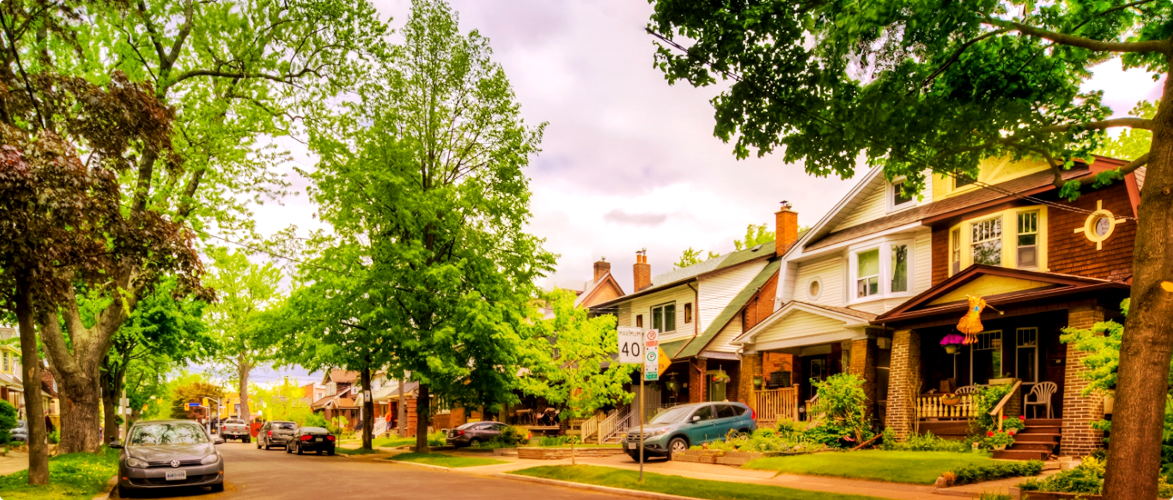
Greenwood-Coxwell is a quiet east-end residential neighbourhood bounded by Coxwell Avenue, Danforth Avenue, Woodbine Avenue, and Gerrard Street East, with Greenwood Park at its centre and brick semis from 1910 to 1940 lining most of its streets. In early 2026, semis are trading between $850,000 and $1.2 million depending on condition and renovation quality. It's less talked-about than Leslieville to the south, but the housing stock is comparable and the prices remain several hundred thousand dollars lower.
Greenwood-Coxwell sits in a part of Toronto’s east end that gets less attention than it deserves. The neighbourhood runs from Coxwell Avenue in the west to Woodbine Avenue in the east, and from Danforth Avenue in the north down to Gerrard Street East in the south. Leslieville is directly below it. The Danforth is directly above. Both of those neighbourhoods carry stronger name recognition, and Greenwood-Coxwell has benefited from that quietly for years: similar housing stock, lower prices, and a residential character that the adjacent neighbourhoods have largely traded away in exchange for commercial density.
Greenwood Park sits near the middle of the neighbourhood and gives it a centre. The park has a community centre, a wading pool, a splash pad, tennis courts, and a skating rink in winter. It draws residents from surrounding streets in a way that loosely organises the neighbourhood around it, which is not something every Toronto residential pocket can claim. The streets feeding into the park, particularly Greenwood Avenue itself, have a different feel on a weekend afternoon than streets further from it.
The housing is brick semis and detacheds built mostly between 1910 and 1940, with the occasional postwar infill. The streetscape is consistent: two-and-a-half storey homes on 20-foot lots, laneway parking at the rear, front porches that people actually use. Renovations have come steadily through the neighbourhood over the past fifteen years without the wholesale gentrification that reshaped Leslieville. Some blocks look largely as they did in 1985. Others have been systematically updated by successive buyers. That variation is visible at street level and reflected in prices.
The typical purchase in Greenwood-Coxwell is a brick semi from the early twentieth century, three bedrooms, one or two bathrooms, a modest backyard, and laneway access to parking at the rear. Most lots run 20 feet wide and 90 to 110 feet deep, which is standard for pre-war Toronto east end housing. A semi that has been renovated properly, with a functional kitchen, updated bathroom, and refinished original floors, trades between $950,000 and $1.2 million. A property that needs work or has had only cosmetic updates will come in lower, often $850,000 to $950,000.
Detached homes exist in the neighbourhood but they’re less common. When a detached comes to market, it typically attracts buyers who have been waiting for one. An unrenovated detached in acceptable condition starts around $1.25 million. Updated examples on larger lots reach $1.5 million or beyond. The detached supply is thin enough that buyers prioritising that type should be prepared to move quickly and to track the neighbourhood’s new listings closely.
The neighbourhood has no significant condo market. A small number of low-rise apartment buildings exist, and the odd converted triplex or multiplex appears, but Greenwood-Coxwell is functionally a freehold market. Buyers coming from the condo world and looking to make the move into freehold find the price points here more accessible than in most of the inner east end. The trade-off is that the houses are older, require ongoing maintenance, and carry the full range of century-home considerations: knob-and-tube wiring in some properties, galvanized plumbing in others, and foundations that perform differently than a poured concrete basement.
Parking comes with most properties through rear laneways, though not universally. Buyers who need reliable daily parking should confirm the specific property’s arrangement before getting too far into the process. Some lots have a garage. Others have a parking pad. A few have no rear access at all.
Greenwood-Coxwell behaves like most of the inner east end freehold market, with a few variations worth understanding. The buyer pool is smaller than in Leslieville or the Beaches, which means listings don’t typically draw the same volume of competing offers. Well-priced properties do attract multiple buyers when they’re presented properly and hit the market in spring or fall, but the frenzied ten-offer situations that defined some of these streets five years ago are less common in the current environment.
In early 2026, most freehold listings are running without formal offer dates. Sellers list, buyers request showings, and offers arrive when ready. For properties priced correctly at the market, accepted offers are coming in within two to three weeks of listing. Properties that come in above market or that have significant deferred maintenance will sit longer, sometimes six weeks or more, and sellers become more flexible as days on market accumulate.
The neighbourhood has held value reasonably well through the broader correction in Toronto freehold prices since 2022, partly because it was never the most expensive neighbourhood in the east end and partly because the buyer pool here tends toward long-term ownership rather than speculative buying. Turnover is relatively low, which keeps supply thin and prevents the kind of sustained oversupply that pushed prices down harder in some higher-profile neighbourhoods. Buyers should understand they’re entering a market with genuine demand from owner-occupiers who plan to live in the house for a decade.
The buyers who end up in Greenwood-Coxwell have usually run it against Leslieville to the south, the upper Beaches to the east, or the Danforth Village immediately to the north. The decision against Leslieville is almost always financial: Leslieville’s Queen Street East strip has driven its profile and its prices, and buyers who want comparable housing without paying the neighbourhood premium find Greenwood-Coxwell a genuine alternative. The daily life difference between the two is smaller than the price difference.
Buyers choosing against the upper Beaches are often trading away some of the park and lake access for a somewhat lower price point and a slightly shorter commute. Greenwood-Coxwell’s Coxwell subway access is more direct than the bus routes that serve the inner Beaches. For buyers whose priority is transit convenience over recreational access, that trade makes sense and shows in their decision.
The buyers who choose Greenwood-Coxwell itself tend to be practical about the trade-offs. There’s no distinctive commercial strip to anchor the neighbourhood’s identity. There are no marquee restaurants or bars that people travel from other neighbourhoods to visit. What there is is a quiet, well-built residential neighbourhood with good transit access, a useful park, and housing prices that reflect the absence of those amenities rather than the presence of any liability. The buyers who choose here are generally happy with that and stay for a long time.
The age of the housing here means pre-offer due diligence matters more than it would in a neighbourhood with newer stock. A home inspection is worth arranging before or after an accepted offer depending on how the listing is structured. The specific issues to look for in pre-war Toronto semis include knob-and-tube wiring, which some insurers won’t cover without a written quote for remediation; galvanized water supply lines, which reduce water pressure and eventually fail; and older clay sewer laterals, which can crack and back up and cost $10,000 to $20,000 to replace. None of these are deal-breakers on their own, but not knowing about them before signing is a mistake that shows up in the first year of ownership.
Parking is worth verifying at the specific property level. Laneway access exists for most of the neighbourhood, but individual lots vary significantly. Some have a proper garage. Some have a parking pad. Some have shared access arrangements with the adjacent property that are informal and could become complicated. If daily car storage is part of your life, walk the lane behind any property you’re seriously considering and confirm exactly what’s there.
The neighbourhood sits in a flood plain in a few specific areas near Greenwood Park. The city’s flood plain maps are publicly available and worth consulting if you’re buying a property with a basement you plan to use. The vast majority of streets are not at risk, but the specific block matters. Properties that have flooded in heavy rain events will typically show evidence in the basement: efflorescence on concrete block walls, patched cracks, or a newer sump pump that wasn’t there when the house was built. Look for those signs.
Sellers in Greenwood-Coxwell need to be honest with themselves about what the neighbourhood’s buyer pool looks like and what drives those buyers’ decisions. The buyers here are practical. They’re making a value calculation against comparable properties in Leslieville and the upper Beaches. They’re not paying a premium for the address itself. That means the condition and presentation of the specific property carries more weight here than it might in a neighbourhood where demand is so strong that buyers overlook deficiencies.
The properties that consistently achieve the upper end of the price range in this neighbourhood are the ones that have been maintained and updated with genuine care rather than cosmetic staging. Refinished original floors, a kitchen that works without being overbuilt, updated electrical and plumbing that a buyer’s inspector won’t flag, and a backyard that’s been kept rather than neglected. Buyers here will hire an inspector and they’ll read the report. A property that comes through an inspection with a clean bill generates confidence that the property with deferred maintenance cannot.
Timing follows the standard Toronto freehold pattern. Spring, specifically March through May, is the strongest window. The second window is September and October. Listings that appear in late November or through January sit longer and typically generate lower offers, not because the neighbourhood weakens but because the buyer pool is smaller and less active during those months. If you have flexibility, the spring window is worth waiting for. The difference in net proceeds between a strong spring listing and a mid-winter listing on the same property can be $50,000 to $80,000.
Greenwood Park is the neighbourhood’s primary amenity and its social anchor. The park has a community centre with programming for children and adults, a wading pool and splash pad that draw families in summer, outdoor tennis courts, and a skating rink that gets cleared and maintained through winter. It’s a working park in the sense that residents actually use it daily rather than occasionally, and that daily use gives the streets around it a pedestrian character that the blocks further from the park don’t quite have.
The commercial life of the neighbourhood is modest and spread thin. There’s no street the way Leslieville has Queen East or the Danforth has its own strip. Coxwell Avenue has a few local restaurants and a coffee shop. The Danforth is a ten-minute walk north and provides considerably more eating and shopping options. Gerrard Street East, the southern border, connects to the Gerrard India Bazaar further west, one of Toronto’s more distinctive commercial streets and genuinely useful for grocery shopping. Residents who want a concentrated local strip live and socialise slightly outside the neighbourhood’s borders.
The east end social infrastructure is within easy reach without being part of the neighbourhood itself. Leslieville’s restaurants on Queen East are a 10-to-15-minute walk south. The Danforth, with its Greek restaurants and independent retail, is the most walkable option for daily commerce. Beaches residents treat that whole east-end strip as their territory, and Greenwood-Coxwell residents operate the same way: the neighbourhood is where you live, and the surrounding areas are where you go out.
The Coxwell bus is the primary transit link. It runs north on Coxwell Avenue and reaches Coxwell station on the Bloor-Danforth line in three to four minutes. From Coxwell station, downtown stations like King, Queen, and Union are 20 to 25 minutes by subway. The Woodbine station to the east serves the eastern portion of the neighbourhood. Most of the neighbourhood is genuinely walkable to one of those two stations, with the western edge clearly closer to Coxwell and the eastern edge closer to Woodbine.
The 22 Coxwell bus also connects south toward Queen Street East and the eastern Beaches, giving residents direct access to the Leslieville commercial strip and the lakefront without transferring to subway. The 92 Woodbine bus does the same on the eastern edge. For residents who use transit regularly, the neighbourhood’s north-south bus connections are more useful in daily practice than a map might suggest.
Cycling is practical for residents heading downtown or toward the Danforth. Greenwood Avenue itself provides a relatively direct north-south cycling connection. The lake is accessible via the Martin Goodman Trail, which runs along the waterfront roughly two kilometres south of the neighbourhood. For car-dependent residents, the Don Valley Parkway is accessible from Danforth Avenue with a short drive east, making Greenwood-Coxwell one of the more convenient inner-east-end neighbourhoods for drivers who occasionally need highway access.
Leslieville is the comparison that comes up most often. The two neighbourhoods share a border, share the same era and type of housing, and share the same general transit access. What they don’t share is a commercial identity. Leslieville has Queen Street East, which developed over the past twenty years into one of Toronto’s better-known independent restaurant and retail strips, and that strip drove the neighbourhood’s profile and its prices. Greenwood-Coxwell doesn’t have an equivalent strip. Equivalent semis in Leslieville run $150,000 to $250,000 higher for the same square footage and condition. Buyers who want the living environment of the east end without the commercial premium have a clear alternative here.
The Danforth, which forms the northern border, is a different kind of comparison. The Danforth neighbourhood to the west, around Pape and Broadview, has Greek restaurants and a commercial identity built over decades, with housing that’s marginally less expensive than Greenwood-Coxwell in some blocks. The Danforth to the east, toward Woodbine and beyond, gets quieter and more residential. Greenwood-Coxwell buyers who prioritise the Danforth’s restaurants and the Bloor-Danforth subway access can get both from this neighbourhood without paying the slight premium that attaches to Pape or Broadview addresses.
The upper Beaches, east of Woodbine Avenue, is the third comparison. Properties there carry a modest premium for the proximity to the lake and the Beaches’ park infrastructure, but the transit is slower: the Queen streetcar east of Woodbine is notoriously unreliable. Greenwood-Coxwell’s subway access via Coxwell is a genuine advantage for buyers who commute by transit and find the Beaches’ bus routes frustrating.
What Greenwood-Coxwell looks like on the ground is a residential neighbourhood that hasn’t been discovered so much as steadily appreciated. The streets are quiet. There are few visitors who aren’t residents or residents’ guests. The housing is well-built and largely well-maintained, with individual properties varying considerably in their renovation history. A walk down Greenwood Avenue or Woodfield Road on a weekday morning feels like most of Toronto’s east end residential streets felt twenty years ago: people walking dogs, children heading to school, a general absence of the amenity infrastructure that would attract anyone who didn’t live there.
That character is the neighbourhood’s main appeal and its main constraint. Buyers who value quiet, residential consistency, and the absence of the noise and foot traffic that comes with a commercial strip find it exactly right. Buyers who want the neighbourhood to pull its own weight socially, with places to go and things to do within walking distance, find it lacking and end up looking at Leslieville, the Danforth, or the Beaches instead. Neither group is wrong. The neighbourhood is genuinely what it appears to be: an ordinary east end residential area with good bones, reasonable transit, a useful park, and prices that reflect the modesty of its commercial offering.
The long-term owners who have been here since the 1990s and early 2000s tend to be evangelical about the neighbourhood in a low-key way. They bought when prices were low, they’ve watched the surrounding areas appreciate faster and louder, and they’ve decided the trade-off favours them. The newer buyers over the past five to ten years tend to arrive having done the comparison and concluded the value is there. Both cohorts stay. The neighbourhood has a low turnover rate for Toronto’s inner east end, which says something specific about buyer satisfaction.
What are home prices like in Greenwood-Coxwell in 2026? Semis are trading between $850,000 and $1.2 million in early 2026, with condition and renovation quality driving most of the spread. A brick semi that’s been properly updated, with a functional kitchen, updated bathroom, and refinished original floors, sits toward the upper end of that range. A property that needs work or has had only cosmetic updates will come in at or below the midpoint. Detached homes start around $1.25 million for unrenovated examples, with fully updated properties on larger lots reaching $1.5 million or beyond. The prices are meaningfully lower than Leslieville to the south for equivalent housing stock and age.
How close is Greenwood-Coxwell to the subway? Coxwell station on the Bloor-Danforth line is the primary subway connection. The Coxwell bus reaches it in three to four minutes from the neighbourhood’s core, and most of the neighbourhood is within a ten-minute walk of the bus route. From Coxwell station, King or Queen Street downtown is reachable in roughly 20 to 25 minutes by subway. The Woodbine station to the east serves the neighbourhood’s eastern edge. For buyers who commute by transit, the access here is genuinely useful and more reliable than the streetcar routes serving Leslieville and the Beaches.
How does Greenwood-Coxwell compare to Leslieville? The two neighbourhoods share a border at Gerrard Street East and have similar housing stock in age and type. The main differences are price and commercial amenity. Leslieville has Queen Street East, which has developed into a well-known restaurant and retail strip. Greenwood-Coxwell is quieter and more residential, with no equivalent commercial concentration. That trade-off shows in price: equivalent semis in Leslieville run $150,000 to $250,000 higher for comparable condition. Buyers who want the east-end residential character without paying for a commercial strip find Greenwood-Coxwell the stronger value.
The case for Greenwood-Coxwell in 2026 is fundamentally a value case. You’re buying the same pre-war brick housing that defined the inner east end before it became expensive, in a neighbourhood that hasn’t attracted the restaurant and retail development that drives prices in Leslieville and the Beaches, with transit access that’s more reliable than much of the east end and a park that functions as a real community asset rather than a passing-through space. The discount relative to Leslieville is $150,000 to $250,000 on a comparable semi. That gap has been persistent.
The neighbourhood doesn’t hide what it is. There’s no flagship coffee shop, no restaurant that generates press, no street that visitors come to see. What there is, is a working residential neighbourhood with well-built housing, consistent demand from owner-occupiers who plan to stay, and prices that reflect the absence of amenity rather than any underlying deficiency in the housing itself. Buyers who have toured Leslieville, found the price high, and wondered whether an adjacent alternative existed at a lower entry point are looking at the right neighbourhood.
The long-term thesis here is that Greenwood-Coxwell will continue to gradually close the gap with Leslieville as the east end fills in and the remaining price discounts compress. That may take another decade or it may not happen at all. What’s more immediately true is that buyers who value quiet residential streets, solid pre-war housing, subway proximity, and a price point below most of the inner east end will find what they’re looking for here and will likely be satisfied with the decision for a long time.
Street-level knowledge is hard to find online. Our team works in Greenwood-Coxwell every day. They know which pockets hold value, where the school catchment lines actually fall, and what the market is doing right now. Talk to us before you make a decision about Greenwood-Coxwell.
Talk to a local agent For Sale
 For Sale
 For Sale
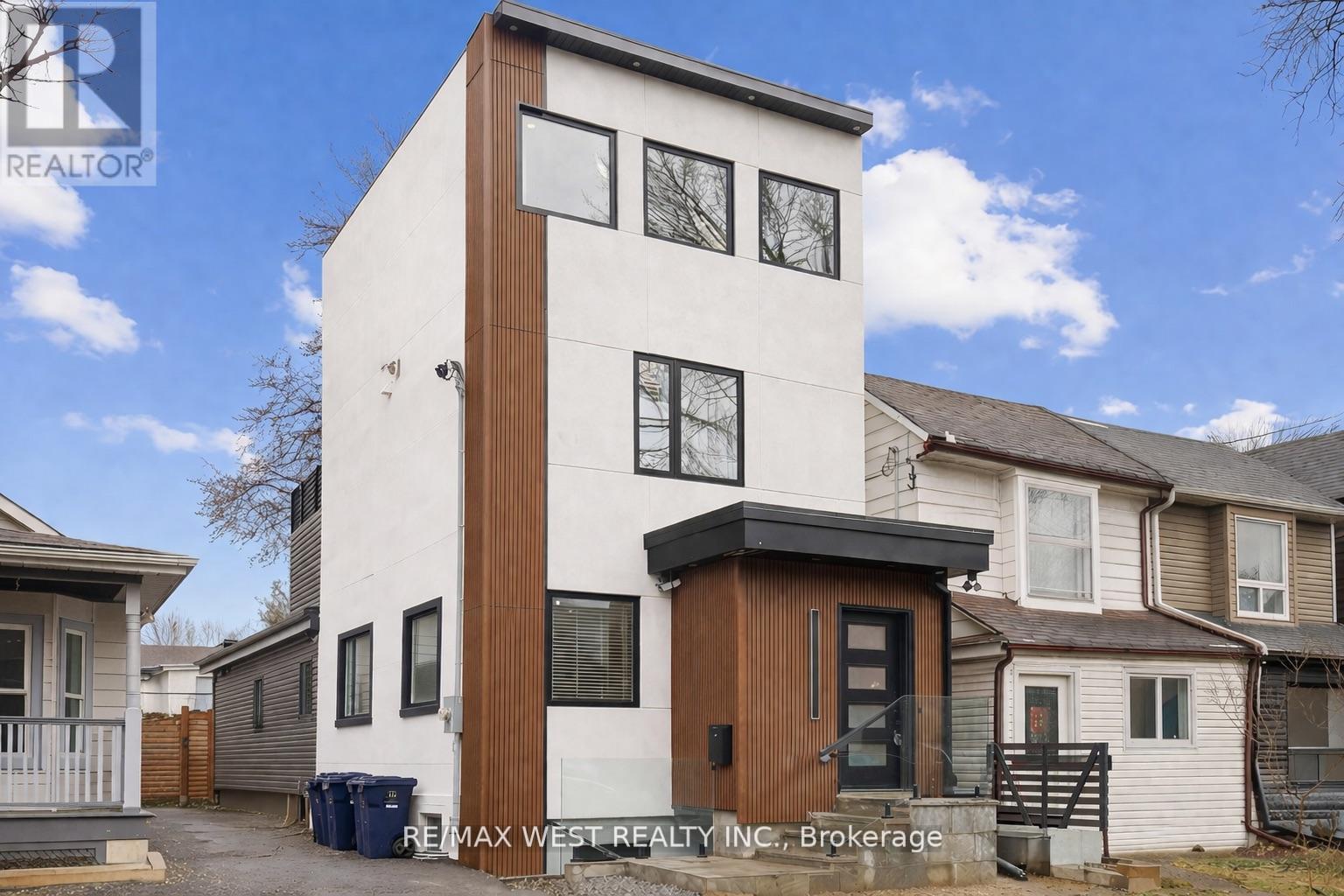 For Sale