
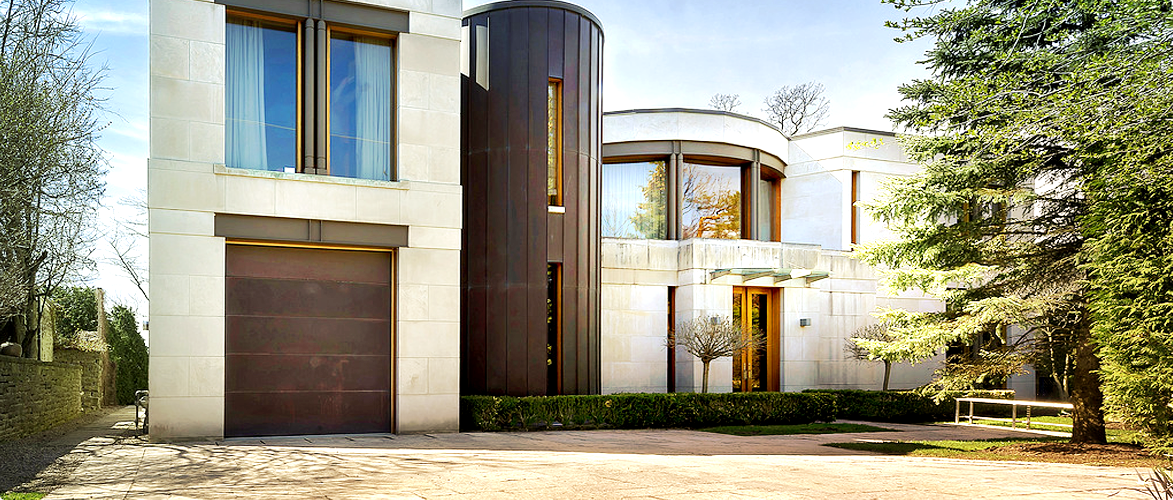
Hoggs Hollow is a ravine enclave in the Don River valley north of York Mills Road, one of Toronto's most secluded and expensive residential addresses despite sitting minutes from the Yonge subway corridor.
Hoggs Hollow sits in the valley of the West Don River, tucked between Yonge Street and Bayview Avenue north of York Mills Road. The valley drops steeply from the surrounding plateau and the neighbourhood is built along its floor and lower slopes, which means that driving into Hoggs Hollow from York Mills Road feels like leaving the city without actually going anywhere. The ravine closes in on either side, the noise from York Mills drops away, and the houses you’re looking at could plausibly be on a country road sixty kilometres from downtown. They are, in fact, roughly fourteen kilometres from Bay Street.
That contrast, between physical setting and actual urban location, is what defines the neighbourhood and what drives its pricing. Hoggs Hollow offers ravine seclusion, mature tree cover, custom-built homes on large lots, and extreme quiet at a distance from the city centre that still allows a functional professional life without extraordinary commute times. The Yonge subway line runs along the east side of the neighbourhood and York Mills station is within reach on foot or a very short drive. The combination of natural setting and transit proximity is rare enough in Toronto that the neighbourhood commands prices that consistently place it among the city’s most expensive addresses.
The community is small. The number of properties that change hands in a given year is measured in single digits in most years, sometimes barely reaching double digits. There is no commercial strip, no coffee shop, no public gathering place within the hollow itself. What it has is privacy, space, and a physical environment that’s unlike anywhere else in the city.
The housing stock in Hoggs Hollow is almost entirely large detached custom homes, built across several decades from the 1930s through to recent new construction. The earliest homes, some of which are stone cottages built when the valley was a summer retreat for wealthy Torontonians, have a completely different character from the mid-century brick and stone custom builds that make up the majority of the housing. Newer construction, where it exists, tends toward larger footprints and more contemporary design, often replacing older structures on desirable lots.
Lots vary considerably. Some properties on the valley floor are narrow and constrained by the ravine edge on one side and the road on the other. Others, particularly on the lower slopes, have substantial width and depth with garden space that would be unremarkable in the countryside but is extraordinary for a property inside the Toronto city limits. Buyers should look carefully at the lot lines and any ravine setback restrictions, which the City of Toronto enforces through its Ravine and Natural Feature Protection By-law. Building or expanding close to the ravine edge requires approval that isn’t guaranteed, and this can limit what buyers are able to do with a property after purchase.
In 2026, prices in Hoggs Hollow run from approximately $3 million at the lower end, which typically means a smaller original home in need of significant renovation, to $8 million and above for recently updated or newly built larger properties on desirable lots. The wide range reflects how much condition and lot character vary within a very small geographic area. A well-renovated mid-century home on a flat, wide lot with a proper garden might trade at $6 million. An unupdated 1940s stone cottage on a sloped, constrained lot might come in at $3.2 million. Both are in Hoggs Hollow; neither is a bargain in absolute terms, but in context of what each offers, the pricing logic is consistent.
Hoggs Hollow is a thin market. In most years, fewer than fifteen properties trade hands, and in slow years the number is closer to five or six. That thinness has a direct effect on how the market moves: a single strong sale can shift the perceived price floor for the entire neighbourhood, and a single property that sits unsold for six months can create a narrative of softness that doesn’t reflect actual demand. Buyers and sellers both need to treat individual comparables carefully and look at a broader window, typically three to five years of sales rather than the last twelve months, to get an accurate read on value.
The buyer pool is narrow and specific. Hoggs Hollow doesn’t attract buyers who are making a compromise or stretching to afford a neighbourhood. It attracts buyers who have looked at a range of Toronto’s expensive enclaves and decided, specifically, that they want the ravine setting and the privacy that only this neighbourhood delivers. Those buyers tend to be patient, financially secure, and clear about what they’re looking for. When the right property comes to market, qualified buyers who have been waiting will move on it relatively quickly. When a property doesn’t match the market’s expectations, it will sit regardless of price.
Sellers in Hoggs Hollow frequently wait years for the right moment to list. Homes aren’t sold here the way they are in higher-volume Toronto neighbourhoods, where sellers list in a predictable spring window and expect to trade within a few weeks. Here, the timing of a sale is more fluid, the listing period is longer, and the negotiation between buyer and seller often takes more time than a standard Toronto transaction. That’s not a dysfunction; it’s how a market with very few participants and very high transaction values is supposed to behave.
The buyers who end up in Hoggs Hollow have almost always ruled out other expensive Toronto neighbourhoods first. They’ve looked at Rosedale and found it too close to the action, or too urban in feel, or the lots too small for what they want. They’ve looked at Forest Hill and found it more conventional than they’re after. They’ve looked at the Bridle Path and found it right on price but too exposed, or the properties too large, or the distance from the subway too inconvenient. Hoggs Hollow tends to be the choice of buyers who specifically want the ravine experience, the scale of property, and the genuine quiet, and who are willing to pay for all three.
A significant portion of buyers are professionals and executives with established careers who are buying what they expect to be their long-term or final family home. These are not buyers making speculative purchases. They’re building a life in the neighbourhood and they plan to stay. That tenure pattern keeps turnover low and maintains the neighbourhood’s stable, private character across ownership cycles. When a Hoggs Hollow house does come to market after many years in the same ownership, it often needs updating precisely because the previous owners lived in it rather than maintaining it as a financial asset.
There’s also a returning buyer pattern: Torontonians who grew up in Hoggs Hollow or nearby in Bayview Village or York Mills who come back to the area after careers in other cities or countries. The neighbourhood has a specific social gravity for families who know North York well and understand what makes Hoggs Hollow different from the surrounding streets. For those buyers, the purchase is partly about place memory and partly about a very practical assessment of what their money gets them relative to alternatives.
Every purchase in Hoggs Hollow warrants a thorough pre-offer inspection, and given the age of much of the housing stock and the ravine context, that inspection should include a specialist assessment of the foundation and drainage. Homes built on valley slopes deal with water management challenges that don’t affect properties on flat ground. Hydrostatic pressure, surface water routing, and the condition of weeping tile systems are all legitimate concerns in this setting, and an inspector who hasn’t worked on ravine-adjacent properties may not know what to look for. Finding an inspector with specific experience in ravine and valley properties is worth the additional effort before you make a seven-figure commitment.
Ravine setback restrictions are a separate but equally important due diligence item. The City of Toronto’s Ravine and Natural Feature Protection By-law establishes a mandatory setback from the top of the ravine slope, typically ten metres, within which building is prohibited or severely restricted. If you’re buying with plans to expand the footprint, add a pool, build a new structure in the garden, or undertake any significant exterior work, you need to know exactly where your lot stands relative to that setback before going firm. A surveyor who can identify the top of the slope on your specific lot, and a planner or architect who can advise on what the by-law allows, are both necessary before committing to any purchase where future development is part of the plan.
The title history on older properties here sometimes reveals easements, rights of way, or encumbrances related to the valley itself. Some lots have historical drainage easements, utility easements, or shared lane agreements that limit what owners can do with specific parts of the property. A thorough title search by a real estate lawyer with experience in complex residential properties is the right approach rather than a standard title insurance policy alone. These are not common problems but when they exist they matter, and the properties where they’re most likely to exist are the older ones that first-time Hoggs Hollow buyers are sometimes drawn to because of their original character.
Selling a Hoggs Hollow property requires accepting that the buyer pool is genuinely small. There are not hundreds of people looking for a $5 million ravine home in a specific North York valley. There are dozens, maybe fewer, at any given time. The listing strategy needs to reflect that reality. Broad online exposure matters, because the buyer for a specific Hoggs Hollow property might be anywhere: currently living in another Toronto neighbourhood, relocating from another city, or coming from abroad. The listing needs to reach them wherever they are, not just appear in local search results.
Professional photography and, for larger properties, a properly produced video walkthrough are not optional at this price point. Buyers considering a property in the $4 million to $8 million range will not make a showing appointment based on a phone photo. They will, however, request a showing based on images that accurately and attractively represent the setting, the natural environment, the scale of the rooms, and the quality of the construction. The ravine setting is a major selling point and many listings undersell it by using interior photos exclusively. Exterior and garden photography that captures the tree canopy, the valley views, and the seasonal character of the setting is an important part of the marketing package.
Pricing requires discipline and an honest assessment of what comparable Hoggs Hollow properties have achieved over the last several years, adjusted for condition, lot size, and the specific micro-location within the hollow. Properties on the valley floor with full ravine frontage trade differently from properties on the slopes with partial ravine views. Properties with updated kitchens and bathrooms trade differently from original-condition homes at the same nominal square footage. A seller who insists on a price that reflects their own renovation investment without accounting for market precedent will wait a long time. The right price is the one that attracts the handful of qualified buyers currently in the market, not the one that assumes more buyers than actually exist.
The West Don River runs through the bottom of the Hoggs Hollow valley, and for many properties the sound of the river is audible from the garden. The valley itself is part of the broader Don Valley ravine system, one of the largest urban ravine networks in North America, and the section that runs through Hoggs Hollow is among its most intact and ecologically significant segments within the city. The canopy of mature trees, many of them decades old, provides a degree of shade, privacy, and seasonal colour that is genuinely exceptional in an urban context.
The natural setting is the neighbourhood’s primary amenity, but it also creates responsibilities. Trees on or adjacent to ravine lots may be protected under the City of Toronto’s private tree by-law, which requires a permit before any tree over a certain diameter at breast height can be removed. That by-law applies to private property, not just City land, and it has real teeth. Owners who want to remove trees for any reason, including to improve sightlines, create space for construction, or address a diseased or damaged tree, need to go through the permit process and should expect that the City will scrutinize applications for ravine-adjacent properties carefully.
Flooding is a topic that comes up in any honest discussion of the Hoggs Hollow setting. The valley floor has flooded historically, and some properties experienced significant flooding during major storm events including the remnants of Hurricane Hazel in 1954. Since then, floodplain mapping has been updated, some properties have been acquired and removed from the floodplain by the Toronto and Region Conservation Authority, and modern drainage and flood management infrastructure has been improved. Buyers should obtain the current TRCA floodplain mapping for any specific property they’re considering and discuss flood history and risk with a specialist before purchasing on the valley floor. Properties on the lower slopes rather than the floor typically carry a different risk profile than those immediately adjacent to the river.
Hoggs Hollow is a car-dependent neighbourhood in the same way that any low-density, ravine-set residential enclave is car-dependent. There is no transit that runs through the hollow itself, and the internal roads are residential in character and scale. York Mills station on the Yonge-University subway line is the nearest rapid transit access point, reachable by a short drive up from the valley to York Mills Road and then a walk to the station, or a walk that takes fifteen to twenty minutes for those who prefer to go on foot through the neighbourhood streets. For anyone commuting downtown by transit, the subway connection is functional and the total journey from Hoggs Hollow to the Financial District runs roughly thirty to forty minutes under normal conditions.
By car, the neighbourhood is well placed for access to the major routes that serve North York. York Mills Road connects east to Bayview Avenue and west to Yonge Street. The 401 is accessible from either Yonge or Bayview in under ten minutes from most addresses in the hollow. The Don Valley Parkway can be reached via York Mills Road east and then south on Don Mills Road. For commuters heading to offices in Markham or along the Highway 7 corridor to the east, Hoggs Hollow is a logical home base: the drive north through the Bayview extension and then east is straightforward and avoids the worst of the downtown congestion.
The immediate surrounds offer practical daily amenities without requiring a long drive. The intersection of Yonge and York Mills has a grocery store, pharmacy, LCBO, and a concentration of restaurants and services. The Bayview Village Shopping Centre, roughly five minutes by car, is a mid-market enclosed mall with additional grocery options, specialty food stores, and retail. For private school access, Crescent School on Bayview Avenue is close enough that many families drive their children there without it being a significant daily commitment. The neighbourhood is not self-contained in the way that a mixed-use urban community is, but it’s not isolated either: everything needed for daily life is a short drive away in any direction.
The neighbourhood most often mentioned alongside Hoggs Hollow is Rosedale, and the comparison is reasonable but incomplete. Both are expensive, both have strong ravine character, both attract established professional buyers. The difference is that Rosedale is a walkable, socially active neighbourhood with a genuine village feel along Crescent Road and the surrounding streets, proximity to Summerhill and Bloor, and a density that makes it feel part of the city even as it maintains its enclave character. Hoggs Hollow doesn’t have any of that urban texture. It’s quieter, lower-density, and more genuinely removed from city life. Buyers who want the ravine without the social scene, and who don’t need to be in Midtown, often find Hoggs Hollow the more honest choice for how they actually live.
Forest Hill is another common comparison. Forest Hill is defined by its large detached homes on generous lots, its established Jewish community, and its proximity to Upper Canada College and Bishop Strachan School. The lots in Forest Hill are large by Toronto standards but typically smaller than the Hoggs Hollow equivalent, and the neighbourhood’s topography is gentler. Forest Hill buyers are often deeply embedded in the community’s social structure in a way that doesn’t have a direct equivalent in Hoggs Hollow. If you’re looking for community ties to a specific cultural or institutional network, Forest Hill serves that. If you’re looking for maximum privacy in a natural setting, Hoggs Hollow is the more extreme version of what expensive Toronto real estate can offer.
The Bridle Path is the one comparison where Hoggs Hollow genuinely comes out cheaper per square foot, and that price difference reflects the Bridle Path’s superior name recognition and the sheer scale of its properties. Bridle Path homes regularly trade above $10 million and have been known to reach $30 million or more on estate lots. Hoggs Hollow is a smaller-scale luxury market: the properties are large but not typically in the fifteen-thousand-square-foot range, and the setting is ravine rather than estate. Buyers who have the budget for Hoggs Hollow’s upper end but not for the Bridle Path’s middle often find that Hoggs Hollow actually better matches the way they want to live.
York Mills Collegiate Institute is the public secondary school serving Hoggs Hollow, and it has an academic reputation within the TDSB that reflects the community it serves. York Mills consistently performs well on provincial assessments and has a population drawn from one of the higher-income catchment areas in the city. Elementary catchments for the neighbourhood vary by address and families should confirm with the Toronto District School Board for their specific location. Catholic school families are zoned to St. Andrew’s College of the Holy Name area, and parents should verify current TCDSB catchments directly.
Many families in Hoggs Hollow use private schools. Crescent School, an all-boys independent school on Bayview Avenue, is geographically close and has historically drawn from this neighbourhood. Toronto French School has a campus nearby. Havergal College, Upper Canada College, and Bishop Strachan School are all within a manageable drive for families who prioritise those institutions. The proximity of multiple strong private school options is a factor in why the neighbourhood attracts the buyer profile it does: professional families with children who are making a long-term residential commitment want access to educational institutions they trust.
Daily life in Hoggs Hollow is quiet and private by design. There are no restaurants, cafes, or shops within the hollow itself. Social life tends to be home-based, neighbour-to-neighbour in the way that characterises very low-density residential enclaves where you know who your neighbours are and encounter them by design rather than by accident on a main street. The neighbourhood has a residents’ association that handles community matters and maintains the relationship with the City on issues like road maintenance, tree management, and development pressures. For families who want to live at a remove from the urban pace while remaining within the city, this structure works well. For buyers who expect neighbourhood amenity from their immediate surroundings, it doesn’t, and those buyers typically don’t stay long.
What do homes cost in Hoggs Hollow in 2026? The price range in 2026 runs from roughly $3 million at the lower end, which typically means a smaller original home needing substantial renovation, to $8 million and above for a recently updated or newly built property on a desirable lot. The market is thin enough that there’s meaningful variation within those numbers depending on lot size, ravine frontage, condition, and whether the property has been updated since it was built. Buyers should budget for a home that will likely require renovation investment unless it has been recently updated, and factor that cost into the offer rather than treating an older asking price as a guide to final value.
Is flooding a real risk in Hoggs Hollow? It has been historically. The valley floor flooded during major storm events in the past, most significantly during Hurricane Hazel in 1954. Since then, floodplain mapping has been updated and some of the most vulnerable properties were removed from residential use by the TRCA. That said, buyers looking at properties on the valley floor should obtain current TRCA floodplain mapping for the specific address and discuss flood risk with an environmental consultant before going firm. Properties on the lower slopes above the river carry a different risk profile. Climate change has also increased the frequency of significant rainfall events in Southern Ontario, which is a factor worth discussing with both an inspector and an insurer before purchasing.
Can I renovate or expand a Hoggs Hollow property? It depends on the specific lot and the scope of what you’re planning. The City of Toronto’s Ravine and Natural Feature Protection By-law establishes a ten-metre no-build setback from the top of the ravine slope, and any work within or near that setback requires TRCA approval in addition to standard building permits. The tree by-law adds another layer of complexity for properties with significant tree cover. Buyers planning substantial renovations or new construction should engage an architect or planner before purchasing who can confirm what the by-law and the specific lot allow, because assumptions about what will be permitted have a way of proving incorrect after the purchase is done.
How private is Hoggs Hollow really? Genuinely private by Toronto standards. The road through the hollow is a through-route between York Mills Road and Bayview Avenue, so there is vehicle traffic, but it’s residential in character and volume rather than arterial. The homes sit on lots large enough that neighbours are not immediately proximate in the way they are on a standard Toronto residential street, and the tree cover throughout the valley provides visual screening between properties across most seasons. It’s not isolated, but it’s as close to genuinely private as residential Toronto gets within a reasonable distance from the city’s business core.
Hoggs Hollow takes its name from James Hogg, a Scottish immigrant who established a mill on the West Don River in the early nineteenth century. The hollow itself, the narrow valley where the river runs, was a working landscape long before it became a wealthy residential enclave. The transition came gradually, beginning in the early twentieth century when the combination of the valley’s natural beauty and its proximity to the growing city of Toronto made it attractive to affluent Torontonians looking for summer retreats and, eventually, year-round residences. The stone cottages and early homes that survive from this period are among the oldest residential structures in this part of the city.
Development intensified through the 1930s, 1940s, and 1950s as the surrounding North York plateau was built out with postwar subdivisions and the valley’s exclusivity, defined partly by its physical separation from the surrounding grid, became a feature rather than an inconvenience. The custom homes built during this period, many of them in brick and stone by architects whose names are no longer widely known, established the character of the neighbourhood that persists today. These were not developer-built properties. They were individual commissions, and that individual character is visible in the variety of architectural styles and site plans across the hollow.
The neighbourhood survived largely intact through the development pressures that transformed much of North York through the 1960s and 1980s, partly because the ravine setting made the land unsuitable for the high-density development that characterised the Sheppard and Yonge corridors. The same topography that kept developers out is what kept the housing stock intact and the natural setting preserved. That historical accident is now one of the neighbourhood’s principal selling points: Hoggs Hollow looks much as it did fifty years ago, while the city around it has changed almost beyond recognition.
Street-level knowledge is hard to find online. Our team works in Hoggs Hollow every day. They know which pockets hold value, where the school catchment lines actually fall, and what the market is doing right now. Talk to us before you make a decision about Hoggs Hollow.
Talk to a local agent