
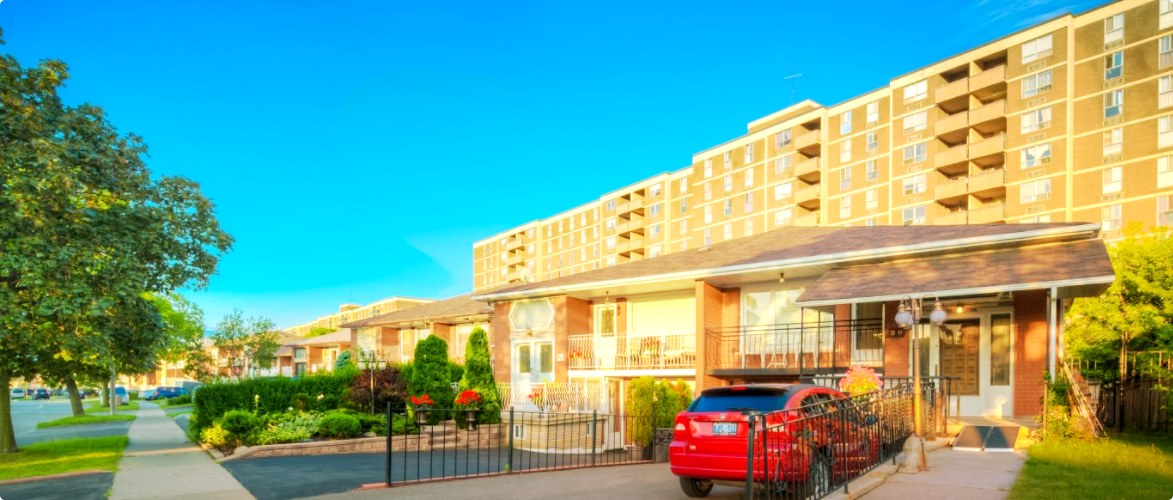
Humber Summit is an affordable northwest Toronto neighbourhood above Steeles Avenue, bounded by the Humber River ravine to the west and Islington Avenue to the east. Post-war detached bungalows on modest lots make up most of the housing stock. The neighbourhood is home to a long-established diverse community and offers some of the most accessible detached home prices in Toronto.
Humber Summit sits in the northwest corner of Toronto, above Steeles Avenue West near the Humber River, in a part of the city that most Toronto real estate conversations don’t reach. It’s bounded roughly by Steeles to the south, Islington Avenue to the east, Albion Road to the north, and the Humber River ravine to the west. The neighbourhood was built out in the 1950s and 1960s and has the character of a working-class postwar suburb: modest detached homes, a strong sense of community among long-term residents, and a demographic that is genuinely diverse in ways that predate the more recent wave of newcomers to Toronto.
This is one of Toronto’s more affordable markets for detached homes. That affordability is real, and it persists for reasons that buyers should understand clearly before purchasing: the neighbourhood has limited transit, is far from the downtown employment corridor, has been historically underinvested in commercial and public amenity terms, and carries some of the social and service challenges associated with northwest Toronto more broadly. None of that means it’s a bad place to live. Many families have built stable, good lives here across multiple generations. But buyers approaching it as a value play without understanding what they’re getting are doing themselves a disservice.
What Humber Summit has going for it beyond price is the Humber River ravine, which runs along its western boundary and provides genuine natural space. The housing stock on larger lots gives families space that’s unavailable at similar price points in more central areas. And the community has strong roots, established churches, cultural associations, and a social fabric that reflects a long history of West Indian, South Asian, Filipino, and more recently African and Portuguese communities putting down permanent stakes. For buyers who are looking for that combination of affordability, space, and established neighbourhood character, Humber Summit offers something real.
The housing stock in Humber Summit is predominantly detached bungalows and raised bungalows on modest lots, with some semi-detached homes and a few townhouse complexes on the edges. The overall character is consistent with the broader northwest Toronto bungalow belt: homes built between the mid-1950s and late 1960s on lots that are typically 40 to 50 feet wide and 100 to 120 feet deep.
Condition varies significantly. Some homes have been well-maintained or updated by owners who have lived in them for twenty or thirty years. Others have had multiple tenants and show the wear of under-maintained rental use. The cosmetic condition is less important than the structural and mechanical state of the property, and buyers should not let a freshly painted interior convince them that the electrical, plumbing, and foundation have been similarly attended to.
In 2026, detached bungalows in reasonable condition in Humber Summit are priced between $800,000 and $1.1 million, with the upper end for homes that have been meaningfully updated or are on larger lots. Properties that need significant work or are in poor condition can come in below $800,000, though these are less common as sellers have become more aware of market value. Semi-detached homes and townhomes sell in the $650,000 to $850,000 range depending on size and condition.
Basement apartments are common throughout the neighbourhood, and many detached homes were built or converted to include a ground-floor or basement suite. This is relevant to buyers both as a source of rental income that can help with carrying costs, and as a legal status question: not all basement apartments in older homes have been registered with the city, and buyers should verify legal non-conforming or registered second-suite status before making assumptions about rental income. An unregistered suite that doesn’t meet fire code creates liability.
The Humber Summit market moves at a pace consistent with other northwest Toronto affordable detached markets: moderate volume with steady demand from first-time buyers, newcomers to Canada purchasing their first property, and value-oriented buyers who’ve been priced out of other parts of the city. It’s not the frenzied multiple-offer environment of inner-city neighbourhoods at peak market, but it’s also not a slow market where buyers set the terms entirely.
Properties priced correctly for their condition and lot sell within three to six weeks in a normalized market. Overpriced properties sit, and the neighbourhood is not forgiving of ambitious sellers who are measuring themselves against a 2021 price that no longer exists. Buyers who’ve done their comparable analysis and understand the gap between a well-maintained home and one in need of significant capital work will find opportunities, particularly on properties that have been on the market for more than forty-five days.
The investor market has been active here, with buyers purchasing bungalows to add secondary suites or to rent whole properties to multi-generational households. This creates some competition for what would otherwise be affordable owner-occupied properties, and it’s worth understanding in any given transaction whether you’re competing with an investor who will offer cash or a waived condition. Knowing your competition is part of how a good buyer’s agent helps you win the right deals without overpaying.
Market values here are more sensitive to the broader economic environment than in more insulated parts of the city. In periods of rising rates or market uncertainty, northwest Toronto detached tends to feel softening faster than, say, Rosedale or Forest Hill, because the buyer pool is more leveraged and more rate-sensitive. In periods of recovery, the same areas can move faster than expected because affordability brings a larger pool of potential buyers back into range. The 2026 market in this area shows improving sentiment relative to the 2023-2024 period.
Humber Summit draws three distinct buyer profiles, and understanding them is useful for knowing who you’ll be competing with and what the neighbourhood’s future direction is likely to be.
The first profile is first-time buyers from the West Indian, South Asian, Filipino, and African communities that have been part of the northwest Toronto fabric for generations. These buyers often have family connections to the area. They’re purchasing their first home, they’re stretched to their mortgage qualification limit, and they’re looking for a solid detached bungalow with basement suite potential to help with carrying costs. They know the neighbourhood. They’re not romanticizing it or approaching it as a value discovery. They’re buying where their community is.
The second profile is more recent newcomers to Canada, particularly from West and East Africa, South and Southeast Asia, and the Middle East, who are making their first Toronto property purchase. For these buyers, northwest Toronto’s lower price points make detached ownership achievable, and the established immigrant community infrastructure (cultural centres, places of worship, specialty grocery, multilingual services) makes the area a practical fit. These buyers are often paying close to their maximum qualification and need the purchase to work financially from day one.
The third profile is the value-play buyer: someone who’s been watching the Toronto market, can’t afford what they want closer in, and has decided that $900,000 for a detached bungalow in northwest Toronto is a better long-term bet than $700,000 for a condo in a more central location. These buyers are doing a deliberate financial calculation. They tend to be earlier in their Toronto real estate career and are treating this as a step on the property ladder rather than a permanent destination.
Within Humber Summit, the meaningful differences between streets relate primarily to proximity to the Humber River ravine, traffic exposure on arterial streets, and proximity to the neighbourhood’s small commercial nodes.
Streets that back onto the Humber River ravine on the neighbourhood’s western edge are the most desirable in the area. The ravine provides privacy, natural views, and trail access that is unusual for a neighbourhood at this price point. Ravine-backing properties command a premium, and they’re worth identifying specifically if this is important to you. The trail access from these streets connects directly to the Humber River trail system, which runs from Steeles Avenue south to Lake Ontario, one of Toronto’s longest continuous trail corridors.
Islington Avenue forms the eastern boundary and is a busy arterial with bus service. Properties directly on Islington have more traffic noise and less privacy than those on interior residential streets, but the bus access is a real convenience for transit users. Albion Road to the north is similarly busy and similarly convenient for bus users but noisier for residents fronting it.
The interior streets between the arterials and the ravine are the neighbourhood’s residential core. Streets in the central section of the neighbourhood, away from both the arterial noise and the ravine edge, offer a balance of quiet and accessibility. These are the streets that tend to have the highest proportion of long-term owner-occupied homes and the most established street-level character.
There are a few small commercial strips within the neighbourhood, at the Islington and Albion intersection area and along Steeles at the southern boundary, that serve daily needs. Proximity to these is a practical convenience for some buyers and not relevant to others depending on whether they walk or drive for errands.
Transit is one of Humber Summit’s real limitations. The neighbourhood is not within walking distance of a subway station, and reaching the subway requires a bus ride. The 37 Islington bus runs north-south along Islington Avenue and connects to Islington station on Line 2, which provides east-west access across the city. The 36 Finch West bus connects to Finch West station on Line 1, which gives north-south access. Either connection involves a bus ride of fifteen to twenty-five minutes before you’re on the subway, and then a further subway ride to wherever you’re going.
Finch West station on Line 1 is the most useful subway connection for residents of Humber Summit, providing access south to downtown and north to York University and the Vaughan Metropolitan Centre. The Finch West LRT, which is planned to run along Finch Avenue West from Finch West station to Humber College, will improve local bus connections once completed, though construction timelines for transit projects in Toronto have been notoriously difficult to predict. The LRT will not add a new station to the neighbourhood’s immediate vicinity but will improve the bus network that connects to Finch West station.
Driving is practical and the neighbourhood’s position near Highway 400 and the 427 extension makes expressway access reasonable. The 400 provides a direct route to Brampton, Barrie, and the airport corridor. For residents who drive to work in suburban employment centres, the location is more functional than it is for those commuting downtown by transit.
Cycling infrastructure in this area is limited. The Humber River trail is excellent for recreational cycling and provides a car-free route south toward Lake Ontario, but cycling for commuting on the surrounding arterials is uncomfortable without proper infrastructure. Residents who cycle recreationally along the Humber trail value the access highly. Those who need to cycle to work or transit will find the arterial cycling environment difficult.
The Humber River ravine is the neighbourhood’s most significant natural asset. The Humber River runs along the neighbourhood’s western boundary, and the trail system there connects south to Lake Ontario and north through Brampton and beyond, making it one of the longest continuous ravine trail corridors in the Toronto region. Residents with direct ravine access have something genuinely valuable: kilometers of natural trail available without a car.
The Humber River Trail through this section passes through mature forest and along the river, providing a quality of natural experience that most urban neighbourhoods can’t offer. The trail is used by walkers, cyclists, and families with children. Dog owners use it extensively. In winter, the trail remains accessible for walking, though maintenance varies. The Humber is also one of the rivers in the Toronto watershed that is subject to periodic flooding during major rainfall events, and buyers near the ravine edge should review the TRCA flood mapping for their specific property.
Rowntree Mills Park sits just north of the neighbourhood and is one of the largest parks in northwest Toronto, offering open fields, a splash pad, community BBQ areas, and access to the Humber River trails. It’s a well-used community park that serves as an outdoor gathering point for the area’s diverse communities, particularly on summer weekends. The park hosts cultural events and community programming that reflects the neighbourhood’s character.
Within the neighbourhood itself, smaller parks provide day-to-day green space. The park infrastructure in this part of northwest Toronto is functional but less developed than in more affluent parts of the city. Residents who’ve lived in areas with better-maintained parks and more park amenities should calibrate their expectations accordingly. What’s excellent here is the ravine access. What’s less consistent is the condition and programming of the smaller local parks.
The commercial options in and around Humber Summit are practical rather than curated. The Albion and Islington area has a strip mall cluster with the range of services that northwest Toronto working-class neighbourhoods typically support: Caribbean and West African restaurants, South Asian grocery and spice stores, halal butchers, money transfer services, hair salons, and a variety of small businesses serving the specific demographic needs of the area’s population. For buyers from these communities, this is a genuine amenity. For buyers from outside them, it’s functional but not the kind of commercial strip they may be used to.
Steeles Avenue at the southern boundary has more commercial activity, including grocery stores, pharmacies, and chain restaurants. It’s a busy suburban commercial corridor and is accessible by car or bus. Grocery options in the area include Walmart Supercentre on Albion Road, which serves the practical needs of a neighbourhood where households shop in volume for large families. Specialty food options are better here than in many parts of Toronto, specifically for Caribbean, South Asian, and African cuisines, because the demand exists and the independent retailers have followed it.
There are no fine dining destinations or independent specialty coffee shops within the neighbourhood. Residents who prioritize those experiences drive to other parts of the city. Etobicoke and the Rexdale corridor have better restaurant variety within a short drive, and the Humber College area along Humber College Boulevard has seen some dining development associated with the student population.
Humber College’s Lakeshore and North campuses are both accessible by transit or by car from the neighbourhood, and the college’s presence has some spillover effect on local services and businesses. It’s not a transformative influence at this distance, but the college’s continued growth in the northwest Toronto area is worth noting as a steady economic presence in the broader area.
Schools in Humber Summit are generally public elementary schools within the Toronto District School Board and Toronto Catholic District School Board systems. The TDSB schools in this area serve an extremely diverse student population that includes a high proportion of students for whom English is a second language, which shapes the school environment and the resources allocated to language support programming.
Humber Summit Middle School serves grades 6 through 8 and feeds into the local secondary options. Chester Le Junior Public School and other elementary schools in the catchment serve younger students. The academic performance on provincial assessments at many schools in this area runs below the Toronto average, which reflects the socioeconomic challenges and language learning needs of the student population rather than any particular failure of the schools themselves. Families who are prioritizing school performance metrics should investigate specific schools and programs rather than making assumptions from the neighbourhood’s overall profile.
At the secondary level, students from this area typically attend Thistletown Collegiate Institute, which serves the broader northwest Toronto area. Thistletown has programming in arts, business, and technology, and serves a similarly diverse and multilingual student population to the elementary schools in the area.
For Catholic families, Blessed Trinity Catholic School and the TCDSB secondary options serve the area. French immersion demand exists but available programs may require travel to designated schools outside the immediate neighbourhood, which is common in areas where the proximity to French immersion designated schools is limited.
York University is the closest post-secondary option, accessible by transit via Finch West station. For families with older children planning to attend York, the proximity is a practical consideration. Humber College’s North Campus is also accessible by transit or car, providing a community college option for students in technical, applied arts, and health sciences programs.
Humber Summit has seen less of the condominium intensification that has reshaped other parts of Toronto, partly because it lacks the Major Transit Station Area designation that triggers provincial intensification requirements, and partly because developer interest in northwest Toronto at this density level remains limited relative to corridors with better transit infrastructure. The neighbourhood is unlikely to see significant tower development in the near term.
The individual infill pattern, bungalow replacement and lot severances, has been occurring, though more slowly than in more desirable parts of the city where land values make redevelopment economics easier to make work. Some lots have been severed to create semi-detached pairs on what were originally single-family lots, adding housing supply at a modest scale. This pattern will continue as long as market values support it.
The planned Finch West LRT is the most significant infrastructure change affecting this part of northwest Toronto. The LRT will run along Finch Avenue West from Finch West station to Humber College, with stops at major intersections along the way. Construction has been underway in phases, and the project’s completion will improve surface transit in this corridor, which could have modest positive effects on property values near the planned stations. The magnitude of that effect depends on when the LRT actually opens and how significantly it changes transit convenience for residents.
The city’s ongoing investment in northwest Toronto’s community infrastructure, including schools, parks, and community centres, has been part of the broader Toronto Strong Neighbourhoods Strategy, which targets areas with historically lower investment for catch-up capital spending. Whether that investment continues at pace is a function of city budget decisions that are difficult to predict. Buyers who are counting on neighbourhood improvement as part of their investment thesis should hold that thesis lightly and focus on the property’s standalone merits.
Is Humber Summit a safe neighbourhood?
This question comes up for northwest Toronto neighbourhoods specifically. Humber Summit has historically had higher rates of property crime than more affluent parts of the city, which reflects the socioeconomic pressures that affect many affordable urban neighbourhoods. Most residents who have lived here for years report that street-level safety in their immediate residential area is not a daily concern, and that the neighbourhood is fundamentally a working family area where people look out for each other. Like any part of a large city, the experience varies by street and by time of day. The Toronto Police Service crime mapping data is publicly available and worth reviewing for the specific streets you’re considering. Comparing crime statistics across Toronto neighbourhoods will show you that Humber Summit has more property crime incidents than Leaside but fewer than parts of the downtown core. What that means for daily life depends on your prior experience and what matters most to you.
How does the rental income from a basement suite work out financially?
A registered, legal basement apartment in Humber Summit rents for approximately $1,400 to $1,800 per month for a one-bedroom or bachelor suite in 2026. That rental income is meaningful when you’re carrying a $900,000 mortgage, offsetting several hundred dollars of your monthly carrying cost. The key word is registered. An unregistered suite that doesn’t meet the city’s second suite bylaw requirements creates insurance issues, potential mortgage complications, and liability if something goes wrong with a tenant. The registration process requires the suite to meet minimum standards for ceiling height, egress windows, smoke and carbon monoxide detection, and electrical and plumbing. Many existing basement apartments in this neighbourhood don’t currently meet all requirements, and upgrading them to meet code is an additional cost to factor into your purchase price analysis.
Are there flood risks near the Humber River?
Yes, and this is a serious due diligence item. The Humber River is in the Toronto and Region Conservation Authority regulated area, and portions of the floodplain are designated as being at risk of significant flooding during major storm events. Hurricane Hazel in 1954 caused devastating flooding along the Humber, and the city and TRCA have invested in flood mitigation since then, but flood risk has not been eliminated. Buyers considering properties near the ravine edge should check the TRCA flood mapping for their specific property, review the property’s insurance history to determine whether flood claims have been made, and speak to their insurer about overland flood insurance availability and cost before finalizing a purchase. Properties within the regulated area have additional TRCA approval requirements for works near the valley edge.
What should I expect for property insurance costs here?
Insurance costs in northwest Toronto are higher than in comparable-value properties in other parts of the city. Insurers factor in historical claims data by postal code, and northwest Toronto postal codes have higher claim frequencies for property damage than the city average. Unregistered basement apartments compound the issue, as many standard insurance policies don’t cover claims arising from an unregistered rental unit. Get an insurance quote for the specific address before finalizing any purchase. A meaningful difference from your current insurance cost is not unusual and should be budgeted for. Buyers who are budgeting tightly need to know this number in advance rather than as a surprise after closing.
Buying in Humber Summit requires a buyer’s agent who is honest with you about both the opportunity and the risks, and who knows this specific market rather than treating it as a generic affordable Toronto detached purchase. The mistakes buyers make in northwest Toronto tend to fall into two categories: overpaying for a property in poor condition because the asking price felt low against the broader Toronto market, or under-buying because they got spooked by neighbourhood-level concerns that didn’t translate into a problematic individual property purchase.
The home inspection on a bungalow from this era must be thorough. Electrical panels that look upgraded may still have aluminum branch circuit wiring in the walls. Basement apartments that look finished may have inadequate egress, old plumbing drains, or insufficient ceiling heights for legal compliance. Foundations with parged exteriors may be masking cracks or moisture problems that have been cosmetically addressed. The inspector needs to be experienced with older detached homes specifically, not a generalist who charges $300 and takes ninety minutes.
Second suite status is a specific legal question that needs a clear answer before your offer is firm. Ask the vendor whether the suite is registered with the city, review the registration documentation if they say yes, and if the answer is no or unknown, factor the cost of bringing the suite to code into your offer price rather than assuming you can rent it immediately after closing.
Title insurance is standard and necessary on any property this age. It protects against survey errors, undisclosed encumbrances, and title defects that a standard search might not catch. In this neighbourhood specifically, where informal property arrangements, unlicensed additions, and ownership transitions through estates are more common than in higher-value markets, title insurance is not optional.
Your mortgage lender’s appraisal may come in below the agreed purchase price in this market if you’ve paid above what the appraisal model supports. Understand your mortgage commitment carefully, and know whether your financing is conditional on appraisal. If it isn’t, and the appraisal comes in low, you need the resources to cover the gap or the ability to renegotiate.
Street-level knowledge is hard to find online. Our team works in Humber Summit every day. They know which pockets hold value, where the school catchment lines actually fall, and what the market is doing right now. Talk to us before you make a decision about Humber Summit.
Talk to a local agent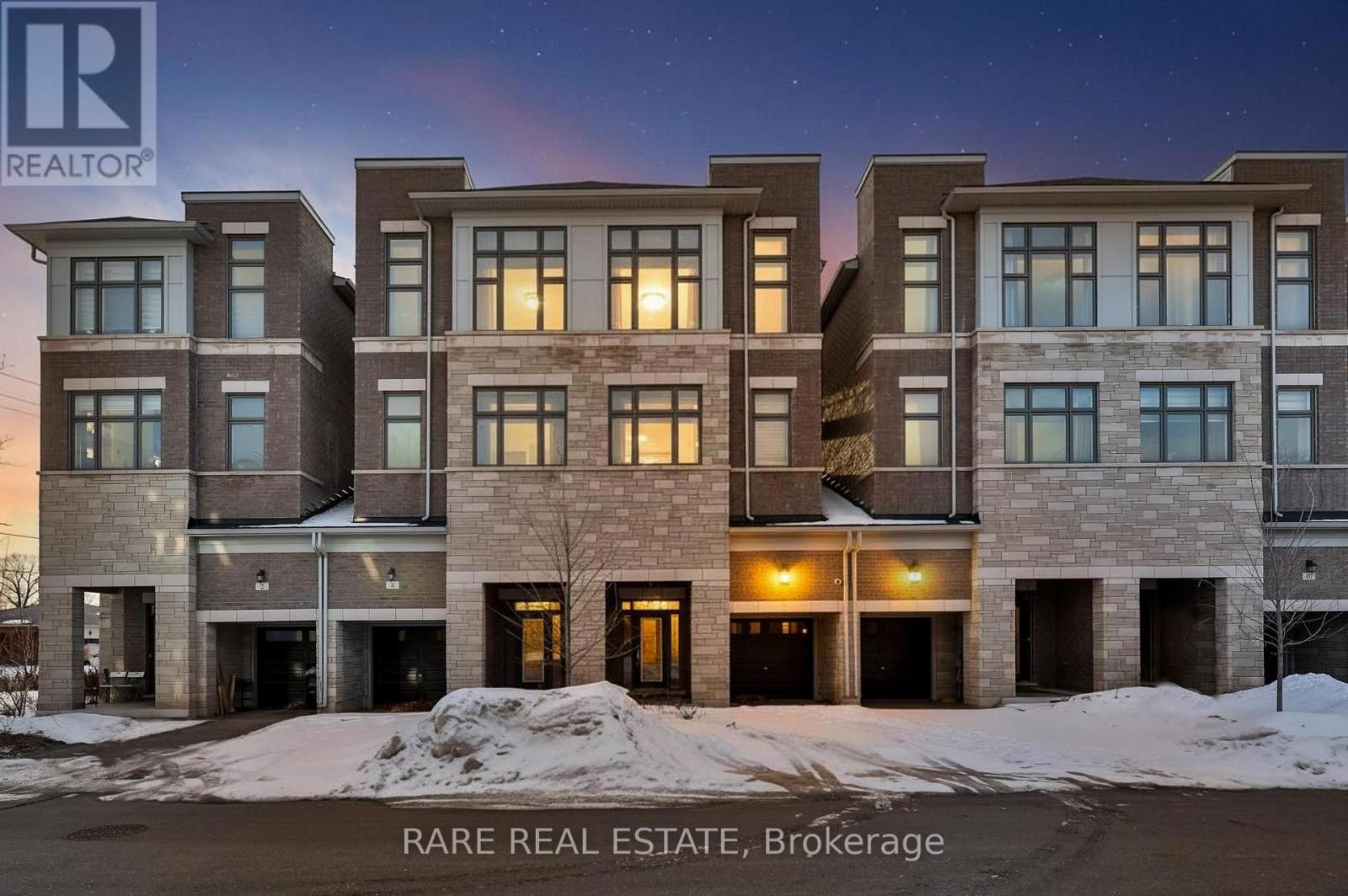 For Sale
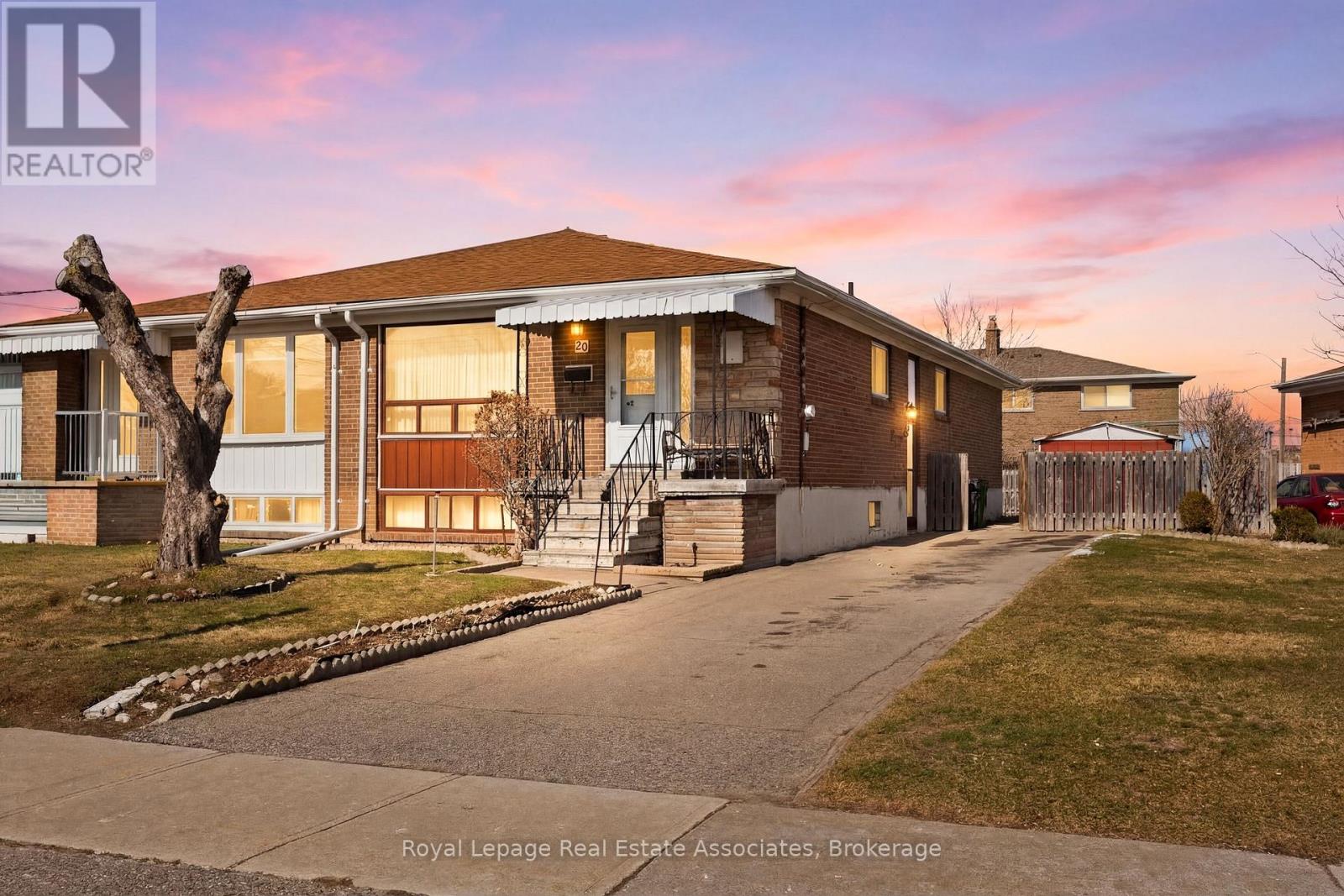 For Sale
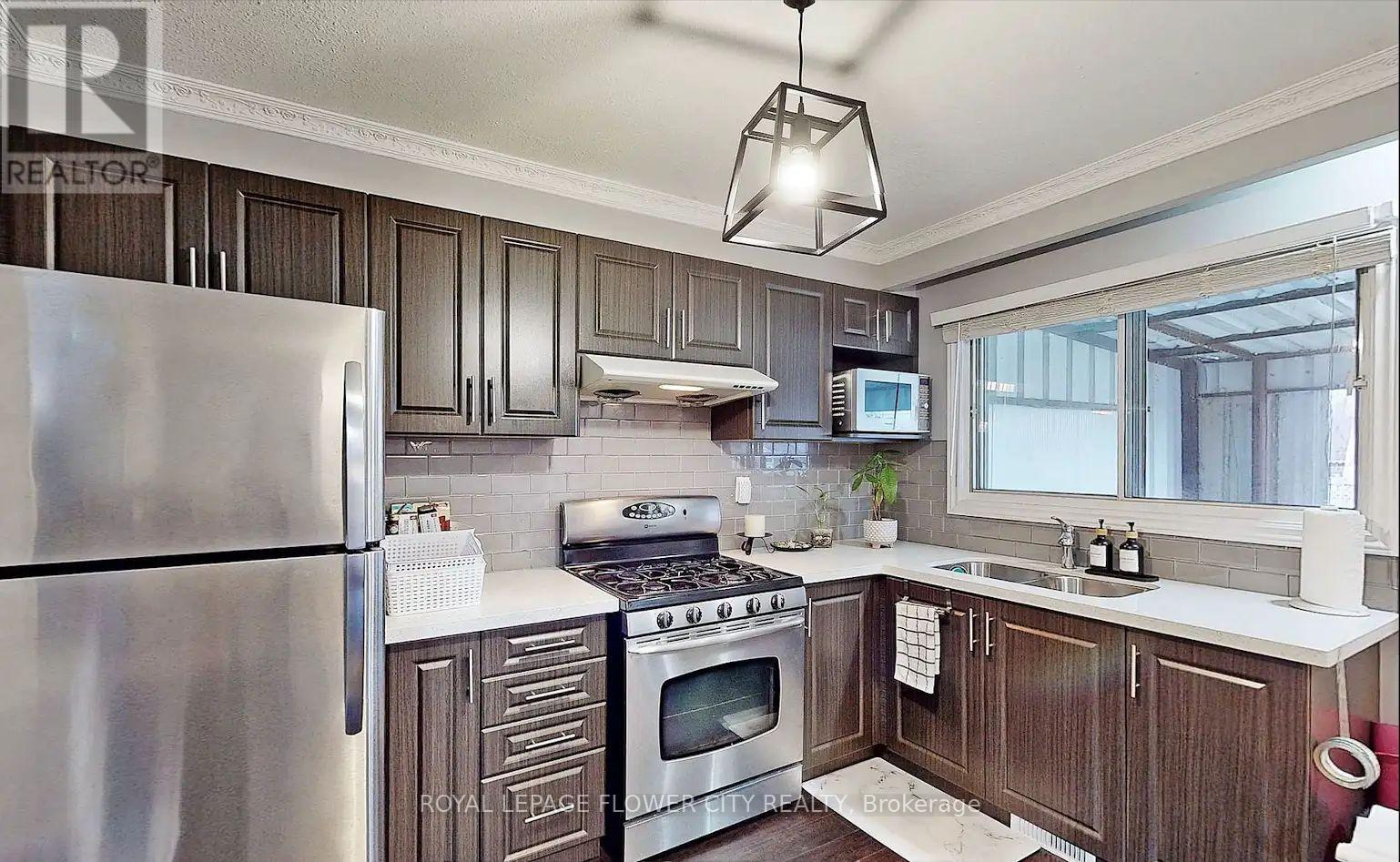 For Rent