
Humberlea-Pelmo Park W5 is the southern portion of the Humberlea-Pelmo Park area in northwest Toronto, with post-war bungalows near the Humber River ravine and bus access to Wilson subway station. Detached homes trade between $800K and $1.1M in 2026. Quiet residential streets, ravine trail access, and manageable transit commute make it a practical choice for families who have done the Toronto affordability math.
Humberlea-Pelmo Park W5 occupies the southern portion of the Humberlea-Pelmo Park neighbourhood area, sitting closer to Wilson Avenue and the transit infrastructure it carries. The boundary between W4 and W5 is a planning designation rather than a visible on-the-ground divide; what they share is more significant than what distinguishes them. Both are post-war bungalow neighbourhoods adjacent to the Humber River ravine, both are bus-to-subway rather than walk-to-subway communities, and both offer the kind of quiet, freehold residential character that families who’ve done the math on Toronto housing often conclude is the right tradeoff for the price.
The W5 designation’s proximity to Wilson Avenue means some properties in this part of the neighbourhood are more aware of the arterial than those deeper into W4. Wilson Avenue carries significant traffic and transit activity. The residential streets immediately north of Wilson, however, are a different environment: quiet, curvilinear, and largely absent of through traffic. Understanding which streets are immediately adjacent to Wilson and which are genuinely set back from it matters when you’re evaluating specific properties.
The Humber River forms the eastern boundary of this area as well, and the ravine access that makes W4 appealing extends fully into W5. Trail connections to the river valley are accessible from the eastern streets of the neighbourhood, and residents who use the Humber trail regularly report that the access from this part of the neighbourhood is as direct and pleasant as from W4. The ravine doesn’t observe planning ward boundaries, and neither do the residents who walk and cycle through it daily. What both W4 and W5 offer that most northwest Toronto bungalow neighbourhoods don’t is that combination: a quiet residential street, a backyard, and a forested river valley accessible on foot from your front door.
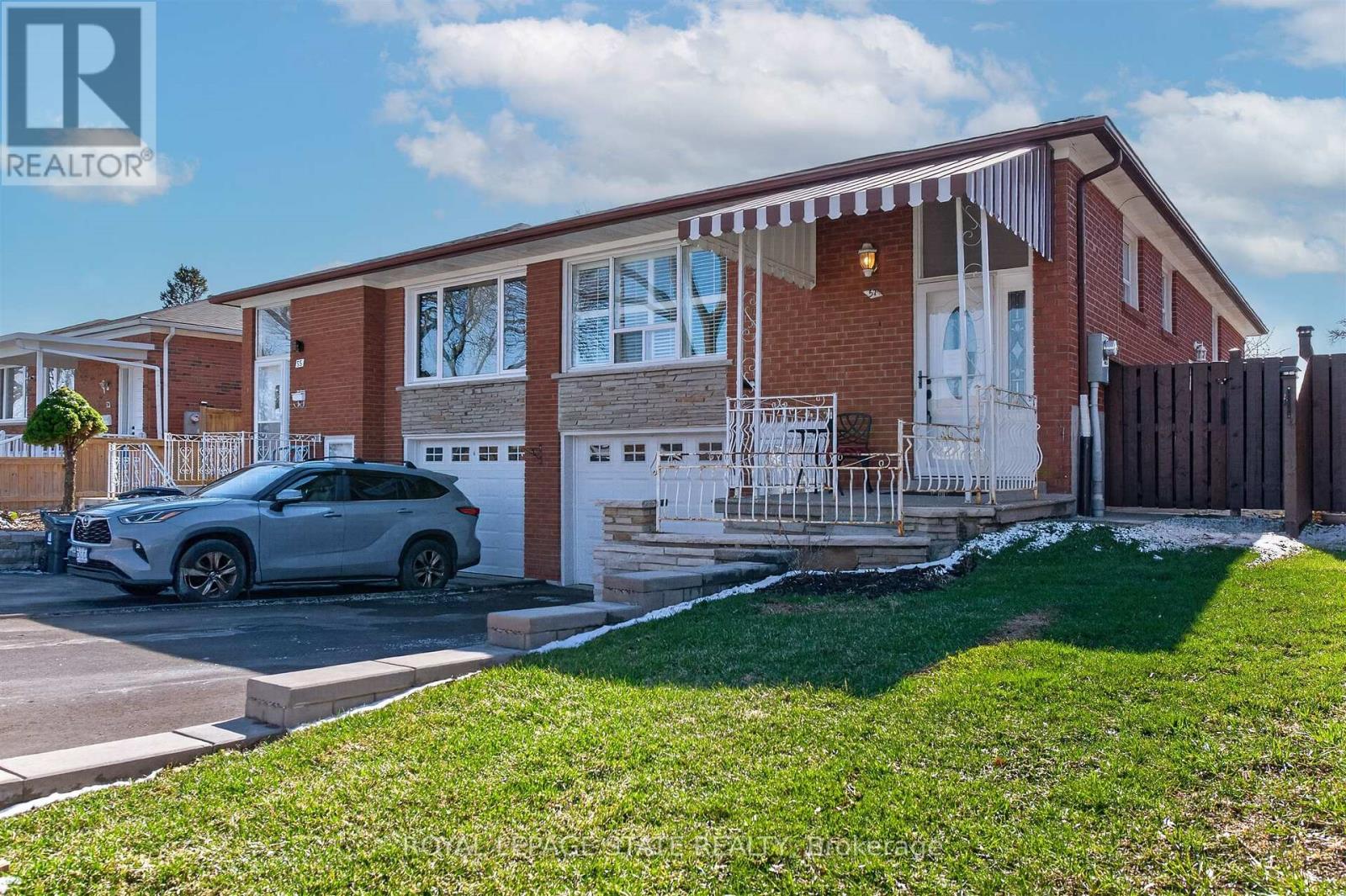
The housing stock in Humberlea-Pelmo Park W5 mirrors what you’d find across the broader Humberlea-Pelmo Park area: post-war detached bungalows and semis, built primarily in the 1950s and 1960s, on residential streets that were designed for the working and middle-class families who populated northwest Toronto in the postwar suburban expansion. The bungalows are typically brick or aluminum-sided, one storey with an often-finished or partially finished basement, a modest living area on the main floor, two or three bedrooms, and a backyard that gives families real usable outdoor space.
Some properties in this neighbourhood have had second-storey additions constructed, which can double the living space and significantly change the value proposition relative to an unextended bungalow on the same street. These extended homes sit at the upper end of the neighbourhood’s price range and compete with different comparables than the original bungalows. Buyers who find that a standard bungalow footprint is too small for their family should look at extended homes specifically rather than expecting to extend after purchase, as the cost and disruption of adding a second storey are significant and the timeline often longer than buyers anticipate.
Renovation levels vary as widely in W5 as elsewhere in the Humberlea-Pelmo Park area. Some streets have seen significant private renovation activity, and the improved homes there provide a visual baseline that makes unrenovated neighbours look more out of place than they would on a less-improved street. This variation creates opportunity for buyers willing to buy the lower-condition property on a better street, but it requires accurately assessing what renovation actually costs before factoring that calculation into your offer price.
Detached homes in W5 were trading in the $800,000 to $1.1 million range in 2026, consistent with the W4 area. Semis are priced below detached on comparable streets. There is no meaningful condo inventory in this neighbourhood; buyers who are looking here have made a deliberate choice for freehold over the condo market, which is a choice that should be made consciously rather than by default.
The market in Humberlea-Pelmo Park W5 follows the same patterns as W4: measured pace, limited bidding war activity on most properties, and a buyer pool that’s consistent but not deep. Properties that are priced correctly for their condition and location find buyers within a reasonable timeframe. Properties priced as if they were in a higher-demand neighbourhood sit longer and eventually come down to where the market actually is.
W5’s slightly closer proximity to Wilson Avenue and Wilson station could logically support a modest premium over W4 for the same property type, as transit access is marginally more convenient. In practice, this effect is small and varies by specific street. The streets closest to Wilson Avenue itself don’t benefit from the transit proximity enough to offset the noise and activity of the arterial. The streets one or two blocks north of Wilson, where you get the transit access without the arterial’s front-door presence, are the ones that capture the best of both.
The buyer pool here overlaps significantly with the pool looking at adjacent W4, Humbermede, and parts of northwest Toronto broadly. Buyers who have identified this general area as their target often look at several of these neighbourhoods simultaneously, making purchase decisions based on specific available properties rather than strong neighbourhood loyalty. That means the market for any specific property is influenced by what’s available elsewhere in the comparable set at the same moment.
Appreciation here has been steady and in line with northwest Toronto broadly, which has performed reasonably well over the long term without the dramatic cycles of higher-profile Toronto markets. Buyers who hold for 7 to 10 years typically see meaningful equity appreciation; buyers who plan to flip within 2 to 3 years are working in a market where the carrying costs and transaction costs can eat the appreciation available in that timeframe.
Buyers in Humberlea-Pelmo Park W5 share the same general profile as those in W4: families prioritizing freehold with a backyard, first-time buyers who’ve determined that this is where the math works, and people from northwest Toronto’s existing communities who are buying their first owned home close to where they grew up or where their community is rooted. That community continuity is real and sustains demand in ways that don’t show up in transit scores or walkability ratings.
For buyers whose primary transit need is the Wilson subway station, W5’s position makes more sense than W4. A buyer who commutes daily on Line 1 and wants to minimize the bus portion of their commute will find that the southern streets of W5 put them closer to Wilson station than comparable streets in W4. For a commuter who rides the subway five days a week, saving five minutes of bus time each way adds up, and that difference is worth factoring into a choice between otherwise comparable properties in the two areas.
Families with children in elementary school sometimes find that the school catchment in W5 directs them to different schools than W4, and this can influence decisions for families with a strong preference for a specific school. Confirming school catchments before finalizing a neighbourhood preference is worth doing early in the search process, as it occasionally makes a decisive difference to buyers for whom school placement matters more than neighbourhood designation.
Investors looking at northwest Toronto freehold for long-term rental generally find W5 and W4 equivalent in their appeal: the rental demand is similar, the tenant pool is similar, and the price points are similar enough that the choice between them is usually driven by specific property rather than planning area. Basement suites in well-maintained bungalows here can generate rental income that meaningfully offsets carrying costs, which is part of what sustains investor interest at price points that would generate negative cash flow in higher-priced parts of the city.
The streets of Humberlea-Pelmo Park W5 run north from Wilson Avenue through the curvilinear residential layout typical of 1950s and 1960s suburban planning. Weston Road forms the western boundary, and Humber River ravine edge is the eastern limit. Between these boundaries, the residential streets form a self-contained neighbourhood that manages to feel removed from both the arterials that frame it and the broader urban activity of northwest Toronto.
The streets immediately adjacent to Wilson Avenue are different from those further north. The arterial brings noise, bus traffic, and commercial activity that affects the character of the first row of residential properties. Buyers who want the Wilson station access without the Wilson Avenue presence should look at streets two or three blocks north of the arterial, where the neighbourhood settles into genuine residential quietness. An agent who can map this distinction is giving you useful information; one who presents all properties within the neighbourhood name as equivalent is not.
Weston Road on the western boundary is a busier commercial and transit corridor than Wilson, and properties close to it experience a different character than the interior streets. The commercial strip on Weston is functional but not a destination, and the character of the road itself, with its heavy traffic, is something to understand before buying on the streets immediately adjacent to it.
The ravine-edge streets on the east side of the neighbourhood are the ones buyers focused on green space access should prioritize. These streets have the most direct access to the Humber River trail system and sometimes views into the valley. The premium they command within the neighbourhood’s price range reflects what residents who live on them consistently report: that the ravine access is something they use and value every day, making it one of the features they’d most want to replicate if they ever moved.
Wilson station on Line 1 is the neighbourhood’s primary transit connection, and W5’s southern position within the broader Humberlea-Pelmo Park area means some properties here are within a shorter bus ride of the station than comparable properties in W4. The 96 Wilson bus runs along Wilson Avenue and connects to Wilson station quickly, and for residents on the southern streets of W5, the walk to a bus stop is short. From Wilson station, downtown Toronto is 30 to 35 minutes by subway, which is manageable for most commuters.
Weston Road bus service connects to both Keele station to the south and Finch West area to the north, giving residents a secondary transit axis beyond Wilson Avenue. These connections expand the range of destinations accessible by transit, though neither is as direct to downtown as the Wilson subway. For residents who work in locations along Weston Road or the broader northwest Toronto employment corridor, the bus connections are practical alternatives to the subway route.
Drivers have access to Highway 400 via Wilson Avenue or Weston Road, and Highway 401 is a short drive south. The airport is approximately 15 to 20 minutes by car, which matters for airport employees and frequent business travellers. Car ownership is practical to the point of near-necessity for full participation in the retail and dining landscape, which is not within walking distance in a way that satisfies most buyers coming from more central Toronto communities.
Cycling within the neighbourhood on residential streets is pleasant, with low traffic volumes that make riding safe and comfortable. The Humber River trail from the eastern edge of the neighbourhood extends the cycling range significantly for recreational riders and provides a car-free route south toward the lake. Wilson Avenue and Weston Road are not cycling-friendly arterials, so practical cycling commuting depends on where your destination is relative to the trail network.
The Humber River ravine provides the same quality of green space access from W5 as from W4: forested valley, off-road trail network, and a natural environment that feels genuinely removed from the city despite being accessible within minutes on foot from the eastern residential streets. The Humber trail from this part of the neighbourhood runs south through increasingly scenic ravine sections before reaching the Humber Marshes and the waterfront trail. It’s a genuinely remarkable trail connection that most Toronto residents in more expensive neighbourhoods would pay significantly more for.
Smaller neighbourhood parks in W5 serve the immediate residential community with the standard local park infrastructure: playgrounds, benches, and open lawn. These are well used by families with children and by dog owners who want a closer alternative to the ravine for daily walks. The maintenance quality of neighbourhood parks in this part of Toronto has improved with sustained advocacy from community groups and neighbourhood associations that have made park investment a priority in northwest Toronto over the past decade.
Humber Summit Park, accessible by car or a longer walk to the north, provides additional sports and recreation facilities for residents who need more than the neighbourhood parks and ravine trail can offer. The drive time to this park is short enough that it’s a practical weekend destination for families who want a larger field or structured sports facility. The City’s parks and recreation centres in the broader northwest Toronto area provide indoor programming during winter months that extends the recreational infrastructure available to residents beyond what the immediate neighbourhood contains.
The combination of the ravine trail and neighbourhood parks gives Humberlea-Pelmo Park W5 a green space offering that’s meaningfully better than many Toronto freehold neighbourhoods at comparable or higher price points. Buyers who assess neighbourhoods partly by their outdoor access will find this area performs well on that dimension in a way that the purchase price doesn’t fully reflect.
Retail in Humberlea-Pelmo Park W5 is similar to W4: limited within the neighbourhood itself, with practical options accessible along Wilson Avenue and Weston Road. The Wilson Avenue commercial strip near the station area has grocery, pharmacy, and restaurant options that cover everyday needs without requiring a long drive. For residents who want to do a full weekly grocery shop in one location, a No Frills and other grocery options are accessible within a short drive along Wilson or at Yorkdale area retailers.
Weston Road to the west has its commercial strip including a FreshCo and various service businesses. The combination of Wilson and Weston Road commercial access means residents of W5 are somewhat better served for everyday retail than might be implied by the neighbourhood’s quiet residential character. Both corridors are reachable by foot or a short bike ride for residents in the southern part of the neighbourhood, though the arterial character of both roads makes walking them less pleasant than the residential streets.
Yorkdale Shopping Centre is roughly 15 minutes by car or transit, providing access to the full range of national retailers and a food court that makes it a practical destination for shopping that doesn’t require downtown Toronto. For major purchases of appliances, furniture, or clothing, Yorkdale and the surrounding retail district along the 401 corridor handle most of what residents need without requiring downtown trips.
Medical clinics and dental offices are accessible along the Wilson and Weston corridors. Humber River Hospital, serving northwest Toronto for hospital care, is accessible by transit and by car from W5. The library branch closest to the neighbourhood provides library services for residents without requiring travel to a more central branch. The service infrastructure in this area is adequate for family life without being exceptional; the gaps are in the lifestyle retail and food culture categories rather than the essential services ones.
Elementary schools serving Humberlea-Pelmo Park W5 include Pelmo Park Junior Public School and other TDSB schools in the surrounding area. School catchments in this part of northwest Toronto can be checked through the TDSB school locator tool using a specific address, as catchment boundaries are updated periodically and may not match neighbourhood boundary expectations. Parents who are making a purchase decision partly on school access should confirm catchments for their specific address before finalizing a purchase rather than relying on neighbourhood-level generalizations.
French immersion access from this neighbourhood follows the same pattern as W4 and the broader northwest Toronto area: available within the TDSB system but potentially requiring travel to a program school outside the immediate catchment. The TDSB has been expanding French immersion access across the city, and northwest Toronto families have better options than they did a decade ago, but the logistics of getting a child to a program school if it’s not the local school are real and worth thinking through before committing to immersion as a goal.
Secondary school students from W5 typically feed into the same TDSB secondary schools as W4: Emery Collegiate Institute serves much of this area. The specialized program options within the TDSB at the secondary level are accessible by transit from Wilson station, which makes attending a specialized program school in another part of the city more practical from W5 than from transit-poor northwest Toronto locations. This is worth knowing for families who expect their children to pursue arts, technology, or advanced academic programs at the secondary level.
The TCDSB serves Catholic families in this area with elementary and secondary options accessible from W5. As with the TDSB, catchment boundaries should be confirmed for specific addresses rather than assumed from neighbourhood names. Families for whom the Catholic school system is a priority have reasonable options in northwest Toronto, and this area is within range of several Catholic elementary schools.
Development activity in Humberlea-Pelmo Park W5 has been limited to the same incremental pattern visible in W4: individual lot redevelopments, occasional severances, and renovation activity on existing bungalows. The neighbourhood has not attracted significant developer interest in large-scale projects, which has preserved its post-war residential character at the cost of the kind of new supply that might otherwise improve or expand the housing mix.
The Wilson Avenue corridor is the logical axis for any future intensification that might affect the southern boundary of W5. Wilson station is a subway hub that the City’s transit-oriented development policies identify as appropriate for increased density, and the commercial and mixed-use properties along Wilson Avenue could eventually be redeveloped at higher densities. If this occurs, it would change the character of Wilson Avenue in ways that could benefit residents of the neighbourhood’s southern streets, improving the walkable commercial environment that’s currently sparse.
The City of Toronto’s as-of-right permissions for garden suites and laneway suites apply in W5 as in W4, giving owners the ability to add a secondary dwelling to their lot without requiring a variance or rezoning. The physical feasibility of doing so depends on lot configuration, and not every property in the neighbourhood has the lot dimensions required. Buyers interested in this option should have a surveyor assess specific properties before assuming it’s achievable.
For buyers who see northwest Toronto freehold as a long-term hold, W5’s position adjacent to the Wilson subway corridor is the best argument for its trajectory. Subway access is the Toronto real estate variable that most reliably correlates with price appreciation over time, and while W5 doesn’t have walk-to-subway access yet, the bus connection to Wilson station is short and reliable. Any improvement to that connection, whether through bus network redesign or eventually expanded transit infrastructure, would be a positive for this neighbourhood.
What is the practical difference between buying in W4 versus W5?
The honest answer is that the W4 and W5 designations are planning boundaries rather than meaningful on-the-ground distinctions. The same housing stock, the same ravine access, the same bus-to-Wilson-station transit, and the same general price range exist in both areas. The most practical difference is that some streets in W5 are slightly closer to Wilson Avenue and therefore a marginally shorter bus ride or walk to Wilson station. That matters for buyers who are trying to minimize their transit commute time, but it doesn’t create a significant price differential and doesn’t justify treating the two as fundamentally different neighbourhoods. When you’re searching for properties, looking across both areas simultaneously gives you more options without introducing meaningful variation in what you’re actually getting. The specific street, lot, and property condition matter much more than which planning designation applies to the address.
Is the Humber River flooding risk relevant to W5 properties?
The Toronto and Region Conservation Authority regulates development within the Humber River floodplain and hazard areas, including areas within and adjacent to Humberlea-Pelmo Park. For properties that back onto or are close to the ravine edge, TRCA regulated area status is worth confirming before making an offer. Properties within the regulated area have restrictions on what can be altered or added, which can affect renovation plans, garden suite feasibility, and resale. The TRCA provides mapping of regulated areas on its website, and your agent or lawyer can help you confirm status for a specific property. The majority of residential properties in this neighbourhood are outside the regulated area, but ravine-adjacent properties warrant a specific check. Historical flooding events in the Humber valley have informed significant floodplain management since Hurricane Hazel in 1954, and the infrastructure and land use controls put in place since then have substantially reduced the risk to established residential properties.
How is parking in the neighbourhood?
Parking is not a constraint in Humberlea-Pelmo Park W5. Almost every detached house has a driveway with room for at least one and often two vehicles, and street parking is available on residential streets throughout the neighbourhood without time limits or permit requirements in most areas. For buyers coming from denser Toronto communities where parking is a constant source of stress, this is a genuine quality-of-life improvement that often gets mentioned by new residents. Car ownership is essentially assumed for residents of this neighbourhood given the limited walkable retail, and the parking infrastructure exists to support it without friction.
What are the biggest maintenance issues to expect with a post-war bungalow here?
Post-war bungalows in this neighbourhood are roughly 60 to 75 years old, which means any property that hasn’t been substantially renovated likely has aging systems that will require attention during your ownership. The most common issues a home inspector will flag include: older electrical panels that may need upgrading, particularly if they contain fuses rather than breakers or if the service is below 100 amps; galvanized water supply pipes that have narrowed with mineral buildup and may need replacement; insufficient insulation by modern standards in walls and attics, which affects heating and cooling costs; and foundation or basement moisture issues that are common in homes of this era without proper drainage management. None of these are deal-breakers, but each has a cost to address, and knowing which issues are present in a specific property lets you factor the remediation cost into your offer and your budget. A good home inspector familiar with post-war construction in northwest Toronto will identify these issues clearly and help you understand the priority and cost of addressing each one.
An agent working with buyers in Humberlea-Pelmo Park W5 needs to be comfortable explaining the W4 and W5 distinction honestly: the boundaries matter less than the specific property. A buyer who comes in committed to W5 and excludes W4 is unnecessarily limiting their options in a neighbourhood where the supply of available properties at any given time is not large. The best agent for this search is one who treats the two areas as a single search zone and filters by specific street preference and property characteristics rather than planning designation.
The due diligence process here is the same as for W4 and the broader post-war bungalow market: thorough home inspection with attention to aging systems, permit history review for any renovations or additions, and TRCA status check for ravine-adjacent properties. For buyers who are considering a secondary suite as part of their ownership plan, an assessment of what the specific lot allows under Toronto’s secondary suite and garden suite bylaws is worth getting before finalizing an offer.
Offer strategy in this market is generally less complicated than in high-demand neighbourhoods. Most properties here allow time for a conditional offer with a home inspection, and sellers who refuse conditions in a market where properties sit for several weeks are usually overestimating their position. An agent who has tracked recent sales in the area can tell you quickly whether a specific property is likely to attract competing offers or whether you have room to make a deliberate conditional offer. Making that read correctly is a skill that matters more than negotiating tactics in a market like this one.
If you’re comparing Humberlea-Pelmo Park W5 against other affordable northwest Toronto freehold options, including Humbermede, Humber Heights-Westmount, or parts of the Weston area, the TorontoProperty.ca team can help you understand the real differences at a street level. That comparison, done honestly, helps you make the purchase you’ll be most satisfied with rather than the one that appeared available when you stopped looking.
Street-level knowledge is hard to find online. Our team works in Humberlea-Pelmo Park W5 every day. They know which pockets hold value, where the school catchment lines actually fall, and what the market is doing right now. Talk to us before you make a decision about Humberlea-Pelmo Park W5.
Talk to a local agent For Rent
 For Sale
 For Sale
 For Sale