
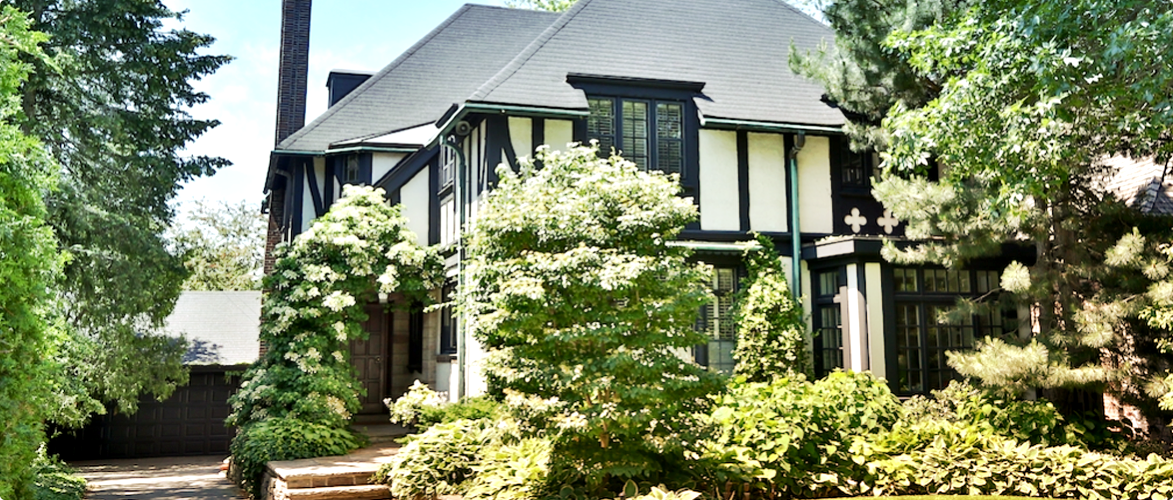
Lawrence Park North sits above Lawrence Avenue West, bounded by Bathurst Street to the west, the 401 to the north, Yonge Street to the east, and Lawrence Avenue West to the south. It's distinct from Lawrence Park South, the well-known and more expensive half of the Lawrence Park area. The north section has a mix of postwar housing from the 1950s and 1960s alongside some prewar stock, larger lots on certain streets, and a more accessible entry price while staying within the same broad part of the city. Detached homes sell between $1.2 million and $2 million depending on street, lot, and condition. Wilson, Glencairn, and Lawrence West subway stations all serve the area.
Lawrence Park North is the half of the Lawrence Park area that buyers outside the immediate neighbourhood consistently undervalue. The address that everyone knows, Lawrence Park, refers in most people’s minds to the streets south of Lawrence Avenue West: the large prewar homes, the tree-lined crescents, the prices that start above $2.5 million and go well past $4 million on the better lots. The north section is different in character, priced differently, and overlooked by buyers who write it off as a lesser version of something they can’t afford. That’s usually a mistake.
Lawrence Park North runs from Lawrence Avenue West up to the 401, between Bathurst Street to the west and Yonge Street to the east. It’s a large area, and it’s not uniform. Some parts of it are fully residential and quiet. Others are closer to the commercial strips on Lawrence and Wilson. The housing stock is primarily postwar, built in the 1950s and 1960s, with some prewar homes mixed in on the streets closer to Lawrence Avenue. Detached bungalows and two-storey houses on lots that are often larger than what you find in older, more tightly subdivided Toronto neighbourhoods make up most of the available supply. Prices run from $1.2 million to $2 million for detached homes, which puts the entry point well below Lawrence Park South while keeping buyers in the same broad area of the city.
The case for Lawrence Park North is straightforward. Three subway stations serve it on the Yonge-University-Spadina line. The 401 is accessible from the northern boundary. The neighbourhood is residential in character, with low-rise detached houses on tree-lined streets. It’s large enough that buyers can be specific about which part they want rather than accepting whatever is available, and inventory turns over often enough to provide real choices across the year.
The dominant housing type in Lawrence Park North is the postwar detached: three-bedroom bungalows and two-storey houses from the 1950s and 1960s, built on lots that frequently run 40 to 50 feet wide, wider than what’s available in prewar neighbourhoods where subdivision happened at higher density. Those wider lots are not a marketing detail. They translate into larger backyards, more practical side access, and in some cases a garage plus additional driveway space. Buyers who’ve been shopping in Midtown or the Annex and find the lots cramped discover a different geometry here.
The condition of postwar construction varies considerably by property. Houses built in this era tend to have solid bones but dated mechanical systems, original kitchens and bathrooms in many cases, and electrical panels that may not meet current load demands without upgrading. A bungalow in original condition in Lawrence Park North is typically priced in the $1.2M to $1.5M range; the same house renovated to a contemporary standard with a finished basement addition is in the $1.7M to $2M range. Buyers who can identify the properties with good bones and poor cosmetics find the best value in the neighbourhood, because the lot and the structure are solid and the renovation cost is recoverable in the resale market.
Some streets in Lawrence Park North have prewar housing, particularly the blocks closest to Lawrence Avenue. These tend to be smaller in footprint than the prewar homes south of Lawrence, built on more modest lots, but they carry a different architectural character than the postwar stock. Buyers who want brick prewar construction but can’t reach Lawrence Park South prices sometimes find what they’re looking for on these transitional blocks. The price overlap between the upper end of the prewar stock north of Lawrence and the entry level in Lawrence Park South is where the most interesting comparisons happen.
Lawrence Park North is a market with more inventory than neighbourhoods like Humewood-Cedarvale or Rosedale, which means buyers have more choices and sellers face more direct competition. That greater inventory cuts both ways. Buyers can take more time to find the right property without missing every opportunity. Sellers need to price correctly from the start because buyers in this range have enough comparable properties to know when something is overpriced. The days of lists of competing offers for anything in a neighbourhood are not entirely gone, but they’re more selective: well-priced, well-presented properties in Lawrence Park North still attract strong interest, while overpriced listings sit and eventually reduce.
The $1.2M to $2M price range in Lawrence Park North overlaps with several competing areas, which means buyers shopping here are also comparing Bathurst Manor to the west, Ledbury Park to the east of Bathurst, and the streets around Wilson and Glencairn that technically fall in different city designations. This competition keeps prices relatively honest and makes Lawrence Park North less susceptible to the premium that narrower, more uniquely identified neighbourhoods can sustain. Buyers benefit from this; it’s harder for sellers to extract a premium based on prestige alone.
Rate sensitivity has been visible in the upper end of the Lawrence Park North market. Properties asking $1.7M to $2M sat longer in 2023 and early 2024 than they would have in 2021, and some sellers found they needed to adjust expectations. By contrast, the $1.2M to $1.5M range held more consistently because it captures a broader pool of buyers who are making the move from condos or smaller houses rather than trading within the upper end of the detached market. Buyers at the entry end of the range have more competition from other buyers; buyers at the upper end have more choices and more negotiating room.
The neighbourhood draws a wide range of buyers because its price spread is wide and its character is consistent across different parts of the area. Families at the entry level of the detached market find Lawrence Park North offers more space, inside and out, than what the same money buys in Midtown or Forest Hill. Buyers who are upgrading from a semi or a smaller detached house in the $900,000 to $1.1M range and need to move into the $1.4M to $1.7M bracket frequently end up here after finding that their budget doesn’t stretch to Forest Hill or Lawrence Park South.
A second group consists of buyers who specifically want the quieter, lower-density character of a postwar residential neighbourhood. Lawrence Park North is not trying to be something it isn’t. It’s a neighbourhood of family houses on tree-lined streets with good transit access and proximity to both the 401 and the amenities on Lawrence and Wilson. Buyers who want that specific combination, without the pressure of competing in a narrowly defined prestigious address, find Lawrence Park North straightforwards.
The neighbourhood also draws buyers with connections to the corridors of institutions nearby, including York University’s Glendon Campus on Bayview, which is accessible from the eastern edge of the neighbourhood. That’s a smaller driver than the school catchment dynamics in some Midtown neighbourhoods, but it contributes a consistent baseline of buyers who want walkable or transit-accessible access to that area. More broadly, the proximity to the Allen Expressway and the 401 makes Lawrence Park North practical for buyers who commute by car to destinations north or west of the city, a combination that’s harder to achieve while staying in a genuinely residential neighbourhood.
Postwar construction from the 1950s and 1960s has different issues than prewar Toronto housing. Electrical panels from this era were typically installed as 100-amp service, which is undersized for a contemporary household running a washer, dryer, dishwasher, and electric vehicle charger simultaneously. Upgrading to 200-amp service costs between $3,000 and $6,000 depending on the panel location and what else needs updating. This is rarely a reason to walk away from a property, but it’s a known cost to build into your offer when a house hasn’t been rewired recently.
Plumbing in houses of this age is a mixed picture. Some have been re-piped in copper or PEX during renovations; others still have original galvanized steel supply lines that corrode from the inside over time, reducing water pressure and eventually failing. Cast iron drain stacks from this era are approaching the end of their practical service life in houses that haven’t been touched. Have your home inspector check both the supply and drain systems specifically. A sewer scope of the main line from the house to the city connection is worth the extra cost, particularly on properties that show signs of never having been opened up.
On certain streets in Lawrence Park North, buyers should be aware of the slope toward the natural drainage courses that cross the area. The neighbourhood was developed across topography that includes some low points where drainage concentrates. Houses on streets that sit in or near these drainage paths are more susceptible to basement water intrusion than houses on higher ground. This is not unique to Lawrence Park North, but the postwar construction era used foundation waterproofing methods that are less reliable than current standards, and the combination of age and topography warrants a specific inspection conversation rather than a general one.
The competition for sellers in Lawrence Park North is higher than in more tightly defined prestigious neighbourhoods because buyers are comparing across a wider set of options. When your house is listed at $1.5M, buyers at that price point are simultaneously looking at Bathurst Manor, parts of Ledbury Park, and comparable detached stock in Glencairn and Englemount. That breadth means presentation, pricing, and timing are not secondary considerations, they’re where the outcome is decided.
The most effective approach for sellers in Lawrence Park North is honest pricing based on recent comparable sales rather than aspirational pricing based on renovated properties in Lawrence Park South. The gap between the two halves of the Lawrence Park area is real and buyers know it. A house in Lawrence Park North listed at the low end of the Lawrence Park South range will not attract Lawrence Park South buyers, because those buyers are not cross-shopping. It will simply sit and eventually reduce. Pricing to the actual comparable sales within the north half, with a clean presentation, produces faster and better results than reaching.
Timing follows the standard Toronto pattern, with spring the strongest period for detached family houses. The specific composition of Lawrence Park North’s buyer pool means family listings benefit from a March or April launch that catches buyers who want to be settled before September school starts. Listings in July and August face a thinner pool. Sellers who have flexibility should plan around the calendar rather than list when the house happens to be ready, because the difference in buyer depth between a May listing and an August listing is significant in a neighbourhood where the buyer pool is families with school-age children.
The commercial options for Lawrence Park North residents are primarily on Lawrence Avenue West and Wilson Avenue, the two main east-west streets that frame the southern and northern portions of the neighbourhood. Lawrence Avenue carries a mix of grocery, pharmacy, dry cleaning, restaurants, and professional services. The Loblaws at Yonge and Lawrence is a major grocery anchor accessible from the eastern edge. The Wilson Avenue strip has more everyday services and a less curated retail character, which suits the practical, residential nature of the neighbourhood.
Glencairn Avenue connects the area toward Bathurst, where additional retail exists along the Bathurst corridor. The Avenue Road corridor is accessible from the southeastern part of the neighbourhood toward Lawrence Park South and Forest Hill, adding higher-end retail and restaurant options for residents who want them. These corridors are close enough to be useful but not so close that commercial traffic or noise intrudes on the residential interior streets, which is the balance most buyers in this price range are looking for.
Green space is present but not the defining characteristic the way the ravine is in Humewood-Cedarvale. Glen Park and Armour Heights Park provide local green space within the neighbourhood. The York Beltline Trail, which connects to the Kay Gardner Beltline at Allen Road, is accessible from the western part of Lawrence Park North and offers the same kind of off-street walking and cycling access. For residents with children, Armour Heights Public School and various schools along the Yonge and Bathurst corridors serve the area, with specific catchments varying by address. The institutional presence of Glendon College on Bayview Avenue, a few blocks east of Yonge, adds a quietly academic character to the eastern edge of the neighbourhood.
Three subway stations on the Yonge-University-Spadina line serve Lawrence Park North, though none of them is particularly close to the interior streets: the neighbourhood is large enough that transit access depends heavily on where within it you live. Wilson station, at the northern end, serves buyers in the blocks near Wilson Avenue and close to the 401. Glencairn station at the western edge near Bathurst and Glencairn Avenue serves the western portion. Lawrence West station, at Lawrence Avenue West and Allen Road, serves the southern portion. In each case, bus routes fill the gap between the interior streets and the station, so transit-dependent buyers should map their specific address to the relevant station before assuming the commute is straightforward.
For drivers, the neighbourhood’s position near the Allen Expressway and the 401 is a genuine advantage. The Allen connects south to Spadina and the downtown core and north to the 401 almost immediately. The 401 itself gives access east and west across the top of the city. For buyers commuting to Mississauga, Brampton, Vaughan, or destinations north of the city, Lawrence Park North’s highway access is one of its underappreciated practical advantages over Midtown neighbourhoods that are deeper in the city grid. Getting out of Rosedale at 8am takes longer than getting out of Lawrence Park North.
Cyclists have access to the York Beltline Trail from the western portion of the neighbourhood, which provides off-street east-west movement. The surface streets themselves are not heavily cycled, partly because they don’t connect efficiently to Midtown cycling infrastructure without using the Allen corridor or Bathurst Street, both of which carry significant traffic. The neighbourhood is more practical for transit and driving than for cycling, which reflects its geography and the era in which its streets were laid out.
Lawrence Park South is the reference point buyers use when they think about this area. It runs south of Lawrence Avenue and includes the curving crescents, the large brick houses from the 1920s and 1930s, and a prestige address that drives prices to a level that puts it out of reach for most buyers who aren’t selling a comparable property elsewhere. Detached homes in Lawrence Park South sell from $2.5 million on the lower end to well past $4 million on Strathallan Boulevard and similar streets. The gap between the two halves is not marginal. Lawrence Park North at $1.2M to $2M is a categorically different market, which is why buyers who conflate the two almost always leave the comparison disappointed.
What the north half offers that the south half doesn’t is lot size on certain streets. The postwar development pattern in Lawrence Park North produced some 50-foot and 60-foot lots that would be extraordinary value propositions south of Lawrence, where the same lot width in prewar construction costs three times as much. Buyers who are focused on land area, outdoor space, and future potential rather than on the prestige of the address find Lawrence Park North the stronger purchase. That calculus doesn’t apply everywhere in the north half, but on the right street it’s real.
Bathurst Manor, immediately west of Lawrence Park North across Bathurst Street, is a reasonable comparison for buyers whose priority is lot size and condition over any particular address. Bathurst Manor has similar postwar housing, similar lot dimensions in many cases, and prices that run at or slightly below the equivalent in Lawrence Park North. The transit access is comparable, with Glencairn station serving both areas from Bathurst. Bathurst Manor tends to be less on buyers’ radar specifically because the name doesn’t carry the Lawrence Park association, which is either a reason to look there or a reason to stick with Lawrence Park North depending on how much the address matters to you.
Lawrence Manor Road is the street that gives the neighbourhood part of its identity: a wide residential road with a consistent pattern of detached houses on larger lots, more settled than some of the interior streets, and more consistently family in character. Brookfield Road is another street buyers ask about specifically, with similar characteristics. These are the addresses where you’ll find the upper end of the Lawrence Park North price range for good reason: the lots are larger, the houses tend to be in better condition on average, and the street quality is high.
The streets closer to the 401 have a different feel. The highway is audible from the northern boundary, and properties within a block or two of Wilson Avenue and the 401 interchange are more affected by traffic noise than the quieter interior. Buyers who are sensitive to noise should stay away from the northern perimeter and focus on the streets in the middle of the neighbourhood, where the distance from both the highway and the commercial strips provides the quiet residential character the area is generally known for.
The interior streets between Lawrence and Wilson, running north-south, vary considerably in character. Some feel thoroughly settled and have been owner-occupied for long periods. Others have more turnover and more houses in the process of updating. On any given street in Lawrence Park North, you can find a house in original 1960 condition next to one that’s been recently renovated. That variation is characteristic of the neighbourhood and it’s where buyers who are doing the work of looking carefully find the opportunities. A bungalow on a 50-foot lot in original condition next to renovated houses on the same street is a candidate for the best per-dollar value in this part of the city, if the buyer is willing to do the renovation.
What is the price range for homes in Lawrence Park North?
Detached homes in Lawrence Park North sold between $1.2 million and $2 million in early 2026. A postwar bungalow in original condition on a standard lot sits at the lower end of that range. A renovated two-storey on a wider lot in good condition sits at the upper end. The variation within that range reflects condition, lot size, and street more than any other factors. There are no condos or townhouses that make up a significant portion of the Lawrence Park North market; it’s almost entirely detached houses, which means buyers shopping here are choosing between a narrower set of property types and competing with a specific pool of buyers who all want the same thing.
Is Lawrence Park North the same as Lawrence Park?
The “Lawrence Park” that most people picture is Lawrence Park South, the half of the broader area that runs south of Lawrence Avenue West. That’s where the prewar homes, the curved streets, and the prestige pricing are concentrated. Lawrence Park North is a distinct area with different housing stock, primarily postwar rather than prewar, and meaningfully lower prices. It shares the general location and transit access but is not the same neighbourhood in character or price. Some buyers find this disappointing; others find it exactly what they were looking for, because they’re after the location and the transit access rather than the specific housing character of the south half.
Which part of Lawrence Park North is best for families?
The central streets, away from the 401 to the north and from the busier commercial edges, are the strongest family areas. Lawrence Manor Road and Brookfield Road are consistently mentioned by buyers with children because they’re quieter, the lots are larger, and the neighbour composition is primarily other families rather than mixed-use or transitional. Streets closer to Wilson Avenue or the 401 exchange some residential quiet for slightly lower prices. The school situation in Lawrence Park North involves several public elementary schools depending on the specific block, and buyers with school-age children should verify the catchment for their specific address directly with the TDSB before committing.
How does the highway access affect living in Lawrence Park North?
For buyers who commute by car, the proximity to Allen Road and the 401 is a genuine advantage. Getting onto the Allen from the southern part of the neighbourhood takes five to ten minutes on a normal morning, and the 401 is directly accessible from the northern boundary. That combination is rare in a genuinely residential part of the city. For buyers who commute downtown, the Allen gives quick southbound access to Spadina and the core. The trade-off is that the northern perimeter streets near the 401 carry highway noise, which is audible in backyards and through windows on properties within one or two blocks of the interchange.
Can I add an addition or a basement suite to a postwar house in Lawrence Park North?
The wider lots that characterise some parts of Lawrence Park North make additions more feasible here than on the narrower lots of prewar neighbourhoods. A rear addition to a bungalow that adds a main floor family room and extends the kitchen is a common renovation in this neighbourhood, and the wider setbacks and lot dimensions make it possible on more properties than in areas with tighter subdivision. Basement suites are also common: the bungalow format naturally lends itself to a legal basement apartment, and many properties in Lawrence Park North already have them or have been prepared for one. Zoning for basement suites follows the city’s as-of-right permissions for secondary suites in detached houses; the specific requirements around ceiling height, egress windows, and fire separation apply and should be checked against any property you’re considering for this purpose.
Lawrence Park North offers buyers something that is increasingly rare in Toronto’s mid-range detached market: a genuine combination of reasonable price, subway access, highway access, and residential quiet in a large enough area that inventory is available with some regularity. The neighbourhood is not fashionable in the way that Leslieville or Little Portugal are fashionable. It doesn’t have a restaurant strip that gets written up in food media. It has the things that matter more over a ten-year ownership period: good transit, good highway connections, large lots on certain streets, and a residential character that doesn’t change quickly because the zoning doesn’t support rapid intensification.
The postwar housing stock has a ceiling on what it fetches in the current market relative to prewar construction in more prestigious addresses, and that ceiling is a feature for value-oriented buyers. A house that is unlikely to sell for $3 million in five years is also unlikely to have been overpriced at $1.5 million today. The entry point is defensible because the buyer pool for this specific combination of features, highway access plus subway access plus detached house plus reasonable price, is durable. It doesn’t depend on a neighbourhood being fashionable.
Buyers who choose Lawrence Park North and stay for ten years consistently describe the experience as practical and comfortable rather than exciting. The streets are quiet. The transit works. The lots are large enough to do things with. The highway access makes car-dependent destinations easy. These are the things that matter in daily life more than any neighbourhood narrative, and Lawrence Park North delivers them at a price that, compared to what the same features cost south of Lawrence or east toward Yonge, represents real and lasting value.
Street-level knowledge is hard to find online. Our team works in Lawrence Park every day. They know which pockets hold value, where the school catchment lines actually fall, and what the market is doing right now. Talk to us before you make a decision about Lawrence Park.
Talk to a local agent For Sale
 For Sale
 For Rent
 For Sale