

Leslieville is the east-end neighbourhood that keeps getting discovered. Victorian semis, loft conversions, and boutique condos on walkable streets four kilometres from downtown. Average sale price $980K (April 2026). Here is what you actually need to know before buying or selling here.
Leslieville is the east-end neighbourhood that keeps getting discovered by people who swear they found it first. Roughly bordered by the CN rail corridor to the north, Broadview Avenue to the west, Eastern Avenue to the south, and Coxwell Avenue to the east, it sits far enough from the financial district to feel genuinely unhurried but close enough that a bicycle commute to downtown takes 20 minutes.
The streets feel residential. Two-storey Victorian semis and detached houses dominate the blocks running off Queen Street East, most with front porches that get used. Loft conversions occupy former industrial buildings along Carlaw and Eastern Avenues. Boutique condo buildings have been filling in the gaps for the past decade, most of them six to twelve storeys. There are no towers here.
The people who live here are a specific mix. Working artists, documentary filmmakers, and creative industry workers come partly for the character and partly because Showline Studios and Pinewood Toronto Studios operate nearby, making this a genuine film and television production district. Alongside them are teachers, health workers, young families who bought early, and professionals who chose this over the Annex or Roncesvalles because the proportions feel right.
What distinguishes Leslieville from Riverside to its west is the quieter residential texture. Riverside has the Broadview Hotel and a more concentrated nightlife strip. Leslieville’s energy is spread along a longer stretch of Queen and is easier to ignore when you want to. What distinguishes it from the Beaches to the east is the absence of a specific outdoor draw. Leslieville trades lake access for better transit connections and a denser, more urban quality to the streets.
The housing stock is genuinely varied and that reflects Leslieville’s industrial-to-residential history. The dominant type on the residential streets is the Victorian semi-detached: two or three storeys, brick or stucco, most built between the 1880s and 1920s, with a full basement and a rear lane or small yard. A tastefully updated semi on a good block on Bertmount, Leslie, or Fenwick Avenue currently trades between $1.1M and $1.6M depending on lot size, finish, and proximity to the CN rail corridor.
Detached homes in Leslieville are less common and trade accordingly. A detached three-bedroom on a standard lot runs from around $1.4M to above $1.8M for renovated properties in good condition. Four-bedroom detached homes are rarely under $1.7M.
Loft conversions are one of Leslieville’s signature property types. The Weston Lofts, the Broadview Lofts, and similar buildings converted from industrial and warehouse space offer ceiling heights and character that do not exist in purpose-built condo towers. These trade at a premium relative to comparable square footage in a standard building and move quickly when they come up.
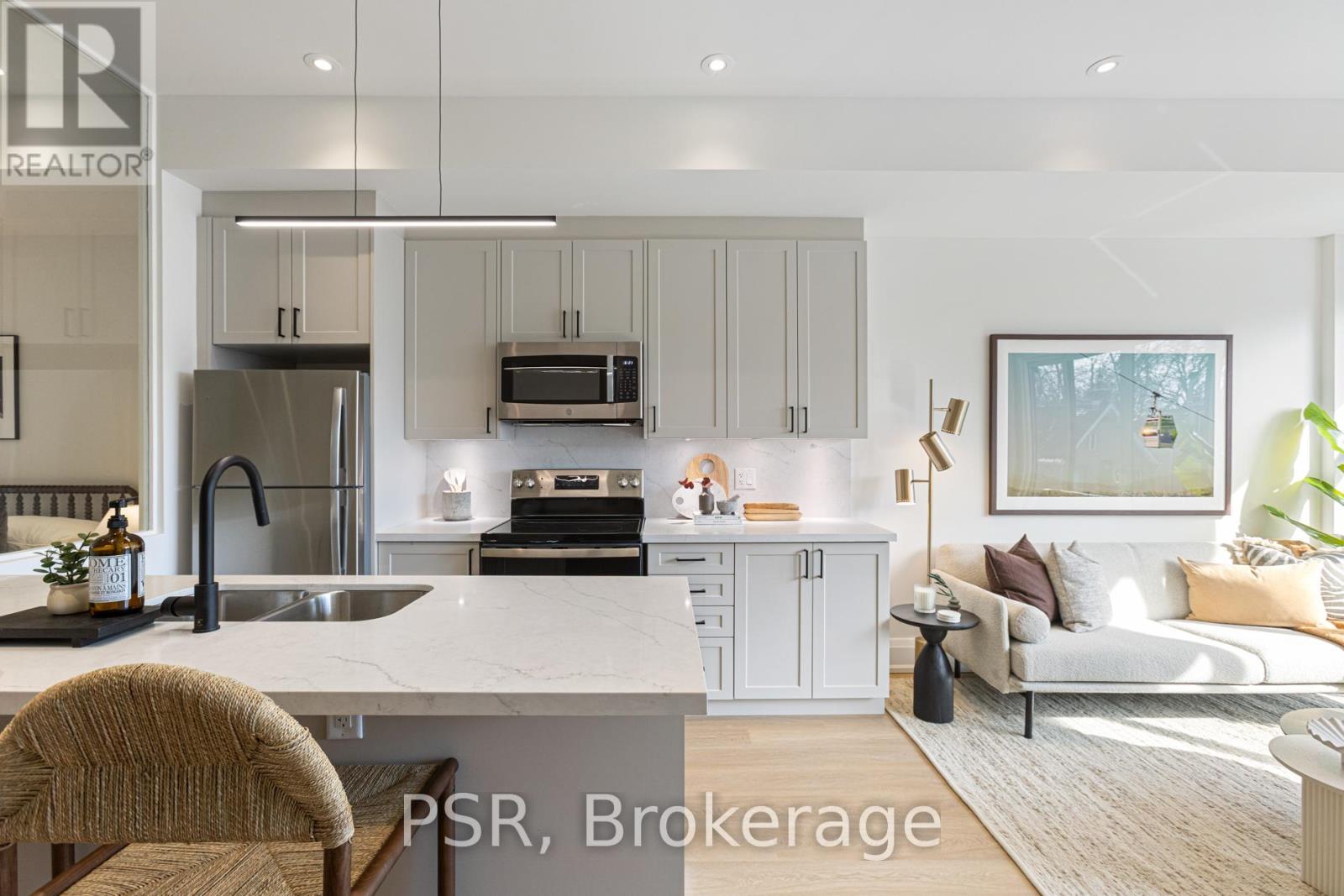
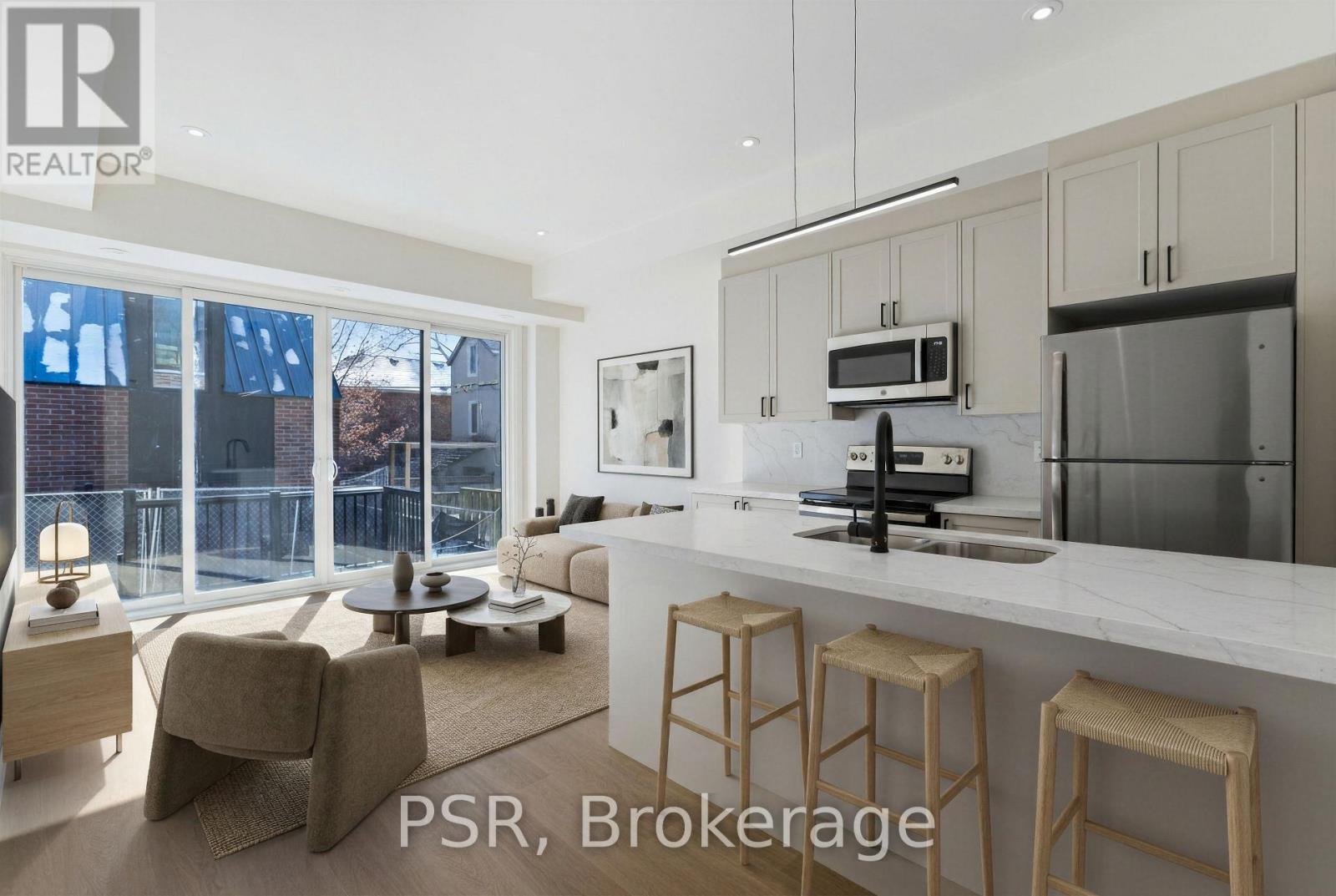
Boutique condo buildings dominate the new inventory. A one-bedroom unit in the 500-600 sq ft range typically sells in the $580K to $730K range. Two-bedrooms in 700-900 sq ft run from around $750K to $1.1M. Check the status certificate on any condo purchase in this neighbourhood. Several buildings built in the early 2010s are entering major reserve fund updates.
The overall average sale price across all property types stands at $980K (live MLS data, April 2026).
Properties in Leslieville are averaging 33 days on market as of April 2026 (live MLS data), which is meaningfully longer than the 7-12 day averages seen in the spring of 2022 but reflects a normalised market rather than a distressed one.
The offer process in Leslieville today is mostly offer-date free. Most properties are listed with no formal offer date and reviewed when offers arrive. Competing bids still happen on well-priced semis and detached homes in prime pockets, but buyers no longer operate under the blanket assumption that everything requires a pre-emptive bid. Conditions are back. A standard offer for a freehold property includes a financing condition (3-5 business days) and a home inspection condition.
Condos are the weakest segment right now. Inventory is higher relative to demand than freehold, days on market are longer, and sellers in some buildings are facing downward pressure on price. For buyers this is a genuine opportunity.
Spring (February through May) produces the most buyer activity and the strongest prices for sellers. Properties listed in April perform best. October and November are the second window. Mid-December through January is predictably slow.
The buyers who end up in Leslieville are usually comparing it specifically against Riverside, the Beaches, and sometimes Riverdale. From Riverside: buyers looking for more residential quiet come east. Riverside’s concentration of bars and restaurants makes it excellent if you want to walk out your front door into a social scene. If you’re a family or a remote worker who wants calmer streets, Leslieville offers that without sacrificing walkability.
From the Beaches: the choice often comes down to price and commute. The Beaches commands a premium, largely justified by lake access. A buyer who cannot absorb a 15-20% price increase for the same property type, or who commutes downtown regularly and finds the east-end streetcar delay frustrating, often ends up in Leslieville.
From Riverdale: Leslieville buyers who considered Riverdale are usually choosing on price. The streets closest to the Don Valley in Riverdale carry a significant premium for the park and ravine access. Buyers who want more square footage for the money and are not specifically drawn to the ravine system often land in Leslieville.
The most important thing to understand about Leslieville’s geography is the CN rail corridor at the northern boundary. Properties close to the corridor, within roughly 100-150 metres, are worth investigating on a Saturday morning before you commit. Rail noise varies by property and building quality. The discount for proximity to the tracks is real, and whether it is sufficient depends on your sensitivity to noise.
Within the neighbourhood, the streets between Dundas Street East and Queen Street East, roughly between Degrassi and Jones Avenue, draw the most consistent competition. The blocks on Bertmount, Woodfield, Pape, and Jones produce reliable demand from families who want walkable distance to the Queen Street strip and good schools.
East Harbour is the development worth tracking for Leslieville’s long-term value. The mixed-use master plan at the Port Lands includes a new GO/TTC multimodal transit hub at the Don Valley and Eastern Avenue. When complete, it will bring regional rail access closer to Leslieville than it has ever been. Infrastructure work is actively underway as of 2026.
School catchments matter here and a few blocks make a real difference. Morse Street Junior Public School serves the western part of the neighbourhood. Duke of Connaught covers the eastern section. Confirm the specific catchment for any address using the TDSB boundary tool before relying on it in your decision.
Leslieville buyers in 2026 are more patient and more careful than they were in 2021-2022. They use home inspection conditions. They compare properties across multiple listings before committing. They respond to accurate pricing and good presentation, and they are resistant to properties that feel overpriced relative to recent comparable sales.
Presentation quality has an outsized return in this neighbourhood. Leslieville has a specific aesthetic that its buyers recognise: clean, original architectural detail preserved where possible, contemporary kitchen and bath updates that do not destroy the Victorian bones of the house. A freshly painted Victorian semi with restored hardwood floors and a well-staged main floor will outperform an equivalent property with a tired interior even when the bones are identical. Professional photography is not optional.
Spring listings (February through May) outperform the rest of the calendar year consistently. April and early May are the peak. If you have flexibility on timing, holding a spring listing is usually worth the wait over a late November or January listing.
The Queen Street East strip between Broadview and Coxwell is where most of Leslieville’s commercial life concentrates. It runs about two kilometres and is almost entirely independent shops, cafes, bars, and restaurants. The character of the strip is the main reason people choose this neighbourhood over somewhere with equivalent housing stock but a less interesting street.
Lady Marmalade on Leslie Street has been the neighbourhood’s weekend brunch institution for years. The line is real. Arrive early or wait. Leslieville Pumps at Queen and Leslie is the converted gas station bar that people reference when they describe the neighbourhood’s character. Barrio Cerveceria on Queen has reliable tacos and a good patio. Gare de l’Est on Gerrard has French brasserie food and is the natural pre-show spot for Crow’s Theatre immediately adjacent.
Crow’s Theatre at 345 Carlaw Avenue is one of Toronto’s most respected mid-size theatre companies. It moved to its current custom-built facility in 2020. Carlaw Avenue between Gerrard and Queen also has a high concentration of boutique fitness studios within a short stretch.
Greenwood Park, near Coxwell, has baseball diamonds, a multipurpose sports field, an outdoor pool, and the city’s first covered outdoor artificial ice rink. Woodbine Beach and Ashbridge’s Bay Park are a short bike ride east along the Martin Goodman Trail.
Leslieville’s transit is centred on the 501 Queen streetcar, which runs the full length of the neighbourhood. The 501 will get you downtown in about 30-40 minutes in normal conditions, but irregular service is common during rush hours. It is one of the TTC’s most frequently delayed routes. The 502 and 503 streetcars run as rush-hour overlays, which helps frequency during peaks.
Many residents commute by bike. The bike lanes on Carlaw, the Portlands Cycle route, and the Martin Goodman Trail along the waterfront give good cycling access west toward downtown. A fit cyclist can reach King and Bay in about 25 minutes from Queen and Leslie, genuinely faster than the streetcar on most mornings.
Driving to downtown takes 10-15 minutes off-peak via Eastern Avenue or the Gardiner Expressway. The Gardiner on-ramp at Carlaw gives quick westbound access. On-street parking in the neighbourhood is permit-controlled and genuinely limited. If bringing your car home daily is important to you, confirm the parking situation for any specific property before committing.
Riverside immediately to the west is smaller than Leslieville with a more concentrated commercial strip at Dundas East and Queen near the bridge. The Broadview Hotel anchors the nightlife at Broadview and Gerrard. Prices are comparable to Leslieville for equivalent property types, semis and detached homes in the $1.1M-$1.6M range, but the supply of available properties is smaller since the neighbourhood is more compact.
The Beaches lies east of Leslieville beyond Coxwell Avenue. Properties there carry a premium over Leslieville of roughly 10-20% for equivalent property types, reflecting lake access and park quality. Transit access is weaker the further east you are on the 501. Buyers who specifically want lakefront proximity pay the Beaches premium willingly. Buyers who do not rank lake access that highly usually find Leslieville a better value for the same property type.
Greenwood-Coxwell sits north of Leslieville, above Gerrard Street between Coxwell and Woodbine. It is a quieter, more purely residential area without a strong commercial strip. Properties there are typically 10-15% less expensive than equivalent Leslieville homes, a meaningful difference if your priority is house size and a yard rather than Queen Street East walkability.
Families with school-age children need to verify catchment boundaries before finalising a purchase. The boundaries are specific and a few blocks can place you in a different school. The TDSB boundary tool at tdsb.on.ca lets you look up any address.
Morse Street Junior Public School (JK to Grade 6) serves the western part of the neighbourhood. Duke of Connaught Junior and Senior Public School (JK to Grade 8) covers more of the eastern section, with roughly 800 students and an Early French Immersion stream from senior kindergarten through Grade 8. St. Joseph Catholic School (JK to Grade 8) serves families in the TCDSB system.
Riverdale Collegiate Institute (Grades 9-12) is the secondary school most associated with this area, with a strong university acceptance rate and a broad extracurricular program.
Note that several Leslieville streets fall just outside the catchment boundaries of the most in-demand schools. A two-block difference in address can make a meaningful difference to school assignment. Verify with the relevant board directly.
Is Leslieville safe?
Leslieville is a generally safe neighbourhood and consistently considered one of the more family-friendly parts of Toronto’s east end. The streets are active, well-lit, and populated at most hours. Crime statistics for the area are below the Toronto average for most categories. This is not an area with a crime problem that would factor into a purchasing decision. Parents raise children here in large numbers.
Where exactly is Leslieville in Toronto?
Leslieville sits in Toronto’s east end, roughly bounded by the CN rail corridor to the north, Broadview Avenue to the west, Eastern Avenue and Queen Street East to the south, and Coxwell Avenue to the east. It is approximately four kilometres east of Union Station: 10-15 minutes by car off-peak, 30-35 minutes on the 501 Queen streetcar. Riverside is immediately to the west, the Beaches is to the east beyond Coxwell, and Greenwood-Coxwell is to the north above Gerrard Street.
What is the average house price in Leslieville?
The average sale price across all property types in Leslieville is $980K as of April 2026, based on live MLS data. Entry condos (one-bedroom, under 600 sq ft) typically sell in the $580K to $730K range. Victorian semi-detached homes on good blocks trade between $1.1M and $1.6M. Detached homes run from around $1.4M for a standard three-bedroom up to $1.8M and above for renovated four-bedroom properties. Prices have pulled back from the February 2022 peak by roughly 15-20% and have stabilised through 2025 and into 2026.
Are there condos for sale in Leslieville?
Yes. Leslieville has a reasonable supply of condos, mostly boutique-scaled buildings of 6-12 storeys plus loft conversions from former industrial buildings. One-bedroom units typically sell in the $580K-$730K range. Two-bedrooms run from approximately $750K to just over $1.1M. The condo segment currently shows more inventory and longer days on market than freehold, which creates genuine buying opportunities. Always read the status certificate before purchasing.
Is Leslieville a good place to buy?
For buyers who value urban character, walkability, and a genuine neighbourhood identity, Leslieville is consistently one of the stronger 416 value propositions. The market in early 2026 is softer than 2021-2022, with more inventory and longer selling periods, giving buyers negotiating room and the ability to include conditions on offers. For buyers with a 7-10 year horizon, the combination of current pricing and the improving transit infrastructure driven by the East Harbour development makes Leslieville a credible long-term hold.
Leslieville takes its name from George Leslie (1804-1893), the Scottish-born horticulturalist who founded the Toronto Nurseries here in the mid-1800s, at one point the largest nursery business in Canada. Leslie’s trees were planted throughout the city, including Mount Pleasant Cemetery and Allan Gardens. The neighbourhood that grew up around his nursery was, for most of the 19th and early 20th centuries, a blue-collar area serving the brick factories and industrial operations along the lake.
The industrial character persisted well into the late 20th century. Metal smelters, tanneries, and manufacturing operations occupied the stretches along Eastern Avenue and the rail corridor now being converted to residential and commercial use. The neighbourhood’s creative industry identity grew partly from this industrial legacy: Showline Studios and Pinewood Toronto Studios operate nearby, drawing film and television production to the area as large-footprint warehouse buildings were converted to production use in the 1990s and 2000s.
The residential gentrification that accelerated in the 2010s followed the pattern common to many of Toronto’s former industrial east-end neighbourhoods: artists and young professionals, followed by families, followed by more intensive commercial development along Queen Street East. That process was largely complete by 2019. The neighbourhood is now established, and the next phase of change is driven by the East Harbour development to the south rather than further neighbourhood discovery.
Street-level knowledge is hard to find online. Our team works in Leslieville every day. They know which pockets hold value, where the school catchment lines actually fall, and what the market is doing right now. Talk to us before you make a decision about Leslieville.
Talk to a local agent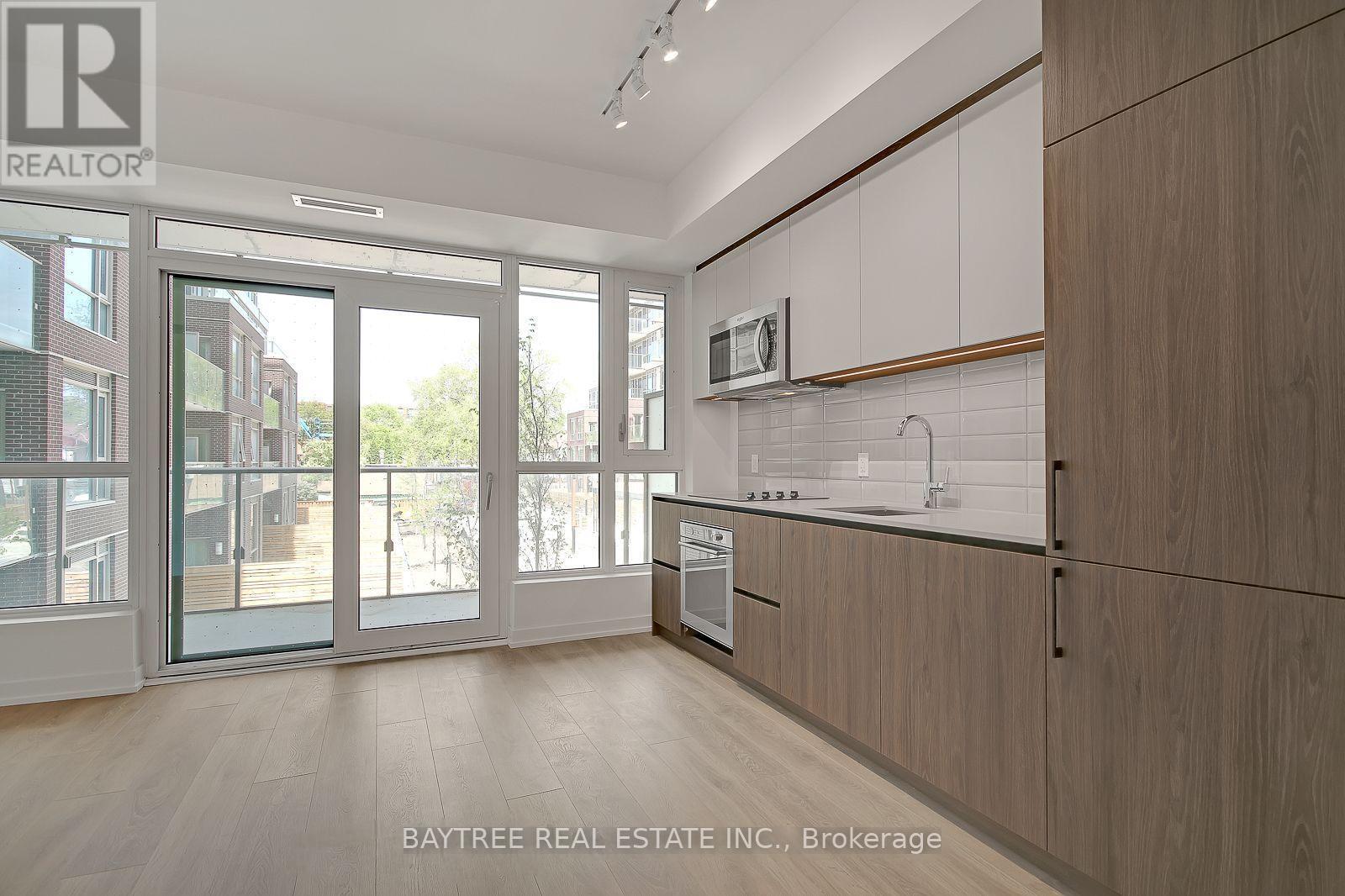 For Rent
 For Rent
 For Rent
 For Rent