
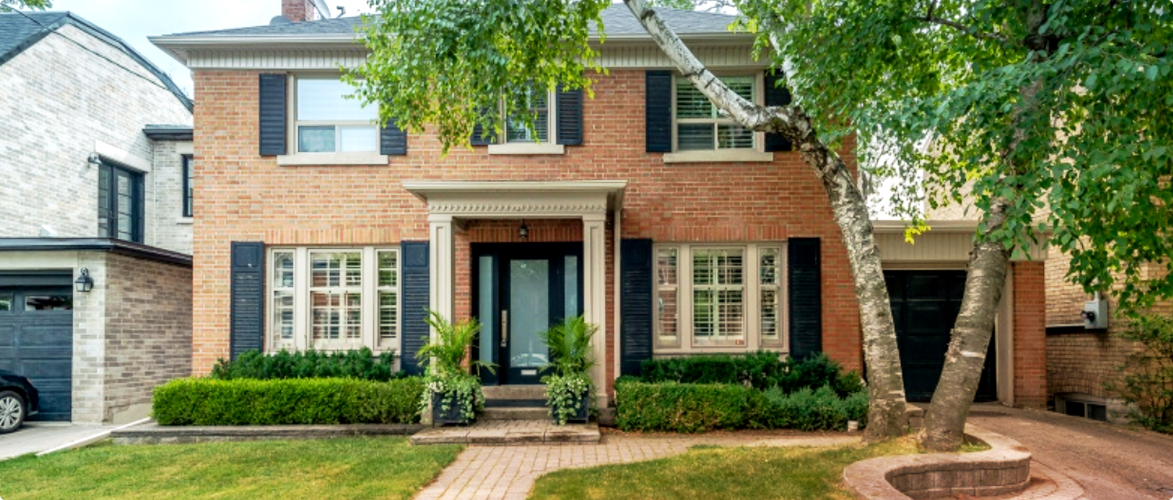
Humewood-Cedarvale sits between Forest Hill and Fairbank, north of Oakwood Village, built on detached and semi-detached brick houses from the 1920s and 1940s. The Cedarvale Ravine cuts through the neighbourhood and connects to the Kay Gardner Beltline Trail, giving residents off-street walking and cycling access that most Toronto neighbourhoods don't have. Detached homes sell between $1.5M and $2.8M depending on size and condition. Semis start around $1.1M. Eglinton West and Glencairn subway stations are both within reach.
Humewood-Cedarvale occupies a strip of north Toronto that most buyers from outside the city have never quite located on a map, which is part of why it still offers value that comparable neighbourhoods east of Bathurst don’t. It runs roughly from Bathurst Street on the east to Dufferin Street on the west, between St. Clair Avenue West to the south and Eglinton Avenue West to the north. Forest Hill is the neighbour to the east, and the price difference between the two is real and consistent. Buyers who look at Forest Hill and find it out of reach frequently discover Humewood-Cedarvale solves the same problem at a lower price.
The defining physical feature is the Cedarvale Ravine. It cuts diagonally through the neighbourhood and connects, at its northern end, to the Kay Gardner Beltline Trail. That trail is a former rail corridor converted to a linear park that runs east-west across the middle of the city, and Humewood-Cedarvale residents can step onto it without crossing a major street. This is the kind of access that gets listed as a feature in real estate ads and actually earns its place there. The ravine is wooded, maintained, and used throughout the year.
The housing stock is largely brick detached homes built between the 1920s and 1940s, with a mix of semis on narrower lots and the occasional postwar infill. Streets like Humewood Drive, Cedarvale Avenue, and Rushton Road have the detached stock that attracts family buyers. The neighbourhood is residential in character, with commercial activity concentrated on Eglinton Avenue West and St. Clair Avenue West rather than running through the interior streets. That separation between the residential core and the retail strips is deliberate and it shows in how quiet the blocks feel.
Most detached homes in Humewood-Cedarvale are three or four bedrooms, built on 25- to 35-foot lots, with a single-car garage or a parking pad accessed from the rear lane. The interiors range from fully original to gut-renovated depending on when the house last sold and who owned it. Original homes from this era typically have smaller kitchens by contemporary standards, plaster walls, and older mechanical systems. A house that hasn’t been touched in twenty years is priced accordingly, and buyers who can manage a renovation find the best value there. Renovated homes in the $1.8M to $2.4M range tend to have open main floors, updated kitchens and bathrooms, and finished basements that add usable square footage.
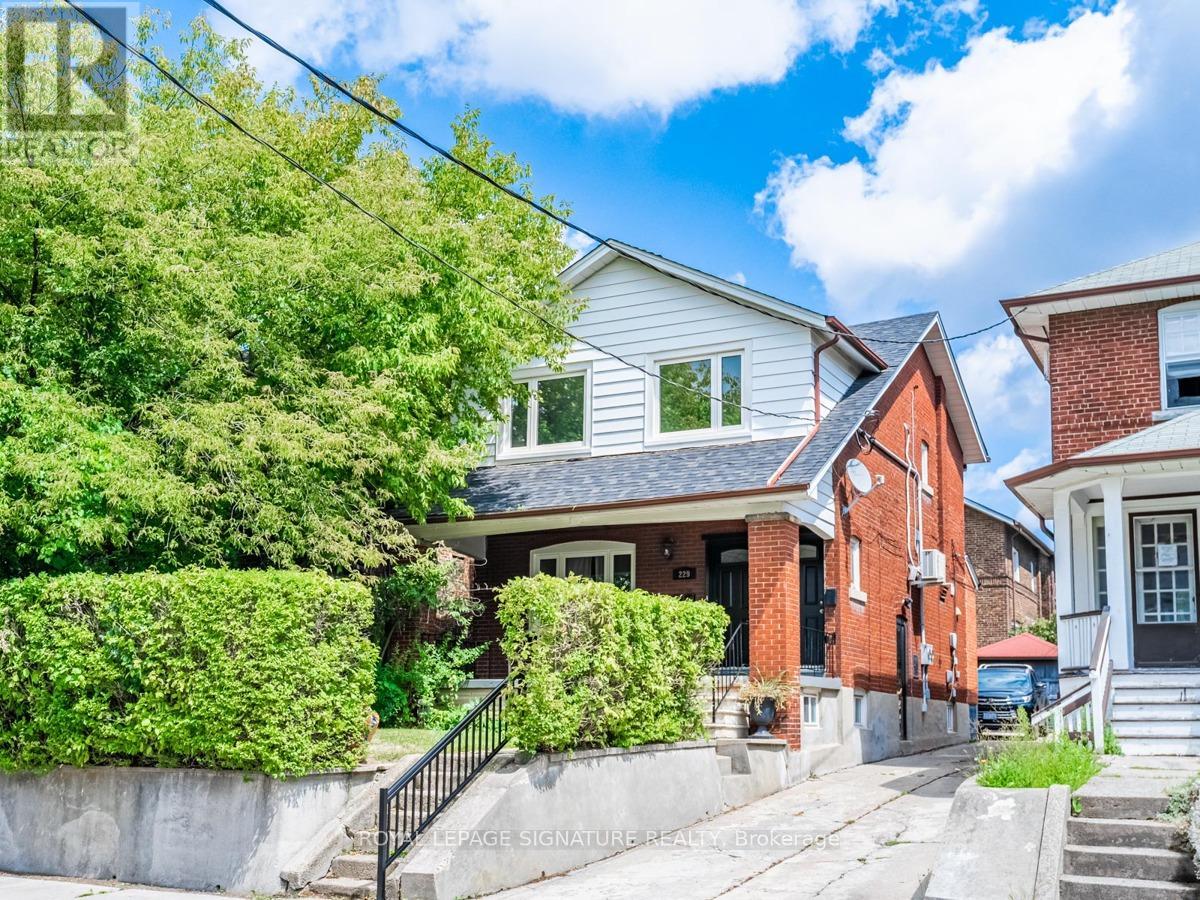
Semis in the neighbourhood follow the same character: brick construction, narrow lots, rear lanes, and condition that varies house by house. The $1.1M to $1.5M semi range covers a wide spectrum from needing full renovation to move-in ready, and the spread in condition explains most of the price difference within that band. Buyers sometimes overlook semis in favour of detached homes at a similar price point in adjacent neighbourhoods, but a renovated semi in Humewood-Cedarvale on a good street frequently outperforms a detached house in a weaker area on every measure that matters day to day.
One thing buyers consistently underestimate is the lot depth on some of the streets closer to the ravine. Lots that back onto green space or run longer than average create backyard situations that are genuinely unusual in this part of the city. A deep lot in Humewood-Cedarvale can give a family outdoor space that would be impossible to find at the same price point in Midtown, Annex, or Roncesvalles. If backyard size is a priority, the streets north of Humewood Park and near the ravine edge deserve a look before committing to anything else.
Humewood-Cedarvale is a low-turnover neighbourhood. Families who move in tend to stay, which means available inventory is thinner than in higher-churn areas and listings don’t accumulate. When a well-priced detached home comes up on a good street, it moves quickly, often within a week and frequently with competing offers. The buyers who win in this market generally know the neighbourhood before they’re actively looking: they’ve been watching for six months or longer and they move when the right property appears rather than deliberating after their first visit.
Pricing here follows the broader Toronto market in direction but not always in magnitude. When the market softens, Humewood-Cedarvale tends to hold better than outer suburbs or purpose-built condo markets because demand comes from buyers who specifically want this neighbourhood rather than buyers who are agnostic about location. That said, the $1.5M to $2.8M detached range is not immune to rate sensitivity, and buyers with larger budgets are more affected by carrying cost changes than buyers in the $700,000 to $1.1M range. When rates moved significantly in 2022 and 2023, some of the high-end detached homes in this neighbourhood sat longer than they would have in 2021.
The Eglinton Crosstown LRT, which runs along Eglinton Avenue and connects to the existing subway at multiple points, is gradually being absorbed into the market’s baseline expectations. Mount Dennis to Kennedy, with an underground section through the Midtown core, the Crosstown changes how accessible this part of the city feels. Properties within a few minutes’ walk of Eglinton stations are already priced with that access in mind. For Humewood-Cedarvale buyers, the relevant stations are Eglinton West and Fairbank, which add surface LRT access on top of the existing subway stations at Glencairn and Eglinton West.
The neighbourhood draws families who want a quiet residential street, backyard space, and access to the ravine system, without paying Forest Hill prices or accepting the trade-offs of Fairbank’s more mixed commercial character. The Humewood Community School catchment is a specific draw for buyers with children in the early grades, and it regularly appears as a stated reason for choosing this neighbourhood over adjacent ones. Families who’ve done the school research arrive knowing which streets fall inside the catchment and shop accordingly.
A second group consists of buyers moving out of condos who want to stay in the midtown corridor, retain their existing transit habits, and add outdoor space and physical separation from neighbours. These buyers are often first-time house buyers who know the Eglinton and St. Clair corridors well, have been watching prices for a year or more, and recognise that Humewood-Cedarvale gives them a detached home at a price point where comparable product east of Yonge or south of Bloor doesn’t exist. They tend to be price-conscious but not at the entry level of the market.
A smaller but consistent third group are buyers from Forest Hill who need to adjust their budget without relocating their lifestyle. The ravine access is similar, the transit options are comparable, the residential character is equivalent, and the address carries its own identity without pretending to be something else. These buyers sometimes take longer to arrive at Humewood-Cedarvale because they resist the comparison initially, but buyers who have lived here tend to describe it as the better decision rather than the compromise they feared it would be.
Homes from the 1920s and 1940s in Humewood-Cedarvale carry the predictable issues of their era: knob-and-tube wiring in houses that haven’t been rewired, cast iron drain stacks that are approaching the end of their service life, and older furnaces that may be functioning but are oversized or inefficient by current standards. A home inspection on a house in this age range should look specifically at the electrical panel, the plumbing stack, and the basement drainage. These are not reasons to avoid older homes, but they are reasons to price in potential work when making an offer.
The ravine edge adds one issue that buyers sometimes overlook: slope stability and drainage. Properties that back directly onto the ravine can have grade issues, and during wet springs or after heavy rain, basement water intrusion is a real risk in houses where the foundation waterproofing hasn’t been updated. Ask the seller’s agent specifically whether the basement has had any water penetration, and have your inspector check the grading around the foundation. A house that backs onto green space is appealing but the appeal doesn’t eliminate the physics.
Zoning in Humewood-Cedarvale follows standard Toronto residential rules, with most of the interior streets zoned RD (Residential Detached) or RS (Residential Semi-Detached). Laneway suites are possible on lots with lane access and sufficient lot area, and a number of properties in the neighbourhood have already had them built. If adding a laneway suite is part of your plan, check whether the specific lot meets the city’s minimum requirements for lane width, lot depth, and the setback rules that apply. This is worth verifying before making an offer on any property where a laneway suite is part of the value proposition rather than an afterthought.
Sellers in Humewood-Cedarvale benefit from a buyer pool that arrives pre-motivated: they’ve chosen the neighbourhood specifically, they know the price range, and they’re not waiting to be convinced that the location is worth it. The challenge is competing with the other listings that come up at the same time, because buyers who know the neighbourhood are also comparing your house against the others actively available. Presentation matters here, not because buyers are superficial, but because houses that show well attract more offers and more offers change the outcome.
The most common seller mistake in this neighbourhood is under-pricing renovation work that was done on the cheap. Buyers at the $1.5M to $2.4M level are experienced, they bring inspectors, and they’ve seen enough renovated houses to know the difference between a quality finish and one that was done to sell. A kitchen renovation that used mid-grade cabinets and skipped the structural changes doesn’t support the same asking price as one that moved walls, upgraded the electrical, and used consistent finishes throughout. Price to the actual condition, not to the aspiration.
Timing the market in Humewood-Cedarvale follows the standard Toronto pattern: spring (March to June) and fall (September to November) produce the most buyer activity and the strongest offer situations. Listings that sit through July and August without selling often face a tougher autumn, as buyers who saw the property in summer assume something is wrong with it even if the delay was simply seasonal. If a house needs work before listing, completing that work and listing in September is usually better than listing in July in its current state. The neighbourhood’s low inventory means a well-prepared listing in the right window attracts serious attention.
The Cedarvale Ravine is one of the reasons people choose this neighbourhood and stay. The ravine system runs from roughly Viewmount Avenue in the south, widens through the Cedarvale Park area, and connects at the north end to the Kay Gardner Beltline Trail near Chaplin Crescent. The trail itself is a 9.2-kilometre former Canadian Pacific rail corridor converted to a linear park, running east from Allen Road through Chaplin Crescent, Davisville, and out toward Mount Pleasant Cemetery. Residents can walk or cycle across a substantial portion of Midtown Toronto without touching a surface street.
The ravine itself has maintained forest cover, maintained paths, and a creek system that runs through the bottom. It functions differently from a city park: it’s not manicured or programmed, it changes with the season, and the tree canopy makes it feel substantially removed from the surrounding city even when you’re ten minutes from Eglinton Avenue. Dogs and children both get something from it that a tennis court or a soccer field doesn’t provide. The connection to Humewood Park, which sits at the eastern edge of the neighbourhood, extends the usable green space further.
What this means practically for buyers is that ravine access substitutes for the kind of indoor amenities that condo buildings use to justify maintenance fees. Families in Humewood-Cedarvale get daily outdoor access that requires no car trip, no fee, and no reservation. The trade-off is that unlike a park with a splash pad and a playground, the ravine is natural terrain and requires a bit more parental supervision with younger children. The Beltline Trail’s paved surface is accessible year-round including winter, while the ravine paths become muddier and less navigable after significant rain or snow.
The neighbourhood sits between two subway stations on the Yonge-University-Spadina line. Glencairn station is at the north end, on Bathurst just north of Glencairn Avenue. Eglinton West station is to the south, at Bathurst and Eglinton. Both are accessible on foot from most of the neighbourhood, with the closer one depending on which street you’re on. Bus service on Bathurst runs frequently and connects these stations with the interior of the neighbourhood. This combination gives residents reasonable subway access without requiring a car trip to reach the platform.
The Eglinton Crosstown LRT adds a second rapid transit axis along Eglinton Avenue West. The above-ground portion along the western section includes a stop near Dufferin and one at Fairbank, which are relevant for residents in the western part of the neighbourhood and for anyone commuting toward the airport or Mississauga. Where the Crosstown connects to the existing Eglinton West subway station, residents gain a transfer point that links the two lines. The full Crosstown route runs from Mount Dennis in the west to Kennedy Station in the east, with an underground section through the Midtown core.
Drivers can reach the Allen Road expressway at Glencairn, which gives reasonably quick access downtown or north to the 401. Bathurst and Dufferin both carry traffic efficiently in both directions. The neighbourhood’s position between Bathurst and Dufferin means most residents are within ten minutes of the highway on surface streets, which is above average for this part of the city. Parking is less of a concern here than in higher-density Midtown neighbourhoods: most detached homes have a single-car garage or a rear pad, and on-street parking on the interior residential streets is generally available, with permit requirements applying in some zones.
Forest Hill South, east of Humewood-Cedarvale across Bathurst Street, is one of Toronto’s most consistently expensive neighbourhoods. Detached homes there sell routinely above $3 million and frequently above $4 million on the best streets. The housing stock in Forest Hill South is generally larger, the lots are often deeper, and the address carries a prestige factor that has been priced into the market for decades. Buyers who compare the two neighbourhoods usually find that Humewood-Cedarvale offers equivalent ravine access, similar transit proximity, and the same era of brick construction at a price that is 30 to 50 percent lower for comparable square footage. What Forest Hill offers that Humewood-Cedarvale doesn’t is a larger, more established detached home market and the specific social weight of the address.
Forest Hill North, which sits immediately north of Forest Hill South, is closer in price to Humewood-Cedarvale and worth including in any comparison. The gap narrows considerably for buyers looking at $1.8M to $2.4M detached homes. The difference at that price point comes down to individual streets, specific lot sizes, and renovation quality rather than a categorical gap between the two areas.
Oakwood Village sits to the south of Humewood-Cedarvale, below St. Clair Avenue West. It’s a more diverse neighbourhood commercially, with the St. Clair strip carrying a mix of independent shops, restaurants, and services. Housing prices in Oakwood Village are lower across the board, reflecting a mix of housing types, a more active commercial border, and somewhat less green space. Buyers who find Humewood-Cedarvale prices difficult should look at Oakwood Village as the logical next step south: same transit corridor, more affordable entry point, less ravine access but still within range of the park system.
Humewood Drive is the address that anchors the neighbourhood’s identity: it runs along the eastern edge of the ravine, with houses that face the green space directly and command prices at the upper end of the neighbourhood range. Cedarvale Avenue and Viewmount Avenue attract buyers who want ravine proximity without the premium for a direct facing lot. Rushton Road and Heath Street East are quiet residential streets with consistent brick detached stock. These streets see strong demand from family buyers because they combine quiet residential character with reasonable access to both the ravine and the transit corridors.
Northwood Drive, Glenholme Avenue, and the streets that run north-south between Dufferin and Bathurst have more variation in condition and lot size. Some blocks feel more settled and established; others have more turnover and more houses in the process of renovation. Buyers who are flexible on street and willing to look at houses that need work find better value on these interior streets than on the most in-demand addresses.
The one thing buyers don’t always appreciate before they move in is how the neighbourhood changes by season. The ravine access that drives part of the premium is most useful from April to October. Winter here is quieter, the trail system becomes less usable after significant snow without clearing, and the neighbourhood lacks the density of commercial activity that makes some Toronto areas feel vibrant year-round. The Eglinton strip provides coffee shops, groceries, and essential services, but it’s not the kind of walkable main street environment that Roncesvalles or the Danforth offer. Buyers who rate commercial walkability highly should factor that in before choosing Humewood-Cedarvale over neighbourhoods with stronger retail corridors.
What do homes cost in Humewood-Cedarvale right now?
Detached homes in Humewood-Cedarvale sold between $1.5 million and $2.8 million in early 2026. That range reflects real variation: a three-bedroom on a standard 25-foot lot that hasn’t been updated since the 1990s sits near the bottom, while a fully renovated four-bedroom on a 35-foot lot facing the ravine sits near the top. Semi-detached homes run from around $1.1 million to $1.5 million. Buyers who’ve been comparing this neighbourhood to Forest Hill South will find prices here are consistently 30 to 50 percent lower for similar square footage, which is the central value proposition.
Is the Cedarvale Ravine actually worth the premium?
For buyers who use it, yes. Properties that directly face the ravine or back onto it command a premium of roughly $100,000 to $200,000 over comparable homes on interior streets, and that premium has held through market cycles because the access is genuinely scarce. You cannot manufacture a ravine-facing lot. For buyers who won’t walk the trail regularly, the premium is less defensible, but even for those buyers, the absence of rear neighbours and the privacy that comes with green space backing have value that shows up again at resale. The neighbourhood’s reputation is partly tied to the ravine, and that reputation supports the broader market above what the houses alone would justify.
Which streets in Humewood-Cedarvale should I focus on?
Humewood Drive, Cedarvale Avenue, and Rushton Road are the most consistently in-demand streets for family buyers. They combine quiet residential character with direct or near-direct ravine access. Northwood Drive and Glenholme Avenue offer more variation in price and condition, with better value available for buyers who can handle a renovation. Streets closer to Dufferin are less expensive than those near Bathurst, and the gap reflects both distance from the subway and a somewhat different residential character on the western blocks.
Does Humewood school affect which streets are worth targeting?
The Humewood Community School catchment is a real factor for families with children in junior kindergarten through grade 6, and buyers specifically shop within it. The catchment covers most of the core residential streets in the neighbourhood. That said, catchment boundaries shift with enrollment and the TDSB reviews them periodically. Before you make an offer based on school access, check the current boundary directly with the school board using the address of the specific property. Buying a house because of a school catchment and then finding the catchment has moved is an expensive mistake.
Can I add a laneway suite to a house in Humewood-Cedarvale?
Many properties in the neighbourhood have rear lane access and lots that meet the city’s minimum requirements for a laneway suite. The laneways that run behind the interior streets were originally built for garage access, and they’re the reason laneway housing is feasible here at all. A one-bedroom laneway suite costs roughly $250,000 to $350,000 to build at current construction prices and adds both rental income and resale value. Not every lot qualifies: you need minimum lot area of 54 square metres for the suite footprint, a rear setback of 7.5 metres from the rear property line to the main house, and a lane that meets minimum width requirements. Verify against the specific property before you treat a laneway suite as part of your offer rationale.
Humewood-Cedarvale has held value through multiple Toronto market cycles for reasons that are structural rather than fashionable. The ravine and trail system don’t depreciate. The transit access has improved with the Crosstown rather than diminished. The housing stock ages in ways that create renovation value rather than obsolescence, because brick construction from the 1920s and 1940s holds up physically and remains attractive to buyers who want character over uniformity. The school catchment adds a floor of family demand that keeps the market active even when broader conditions soften.
The neighbourhood is unlikely to change dramatically in character. The residential streets are low-density and the zoning doesn’t support intensification of the kind that transforms other Toronto areas. New condominium development is concentrated on the Eglinton corridor rather than the interior streets, which means the residential character buyers pay for is preserved rather than gradually eroded. That stability is part of what makes Humewood-Cedarvale a good long-term hold: you’re buying into a neighbourhood that will look broadly similar in fifteen years.
Buyers who choose Humewood-Cedarvale and stay for ten or more years consistently describe it as a neighbourhood that exceeds expectations at purchase and improves on acquaintance. The ravine access becomes a daily habit rather than an occasional treat. The school relationships build community in a way that takes time but becomes genuinely valuable. The quiet residential character, which can feel like a trade-off against more active commercial streets when buyers are deciding, tends to feel like an asset once children are in school and the pace of family life is what it is. The neighbourhood rewards buyers who are choosing where to live, not just what to own.
Street-level knowledge is hard to find online. Our team works in Humewood-Cedarvale every day. They know which pockets hold value, where the school catchment lines actually fall, and what the market is doing right now. Talk to us before you make a decision about Humewood-Cedarvale.
Talk to a local agent For Rent
 For Rent
 For Rent
 For Sale