
Islington-City Centre West is the transit hub of west Etobicoke, anchored by the Kipling and Islington subway stations on the Bloor-Danforth line, with a rapidly growing condominium market, the Kipling GO Bus Terminal, and established commercial activity along Bloor Street West and Islington Avenue.
Islington-City Centre West is the transit heart of west Etobicoke, built around two of the westernmost stations on the TTC Bloor-Danforth subway line. Kipling and Islington stations anchor a neighbourhood that has been transforming steadily over the past decade from a low-rise suburban area into a transit-oriented mixed-use district. The Kipling GO Bus Terminal at the western end of the area connects regional Brampton Transit, GO bus routes, and the subway in a hub that draws commuters from across west Toronto and the inner suburbs.
The neighbourhood’s character is split between the older low-rise residential fabric north and south of Bloor Street West and the increasingly dense condominium development clustering around the subway stations. The residential streets off Islington Avenue and in the blocks surrounding Martin Grove Road retain a postwar bungalow and ranch-style character that traces directly to Etobicoke’s development in the 1950s and 1960s. These streets are quiet and family-oriented in a way that the increasingly active commercial spine along Bloor does not suggest.
The name reflects a City of Toronto designation for planning purposes. Most residents simply say they live near Islington subway or Kipling. The boundaries are somewhat bureaucratic but the area’s identity as west Etobicoke’s transit hub is clear and consistent. What makes it worth understanding is the gap between its transit accessibility and its pricing relative to areas with equivalent TTC access further east along the Bloor-Danforth line.
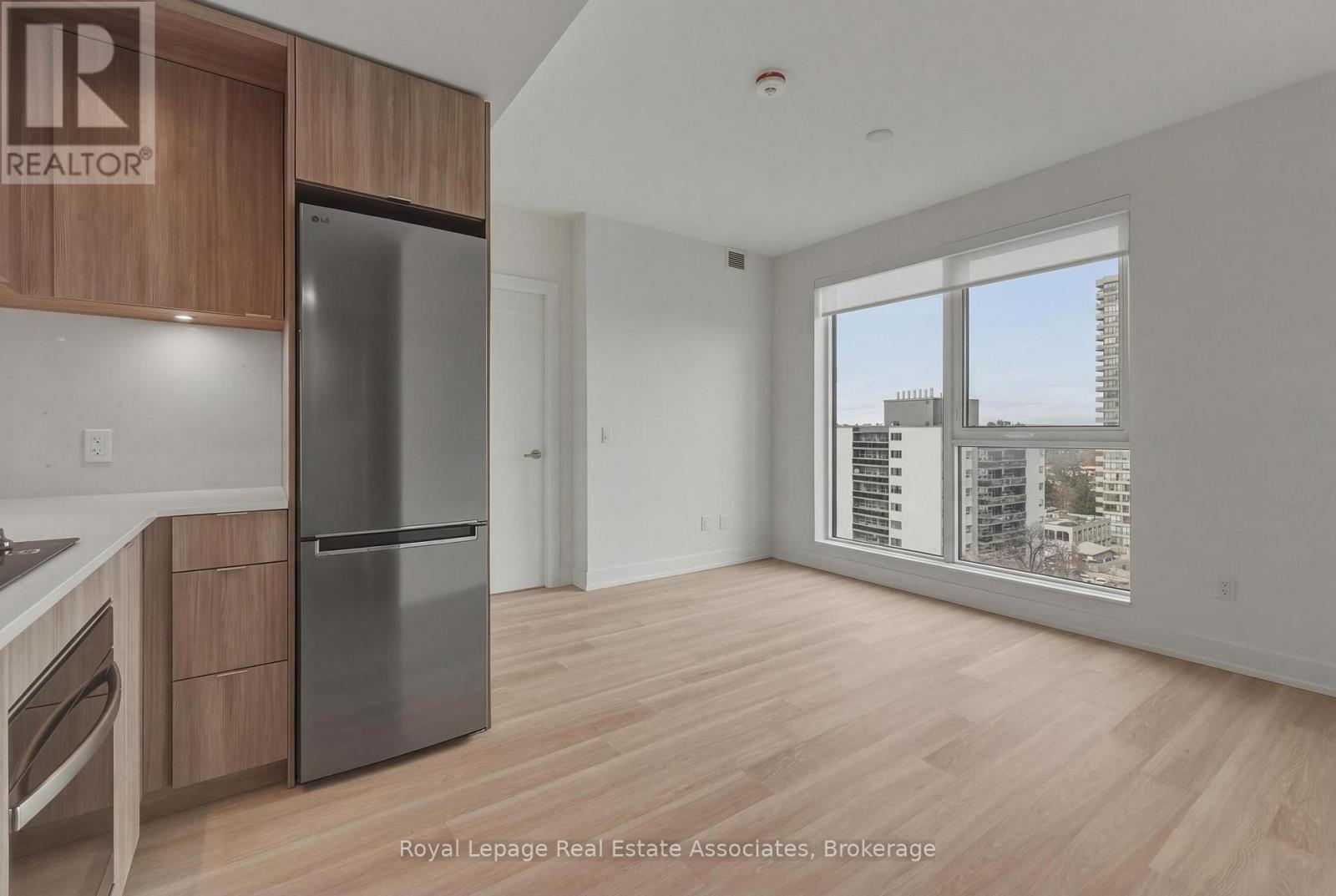
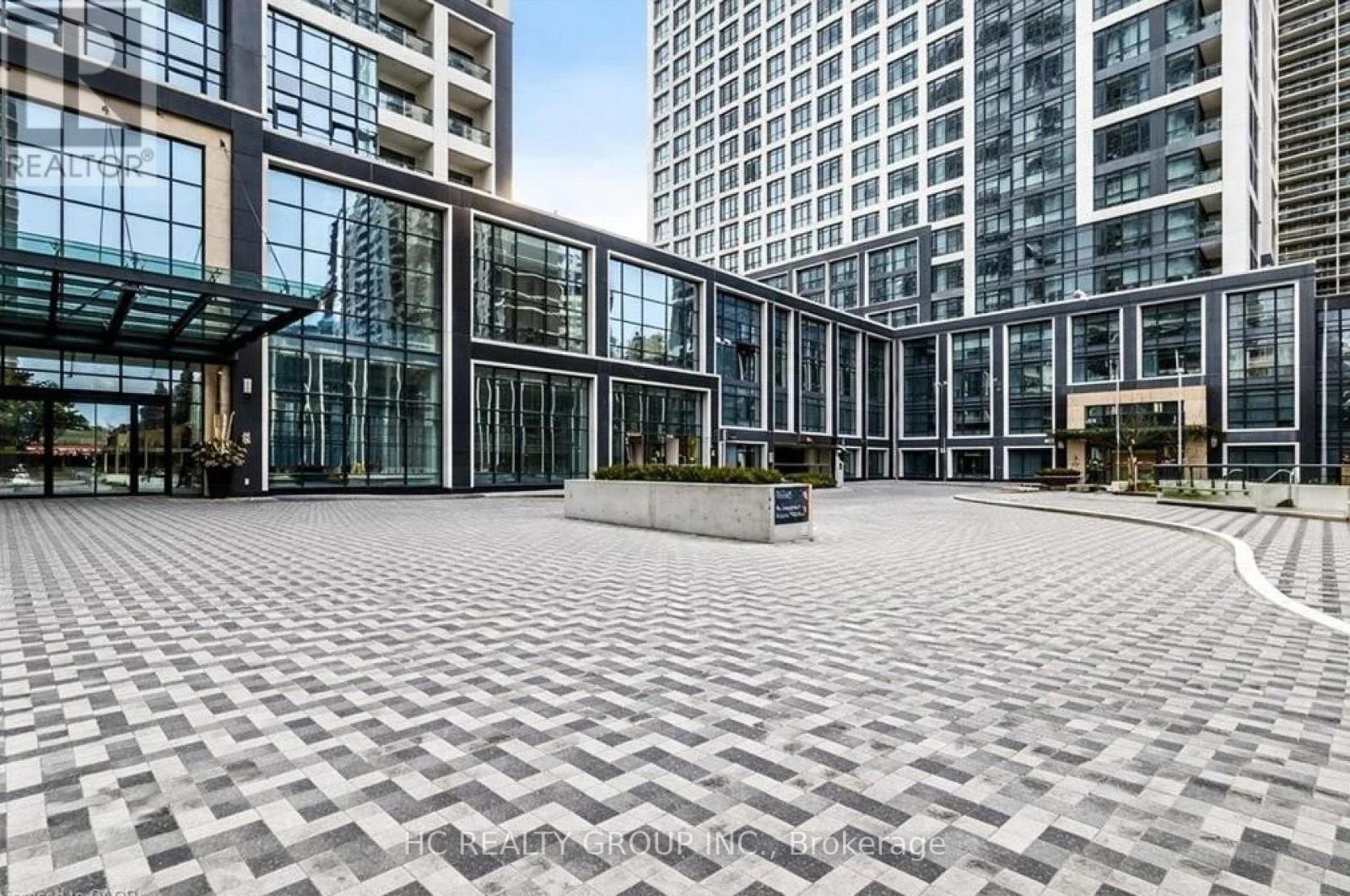
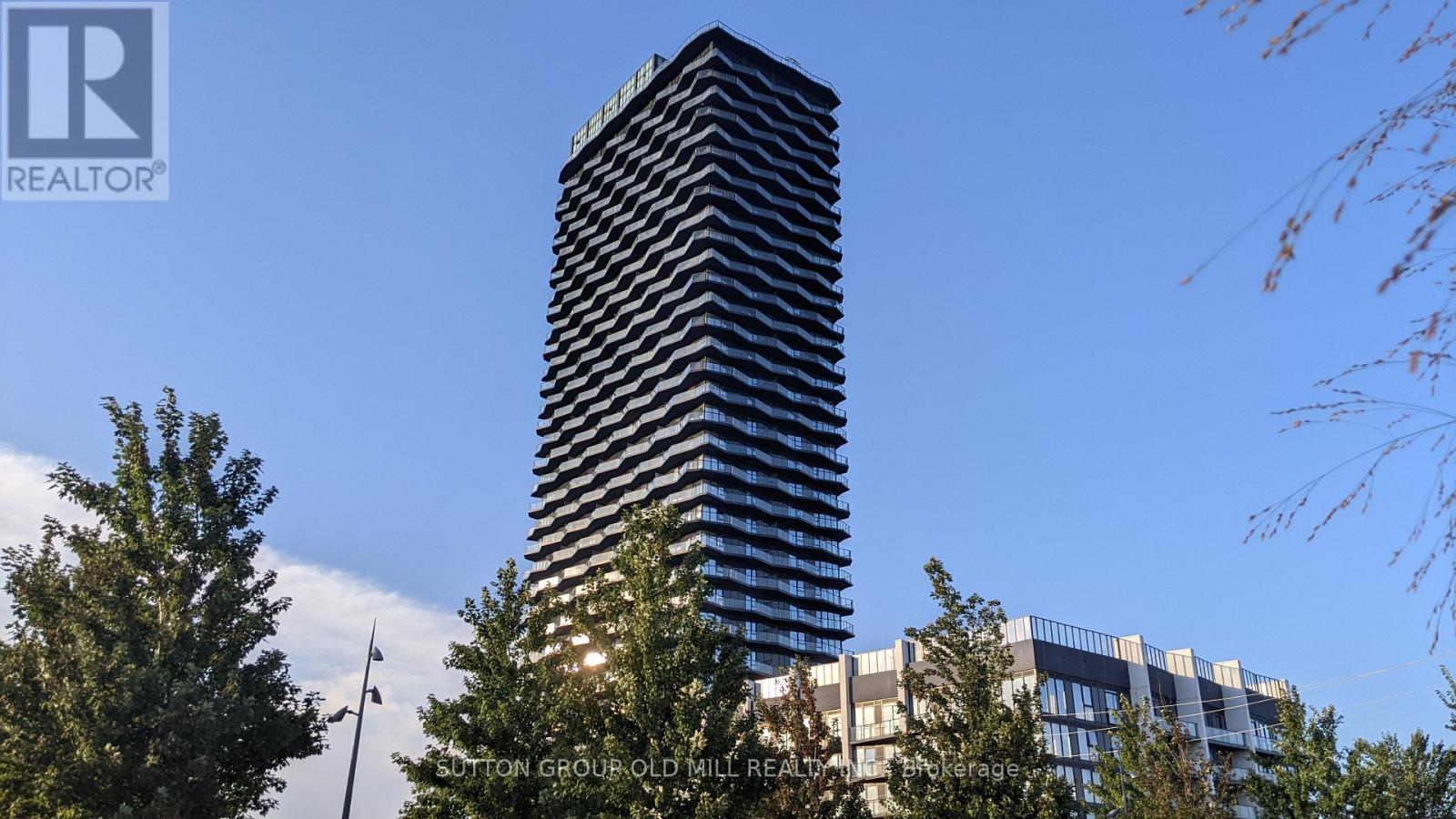
The condominium market in Islington-City Centre West is anchored by the high-rise towers that have risen around the subway stations over the past 15 years. These range from 2000s-era concrete towers to new-construction glass buildings still under development. Resale condo prices average around $540,000 to $620,000 for a one-bedroom unit, with two-bedrooms trading between $700,000 and $950,000 depending on size and building quality. The newest buildings with better amenity packages and higher finishes trade at the top of these ranges.
The low-rise residential fabric off the main streets is where detached homes sit. Postwar bungalows on standard 40 to 50-foot lots typically trade between $1.1 million and $1.4 million, with two-storey detached homes in updated condition reaching $1.5 million to $1.8 million. These are genuine family homes with garages, finished basements, and backyards, and the price represents significant value relative to comparable homes in Bloor West Village or Roncesvalles five kilometres to the east.
Semi-detached homes and older townhouses fill the middle of the market, trading between $900,000 and $1.2 million depending on condition and lot position. The market here is active with well-maintained properties typically selling within 14 to 21 days of listing. Properties requiring significant updating take longer and buyers calculate renovation costs carefully given the price level.
Islington-City Centre West has consistently benefited from being underpriced relative to its subway access. Buyers who price out of the Bloor West Village and Swansea areas regularly end up in this neighbourhood and find that their dollar goes meaningfully further while the TTC commute is essentially the same. This dynamic has driven steady appreciation over the past decade and is the primary reason the area continues to attract attention from buyers tracking the value differential across the Bloor-Danforth corridor.
The condominium segment tracks the broader Toronto condo market closely. The 2022-2023 correction brought condo prices down 10 to 15 percent from peak and the recovery has been gradual. New-construction presales have been challenging in this area as they have been across the city. Resale condos are now more competitively priced relative to new construction, which has redirected some buyer activity from the presale market to the existing building inventory.
The detached market is more resilient and has held its value better through the rate cycle than the condo segment. Families looking for a detached home with TTC access at a price below $1.5 million have limited options across the city, and Islington-City Centre West is one of the few areas that can deliver this combination. That scarcity shows up in the days-on-market data: properly priced detached homes here move in two to three weeks.
Condo buyers in Islington-City Centre West are primarily downtown commuters who prioritize transit access and have decided to buy on the western end of the Bloor-Danforth line rather than pay the premium for a unit closer to the core. They are professionals in their late 20s and 30s who work in the financial district or midtown and are comfortable with a 35 to 45 minute TTC ride. They get more square footage per dollar than they would in the same building class near Spadina or Ossington.
The detached home buyer is almost always a family. They want a backyard, a second bathroom, a garage, and a school catchment that works for their children. Etobicoke schools, particularly at the elementary level, have strong reputations and the combination of school quality and subway access pulls buyers from a wide area who have decided that Etobicoke west represents better value than anything comparable in the old city.
There is also a meaningful buyer segment arriving from Brampton, Mississauga, and Etobicoke’s more western communities. These buyers are moving east toward Toronto, often because one or both partners work downtown, and Islington-City Centre West represents the first stop on the subway line where they can get a detached home at a price their equity from a western suburb can support. The GO bus terminal at Kipling also serves buyers who commute regionally and want multiple transit options from a single location.
The most established residential streets are north of Bloor Street West in the blocks between Islington Avenue and Martin Grove Road. These streets, with names like Rathburn Road, Grenview Boulevard, and the crescents running off them, have mature canopy cover, wide lots for Etobicoke, and a settled character that high-density development has not reached. They represent the most family-oriented and stable part of the neighbourhood.
South of Bloor and east of Islington, the character shifts toward denser commercial and mixed residential. The streets closer to the subway stations have more apartments, older rental buildings, and the beginning of the high-rise transition that defines the station areas. These streets are noisier and less green but offer lower entry prices for buyers willing to accept the tradeoffs of denser living.
The area around Kipling GO Terminal is the most intensely developed and the most in transition. Multiple towers are underway or recently completed in this zone and the street-level experience will continue to change over the next several years. Buyers purchasing in this immediate zone are buying into a neighbourhood that will look substantially different in five to ten years, which is either an opportunity or a disruption depending on your perspective and timeline.
Kipling and Islington stations on the TTC Bloor-Danforth line are the primary transit infrastructure. The ride from Islington station to Bloor-Yonge takes approximately 25 minutes on a clear run. The ride from Kipling takes about 30 minutes. Both stations are large and well-used, with multiple bus connections branching north and south along Islington and Kipling avenues into the broader Etobicoke street network.
Kipling GO Bus Terminal provides regional transit connections to Brampton, Mississauga, and other regional destinations. For buyers who need to travel regionally without a car, this is a genuine advantage. The terminal also connects to GO Train service at the nearby Kipling GO Station (on the Milton and Kitchener lines for Mississauga Express service), which gives this area access to both TTC and GO in a single transfer point.
Drivers have good access to Highway 427 via Burnhamthorpe Road and Bloor Street West. The 401 is accessible via the 427 interchange further north. Gardiner Expressway access is available to the south. For drivers heading downtown, the Gardiner is typically faster than Bloor Street during peak hours. The neighbourhood is car-friendly by inner Toronto standards, with wider streets and ample residential parking compared to what is available east of Dufferin.
Islington-City Centre West is not a green-space-rich neighbourhood by Toronto standards. The parks in the area are primarily small neighbourhood parks and sports fields rather than ravine systems or significant natural areas. Mimico Creek runs along the western edge of the neighbourhood and has a trail corridor, though it is a modest trail compared to the Humber or Rouge systems.
Centennial Park to the north in Etobicoke is the main regional green space accessible from this neighbourhood, with extensive playing fields, a ski hill, tennis courts, and the Centennial Park Conservatory. It is a 10-minute drive or a bus ride from the neighbourhood. For families with children in sports programs, Centennial Park’s facilities are a genuine asset that compensates for the more limited green space within the neighbourhood boundaries.
The smaller parks within Islington-City Centre West, including Burnhamthorpe Park and several smaller playground sites, serve the immediate residential fabric well for casual use. They are maintained by the City of Toronto and are busy during the summer with residents of the surrounding streets. The neighbourhood would benefit from more green space as density increases, and this is a recognized issue in the city’s planning documents for the area.
Bloor Street West through this area has an established commercial strip with a mix of national chains and independent businesses. The stretch from Islington to Kipling has a Canadian Tire, several pharmacies, multiple banks, a range of restaurants covering various cuisines, and the service retail that a neighbourhood of this density requires. The commercial infrastructure here is functional rather than distinctive, oriented toward the daily needs of a large residential population rather than destination dining or boutique retail.
Sherway Gardens shopping centre is about 10 minutes by car or bus and provides a full-scale shopping mall experience with major department stores and a comprehensive retail mix. For anything requiring a department store or a large-format specialty retailer, Sherway handles it. The proximity to Sherway is an underrated practical advantage of west Etobicoke living that residents coming from the east end often comment on.
The dining options along Bloor and Islington have improved meaningfully over the past five years. The influx of condominium residents has driven demand for better restaurants and the supply has responded. There are now several independently operated restaurants at a quality level that was not present here a decade ago, though the area still lacks the dining density of the Bloor West Village or Roncesvalles strips further east. The trajectory is clearly upward.
Islington-City Centre West is served by the Toronto District School Board on the public side and the Toronto Catholic District School Board for Catholic schools. Public elementary schools in the area include Islington Junior Middle School, which offers a Junior Kindergarten through Grade 8 program, and several other elementary schools within walking distance depending on the specific address. Secondary students at the public board attend Etobicoke Collegiate Institute, one of Etobicoke’s established secondary schools with a strong arts and academic program.
Catholic elementary students have options including St. Gregory Catholic School on Islington Avenue, with secondary students attending Michael Power/St. Joseph High School. The Catholic secondary school draws students from a wide area of west Etobicoke and has a good reputation for both academic and athletic programs.
French Immersion and other alternative programs are available within the TDSB system, though specific program availability requires confirmation with the board as the catchment boundaries and program offerings shift periodically. The overall quality of the elementary schools in this part of Etobicoke is considered competitive within the Toronto system, which is part of what makes the detached home market here attractive to families.
Islington-City Centre West is one of the most actively developing neighbourhoods in Etobicoke. Multiple high-rise condominium towers are underway or recently completed around the Kipling and Islington station areas, with additional projects in the planning and approval pipeline. The City of Toronto’s transit-oriented community planning process has designated the station areas as priority intensification zones, which means the pace of development here will continue for at least the next decade.
The Kipling Mobility Hub redevelopment is the largest single project affecting the area. The city and Metrolinx have been planning an integrated transit hub and mixed-use development at the Kipling terminal site that will add residential, commercial, and community space to the existing transit infrastructure. This project has been in planning for several years and the timeline has shifted, but the direction of intensification at this node is clearly established.
The effect on existing residential streets has been limited so far. The intensification is concentrated around the station nodes and along the Bloor Street commercial corridor. The interior residential streets that define the family-home market in this neighbourhood have not seen significant teardown or intensification pressure, and the city’s planning framework is designed to direct growth to the transit-adjacent sites rather than into the established low-rise fabric. Whether this holds over the long term depends on continued planning discipline.
How does Islington-City Centre West compare on value to other Bloor-Danforth subway neighbourhoods?
It consistently offers better value per dollar than neighbourhoods east of Dufferin with equivalent subway access. A detached home at $1.2 million near Islington subway would cost $1.6 to $1.9 million near Runnymede or the Junction Triangle with a comparable transit commute. The difference reflects historical perception of west Etobicoke as suburban rather than urban, but the actual transit times to downtown are comparable and the housing stock is similar in age and character to the postwar neighbourhoods further east. Buyers who have tracked the value gap for any length of time understand that west Etobicoke has been repricing toward the rest of the Bloor-Danforth corridor and the gap, while still present, has narrowed substantially since 2015. The condo market similarly offers more square footage per dollar than equivalent transit-adjacent buildings closer to Spadina.
What is the realistic commute from Islington or Kipling subway to downtown Toronto?
Islington to Bloor-Yonge is approximately 22 to 26 minutes by subway. Kipling to Bloor-Yonge is 28 to 32 minutes. Add a 5 to 10 minute walk to the station from most residential streets in the neighbourhood and you are looking at 30 to 40 minutes door to downtown core, depending on the specific destination and the time of day. This is competitive with many inner-city neighbourhoods where surface TTC (streetcars, buses) rather than subway forms the primary connection. For buyers comparing Islington-City Centre West to a neighbourhood where you rely on a streetcar to reach the subway, the Islington and Kipling stations deliver a faster and more predictable trip despite the greater distance from downtown.
Is the area affected by the Gardiner Expressway or airport noise?
The Gardiner Expressway runs south of the neighbourhood and is not a noise factor for most residential streets in Islington-City Centre West. The streets south of Bloor and closest to Burnhamthorpe Road are more aware of regional traffic noise, but the interior residential streets north of Bloor are well buffered. Pearson International Airport is several kilometres to the northwest and the primary flight approach paths do not cross directly over this neighbourhood. Some flight noise is audible during certain wind conditions but it is not at a level that affects daily life on most streets. Buyers who are specifically sensitive to aircraft noise should note that the Etobicoke communities further north and west, closer to the airport, are more directly affected.
What condo buildings are considered the better options in the area and what should buyers avoid?
The buildings along Bloor Street near Islington built in the 2010s have generally better construction quality and amenity packages than the older towers from the 1980s and 1990s further west. The newer glass-and-concrete towers closest to the station nodes have the highest condo fees because of the amenity load, which is worth evaluating relative to what you actually use. For buyers who do not use a gym, a party room, or a guest suite, paying $700 per month in condo fees for these amenities is poor value. The older brick buildings from the 1970s on the side streets trade at lower prices and have lower fees but also have older mechanical systems and less modern layouts. A buyer’s agent familiar with specific buildings in this corridor can walk you through the reserve fund status, the management quality, and the fee structure of the buildings currently available, which is where the real differences are.
Islington-City Centre West is a market where the value proposition is real but requires explanation. First-time buyers who have been priced out further east sometimes need help understanding why the subway commute from Kipling is not meaningfully worse than from Runnymede and why the price difference is worth paying attention to. Buyers who move past that perception hurdle tend to feel good about the decision within six months of living here.
In the condo segment, building knowledge matters more than neighbourhood knowledge. The difference between a well-run building with a healthy reserve fund and a poorly managed building with deferred maintenance can be $50,000 to $100,000 in effective value and a very different ownership experience. Getting that analysis right requires experience with the specific buildings in the area, not just the postcode.
We cover Islington-City Centre West and the broader west Etobicoke market. If you want a straight comparison of what your budget buys here versus comparable transit-accessible areas further east, or if you want to understand the condo building landscape before shortlisting, reach out. We will give you the data and the honest read.
Street-level knowledge is hard to find online. Our team works in Islington-City Centre West every day. They know which pockets hold value, where the school catchment lines actually fall, and what the market is doing right now. Talk to us before you make a decision about Islington-City Centre West.
Talk to a local agent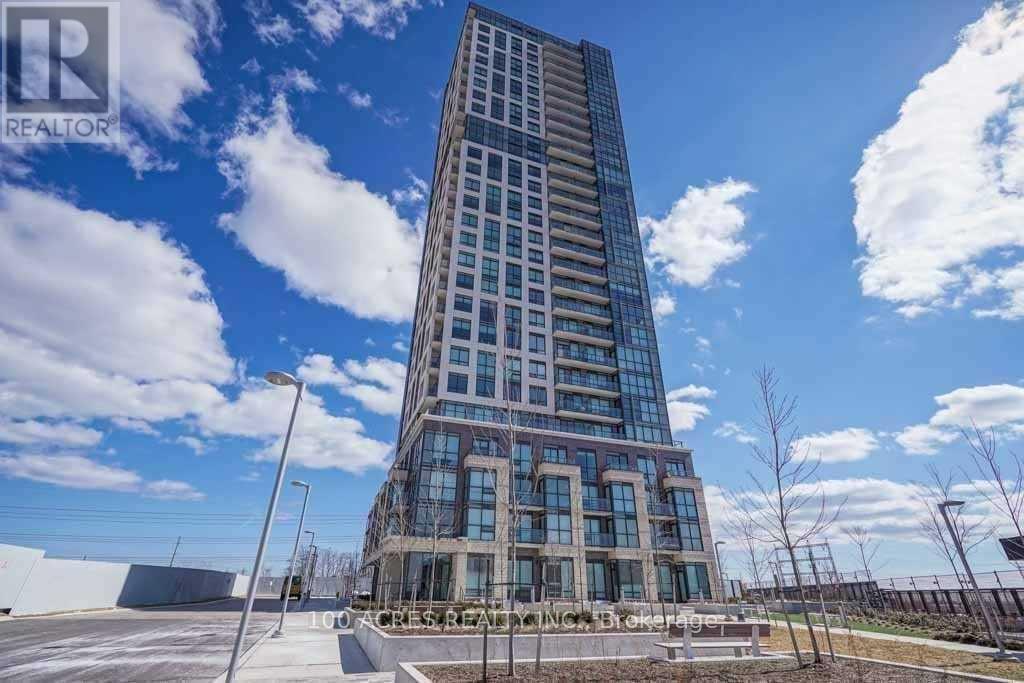 For Rent
 For Rent
 For Rent
 For Rent