
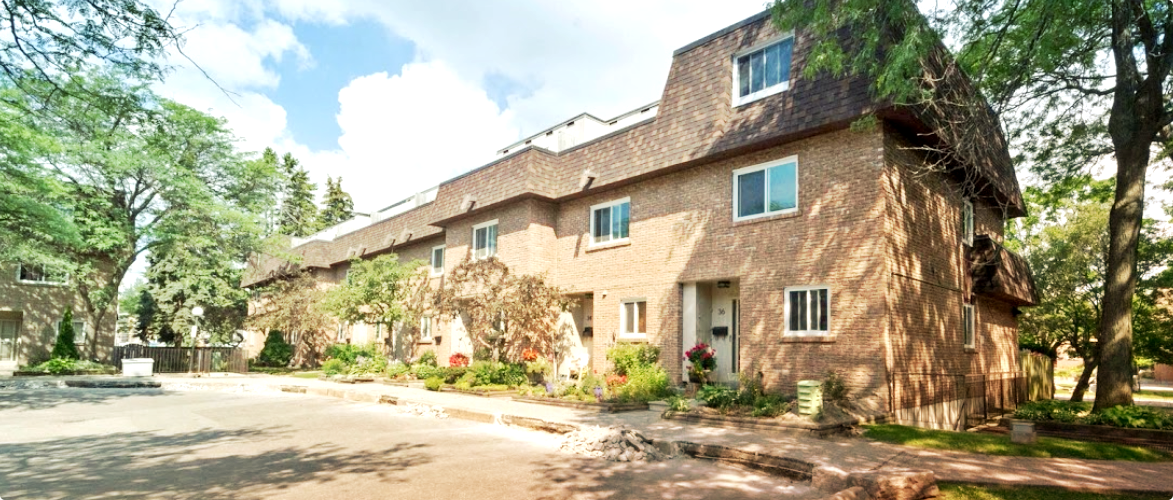
Manse Valley is a quiet, established neighbourhood in east Scarborough near the Highland Creek ravine and Morningside Park. Known for its postwar bungalows, low-traffic streets, and genuine green space access, with detached homes in the $850K to $1.3M range.
Manse Valley sits in the quieter, less-discussed part of east Scarborough, in the area where Morningside Avenue meets Kingston Road and the land drops into the Highland Creek and Morningside ravine systems. It’s not a neighbourhood that generates much attention in Toronto real estate conversations, which is part of why buyers who find it tend to feel they’ve found something real.
The area developed mostly in the 1950s through the 1970s, with the kind of established residential character that comes from homes and trees that have had time to settle into the land. Streets feel quieter than the arterials that bound the neighbourhood suggest. The ravine edges create a sense of separation from the surrounding city that’s unusual this far into the built-up suburbs, and on the streets backing or running near the ravine, you can walk into the trail system within a few minutes of your front door.
The housing mix is predominantly detached bungalows and raised bungalows, with a scattering of split-levels and two-storeys from the same postwar era. Lots are typically reasonable in size. The neighbourhood’s relative obscurity has kept prices honest: this is not a place where the name itself adds a premium. What you’re paying for is the physical reality of the streets, the proximity to the ravine, and a level of quiet that’s increasingly hard to find at this price point in the east end of Toronto.
Buyers who do end up here tend to be people who found it while looking at a map and then came to see it and liked what they found. Word of mouth plays a bigger role in driving interest here than it does in neighbourhoods with more marketing-friendly identities.
The homes in Manse Valley and the surrounding Morningside area are predominantly detached bungalows and raised bungalows from the 1950s through the 1970s, with split-levels and two-storey homes making up the rest. Lot sizes are generally in the 40 to 50 foot range on the wider streets, with some narrower lots on the crescents and courts.
The bungalows here follow the typical pattern for Scarborough postwar construction: a main floor with two or three bedrooms, kitchen, and living room, with a full basement below. Many have been finished over the years, with varying levels of quality. The better-finished basements include a bathroom and additional bedrooms; some have been used as rental units. As with all older housing in this part of Scarborough, the key question on any specific property is what’s been done and when: updated electrical, plumbing, roof, and windows significantly change the short-term cost of ownership.
The ravine-adjacent properties command a modest premium over comparables on less distinctive streets. The premium is real but not dramatic; this neighbourhood doesn’t have the profile to push ravine premiums to the levels you’d see in Rosedale or the Kingsway. A home backing onto the ravine edge in Manse Valley might be $75,000 to $125,000 more than a comparable bungalow without that exposure, depending on the specific lot and condition.
The price range for detached homes in 2026 runs roughly $850,000 to $1,300,000, with the lower end representing smaller bungalows in average condition and the upper end reflecting larger lots, updated homes, or ravine exposure. Semis, which are less common in this neighbourhood than detacheds, come in below those figures. There’s very limited condo or apartment product in the immediate area, which gives the neighbourhood a consistent ground-level residential character that many buyers specifically want.
The market in Manse Valley and the broader Morningside-Kingston Road area of east Scarborough behaves more predictably than in the higher-pressure parts of Toronto. Competition for well-priced homes exists, but it rarely reaches the bidding-war intensity common to neighbourhoods along or near subway lines. That predictability is useful for buyers who want to make thoughtful decisions rather than reactive ones.
Sales volume in this area is moderate. It’s not a neighbourhood where dozens of homes trade hands every month, which means the comparable sales data for any specific purchase is thinner than in a higher-volume market. Your agent needs to be able to interpret a smaller data set and look at a wider geographic area to establish value accurately.
The price range, from roughly $850,000 to $1,300,000 for detacheds, reflects the neighbourhood’s position in the broader Scarborough hierarchy: more expensive than Malvern and the further northeast communities, but below what comparable square footage would cost closer to the subway or the Bluffs. The upper end of the range reflects genuine outliers in condition or lot quality; most of the volume trades in the $850,000 to $1,100,000 band.
Rate sensitivity in this market is real. The buyer pool is primarily composed of family purchasers, many of them first-time buyers at the upper limit of their affordability. When rates rise, these buyers either wait or reduce their price ceiling, and the market softens. When rates fall or stabilize, activity picks up. This dynamic makes the market reactive to monetary policy in ways that more established, equity-rich markets are not.
Seasonal patterns follow the Toronto standard: spring and fall are the most active periods, summer slows down, and the January-to-March window before spring can produce motivated sellers. In a market with limited volume, patience and timing have an outsized effect on outcome compared to higher-velocity neighbourhoods.
The buyers who end up in Manse Valley tend to share a few things: they’ve been looking in east Scarborough for a while, they’ve figured out what they actually need versus what they initially thought they needed, and they’ve come to value quiet residential character more than walkability or proximity to entertainment.
Families with school-age children make up a significant portion of buyers. The neighbourhood’s established, low-traffic streets and the proximity to ravine trails offer a physical environment that’s genuinely good for children in a way that denser, more urban settings aren’t. The sense that kids can move somewhat freely in the immediate area matters to parents who grew up in places where that was normal.
Buyers moving out of rental apartments in east Toronto and Scarborough, often after years of looking and being outbid or priced out, find the Manse Valley price range achievable compared to Bluffs-adjacent neighbourhoods or anything west of Warden. They’re trading some of the east Toronto character they might prefer for the practical reality of what they can actually afford to own.
Buyers who work in the eastern suburbs, at the University of Toronto Scarborough, at Centennial College, or in the business parks and industrial areas along Kingston Road, find the location genuinely convenient. The commute calculation looks different when your workplace is in east Scarborough rather than downtown.
There’s also a demographic of buyers specifically drawn by the ravine. Trail runners, dog owners, cyclists who use the Highland Creek trail system, and people who simply value being near green water-edge environments consistently identify the ravine access as the decisive factor in their choice of this neighbourhood over comparable-priced options further north or west.
What this neighbourhood doesn’t attract is the buyer prioritizing nightlife, dense urban retail, or easy downtown access. Those buyers will find the combination of bus-dependent transit and quiet residential streets frustrating rather than appealing.
The most desirable streets in Manse Valley are those backing onto or running near the ravine system. Manse Road, which gives the valley its name, runs through the older core of the neighbourhood and has established tree canopy and well-maintained properties. The streets that branch off toward the ravine edge, including parts of Morningside and the quieter side streets between Morningside and Kingston Road, are where buyers specifically looking for the ravine experience should focus their search.
Kingston Road is the main commercial arterial at the southern edge of the area. It’s a busy road with a wide range of commercial uses, including the older strip-mall pattern that characterizes Kingston Road through east Scarborough. Properties fronting directly on Kingston Road are less desirable for residential purposes, not because of safety but because of noise and commercial character. The streets one to three blocks north of Kingston Road hit the sweet spot: close enough to access the commercial strip easily, far enough to feel residential rather than arterial.
Morningside Avenue itself, where it runs through this area, is a transit corridor and carries significant bus traffic. The residential streets to the east of Morningside, running toward Highland Creek, are generally quieter and more private. The streets to the west of Morningside have their own character, with slightly more apartment and higher-density housing mixed in.
The ravine edge itself creates some natural boundaries between the most sought-after pockets and the surrounding areas. Properties that look directly into the ravine have a genuinely different quality of life from those that back onto other homes, and the price differential reflects that. If ravine access is the reason you’re considering this neighbourhood, be specific about which streets deliver it. Not all addresses that mention Manse Valley or Morningside in real estate listings actually have ravine proximity.
The overall condition of the neighbourhood is stable. Properties are well maintained on most streets, and there’s no significant blight or visible deterioration in the established residential pockets.
Manse Valley and the Morningside-Kingston Road area are bus-dependent. There’s no subway within walking distance, and the nearest rapid transit is a meaningful bus ride away. The 116 Morningside bus connects north-south along Morningside Avenue to Kennedy station on Line 2 at the south end and to Scarborough town centre via buses at the north end. The 86 Scarborough bus runs along Kingston Road and connects to Kennedy station. Both routes operate on reasonable frequency during peak hours but thin out in evenings and on weekends.
From Kennedy station, the subway connects west to downtown. Total travel time from Manse Valley to downtown Toronto on transit runs between 50 and 70 minutes on a typical weekday, with most of that variability depending on wait times at transfer points. It’s a long commute by the standards of anyone used to living near a subway station, and buyers who commute daily to downtown need to account for it honestly.
Driving is faster for most trips, particularly off-peak. Kingston Road connects east to Port Union, Pickering, and Ajax, and west toward the Beach and downtown via Lake Shore Boulevard or the DVP. The 401, accessible from Morningside Avenue, handles longer-distance commuting north and east. Off-peak, downtown is about 25 to 30 minutes by car; in rush hour, that stretches to 45 minutes or more.
The GO Train is not directly accessible from Manse Valley without first taking a bus or driving to Rouge Hill station. That option exists for buyers commuting into Union Station and willing to make the connection, but it’s not as convenient as it is for households in Port Union and West Rouge, where the GO station is within closer reach.
For buyers who work in east Scarborough or Kingston Road commercial areas, the transit situation is much less of a problem than it would be for downtown commuters.
The Highland Creek ravine and Morningside Park are the defining green assets of this area, and they’re substantial. Morningside Park stretches along the Highland Creek valley for several kilometres and offers a connected trail system, picnic areas, sports fields, and wooded sections that feel genuinely natural rather than manicured. For a neighbourhood inside Toronto’s urban boundary, the scale and quality of this green corridor is unusual.
Trail access from the Manse Valley area connects into a larger network that runs along Highland Creek through Scarborough, ultimately reaching Rouge National Urban Park to the northeast. That connection means a serious trail user can walk or run for hours from a residential street in Manse Valley without repeating terrain. The Highland Creek trail is well-maintained by the City, well-used, and safe for solitary use during daylight hours.
Morningside Park itself has multiple entry points from the surrounding neighbourhood. The park includes formal picnic shelters that can be booked for larger gatherings, sports fields used by local leagues, and informal open areas that serve as de facto dog parks, though there are designated off-leash areas within the park as well. In winter, the park is used for snowshoeing and cross-country skiing when conditions permit, which they do with enough frequency to matter.
The Colonel Danforth Trail runs along parts of the Highland Creek corridor in this area and connects to other sections of Toronto’s waterfront and ravine trail system. Cyclists use it, though it’s not a high-speed cycling route; it’s more suited to recreational riding than commuting.
For buyers who weight outdoor access heavily, the ravine and park system adjacent to Manse Valley is a genuine competitive advantage over Scarborough neighbourhoods at similar price points that lack that kind of green infrastructure. It’s the feature that, once experienced, tends to seal the decision for the buyers it appeals to.
The retail and commercial options in the immediate Manse Valley area are modest. Kingston Road is the main commercial artery and has the characteristic east Scarborough strip mall pattern: a mix of independent businesses, fast food, service retailers, pharmacies, and grocery options that handle everyday needs without being particularly distinctive. The selection is functional rather than curated.
For grocery shopping, there are options along Kingston Road, including some supermarkets and independent stores in the Morningside-Kingston intersection area. The selection improves as you move west along Kingston Road toward the Beach or east toward Port Union, where larger grocery stores are accessible by a short drive.
Scarborough Town Centre, which has a full range of national retail, a large food court, and a cinema, is accessible by driving north on Morningside or by a bus route connection, and handles anything the local strip can’t. For more specialized grocery shopping, particularly Asian and South Asian food, the options along Sheppard and in the Milliken and Agincourt areas to the north are well-stocked and worth the drive.
Healthcare services in the area include a concentration of clinics and family practices along Kingston Road, consistent with the broader east Scarborough pattern. Scarborough General Hospital, now part of Scarborough Health Network, is accessible by car and provides emergency and acute care for the area.
The neighbourhood doesn’t have the independent restaurant and cafe scene that characterizes the Beach or East Danforth. Residents who prioritize that kind of walkable food and social environment will find Manse Valley disappointing on this front. The honest picture is that the local retail and food scene is adequate for practical purposes and unremarkable for anything beyond that. Buyers who can live without daily walkable cafe culture tend to find it a fair trade for what the neighbourhood delivers in other respects.
The schools serving the Manse Valley and Morningside-Kingston Road area fall within the Toronto District School Board and Toronto Catholic District School Board catchments for east Scarborough. The specific school an address feeds into depends on the exact location, and it’s worth confirming catchment assignments directly through the school boards rather than assuming based on neighbourhood name alone, since boundaries in this area can be irregular.
Sir Wilfrid Laurier Collegiate Institute is one of the secondary schools in the broader east Scarborough area serving some parts of this community. Cedarbrae Collegiate Institute is another option depending on the address. Both offer full academic programming. Like most Scarborough secondaries, their test scores are in the mid range for the city; they’re not the focus of the intense competition for catchment that drives buyers to specific addresses in, say, the Leaside or Forest Hill areas.
Elementary schools in the area include Joseph Howe Senior Public School and several smaller schools serving the residential catchments between Morningside and Kingston Road. Some have French immersion streams, which matters to families planning for that pathway.
The University of Toronto Scarborough campus is in the area, roughly a 10-to-15-minute drive north on Morningside. While it’s not relevant for families with young children right now, it creates a permanent post-secondary anchor in the broader neighbourhood that sustains some of the area’s rental market and contributes to the long-term stability of the east Scarborough residential environment.
Centennial College’s Morningside Campus is similarly proximate and is relevant for families whose children are considering trades, technology, or practical vocational paths. Both institutions are good neighbours from a neighbourhood planning perspective: they generate foot traffic, employment, and local spending without the disruption patterns associated with some other institutional uses.
The Manse Valley and Morningside-Kingston Road area has seen limited new development compared to the rest of Scarborough, and that’s largely a function of what’s available to develop. The ravine system constrains buildable land, the existing residential streets are well-established, and there aren’t large underused parcels of the kind that attract condo developers. The neighbourhood’s relative stability in terms of built form is likely to continue in the medium term.
Kingston Road is the corridor with the most development potential in the area. Provincial and municipal planning policy pushes density toward major arterials, and Kingston Road qualifies. There have been some mixed-use proposals along the Kingston Road corridor between Morningside and Port Union over the years, though the pace of change has been slow. More development has materialized further east toward Port Union than in the central Manse Valley section.
The City of Toronto’s planning for the Kingston Road and Morningside area contemplates a transit-supportive urban street form along the arterial while maintaining the residential character of the streets behind it. In practice, that means there’s some potential for infill and intensification along Kingston Road, but the established bungalow streets to the north are not on the radar for wholesale change.
The Scarborough Subway Extension, while primarily relevant for north Scarborough, will affect the entire east end’s real estate dynamics as it progresses toward completion. Areas that can offer reasonable transit access to the extended line will see increased buyer interest. Manse Valley’s position, several kilometres from the planned stations, means it will see indirect rather than direct benefit.
For buyers, the stable development picture is mostly reassuring: the neighbourhood you’re buying into today is likely to look similar in 10 years. The risk of a major change in character from new development is lower here than in many other parts of Scarborough.
What exactly is Manse Valley, and where is it?
Manse Valley is a loosely defined community in east Scarborough, centred around the Manse Road area and the ravine system where Highland Creek runs south toward Lake Ontario. It sits roughly at the intersection of Morningside Avenue and Kingston Road, and the defining geographic feature is the ravine and valley terrain that separates it from the more uniformly suburban streets to the north. The name refers more to a physical and community identity than to a strictly bounded planning district, and listings in this area sometimes use “Morningside” or “Manse Valley” interchangeably. When buying, confirm the exact address and its relation to the ravine and transit routes rather than relying on the neighbourhood name alone.
Is the ravine actually accessible, or is it just visible from backyards?
It’s genuinely accessible. Morningside Park has formal entry points from Morningside Avenue with maintained trail infrastructure, and several of the neighbourhood streets have informal access points where the trail system begins. The Highland Creek trail connects through the park and extends further in both directions. That said, not all homes described as “ravine adjacent” deliver equal access. Some properties back onto a ravine edge but have limited practical access to trails from the property itself. It’s worth walking the specific access points near any property you’re seriously considering rather than assuming a listing description captures the full picture.
How do prices here compare to the Bluffs?
The Bluffs area, particularly Birch Cliff and Cliffside, consistently prices higher than Manse Valley for comparable home types. The Bluffs benefit from proximity to the Beach neighbourhood’s reputation, stronger walkability, and a more established gentrification narrative. Manse Valley offers more house or lot for similar money, plus the ravine access that’s different from but not necessarily inferior to blufftop proximity. Buyers priced out of Birch Cliff often find Manse Valley an honest alternative once they’ve seen it in person.
What are the main things to check before buying in this area?
Age and condition of the mechanical systems matters on any Scarborough bungalow from the 1960s and 70s. Specifically: the electrical panel and whether aluminum wiring is present in the home’s branch circuits (common in homes built 1965-1975 and an insurance concern), the state of the plumbing, and whether any basement finishing was done with permits. Ravine-adjacent properties need a specific look at drainage and any history of water ingress. The TRCA (Toronto and Region Conservation Authority) has jurisdiction over properties within the ravine flood plain, and any renovations or additions near the ravine require their approval in addition to a city building permit. Confirm whether the property you’re considering falls within the TRCA regulated area before assuming you can build an addition or finish the backyard as you’d planned.
Manse Valley rewards buyers who are specific about what they want. If the ravine access is the primary draw, your agent needs to know which streets actually deliver it and be able to guide you toward properties where the access is genuine rather than nominal. If it’s the quiet residential character, they need to know which parts of the neighbourhood have the most stable, well-maintained blocks. The neighbourhood name alone doesn’t tell you enough.
The TRCA regulated area issue mentioned in the FAQ section is genuinely important to navigate before purchase. An agent who knows east Scarborough will be able to tell you quickly whether a specific property is within the regulated area and what that means for your renovation plans. Getting this wrong by discovering TRCA jurisdiction after you’ve bought is the kind of frustration that’s entirely avoidable with the right preparation.
Comparable sales data in this neighbourhood is thinner than in higher-volume markets, which means establishing accurate value requires looking at a broader set of comparable properties across east Scarborough rather than relying on a tight local comparison set. An agent doing this well will have a clear methodology for setting price ranges when the local data is limited.
Conditional offers, including financing and inspection conditions, are worth pushing for in this market. The area’s sales pace allows it in most cases, and the age of the housing stock makes a professional home inspection genuinely informative rather than merely procedural. The inspection should include a specific look at the items relevant to this era and type of construction: electrical, plumbing, drainage, and the state of any basement finishing.
If you’re considering this area as part of a broader search across east Scarborough, comparing Manse Valley against Guildwood, Manse-Midland, and west Rouge helps clarify whether the specific combination of ravine access and price point here is the right fit relative to the alternatives. TorontoProperty.ca works across all of these communities. Get in touch to start the conversation.
Street-level knowledge is hard to find online. Our team works in Manse Valley every day. They know which pockets hold value, where the school catchment lines actually fall, and what the market is doing right now. Talk to us before you make a decision about Manse Valley.
Talk to a local agent