
Mississauga is one of the two big cities west of Toronto, with about 780,000 people on the Lake Ontario shore and Brampton, now slightly larger, directly to its north. Toronto buyers come here for a detached house with a garage and a yard at a price Toronto no longer offers, and from Port Credit the train to Union takes 30 minutes. A house here costs roughly a fifth less than the Toronto average and a condo about a sixth less.
Mississauga sits on the north shore of Lake Ontario between Etobicoke and Oakville, with Brampton to the north and Pearson airport inside the city limits in the northeast corner. It covers about 292 square kilometres, and the 2021 census counted 717,961 people. Statistics Canada’s estimate had passed 780,000 by 2024.
It became a city in 1974 by joining a string of older villages and townships: Port Credit and Clarkson on the lake, Streetsville and Meadowvale on the Credit River, Malton by the airport, Cooksville and Dixie along the old Dundas highway. Those villages are still the parts of the city with a main street and a reason to walk. Everything between them was built from the 1960s onward as suburb, and you drive to most of it. Hazel McCallion was mayor for 36 of those years, from 1978 to 2014, and the wide roads, the plazas and the single-family subdivisions are her legacy.
Mississauga’s market is about half houses and half condos, with far more of both than any other GTA city outside Toronto. A freehold house here costs roughly a fifth less than the Toronto average and a condo about a sixth less, and that gap has held through rising and falling markets. It is what starts most searches here. The live figures for the city sit beside this text and update every day.
It isn’t one market. Lorne Park and Mineola on the lake price above the Toronto freehold average. City Centre and Mississauga Valleys are condo markets where a two-bedroom costs a fraction of a house anywhere else in the city. Malton and Applewood are the cheapest places in Mississauga to buy a detached house.
Houses and condominiums come to market here in roughly equal numbers. Mississauga built single-family subdivisions for forty years, then from the late 1990s built towers around Square One and along Hurontario Street, and a buyer today has as much choice of one as the other.
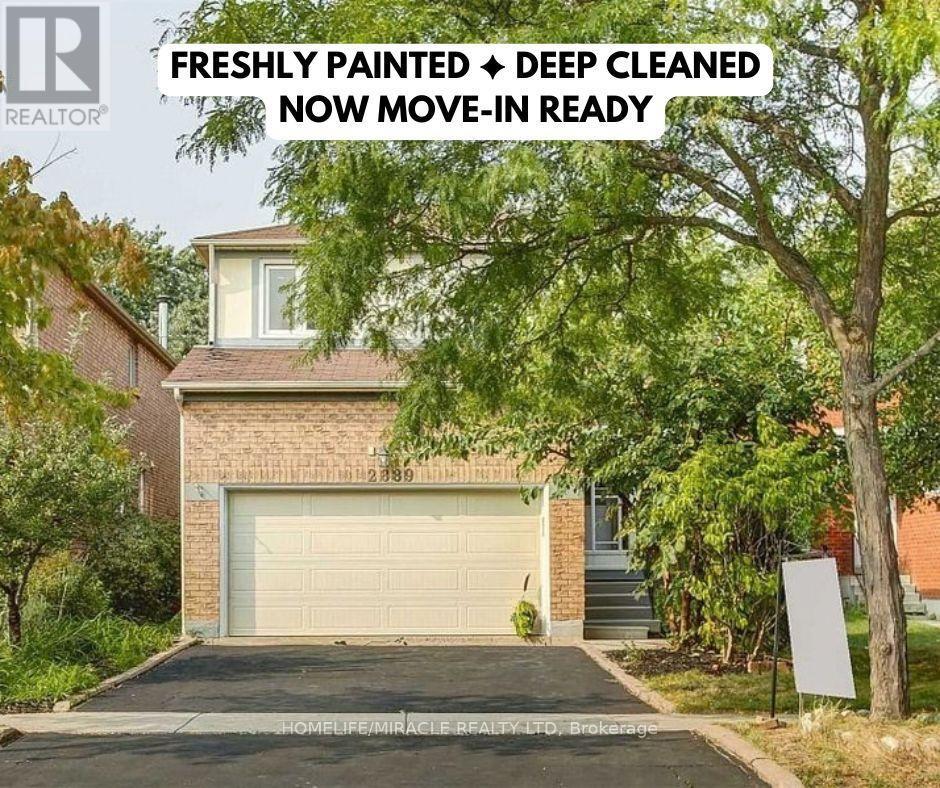
Most freehold houses are detached. The 1950s and 1960s bungalows and side-splits of Applewood, Cooksville, Lakeview and Clarkson sit on wide lots, and builders buy them for the land. The 1970s and 1980s two-storeys of Erin Mills, Meadowvale and Rathwood are four-bedroom family houses on curving crescents with a double garage out front. The 1990s and 2000s subdivisions of Churchill Meadows, Lisgar, East Credit and Hurontario are larger again, more tightly packed, and built with the finished basement and the second ensuite that buyers of that era wanted. Across the city a four-bedroom costs about a quarter more than a three-bedroom, and a five-bedroom roughly double, with that top band pulled up by the estate lots of Lorne Park and Mineola.
Townhouses are a bigger part of the market here than in Toronto. Freehold towns from the 1980s onward fill the gaps between the detached pockets, and condominium townhouses, where a corporation owns the common ground and charges you a monthly fee, are common across Erin Mills, Meadowvale and Churchill Meadows. Listings show both under the same heading, so read carefully: a townhouse with a monthly fee is a different purchase from a freehold at the same price.
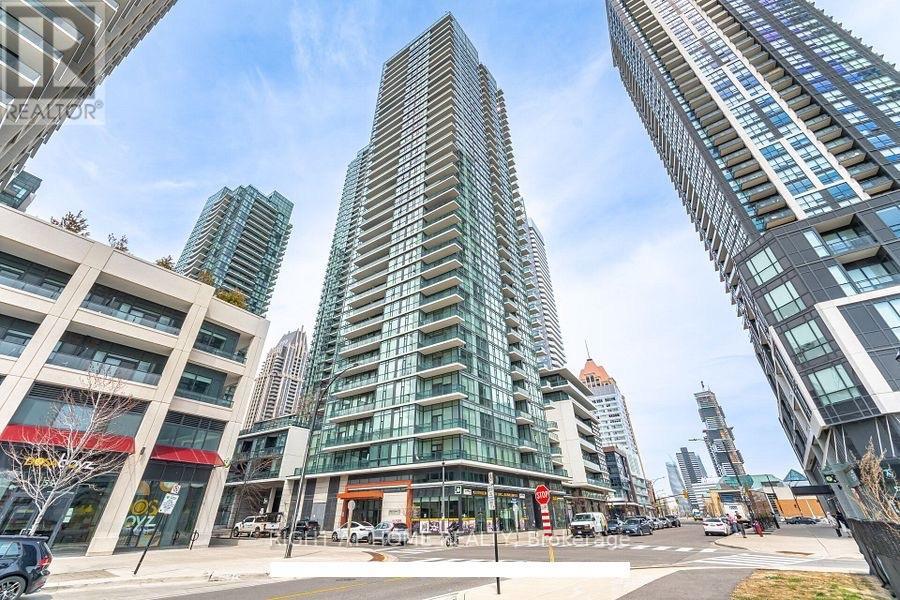
Condominium apartments are concentrated in City Centre around Square One, down Hurontario Street through Cooksville, and in the newer towers along the Lakeshore in Port Credit and Lakeview. Three-bedroom condos are as common here as two-bedrooms, which is rare in the GTA, so a family priced out of a freehold has somewhere to look. The City Centre stock splits into the 1990s buildings on Webb Drive and Burnhamthorpe, with large suites and higher fees, and the post-2010 towers, with smaller suites, lower fees and more amenity floors. The spread between the cheapest and dearest City Centre condo is about four to one.
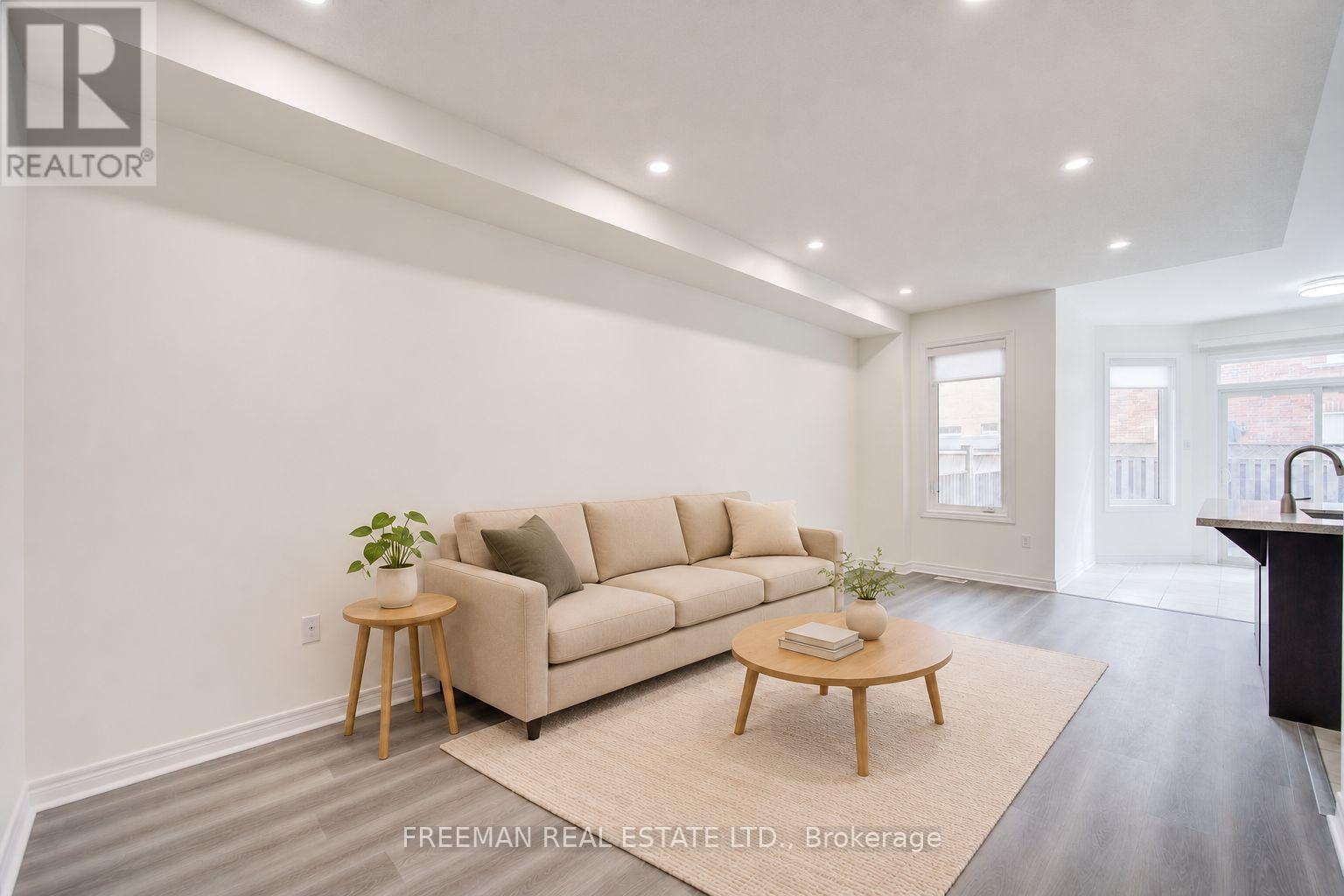
Renting is the other route in. Mississauga has a large rental market in both condos and houses, and a house rents for roughly 15 percent more than a condo. If you’re moving from Toronto and want to rent for a year before you buy, the listings for rent show today’s asking rents by neighbourhood.
Mississauga moves with the Toronto market. The same interest rates, lending rules and buyers set prices on both sides of Etobicoke Creek, so the two cities rise and fall together. What changes is the gap between them, 22 percent on freehold houses today. Watch that figure rather than either price on its own: if it narrows, the discount you came here for is shrinking.
The freehold market is a spring and fall market. Family houses in Erin Mills, Lorne Park and Churchill Meadows list from late February to May and again from September to early November, timed to the school year. Over summer and from mid-December to late January, listings thin out and the houses that remain are the ones that didn’t sell. If you can buy in July or January you’ll have less to choose from and more room to negotiate.
The condo market runs all year and moves more slowly. City Centre has more listings than any other neighbourhood in the city and the lowest average price. A buyer there has choice and can take time. A seller there is competing with the building next door and with the towers still going up around Square One.
Teardown lots are a market of their own. In Mineola, Lorne Park, Lakeview and parts of Clarkson and Applewood, a 1950s bungalow on a wide lot is bought for the land and replaced with a house two or three times its size. Those lots sell on frontage, not on the house standing on them, and the custom builds that follow are what put those neighbourhoods above the Toronto average. If you want one of those bungalows to live in, you’re bidding against builders who don’t care about the kitchen.
The Hazel McCallion LRT on Hurontario Street, now expected to reach substantial completion in spring 2028, will put a rail stop within a ten-minute walk of the City Centre and Hurontario towers. Two-way all-day GO service on the Milton line, still at the business-case stage, would do the same for Streetsville, Erindale and Cooksville. The LRT date has already slipped and the Milton line has no date at all, so don’t pay a premium for either yet.
A lot of Mississauga’s buyers already live in Mississauga. Children who grew up in Erin Mills buy in Churchill Meadows. Empty-nesters sell the Lorne Park house and buy a condo in Port Credit down the road. Buyers from Toronto, many of them from Etobicoke and the west end, come for the house, for a job that was never downtown, or for family.
A four-bedroom house here costs less than the average Toronto freehold of any size. For a family with two children and two cars that isn’t a hard choice. Pearson, the two hospitals and the office parks along the 401 and 403 employ people who’d be driving out of Toronto every morning if they lived there. Mississauga also has large, long-established South Asian, Chinese, Polish, Portuguese, Arab and Filipino communities, so a lot of buyers are moving closer to parents or siblings who are already here.
Outside Port Credit and Streetsville, you drive to everything. Restaurants, cinemas and shops sit in plazas and malls rather than on streets. A night out in Toronto means a GO train with a last departure to think about, or a long cab ride home. For the family that wants the house and has a car for each adult, those trade-offs are easy. A couple who walks to dinner three nights a week should look at Port Credit or Streetsville and nowhere else, or stay in Toronto.
Mississauga is also where many newcomers to Canada buy a first home. Malton, Cooksville, Hurontario and Mississauga Valleys have long been first-purchase neighbourhoods, and a registered basement apartment, which the city allows, helps carry a lot of those first mortgages. If a listing counts rent from the basement, ask to see the registration.
This site has a page for each of Mississauga’s twenty-seven neighbourhoods. Here they are, from the lake northward.
On the lake, Port Credit is the walkable village, with a main street, a marina, a GO station and the Brightwater redevelopment filling the old refinery lands to its west. It has condos at one end of the price range and lakefront houses at the other. Lorne Park west of it is the city’s most expensive address, with estate lots under old trees and no sidewalks. Mineola east of the Credit River is the same idea, where the bungalows are becoming custom builds.
Clarkson at the Oakville border has 1950s ranch houses, a GO station and the Rattray Marsh. Lakeview east of Port Credit is mid-priced for the lakeshore, with the 177-acre Lakeview Village rising on the old power station site, and Sheridan north of Clarkson is a quiet 1960s pocket with a few very large properties.
Along Dundas Street, the city’s old east-west spine, Cooksville is the historic centre, a wide spread of 1950s houses and Hurontario towers with a GO station on the Milton line. Erindale sits on the Credit River west of it, with the university campus and the largest park in the city. Dixie and Applewood east of Cooksville are post-war bungalow country and some of the best value in detached houses. Fairview and Mississauga Valleys sit between Dundas and the core; the Valleys is a condo and townhouse market.
In the centre, City Centre is Square One and the towers around it, almost entirely condominiums, the cheapest neighbourhood in the city and the place the LRT and the Square One District redevelopment will change most. Hurontario runs north from there, a mix of 1990s subdivisions and new towers on the LRT route. Rathwood east of the core is a 1970s and 1980s family neighbourhood, and Creditview west of it has a large townhouse stock.
West of the Credit River, Erin Mills and Central Erin Mills are the big 1970s to 1990s planned suburbs around the Erin Mills Town Centre and Credit Valley Hospital, and they’re where a Toronto family looking for a four-bedroom should start. Churchill Meadows and Lisgar further west are the newest subdivisions, built after 1995, with Lisgar GO at the edge. East Credit north of the 403 has a long run of 1990s executive houses.
To the north, Streetsville is the other village, on the Credit River and older than Mississauga itself, with a main street and a GO station. Meadowvale is the 1970s new town around its own lake and town centre, with a lot of townhouses, and Meadowvale Village north of it is the preserved nineteenth-century hamlet with newer subdivisions around it. Malton in the northeast corner by the airport has the lowest house prices in the city, and Gateway beside it is mainly the employment lands south of Pearson. Airport Corporate is industrial and office land with almost no housing.
Each page covers the streets, the schools, the transit and what houses on those streets have sold for.
Two GO lines serve the city. The Lakeshore West line runs through Port Credit and Clarkson with trains every 30 minutes all day in both directions and every 15 minutes on weekend afternoons and evenings. Port Credit to Union takes 25 to 30 minutes.
The Milton line runs through Dixie, Cooksville, Erindale, Streetsville, Meadowvale and Lisgar, and it’s a peak-direction service only: trains to Union in the morning, trains back in the afternoon, nothing midday and nothing on weekends. The province has committed to two-way all-day service on the Milton line, with a business case estimating $6.2 billion of track work on a corridor owned by the freight railway CPKC, but there’s no construction date. Buyers in Streetsville or Erindale who count on the GO should plan around the current schedule, not the promised one.
The QEW runs along the lake, the 403 cuts through the middle of the city, the 401 crosses the north and the 407 toll highway skirts the top edge. Highway 410 runs north to Brampton. The QEW through Etobicoke is the slow part of any morning drive downtown. Pearson is inside the city limits, a daily convenience for anyone who flies for work.
Inside the city, MiWay runs the buses. Its Transitway is a dedicated busway along the 403 from Winston Churchill Boulevard to Renforth, where MiWay meets the TTC. The Hazel McCallion LRT will run 18 kilometres up Hurontario Street from Port Credit GO to the Brampton Gateway Terminal with 19 stops, passing Cooksville GO, Square One and the City Centre towers. Nine of the 19 platforms are built, and Metrolinx told city council in 2026 to expect substantial completion in spring 2028, later than first promised. When it opens it will be the first rail transit the middle of the city has ever had.
Cycling is possible on the Waterfront Trail and the Culham Trail along the Credit River, and on a growing network of painted lanes, but most of the city was laid out without it in mind, and arterial roads like Dundas, Burnhamthorpe and Eglinton are wide and fast.
The Waterfront Trail runs about 22 kilometres through Mississauga, from Etobicoke Creek to the Oakville border, and connects a chain of public parks. From the east: Marie Curtis Park, Lakefront Promenade with its marina and splash pad, the 45 acres of new parkland being built into Lakeview Village, then Port Credit harbour with its lighthouse and J.C. Saddington Park. Further west come Rhododendron Gardens, Jack Darling Memorial Park with its beach and off-leash area, and Rattray Marsh Conservation Area in Clarkson, a boardwalk through one of the last lakefront wetlands on this stretch of shore.
The Credit River is the city’s other green corridor, running from the north boundary down through Meadowvale, Streetsville and Erindale to the lake at Port Credit. Erindale Park on its banks is the largest park in the city, with the Culham Trail following the river for most of its length. The Riverwood Conservancy south of Burnhamthorpe is 150 acres of forest and formal garden with a working education program. Salmon run up the river each fall and people line the banks at Erindale to watch.
Away from the water, the city has the generous suburban park supply of a place planned in the 1970s: neighbourhood parks a few blocks from most houses, community centres with pools and rinks, and large sports parks at Iceland and the Paramount Fine Foods Centre. Kariya Park next to Square One is a Japanese garden, the quietest place in City Centre. Lake Aquitaine and Lake Wabukayne in Meadowvale are stormwater ponds that have become the centres of their neighbourhoods. The golf courses are Credit Valley and the Mississaugua Golf and Country Club, both private, and Lakeview in the east end, which is public.
Square One is one of the largest shopping centres in Canada. In 2026, it’s adding a Tiffany store and a larger Rolex boutique as its owner, Oxford, repositions it for the 18,000 homes planned around it. Erin Mills Town Centre serves the west, Dixie Outlet Mall the southeast, and Heartland Town Centre at Mavis and Britannia is the big-box power centre where the city buys its appliances and furniture.
The two villages are where you eat on a street. Port Credit’s Lakeshore Road is lined with restaurants and patios, and Brightwater’s first restaurant, Mercato Centrale, opened on the new west end of it in early 2026. Streetsville’s Queen Street is a smaller version with the same idea. Outside those two, the city’s food is in its plazas, and that food is very good. The Dundas and Hurontario corridors through Cooksville are dense with South Asian restaurants and grocers, Malton the same, and Chinese, Middle Eastern, Polish and Portuguese bakeries and restaurants cluster around the communities that run them.
Trillium Health Partners runs the Mississauga Hospital on Queensway in Cooksville and Credit Valley Hospital in Erin Mills. The Mississauga Hospital site is being rebuilt as the Peter Gilgan Mississauga Hospital, 22 storeys and more than 950 beds, the largest in Canada when it opens in 2034. Construction started in June 2025 and concrete was pouring by June 2026.
Most of the city’s jobs are inside the city: Pearson airport and the office and logistics belt around it along the 401, 409 and 427, the corporate campuses of the Meadowvale Business Park and the Airport Corporate Centre, the two hospitals, the university and Sheridan College’s Hazel McCallion campus in City Centre. A lot of households here have one partner working in Mississauga and one commuting to Toronto, and they choose their neighbourhood for the GO station.
The Peel District School Board runs the English public schools and the Dufferin-Peel Catholic District School Board the English Catholic ones. Both offer French immersion from Grade 1 at designated schools. The French-language boards, Viamonde and MonAvenir, each have schools in the city too.
Port Credit Secondary runs the SciTech regional program, Gordon Graydon Memorial in Dixie offers the International Baccalaureate, Cawthra Park Secondary in Lakeview is the board’s regional arts school, and Glenforest in Rathwood and John Fraser in Erin Mills run IB and Advanced Placement. Those regional programs take students by application from across the board, so buying next door to one doesn’t get your child a place. Buyers with children ask about Lorne Park Secondary, Streetsville Secondary and Stephen Lewis in Churchill Meadows. Families who want a Catholic school look at St. Francis Xavier, Loyola in Erin Mills and Iona in Lakeview.
Boundaries are drawn by the board, redrawn when a new school opens, and they don’t follow neighbourhood names. A house on one side of a crescent can feed a different elementary school from the house opposite. Both boards publish an address lookup. Check the listing agent’s school claim against it before you offer, not after.
The University of Toronto Mississauga campus in Erindale had 17,361 students in 2025-26. If you’re buying near the campus or along Dundas, expect student rentals on the street. Sheridan College’s Hazel McCallion campus is in City Centre beside Square One.
Lakeview Village is the 177-acre site of the old Lakeview coal-fired generating station on the waterfront east of Port Credit. The province’s zoning order allows up to 16,000 homes, with 800 of them affordable or attainable, and around 45 acres of new parkland. Six builders are on the first phase, Tridel broke ground on the first tower in October 2024, and first occupancy is now expected in early 2029. It puts housing on a stretch of waterfront that was fenced off as a power station for decades.
Brightwater is the 72-acre former Imperial Oil refinery site on the west side of Port Credit, now the Port Credit West Village. The first two condo towers are registered and occupied, The Mason has begun occupancy, and Bridge House, the next three towers, is in sales with occupancy projected for 2028. The development is in the third of six phases and includes 300,000 square feet of restaurants and shops along a new extension of the village’s streets, so the village is growing westward.
Square One District is Oxford Properties and AIMCo’s 130-acre redevelopment of the shopping centre’s parking lots into 37 towers and more than 18,000 homes, over half of them purpose-built rentals, around a transit hub on the LRT. A 47-storey tower with 518 units was proposed for the next block in April 2026. It’s a multi-decade project, and it will turn City Centre from a mall with condos around it into a downtown.
Behind those sit the Hazel McCallion LRT, due in 2028, and the new hospital, due in 2034. A buyer who wants in before any of it finishes should look at Cooksville, Lakeview and the Hurontario corridor north of the 403, where those projects land.
Is Mississauga cheaper than Toronto?
Yes, by about a fifth for a house and about a sixth for a condo, and that gap has held through rising and falling markets. The reason is land: Mississauga has more of it per house, and the four-bedroom detached with a double garage that is the city’s standard family home does not exist at a comparable price inside Toronto. The gap disappears in the lakefront neighbourhoods. Lorne Park and Mineola sit above the Toronto freehold average, because in character they’re the same kind of place as Toronto’s best residential streets. The condo gap is narrower than the house gap because the city keeps building condos, and City Centre alone usually has more for sale than any Toronto neighbourhood outside the downtown core. Two costs run the other way. Property tax on the same assessed value is set by the city and the Region of Peel together, and the combined 2026 increase was 5.21 percent, about $54 more per $100,000 of assessment. And many households here run a second car, which CAA puts at roughly $9,500 a year for a mainstream compact, money a downtown household doesn’t spend. Put both into the monthly budget before you compare the two mortgages. The live prices for the city and for each neighbourhood sit on their pages and update daily.
How long is the commute from Mississauga to downtown Toronto?
It’s 25 to 30 minutes by train if you live near Port Credit or Clarkson GO, and a good deal longer from anywhere else. Those two stations are on the Lakeshore West line, with trains to Union every 30 minutes all day and every 15 minutes on weekend afternoons and evenings. A house within a ten-minute walk of Port Credit GO has a shorter door-to-door commute to Bay Street than a lot of houses inside Toronto. From Streetsville, Erindale, Cooksville or Meadowvale on the Milton line, the train takes longer and runs only toward Toronto in the morning and back in the afternoon, with no midday or weekend service, so anyone with irregular hours ends up driving. Two-way all-day service on that line is a provincial commitment with a $6.2 billion business case and no start date, and the corridor belongs to the freight railway CPKC, not to Metrolinx. If you drive, the QEW through Etobicoke is the usual bottleneck at 8am, and from Malton or Meadowvale the route is the 401 and 427. The Hazel McCallion LRT, when it opens in 2028, will connect the middle of the city to Port Credit GO and Cooksville GO. A great many condo residents who drive to the GO today will be able to walk to an LRT stop instead.
Which Mississauga neighbourhoods are best for families?
The ones families choose are Erin Mills, Central Erin Mills, Churchill Meadows, Lisgar, East Credit, Lorne Park and Streetsville. The reasons are the same in each: detached four-bedroom houses, a school with a good reputation inside walking distance, a community centre with a pool and rink, and quiet crescents with no through traffic. Erin Mills and Central Erin Mills, built from the 1970s to the 1990s around Erin Mills Town Centre and Credit Valley Hospital, are the largest supply of that kind of house, and John Fraser Secondary is the school people name. Churchill Meadows and Lisgar further west are newer, from 1995 onward, with Stephen Lewis Secondary and smaller lots at a similar price. East Credit north of the 403 has the biggest 1990s houses. Lorne Park is the premium version, with Lorne Park Secondary and lots that back onto ravine, at roughly double the price of Erin Mills. Streetsville gives a family a real village main street along with the house. School boundaries decide more than neighbourhood names do, and both school boards publish an address lookup; check it for the house, not the neighbourhood. Families with younger children also look hard at Meadowvale, whose 1970s townhouses and semis around Lake Aquitaine are where many of them can afford to start.
Is Mississauga a good place to buy a condo?
It’s a good place to buy a condo to live in and a harder place to buy one as an investment, and the difference is supply. The city has built towers around Square One and along Hurontario Street since the late 1990s and is still building, with the Square One District alone planning more than 18,000 units. A buyer has a wide choice, and City Centre is the cheapest neighbourhood in the city. For an owner-occupier that’s the point: a two-bedroom in City Centre comes with a walk to Square One, a Sheridan campus and, from 2028, an LRT stop, for well under the price of any house in Mississauga. For an investor, the same supply is the problem. The building next door is always selling too, and rent has to cover a mortgage, a fee and property tax at today’s rates. The condos hardest to replace are the ones to look at: the Port Credit and Lakeview buildings near the Lakeshore line, the lower-rise buildings in Erin Mills and Streetsville, and the older City Centre buildings on Webb Drive with large suites, if the fee checks out. Read the status certificate, work out the maintenance fee per square foot, compare it with the buildings on either side, and treat a fee well above theirs as needing an explanation before you offer.
Mississauga is 292 square kilometres and twenty-seven neighbourhoods with very little in common. A Toronto agent who knows Roncesvalles won’t know which side of a school boundary a crescent in Erin Mills falls on, which Mineola bungalows are really lot sales headed for a builder, or which City Centre buildings have a reserve fund problem.
The agent we refer Mississauga buyers to works these neighbourhoods. Tell them what you need: a house with a garage within walking distance of a Lakeshore line station, a condo with a low fee near the LRT route, a lot in Lorne Park to build on. They’ll tell you which neighbourhoods to look at, which to skip, and why. They’ll pull the sold history for any street you ask about, flag the school boundary before you fall in love with a house on the wrong side of it, and tell you when a listing is priced to start a bidding war rather than to sell.
Start with the neighbourhood pages linked above. When you’re ready to see houses, get in touch, and we’ll connect you with the local agent for the areas that fit.
Street-level knowledge is hard to find online. Our team works in Mississauga every day. They know which pockets hold value, where the school catchment lines actually fall, and what the market is doing right now. Talk to us before you make a decision about Mississauga.
Talk to a local agent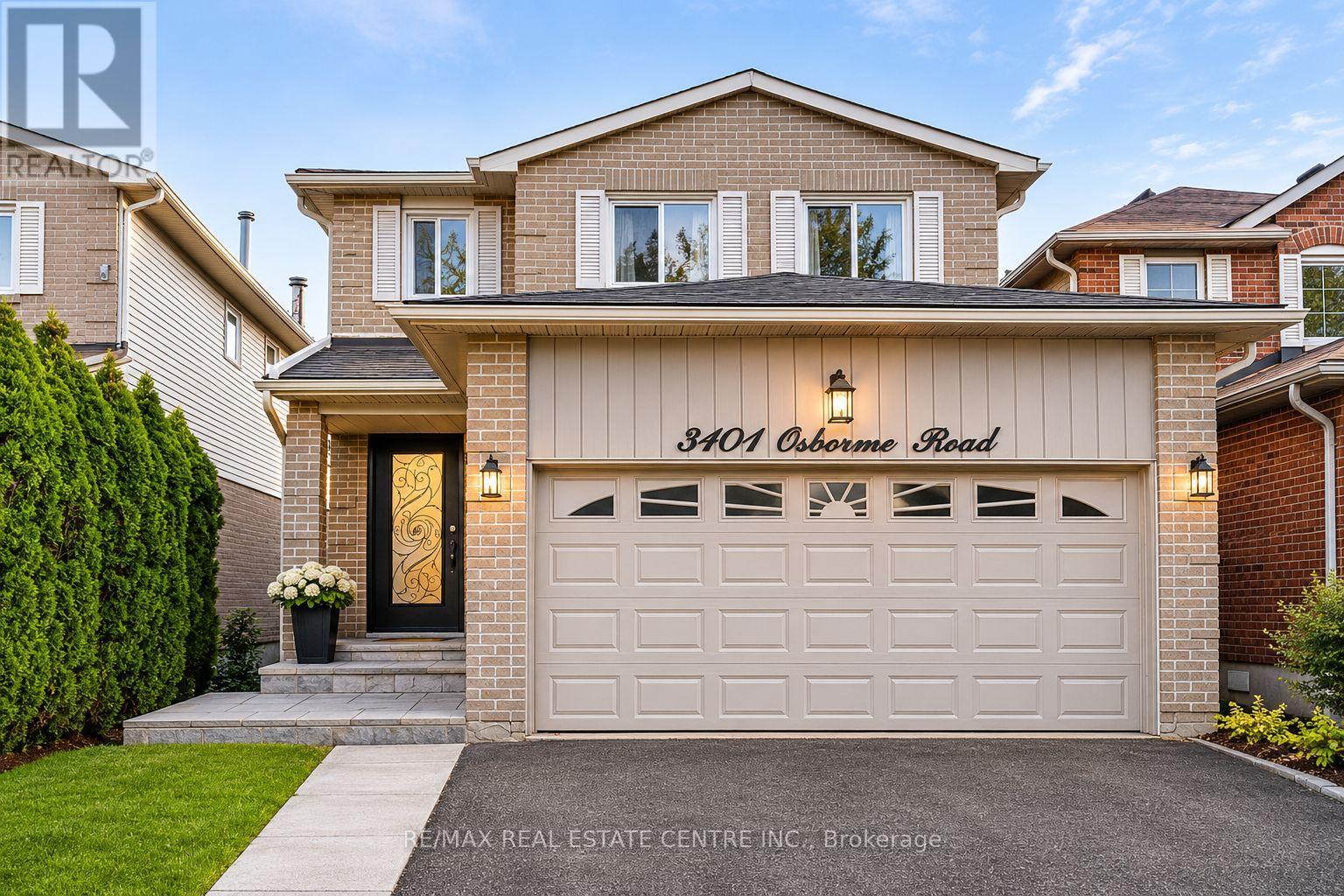 For Rent
 For Rent
 For Rent
 For Rent