
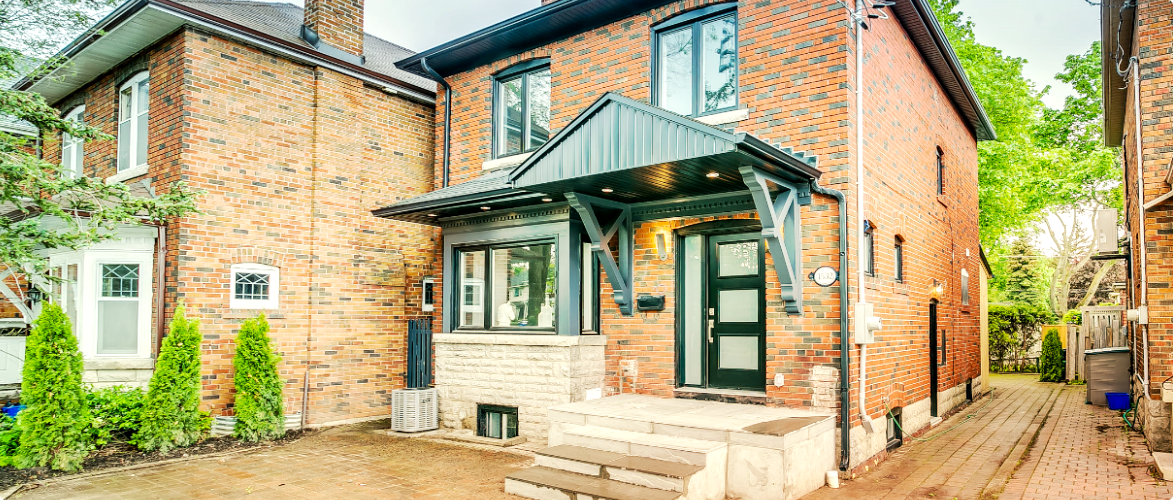
Mount Pleasant is a midtown residential neighbourhood running along Mount Pleasant Road between Davisville Avenue and Eglinton Avenue East, with detached homes from the 1920s through the 1950s set on tree-lined streets that see very little turnover. Detached homes start around $2 million and reach $4 million and above on the larger lots, with some semis in the lower blocks from $1.5 million. The cemetery on the west side of Mount Pleasant Road is a walking green space that residents treat as a park, and North Toronto Collegiate Institute is the secondary school that draws families from across the area.
Mount Pleasant Road runs north from Davisville Avenue to Eglinton Avenue East, and the residential neighbourhood that takes its name from the road spreads east and west along the cross streets: Soudan, Merton, Hillsdale, Roehampton, Manor, and Broadway. These are quiet, heavily treed streets built out in the 1920s through 1950s, with large single-family homes set well back from the road on lots that have generous frontages by Toronto standards. The road itself is not a commercial strip, which defines the neighbourhood’s character: this is a place people come home to, not a place people pass through looking for restaurants.
The west side of the neighbourhood borders Mount Pleasant Cemetery, one of the largest cemeteries in Canada and a genuine landscape feature that functions as informal parkland for residents. The cemetery is open to pedestrians and cyclists during daylight hours, and on weekday mornings the paths are busy with walkers, joggers, and cyclists who use it as a quiet route away from traffic. The mature canopy across the cemetery’s 89 hectares extends over the adjacent streets, and properties backing or siding onto the cemetery boundary often have a greenbelt quality that’s rare for midtown Toronto.
At the southern end, the neighbourhood transitions into Davisville Village around the Davisville subway station, where Yonge Street picks up and the scale shifts to apartment towers and commercial uses. At the northern end, the Eglinton Crosstown LRT connection is now operational, adding rapid transit access along the Eglinton corridor that didn’t exist before 2024. The neighbourhood sits between two transit nodes and has established its residential character firmly between them rather than around either one.
The dominant property type in Mount Pleasant is the detached two-storey, built between 1925 and 1955, typically brick, with a formal floor plan, a generous principal floor, three or four bedrooms upstairs, and a basement that most owners have finished over the years. Frontages range from about 30 to 45 feet, with depths typically around 120 to 135 feet. These lots are large enough to support significant additions, and many homes in the neighbourhood have had rear extensions, third-floor additions, or both. Renovation quality ranges from builder-grade flips to architect-designed projects, and the gap between them shows in price.
Detached homes start around $2 million for a three-bedroom in original or lightly updated condition. A well-renovated property with four bedrooms, updated kitchen and bathrooms, and a functional basement typically sells between $2.5 million and $3.5 million. The homes on the deeper and wider lots, particularly those backing onto the cemetery or on the quieter cross streets with good natural light, have sold above $4 million. The neighbourhood’s low turnover means that price data is thinner than in higher-volume markets; comparable sales from six to twelve months ago carry more weight here than they would in a market with more frequent transactions.
Semi-detached homes are present in the southern blocks, particularly on Soudan and the streets between Davisville and Hillsdale. These properties are smaller in footprint but sit on the same quality streets with access to the same school catchments. A semi in reasonable condition starts around $1.5 million and can reach $2 million or above in renovated condition with parking. For buyers with a budget in that range, Mount Pleasant semis offer a meaningful step up from comparable properties in Davisville Village, both in lot quality and in the school catchment premium.
Mount Pleasant’s market is defined by two characteristics that operate together: low inventory and a concentrated, motivated buyer pool. In any given year, fewer than thirty or forty detached homes trade hands in the core neighbourhood. That supply scarcity means well-priced, well-presented properties rarely sit for long, and buyers who have been watching the area know that when something good comes up, the window to act is short. Properties in poor condition or with specific constraints sit longer, but they also trade at discounts that reflect those issues.
Spring remains the most active period, with properties listed between February and May generating the most competition. The fall market, from late September through early November, is the second window. Buyers who enter the market in these windows face more competition but also have more to choose from. The mid-winter and summer periods tend to produce fewer listings, but the buyers who remain active in those quieter periods sometimes find sellers with more flexibility, particularly on properties that have been on the market through a seasonal transition.
The buyer profile keeps demand stable even when broader Toronto markets soften. Families trading up from Davisville or Leaside, buyers priced out of Rosedale who want comparable neighbourhood quality at a lower entry point, and buyers returning to Toronto from international postings who prioritise established school catchments all form a consistent base of demand. That base doesn’t disappear in softer markets; it contracts somewhat and becomes more selective. The properties that struggle in a softer market here are overpriced for their condition, not well-priced properties in a neighbourhood that’s lost its appeal.
The buyers who end up in Mount Pleasant are almost always making a deliberate neighbourhood choice rather than a default one. Three types of buyers are most common. The first is families coming up from Davisville Village who have outgrown a condo or semi and want to stay within the same school catchment and transit corridor while moving into a proper house. For them, Mount Pleasant is the natural next step: larger lots, more established residential streets, and familiar territory. The price increase from Davisville to Mount Pleasant is substantial but expected.
The second type is buyers who looked at Rosedale and found the prices beyond reach or the housing stock too variable. Rosedale offers some of Toronto’s most desirable addresses on the valley streets and on Glen Road, but it also has a meaningful range of condition and a price floor that sits above Mount Pleasant’s. Buyers who want the midtown residential quality of Rosedale without paying Rosedale prices, and who don’t need the ravine or the prestige of the address itself, often find Mount Pleasant offers a better value equation, particularly given the shared school catchment benefits.
The third type is buyers returning to Toronto after time abroad, often in international postings with international schools. They prioritise English-language public schools with strong academic programs, established neighbourhood stability, and good transit access for children old enough to travel independently. Mount Pleasant delivers on all three, and buyers in this group tend to research it specifically rather than arriving at it through adjacent neighbourhoods. They often move quickly once they identify the right property because they’ve done the homework in advance.
North Toronto Collegiate Institute on Roehampton Avenue is the secondary school that defines the catchment for Mount Pleasant, and it’s one of the strongest drivers of property demand in this part of the city. NTCI draws from Mount Pleasant, Moore Park, Davisville Village, and parts of the Yonge-Eglinton area. It has a long record of strong academic outcomes, active arts and athletics programs, and the kind of stable institutional character that takes decades to build. Families who buy in the catchment and send their children through from Grade 9 onward describe an experience that compares favourably to private school alternatives at a fraction of the cost.
For elementary school, the primary catchment feeds into Maurice Cody Junior Public School on Soudan Avenue. Maurice Cody is consistently one of the most sought-after public elementary schools in midtown Toronto, and the demand for properties in its catchment is a real and measurable factor in the price premium the neighbourhood commands over adjacent areas that fall outside it. Families who value school catchment as a buying criterion should verify the specific catchment for any address they’re considering directly with the TDSB, as the boundaries run through the neighbourhood and some streets are closer to the edge than they appear on a map.
The Catholic school alternative in the area is Holy Rosary Catholic School on St. Clements Avenue, which also has a strong reputation and draws a meaningful portion of families in the neighbourhood. St. Patrick Catholic Secondary School is the high school catchment for Catholic families. Buyers who prefer the Catholic system or who are open to either system have more than one strong option available without leaving the neighbourhood’s immediate area, which is less common in many other Toronto catchments.
Mount Pleasant Road is genuinely walkable to transit at both ends without being a transit hub itself, which suits the neighbourhood’s character. Davisville station on the Yonge-University line is about a ten-minute walk from the southern end of the neighbourhood on Davisville Avenue. From there, the ride downtown to King or Queen is under fifteen minutes. Eglinton station, at the northern end, connects to the Crosstown LRT as well as the Yonge-University line, giving residents on the upper streets of the neighbourhood access to the east-west Eglinton corridor that didn’t exist before the Crosstown opened.
The Eglinton Crosstown LRT, which began full operations in late 2024 after a protracted construction period, runs from Mount Dennis in the west to Kennedy Station in the east, with an underground section through the Yonge-Eglinton core. For Mount Pleasant residents, the practical effect is direct rapid transit access to Yonge and Eglinton, the Midtown commercial corridor, and connections east toward Scarborough and west toward Etobicoke. Properties on the northern blocks of the neighbourhood are now closer to two rapid transit lines than the Davisville-only access that defined the area before the Crosstown opened.
Driving to work from Mount Pleasant is manageable but not the neighbourhood’s strongest suit. Mount Pleasant Road itself moves reasonably well in non-peak hours, but the Yonge-Eglinton and Davisville corridors are congested during rush hour. Most households in the area keep one car, often used primarily for weekend errands, school runs, and trips requiring cargo capacity rather than daily commuting. Parking is not typically a constraint on properties here, unlike many inner-city Toronto neighbourhoods: most detached homes have a single-car garage or at minimum a driveway parking space.
Mount Pleasant Cemetery is 89 hectares of mature treed landscape running between the neighbourhood’s western edge and Yonge Street, from Moore Park Ravine in the south to Merton Street in the north. It’s open to pedestrians during daylight hours and is a genuine amenity that most people outside the neighbourhood don’t register. Residents use it daily: the internal paths provide a car-free route across the midtown plateau, the canopy is extraordinary, and the landscape has a quiet that’s unusual for this part of the city. On a weekday morning the cemetery paths carry commuter cyclists, dog walkers, and the early-morning runners who’ve discovered it over the years.
The cemetery contains the graves of several significant Canadians, including William Lyon Mackenzie King, Glenn Gould, and the Massey and Eaton family plots that reflect the history of the city’s industrial and commercial founding families. Some residents treat a walk through the cemetery as something like local history education, which isn’t as unusual as it sounds once you’ve spent time in the neighbourhood. The heritage character of the landscape and the memorials it contains is part of what residents mean when they describe the area’s established, layered quality.
Properties that back onto or adjoin the cemetery boundary benefit from a green buffer that won’t be developed, which is a meaningful advantage in a city where adjacent properties can change substantially over time. The north-facing aspect of those lots means natural light varies, and buyers should assess individual properties carefully. But the permanence of the open green space to the west is a genuine attribute that supports long-term value in a way that an adjacent park or school yard, which could be redeveloped or have its character changed, does not.
Mount Pleasant Road between Davisville and Eglinton is not a commercial strip in the way that Queen West or the Danforth is a commercial strip. There are small clusters of independent businesses at the Davisville end and around the Eglinton intersection, but the road itself is primarily residential. This is not a neighbourhood where you walk out your door and straight into a block of restaurants. That can be an advantage or a disadvantage depending on what you value.
Yonge and Eglinton, a ten-minute walk or a short Crosstown ride north, is the primary commercial hub for the area. The Yonge-Eglinton Centre has grocery, pharmacy, cinema, and a substantial food court; the surrounding blocks have a dense mix of restaurants, bars, and services ranging from fast casual to white-tablecloth. Yonge Street between Davisville and Eglinton has independent food shops, wine bars, and neighbourhood-scale retail that draws residents from both ends of the neighbourhood. For residents who want something between home cooking and a restaurant night out, this stretch does most of the work.
Davisville Village, immediately to the south at the subway station, has its own cluster of restaurants and independent shops along Yonge and on Merton and Balliol Streets. The neighbourhood has shifted noticeably over the past decade toward better food options and less convenience retail, which reflects the demographics of the buyer pool that’s been active in the area. A supermarket at the base of the Davisville subway development handles most grocery needs for southern residents, and the Loblaws on Redpath handles the north end. Families in the neighbourhood tend to settle into a weekly rhythm between the two, supplemented by the farmers’ market at Eglinton Park on Saturday mornings from May through October.
Mount Pleasant has been a heavily renovated neighbourhood for at least two decades, and the pace has not slowed. Most of the detached homes that sell today have had at least one significant renovation, and a meaningful portion have had two: a first update by an owner who bought in the late 1990s or early 2000s, and a second wave update by a buyer who purchased more recently and found the first renovation dated or incomplete. The practical effect is that buyers can find properties across a wide range of renovation states, from fully updated architect-designed homes to original-condition houses that haven’t been touched since the 1970s.
The original-condition properties attract a specific type of buyer: typically someone with a clear vision of what they want to build, an architect they trust, and the budget to do it without compromise. The renovation market in Mount Pleasant has produced some of the most thoughtfully executed residential projects in midtown Toronto, partly because the underlying structures are solid, the lots are generous, and there’s been enough activity over enough years that local contractors and architects know the specific conditions well. A full top-to-bottom renovation on a standard Mount Pleasant detached runs $400,000 to $700,000 depending on scope, finishes, and whether a rear addition or third floor is involved.
Buyers considering unrenovated properties should budget carefully and resist the temptation to underestimate scope. The homes built in this era often have aluminum wiring in older additions, outdated service panels, asbestos in floor tiles or pipe insulation, and plumbing configurations that don’t accommodate modern kitchen or bathroom layouts without significant work. A pre-purchase inspection from an inspector familiar with 1930s and 1940s Toronto construction is worth the time. The buying decision and the renovation budget need to work as a single calculation, not two separate ones.
Davisville Village, immediately to the south, is the natural comparison for buyers approaching Mount Pleasant from below the Davisville subway station. The housing stock in Davisville Village includes more semis and smaller lots, and the entry prices for detached homes are somewhat lower, typically starting around $1.5 to $1.8 million. The school catchment overlaps significantly with Mount Pleasant for secondary school, as both feed into NTCI. The practical difference is lot size, street character, and the density of renovation activity: Mount Pleasant streets feel more settled, with larger setbacks and more mature plantings. Buyers who find the Mount Pleasant price floor out of reach should look carefully at Davisville Village before widening the search further; the neighbourhoods share more than they differ.
Moore Park, east of Mount Pleasant Road, is the most direct upscale comparison. Moore Park homes sit on larger lots in many cases, particularly on the ravine-adjacent streets near Avoca and Moorevale. Entry prices for detached homes start around $2.5 million and reach $5 million or above for the best properties. The school catchment is the same. Buyers who find Mount Pleasant pricing reasonable will find Moore Park pricing a significant step up, and the incremental premium reflects lot quality and the ravine adjacency more than neighbourhood character differences. Buyers who can reach either price range need to be clear about what they’re buying and why.
Rosedale is the comparison for buyers who are choosing between the prestige midtown address and the quieter midtown value. Rosedale’s most desirable streets, on the south side of the ravine and on Glen Road, carry prices that start well above Mount Pleasant’s ceiling. The housing stock is more varied in condition and age in Rosedale, and the street character is different: more canopy, narrower streets, and the ravine presence that defines the neighbourhood’s identity. Mount Pleasant doesn’t offer a ravine. It offers larger, more regular lots at lower prices in the same school catchment system. For buyers who genuinely need to choose between them, the decision usually comes down to whether the Rosedale address and the ravine proximity are worth the premium over what Mount Pleasant offers.
How often do properties come up for sale in Mount Pleasant?
Not often. Turnover in the neighbourhood is genuinely low compared to most Toronto residential markets. In a typical year, something in the range of twenty-five to forty detached homes trade in the core Mount Pleasant area between Davisville and Eglinton. That figure varies with broader market conditions; a softer market doesn’t produce more listings, it just means some properties sit longer before selling. Buyers who decide they want a Mount Pleasant detached should expect to track the market for months before the right property appears. Working with an agent who monitors the area actively is worth it here, because well-priced properties rarely sit long enough for a buyer to discover them through a passive search and then do due diligence. The buyers who do well in this market know what they want, have their financing confirmed, and are ready to move within days of a listing appearing.
Is Mount Pleasant Road itself a problem for properties facing it?
Mount Pleasant Road is a four-lane arterial that carries meaningful traffic during rush hours, and properties directly facing the road take on some of that noise and activity. Most buyers who are serious about the neighbourhood choose the cross streets: Soudan, Merton, Hillsdale, Roehampton, Manor, and the blocks between them. The cross streets are noticeably quieter and the residential character is more intact. Properties on Mount Pleasant Road do sell, typically at a discount to equivalent cross-street properties, and buyers who don’t mind road-facing exposure can find value there. The road noise is a real factor, not an aesthetic preference, and properties on Mount Pleasant Road should be assessed with windows open during a site visit at rush hour before deciding.
What should buyers know about parking in Mount Pleasant?
Unlike many inner-city Toronto neighbourhoods, most detached homes in Mount Pleasant have a garage or at minimum a driveway parking space. The lots are deep enough to accommodate a rear garage in most cases, and many homes have them. This is a genuine advantage over neighbourhoods like Rosedale or the Annex where Victorian-era lots were built before car ownership was standard. Buyers should still verify parking on any specific property, as some of the smaller lots and the semi-detached properties may have constrained or no parking. But the neighbourhood as a whole is not a place where buyers routinely face the choice between the property they want and the ability to park a car.
Mount Pleasant suits a specific buyer well and is genuinely not the right choice for everyone. The neighbourhood rewards buyers who want established residential character, good public schools, and midtown transit access without the noise and density of Yonge Street itself. It does not reward buyers who want a walkable commercial strip on their doorstep, rapid neighbourhood change, or entry at a price point below $1.5 million. Those buyers are better served by Davisville Village, Leaside, or East York, all of which offer different but real versions of the same midtown family neighbourhood at lower entry prices.
The school catchment is the single most powerful draw for families with children, and it’s legitimate to base a buying decision substantially on it. North Toronto CI and Maurice Cody together produce a public school experience that is difficult to replicate in most Toronto catchments, and buyers who want that combination without paying private school fees make a rational decision when they buy in Mount Pleasant even at the premium the address commands. The buyers who regret the purchase are almost always those who paid too much for a specific property in poor condition and underestimated the renovation cost, not those who chose the wrong neighbourhood.
Inventory will stay tight and prices will stay supported as long as the school catchment remains desirable and midtown Toronto remains a destination for the families who make up the buyer pool here. Those conditions look durable. The Eglinton Crosstown, now fully operational, adds a transit dimension that the neighbourhood didn’t have before, which expands the appeal slightly without changing the fundamental character. Buyers with a ten to fifteen year horizon in this neighbourhood have historically found it a stable and appreciating asset. The case for that continuing is stronger than in most Toronto markets at this price point.
Street-level knowledge is hard to find online. Our team works in Mount Pleasant every day. They know which pockets hold value, where the school catchment lines actually fall, and what the market is doing right now. Talk to us before you make a decision about Mount Pleasant.
Talk to a local agent