
Rural Caledon covers the agricultural and conservation lands between the Niagara Escarpment and Oak Ridges Moraine, offering hobby farms, equestrian estates, and rural residential properties within the greenbelt. It attracts buyers seeking genuine rural land and landscape over convenience, at prices that range from $1.2M for a standard rural home to $5M+ for a working farm.
Rural Caledon refers to the large swath of agricultural land, conservation land, and rural residential properties that make up the majority of the Town of Caledon by area. This includes the concession road properties between the named hamlets, the Oak Ridges Moraine lands in the north and east, the Niagara Escarpment area in the west, and the agricultural plateau in the centre and south. It is not a single neighbourhood but a way of describing the rural character of properties that do not fall within a defined village or subdivision.
Caledon covers approximately 700 square kilometres, and the overwhelming majority of that land is rural. The Town has 72,000 residents, most of whom live in Bolton and the villages. The rural area between those nodes is thinly populated, largely agricultural, and characterized by the kind of landscape that brought the phrase “Hills of the Headwaters” into regular use: rolling drumlin terrain, forest, wetland, river valleys, and open farmland.
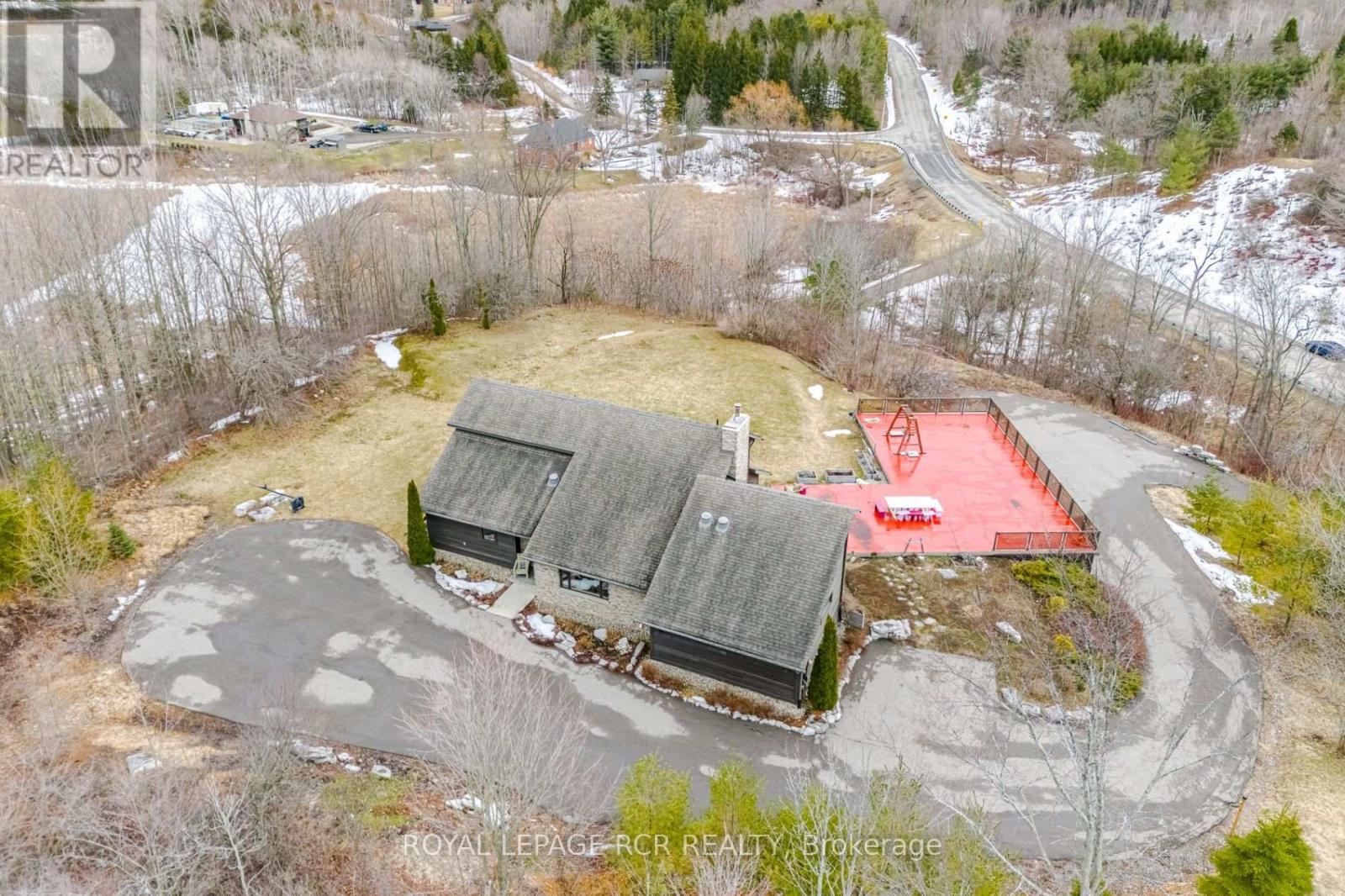
Properties in rural Caledon range from hobby farms of 2 to 5 acres to working farms of 50 to 200 acres, from modest rural homes to estate properties with substantial building programs. Lot sizes are generally a minimum of 1 acre under rural zoning, and most properties have significantly more. The housing stock includes everything from 19th-century stone farmhouses to recently built custom homes.
Prices vary enormously. A rural residential property on a 2-acre lot with a 1980s house might list at $1.2M to $1.4M. A restored 19th-century stone farmhouse on 10 acres with outbuildings and a pond will list at $2M to $3M. A working farm on 100 acres with infrastructure can exceed $5M. Buyers in rural Caledon need to define what they are looking for very precisely because the category is too broad to generalize from.
Rural Caledon transactions are thin across most concession road areas. Properties can sit on the market for 60 to 120 days or more because the buyer pool is narrow and specific. Farm and estate transactions often happen through networks rather than open MLS marketing. Correctly priced properties in good condition tend to find buyers; overpriced properties sit indefinitely.
The market for rural Caledon properties in the $1.5M to $3M range is primarily driven by Toronto-area professionals who have decided on a significant lifestyle change. The $3M+ estate range is smaller and more specific, driven by buyers who have already done well financially and are choosing this area for its beauty and the protection that the greenbelt and escarpment plans provide against suburban encroachment.
The buyers for rural Caledon properties are a diverse group united by a preference for land and landscape over urban infrastructure. Some are horse people. Some are market gardeners and small-scale farmers. Some are artists and creative professionals who have chosen the landscape as a working and living environment. Some are remote workers who have optimized their professional life for location independence and have chosen Caledon as their base. Some are retirees with a long-held dream of owning land in the Hills of the Headwaters.
What this buyer profile does not include in significant numbers is the first-time buyer or the commuter who is choosing rural Caledon as a compromise. The people who end up here have generally thought about it carefully and are making an intentional choice.
The rural Caledon landscape is defined by the intersection of three significant geographic features: the Niagara Escarpment on the west, the Oak Ridges Moraine on the north and east, and the Credit, Humber, and Nottawasaga river headwaters that run through the centre and south. This convergence of features makes rural Caledon one of the most ecologically complex and scenic areas in southern Ontario.
The concession roads run on the original surveyor grid, and the properties along them retain the character of the original land grants. Stone fences, heritage barns, woodlots on the clay knolls, and open fields on the drumlin slopes define the rural landscape in a way that is recognizable from one end of the municipality to the other. Buyers who value this landscape as a permanent backdrop for their daily life find it in abundance in rural Caledon.
There is essentially no transit in rural Caledon. Properties on the concession roads have no bus service. The nearest transit connections are in Bolton, which has limited local service and GO bus connections south. Highway 10 and Highway 50 are the main north-south arteries, and Highway 9 provides east-west connection. Most rural properties are 20 to 45 minutes from the nearest highway on-ramp, depending on their location within the municipality.
Rural Caledon residents are self-sufficient in transportation. Multiple vehicles are the norm. Winter driving requires a vehicle with appropriate traction capability for rural roads. Many properties on side concessions that are maintained by the municipality have ploughed road access, but some shared lanes and private roads are owner-maintained.
Rural Caledon has over 260 kilometres of public trails, 70 parks, and multiple conservation areas managed by TRCA, Credit Valley Conservation, and the Nottawasaga Valley Conservation Authority. The Bruce Trail traverses the escarpment and is accessible from multiple points throughout the western part of the municipality. The Humber, Credit, and Nottawasaga rivers provide fishing, canoeing, and natural corridor access.
Albion Hills Conservation Area, Palgrave Forest and Wildlife Area, Terra Cotta Conservation Area, and the Forks of the Credit Provincial Park are all within Caledon. Residents do not need to drive far to reach significant natural land. For most rural Caledon properties, that land begins at the end of the driveway.
There are no retail services in rural Caledon beyond the service levels of the named villages, which are themselves limited. Grocery shopping, healthcare, fuel, and any significant services require driving to Bolton, Brampton, or Orangeville. Most rural Caledon residents shop weekly or less frequently, buying in quantity and planning ahead.
The absence of commercial services is not a bug in the rural Caledon lifestyle; it is a feature. The peace, the darkness at night, the distance from commercial noise, and the self-sufficient rhythm of rural life are what people come here for. Buyers who need walkable retail or daily access to urban services are buying in the wrong place.
School busing is available to eligible students throughout rural Caledon. The Peel District School Board and Dufferin-Peel Catholic District School Board operate routes to rural areas, and properties within the municipality generally qualify for busing based on distance from the assigned school. Rural bus routes can involve long rides, early pickups, and transfers.
Secondary school access for rural Caledon students typically means travelling to Bolton, Brampton, or occasionally Orangeville. Home schooling is more common in rural Caledon than in suburban communities, and many families choose it specifically because it aligns with the self-sufficient lifestyle they have chosen. The educational options available in rural Ontario are genuinely different from those in suburban GTA communities, and families should research them thoroughly before making a purchase decision.
Rural Caledon faces ongoing pressure from provincial housing targets that require the Town to plan for significant population growth. The Town is working to concentrate that growth in Bolton and the villages while protecting the agricultural and natural heritage land base that defines rural Caledon. Greenbelt and Oak Ridges Moraine protections cover significant portions of the municipality, and Niagara Escarpment Plan protections apply in the west.
The provincial housing debates of 2022 to 2024 included contentious proposals to remove portions of the greenbelt for development. As of April 2026, the greenbelt protections for rural Caledon are reinstated and in place. Buyers in rural Caledon should monitor this issue over the long term, as it will determine whether the landscape that makes these properties valuable remains protected.
What should I know before buying a rural property in Caledon?
Rural property ownership involves costs and responsibilities that suburban homeowners rarely encounter. A private well means water quality is your responsibility: annual testing is good practice and significant water treatment systems are common. A septic system means the leaching bed must be maintained and occasionally replaced, which is a significant expense when the time comes. Heating in rural properties is often via propane or oil rather than natural gas, which costs more per unit of heat and requires managing fuel delivery. Driveways may be long and require regular maintenance, snow clearing, and gravel upkeep. None of these are reasons to avoid rural Caledon, but buyers who have only owned suburban homes should cost them in before comparing the purchase price to a Bolton subdivision house.
Are there restrictions on what I can do with rural Caledon land?
Yes. Depending on the specific land designation, properties in rural Caledon may be subject to the Greenbelt Plan, the Oak Ridges Moraine Conservation Plan, the Niagara Escarpment Plan, and various Conservation Authority regulations. These plans generally allow agricultural use, forestry, limited residential development, and conservation uses, while restricting subdivision development, commercial and industrial uses, and significant alterations to natural heritage features. Buyers with specific plans for a property, whether adding a building, creating a pond, clearing a woodlot, or changing the use, should check with the Town of Caledon planning department and the applicable Conservation Authority before purchasing to confirm what is and is not permitted.
How does rural Caledon compare to rural King Township for a buyer considering a horse property?
Rural Caledon and rural King Township are the two most prominent equestrian areas in the GTA north, and they compete for the same buyer in some cases. King Township has higher land prices, a York Region address with higher-ranked schools and services, and a longer-established equestrian prestige reputation. Rural Caledon has better value per acre, the Caledon Equestrian Park as an asset, greenbelt and escarpment protections that King Township partly lacks, and a wider range of price points. Buyers who are maximizing functional equestrian capacity per dollar often prefer Caledon. Buyers for whom address and the King Township social network matter will pay the King premium. There is no universally correct answer; it depends on what is driving the purchase.
What is the property tax situation in rural Caledon?
Property taxes in rural Caledon are set by the Town of Caledon and Peel Region. The municipal tax rate in Caledon is generally lower than in Brampton or Mississauga on a mill-rate basis, but because assessed values of rural properties vary considerably, the actual tax bill depends on the specific property assessment. Agricultural land classified as farmland receives a significant rebate under the Ontario Farm Tax Rebate program, which reduces the effective rate to 25% of the standard residential rate on the qualifying portions of the property. Buyers purchasing farms or properties with significant agricultural land should understand how the farm tax rebate works and what portion of their specific property qualifies, as it can be a meaningful number on a larger acreage parcel.
Rural Caledon requires agents who specialize in this type of property. The skills needed, reading surveys, interpreting drainage and water management, understanding well and septic condition, valuing heritage barns and outbuildings, are specific and not developed by general residential practice. Equally important is understanding the planning framework: which plan areas apply, what they permit, and what they restrict.
Buyers who work with an agent who handles mostly suburban residential transactions and occasionally ventures into rural properties will not get the depth of knowledge that rural Caledon requires. The right agent will have a track record of rural and equestrian transactions in Caledon and the surrounding area and will be known within the rural community networks through which many of the best properties are sold.
Street-level knowledge is hard to find online. Our team works in Rural Caledon every day. They know which pockets hold value, where the school catchment lines actually fall, and what the market is doing right now. Talk to us before you make a decision about Rural Caledon.
Talk to a local agent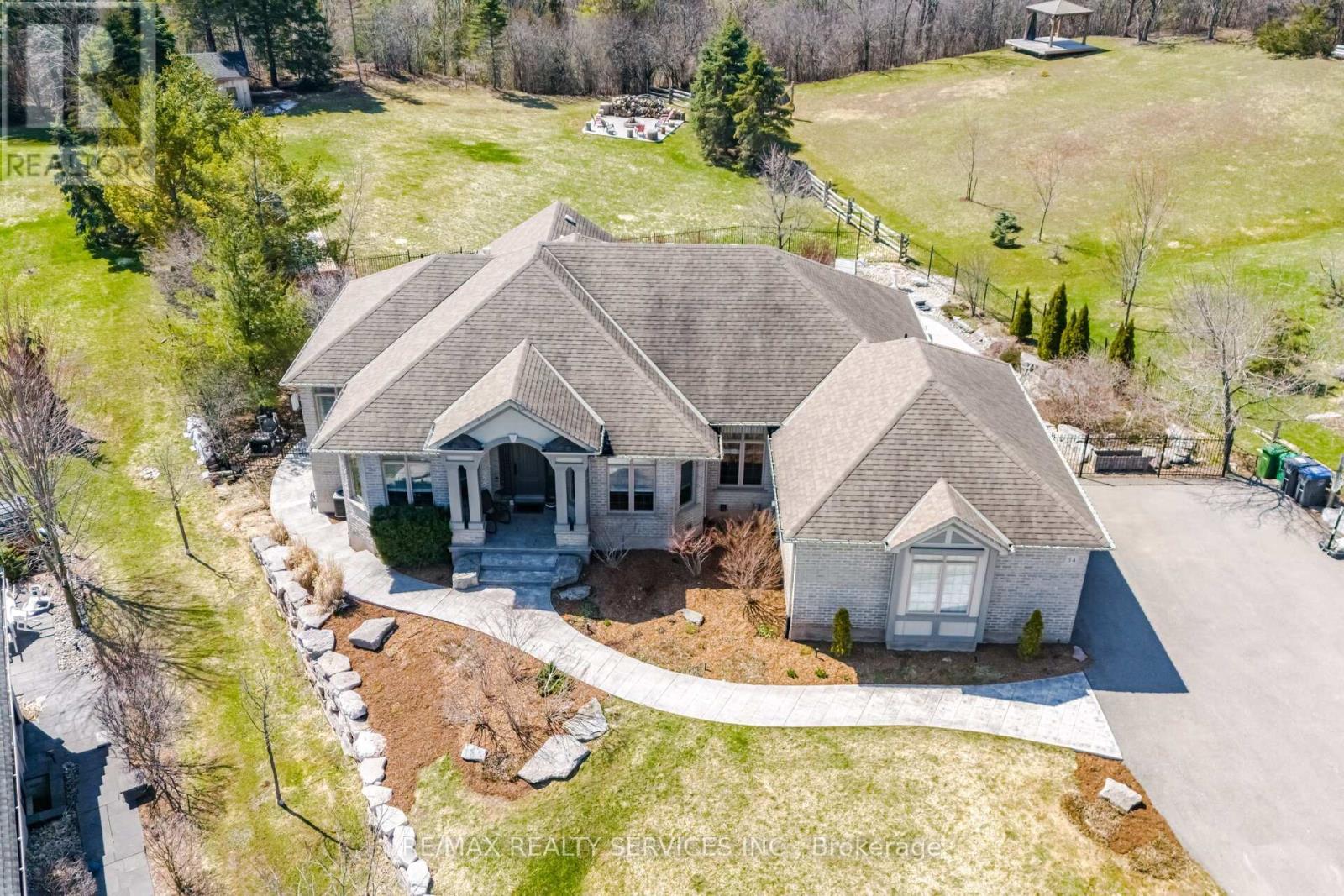 For Sale
 For Sale
 For Sale
 For Sale