
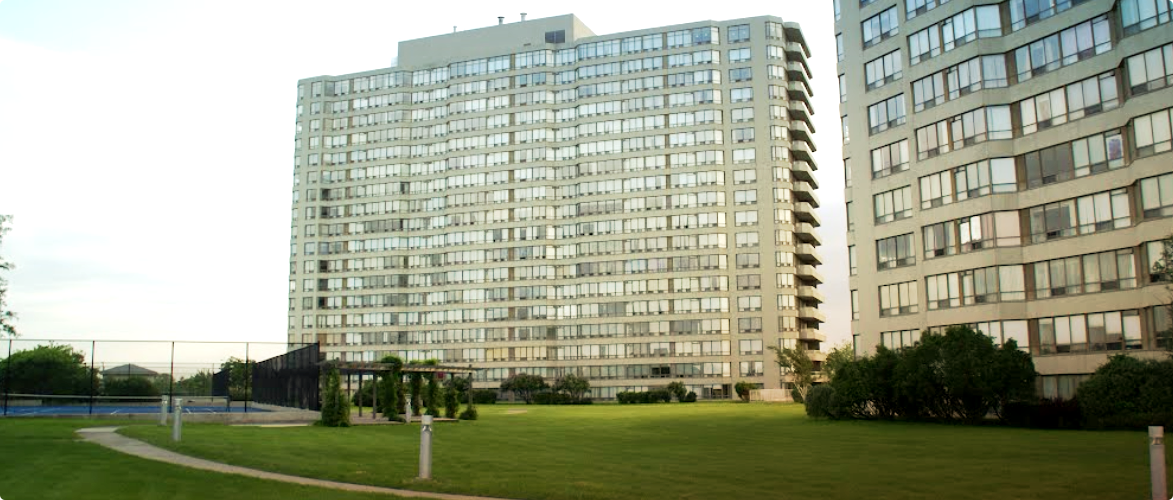
Scarborough Junction is a quiet postwar bungalow neighbourhood in west Scarborough near Victoria Park subway station and the Danforth. Improving commercial activity along Victoria Park Avenue and Eglinton Crosstown access ahead. Detached homes run $800K to $1.2M in 2026.
Scarborough Junction sits in the western part of Scarborough, in the area between Victoria Park Avenue and Warden Avenue near Danforth. It’s not a neighbourhood name that generates immediate recognition the way Birch Cliff or Wexford do, which is part of why buyers who research carefully sometimes find it an underpriced option compared to what it actually delivers: subway access, proximity to East Toronto’s commercial strips, and a stock of postwar residential streets that are quiet and established.
The neighbourhood takes its name from the former Scarborough Junction rail yard and the general transit history of the Victoria Park area. Today it describes the residential community in the wedge of west Scarborough near Victoria Park subway station and the Danforth-Victoria Park corridor. The built form is primarily postwar detached and semi-detached homes from the late 1940s through the 1960s, with the occasional newer infill development on streets where old homes have been replaced.
The location is its central argument. Victoria Park subway station on Line 2 is accessible, which puts downtown Toronto within a realistic commute distance. The Danforth, with its restaurants and commercial activity, is at or near the neighbourhood’s northern edge. Eglinton Avenue to the south is being transformed by the Crosstown LRT. And the prices, while higher than the further-east Scarborough communities, are still meaningfully below what comparable proximity to the subway costs in East Toronto proper.
For buyers who want subway access in a detached or semi-detached home format and have a budget that doesn’t reach the Beach or Leslieville, Scarborough Junction occupies an interesting position in the market. It’s improving, it has transit infrastructure, and it hasn’t fully priced in either of those facts yet.
The housing stock in Scarborough Junction is primarily postwar detached and semi-detached homes from the 1940s through the 1960s, with bungalows and two-storey homes in roughly equal proportion on most streets. Lots are typically 25 to 35 feet wide, on the narrower end of the Toronto residential spectrum, which reflects the era’s planning conventions. The narrowness is more obvious in the semis than in the detacheds, but even the detacheds are not spacious by lot standards.
The bungalows in the area follow the familiar pattern: two or three bedrooms on the main floor, a full basement below, and a backyard that’s usable but modest. Many have basement apartments with separate entrances, and the presence or absence of a legal second unit is a meaningful factor in the pricing and attractiveness of individual properties. Two-storey homes offer more above-grade living space and tend to attract buyers who need the room, particularly families with older children.
Condition varies more than it does in newer-build areas. Some homes have been continuously updated by long-term owners and are in excellent shape throughout: modern kitchens and bathrooms, updated electrical to contemporary standards, newer roofs and windows, properly insulated attics. Others have had minimal investment since the 1970s and require substantial work to bring into livable condition. The price range reflects this variation, and buyers need to be able to accurately assess condition to know what they’re buying.
Some newer infill detacheds and semis have been built on lots where older homes were demolished, particularly on streets near the Victoria Park Avenue commercial corridor. These newer builds are typically two or three storeys, narrower and taller than the surrounding homes, and priced at the upper end of the neighbourhood range. They attract buyers who want newer construction without leaving the area.
The 2026 price range for detacheds runs roughly $800,000 to $1,200,000. Semis sit below the lower end of that range. The variation within the range is primarily a function of condition, lot size, and specific location within the neighbourhood.
Scarborough Junction’s market position has been steadily moving over the past decade. Buyers who were priced out of the Beach, Leslieville, or East Danforth began looking east of Victoria Park with more frequency as those west-of-Vic-Park communities appreciated sharply. The result has been increased competition for well-priced properties in Scarborough Junction and gradual price appreciation that has been faster here than in more isolated Scarborough communities.
Multiple offers happen regularly on well-priced detacheds, particularly in spring. The neighbourhood isn’t at the bidding-war intensity of the most sought-after East Toronto communities, but it’s no longer the quiet backwater where you could routinely buy below asking. Buyers who’ve been in the East Toronto market will find Scarborough Junction a step less competitive; buyers coming from entirely different markets may be surprised by the activity levels on good listings.
The Eglinton Crosstown factor adds a layer of forward-looking buyer sentiment to the southern portion of the neighbourhood. The Crosstown’s Eglinton Avenue East corridor runs south of the main residential body of Scarborough Junction, but the improved transit access it provides to mid-Scarborough affects buyer interest in the broader area. Whether and how quickly that sentiment translates into measurable price differences depends on when the Crosstown actually achieves full operation.
Days on market for accurately priced properties in the $800,000 to $1,000,000 range runs two to three weeks in active market periods. Properties priced above $1,100,000 move more slowly and are more negotiable. Overpriced listings, which are not uncommon, can sit for extended periods and eventually need price reductions or relisting.
The buyer pool here is mixed between east Toronto spillover buyers, Scarborough-rooted families, and some investors attracted by the combination of subway proximity and below-East-Toronto pricing. That mix creates a market that responds to different supply-demand pressures simultaneously, which makes it useful to work with an agent who tracks the Victoria Park corridor specifically rather than east Scarborough generally.
Scarborough Junction attracts a recognizable buyer profile: people who want subway proximity in a detached or semi home and have either run out of budget in East Toronto or made the deliberate decision that the price difference is more valuable than the postal code. These buyers have usually looked at Birch Cliff, Upper Beaches, and East Danforth before arriving here, and they’ve done the calculation explicitly. They’re not settling; they’ve decided the trade is worth it.
First-time buyers and young families make up a significant portion of the buyer pool. For households who need a two- or three-bedroom home within reasonable subway reach of downtown, and whose budget is in the $800,000 to $1,000,000 range, Scarborough Junction is one of the most viable options in the city. The alternative at that budget in most of East Toronto is a condo or a very small semi on a narrow lot; here you can sometimes find a detached bungalow with a basement income unit.
Buyers who are already in west Scarborough communities, in Wexford, Clairlea, or Oakridge, and who want to stay close to existing community networks while moving to a home that fits their growing family’s needs, often end up in Scarborough Junction as a lateral or slight upgrade move within the same general area.
Investors, both experienced landlords and buyers looking at their first income property, are drawn by the combination of subway proximity and below-East-Toronto pricing. A property near Victoria Park station with a legal basement unit can generate reasonable rent-to-cost ratios while being in a location attractive to quality tenants with downtown jobs. The Victoria Park area’s transit access makes it genuinely competitive for tenant demand from the working professional rental market.
What Scarborough Junction doesn’t attract is the buyer who primarily wants to be in a community with a strong independent food and cafe scene, or one with a clearly developed neighbourhood identity and brand. The neighbourhood is still becoming something; buyers who want it already arrived need to look at communities further west.
Scarborough Junction is defined geographically by the Victoria Park Avenue corridor on its western edge and Warden Avenue to the east, between Danforth Avenue to the north and roughly Eglinton Avenue to the south. Within those boundaries, the neighbourhood is primarily a grid of residential streets with a consistent postwar character. Victoria Park Avenue itself is the commercial and transit spine, with stores, restaurants, and the subway station at Danforth.
The blocks immediately east of Victoria Park Avenue, within walking distance of the subway station, are the most transit-accessible and attract buyers specifically for that proximity. The walking distance from the residential streets to Victoria Park station is 5 to 15 minutes depending on which part of the neighbourhood you’re in. The closer blocks price modestly higher for comparable homes; the difference is not dramatic but is consistent.
The streets north of the main residential body, immediately adjacent to Danforth Avenue, have more commercial activity and noise than the interior streets. Properties fronting on Danforth itself are mixed commercial and residential; the streets one to three blocks south of Danforth are where the quieter residential character begins. These inner residential blocks are generally the most sought-after within the neighbourhood for buyers who want quiet and transit access simultaneously.
The Warden Avenue edge on the east is a busy arterial and bus route. Properties directly facing Warden deal with road noise and the industrial and commercial character of that corridor in some sections. The residential streets east of Warden but still within the broader Scarborough Junction area shade into the Oakridge and Clairlea communities, with similar housing stock and character.
Some streets in the neighbourhood show more variation in property condition and maintenance than others. Drive-throughs at different times of day, including evenings and weekends, are worthwhile before committing to a specific block. The neighbourhood is improving overall, but that improvement is uneven, and the difference between the best streets and the most transitional ones is visible.
Victoria Park subway station on Line 2 is the neighbourhood’s primary transit asset and the reason the neighbourhood commands the prices it does relative to other Scarborough communities at equivalent distance from downtown. The station sits at Danforth and Victoria Park Avenue, at the northern edge of the neighbourhood. From the most transit-accessible residential streets, it’s a 5 to 10 minute walk; from the southern parts of the neighbourhood, near Eglinton, it’s a longer walk or a bus ride to Danforth.
From Victoria Park station, Line 2 runs west to downtown. Travel time to Bloor and Yonge is approximately 20 minutes; travel time to Union Station, by transferring at Bloor-Yonge to Line 1, runs about 30 minutes. That’s a commute that most people can live with, and it’s meaningfully shorter than what bus-dependent communities further east can achieve.
Bus service on Victoria Park Avenue, Danforth, and Warden provides north-south and east-west connectivity across the neighbourhood. The 12 Kingston Road bus and the 24 Victoria Park bus extend the range of transit destinations beyond the subway. Eglinton Avenue buses connect east across Scarborough and, with the Crosstown LRT eventually, will connect to rapid transit along that corridor.
The Eglinton Crosstown LRT, when operational, will add an east-west rapid transit corridor along Eglinton Avenue at the southern end of the neighbourhood. The closest station to Scarborough Junction on the Crosstown will be at Warden and Eglinton, within a reasonable walk or short bus ride from the southern streets. That will give residents a second rapid transit option at a perpendicular direction to the existing subway, materially improving mobility for trips that don’t align with the east-west Bloor-Danforth alignment.
Driving from Scarborough Junction to downtown takes 25 to 35 minutes off-peak. The 401 is accessible via Warden Avenue north. Rush-hour driving to downtown is slower and less predictable. Most downtown commuters from the neighbourhood use the subway rather than driving.
Scarborough Junction’s green space provision is reasonable for an urban residential neighbourhood but not exceptional. The neighbourhood’s main parks are distributed through the residential grid and include a mix of local parks with playgrounds and open space. Victoria Park, the larger namesake park on Victoria Park Avenue near the subway station, provides more substantial green space with sports fields and facilities used by community leagues.
Taylor-Massey Creek, which flows through the area on its way to the Don River, creates a natural corridor that runs through or near parts of Scarborough Junction. The creek-side trail provides a walking and cycling route that connects into the broader Don Valley trail network to the west. For residents who want a natural setting for daily walks or cycling, the creek corridor offers that without requiring a car trip to a park. The trail quality varies by section; the connected segments that are part of the formal trail network are well-maintained.
The Don Valley trail network, accessible from the Taylor-Massey connection, is a major asset for the entire east Toronto and west Scarborough area. Cyclists use the Don Valley trail to commute downtown on good-weather days; the route runs from the Scarborough end of the system all the way to the waterfront. From Scarborough Junction, the total cycling commute to the financial district via the Don Valley trail is in the range of 40 to 50 minutes for a reasonably fit cyclist.
Scarborough’s ravine system is more accessible from communities further east and north, but the Taylor-Massey connection gives Scarborough Junction residents a trail access that’s better than many west Scarborough communities. The neighbourhood’s green space picture is defined by this trail connection more than by its formal parks, which are functional but unremarkable.
For families with young children, the distribution of local parks with playgrounds through the residential streets is a practical positive. Most blocks have at least one playground within a few minutes’ walk, which matters for daily family routines in a way that more distant but larger parks don’t.
The Victoria Park Avenue commercial strip is the neighbourhood’s main retail corridor and the place where most daily commercial activity happens. The stretch of Victoria Park Avenue near Danforth carries a mix of independent restaurants, grocery stores, pharmacies, banks, cafes, and service businesses. It’s a working commercial street that has been slowly improving over the past decade as buyers from East Toronto have moved into the area and the overall commercial tenant mix has shifted toward the kinds of businesses that serve a more diverse income level.
The Danforth Avenue commercial strip, at the neighbourhood’s northern edge, extends the retail options considerably. Danforth east of Victoria Park has both the continuation of the well-established Greektown strip to the west and the independently developing stretch to the east that has been gradually improving in restaurant and food business quality. Residents of Scarborough Junction have easy walking or transit access to the full Danforth strip, which is one of Toronto’s more mature and interesting commercial streets.
Grocery shopping in the immediate area is covered by a few independent and smaller chain options on Victoria Park Avenue. For a full grocery shop with broad selection, residents typically drive or take transit to larger stores nearby. No major national grocery chain anchors the Victoria Park Avenue strip; for that scale of grocery, the nearest options are on Danforth or at the Warden-Eglinton intersection area.
The independent restaurant scene on Victoria Park and the local streets has more character than a similar-distance Scarborough community further from the Danforth influence. There are South Asian, Vietnamese, Caribbean, and Portuguese options within the general area that are worth knowing. The cafe situation is improving slowly: a few independent coffee spots have opened in the corridor and more may follow as the neighbourhood’s demographic mix continues to shift.
Healthcare and professional services are available on the commercial strips. Toronto East Health Network hospitals are accessible by transit. The neighbourhood is adequately served for routine healthcare without being particularly well-served for specialist or complex care, which is consistent with most residential areas in Toronto not adjacent to a hospital campus.
The schools serving Scarborough Junction fall within the TDSB and TCDSB catchments for western Scarborough. The neighbourhood sits near the boundary between east Toronto and Scarborough school communities, and some addresses feed into schools associated with the east Toronto catchment while others feed into Scarborough schools. Confirming the specific school catchment for any address you’re seriously considering is worth doing before purchase, as the options and their characteristics can differ between addresses that appear to be in the same area.
Birchmount Park Collegiate Institute is the main TDSB secondary school for parts of this area. It serves a diverse student population from west Scarborough and has academic, applied, and specialist programs. The school has arts programming and is known within the district for that focus alongside its general academic offering.
Elementary schools in the area include Chine Drive Public School and several others serving different sections of the neighbourhood. The school quality at the elementary level is broadly consistent with west Scarborough averages, which fall in the mid range for Toronto overall. Families for whom school rankings are a primary purchase consideration should check current EQAO data for the specific catchment schools serving any address they’re evaluating.
The proximity to east Toronto means that some families explore the TDSB’s French immersion and specialized programs that have home schools west of Victoria Park but serve students from across a wider area. Confirm with the TDSB which programs are accessible from a Scarborough Junction address and what the transport or application requirements are.
Toronto Metropolitan University, formerly Ryerson, is accessible by subway from Victoria Park station in about 30 minutes, which is directly relevant for families at the stage where post-secondary options are a consideration. The University of Toronto’s downtown campus is similarly accessible. The neighbourhood’s subway connection makes it more practical for post-secondary students than bus-dependent communities further east.
Scarborough Junction is seeing more development activity than it did a decade ago, driven by its proximity to the subway and the broader east Toronto buyer interest that has been moving east along the Danforth corridor. Infill development, where older bungalows and semis are demolished and replaced with new multi-unit buildings or larger custom homes, is happening on individual lots with increasing frequency. The streetscape on some blocks is beginning to show the mix of old and new that characterizes actively changing urban residential neighbourhoods.
Victoria Park Avenue itself is a designated intensification corridor in the City’s planning framework. The arterial’s transition from a predominantly one or two-storey commercial strip to a mid-rise mixed-use street is underway in patches, with new buildings appearing where older commercial properties have been redeveloped. This process will continue over the next decade and will gradually change the scale and character of the Victoria Park commercial strip from its current 1950s-and-60s baseline toward something more consistent with the City’s transit-corridor planning vision.
The Eglinton Crosstown will, once operational, direct development interest toward the Eglinton corridor and the Warden-Eglinton station area. The intersection of Victoria Park and Eglinton is within the neighbourhood’s sphere and will attract mixed-use development proposals as the LRT begins to function as a true rapid transit spine through mid-Scarborough.
For existing homeowners, this development trajectory is generally positive: more commercial activity and transit investment in the area tends to push residential values upward over time. The short-term disruption of construction activity on adjacent streets is the cost; the long-term value uplift from improved neighbourhood infrastructure is the benefit. Buyers who can look past a 10-to-15-year transformation timeline are buying into a neighbourhood that is more likely to appreciate above the Scarborough average than below it.
The neighbourhood’s character is going to change, and buyers should be comfortable with that rather than buying it on the assumption that it will stay exactly as it is. The arc of change is toward more urban density and improved transit access, which is consistent with what happened to the Danforth communities west of Victoria Park over the past 20 years.
Is Scarborough Junction actually in Scarborough or is it part of East Toronto?
It’s in Scarborough, within the City of Toronto. Victoria Park Avenue is the traditional boundary between East Toronto and Scarborough, and Scarborough Junction sits east of that line. The distinction matters in terms of community identity and historical development patterns, though since amalgamation in 1998 it’s a single municipality. Practically, the neighbourhood is influenced heavily by its proximity to East Toronto: the Danforth commercial strip, the Leaside and East York buyer market, and the general improvement wave that has moved east along the Danforth over the past two decades. Buyers coming from East Toronto searches will feel the Danforth connection; buyers coming from deeper Scarborough searches will notice how much more transit-accessible this neighbourhood is than those communities.
How close is Victoria Park subway station to the residential streets?
The station is at Danforth and Victoria Park, at the northern boundary of the neighbourhood. For homes on the streets immediately east of Victoria Park between Danforth and the first few cross-streets south, the walk is 5 to 10 minutes. For homes on the southern streets near Eglinton, the walk is 20 to 25 minutes to the station; most residents in that part of the neighbourhood take the bus to Danforth rather than walking. If proximity to the subway station specifically is your priority, look at addresses in the northern part of the neighbourhood and verify the walk time using a mapping tool with the actual route, not a straight-line distance estimate.
What’s the difference between Scarborough Junction and Oakridge or Wexford?
All three are postwar west Scarborough bungalow neighbourhoods with similar housing stock and comparable price ranges. Scarborough Junction’s main differentiator is its tighter proximity to Victoria Park subway station and to the Danforth commercial strip, both of which give it more of an East Toronto feel and better transit access than Oakridge or Wexford. Oakridge is slightly further east but also near Warden station. Wexford is further north and less connected to the Danforth influence. In practice, buyers often look at all three communities when they’re searching this price range in west Scarborough, and the choice comes down to specific address, condition, lot size, and which of the transit access points is most relevant for their daily life.
What condition issues should I expect in homes from this era?
Postwar homes in Scarborough from the 1940s through the 1960s carry a predictable set of potential issues. Knob-and-tube wiring may be present in older sections of the electrical system; it’s not necessarily unsafe if well-maintained, but insurers charge higher premiums for homes where it remains active. Galvanized steel plumbing, common in this era, corrodes from the inside and can reduce water pressure significantly over time; replacement with copper or PEX is standard. Roofs on homes that haven’t been reroofed recently may be at end of life. Older homes in this area sometimes have asbestos-containing materials in insulation, floor tiles, or stippled ceilings, which is relevant for any planned renovation. A thorough home inspection from an inspector experienced with this era of construction is the only way to know what you’re actually buying.
Buying in Scarborough Junction benefits from an agent who understands both the east Toronto and west Scarborough market simultaneously, because the buyer pool draws from both and the comparable sales set may extend west of Victoria Park depending on the property type. An agent whose knowledge stops at Scarborough’s edge will have an incomplete picture; one who only knows east Toronto won’t understand the Scarborough-specific dynamics well enough to advise accurately.
The electrical and plumbing issues specific to this era of construction, described in the FAQ section, are the most common sources of post-purchase surprise in this neighbourhood. Make the inspection substantive rather than a formality. Ask the inspector specifically whether knob-and-tube wiring is present and whether it’s active, whether the plumbing is galvanized or has been replaced, and what the estimated remaining life of the roof is. Ask for photographs of the electrical panel and the visible plumbing. These aren’t reasons to walk away from a property necessarily, but they’re items that should affect the offer price or be addressed as conditions of purchase.
The competition dynamic in Scarborough Junction is more nuanced than in purely Scarborough or purely East Toronto markets. In an active period, a well-priced detached bungalow near the subway can generate multiple offers. In a slower period or for a property with condition issues, negotiation is possible and conditions are achievable. Understanding which situation you’re in on any specific listing, and how to position your offer relative to the competition, is where agent experience earns its value.
If you’re comparing Scarborough Junction against communities west of Victoria Park at similar price points, the comparison is worth making explicit: what does the additional price buy you in terms of neighbourhood character, commercial access, and community identity, and is it worth the difference to you? For some buyers it is; for others the gap isn’t justified. A direct conversation with your agent about that comparison is more useful than trying to make the judgment from listing databases alone.
TorontoProperty.ca works with buyers across west Scarborough and the Victoria Park corridor. Get in touch to talk through your search and whether this neighbourhood is the right fit.
Street-level knowledge is hard to find online. Our team works in Scarborough Junction every day. They know which pockets hold value, where the school catchment lines actually fall, and what the market is doing right now. Talk to us before you make a decision about Scarborough Junction.
Talk to a local agent