
Schomberg is the smallest of King Townships three community areas, with a retained historic main street and village character that distinguishes it from the more suburban community areas to the south. It offers King Township planning protections and moraine landscape at prices below King City, for buyers prepared for the full car commute to Toronto and no direct GO Transit access.
Schomberg is the third of King Township’s three designated community areas, sitting in the northern part of the township on the Oak Ridges Moraine. It is the smallest and quietest of the three, with a historic main street that has retained more of its 19th-century commercial character than King City or Nobleton, and a residential population that skews toward established families and retirees rather than the younger commuter households that have driven growth in the other two centres.
The village sits at the intersection of Highway 9 and Schomberg Road, with the Highway 9 corridor connecting it west to Orangeville and east toward Newmarket and the 400 series highway network. The drive to Toronto is roughly an hour under normal conditions, and there is no direct GO Transit service: the nearest GO station is at King City, roughly 20 kilometres south, making Schomberg more car-dependent than the communities closer to the Barrie line.
What Schomberg offers that King City and Nobleton do not is a main street that still functions as a village centre. There are independent shops, a few restaurants, a hardware store, and the kind of walkable small-town commercial life that most GTA suburbs lost a generation ago. The commercial area is modest by any urban standard, but it is authentic, and buyers who choose Schomberg often cite the village character as a meaningful part of the decision rather than simply an incidental feature of the location.
The residential areas around the historic core are a mix of older village housing stock from the early and mid-20th century and newer residential development from the 1990s through the 2010s that has grown the community beyond its original boundaries while maintaining a scale that doesn’t overwhelm the older fabric. King Township’s planning policies limit growth in all three community areas, which means Schomberg is not going to experience the suburban transformation that comparable communities in more permissive municipalities have undergone.
Schomberg’s housing stock reflects the village’s history as an agricultural service centre that has grown slowly over 150 years. The oldest housing is on and near the main street: two-storey Ontario vernacular homes from the late 19th and early 20th centuries, many still well maintained, with modest lots and proximity to the commercial core that defines older village living. These homes sell for less than equivalent square footage in newer subdivisions but offer character and a sense of place that newer construction doesn’t replicate.
The newer residential areas around the historic core include detached homes from the 1980s and 1990s that represent the first significant residential expansion beyond the original village boundaries, and more recent subdivision development from the 2000s and 2010s that has added inventory of newer two-storey homes on standard residential lots. These newer areas are more conventionally suburban in character but benefit from the village context and the King Township planning environment that limits further expansion.
Townhouse and semi-detached housing exists in Schomberg at a modest scale, providing entry-level ownership options at prices below the fully detached inventory. This segment attracts first-time buyers and downsizers who want the King Township community context without the lot maintenance responsibilities of a detached home on a larger lot.
The municipality of King Township services Schomberg with municipal water and sewer in the residential areas, which distinguishes it from the rural township properties on private well and septic systems. This serviced status is important for buyers used to urban servicing standards; it also means that routine water quality concerns and septic maintenance are not factors in the ownership experience within the community area boundaries.
Schomberg’s market is quieter than King City and Nobleton in terms of transaction volume, reflecting the smaller community size and the narrower buyer pool. Properties turn over less frequently, and when they do, days on market can be longer than in the more active community areas to the south. Buyers with patience and specific criteria for village character will find that Schomberg rewards them with less competition than they’d face in King City, while sellers need realistic pricing expectations given the thinner buyer pool.
Prices in Schomberg sit below King City and Nobleton for comparable square footage, reflecting the longer commute to GO Transit and the smaller community scale. The gap is meaningful: buyers who prioritise village character over commute convenience and who are prepared for the full car commute to Toronto rather than the hybrid drive-and-ride approach available from King City can access King Township’s planning environment and rural-adjacent lifestyle at a lower price point.
The older housing stock requires careful due diligence. Homes from the early and mid-20th century may have deferred maintenance, older mechanical systems, or construction methods that are unfamiliar to buyers whose reference point is newer subdivision housing. A thorough home inspection from an inspector with experience in older Ontario housing is essential, and a realistic budget for ongoing maintenance and potential capital improvements is part of owning an older village property.
New construction is limited by King Township’s growth management policies. There are no large subdivision approvals pending that would add significant new inventory to the Schomberg market. This supply constraint means that the price floor for existing housing is relatively well supported; the market can’t be undercut by a wave of new builds, which is a different situation from growth-oriented municipalities where new development continuously competes with resale.
Schomberg’s buyer pool is dominated by people who have specifically chosen village life over suburban convenience, and who are prepared for the commute realities of a community without direct GO Transit access. The typical Schomberg buyer is an established household rather than a first-time buyer: a family that has lived in the GTA, accumulated equity in a more urban location, and decided to trade commute convenience for space, character, and the particular quality of life that a small village in an agricultural township offers.
Retirees and semi-retirees are a meaningful segment. Schomberg’s village core, with its walkable main street and independent shops, is more liveable without a car than most GTA suburban locations, and buyers who are reducing their driving rather than increasing it find that the village centre serves them reasonably well for daily basics. The King Township community character and the absence of the suburban sprawl development pressure that defines nearby municipalities appeals to buyers who have watched other places change and want stability.
Remote workers have added to Schomberg’s appeal since 2020. The high-speed internet infrastructure in the Schomberg community area is more reliable than in the rural township, and the combination of village character, larger lots than are available in urban neighbourhoods, and genuine quiet during working hours makes Schomberg a practical choice for buyers who have decoupled work from daily commuting. The occasional trip to Toronto is manageable; the daily commute is what was eliminated.
Equestrian and rural lifestyle buyers choose Schomberg as a community-area base when they want village services and municipal servicing alongside proximity to the rural township landscape. The rural King Township properties with equestrian infrastructure are a short drive, and using Schomberg as a household base while operating a nearby rural property for horses is a pattern some households have adopted when they want both the village and the land.
Schomberg is small enough that neighbourhood distinctions within the community are less about named districts and more about proximity to the historic core versus the newer residential areas. The basic distinction buyers make is between the older village fabric near the main street and the newer subdivision areas that have grown around it.
The historic core, bounded roughly by the main commercial blocks of Main Street and the surrounding residential streets, has the oldest housing and the most intact village character. Properties here are within walking distance of the commercial area, sit on smaller lots typical of historic village development, and have the architectural variety that comes from 150 years of organic residential growth. The streetscape quality in this area is higher than in the newer residential extensions, and buyers who specifically value the village aesthetic target these blocks.
The residential areas to the south and east of the historic core include the subdivisions built from the 1980s through the 2010s. These areas have larger homes on standard residential lots, more predictable construction, and the layout of planned residential development rather than the organic street pattern of the older village. They are farther from the commercial core but closer to the edge of the community area where properties back onto or near the agricultural lands of the rural township.
For buyers with children, the school locations and bus routing are the practical consideration that shapes which part of Schomberg makes sense. King Township elementary school assignments for Schomberg direct to the local school, which is within the community area and accessible without a long bus ride. Secondary school requires a longer commute; King City Secondary School is the secondary assignment for most Schomberg students, which is a drive or bus ride south.
Schomberg is a car-dependent community. Highway 9 is the primary east-west corridor, connecting the village to Highway 400 eastward (roughly 20 minutes to the 400/9 interchange in Schomberg Road terms) and westward toward Orangeville and Highway 10. Southbound, Schomberg Road leads to King City in roughly 20 minutes, where the Barrie GO line station is located.
The absence of direct GO Transit service distinguishes Schomberg from King City and Nobleton for commuters. Buyers who plan to use GO Transit regularly face the additional step of driving to King City or Aurora before boarding. This makes the effective commute to Union Station longer from Schomberg than from communities on the Barrie line, and buyers who are weighing the Schomberg price discount against the King City commute convenience need to do that calculation honestly before deciding.
York Region Transit does not provide meaningful service to Schomberg’s residential areas. This is a village where two vehicles per household is the practical standard, and any buyer evaluating a single-vehicle household needs to plan how daily logistics will work without transit as a fallback option. For established households with two working adults, this is typically not a practical problem, but for households in transition or those accustomed to urban transit, the reality needs to be acknowledged before purchase.
The highway network is Schomberg’s main commute asset. Highway 400 to the east and Highway 27 to the south both provide southbound routes into the city, with Highway 400 being faster and Highway 27 being slower but more accessible from the western rural township. For buyers whose destinations are in Vaughan, Brampton, or western portions of the GTA rather than downtown Toronto, the routing via Highway 427 or 400 can actually be reasonably efficient.
Schomberg sits on the Oak Ridges Moraine, and the natural landscape surrounding the community area is the defining outdoor amenity for residents. The moraine topography creates rolling terrain with woodlots, recharge wetlands, and cold-water stream corridors that provide a genuine natural environment within minutes of the village. The Greenbelt and Moraine Conservation Plan protections that prevent development in the surrounding rural areas also preserve the landscape quality that makes Schomberg’s outdoor setting valuable.
There are formal trail connections accessible from the Schomberg area. The Bruce Trail system and its eastern extensions provide walking trail access through moraine woodland that is more ecologically intact than anything accessible from most GTA suburban locations. The Holland River watershed, which flows northward through the northern parts of King Township, has conservation lands managed by the Lake Simcoe Region Conservation Authority with trail access points that are a short drive from Schomberg.
The community itself has a small park network and recreational facilities appropriate to a village of its size. The King Township recreation programming is centred in King City, but the community facilities in Schomberg provide local options for residents who don’t want to drive south for every recreational activity. The arena, when operational for winter programming, and the outdoor parks provide the baseline of community recreational infrastructure.
Cycling on the low-traffic concession roads surrounding Schomberg is genuinely pleasant and increasingly popular among residents who have discovered that the roads connecting the rural township are safe and scenic for road cycling and gravel riding. The combination of modest traffic, varied terrain, and the visual quality of the moraine landscape makes this one of the better rural cycling environments accessible from any GTA community.
Schomberg’s main street commercial area is the most functional village commercial core of King Township’s three community areas. Independent retailers, a hardware store, a pharmacy, a grocery option, and a handful of restaurants and cafes provide residents with genuine daily convenience within walking or short driving distance. This is modest by any urban measure, but for a community of Schomberg’s size, the commercial continuity on the main street is a meaningful quality-of-life asset that many comparable Ontario villages have lost.
The village commercial area has historically had higher occupancy than comparable main streets in smaller communities, in part because the King Township planning environment and Schomberg’s stable residential base have maintained demand for independent commercial tenants. There have been vacancies over the years, as in any small commercial area, but the overall character of active street-level retail has persisted in a way that distinguishes Schomberg from villages whose main streets have hollowed out into vacant storefronts.
For larger shopping and full medical services, residents drive south to King City or east to Newmarket. Southlake Regional Health Centre in Newmarket is the nearest hospital emergency department, roughly 35 minutes away. Major retail, specialist medical care, and professional services are all in Newmarket or Aurora. Most Schomberg households make a weekly or bi-weekly trip south as a routine, treating Newmarket as their practical service centre while relying on the village for daily basics.
The agricultural and equestrian supply services that serve the rural King Township population are accessible from the Schomberg area, with farm supply and feed options available nearby for the working farm and hobby farm households that the township supports. This is a practical amenity that matters to buyers with rural lifestyle requirements who are using Schomberg as their community base while managing rural properties or horses.
Schomberg falls within the York Region District School Board for public schools and the York Catholic District School Board for Catholic schools. The community area has local elementary school coverage, with children in the Schomberg area attending King Township elementary schools. Secondary school requires travel to King City Secondary School, roughly 20 kilometres south, via bus or parent driving.
The elementary school experience in Schomberg benefits from the smaller community scale: the local school serves a village community rather than a large subdivision catchment, which typically means smaller class sizes than in high-growth GTA suburbs and a more stable student population. For families who value smaller school environments, King Township’s schools have historically delivered that as a consequence of the township’s growth management policies rather than as an intentional design.
St. Andrew’s College and Country Day School, both independent private secondary schools with strong academic programs, are accessible from Schomberg and attract students from across King Township and beyond. Families who choose private secondary education for their children have genuinely good options within the immediate area, a situation that distinguishes King Township from most comparable rural communities in Ontario where private school access requires travel to larger centres.
York University and Georgian College are the nearest post-secondary options, accessible from Schomberg via car. The University of Toronto and Seneca College are reachable but require a full commute. For households with university-bound children, the Schomberg location is not proximate to post-secondary institutions in the way that central GTA neighbourhoods are; students typically move out, live in residence or off-campus housing, and come home on weekends or during breaks in the same pattern as students from other rural communities.
Schomberg is not growing in any significant way. King Township’s Official Plan designates the community areas for limited infill and modest residential growth, not for major expansion. The suburban transformation that has occurred in Aurora, Newmarket, and other York Region municipalities over the past 40 years is not happening here and is not going to happen here. Buyers choosing Schomberg for its village character are choosing something that the planning framework actively protects.
The main street commercial area has been the subject of heritage overlay considerations that reflect the township’s interest in maintaining the historic fabric of the village core. While this limits certain types of commercial redevelopment, it is consistent with what makes the main street attractive in the first place. The heritage character is an asset that the planning environment is designed to preserve rather than sacrifice for development density.
Infrastructure investment from York Region and the Province has been gradual. Highway 9 has seen incremental improvements, and the broader region’s investment in transit and roads benefits Schomberg residents in terms of access to service centres. The Barrie GO corridor investment that has been ongoing through King City and Aurora improves the regional transit context even without a direct Schomberg station, because it makes the drive-to-GO option at King City faster and more reliable over time.
High-speed internet coverage in Schomberg’s community area is more consistent than in the surrounding rural township, with Bell and Rogers service reaching most residential addresses in the core. Some properties on the edges of the community area have variable coverage, and prospective buyers should verify service availability at a specific address before assuming urban-equivalent internet speeds are available. The serviced community area status generally means better connectivity than rural King Township addresses, but it is worth confirming before purchase if high-speed internet is a requirement.
How does Schomberg compare to King City and Nobleton?
Schomberg is the smallest and northernmost of King Township’s three community areas. It has the most intact historic main street commercial character, lower prices than King City for comparable housing, and less direct GO Transit access. King City is the closest community to the Barrie GO line and has the largest residential base; Nobleton is midway between the two in size and character. Buyers who prioritise village charm and lower prices over commute convenience tend to prefer Schomberg; buyers who commute regularly tend to prefer King City.
Is Schomberg on municipal water and sewer?
Yes. Schomberg’s community area is serviced by municipal water and sewer through King Township, which distinguishes it from rural township properties on private wells and septic systems. This is a meaningful practical difference for buyers coming from urban settings who are familiar with municipal servicing standards. Buyers should confirm the specific servicing status of any property they are considering, as the serviced area boundary does not necessarily include all properties adjacent to the community area.
What is the commute from Schomberg to downtown Toronto?
By car, the drive from Schomberg to downtown Toronto typically takes 55 to 75 minutes in normal conditions via Highway 400 south. During peak rush hour, the 400 through Vaughan can add 20 to 40 minutes. GO Transit access requires driving to King City Station (roughly 20 minutes) and taking the Barrie line, adding the drive time to the rail commute of about 55 minutes to Union Station. Schomberg is a full car commute in each direction; buyers who need to commute daily should be honest with themselves about whether this is sustainable.
Are there heritage restrictions on homes in the Schomberg village core?
Some properties in the historic core are subject to heritage designation or heritage overlay provisions under King Township’s Official Plan and heritage policy. These provisions affect what alterations are permissible on the exterior of designated properties. Buyers of older village properties should confirm heritage status with the township before purchasing and factor any applicable restrictions into their renovation and improvement planning. Heritage properties are not impossible to modify, but the approvals process is different and requires more lead time than a standard building permit application.
Buying in Schomberg requires an agent who understands the King Township planning environment and who has experience with the older housing stock that makes up much of the village’s inventory. An agent who primarily works suburban resale in Newmarket or Aurora may be competent in those markets and still be poorly equipped for a Schomberg purchase, because the heritage and conservation considerations, the older home inspection requirements, and the smaller comparable data set require specific knowledge to navigate properly.
Heritage property due diligence is the step most often skipped by buyers and agents who don’t work in heritage-protected areas regularly. Before making an offer on an older Schomberg property, confirm whether any heritage designation applies, what it restricts, and whether planned improvements would be subject to heritage approval. The township’s heritage register is public information, and a competent agent will check it before an offer rather than discovering the designation after the deal is firm.
The home inspection on an older village property should go beyond the standard suburban inspection checklist. Electrical panels, knob and tube wiring, plumbing systems, foundation conditions, and the envelope performance of older construction all require specific attention. An inspector with experience in older Ontario homes will know what to look for; an inspector whose primary experience is with newer subdivision homes may miss problems that are characteristic of the era. Ask about the inspector’s experience before booking.
Buyers moving from more active urban markets will find Schomberg’s pace of life genuinely different. The quietness is the point, and the community’s stable character is what the planning environment protects. Buyers who have thought carefully about the commute, the services, and the lifestyle shift, and who have decided that the trade is worth making, tend to be very happy with Schomberg. Those who arrive with unexamined assumptions about what small-village rural life involves tend to find it harder.
Street-level knowledge is hard to find online. Our team works in Schomberg every day. They know which pockets hold value, where the school catchment lines actually fall, and what the market is doing right now. Talk to us before you make a decision about Schomberg.
Talk to a local agent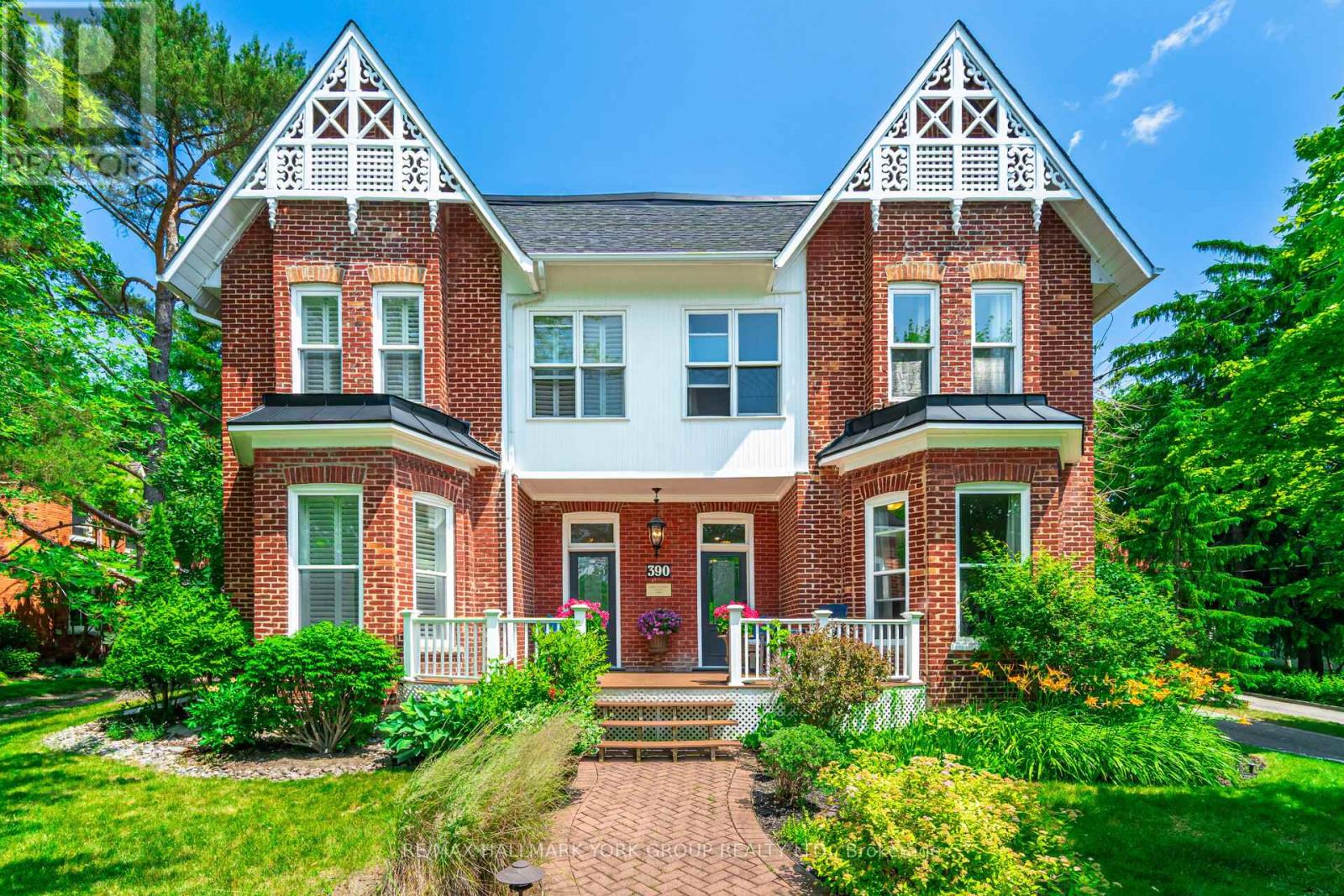 For Sale
 For Sale
 For Sale
 For Sale