
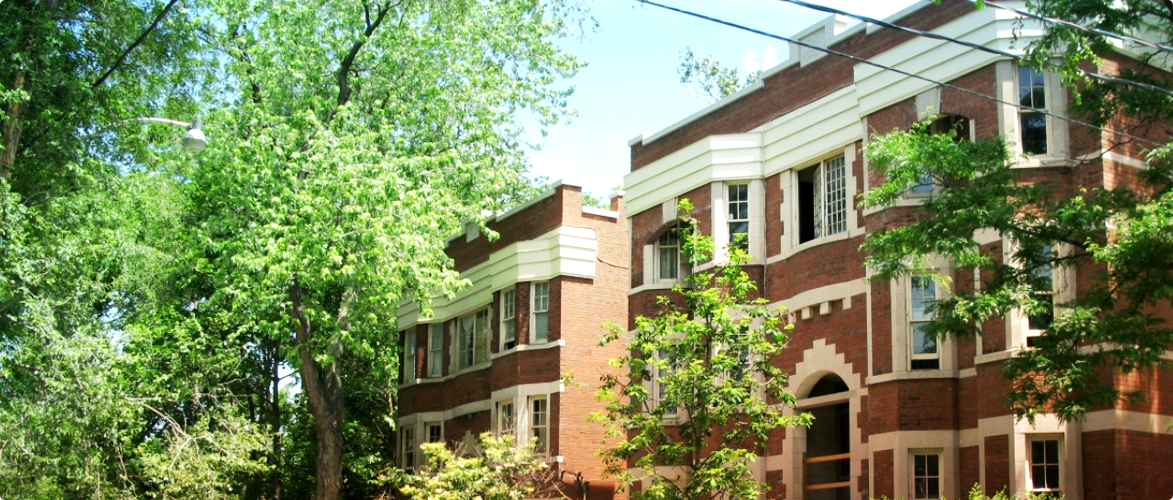
St. James Town is one of the highest-density residential areas in Canada, with 17 apartment towers from the 1960s and 1970s housing around 17,000 people in 36 hectares between Wellesley Street East, Bloor Street East, Parliament Street, and Sherbourne Street. It's primarily a rental market, bordered by Cabbagetown to the west and Rosedale to the north, with new condo development appearing on the perimeter in recent years. Bloor-Yonge subway is roughly a 15-minute walk, and the neighbourhood offers some of the most affordable per-square-foot rental rates in downtown Toronto.
St. James Town covers 36 hectares between Wellesley Street East to the south, Bloor Street East to the north, Parliament Street to the west, and Sherbourne Street to the east. Inside those boundaries, 17 apartment towers from the 1960s and 1970s house approximately 17,000 people. By census tract, the neighbourhood ranks among the highest-density residential areas in the country, and the numbers show it: the towers reach 19 to 32 storeys, the streets between them carry constant foot traffic, and the small number of parks and open spaces serve a population that most Toronto neighbourhoods ten times the geographic size wouldn’t approach.
The towers were built in two main phases during the 1960s, developed primarily by Meridian Investments and constructed as a deliberate high-density residential project on land that previously held Victorian rowhouses. The urban planning model of the era favoured tower-in-the-park design, and St. James Town reflects that: buildings set back from the street on landscaped grounds, with a theoretical abundance of open space between them that in practice serves a population the designers probably did not fully account for. The neighbourhood has operated at this density since the early 1970s, which makes it one of the longest-running high-density urban housing experiments in Canada.
What surrounds it matters as much as what’s inside. Cabbagetown sits directly to the west, across Parliament Street, with its restored Victorian housing and quiet residential character. Rosedale is directly north, across Bloor Street, with a median household income that differs from St. James Town’s by more than almost any other adjacent neighbourhood boundary in the city. Church-Wellesley Village is a short walk southwest. The neighbourhood’s position inside a cluster of very different adjacent areas gives it a geographic centrality that its density alone wouldn’t confer.
The original 17 towers are entirely rental and have never been converted to condominium ownership. There is no mechanism for buying a unit in those buildings. The ownership market in St. James Town consists of newer condo construction on the neighbourhood’s perimeter, primarily along Bloor Street East and near the Sherbourne Street boundary. These are purpose-built condos from the 2000s and 2010s with the standard Toronto condo structure: individual unit ownership, condominium corporation, monthly maintenance fees, and all the considerations that come with buying into a managed building.
Perimeter condos here are priced in line with comparable downtown stock rather than carrying a specific neighbourhood premium or discount. A one-bedroom in a well-maintained building on Bloor Street East was running between $580,000 and $720,000 in early 2026 depending on size, floor, view, and building quality. Two-bedroom units were in the $750,000 to $950,000 range. The supply of these units is modest, which means listings don’t appear frequently and buyers who are seriously looking need to monitor the area’s new listings actively rather than waiting for something to come to them.
The freehold market in St. James Town is essentially non-existent. The land use is almost entirely taken up by the towers and their grounds, with no rowhouses or detached properties to buy. The handful of commercial properties and institutional buildings at street level are not available for residential purchase. Buyers who want to own something in this neighbourhood are buying a perimeter condo. Buyers who want to rent have access to one of the largest concentrations of large-unit rental apartments in downtown Toronto, at prices considerably below new construction rental rates in adjacent areas.
Maintenance fees on the perimeter condos vary by building and age. Newer buildings tend to have lower fees initially, which rise as reserve funds are built and capital work is addressed. Buyers should request status certificates and have them reviewed before purchase, both to understand the current financial health of the corporation and to check for any known special assessments in the near term.
The ownership market in St. James Town is thin and moves slowly relative to more established condo corridors in the downtown core. The neighbourhood doesn’t draw the same buyer profile as Yorkville or King West condos, and the listing inventory is small enough that comparing this market to those is misleading. When perimeter condo units come to market, they typically attract buyers who have specifically identified the neighbourhood as a target, either for its price relative to comparable downtown stock or for its location relative to specific employers or communities in the area.
In early 2026, condo resale across Toronto is running with longer days on market and more seller flexibility than in 2021 or 2022. St. James Town perimeter condos are no exception. Listings that are priced to reflect current conditions rather than peak-market expectations are finding buyers within four to six weeks. Listings that come in above comparables are sitting for longer and requiring price adjustments. Buyers in this market have more time and leverage than they would have had three years ago, which translates to more opportunity to negotiate conditions, timing, and price.
The rental market operates entirely separately from the ownership market and is governed by Ontario’s Residential Tenancies Act. The towers are subject to rent control on existing tenancies, which means rents on occupied units are regulated but vacant units can be listed at market. Turnover in the towers generates a stream of newly available units at market rents throughout the year. Renters looking for two or three-bedroom apartments at below-market-rate pricing for central Toronto will find this neighbourhood provides more supply of that type than almost anywhere inside the downtown core.
St. James Town has been one of Toronto’s primary immigrant reception neighbourhoods for decades. The population is one of the most culturally diverse in the city by any measure, with significant South Asian, Filipino, and East African communities, among many others. The neighbourhood functions as a landing point for new Canadians who prioritise central location, large apartment units at accessible rental rates, and proximity to the transit connections and community services that make the first years in a new country more manageable. This has been consistent across different immigration waves since the 1970s.
Longer-term residents include people who arrived a generation ago and remained, in some cases raising children and grandchildren in the same buildings. The towers have a layered social history that isn’t visible on the street: the same building might house a family who’s been there since 1988 next to a family that arrived from Nigeria in 2023. That layering produces a community dynamic that’s different from neighbourhoods where the population has turned over wholesale through gentrification. St. James Town has changed, but it hasn’t been replaced.
The buyers who purchase perimeter condos here are a different profile from the rental population of the towers. They tend to be younger professionals or investors who value the downtown location and the price point relative to adjacent neighbourhoods. Some are buying their first owned property after renting, choosing St. James Town because the prices are lower than Church-Wellesley or Cabbagetown. Others are investors purchasing units to rent in a neighbourhood where rental demand from the large surrounding population is consistent.
The most important step for buyers of perimeter condos here is the status certificate review. Request the status certificate as early as possible and have a real estate lawyer review it before you firm up. The status certificate will tell you whether the condominium corporation’s reserve fund is adequately funded, whether there are any pending or recent special assessments, and whether there is litigation involving the corporation. Older condo buildings near St. James Town have in some cases faced significant special assessments for capital work deferred in earlier years. Knowing this before purchase rather than after is the difference between a manageable decision and an expensive surprise.
Building age and management quality matter considerably in this area. A tower or perimeter condo building that has been well-managed, with regular capital investment in elevators, plumbing, and envelope, will operate differently from one that has deferred maintenance. It’s worth asking building management directly about what major capital work has been done in the past five to ten years and what is planned. Some buildings will have this information readily available. Others will be vague. The vagueness itself is information.
Noise and density are real factors for residents coming from lower-density living situations. The neighbourhood is active at all hours. The towers are densely occupied and shared walls, ceilings, and infrastructure mean that soundproofing varies enormously by building and unit position. A unit on a high floor with a view away from the street will feel quite different from a low-floor unit facing Howard Street or Wellesley. If you’re seriously considering a specific unit, visiting it at different times of day before committing is worth the time.
Sellers of perimeter condo units here are working in a market with limited comparable sales and a buyer pool that’s smaller and more specific than in larger condo corridors. That means pricing has to be done carefully, with reference to actual recent comparable transactions rather than aspirational values from the peak years. Buyers who are specifically targeting this neighbourhood know the comparables and will push back on overpriced listings. Buyers who encounter this neighbourhood incidentally, during a broader downtown condo search, may need more context about why the price is what it is.
Presentation matters in proportion to the unit’s specific merits. A condo in a well-managed building, on a high floor with a clear view and good natural light, can be presented straightforwardly and will sell to its likely buyer with limited friction. A unit on a lower floor in a building with a more mixed reputation needs either a price that reflects the trade-offs or presentation work that addresses them directly. Buyers here are practical and have usually toured multiple buildings in the area before arriving at your unit.
Timing for condo sales in this neighbourhood follows the general pattern: spring and fall produce more buyer activity than summer or mid-winter. The specific advantage for sellers is that rental demand in the neighbourhood is consistent year-round, so investor buyers who might represent the broadest pool of interested purchasers aren’t as seasonally concentrated as owner-occupier buyers tend to be. A well-priced unit will find a buyer in any season, though the fastest path to a strong offer is typically a spring listing.
The neighbourhood’s immediate surroundings provide considerably more amenity than the interior of the tower complex itself. Sherbourne Street is the eastern border and connects north into Rosedale and south toward the lake. Bloor Street East is the northern border and has a stretch of commercial uses, including a grocery store and various restaurants, that serves the neighbourhood’s day-to-day needs alongside those of adjacent Rosedale. Church Street, a few blocks west, is the primary commercial spine for the area: the Church-Wellesley strip runs south and has dense food, retail, and nightlife options.
Sherbourne Common, a park on the lake at the foot of Sherbourne Street, is roughly two kilometres south and provides waterfront access for residents who are willing to walk or cycle. The Martin Goodman Trail connects along the waterfront. In winter the Common has a skating rink. The route south on Sherbourne is not particularly pleasant for walking, being a wide arterial street with modest pedestrian infrastructure, but the destination is worth it for residents who use the waterfront regularly.
For grocery shopping, the Wellesley Street area has a Metro and several smaller independent markets serving the neighbourhood’s specific food preferences, including South Asian and Filipino grocery options that reflect the resident population. Bloor Street and Church Street have additional options. The neighbourhood is not underserved on daily needs, which is a genuine practical advantage for residents who don’t have a car and rely on walking for regular errands.
Bloor-Yonge station, the primary interchange point on the TTC subway network, is roughly a 15-minute walk from most of the neighbourhood. That walk goes west on Bloor Street or through the Rosedale valley ravine connection depending on the starting point. The Sherbourne bus on route 75 connects south from Bloor to downtown destinations and north toward Summerhill. The Carlton streetcar on 506 runs along Carlton and College to the south and connects toward Spadina and beyond. Residents have multiple transit options within a short walk, though the specific route depends heavily on the destination.
The Castle Frank subway station on the Bloor-Danforth line is also within reach for residents on the northern edge of the neighbourhood, accessed via a walk through the Rosedale valley. That walk is pleasant in good weather and less appealing in winter, which affects how often residents use that particular option. The practical transit experience for most St. James Town residents is the Carlton streetcar or the Bloor-Yonge walk, both of which are reliable and frequent.
The neighbourhood is walkable for many downtown destinations. King Street and the financial district are roughly a 20-minute walk south. The University of Toronto campus on St. George is 20 minutes west on foot or 10 minutes by streetcar. For residents without cars who work downtown, the transit access is adequate for most situations. For residents with cars, the neighbourhood offers minimal parking infrastructure, and street parking is tightly contested. Most residents in the towers don’t own cars, which is reflected in how the neighbourhood was designed and in how it continues to function.
Cabbagetown sits directly west across Parliament Street and represents the most immediate contrast. The two neighbourhoods could not look more different from ground level: Victorian rowhouses on tree-lined streets on one side, 1960s towers on landscaped grounds on the other. Cabbagetown has one of the largest concentrations of preserved Victorian residential architecture in North America, with active freehold buying and selling and prices that reflect both the housing quality and the neighbourhood’s established desirability. A semi in Cabbagetown runs $900,000 to $1.4 million depending on condition and renovation. The comparison for renters is equally stark: Cabbagetown’s rental stock is older houses divided into units, at prices that are higher per square foot than St. James Town’s towers offer.
Church-Wellesley Village is a 10-minute walk southwest and provides the primary commercial and social strip that St. James Town residents use most often. The Village is a distinct community with its own identity and a concentration of bars, restaurants, and retail that St. James Town itself doesn’t have. The ownership market there runs higher than St. James Town perimeter condos for comparable units, reflecting the neighbourhood’s stronger commercial identity and buyer demand. Residents who choose St. James Town often treat Church-Wellesley as their effective local commercial strip without paying the premium that comes with living inside the Village’s boundaries.
The comparison most buyers should run is against other downtown condo buildings in the Bloor-Sherbourne corridor rather than against the freehold stock in Cabbagetown or the Village’s specific pricing. The perimeter condos here are competing with buildings along Jarvis Street, along Carlton, and along Church Street. In those comparisons, St. James Town perimeter condos typically offer equivalent quality at a slight discount, which is what makes them interesting to the buyer who has done that work.
Walking through St. James Town on a weekday afternoon gives a specific impression that’s worth understanding before deciding whether it’s a neighbourhood you want to live in. The tower grounds are active with children, adults, and the general activity of a very large number of people living in a small area. The streets between the towers, Howard Street and Wellesley Street East in particular, carry heavy pedestrian traffic. The neighbourhood has the feel of a large urban village that has been self-contained by its own density, which some people find energising and others find oppressive.
The infrastructure serving 17,000 residents in 36 hectares is, by any objective measure, strained. The parks and open spaces are used continuously. The grocery options serving the neighbourhood were not designed for this population density. The TTC stops nearby fill up quickly at peak times. These are conditions that long-term residents have learned to navigate and that newcomers from lower-density living situations sometimes find jarring in the first months. They improve with familiarity and with the development of routines that work around the constraints.
The neighbourhood’s cultural diversity is not incidental to how it functions. The mix of communities, languages, and food options within walking distance is something many residents cite as a specific reason they chose to stay. The same blocks that look chaotic from the outside look, from within, like a neighbourhood with more going on per square metre than almost anywhere else in the city. That density of human activity is the neighbourhood’s primary characteristic, and it’s the thing that most separates people who thrive there from people who don’t. Knowing which category you fall into before signing a lease or a purchase agreement is worth some honest reflection.
Can you buy a condo in St. James Town? The original 17 towers are entirely rental and have never been converted to ownership. There’s no mechanism to purchase a unit in those buildings. The ownership market consists of newer condo buildings on the perimeter, primarily along Bloor Street East and near Sherbourne Street, built in the 2000s and 2010s. A one-bedroom in these buildings runs roughly $580,000 to $720,000 in early 2026, depending on size, floor, and building quality. Two-bedrooms are in the $750,000 to $950,000 range. The freehold market in the neighbourhood is non-existent. Buyers who want ownership here are buying into the perimeter condo stock only.
What is it like to rent in St. James Town? St. James Town is one of the most affordable rental markets in downtown Toronto for large units. The towers offer one, two, and three-bedroom apartments at rents considerably below comparable units in new construction nearby. The trade-off is building age: most towers are from the 1960s and 1970s and vary significantly in how well they’ve been maintained. Some buildings have had significant capital work done over the years. Others have not. Prospective renters are well-served by viewing multiple units across different buildings and asking management directly about recent capital improvements before committing to a specific building.
Is St. James Town safe? St. James Town has historically had elevated crime statistics compared to adjacent neighbourhoods, reflecting the concentration of high-density housing with limited community infrastructure and the social conditions that accompany significant economic precarity in a dense population. The situation varies by building and by street, and it has shifted over time as the city has invested in community programming and social services in the area. Residents who have lived there for years generally report the neighbourhood functioning adequately for daily life. The surrounding streets, Wellesley, Parliament, and Bloor, are active and well-travelled and benefit from proximity to Cabbagetown and Rosedale’s general foot traffic. Newcomers from low-density environments may find the adjustment to the neighbourhood’s density and activity levels takes time.
St. James Town offers something specific that most of Toronto’s downtown neighbourhoods don’t: large apartments in central locations at rental rates that reflect what the buildings are rather than what the address might imply. A family needing three bedrooms downtown, a recent arrival needing affordable space close to transit and community, or a renter priced out of the Annex or Church-Wellesley will find options here that exist almost nowhere else within 15 minutes of Bloor-Yonge. That specific utility has sustained the neighbourhood’s population through multiple cycles of change in the city around it.
The ownership case is narrower. Perimeter condo buyers are choosing on the basis of price relative to comparable buildings on Jarvis, Church, or Carlton, combined with a willingness to be associated with a neighbourhood that doesn’t carry the residential status of Rosedale or the commercial identity of Church-Wellesley. Buyers who have done that comparison honestly and concluded the value is there will find the practical experience of living close to Bloor-Yonge station and adjacent to three distinctive neighbourhoods is quite liveable. The address carries less cachet than some alternatives and the price reflects that.
The longer arc for the neighbourhood points toward gradual densification on the perimeter as the city continues to build along the Bloor and Sherbourne corridors. The tower complex itself is unlikely to change substantially; these buildings, however aged, represent irreplaceable affordable rental stock and the political will to redevelop them for market use doesn’t exist. What will change is the mix of uses and the quality of public space around the complex as development pressure continues along the neighbourhood’s edges. Buyers and renters choosing St. James Town in 2026 are choosing a neighbourhood that will look somewhat different in ten years, probably in ways that favour property values and quality of life at the margins rather than fundamentally.
Street-level knowledge is hard to find online. Our team works in St James Town every day. They know which pockets hold value, where the school catchment lines actually fall, and what the market is doing right now. Talk to us before you make a decision about St James Town.
Talk to a local agent