
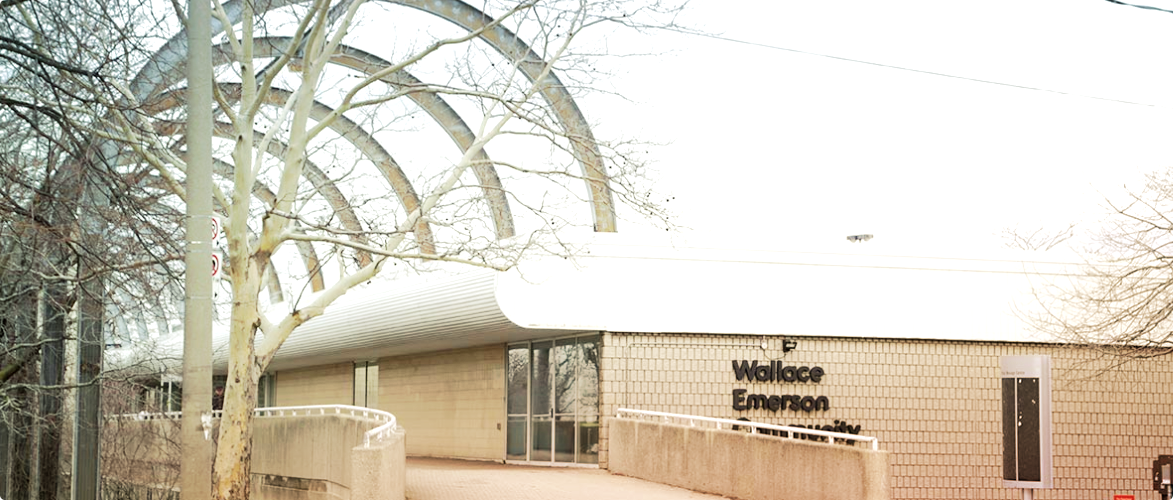
Wallace Emmerson is a west-central Toronto neighbourhood bounded by Dufferin Street, Dupont Street, Lansdowne Avenue, and Bloor Street West. The housing stock runs mostly to brick semis from 1905 to 1925, built when this part of the city was working-class and practical. Dufferin Grove Park anchors the western edge, with its Friday farmers market and wood-fired pizza oven drawing people from well outside the neighbourhood. Semis were trading from $900,000 to $1.2 million in early 2026, with the occasional detached reaching $1.6 million.
Wallace Emmerson sits in the west-central part of Toronto, bounded by Dufferin Street on the east, Dupont Street on the north, Lansdowne Avenue on the west, and Bloor Street West on the south. The neighbourhood takes its name from the intersection of Wallace Avenue and Emerson Avenue near its centre, which is as good a way as any to name a place: two residential streets crossing in the middle of a working neighbourhood that never had a single landmark to hang an identity on.
The streets here were laid out and built on quickly between roughly 1905 and 1925. The houses are the brick semis of that era: two storeys, narrow lots, front porches that were used and then enclosed and then opened up again depending on decade and owner. The neighbourhood was working-class from the start, and while it has changed considerably since then, the housing stock still reads as practical rather than aspirational. The bones are good. The interiors vary from barely touched to fully rebuilt. The lots are modest, mostly 20 to 25 feet wide, with shallow backyards that back onto other shallow backyards.
Dufferin Grove Park runs along the western edge of the neighbourhood, and it matters more than a park of its size normally would. The Friday farmers market has run year-round since 1994. The wood-fired clay oven is a genuine community asset, used by groups for pizza nights and bread baking throughout the year. The park has a skating rink in winter and a significant sand area for children. It functions as the neighbourhood’s living room in a way that gives Wallace Emmerson more social infrastructure than its modest streets alone would suggest. That park is, for many buyers, the thing that tips the decision.
Most of what’s for sale in Wallace Emmerson is a brick semi from the early twentieth century. Twenty feet wide is common; twenty-five is a good lot. Two storeys with a basement, a backyard that gives you enough space for a table and chairs and maybe a small garden, and a front porch that faces the street. These houses were built tightly and the party wall between semis means you’ll hear your neighbour’s major appliances and their children on a bad day. That’s the reality of the housing type, and buyers who haven’t lived in a semi before should know it going in.
The condition of any given house depends almost entirely on what previous owners did with it. The neighbourhood has enough turnover that there’s a wide spread: houses that were renovated thoughtfully in the last decade sit next to houses that haven’t had more than a coat of paint in thirty years. The older renovations, particularly anything done between 1980 and 2000, often mean updated kitchens and bathrooms on top of original knob-and-tube wiring that hasn’t been properly replaced. An inspection that covers the attic and the electrical panel is not optional here. The cost of re-wiring a house this size runs $15,000 to $25,000 depending on condition, which is a negotiating point that often doesn’t get raised until after the offer has already been accepted.
Some properties back onto laneways and may qualify for a laneway suite under the city’s bylaw. The lots in this neighbourhood are on the small side, and not all of them meet the minimum size requirements, but it’s worth checking on any property where a secondary unit matters financially. The houses that do qualify and haven’t yet built a laneway suite sometimes present as an underpriced opportunity for buyers who can build and rent.
Wallace Emmerson moves at a different pace than Roncesvalles or Dovercourt Park to its north. Those neighbourhoods have enough name recognition to draw buyers from across the city who’ve specifically decided they want to live there. Wallace Emmerson gets the buyers who have priced out of both and shifted their search west and south, plus a consistent local base of renters who’ve been in the area for years and know what they’re getting.
Semis were selling between $900,000 and $1.2 million in early 2026. The range reflects condition more than location within the neighbourhood, since the streets here don’t vary as dramatically as they do in High Park or Trinity Bellwoods. A properly renovated semi in good condition on a quiet block can push toward $1.2 million. A semi that needs the wiring replaced, the basement dug out, and the kitchen updated will sit closer to $900,000, sometimes below it if the seller has already factored in the cost of the work. Detached homes are less common and were reaching $1.2 million to $1.6 million depending on size and condition.
The market doesn’t tend to run hot in the way that better-known west-end neighbourhoods do. Multiple offers happen on well-priced properties in good condition, but the buyer pool is smaller and less frenetic than you’d find a few stops east on the Bloor line. For sellers, that means pricing needs to be accurate. An overpriced listing sits in Wallace Emmerson where it would get rescued by bidding competition in Roncesvalles. For buyers, it means there’s more room to negotiate and more time to do proper due diligence, which on houses of this age is not a trivial advantage.
The buyers who end up in Wallace Emmerson fall into a few recognisable groups. The first is people who have been renting in the Dufferin Grove or Bloorcourt area for years, know the neighbourhood on foot, go to the Friday market regularly, and have decided they want to buy without leaving. They come in with realistic expectations and don’t need to be sold on the area. They’ve already lived it.
The second group is buyers who started looking in Roncesvalles or Bloorcourt Village, found prices consistently above their range, and shifted the search west to see what equivalent money gets them one neighbourhood over. For a semi in reasonable condition, Wallace Emmerson can be $150,000 to $250,000 less than a comparable Roncesvalles property. That difference matters to buyers who are already stretching. Some of them decide the Roncesvalles premium is worth it for the commercial strip; others decide it isn’t and buy in Wallace Emmerson with the savings in hand.
The third group is smaller but consistent: investors and buyers who prioritise transit and commute over neighbourhood character. Dufferin station is a straight shot downtown on the Bloor-Danforth line, and the 29 Dufferin bus covers the north-south corridor. For someone whose primary concern is getting to work and getting home efficiently, and who treats their house as a home rather than a lifestyle statement, Wallace Emmerson offers real value for the location. These buyers tend to look carefully at the numbers, negotiate hard, and make good long-term owners of the houses they buy.
Houses built between 1905 and 1925 in this part of Toronto have a consistent set of issues that a good walkthrough won’t reveal. Before you make an offer in Wallace Emmerson, it’s worth knowing what to look for and what to budget for if you find it. Knob-and-tube wiring is the most common issue. Many houses on these streets still have some original wiring that hasn’t been fully replaced, sometimes because the panel was updated but the branch circuits in the walls were left. Home insurers treat active knob-and-tube as a risk, and several major insurers in Ontario will decline coverage or charge significant premiums for it. An inspection that checks the attic and the walls, not just the panel, is the only reliable way to know what’s there.
The lots in Wallace Emmerson are small, and the houses were built to the lot line on both sides in many cases. That means almost no side yard and party walls shared with neighbours on both sides for interior semis. Noise transmission through party walls varies by the construction and by the neighbours, and there’s no reliable way to assess it before you’ve lived in the house. It’s worth asking previous occupants when the opportunity arises, and it’s worth being realistic that a 20-foot semi in this neighbourhood is not going to give you the separation from neighbours that a wider lot would.
Basement moisture is worth investigating carefully on any house of this era. The foundation drainage systems in these houses were often clay tile, which compresses and fails over time. A sewer scope inspection, separate from the standard home inspection, is $300 to $500 and tells you definitively whether the drains are intact. If they’re not, the repair runs from $5,000 for a section replacement to $20,000 or more for a full dig and replacement. Getting that scope done before the offer firm deadline is strongly preferable to discovering the problem after closing.
Selling in Wallace Emmerson means working with a buyer pool that is price-conscious and genuinely knows what comparable properties sell for in Roncesvalles and Dovercourt Park. These buyers have done the tour of the neighbouring areas. They’ve decided to look here because the price is lower, and they’ll do the same math on your property. Pricing accurately matters more in this neighbourhood than in areas where bidding competition can paper over an overpriced listing.
The presentation choices that help the most here are practical ones: repaint if the walls need it, fix anything that looks neglected, and don’t leave deferred maintenance visible during showings. A fresh coat of paint and functional fixtures matter more than staging furniture, because buyers at this price point are looking at the house rather than the lifestyle tableau. A pre-listing inspection with a clear report available to buyers removes the anxiety that tends to knock offers below asking, particularly in a market where buyers have time to negotiate.
Timing follows the standard Toronto pattern. The spring window, February through April, brings the most buyers out and gives you the best chance of competitive offers. The fall window in September and October is the second-best period. Summer and January are slower, and listings in those periods sit longer without necessarily selling for less, since the buyers who are looking in the off-season are usually motivated rather than browsing. If you’re not in a rush, waiting for the spring window is usually the right call. If you need to sell, pricing honestly for the current market is more effective than holding out for a number the market isn’t currently supporting.
Dufferin Grove Park is 14 hectares at the corner of Dufferin Street and Bloor Street West, and it’s the thing that makes Wallace Emmerson different from the other modest west-central Toronto neighbourhoods with similar housing stock. The park is managed with more community involvement than most City of Toronto parks, and that involvement shows. The Friday farmers market has run year-round since 1994, which is unusual enough in a city of seasonal markets to be worth noting. It runs through January and February, when almost every other outdoor market in the city has closed. The vendors are consistent and the quality is reliable.
The wood-fired clay oven in the park is used for community pizza nights and bread baking events through much of the year, and community groups book it regularly. This is not a park amenity that exists as a sign beside an empty barbecue pit. People use it, and the park is designed around the assumption that residents will come and do things there rather than simply pass through it. The skating rink in winter is maintained with real attention, the sand area draws young children during the warmer months, and the basketball courts see consistent use.
For buyers with children, the proximity to Dufferin Grove is a genuine quality of life consideration. A park that has a year-round market, an outdoor rink, a bakery oven, and regular community programming within walking distance of the house changes the daily routine in ways that are hard to replicate with a larger but less programmed green space. High Park is close by transit, but Dufferin Grove is the park you use every week without planning it. Buyers who go to the Friday market a few times before committing to a purchase in the neighbourhood tend to understand this quickly. Buyers who only read about the park sometimes underestimate how much it matters to daily life here.
Dufferin station on the Bloor-Danforth line is the primary transit node for Wallace Emmerson, sitting at the eastern edge of the neighbourhood on Bloor Street West. Most addresses in the neighbourhood are within a 10 to 15-minute walk of the station, with the western parts of the neighbourhood near Lansdowne Avenue being at the far end of that range. Lansdowne station, one stop west, is a reasonable option for residents on that side of the neighbourhood.
The 29 Dufferin bus runs north-south on Dufferin Street and connects the neighbourhood to the Dupont area to the north and to Exhibition Place and the Lake Shore to the south. It’s a useful surface route for trips that don’t align with the east-west subway line, but it runs with the variability of all Toronto surface routes and shouldn’t be confused with a rapid transit alternative. The 47 Lansdowne bus provides a similar north-south option on the western edge of the neighbourhood.
The downtown commute from Dufferin station is realistic in the 20 to 30-minute range for most destinations in the core. The Bloor-Danforth line connects east to the Bay Street corridor and provides the Bloor-Yonge transfer for northbound and southbound trips. Cycling is an option on Bloor Street West, which has protected lanes extending through this stretch of the city. The terrain is flat and the lanes are continuous, making it a viable commute option for the warmer months. Car ownership is common in the neighbourhood, and street parking on the residential streets is generally available. Dufferin Street itself is a busy arterial and not particularly pedestrian-friendly, but the residential streets running east-west off Dufferin are quiet and walkable.
The three neighbourhoods share borders and similar housing ages, but they’re priced differently and feel different to live in. Roncesvalles is the most established of the three, with the Roncesvalles Avenue commercial strip as its backbone. The strip has good restaurants, independent retail, and consistent foot traffic. That commercial identity supports prices 15 to 25 percent above Wallace Emmerson for equivalent semis. Whether that premium reflects value you’ll actually use depends on how often you walk to the commercial strip rather than driving or taking transit past it.
Dovercourt Park sits north of Wallace Emmerson, above Bloor Street, with the Bloor and Lansdowne stations as its transit anchors. The neighbourhood has been gentrifying steadily for a decade and its prices reflect that momentum. It’s become the place buyers move to when they’ve priced out of Bloorcourt Village, which in turn drew the buyers who priced out of Roncesvalles. Wallace Emmerson sits one step further down that price ladder without being meaningfully less convenient or less livable.
The honest comparison is this: the housing stock across all three neighbourhoods is similar in age, type, and construction. The commute from each to downtown is comparable. What differs is commercial strip character, the specific park available, and price. If you want the Roncesvalles strip as part of your daily life, Roncesvalles is worth the premium. If the Dufferin Grove Friday market and the park programming are what you’d actually use, Wallace Emmerson offers that at a lower price point. Buyers who do the comparison honestly and decide on Wallace Emmerson tend to be satisfied with the decision. Buyers who settle for it because they couldn’t afford Roncesvalles sometimes feel the absence of the commercial strip more than they expected.
Walking through Wallace Emmerson on a Tuesday morning gives you a clear picture of what the neighbourhood actually is. The streets are narrow and quiet. The houses are close together. Dufferin Street to the east is a busy arterial with the noise and traffic density of a major north-south route in the city. The commercial activity on Dufferin Street is practical rather than inviting: laundromats, convenience stores, a few restaurants, and the kind of retail that serves a neighbourhood rather than drawing visitors from elsewhere.
The interior streets between Dufferin and Lansdowne are a different story. Wallace Avenue, Emerson Avenue, Peel Avenue, and the surrounding blocks are genuinely pleasant to walk: brick houses, front gardens that some owners have put real effort into, children on front steps, neighbours who know each other by name. The neighbourhood has the texture of a place where people have been living for a long time and intend to keep living there. It doesn’t feel like a neighbourhood in transition, even though it has changed. It feels established in a way that doesn’t depend on the commercial strip to justify itself.
The Friday market at Dufferin Grove is the most visible expression of the neighbourhood’s character. It runs rain or shine, through the winter, without the seasonal interruptions that affect most outdoor markets. The vendors are regulars, the customers are regulars, and the whole thing feels embedded in the community rather than grafted onto it. For buyers who are trying to understand whether they’d actually enjoy living here, going to the market on a Friday and walking the interior streets on a weekend morning is more informative than any listing description. The neighbourhood makes a specific kind of sense when you experience it on foot. It doesn’t sell itself on appearance; it sells itself on daily life.
What schools serve Wallace Emmerson?
The public elementary school for most of Wallace Emmerson falls within the Toronto District School Board catchment, with Dewson Street Junior Public School being the primary elementary school for much of the neighbourhood. It’s a well-regarded neighbourhood school with a stable community. Perth Avenue Junior Public School serves parts of the neighbourhood to the west. Secondary school catchments feed into Bloor Collegiate Institute, though families should confirm their specific address against current TDSB boundaries, which can change. For Catholic families, the Toronto Catholic District School Board has schools in the surrounding area. The neighbourhood’s proximity to several schools with French immersion programs is worth investigating for families with that priority, as immersion programs often require research into application timing and eligibility.
Is Wallace Emmerson safe?
The neighbourhood’s interior residential streets are quiet and have been for years. Dufferin Street is a busy arterial with the issues that come with high-volume urban roads: noise, some transient activity near the strip, and the general character of a major Toronto arterial. The area around Dufferin station at Bloor is busier than the residential interior. Crime statistics for the neighbourhood are consistent with surrounding west-central Toronto areas, and the perception of safety among residents who live on the interior streets is generally positive. Buyers should walk the specific streets they’re considering, at different times of day and on different days of the week, rather than drawing conclusions from the Dufferin Street strip alone.
Are there detached homes available in Wallace Emmerson?
Detached homes exist in the neighbourhood but they’re not common. The area was built predominantly as semis, and most of the housing stock reflects that. When detached homes come to market, they tend to sell quickly because the supply is limited and the buyer interest is genuine. Detached homes in Wallace Emmerson were reaching $1.2 million to $1.6 million in early 2026 depending on size, lot width, and condition. Buyers specifically looking for a detached home at that price point should be prepared to wait for the right property rather than expecting consistent inventory. Monitoring listings actively and being ready to act quickly matters more for detached homes here than for semis, where turnover is more regular.
What’s the rental situation like if I want to generate income from the property?
The neighbourhood has a mix of owner-occupiers and renters, and the rental market for basement suites and upper floors is active. A two-bedroom upper floor or basement suite in good condition in this neighbourhood was renting for $2,000 to $2,500 a month in early 2026. The income from a legal second suite can meaningfully affect mortgage qualification and carrying costs. The key word is legal: an informal rental that doesn’t meet the City of Toronto’s secondary suite requirements creates liability for the landlord, limits the type of insurance you can get, and complicates the sale when you eventually sell. Converting an existing basement to a legal suite requires minimum ceiling heights, proper egress, and often electrical and plumbing upgrades. Buyers planning to use rental income should get a clear picture of the existing condition before they close.
How has the neighbourhood changed in the last decade?
Wallace Emmerson has changed steadily rather than dramatically. The buyer profile has shifted: the neighbourhood now draws more professionals and young families than it did fifteen years ago, and renovation activity on the residential streets has increased. House prices have followed the broader Toronto trajectory, meaning they’ve risen significantly since 2015 and corrected partially since the 2022 peak. The Dufferin Grove Park programming has expanded, the Friday market has grown in vendor count, and some new food businesses have opened on the Dufferin strip. What hasn’t changed is the fundamental character: the houses are still the same age and type, the lots are still modest, and the neighbourhood’s identity still rests more on Dufferin Grove Park and the residential streets than on a commercial strip.
The case for Wallace Emmerson isn’t complicated, and it doesn’t need to be oversold. The neighbourhood offers real access to downtown Toronto via Dufferin station, housing stock of a type that holds value over time, a park with programming that serves the community year-round, and prices that sit below comparable neighbourhoods to the east. That combination is straightforward. The buyers who find it compelling are the ones who have been in the market long enough to know what those things actually cost elsewhere.
What the neighbourhood asks of buyers is honesty about their own priorities. If a developed commercial strip, a café to work from, and a restaurant scene within walking distance are priorities, Wallace Emmerson is not the right fit. Those things exist nearby on transit, but not on foot from the front door. Buyers who discover this after purchasing tend to find the neighbourhood frustrating in ways that the price advantage doesn’t fully compensate for. Buyers who’ve decided the daily routine they want is: the market on Fridays, the park on weekends, and a subway commute downtown on weekdays, find that Wallace Emmerson delivers on that routine reliably.
The financial case is also clear. At $900,000 to $1.2 million for a semi in a neighbourhood with a subway station and a functioning park, Wallace Emmerson sits at a price point that has proven durable through several market cycles. The houses are built to last, the transit access is permanent, and the park is a city asset that isn’t going anywhere. Buyers who approach the purchase with a ten-year horizon rather than a three-year flip mentality tend to find the fundamentals sound. The neighbourhood won’t make anyone rich on a short timeline. It will give people who want to own a house in central Toronto, live in it properly, and not be financially stretched beyond the point of comfort a practical and honest answer to that problem.
Street-level knowledge is hard to find online. Our team works in Wallace Emmerson every day. They know which pockets hold value, where the school catchment lines actually fall, and what the market is doing right now. Talk to us before you make a decision about Wallace Emmerson.
Talk to a local agent